The Birds of the Galapagos –

Birds of the Galapagos Islands – Part 1

I will do a few blogs on the birds of the islands. They are certainly the most abundant and most famous of the vertebrate animals on this remote archipelago. In case you favor the huge land tortoises as the most famous of the Galapagos vertebrates I will do a page or two on them as well. Over the next week I will do several pages on both the islands and the animals of the Galapagos.

The birds of the islands have earned a reputation as the stimulus for Charles Darwin’s thinking regarding the origin of species. In fact he was more impacted by the geology of the South American coast that he had seen in the almost four years of travel before reaching the Galapagos. Darwin developed a sense that the earth was changing over time well before he began to think about plants and animals changing over time. Once Darwin returned to England he wrote (more than 16 books!) about the journey, geology, island formation, barnacles, and the raising of domestic animals before he wrote about the origin of species. He had a lot of thinking to do.

The finches found on the Galapagos Islands do show close a group relationship and are in fact now used by evolutionary biologists as exemplars of adaptation and speciation. But, most of that work has been done by David Lack and Rosemary and Peter Grant in more recent times. If Darwin had had more time in the Galapagos he might have noticed the variation in the mockingbird or land snails of the Galapagos; they, like the finches, show  a common heritage and local adaptation. As it was he did not label the finches he did collect very well at all and had to borrow two other collections to look at once it was pointed out to him that the birds were in fact all finches not an array of warblers, finches, and others as Darwin first assumed.

The cactus finch pollinates it food plant (the Opuntia cactus) and has developed a 
long and pointed bill to reach deep into the cactus flowers.

The birds of the islands are rather few in number and most of them are comfortable at sea or along the coast. There are pelicans, gulls, storm-petrels, terns, frigatebirds, petrels, a cormorant and a penguin, and one albatross. The land birds have had to adapt to a rather barren, lava-dominated landscape or perish. It is most likely that most birds lucky enough to survive a wayward flight to the Galapagos did in fact die. The survivors were seed eaters and have now radiated into species that fit into a variety of habitat types.

On this page I will mention some of the birds of the coast. The pelagic (oceanic) terns (Sooty and Noddy) that breed in the islands are birds of all the worlds oceans. There are colonies off the Florida Keys and on the Great Barrier Reef in Australia. They nest on the northern islands and are rarely seen south of these waters. They stay at sea except for the breeding season. In my four visits to the Galapagos I have seen no Sooty  Terns and the only Noddies have been loafing birds on the rocky edges.

Common (or Brown) Noddys are pretty much all brown but the soft gray head looks 
white in bright light. Like the Sooty Tern they nest in colonies with thousands of pairs.
 
Tropical nesters, like this Sooty Tern spend a lot of time, in the sun. They air themselves by drooping their wings and often shade their eggs and young. The less common Bridled Tern can be found in these colonies on occasion.
The Brown Pelican of the Galapagos is another bird of the ocean though it uses the shallow waters. The pelican is a subspecies tied to the islands but it has not changed enough from its South American relatives to be considered a species.
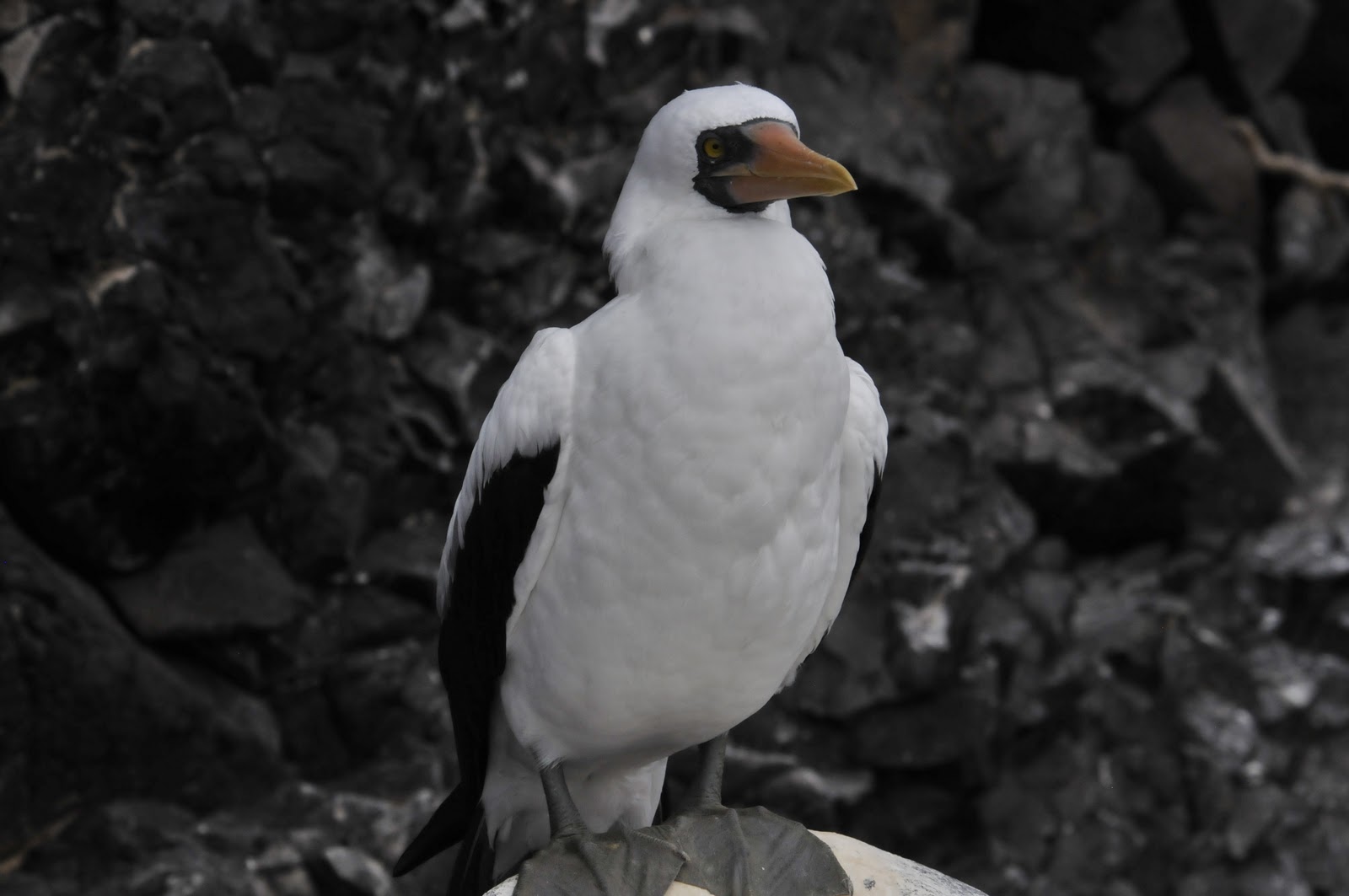
Perhaps the most famous of the islands’ salt water birds are the boobies and the Waved Albatross. There is only the one albatross here, called the Waved, and three common, nesting boobies; the Nazca, Red-footed, and the Blue-footed. Most albatross’ travel long distance over huge expanses of ocean looking for sparse foods to bring back to their nest. The Waved Albatross is a bit luckier in that they can stay rather tight to the islands and do very well. After nesting they seem to head into the ocean to the north and east of the Galapagos.
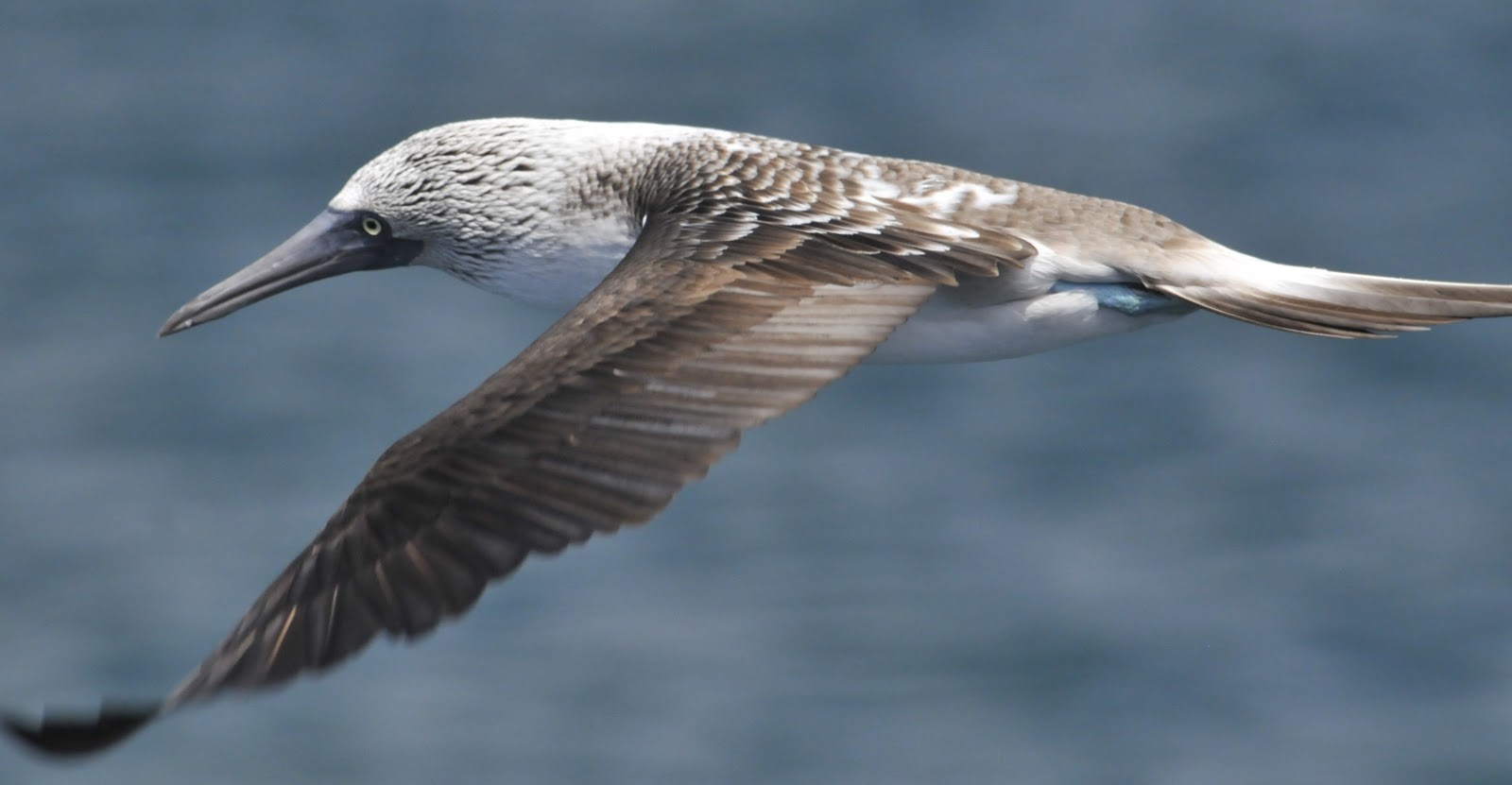
The Nazca Booby has only recently been recognized as a separate species. It’s ties to the islands and the changes in size and pattern have established it as a distinct species. The three boobies in the Galapagos feed in different part of the ocean: the Blue-footed feeds inshore near the volcanic cliffs, the Nazca feeds a bit further out but no very far from land, and the Red-footed Booby feeds well off shore. This is reflected in the number of eggs laid; only one in the Red-footed, often two in the Nazca but only one survives, and usually two in the Blue-footed.

Nazca Booby
Red-footed Booby – brown morph or phase
Blue-footed Booby

The Red-footed Booby comes in both a white morph and a brown morph and both forms can be seen in the Galapagos Islands. The brown morph is above and the white is below. This species is found in the southern Atlantic off Brazil as well as in the Pacific. The white morph of the Red-footed Booby looks a bit like the Nazca Booby, but it has a bluish bill, reddish feet, and (best of all) is usually perched in a bush or on a tree. The Nazca booby is always on rocks or sand. In the air the red-footed has a longer and more attenuated tail.

Birds of New Zealand

Some of New Zealand’s More Common Birds

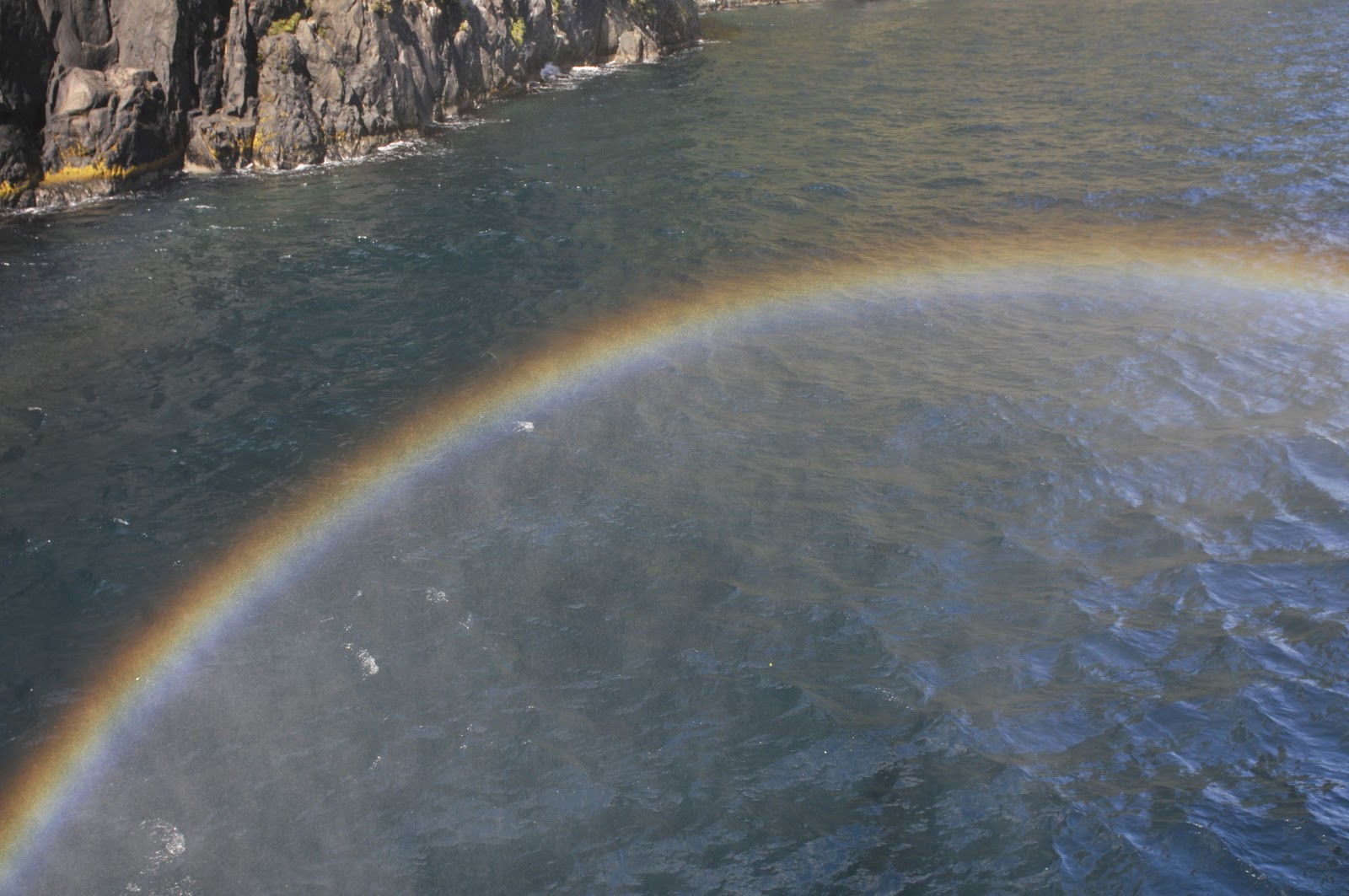
A rainbow sweeps around our motor vessel in Milford Sound. An ocean trip from here could garner twenty species of pelagic birds – we did see Australasian Gannet (Morus serrator), lots of distant Pintado Petrel (Daption capense or Cape Pigeon) and two Southern Royal Albatrosses (Diomedea epomophora). 
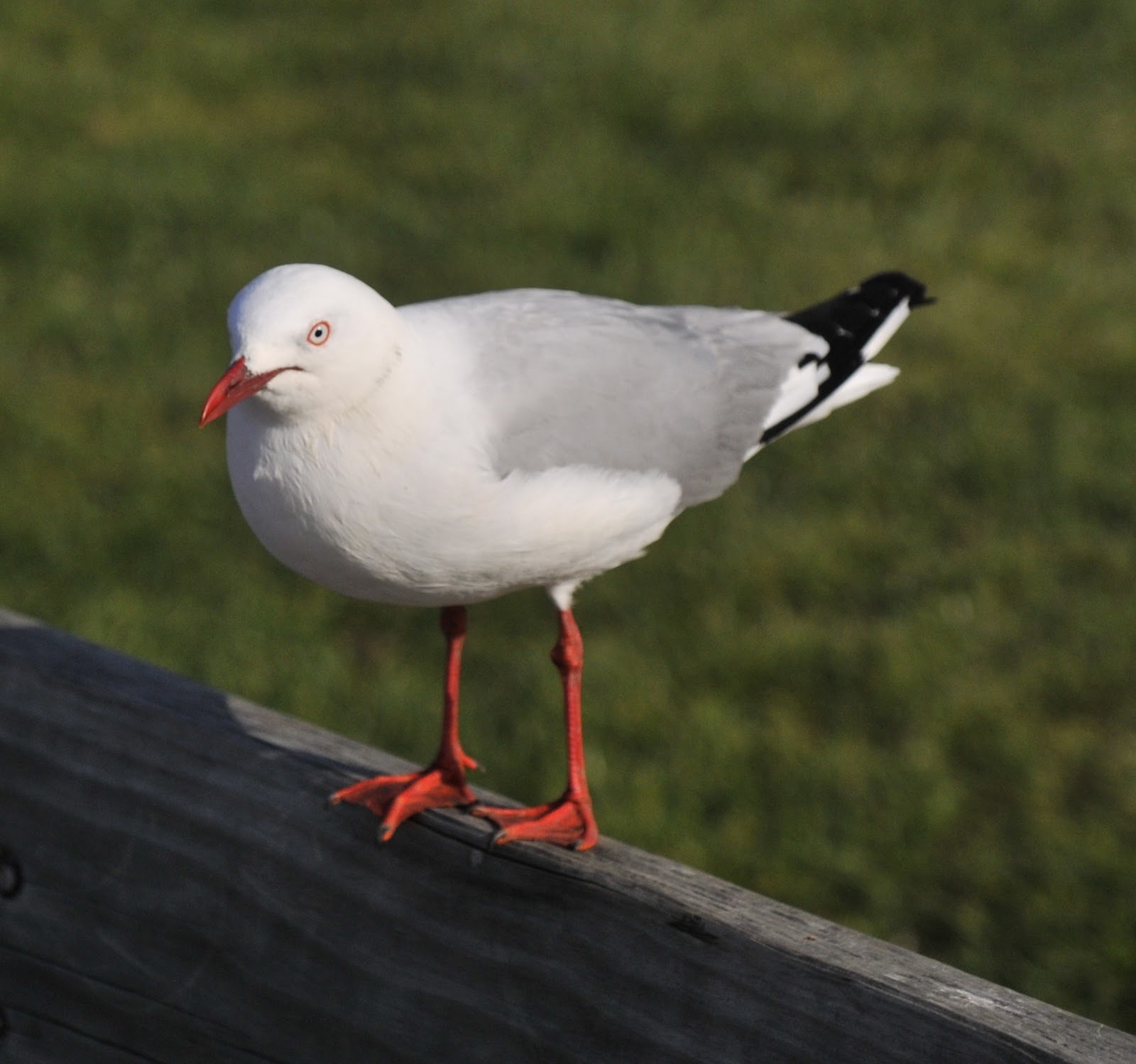
There are two species of gull that are common in New Zealand. This is the Red-billed Gull (Larus novaehollandiae) which is found along the coast throughout the area and also on the large lakes of North Island. 

I have mentioned previously that New Zealand (like many islands and island chains) has been impacted by colonization in ways that have eliminated native flora and fauna. On many island chains the birds had time to adapt to specific circumstances before humans arrived. There is the obvious example of the finches on the Galapagos Islands; but the Galapagos Islands also have variation (speciation in many cases) in mockingbirds, lava lizards and marine iguanas. Hawaii was rich in honeycreepers and new Zealand was full of flightless birds. Most of the damage was done (to the smaller creatures) by the domesticated animals that accompanied ships; in many cases animals were brought along in order to be released top create a food source for later visits and in other cases they escaped or abandoned the vessels while at anchor.

Ships were run aground and then completely emptied in order to be “smoked” – this smoking caused all the rats and insects to flee or die in the fumes. This was how Norway and black rats reached many shores. Cats, dogs, goats, and pigs were common animals aboard ships and found their way around the world quite early in the colonization process. Large animals, like Galapagos tortoises, New Zealand moas, and flightless birds all over the Pacific were captured, killed, or collected for shipboard food.

Many of the most widespread birds in New Zealand have been introduced by the settlers. The same is true for much of the vegetation. Some of the common birds are annotated below. I have inserted images of many of them as well. The plants that make Christchurch (and other NZ towns and cities) so attractive are often from North America and Europe.  Redwoods and sequoias grow rapidly here, as do beeches, oaks, pines and larch. New Zealand is fertile, well-watered, and rather cool; a great place to be a plant.

The native systems are still here but in many cases they exist only because the terrain is rough and difficult to get to. The Nothofagus beech forests still dominate thousands of square miles of the Southern Alps on South Island. The mountain tops are often bare rock but the slopes and valleys are covered by this ancient tree. Many of the native birds are abundant in southern New Zealand – at least the sea birds are still abundant. There are penguins, albatrosses, mollymawks, prions, petrels, cormorants, shearwaters, and other oceanic birds in profusion. Many of these nest colonially and are found on the smaller islands to the south of South Island.

Here are a few of the common birds of New Zealand.

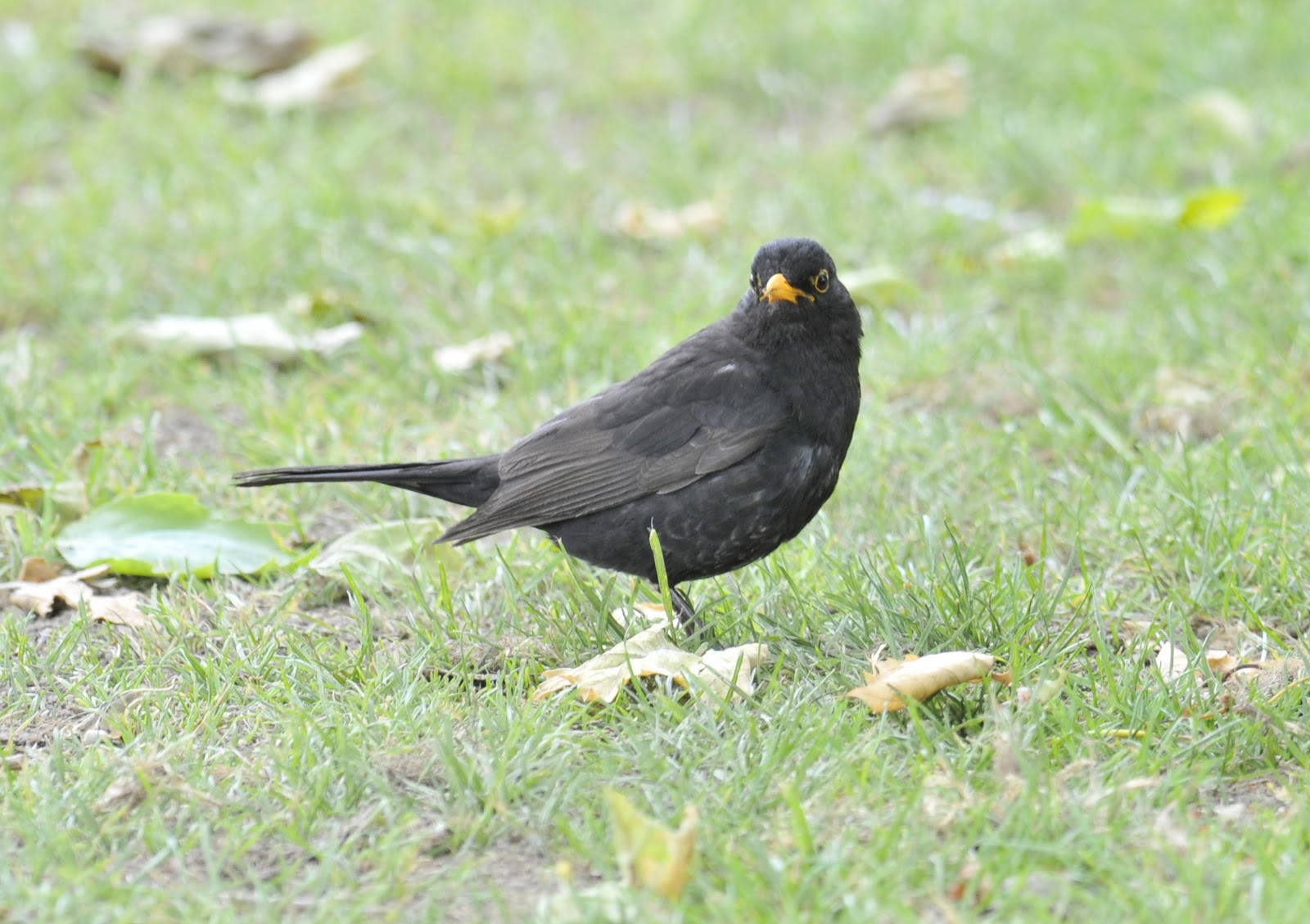
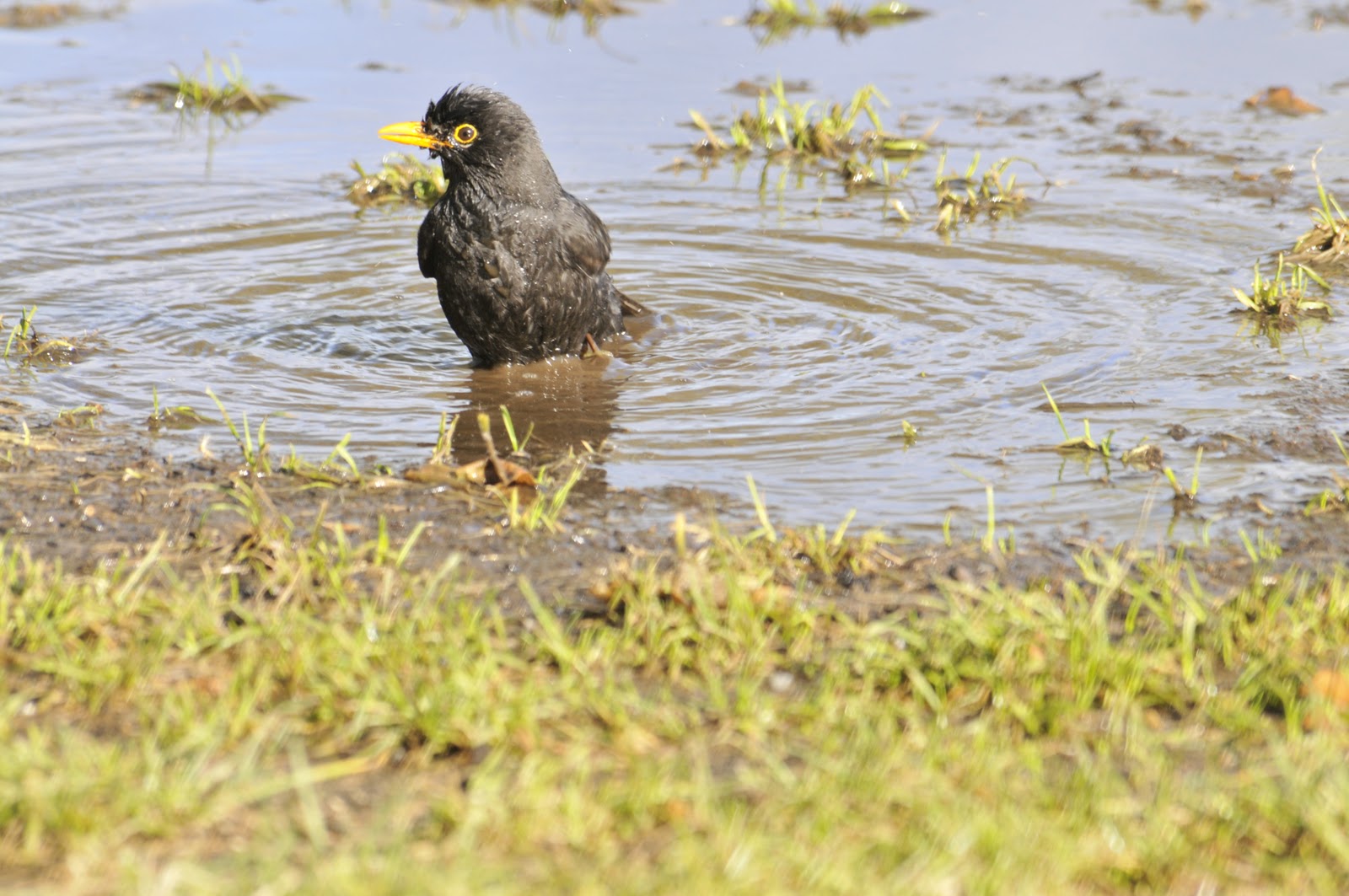
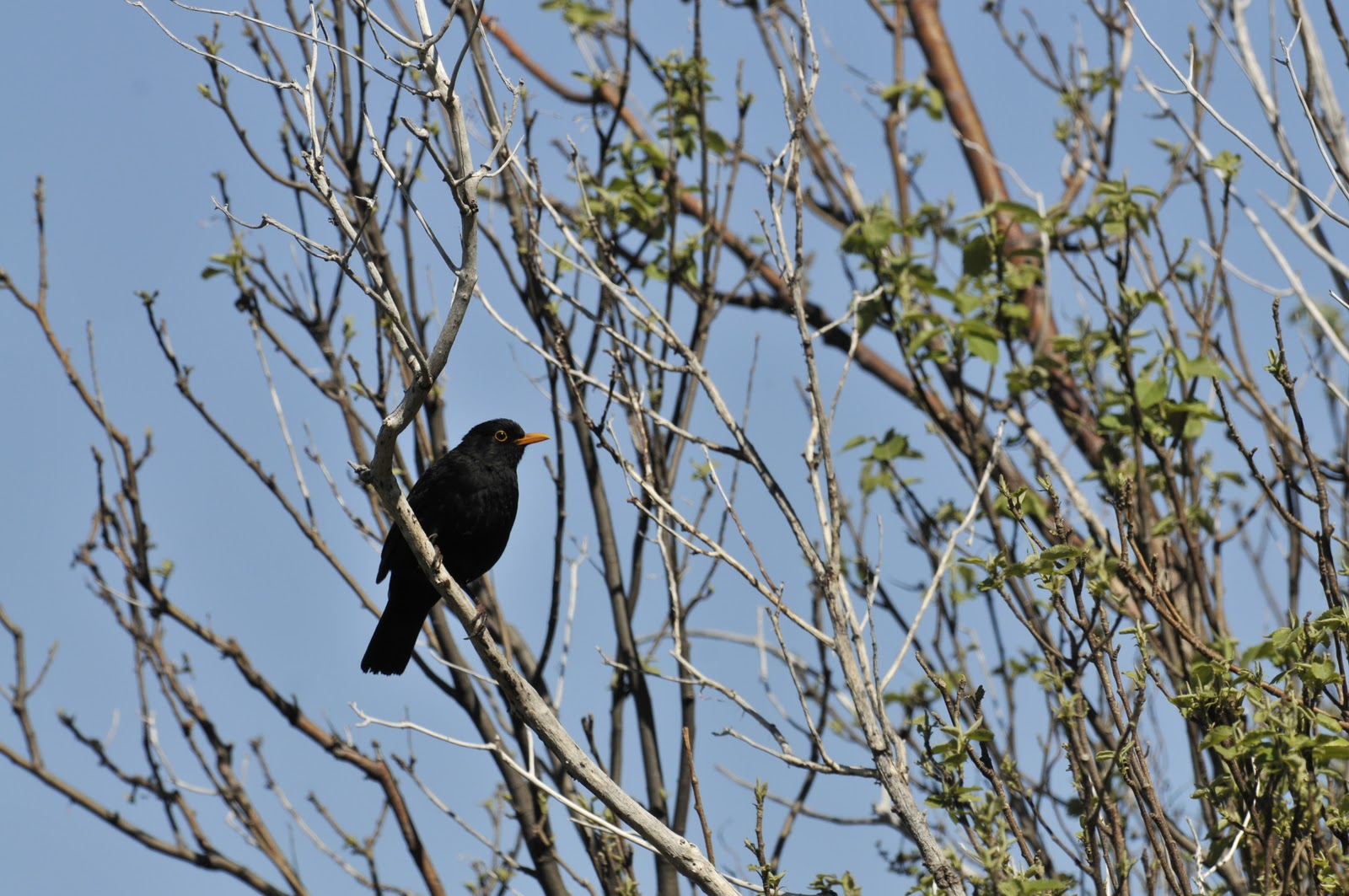
The Blackbird (Turdus merula) behaves like an American Robin (Turdus migratorius) and is a very common bird in both Europe and New Zealand.

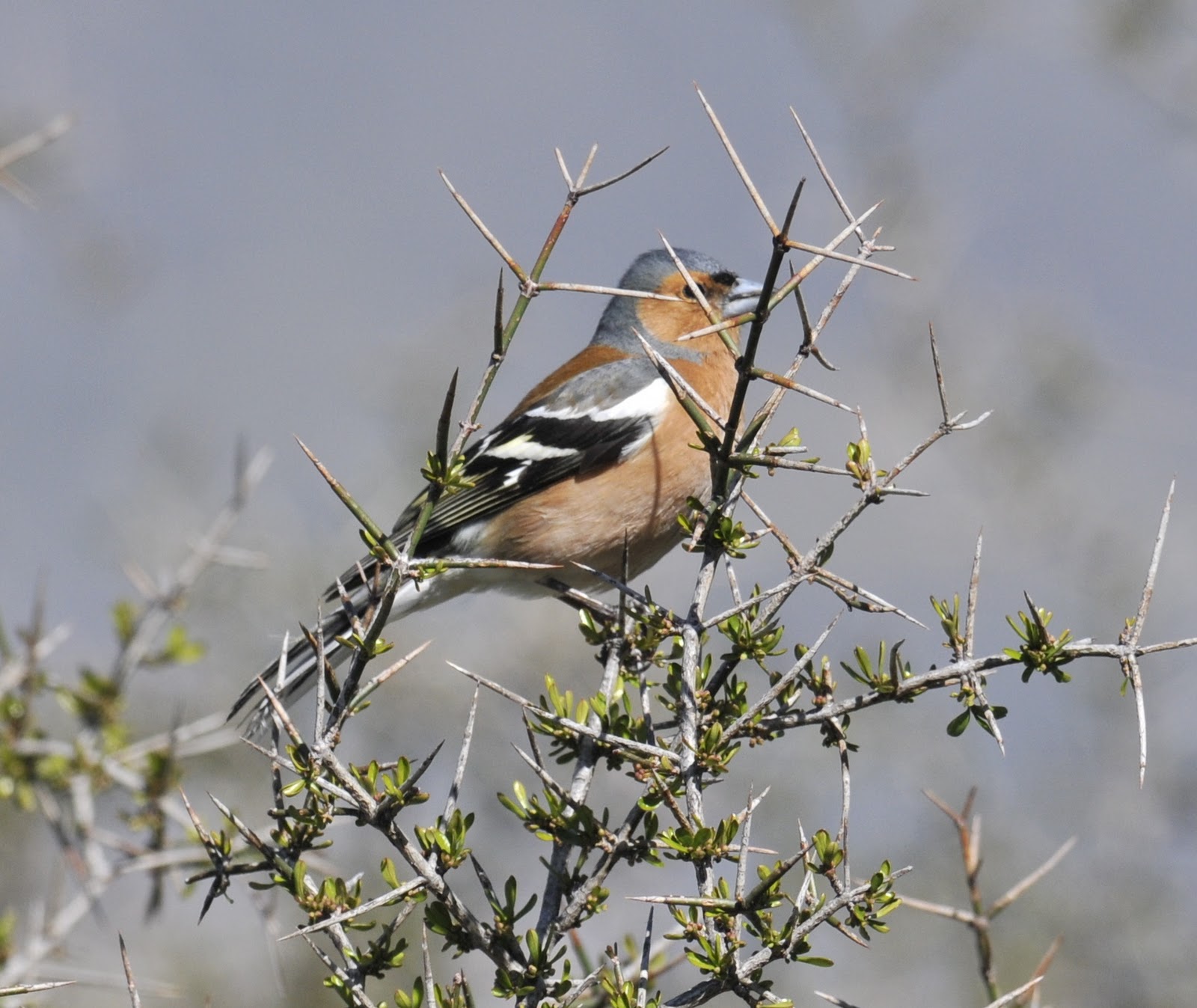
The Chaffinch (Fringilla coelebs) and the Yellowhammer (Emberiza citrinella) are common examples of European finches and sparrows. They are now both very common in New Zealand. The Chaffinch is a nice mix of blue-gray, reddish-brown and white where the Yellowhammer is usually quite yellow.
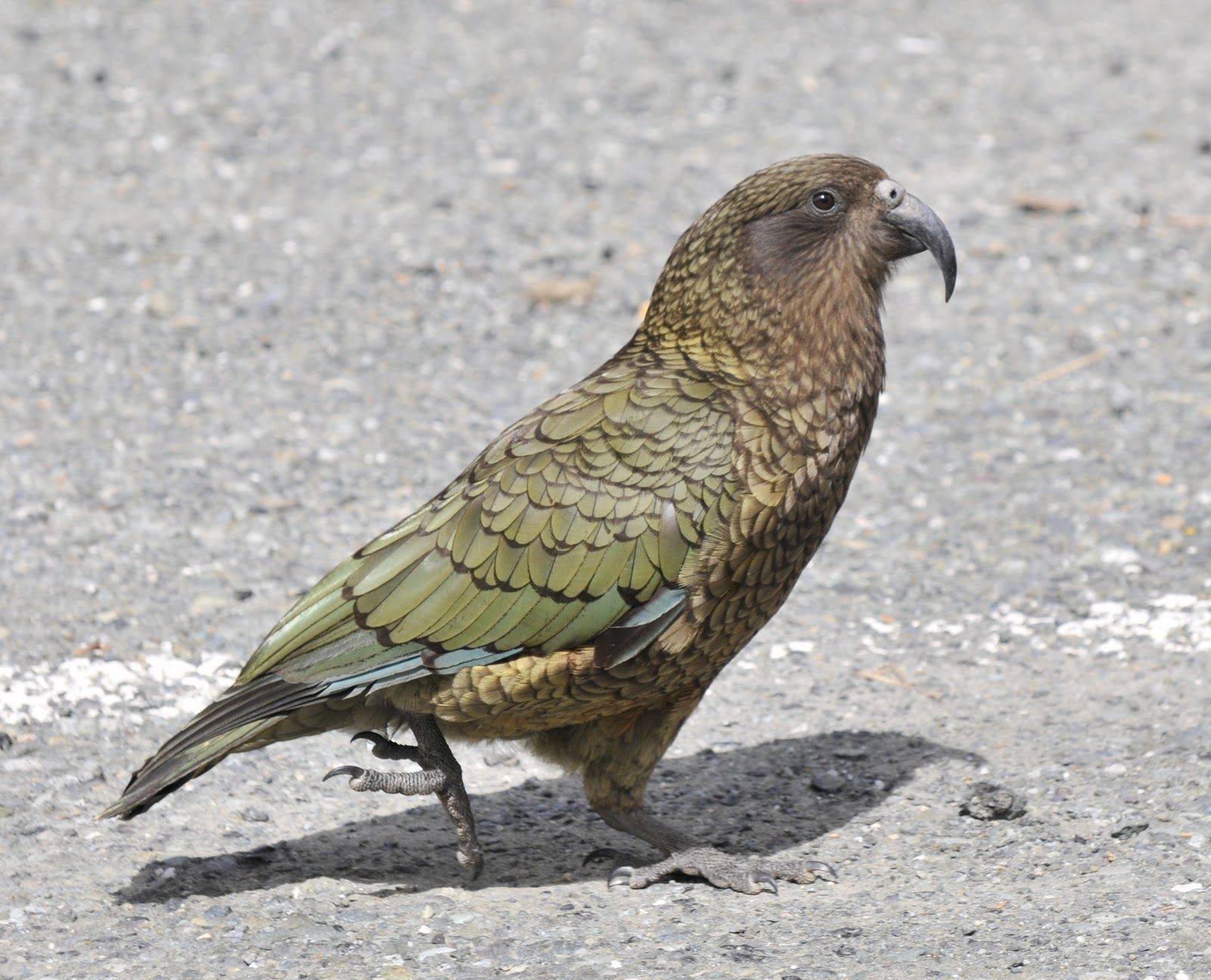
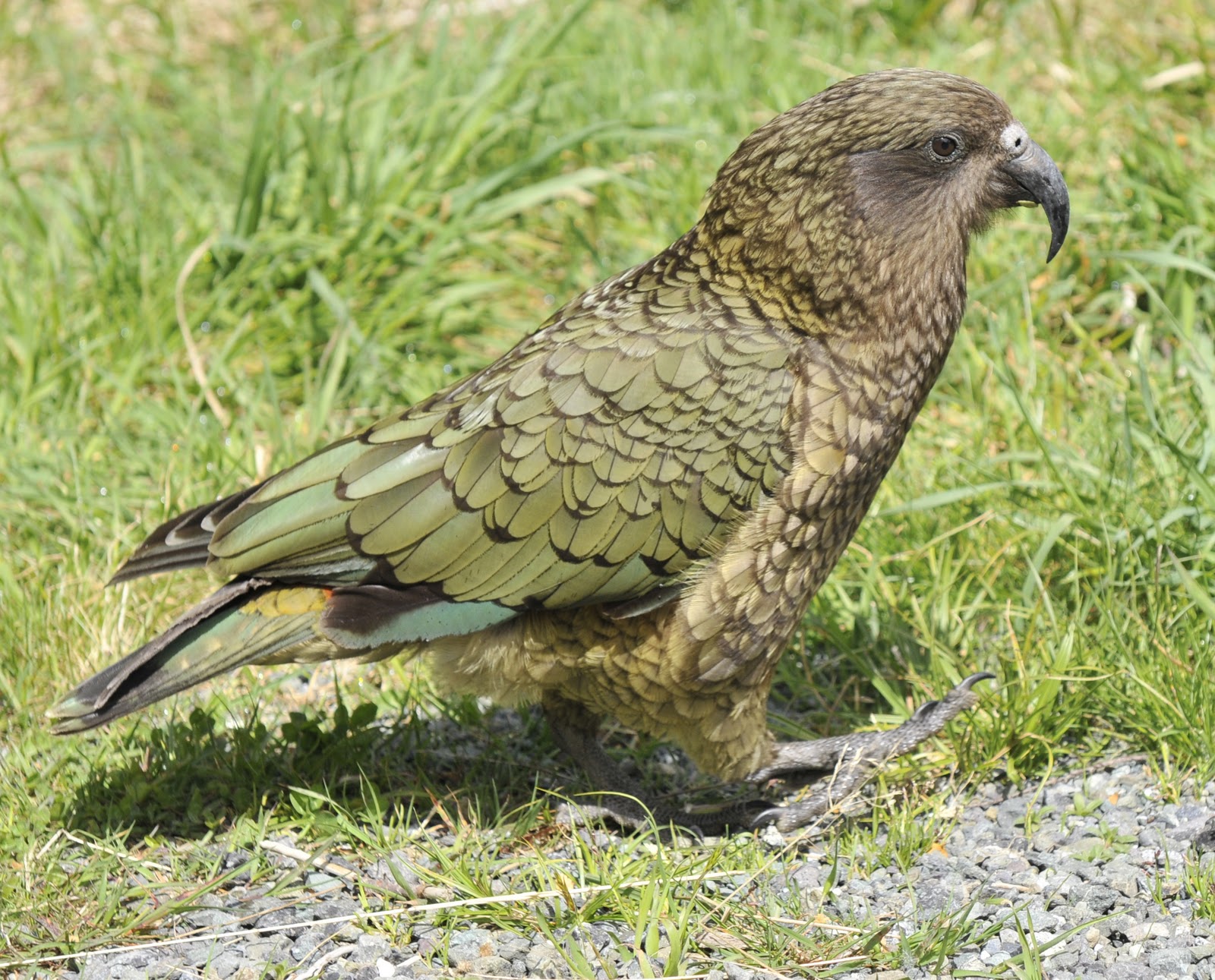
There are still many native birds as well. The little Fantail (Rhipidura fulignosa) comes in to pishing (a shushing noise made by birders to imitate alarm notes and attract birds) and is quite common. The Silvereye (Zosterops lateralis) is another small and common native bird. The Kea (Nestor notabilis) is a mountain parrot that has the reputation for peeling off windshield gaskets and other bits from automobiles. There will also be an image of the Pukeko (Purple Swamphen or Porphyrio porphyrio) a large rail-like bird now found pretty much world wide.
The Fantail is common on both North and South Islands.
The Silvereye ia also common and widespread.
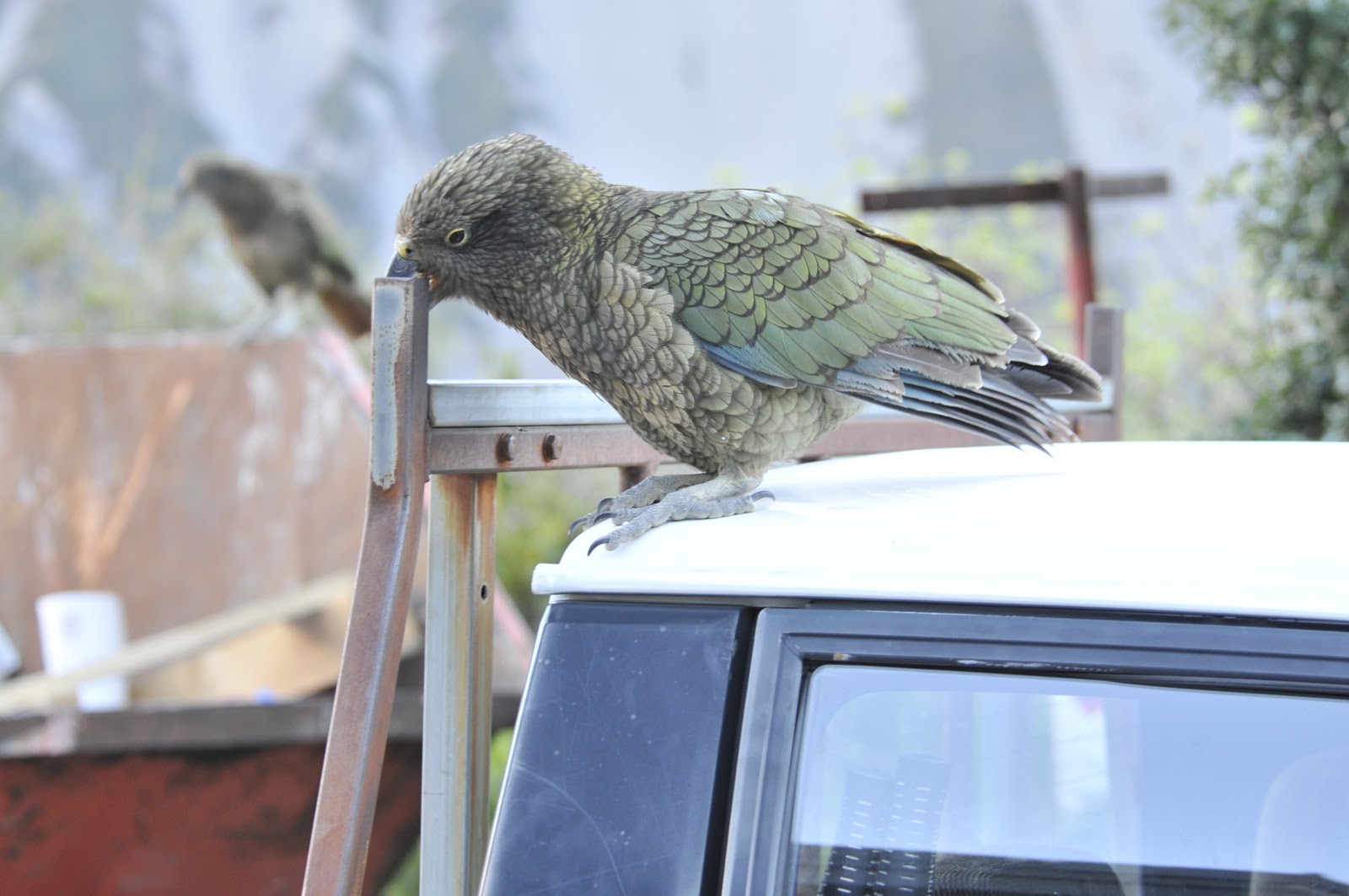
The Kea is one of 3 large, green parrots found in NZ. It is often called “playful” but called “destructive” equally often.
They do seem to like cars…. they examine the contents of dumpster and truck bed with equal zest.
The Pukeko is listed as an abundant (or common) native bird in the NZ bird books. But it is found in southern Europe, India, much of Africa, all of southeast Asia as well as Australia and New Zealand. Whether it arrived in NZ on its own or was brought in by settlers is up for debate. The evidence shows they have only been in NZ since about 1700 – so they could have come with settlers or visitors (perhaps as a food source). They don’t seem to migrate but will move when a wetland dries out and perhaps some move a bit north and south. In the southern US there has been a vigorous eradication program that eliminated hundreds of Purple Swamphens as they were seen as non-native and invasive. That effort has been stopped and we are likely to see them spread through the southeast.  
There are 13 penguins shown in the New Zealand bird book. Ten of them are usual in the seas around Stewart Island. This is a Fiordland Crested Penguin (Eudyptes pachyrhynchus) seen along the shore line of Milford Sound (actually a fiord). 
The New Zealand Scaup (Aythya novaseelandiae) is one of the few ducks that have made NZ home. They are  very common in the lakes around Rotorua and listed as uncommon elsewhere, though I see them just about everywhere.
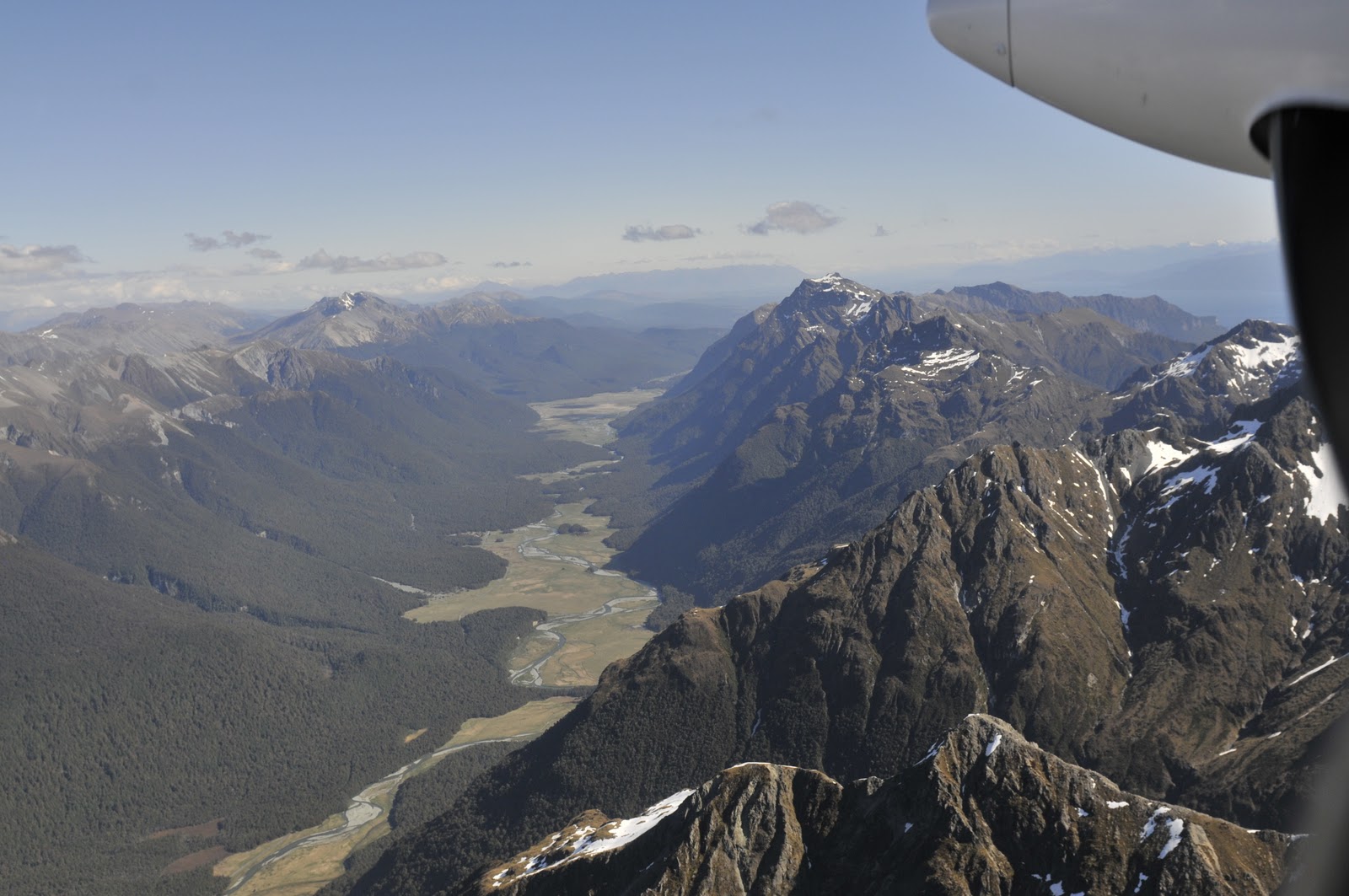
Lastly, I can’t resist one parting geologic comment. Though the Southern Alps are pretty much just rock, there are signs of erosion and change. Here a stream delivers debris to the fiord creating a vey nice outflow delta.   The pictures below are of a mountain valley carved by glaciers during the last glacial period.

Thanks for looking in on this blog. Best wishes to all.

The First People of New Zealand (probably)

New Zealand is a collection of islands – two of them large, one smallish and then there a lot of really small ones. For about 83,000,000 years this land mass drifted alone in the south Pacific, the very south Pacific. The land mass that is now New Zealand is part of a larger mass most of which is currently submerged. Over the past millions of years this region has been exposed and inundated at various times. There is an active fault line that runs sw/ne through the western edge of South Island and North Island has many areas of geysers and mud pots. This region is still tectonically very active, although most of the activity right now seems to be between plates and not volcanism. The land itself is a mix of volcanic materials and sea floor materials. There are limestone caves on North Island where old sea floor has been eroded by oozing and dripping water.


It seems that Australia was settled by people originating in Sri Lanka some 40,000 years ago. These people never reached New Zealand. It is quite possible that the Australian aboriginals came by boat but in short hops during a time when the ice caps held enough water to lower sea level over 400′. New Zealand was also settled by people via aquatic channels, but it is likely these people came to New Zealand by traveling south from an enclave in the central Pacific – perhaps in the area of the Society Islands.
Depending on how you define your terms; the Maori are the indigenous people of New Zealand. They are people from the western Polynesian Islands who traveled and settled throughout the Pacific during the past 5000 years (plus or minus). Their DNA ties the people of the Pacific to the Chinese coast from which they headed south and east into the sea, about 5000 years ago. They seem to have centered in the island chains in and about Tahiti no more than 2200 years ago. The people seemed to settle and establish and remain sedentary for many generations. Then something would stimulate a movement of people and the settling of a new area. The lack of written language makes much of the cause of this pulsing distributional pattern hard to discern, but the effect is quite visible.
The languages of the Maori and the Hawaiians are very similar and the speakers of each tongue can understand each other to this day. The other Polynesian and Pacific languages have similarities as well. It seems obvious on many levels that the people who traveled the Pacific Ocean and settled it, were from the same source stock.

These were tropical people coming to a rather temperate area. There is snow on the mountains here and very seasonal weather patterns. The polynesians who arrived here were not yet Maoris and they were not yet ready for the change in the weather. But they adapted. They found New Zealand flax and made wraps, and coats, and ropes from the fibers. They carved the trees into great double-hulled catamarans and they ate the flightless birds that were endemic to the islands. They were the first mammals to tread the land in 83,000,000 years. It was easy pickings and they settled in. Eventually they developed a culture and the trappings of sedentary life; they became the Maori.

The arrival of the Maori in New Zealand is given as one of two disparate dates; either about 800AD or 1300AD. In all cases the evidence seems to have these people living somewhere in the center of the Pacific, perhaps in the Society islands, before moving south to New Zealand. They arrived in the central Pacific a couple centuries BC and after many generations and several hundred years of residence, in part moved on to a new location. They are also known to have traveled east to the Easter Islands off the coast of Chile as recently as 800 years ago. The Humboldt Current moves north along the western edge of South America and is a real barrier to travel; but perhaps they even reach South America and the Galapagos Islands.

The above map shows how the people of eastern China and southeast Asia are presumed to have invaded (culturally speaking) the expanse of the western Pacific. The arrival in New Zealand must have been quite a change for the tropical peoples who made the journey. Flightless birds for food and flax for fiber made the transition to temperate life possible.
The Endeavor

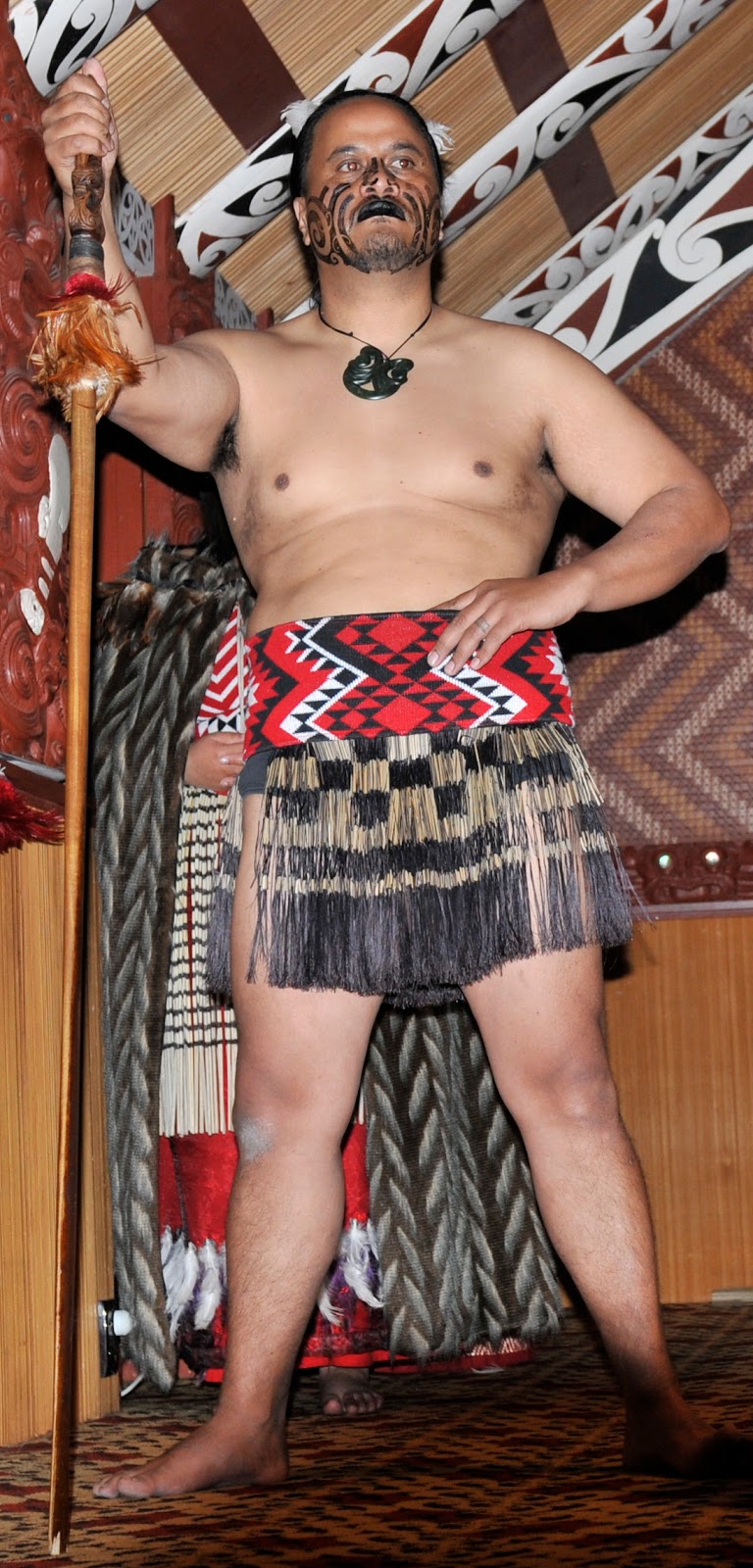
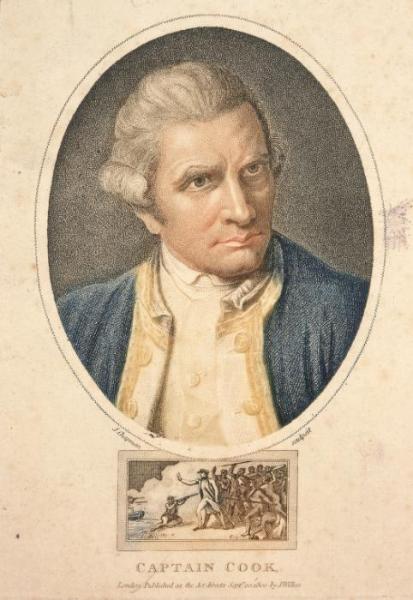
When Captain Cook arrived he was amazed at the speed and maneuverability of the Maori boats and the seamanship of the crews. They could run with the wind and easily tack back through the wind. Cook was very impressed. The Maori were warriors, both men and women were aggressive. The tattoos on their bodies depicted their lineage as did the carvings on their buildings. 

Modern Maoris are part of mainstream New Zealand. They have their own language still and are working to use it as much as possible. Many, perhaps most, of the place names and names of plants and animals use Maori as the describing language. They have levied land claims against European New Zealand and in many cases have had land returned to them. There are many reconstructions and cultural centers on the North Island. In most cases the life of the Maori that is depicted at these facilities represents a time of plenty for the original people. The hunting skills, cultural adaptations, and craftsmanship of the people are shown. A meal is provided nightly (hangi) for those who stay (and pay). The cultural depictions are not demeaning or presented as if from a lesser culture; rather they are educational and prideful. The early days were a time of success for the Maori people and it is represented that way by the descendants who have adapted to new cultural demands.

Much of the old Maori way was a mix of threat and intimidation. They respected those who would meet them and join them in meals and song. But the welcome was anything but friendly in appearance. There was a vigorous greeting accompanied by faces and weapon displays. If the arriving party accepted the invitation (by picking up the leaf that was laid in front of them – accompanied by all sorts of threatening gestures) they were then invited in to the main buildings and became part of the evenings activities. Weapons and war were a significant part of Maori life. In WWII the Maori battalion was highly decorated and greatly respected by allied troops. They were warriors.

The Caves at Ruakuri & Geysers of Rotorua

The caves on the North Island are quite famous; great limestone excavations made over time by the one of the most passive and vigorous agents on the planet – water. The caves are in an area of rolling mountains, well eroded from their original height. The limestone is from ages ago when these hillsides were part of a sea floor and accumulating bits of lime from all kinds of oceanic life. Now they are part of the landscape; above sea level, covered with leafy vegetation, and their insides are continually being eroded by seeping, flowing, and dripping water.

The caves most usually visited are the Waitomo Caves – but Jack Clyne, the Tour Director in New Zealand, has found an exquisite cave system just a bit further up the road. These caves are the Ruakuri Caves and are wonderful to visit. They are less frequented and hence you have the feeling of being deep in a remote cave – more so than being deep in a remote cave with lots of other people.

The pathway through the cave system is a marvel. There are no big signs, no parking lots, and little alteration to the terrain – there is a packed gravel drive, that’s all. You enter from ground level through a man-made (gunnite perhaps) rock formation. There are Welcome Swallows nesting as if it were a real rock outcrop. This entry brings you through an air-lock door into a very large space – or at least the echos in the dark make you think that. You then watch as the lights go on; downward and downward, gently illuminating a great silo with a ramp around the outside wall. This great spiral ramp – as if you were descending along the outer edge while inside a great cylinder – allows your entry to be gradual and very personal. You know that you are descending into a cave. It is enchanting. 
There are probably five full circles to reach the bottom about 50 feet down. From there you walk through another man-made passage and through another air-lock as you enter the main cave system. In actuality you have dropped down and then moved laterally as you entered the cave; now well below ground. From there on you are almost always on a stainless steel boardwalk with a concrete surface, suspended by spelunking and mountaineering devices from the cave itself. There has been very minimal impact from this installation and little change to the floor of the cave.

We were in the cave for almost two hours. As we passed into and out of sections the low-heat lighting would come on as we entered a new section and then go off as we departed. The temperature was cool and the air moist but comfortable overall. We had one person in a wheelchair and the pathways were more than adequate. (Coming up the spiral ramp in the “silo” to exit the system was a bit of a push – but it was smooth and gradual.)
There were stalactites and stalagmites as well as curtains and dollops and streams. A river roared through beneath us at one point. There are some tours that float through the cave and/or visit the cave by boat. I have not done those options but I really enjoy visiting as we did and appreciate the slower pace and the chances to observe and ask questions without excessive noise and motion. We were guided by one of the founders of this set-up.
One of the highlights of the cave tour is a look at an insect that resides in the cave and depends on the very occasional drift of other insects for food. Not only do other (very small) insects have to pass through the cave in order to be eaten, they have to captured by tendrils of mucus that the insect larvae hangs down from the small web were it resides. These, luck-dependent creatures, are glow-worms. The gentle glow for which they are named attracts the drifting insects toward the light and the gooey strands. 
Their eggs are laid in the cave, the first hatched eat the other eggs, they build a small web/hammock of silk, and then drop down mucus strands. They then wait and wait. If the strands catch food they devour it and eventually lay eggs. In the pitch black of the cave the eery light from the glow-worms allows your mind to wander from the confines of a cave to the vastness of space. It is all part of a remarkable creature’s life-style and dwelling place.
Many animals (and some fungi), mostly insects, have bioluminescence. There are many beetle larvae that produce light and glow and many adult beetles as well. (The group Lampyridae which contains the firefly is the best known.) The New Zealand cave creatures are members of the Diptera family and belong (I think) to a group called fungus gnats. They are Arachnocampa luminous, or “luminescent spider-like campers”. These New Zealand cave creatures can turn on and off the glowing parts.

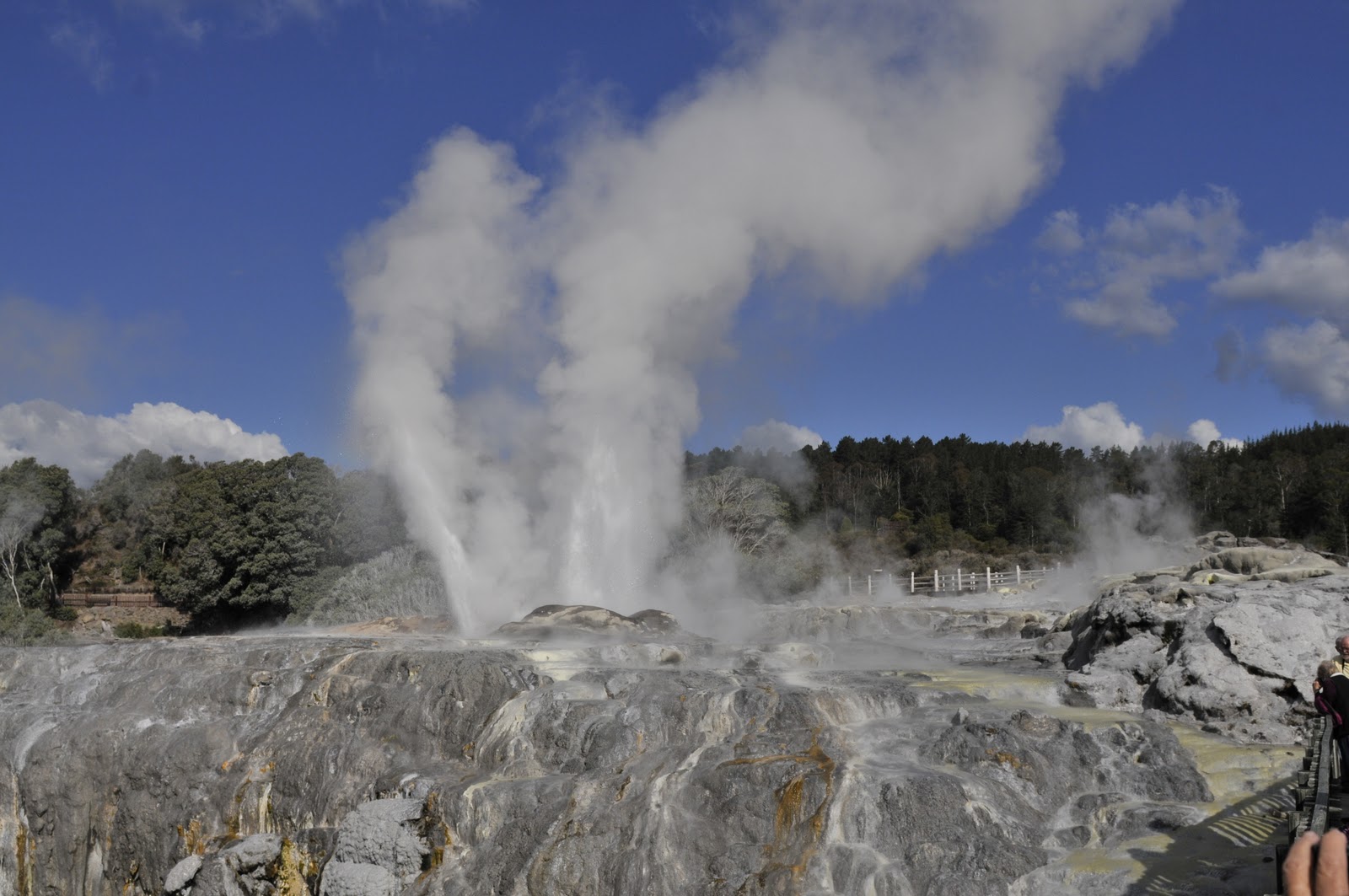
In addition to uplifted mountains, volcanoes, and limestone caves the North Island has hot springs and geysers. In Rotorua, where we spend some time with the Maori people, the surface geology is very obvious and a bit nerve-wracking. In the town many of the residential yards are vented with 2″ pipes to release steam from just underground. There are occasional houses that are abandoned because hot pools have formed in the yard, and the smell of sulfur gas is obvious. There are places where your feet get hot and where boiling water is inches from the surface – or even at the surface if you dig a few inches down. There are places where you are advised not to walk.
The geyser at the Maori education center we visit seemed to be active all the time, though it is said to be active “at least every two hours and perhaps almost hourly”. It was spewing and gushing the whole time we were there. The ground is warm and the air is warm and moist.

Along the slopes of the geyser area there are bacteria and algal mats that provide color to this stark area. I imagine that many of the mats are actually in the group of life forms called Archaea and are neither bacteria or algae – but I saw nothing written and heard of no studies.
There are geysers, mud pools, hot springs and all sorts of similar configurations. The whole area of Rotorua is in an ancient caldera, now partially filled with a deep lake that has a volcanic plug in its center. The lake itself has sections that receive hot water and areas that are less impacted by the heat. The places where the sulfur-water enters are grayish in color and can be easily noted by the continual rise of steam. The island plug is now a rat-free (invasive animal-free) area where some of the rare birds that were impacted by alien species are now able to survive. These restoration projects are rather widespread in New Zealand and almost always on islands. (Google Tiritiri Matangi for a good example.)
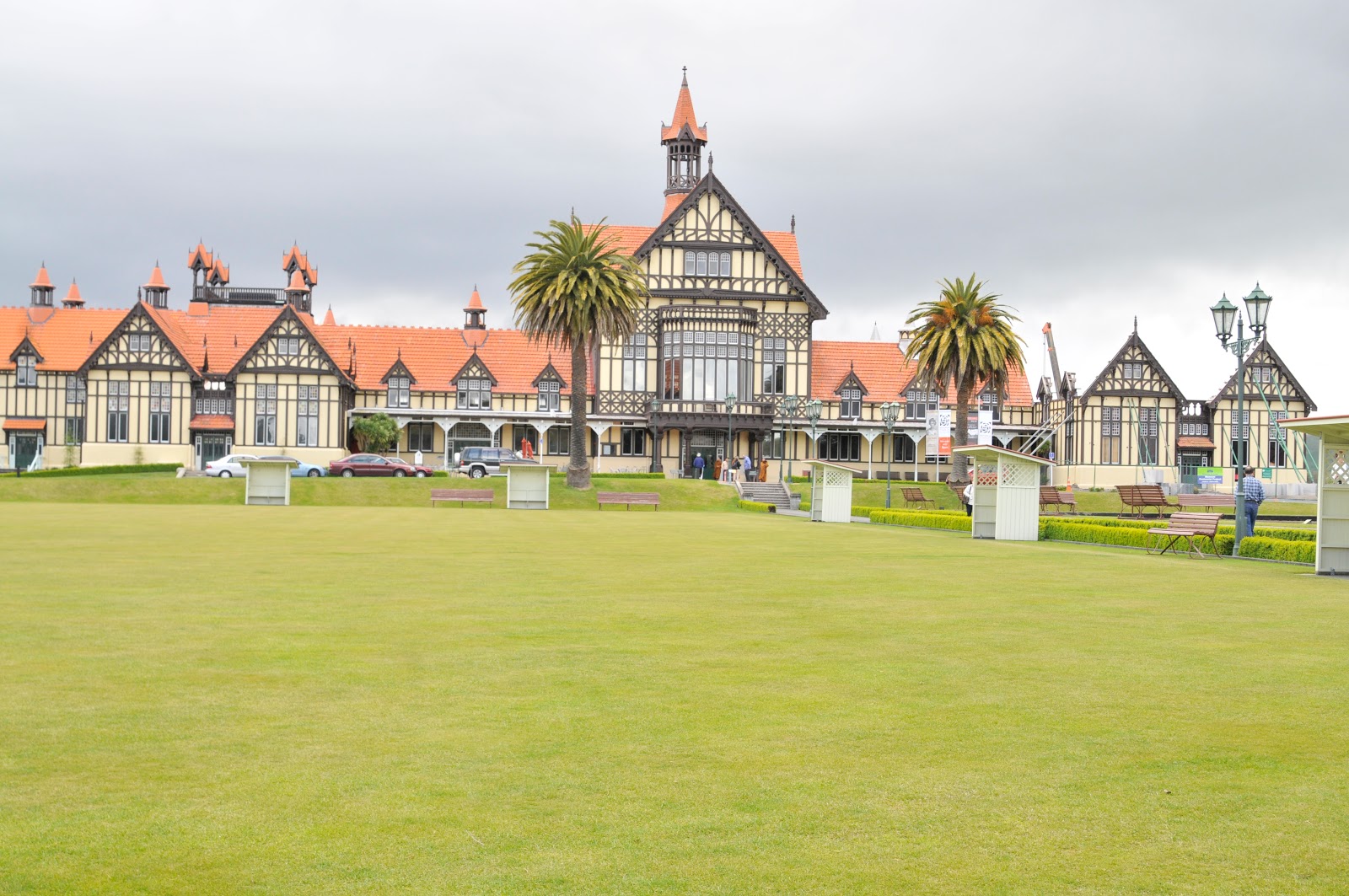
About a century ago there was an effort to build a spa that would attract people for the healthful benefits of mud, heat, and immersion. The building is now a museum – it seems that a spa in New Zealand, though used somewhat, was to expensive to maintain and too far off the beaten path. The building of the spa was a long, slow, and very expensive project – another reason the idea never bore the anticipated fruit.
The spa/museum building is being finished now. The section to the right is under construction – you can see that the roof is not tiled. The bowling green in the front of the picture is one of several in the city. Lawn Bowls and cricket are still played – though rugby is the national sport nowadays. 
The spa, as it was originally run, was very torturous; quite different from what we consider a spa in the 21st century. The use of electric shocks while immersed in hot water or mud was central to many of the treatments. Many of the museum depictions read like punishments or masochism rather than being medicinal or recuperative.

A TSA interaction on my return trip

The following is an unillustrated account of the Computer Saga. 


The flight from Auckland to Los Angeles was a bit bumpy and the rear of the plane seemed bumpiest. Though there was ample leg-room and plenty of fresh air on this flight I did not sleep much or very well. I arrived at LAX tired but with a couple hours to make my transfer. I eventually had my luggage and exited the arrivals room without detailed inspection. I rechecked my bags onto the United flight to Boston and then walked the half-mile or so to the United terminal. I still seemed to have plenty of time to get a boarding pass and pass through security.
I followed the directions on the e-ticket check-in screen and found that they required me to ignore certain statements (about luggage) before I could get a boarding pass. With a little help I eventually had a boarding pass and was then sent outside the building to get in a line that ran well down the sidewalk. I was about fiftieth and soon there were another fifty behind me. This line eventually re-entered the building and the security counter was just inside. Time was now getting a bit tight. 
My plane was to board at about 8:15 and depart about 8:40. The line was very slow and after an hour the fifty people ahead of me had moved through security and I could look in the door to the security area. In front of me were two portly couples traveling together, all on telephones. They had large carry-on bags and seemed oblivious to all proceedings, I just knew they were going to have troubles with security. The four men behind me had been in New Zealand for a fire-fighters rodeo of some sort. They were also portly and looking forward to getting home.
The line was very slow. I asked the staff that was in the area if this line and our pace was unusual. They laughed and said that it was often longer and slower. It appears that there are several United flights between 8:30 and 9:00am each day and this is a situation that happens daily. Increasing staffing for a short time each day does not seem to be an option. 
My plane had now been boarding for more than ten minutes. I was beginning to get a bit antsy. It turned out that there was only one screening unit staffed and if they had to search or re-examine a person or a bag the whole line stopped. It turned out that the four people ahead of me had a few bottles in their bags and they were searched and their luggage sent through the machine again. 
However, by the time that happened the next three people, me included, had put their stuff on the belt. I had a briefcase, a big lens, shoes, and the laptop. These items were proceeding forward when it was determined the foursome needed further scrutiny. They were scrutinized and then their luggage was reinserted in the stream to be examined one more time. Of course to do this the luggage had to be stuck in the flow and in my case that was disastrous. Their luggage separated my bins from each other.
By now there was a tectonic mess at the exit of the x-ray machine. Luggage was jamming against luggage and there were bags lifting up and rolling back. People were looking for their items and the jostling was getting serious. The inspector-fellow was still opening bags and looking for the bottles inside. Everyone was worried about their flights as many flights had been boarding; the line was slow, and people were very tired of being in line.
Even with the continued examination of the four people and the jumble of small luggage,I saw my bags begin to exit the x-ray machine. I grabbed the brief case, slipped on my shoes, grabbed the lens, and briskly started off to the gate. My gate was 83 and 84 is the furthest one. When I arrived at the seating area outside the gate there was no one there – no travelers and no staff. I looked around and found someone who scanned my boarding pass and I entered the jet-way to the plane. We took off moments later. It was nice to have an on-time departure and even nicer to be aboard. As we climbed out of LA I dozed a few minutes, and then reached for my briefcase where I carry the laptop. It wasn’t in its slot.
I called the flight attendant and told her. She scooted up front to the captain and they called the United Airlines people and the TSA in Los Angeles and asked the TSA staff if they had recently found a computer. She soon returned and said they had looked in two of the three security areas and there was no computer. I had been through Door H and that was the one area where they had not looked. When you are in line for an hour, outdoors and moving slower than a glacier, things like Door H are observed hundreds of time. On the slip of paper that had been sent to the plane from United back in Los Angeles were two telephone numbers and she suggested I call them as soon as I could.
Eventually, and with no further news, I landed in Boston and found my luggage. Fran was in the cell-phone-lot and I called her and we started off to the Cape. My story was told and I tried the phone numbers on the slip of paper. It was Saturday afternoon in Los Angeles and the answering machine said they would be open Monday morning; I left a detailed message and promised to call again. I waited until noon on Monday to call them at 9am Pacific time. I reached the answering machine again and left a similar message. Later that day a call came in from Fernando at TSA lost-and-found. He seemed to want me to call him again so I did. 
I provided lots of information on the computer and he seemed to be jotting it all down. Later I called again and he implied, but never stated, that he had the computer in the lost-and-found. He was very quiet, sort of mumbled, and was in no way offering information – but he was there and seemed to be involved (but how I wondered). Optimism is a way of life for me but getting the computer back seemed a bit to much to hope for. I asked what I could do and he said I could come in and get the machine (if they had it). I offered to send a mailing label (pre-paid UPS) and he said that would be OK. I still was never told they actually had the machine.
I sent the 2-day-air mailing label by fax and hoped it would soon be attached to a box holding the laptop and on its way to Massachusetts. Another two days passed; Fernando had stopped answering his telephone and the tracking option offered by UPS could do nothing but tell me that I had purchased the pre-paid label. I was as patient as possible overall; but Fran and I decided to change numbers, codes, and passwords just in case the machine was being taken apart by a gang of bad guys who intended to steal all the information in the computer and become a middle-class, rather mundane, couple from Cape Cod.
One morning UPS told me that at 10:23pm the night previous, the package went from Los Angeles to Ontario California. It was great to know there was a package. I had paid for two-day-air so I was hoping to see the package soon. It then went to Sparks, Nevada, and then to Louisville, Kentucky. The next day it went to Windsor Locks, Connecticut where it spent a quiet weekend. On Monday it came to Yarmouth and on Tuesday the package arrived at my door. (Incidentally two-day-air does not count either Saturday or Sunday as one of the days – as it was posted at 10:23pm it was actually on UPS’s second day that it arrived – though the fifth calendar date) I paused in the raking of oak leaves and brought the box indoors.
The tape was sliced, the box opened and the computer inside was mine! It was a miracle. I do lead a great life – but this was almost beyond belief. A friend of a friend was a State Trooper stationed at Logan Airport and she has very few good things to say about how lost (and left behind) goods are handled by TSA staff. However, it was my computer and it was here. The arrival day was Tuesday; the tenth day after I passed through Los Angeles International Airport.
Overall I am very pleased with the result but I do wonder: why was there only one security line when there were several flights taking off at about the same time; why it was so hard to reach and communicate with the TSA staff; why it took two days to post; why UPS counts so differently from me, and …. how I could be so dumb as to forget to get the computer no matter what the circumstances.

Queenstown and Milford Sound

Today was the Milford Sound day – what a day. Glorious weather, a great boat trip, and I got to take the small plane flight that returned some of us over the Southern Alps back to Queenstown. The flight was $375 but we paid $325 as we were the after-four departure (go figure). The weather was clear as a bell and the visuals of these mountains were stunning. The ride from Queenstown to Milford Sound takes a bit more than five hours and could take more if you stopped for every photo opportunity. It is a wonderful ride.

In Milford Sound; not a town but really just a dock and departure building, we boarded the Milford Mariner and grabbed a box lunch as we headed out. There were quite a few Fiord-land Crested Penguins and also a few Cape Pigeons (Pintado Petrels), a Southern Giant Petrel, a few Australasian Gannets, and two Southern Royal Albatrosses. There was a single Bottle-nosed Dolphin and a few juvenile Southern Fur Seals (actually a sea lion) and a lot of Black-backed Gulls (Kelp Gulls) and White-fronted Terns. The WFTE is as bright as a Forster’s and as elegant as a Roseate – what a nice tern. It simply glows with its bright primaries and thin jet-black bill. The Pintado Petrel (Cape Pigeon) below is not from this trip.

The Milford Track (or the Milford Trek) is a world-renowned hiking path. It takes three and a half days to walk this spectacular path. You have to be ferried by boat to the start and then picked up by another boat at the end. Thus, even though the track has thousands of people on it, you feel alone in a remote place. You are then bussed back to your starting point. But once you finish the walk you should jump on a cruise boat that travels the fiord. It is a grand spectacle; the cliffs rise from the ocean more than a mile straight up. The Nothofagus Beech trees cling to the stark rock walls and form a very unlikely forest. There are the occasional tree-slides that occur when thousands of trees break loose from the rock and slide down to disappear in the sea revealing the rock that they had clung to for many years.

The ride in to Milford Sound is a photographers dream. The hard part is balancing the dark green valleys with the snow-covered peaks; but there are hundreds of opportunities to try to get it right. There are lakes and pools all along the way. If it has been rainy there can be well over 1000 waterfalls. The Homer Tunnel is almost a mile long and descends 600 feet. It was dug by five men with mules and dynamite. There are the occasional Keas along the route as well. These large comical parrots are very much a pleasure and a nuisance. They can (and often do) remove the rubber gaskets from around your car door or windows and then pose in an electric-green plumage like the most elegant catwalk model. 

Once you descend into Milford Sound you don’t really find a town or even a village, it is more a ferry station and pier. It is from this pier that the cruise boats start of on their run out the south side and back the north side of the fiord (it is not a sound at all – sounds were eroded by rivers and fiords were carved by glaciers). The water is very deep; the boats can go right up to the rock wall with no fear of scraping bottom. There is usually more than 1000’ feet of water under the boat. This area is a World Heritage site and they have only modestly altered it in preparing it for public use. There is an airport for small planes and I was able to fly out in an 8-seat Islander. The flight was great and the vistas over the Southern Alps were staggering.

I haven’t said much about the hotels we stay in but I feel I have to now. The Pullman Reef in Cairns has the best towels in the world. It is a wonderful place to stay. The Crowne Plaza in Alice Springs is the best in town – nice enough for sure but not elegant; though the restaurants and lobby are very nice. The Sails in the Desert at Uluru is elegant. The Amora in Sydney is also very nice, though my room this trip was a bit worn. 
Then we come to New Zealand where we start of in the Rydges in Christchurch and move on to The Hermitage at Mount Cook, and then on to the St. Mortitz in Queenstown. The Rydges is a fine small city hotel; but because most other places are quite grand, it may rank kind of low – but low amongst good hotels. The Hermitage is a government run hotel in a national park – a bit like an upscale dormitory; but the views of Mount Cook are brilliant. Then we have the St. Moritz in Queenstown; a lovely hillside hotel above Lake Wakatipu, a 52-mile long lake in the ranges of mountains that become the Southern Alps. The St. Moritz is in a class of its own – well, maybe the Pullman Reef and the (yet to come) Stamford in Auckland compare. Often the group will get suites; some with two bedrooms and a walk-in closet, two baths, and a kitchen and dining room. The views are over other buildings to the lake and mountains beyond. The walk back from town is definitely uphill, but worth it.


New Zealand is beautiful….but

This is about as far south as people seem to be able to live. It is more than 1000 miles from Australia and quite a bit further south. The flight from Sydney is about 2.5 hours and we arrived in the early afternoon. Jack Clyne met us and we were in the Rydges Hotel by 3pm or so. After an introductory talk I had the chance to go next door and buy a telephone calling card. For $10 I have 567 minutes of calling time to the US. So, for less than two cents a minute I have more time than I can use – it is a bit more more from hotels or from cell phones – but I will still never use up the minutes.
The arrival Day in Christchurch was glorious; sunny, brisk, and clear. After arrival we had free time so I went to the botanic gardens and walked about. The plants are very nice but the birds are all British. Of the 15 species I had, 11 were introduced European birds. The vegetation is also from Europe. The two birds below are the Blackbird and the Chaffinch.


As we headed out from town I almost never saw any native plants. This country has been a lonely island for 83 million years and was renowned for its unique plants and animals – that is almost gone now. Sadly the same thing has happened to the Hawaiian Islands chain and would have happened to the Galapagos Islands as well if they were just a bit more hospitable. My hero, Captain Cook, brought goats and pigs to New Zealand and probably rats and cats as well. The plants were brought by colonials as were the birds that now dominate the scene. 
New Zealand only had birds, no mammals and only one reptile-type, an ancient lizard that predated and then survived the dinosaurs, called Tuatara and a couple primitive frogs. Many of the birds were flightless (the five kiwis for example) and many others nested on the ground – there were no predators. That changed quickly with the Pacific Rat brought by the people who became the Maoris in about 1300 and by the sailing ships which brought Norway and Black Rats and later by the settlers during the 1600 and 1700’s. 


The biodiversity here has been hit hard and there are few areas of extensive native habitat. On the west side of the Southern Alps there are large expanses of Nothofagus forests and some small areas of Podocarp Forest, but that is about all that remains.
Our second day was pretty dismal weather-wise. It was windy, cold, and rainy all day. We were in and out of buildings and museums so it was doable, but not pleasant. There is a river (Avon) that winds through town, traversed by forty bridges, and there are boats (punts) that you can ride in and be poled along the river by “polers” in Edwardian costume. It is a bit much but always a hit with some people – but not in the rain and wind.
The next morning we were up and across the Canterbury Plain and then on to the spectacular mountains along the western side of this, the South, island. The Canterbury Plain is highly agricultural and though is was all sheep a decade ago is is now a mix of cattle, deer, and sheep. There is more money in dairy and probably more money in deer meat, which is sold mostly in Germany, as well. Sheep numbers have declined by about 50% during the past few years; from almost 80 million to about 40 million throughout the country.
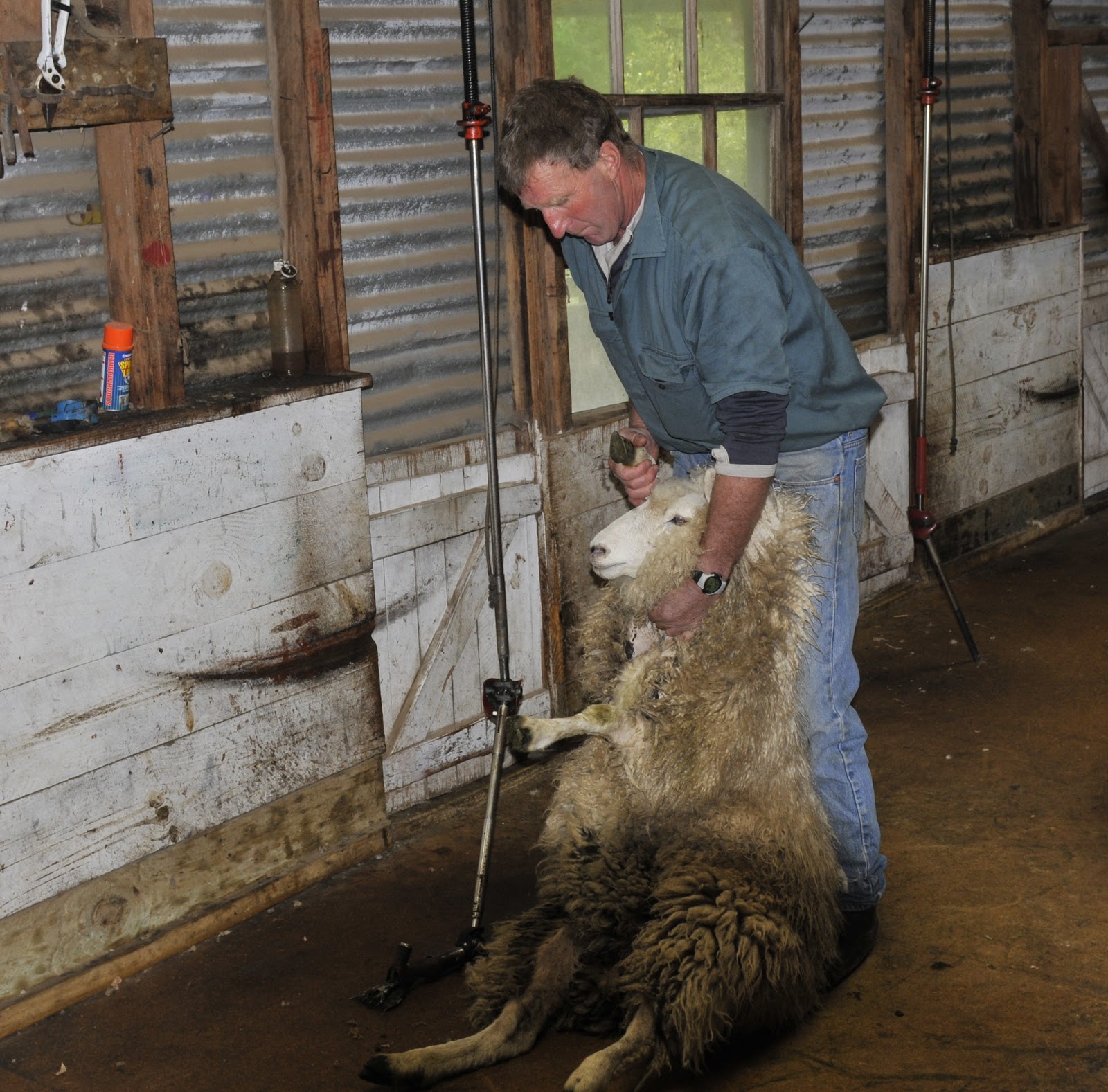
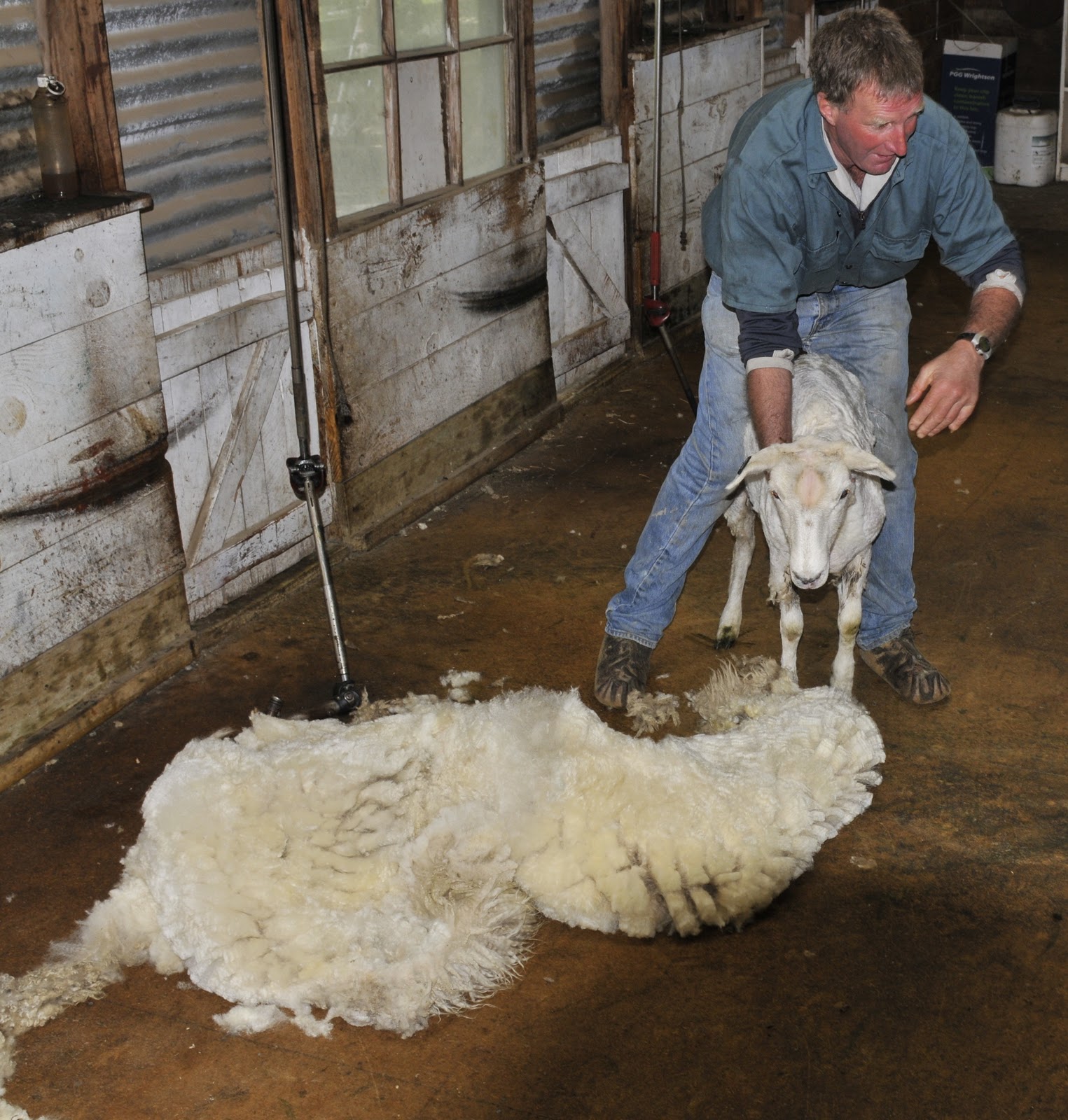
We stopped at a sheep farm and had delicious tea, scones, and breads. The couple that owns the farm were away but two of their friends and their daughter greeted and entertained us. Brian did the shearing of a sheep and ran his dogs. He traveled in the USA shearing sheep for a few years as the skill was lacking here. He was part of, along with a few other Kiwis, a shearing team and traveled around sheep areas in the southwest. He worked in California near LA and through Southern California and a bit of Arizona. His group and a few Mexicans spent the season working flocks that he thought were owned by Basques. He had a ball and remembers those years very fondly. He wanted to buy my Swarovski binoculars as they cost more than $4000 here in New Zealand. I never found out if he wanted to watch his sheep or birds.

The marino has fine, small-barbed wool and makes the softest clothing.

Brian started with a rather dirty and wooly sheep….

and ended with a wool coat and a small animal. 

We then headed off into the hills and to the foothills and are now spending the night at the base of Mount Cook; a spectacular snow-covered peak that rises almost 10,000 feet from where we are staying. Today was rainy as we left Christchurch but became glorious as we headed south and west. The sun stays on the mountain until the last second and even after sunset it is illuminated with the glow of western light. It is a wonderful scene that can be witnessed from every window in The Hermitage. The dinner was very good; roast lamb and other meats, salads, fruits, great vegetables, and several indian dishes. Everyone seemed to eat way too much.

This image is from my room… pretty nice.

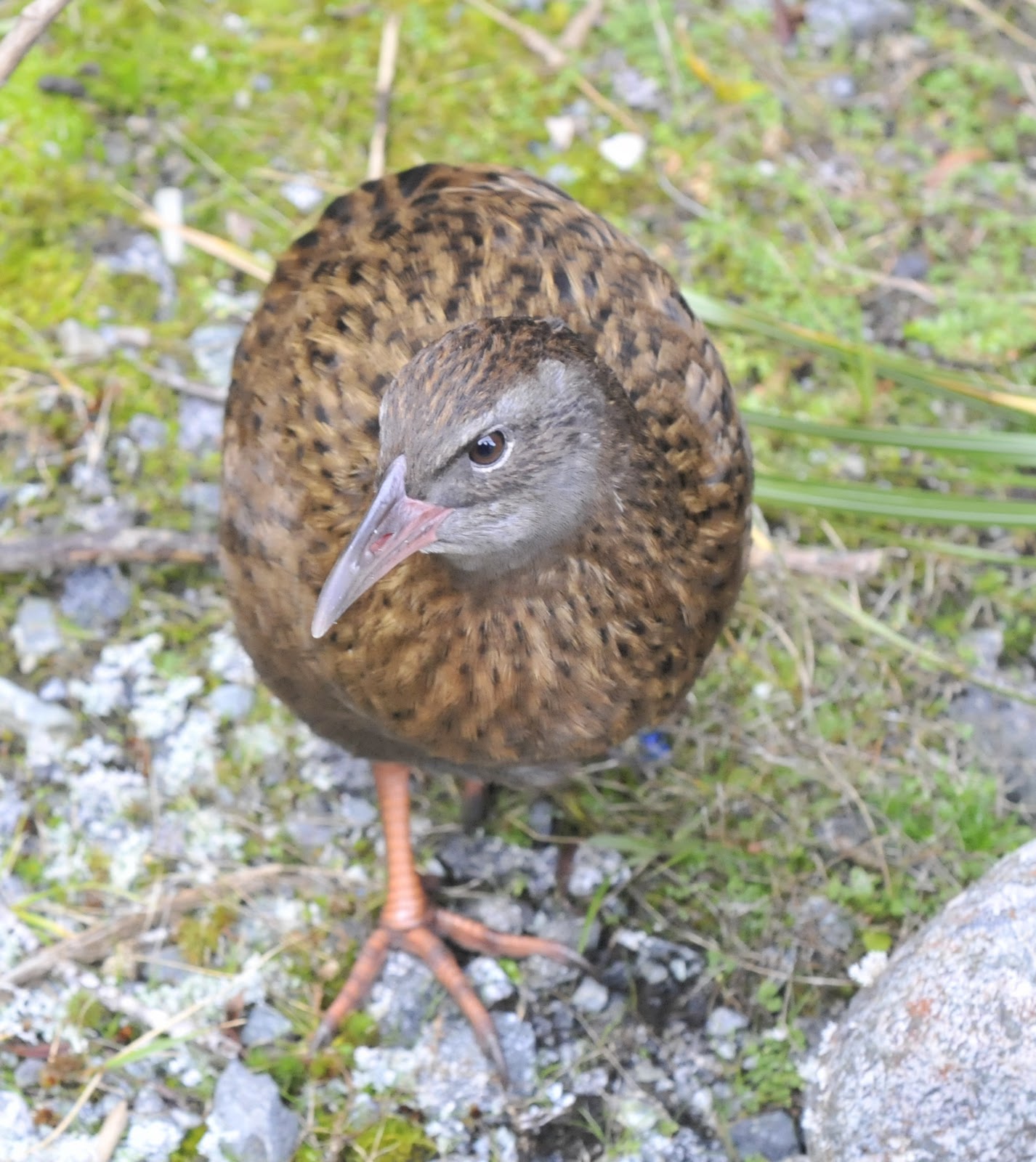
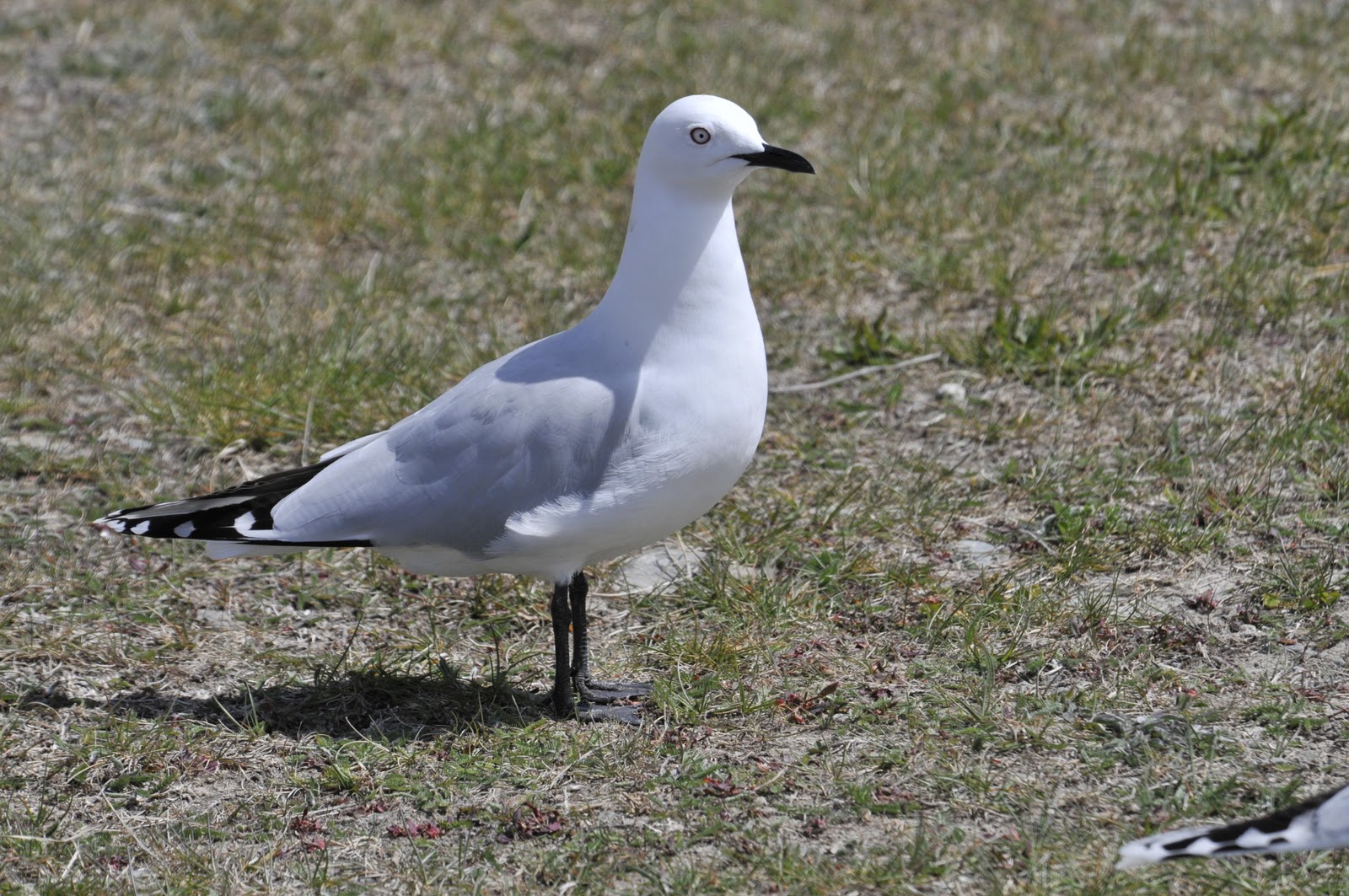
We had one couple take the helicopter flight up and around Mount Cook. They were up for an hour, landed twice on glaciers, and were thrilled beyond words with the outing. It was a very good day to take the flight and it must have been simply breath-taking up there. We will spend the next few days between Queenstown and Milford Sound. I will photograph birds in Queenstown and we will take a boat ride in Milford Sound that almost reaches the richest area of ocean in the world for shearwaters, petrels, and albatrosses. We will stop short of the ocean – but maybe some birds will be identifiable. Last time I was here there was a flightless rail, the Weka, at the boat dock. The Weka is below and a Black-billed Gull is below that.

More from Queenstown. I have a poor wi-fi connection here and want to try to post this —

The Last Day in Sydney

Sydney is a nice city, as I have mentioned, and quite expensive. (Actually Australia as a whole is expensive – their dollar and the US dollar are just about equal right now and things cost more here.) I have the occasional Diet Coke and have not yet paid less than $3.20 in any kind of store. The highest asking price was $4.80. The meals are pretty dear as well. A breakfast will start at $9 for coffee and a croissant. But a 6” Subway chicken sub is about $7 – which is about a third more expensive I guess. A real breakfast with eggs, toast, bacon, tea, and juice is over $30. Lunches are expensive as well. Dinners are not as out of line as the other meals; they probably run 20-30% higher than we pay. Although a burger, fries, and a beer is usually a hair under $20. People from here still come to the US to shop if they can get there, but not like three years ago when they saved enough to cover the cost of travel. In the US the taxes are less and the goods are less expensive overall. Southeast Asia is often the destination for Australians these days.

Yesterday afternoon at 3pm the Melbourne Cup horse race was run. The country simply stops and everyone watches the race. There were thousands of young people at every pub and in front of every TV. The girls were dressed up in cocktail dresses and had “fascinators” in their hair. These were usually feathers but sometimes flowers. The young men were also dressed in suits and ties and it was quite the scene. By 9pm things were a little worn. 


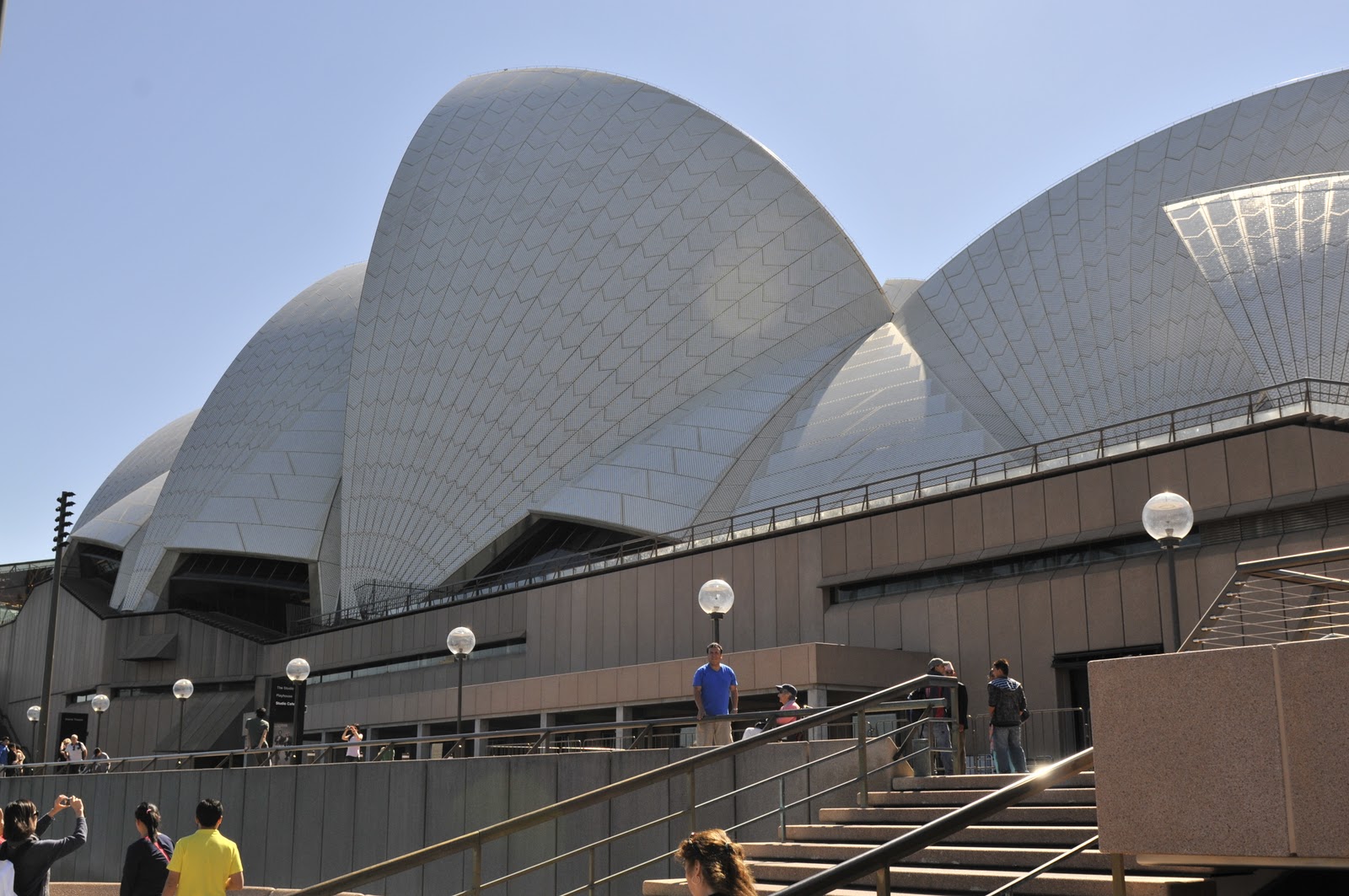
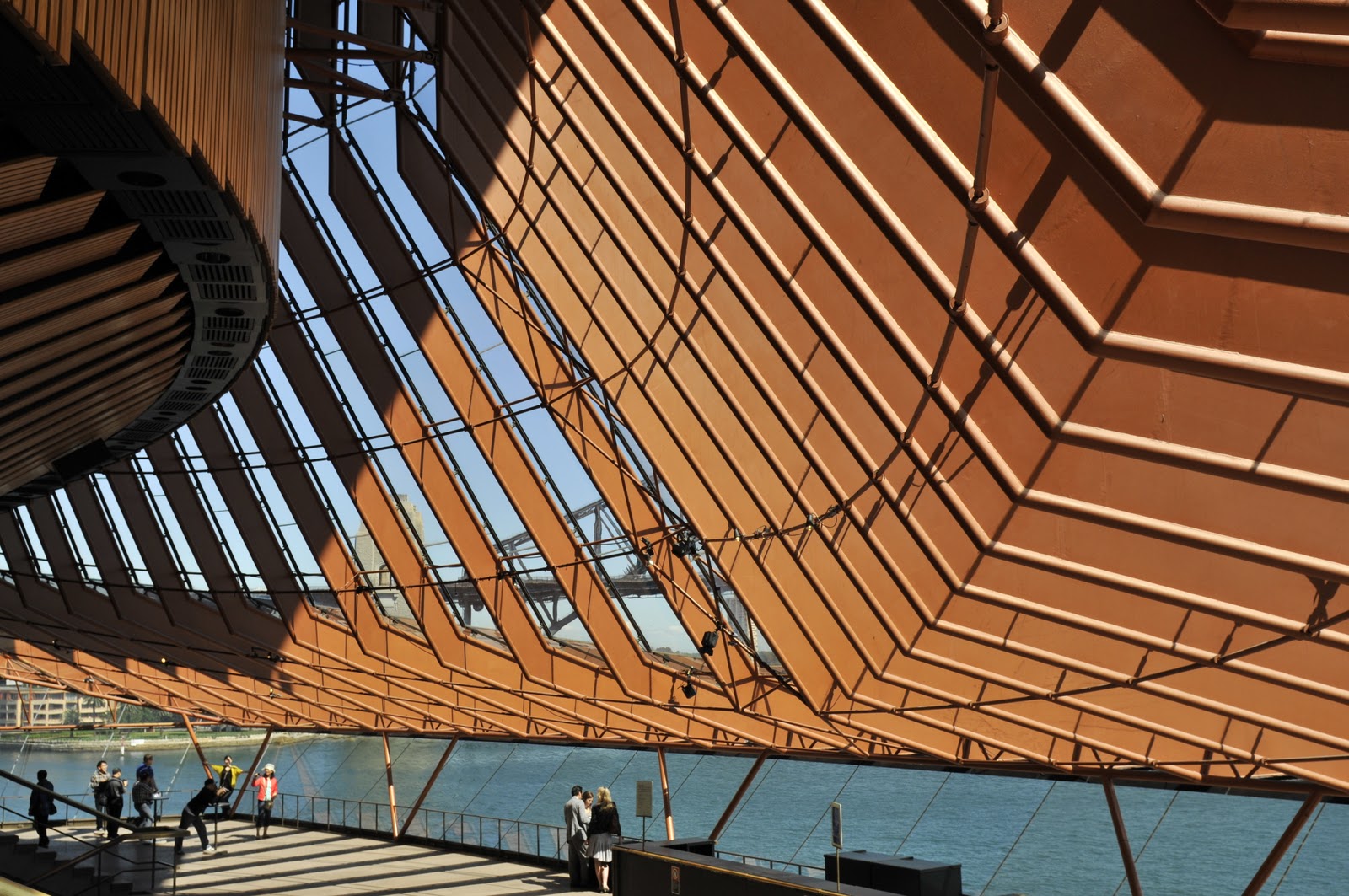
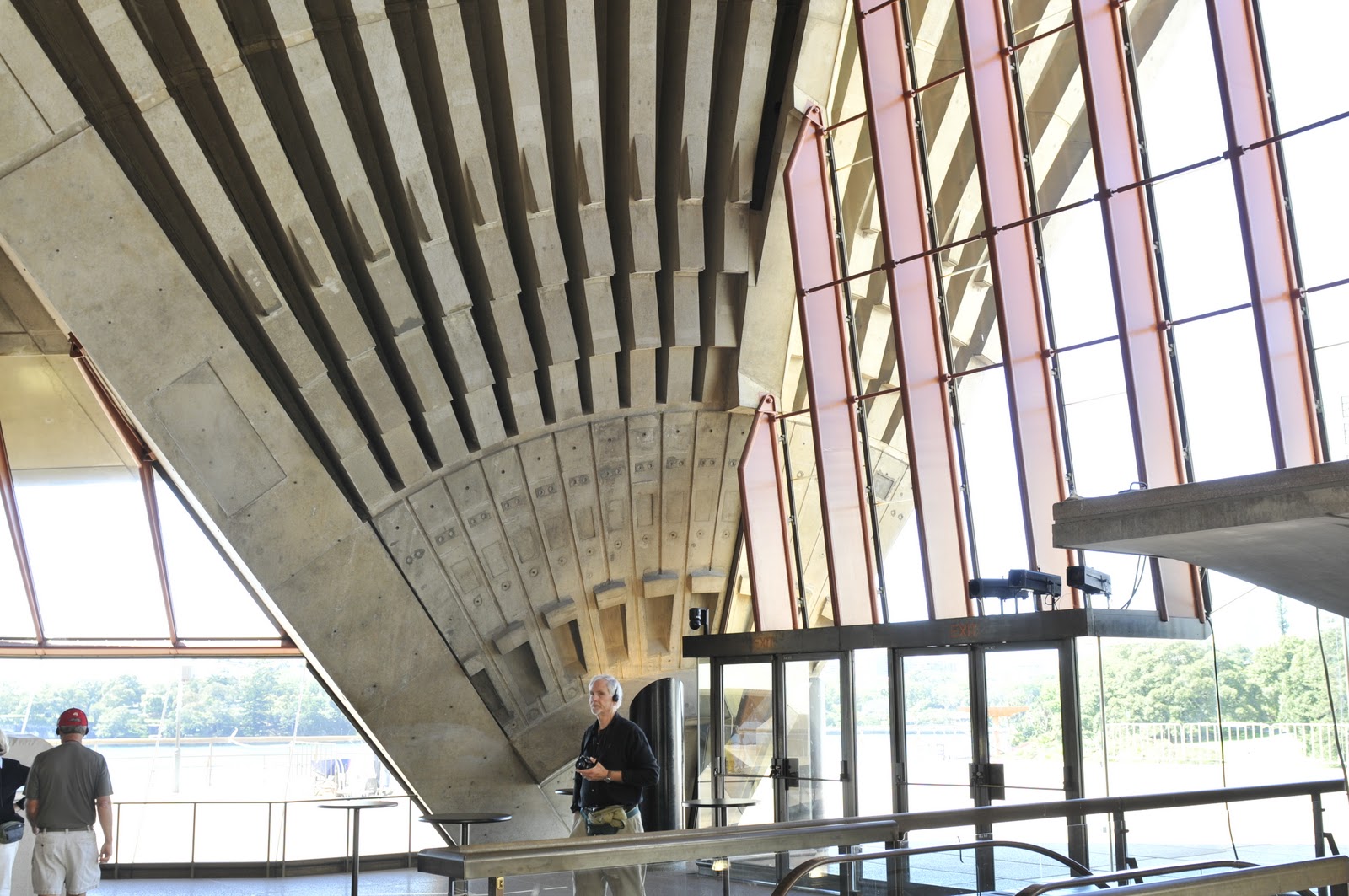
This last day in Sydney is a bit of a hodgepodge. I have a talk and a walk through the Royal Botanical Gardens that last for almost two hours and then we have a one-hour tour of the Sydney Opera House – both of these are excellent and enjoyed by all. About noon there is the potential for a break if people want it. The three images above show some aspects of the Opera House. It is polished concrete and wood inside and ceramic tiles and concrete outside. The design rarely closes in on you, there are always open expanses at the end of each hall or stairway. The long arcs inside are sections of a sphere that were precast and then connected in space. It was impossible to create what the architect wanted on the ground – they tried 16 designs and almost gave up before he thought of this.
Margaret has found an exhibit on the early day – convict labor and the start of the country and she has a sculpture exhibition along a pathway in Bondi Beach. There is at least one person who has signed on to walk over the top of the Sydney Bridge (yes really, $250 or so and very high) and a about four who are heading to the city’s very well done aquarium. So we are scattered over and about the city.
I will make a last visit to the Apple Store (to post a last blog and do emails) and then head into the Royal Botanical Gardens to photograph somer of the birds and bats. We will all reconvene at 5:45pm to head off for our last dinner in Australia. Tomorrow there is a 5am wake-up call that starts us off toward Christchurch, New Zealand. 

Because of the schedule I cannot add to much today – the bridge is the city’s second iconic feature and is walked across at deck level by anyone who wants to, but there are a few that pay for the privilege of walking over the top.
The bird above is a Masked Plover – one of the Vanellus plover Genus, like those of the African plains. This large shorebird is part of the park, garden, cemetery, and gold course scene.
Currawongs (above) and Dusky Gallinules are common parkland birds. There is nothing in North America related to the Currawongs. They are almost crow-sized and have a nice bell-like musical call.

The Dusky Gallinule is a common bird of most wetlands. This one was in a small lily-covered, pond in the botanic gardens.

Sydney is a (nice) City

I am a fan of open spaces and remote vistas. However, I realize that as an animal we humans are very social and city life agrees with something in our nature. That being said, I find few cities to be designed to accommodate the broader array of human associations – cities are designed one piece at a time to solve a specific problem and that doesn’t usually sit well in the bigger picture. Sydney is the same as other cities in most ways; it is not laid out like Salt lake City and doesn’t have the older charm of a Tallin or Prague. But I find Sydney to be OK. There is a great deal of water and that allows for lots of open space, or a feel of open space, so the city never really closes in on you. There are people from all over the world here, especially Asia, and it is vibrant; the foods, the shops, and the ambiance of the city feel rich and young. So, it is a nice city.*

The iconic Opera House of Sydney actually has five different presentation halls and is busy on many levels all year. It is stunning from a distance but a tour of the inside is even more impressive. Design and construction may have ended up at fifteen times original budget but it was a work of new technology as well as a work of art. The rest of the city is a mix of convict-built sandstone buildings from the late 1700’s and 1800’s and modern urban skyscrapers.
* Keep in mind that Australia is part of the South Pacific. The nearest neighbors are Borneo and New Guinea. The biggest trading partners are China, South Korea, and Japan. The school kids learn Chinese and Indonesian in school rather than Spanish and French. This is really Australia not a distant Britain.

William Bligh, Captain Bligh that is, was not only mutinied in the southern oceans, he was later appointed Governor of New South Wales and was later ousted from the position. Lieutenant Cook (Captain Cook later) fared much better, though on his third trip around the world he was killed.  As the map below shows Cook was only in Australia the one time, but he was the first and the most famous visitor. He seemed to have a passion for New Zealand and spent a great deal of time here in the southern Pacific.

The Opera House is quite a bit larger than my head despite what you see above.

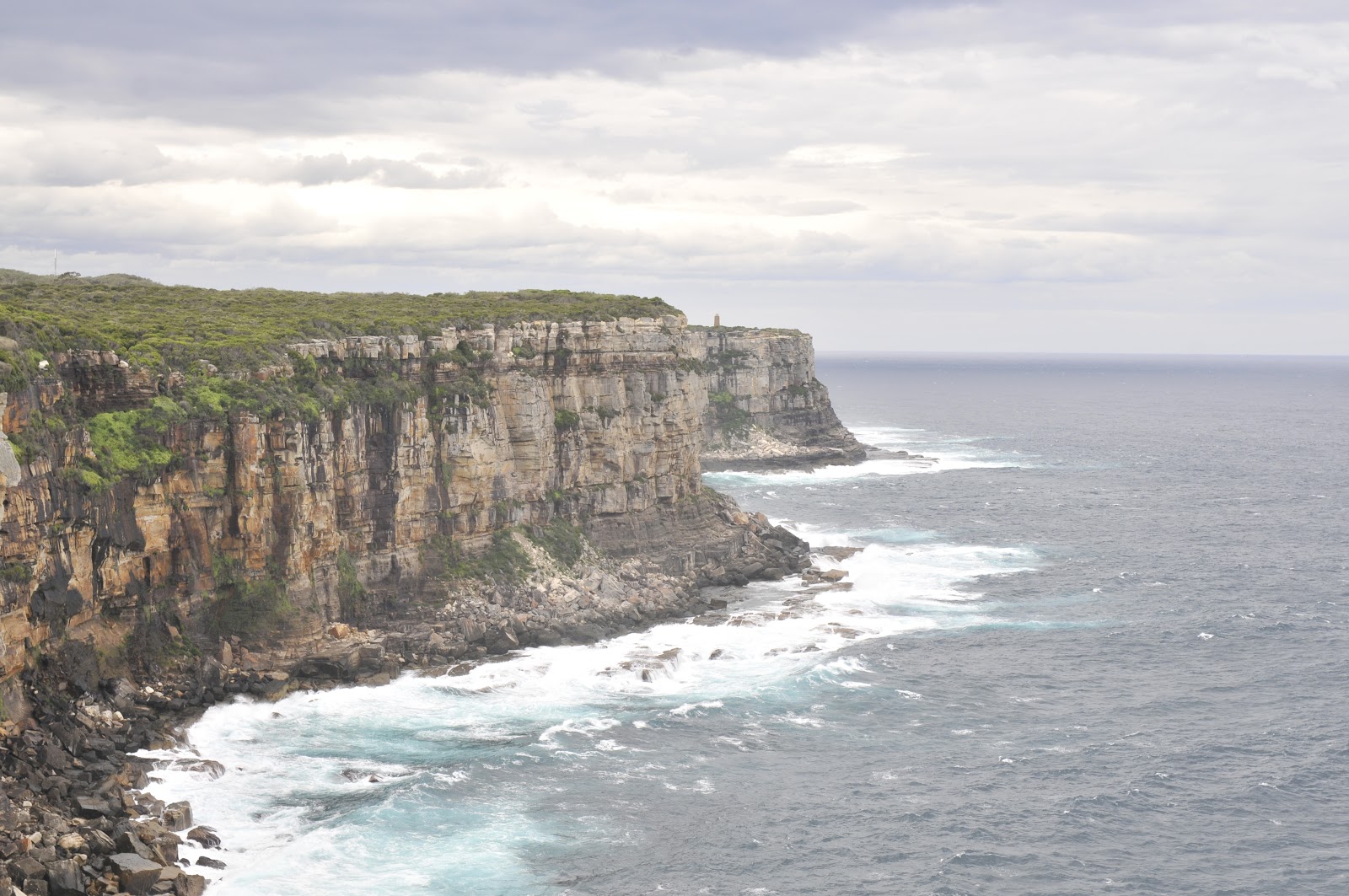
Sydney is a city of harbors; small harbors off medium harbors off larger harbors. There is nothing here but ocean-front property. It is a rather lovely city; both inside the town and in the surrounding area. As I mentioned there are dozens of bays off the major waterway into Sydney and this openness helps abate the clutter of a very urban landscape. The harbor’s outer edges, where it meets the Pacific Ocean (or Tasman Sea) are sandstone cliffs edged with heath habitat and vegetated by tea trees (not drinking tea) and a couple kinds of Banksia. The view below is one of many that can be taken near either north or south head – which frame the mouth of the harbor.

Australian wildlife is generally unique to Australia. The Kangaroos, Wallaroos, Wallabies, Pademelons, and tree kangaroos are all in the same group. There are really only four large kangaroos – the image below is of an Eastern Grey Kangaroo. The baby in the pouch moves around a lot and the view this one is getting is not routine. This baby can get out and hop around on its own easily. The female can have a baby out of the pouch, another in the pouch, and a third (as an embryo) waiting to be “started”. This is an adaptation to the driest times when the young die.

 The koalas that we saw were usually asleep; actually almost all were always asleep and looked like a gray pillow in the tree. This one was being moved and at least looked alive.

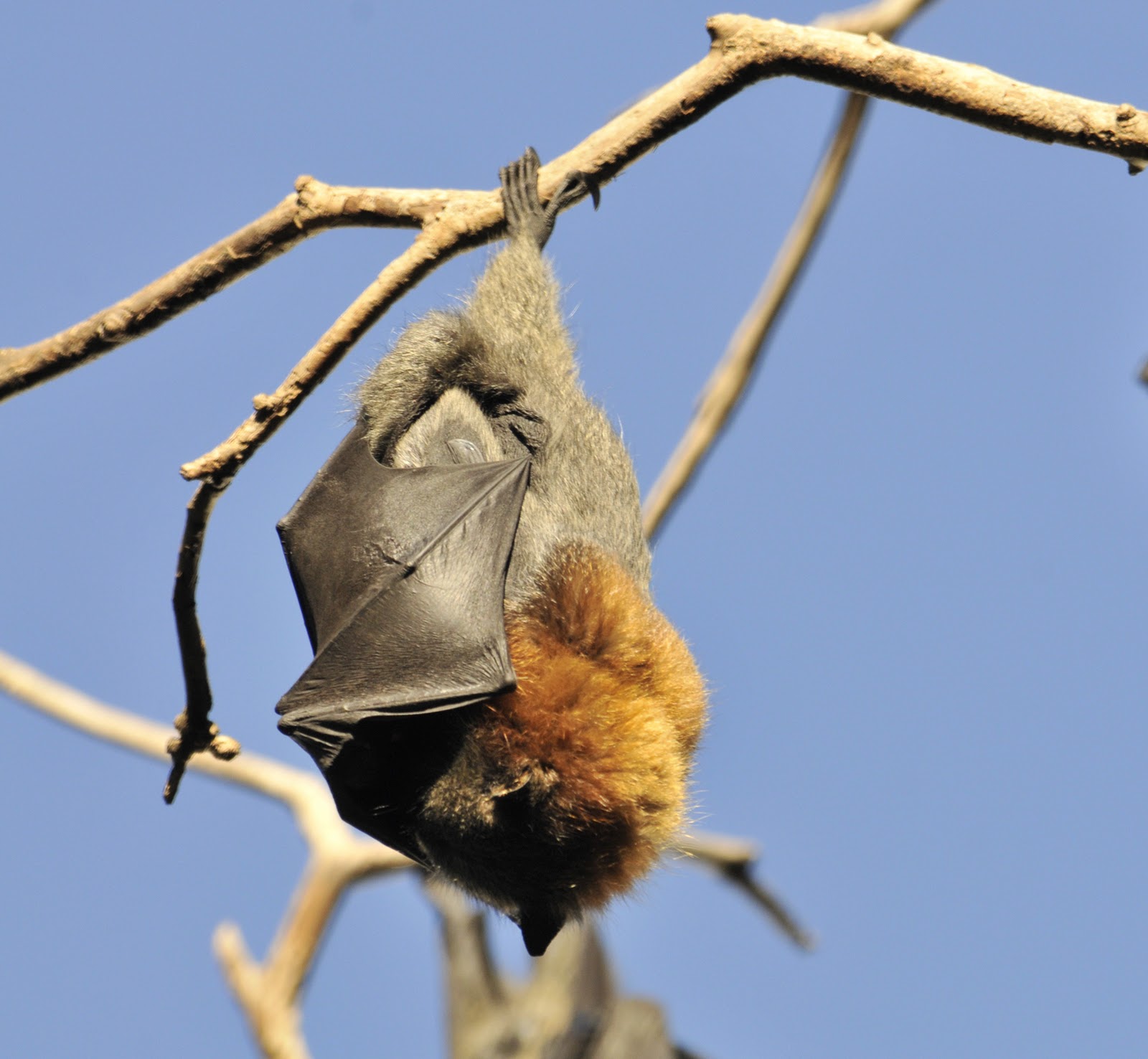
One of my lectures for the Smithsonian Journey travelers is actually a walk in the Royal Botanic Gardens. These 1037 acres are right in town and adjacent to the Opera House and (of course) water. The images below are very typical of what we see as we wander through the greenery. The Sulfur-crested Cockatoos are eating in the grass or flying about, the fruit bats do little during the day except hang around, and the palms provide roosting sites for Royal Spoonbills and many other birds.


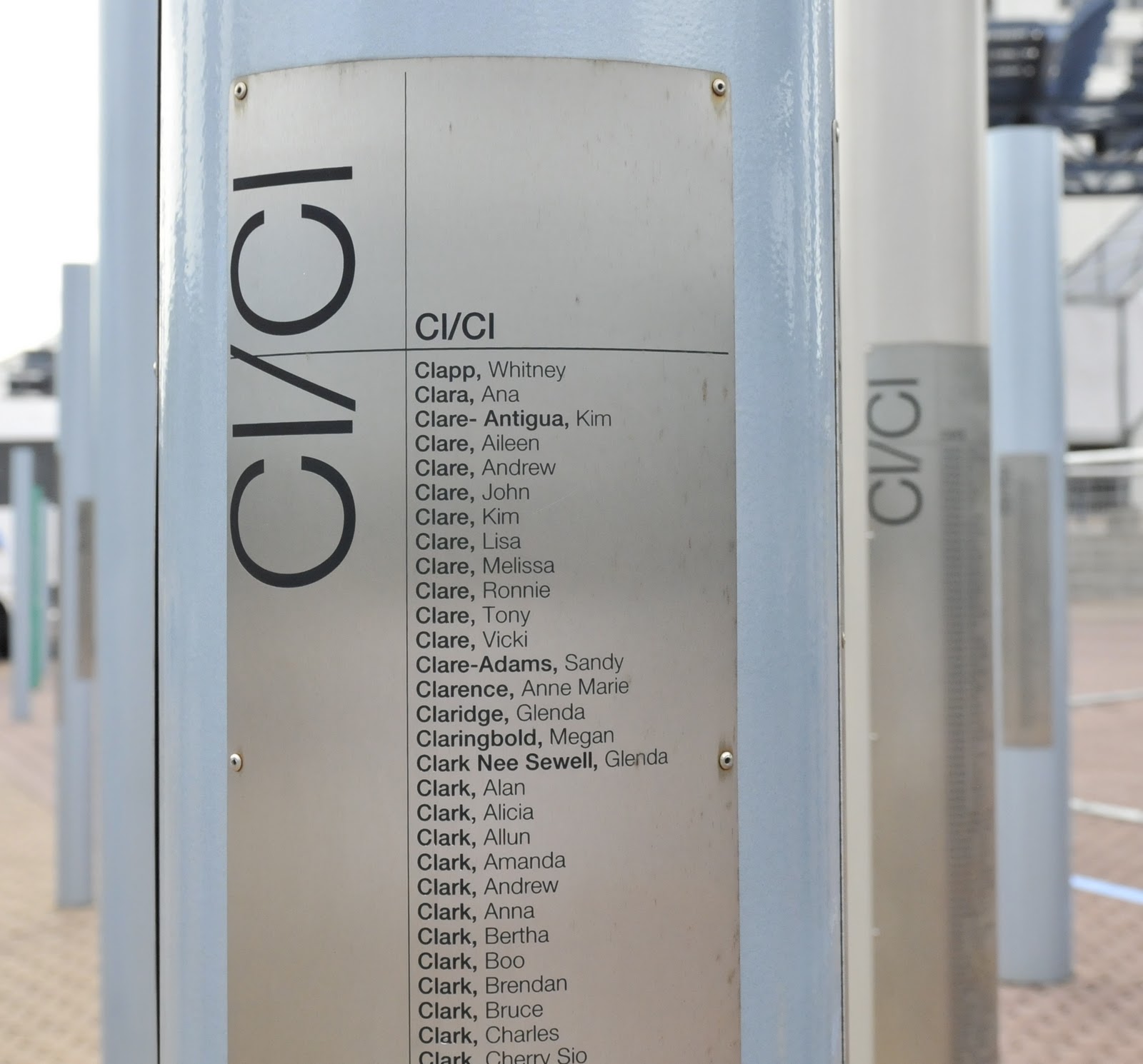
The Olympic Stadium (2000) is still well used. There were 46,000 volunteers involved in the planning and events and they commemorated them with these posts and their engraved names. A very nice gesture and a nice array. There was only the one Clapp.
The beaches along the coast, even the most famous of them, are small by east coast standards. They are rarely two miles in length and are usually crescents bounded by rock heads. Here is Manly Beach (much like Bondi Beach) with surfers, boogey-boarders, and waves lined up and ready to go. The trees along the beach are Norfolk Island Pines! Yes, the same plant we keep in pots.
Well that is probably enough for today. We are off to New Zealand the day after tomorrow (very early) and the last day in Sydney will feature the Royal Botanic Garden outing, a tour of the Opera House, and the choice of several short-term displays and features that Margaret has located. I will probably photograph in the gardens and may post some wildlife tomorrow. Cheers.
PS – I mentioned that I had a snake up in Kuranda the first full day in Cairns – here is a photo of it… still not sure what it is.