Africa; Elephants – teeth and tusks

Please consider all images as copyrighted and contact me for permission to use or reproduce. Thank you, DEC.

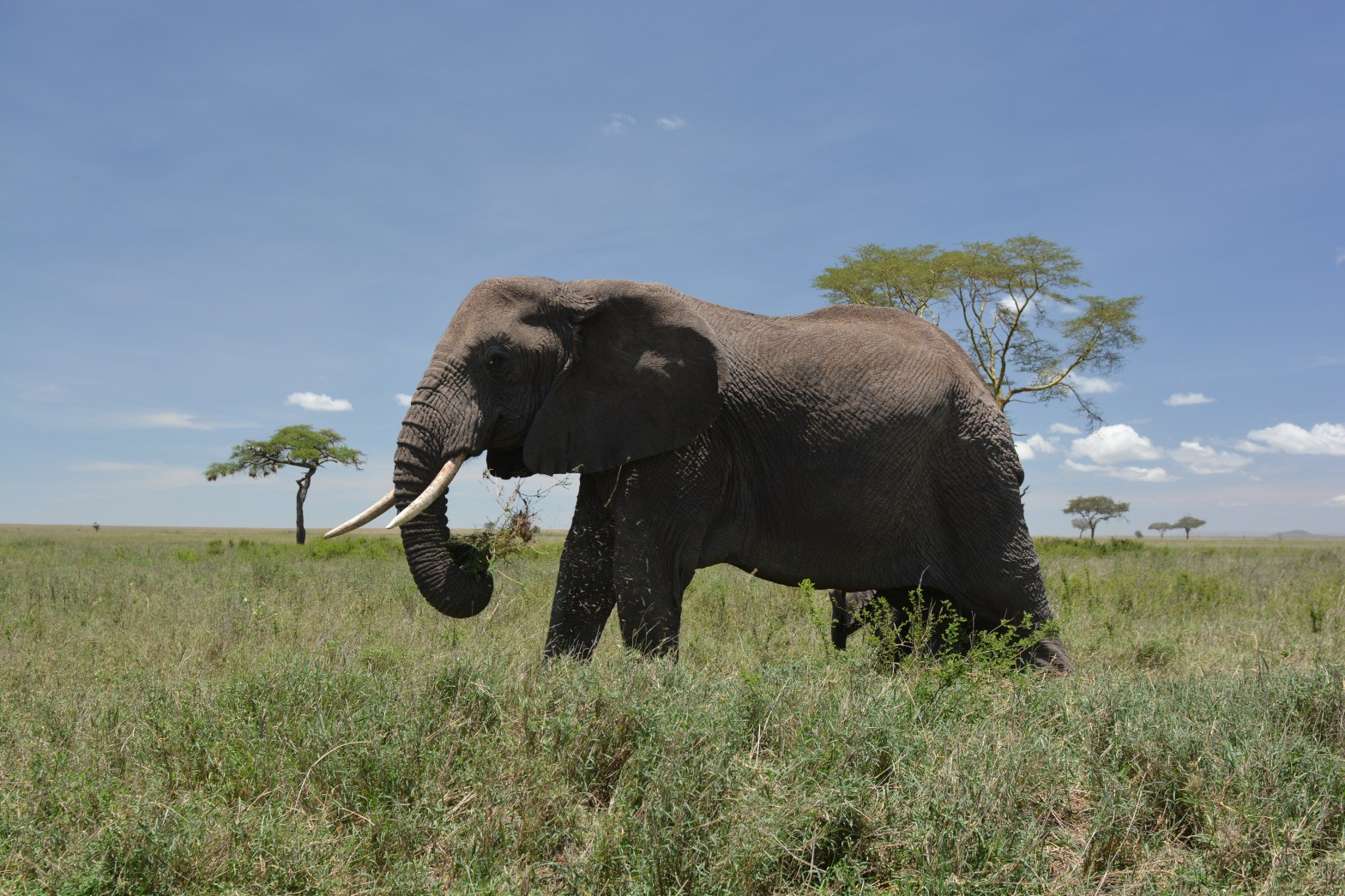
For most of us elephants have only two teeth – the tusks. But they also have a most interesting progression of grinding teeth. Elephants eat branches, twigs, leaves, and clumps of grass. At a minimum the diet is full of cellulose and in fact it is full of dust and dirt. The teeth are sandpapered away by the constant chewing of gritty food stuffs. An adult elephant will eat 300-600 pounds of vegetation each day – depending on the age and sex (relating to size) of the animal. A body that can weigh eight tons requires a great deal of input and provide a great deal of “output”. Wild elephants are never far from water and add about 30-50 gallons of water a day to the foods they take in.DSC_8662
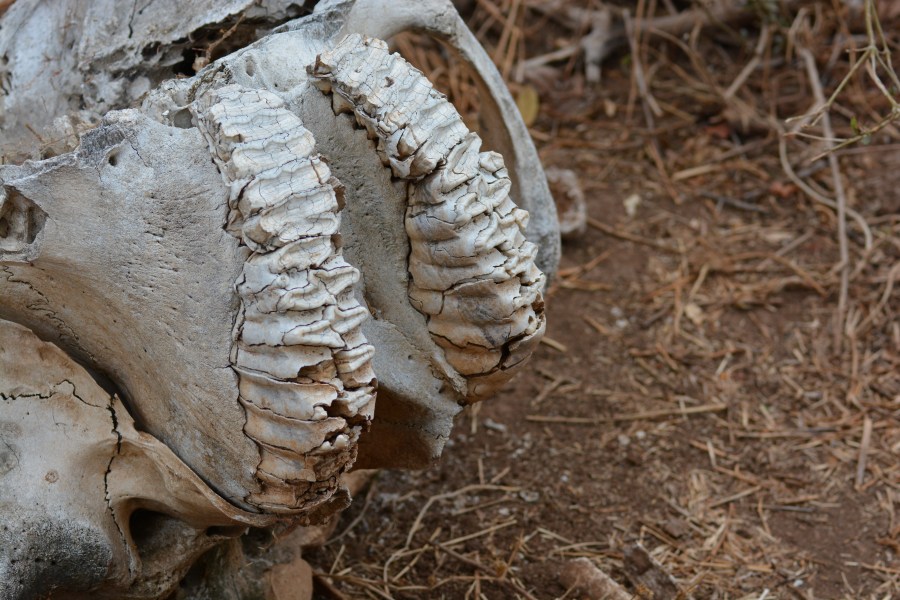
When young elephants don’t really need teeth; they are mammals and they nurse from their mothers. But young elephants do get teeth as do young humans. These first set of teeth are not very important as the baby is mostly nursing. During its young life, while nursing still, they have that one set of teeth. For an elephant that is four teeth at a time, all molar-like; with one up and one down on each side of the mouth. There are no teeth in the front of the jaw either up or down (the trunk puts food back in the mouth and the lower lip is a bit prehensile as well. The first four teeth last a couple of years and a second set replaces them and lasts until the animal is about five-six years old. A third set is in place for another few years after that and the elephant first gets “real” molars in its young teen years. These teeth are deigned to last longer than those “baby” sets. The fourth set will be in place until the animal is about 25 years old. A fifth set until maybe forty and the sixth (and last) set will wear out very late in the elephants life. As a matter of fact the loss of these last four teeth (still just 2 upper and 2 lower molars) will cause the animal to develop a diet that is unsustainable and will eventually cause its death. The teeth of an elephant do not drop out and then rebuild from the jaw upward, rather they start in the rear of the mouth and move forward pushing the older teeth forward and finally off the jaw. So, four molars at a time with six sets in a lifetime equals 24 teeth overall plus two incisor teeth — those tusks.

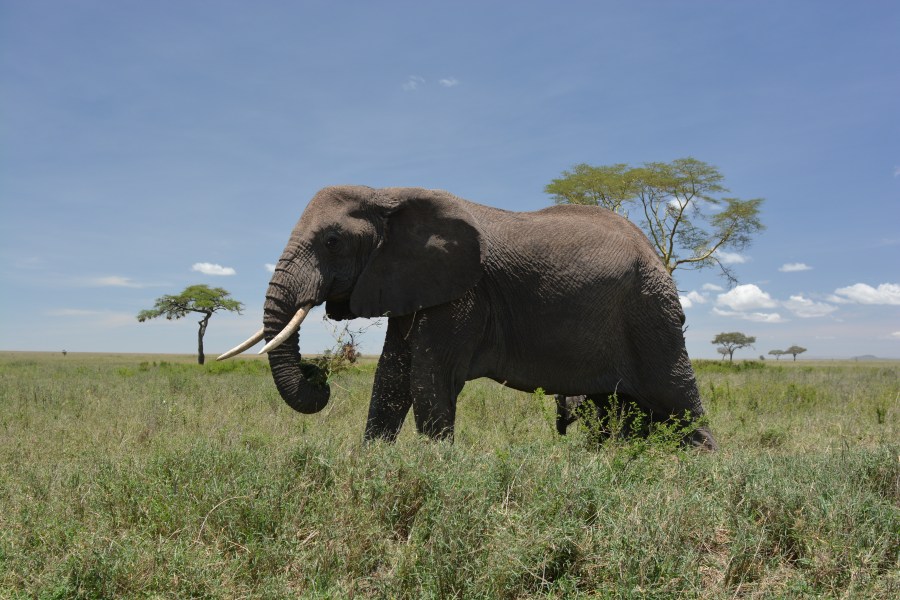
Tusks are not canine teeth though they are pointy. Canines are those sharp teeth that we have,and carnivores have, at the front “corners” of our upper and lower jaw. Your dog or cat has hunting teeth – canines and carnassials. Elephants do have long pointy teeth, two of them, but they are the upper incisor teeth; the ones you use to eat corn off the cob. We have eight incisors, four up and four down, but the elephant has only two; if that. The tusks have made the elephant a creature of great majesty, interest, and value. When considered from a human perspective the meat has had some, but little, value over the centuries and the skin has had no value; but those tusks are worth their weight in gold. The outer layer of enamel wears off when the tusk is very young and the outer, dentine or ivory, layer grows throughout the animal’s life. African elephants, both male and female can have tusks. In the past decade some 60% of the African elephants in Tanzania have been poached/killed for their ivory. And maybe 30% of elephants overall. South Africa with well staffed parks and anti-poaching patrols now has about 70% of the world’s wild elephants. This carnage has resulted in a couple obvious changes; 1) there are very few large tusked elephants left, and 2) those elephant families with “tuskless” genes are in increasing in numbers. The largest tusks are now often quite thin and may reach 100 pounds in weight which is about half the weight that the big old tuskers used to carry. Tusks are used to dig up mineral rich earth to aid in the diet. They also dig for water and roots and use the trunk to peel bark off trees. They are used as a resting place for the trunk and protect that trunk from outside damage. And yes, the tusks are used in fighting and defense though the massive body and legs and the very mobile trunk are the real weapons an elephant carries.

Tuskless elephants may be safer from poaching but long droughts which require the eating of branches and bark may impact the more that elephants with tusks. The future is not predictable but elephants may suffer from a mix of climate-induced habitat change and the loss of tusks. They can still break off branches and knock down trees so the impact may be seen through changes in the wooded savannahs and other treed areas.

There is on last thing to mention: the elephant graveyard. It was said by many that old elephants went to a location to die. These places were full of ivory and bones. Well, it never happened — but it happened all the time! How can that be? It is fairly simple; the elephants teeth wore down and they were unable to eat the usual coarse diet of grasses and branches. So, they moved to wetland edges where there was softer, moister, and copious vegetation. It was here that they eventually died. So, after hundreds of years there were places with lots of bones and ivory. But it wasn’t a graveyard it was a retirement community where life lasted longer for these aging toothless beasts.
elephant
Elephants need time and space as well as food and water in order to survive; especially time. They pass information onward to the young, they have great memories, and they are very adaptable. However they are very severely impacted by human greed and lack of consideration.


Africa; Elephants – family life

Please consider all images as copyrighted; please contact me for permission to use these pictures.
I will be doing at least five pages on elephants (family, teeth and tusks, human interactions, water, and simply their majesty) over the next few days. This will likely open the door to many questions about other African animals and ecosystems which may or may not be answered over the next few months. Stayed tuned for more on African cats, antelope, birds, reptiles, and more.

Elephants are big, very big. A large male will weigh well over than six tons (to 13,800 lbs or 6,300 kg; which equals about seventy 200-pound humans). Females can approach four tons in weight. Males can be over twelve feet high at the shoulder. Their great size, tusks, trunk, and large ears make them unlikely to be confused with any other animal even at a great distance. They are gray overall in most cases though the skin tones are set by melanin and will vary from pale gray and brown to nearly charcoal; though the primary color that they show often represents the soil and dust of the area rather than the pigmentation of the individual. Many elephants show pinkish splotches of poorly pigmented skin. They are quite hairy when born but show hair on the tail, chin, eyelashes, and trunk as they age. Not all mammal taxonomists will say that there are two species of elephant (pygmy/forest and African/bush) but all do agree that this animal can easily establish habitat-specific variations that show in a number of “populations”. They are quite plastic in an evolutionary sense but have remained “elephant” despite these adjustments.

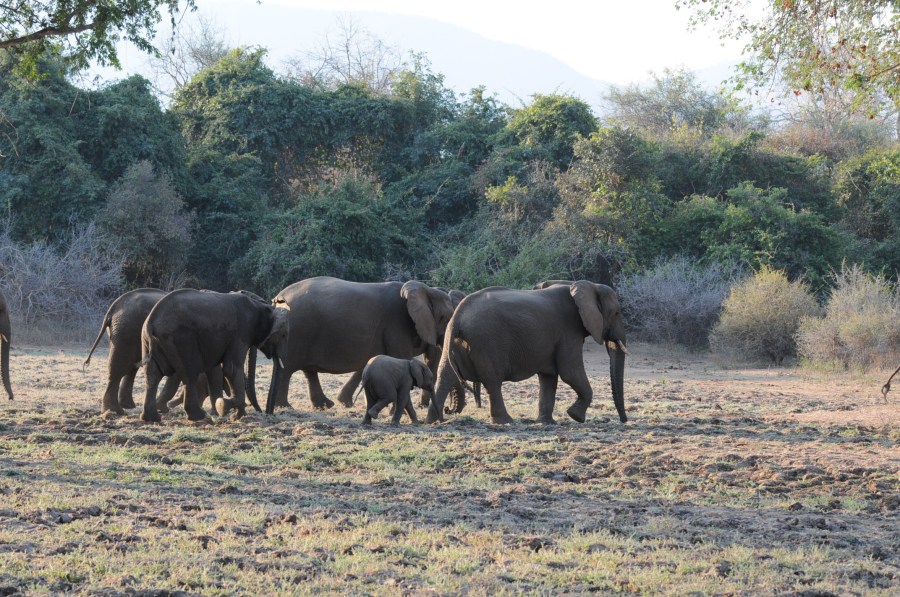
In the images below you can see that young elephants are relatively small, tuskless, and seemingly unable to control their ears and trunks. They are cute and a bit goofy. They are always with a trusted family member; usually the mother but occasional an older sister or a younger aunt. Elephants are very touchy-feely. Youngsters are surrounded by family as they rest, feed, walk, or wander. They have the ultimate helicopter family. The small elephants are often a bit independent but only within the circle of their ever watchful family/clan/group.

The family is matriarchal – momma rules! The females will have their first youngster when they are (at least) 8 years of age, though some females will be twice that age before their first baby. After the first youngster the females will become fertile (heat or estrus) every 3-9 years. Once a female has a baby she starts on her on journey as a matriarch. The young female is likely to have stayed with her own mother, closely with her mother, during her ten years of childhood. Once the daughter has her own baby she will be the mother and matriarch to the baby. But she will usually remain attached to her own mother as well. Thus the group grows and grows; sisters and cousins, mothers and aunties all together with a range of youngsters. There are conditions during which the families will split up and seek food and water on their own, but there are also times where the smaller family units will unite and reestablish relationships. A bit like a holiday reunion for us.

The young are born after a gestation period of about 20-22 months and will be nursed for just under two years before they master the browsing techniques that the adults use. Most females lactate for at least four years and the young take advantage of this opportunity less and less as time passes. They can survive on browse (thorns, leaves, bark, twigs, wood for the adults but mostly grasses, buds, and leaves for the young) before they are two years old but will nurse as long as the female allows it. Some females, especially those with 3-5 year birth cycles, may lactate most of their adult life.

Most any group of elephants will have smaller ones inside the outer perimeter. In most cases there are no enemies threatening these large animals and the youngsters are given whatever freedom they want. But, within the female-based group there is a great deal of communication and the females are aware even if the youngster wanders off a short distance. They use infra-sound to keep track of what’s happening. This is also the kind of sound a receptive female will emit to announce her condition to area males. This “rumbling” wasn’t identified as communication until the mid 1980’s.

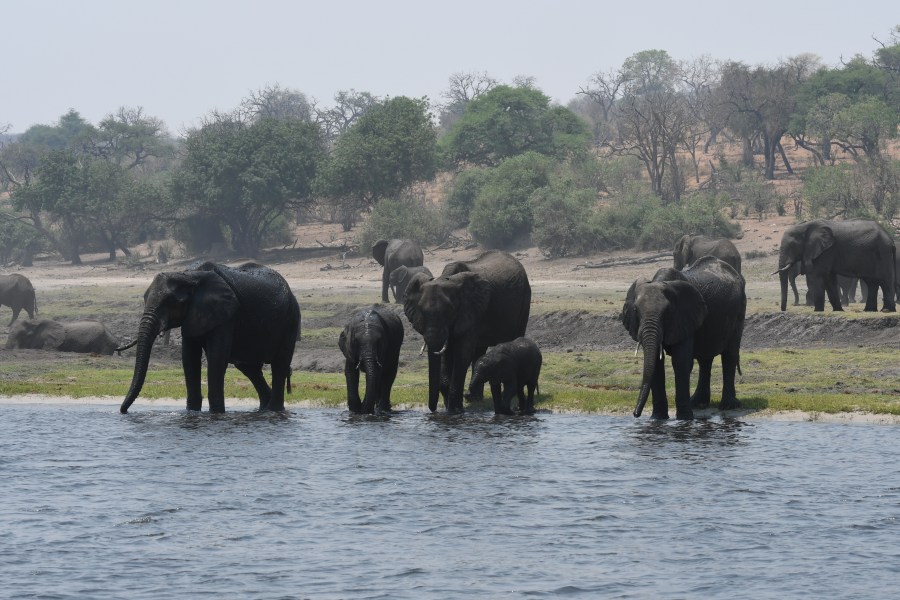
In the image above there are elephants with different shoulder heights in three of the pics. These are often animals that are related and were born about 4-5 years apart. This is typically how a family grows. The young males (middle picture, lower row) are often urged to leave the matriarchal group when they are between 9-12 years old. This is the age of elephant puberty and though they are still very low on the testosterone totem pole they do become a nuisance amongst the family of ladies and children. So, as they rough-house and react to females in heat they are chased off to fend for themselves. Males don’t form large associations but smaller groups are not uncommon. Often an older male will “train” a youngster in the ways of masculinity. In South Africa there is a park named Hluhluwe (“shhla-shlewee” in Zulu, which is the name of a thorny “climber” vine) (actually the park is now called iMfolozi) where elephants were transplanted. The elephants were brought in originally in non-family groups and the young males, with no older male leadership, became delinquents and marauders and killed several of the white rhinos in the park. It seems that young males, even away from their family, continue their education and development under the guidance of older animals.

DSC_5327
As mentioned, most any group of elephants shows a variety of sizes. The youngster in the middle is about a year old probably; certainly over six months. Baby elephants can walk under the mother’s belly until they are about six months old.
DSC_3420
Groups of elephants can be unraveled and identified as to relationships when watched over a long period of time. In the short bursts that we, as safari-tourists, have  with them it is sometimes difficult to figure them out. But, it is always rather easy to see the size/age differences and the affinity that youngsters have for their mother. Lining up at a river, lake, or water hole offers a good chance to see how they sort themselves out.

New Zealand; limestone cave

New Zealand has been under the sea for millions of years during the past eons. It is up and down based on the pressure being applied to the edges of the continental plates of which it is part. Actually New Zealand is at a junction of two plates and it slides, bumps, jumps, and changes its elevation over time. Mountains are being built on New Zealand’s west coast (South Island) as you read this page and those same mountains are being eroded away at an equal speed. There are dozens, if not hundreds, of earthquakes every day. It is a geologically exciting place to live but perhaps not a great place to display a collection of fine China.

The undersea portion of New Zealand’s existence has allowed for the formation of a great deal of lime-based rock. The ocean oozes shells and calcium rich bits that form layer upon layer on the ocean floor. The layers reach a certain weight and undergo a chemical and physical change. This divides the build-up of ooze into what look like separately formed layers of calcium carbonate (the mineral calcite). Some day, millions of years in the future, those “layers” are/will be lifted above sea level. Being a rather wet part of the world these limestone edifices are rained on a great deal. The fresh water seeps down into the myriad of cracks and through the layers of calcite eroding the limestone and carrying off an aqueous solution rich in calcium. Picture that happening for tens of thousands of years and you have a subterranean cave. New Zealand has  miles and miles of such caves. The drips will sometimes evaporate before dripping – this leaves behind the calcium which can create a structure on the walls or ceiling of the cave.

IMG_1901
Many of these limestone caves still have running water in them and these have sometimes been turned into tourist attractions. Rafting and walking through these caves is big business. The image above shows the scope of the Ruakuri Cave. There is a very safe and modern (and environmentally sensitive)  walkway at the base and motion-sensitive lights. It is a wonderful visit. the lower part of the image shows the blurry group walking ahead and to the right. The “layers” or seabed sediments show well in the middle center.
IMG_1904 2
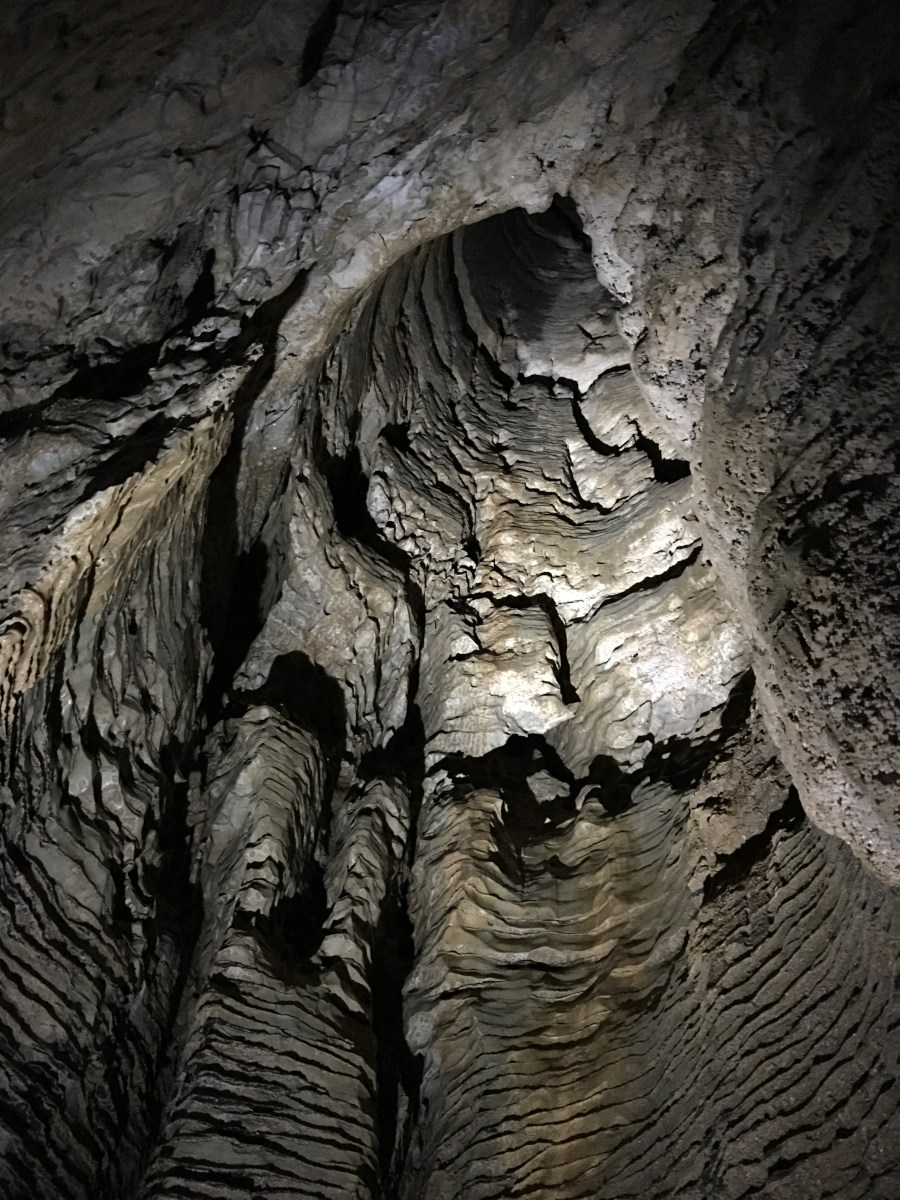
Most of the cave was formed by water running laterally along cracks between the layers. However, there are a few places where the cave has collapsed creating an amphitheatre and other place with chimneys reaching up into the darkness.
IMG_1894
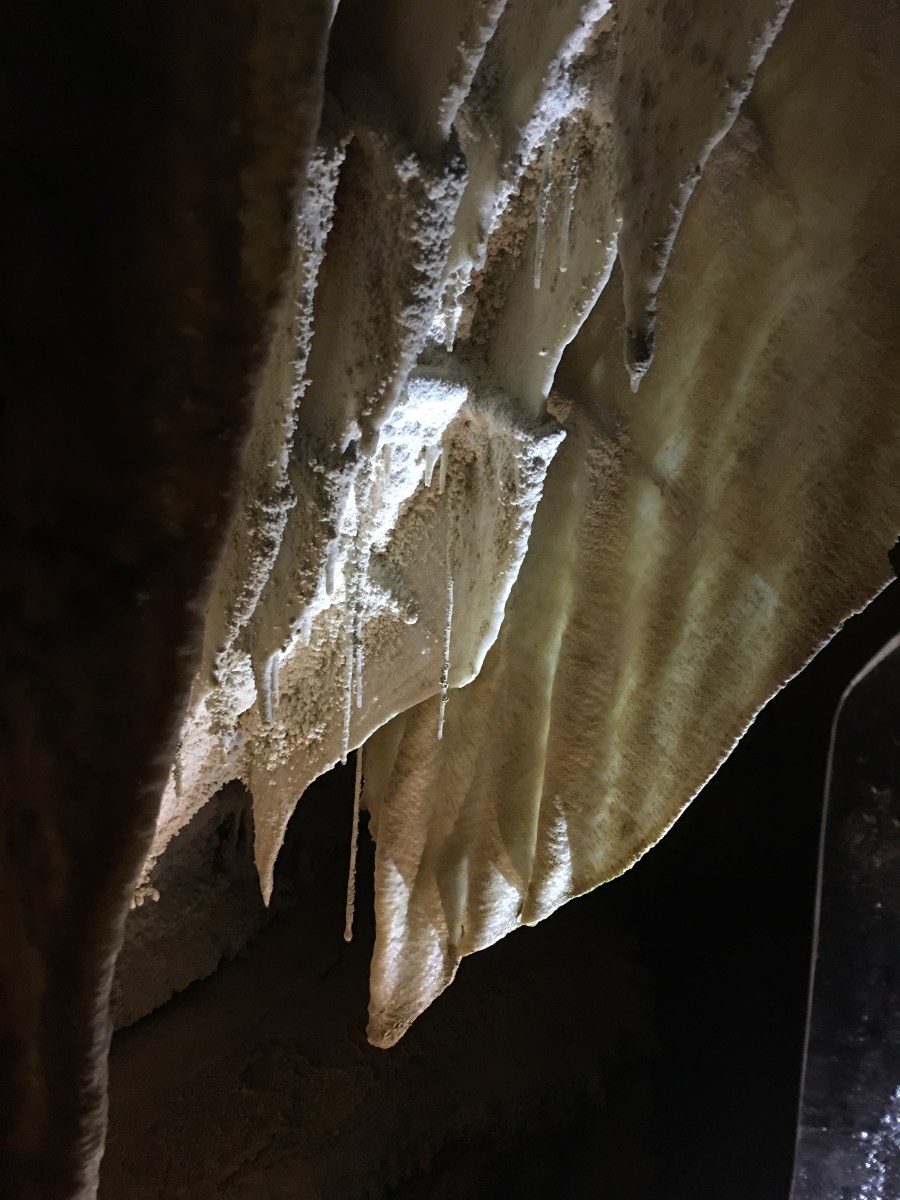
There are thousands of stalactites in the Ruakuri Cave. There is also good representation of “coral”, “curtains”, and stalagmites. One of the few animals in the cave is the Glow Worm. This is a small insect (actually a fungus gnat, a Diptera which includes what we call flies?
IMG_1862
Before looking at the glow-worm a bit closer here is a nice “curtain” with tiny stalactites growing, drawn by gravity, from it.
IMG_1880
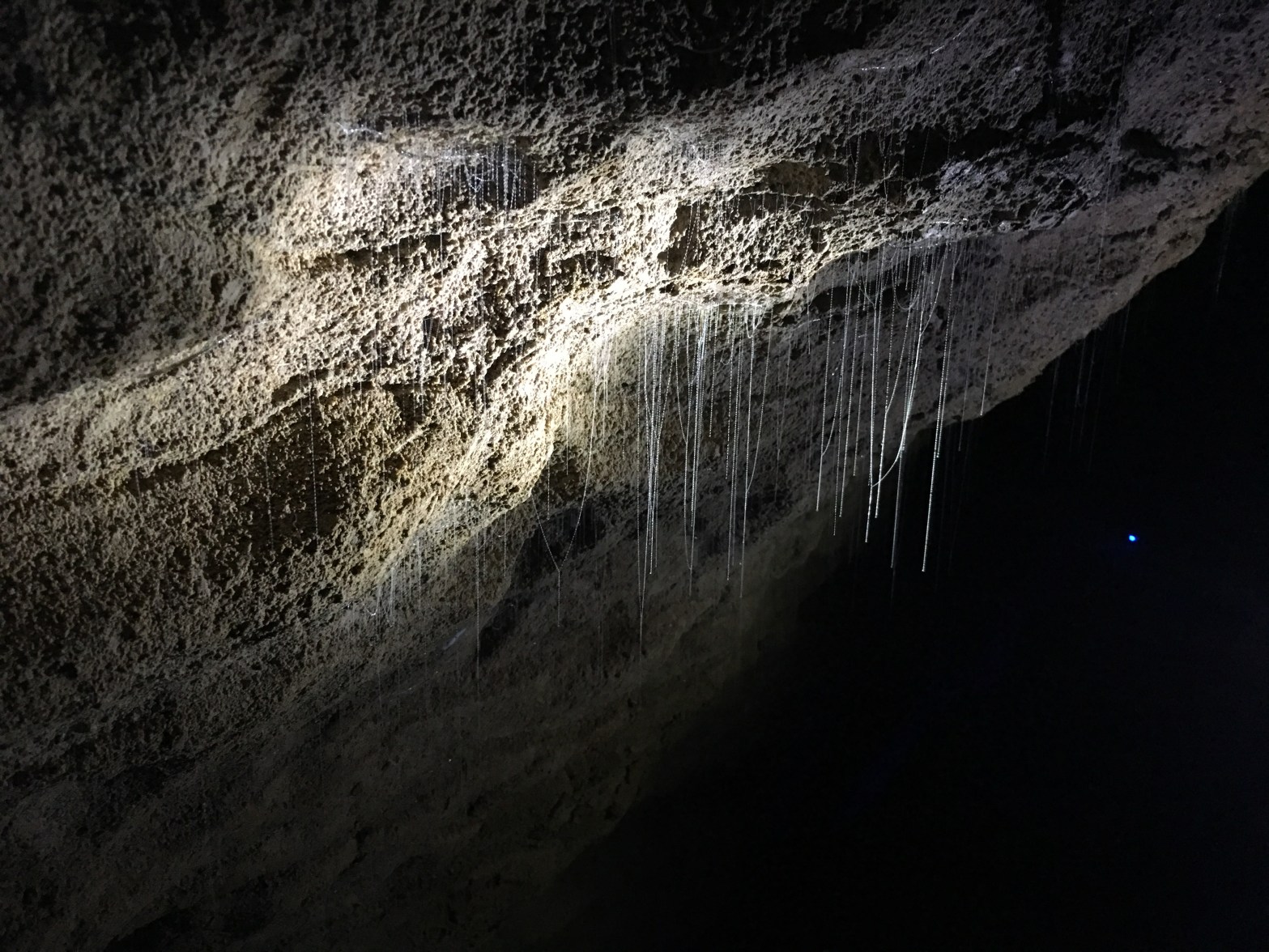
I have dozens of images of the glow-worm snares. They all look pretty much like this. It is pitch black in the caves and we don’t bother the larva too much with lights. So I take what I can. I have had pretty good luck with an iPhone rather that an expensive Nikon; however if I had a quiet time in the cave with a chance for long exposures I’d try again with the Nikon. These snares are gooey and hand down from the hammock in which the glow-worm larva. resides. Pretty cushy life but not much in the way of food. When, and if, some tiny insect flies into the cave and is drawn toward the “stars” that are actually bioluminescent glow worm larva and then gets entangled in a snare it is drawn upward and eaten by the larva. They shed several times and eventually pupate. The adults emerge and the females will lay a few hundred eggs, in bunches of about 40, and then she dies. The male dies after mating. Neither adult feeds. In the darkness of the cave the glowing larva, pupa, and adults can look like a beautiful starry night. The Maori people named them after the reflection of their glow in the cave waters below.


Alaska; Homer the Town

Alaska has few towns and almost no towns that are like we are used to in the lower forty-eight. Anchorage is a city. Fairbanks is a small city, Juneau is a small island tourist town. Then there are the string of towns between Anchorage and Fairbanks; Palmer, Wasilla, Talkeetna, and Healy. There are a few more as you head south into the Kenai from Anchorage; Seward, Whittier, Girdwood, Soldotna, and then at the end of the road Homer. Small towns are what you find. There are more towns, prosperous towns actually, along our share of the Canadian coastline (Southeast Alaska). It is in the roadless coast forests that Sitka, Ketchikan, Haines, Skagway, Petersburg, Wrangell, and the state capital Juneau are located. These smallish cities have been made economically viable by either lumber (not so much now) and fishing for both crabs and fish. This post will give you a look at the Kenai area and Homer specifically. It is just a bit of show and tell. From a birdwatchers’ perspective Homer really shines in early May when the northward migration of sandpipers and others is in full swing. But, there are always moose, marine mammals, eagles, and Alaskan forest birds.

00045_s_r16anxmreee0045
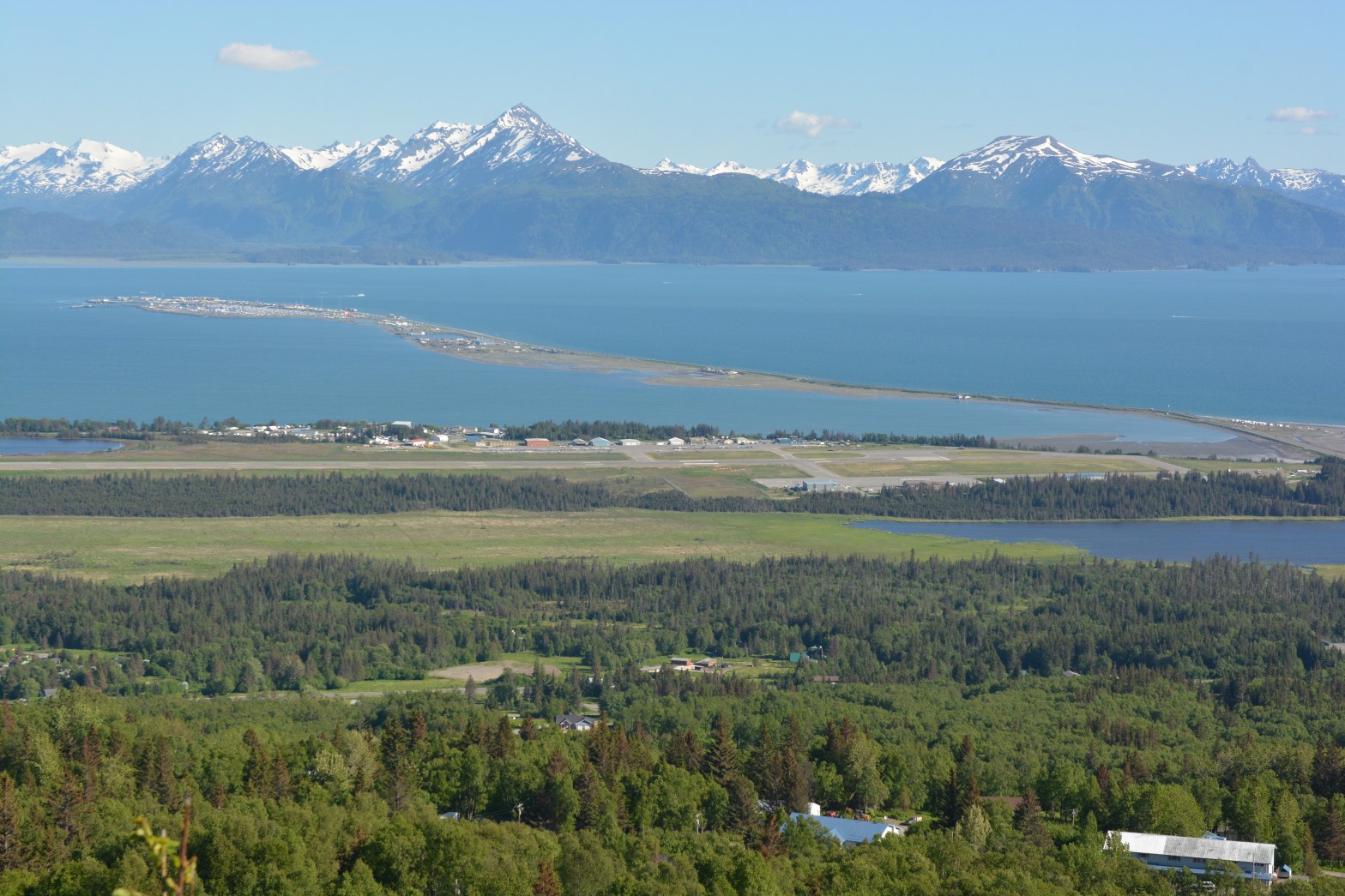
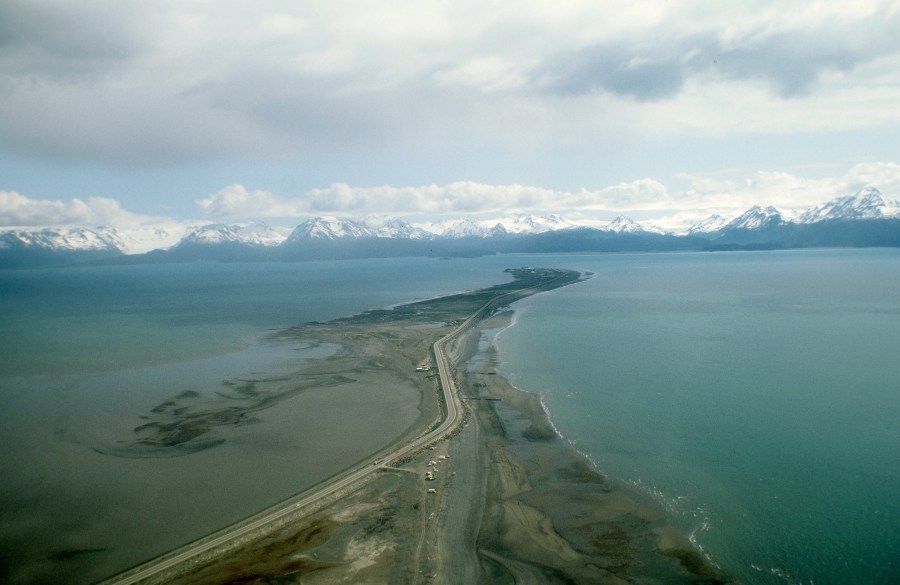
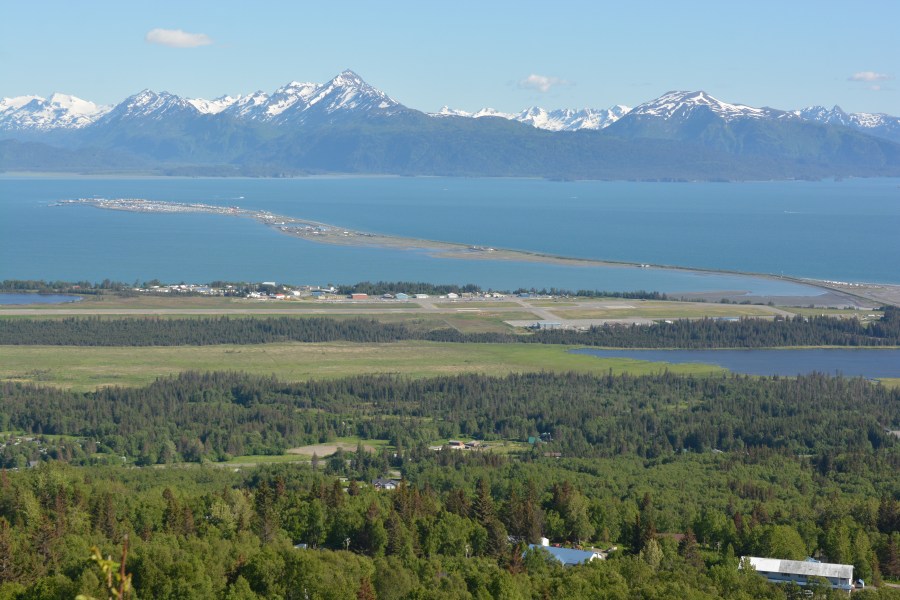
The Homer Spit is pretty much free of vegetation and several miles long as it reaches out into the salt water. There can be tents and campers anywhere along the first half and the outer half is where the shops and eating places are. The outer area is also where the charter and fishing boats are docked. The mountains are in sight from almost every vantage point. There is always a good view to be had. A picture of the boat harbor is in the post titled: Alaska: A Boat Ride Out of Homer.

The salmon start running in early June and the various species run through the summer into September. The King Salmon are first and highly sought after. The spawning fish have the red flesh and the non-spawners have meat that is quite white. The roe is also a treasure of the sea. This fellow was very happy to have two fish with the bright red “caviar”. He talked about how many ways he would enjoy it….I didn’t get to taste it but typically the eggs are oily and fishy tasting – a delicacy for some but certainly not all.

Alaska is a nature paradise. It is not for many people, perhaps most people. It is very outdoorsy and the blood sports (hunting and fishing) predominate. The towns protect habitat with vigor. It is interesting to see a state with tens of thousands of acres of park creating small reserves in town, but they do. The sign for the “Kachemak Bay Birding Hot Spot” was jus one of many notices announcing a bit of protected land, or a research site, or an overlook where something (beluga whales or birds for instance) might be enjoyed. The right hand image is of a huge pile of spruce cone scales with a smaller pile of collected cones on the left. Red Squirrels dismember the cones and eat the seeds that are under each scale – think pine cone…

I know that I have put out a lot of stuff on the Kenai and Homer and the landscape. This will the last one of that sort…I’ll be moving into Denali National Park with the few posts. So get ready for long distance blurry and rainy (and grainy) images of wolves and of course more mountain vistas. But here are three last images from the warm and coastal edge of southern Central Alaska. At some point I will do a couple more on the wet forest and island of the southeast.


DSC_2848
Another view of the Homer Spit looking out over the local airport.
DSC_3307
And another view over the bay to the mountains at the base of the Aleutian Chain. The tall one is Iliamna (again, yes I know).


DSC_2841
This is an area that has been undeveloped because in the winter when the snows blanket the hills lots of moose descend into the “city limits” and browse in this area. Willows and alders are nipped and eaten in the winter and then regrow each summer with new bushy foliage. The moose prune each year which encourages the new growth.

Cape Cod; banding Red Knots

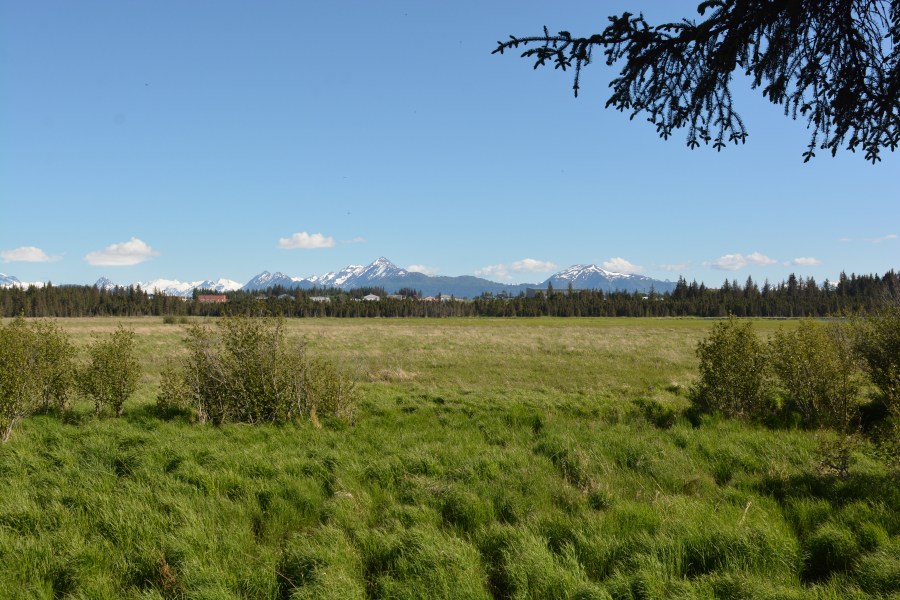
Cape Cod is changing daily. Each tide moves thousands of cubic yards of sand and each storm makes your map even more useless. Barrier beaches protect much of the coast but they are also coming and going almost daily. Chatham is the town at the elbow of the Cape. From here you go east into the Atlantic or south into Nantucket Sound. The actual corner has a great deal of sand around it; there are shoals, bars, beaches, and barriers. There is one new beach that is already several miles long and there are many places where even shallow-draft boats can no longer travel. The fishing fleet is always on the move to avoid sand and low tide blockages.

But is still is a pretty good place for the migration of shorebirds (waders, sandpipers, plovers, godwits, turnstones, knots and more) to be observed and the species tallied. There is a U.S. Fish and Wildlife building on this corner and they are involved in managing and understating that Monomoy National Wildlife Refuge, a wilderness area. There is a tern colony of over ten thousand pairs here and the threatened Red Knot passes along this coast in reasonable numbers. The numbers are reasonable when seen as a percentage of the total population but the number are dramatically lower than twenty years ago – dramatically.

DSC_1494
The boat ride can be easily half-an-hour to the potential banding site. We ferry equipment and people over the first couple hours.
DSC_1551
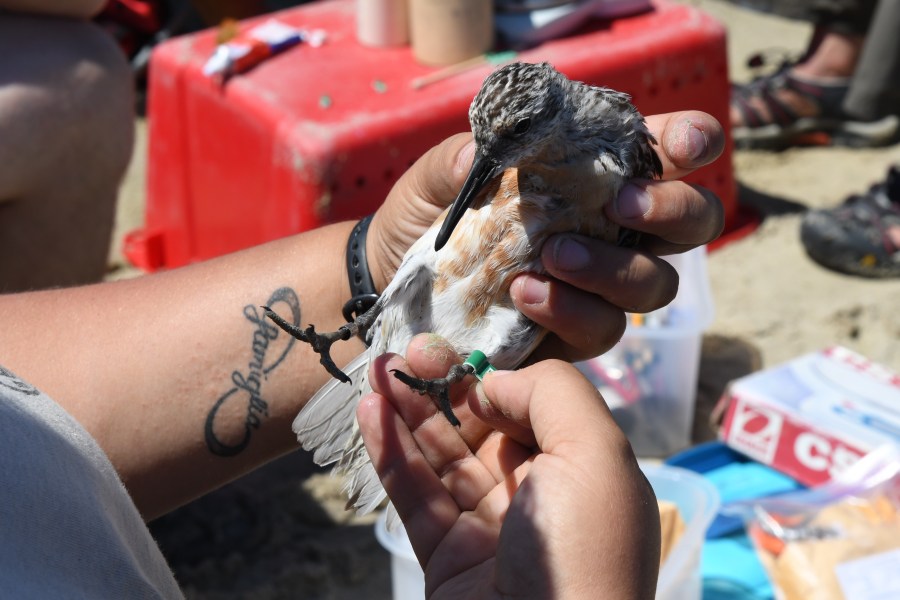
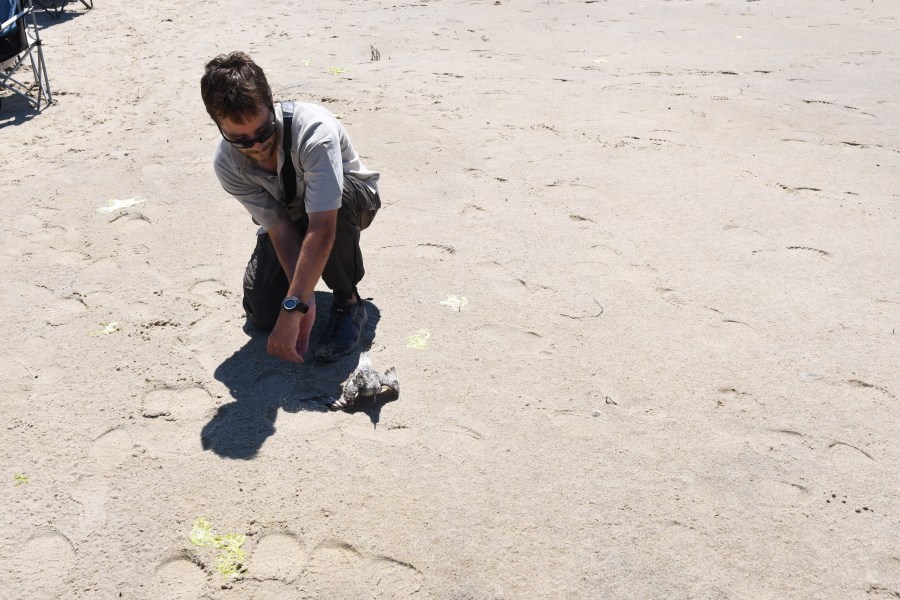
Once the birds arrive and are gently coerced into the range of the net; the net is shot out and over the birds. Traction may not happen if any birds are standing on the net or to close to the discharge area. It is really disappointing to be so close and then have to scrub the attempt and hope for another chance on another day. Once the birds are in hand they are placed on both covered cages on the sand so that they are sheltered, out of the sun, and unaware of all the activity around them. They are banded with federal silver bands and field-readable color bands. The color is meaningful (year, month) and the letter number combination is specific.
DSC_1612
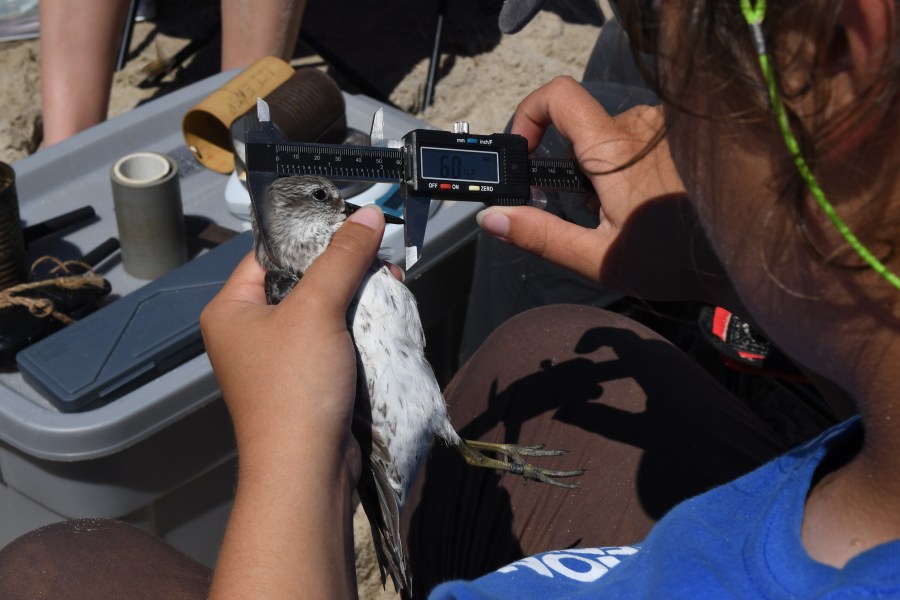
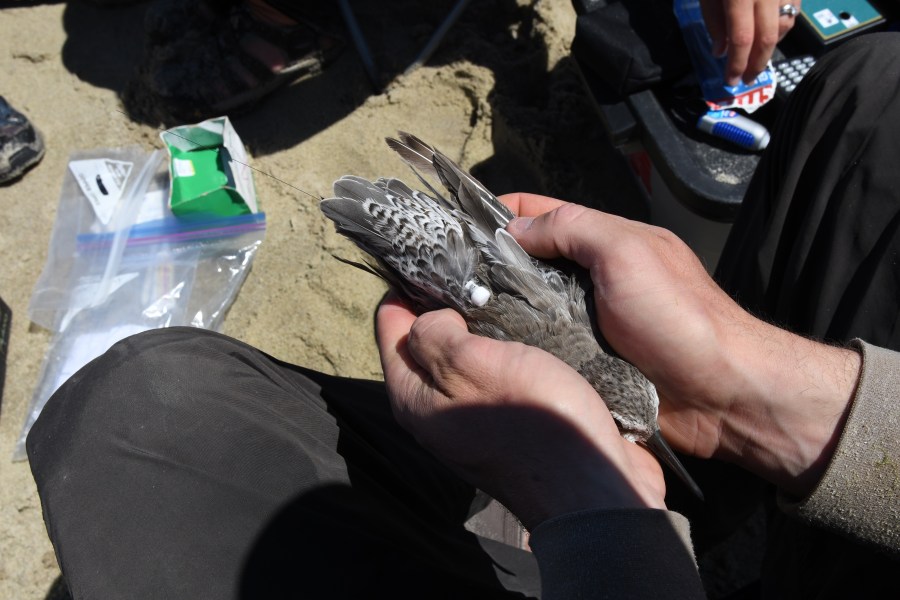
They are weighed, bills measured, wing chord measured, sexed (if possible) and aged. Sometimes there is a tiny transmitter attached to the feather shaft of the upper tail. This allows the birds to be followed by coastal technology along their migration route.
DSC_1588
All the equipment now gets used – and the lunches and water also. The weighing of these birds is similar to any bird banding operation; smooth can, tare weight, and done. The birds are passed around a circle of specialists to be measured, weighed, banded, and perhaps outfitted with some very lighweight technology.
 
DSC_1579
Bird watchers along the coast notice these bands. The same sort of thing has been done with California Condors and American Bald Eagles on the readable tags are attached at the shoulder.
DSC_1568
The white spot between the thumbs is the technology; the hairlike extension out from the tail feathers and over the little square box/bag is the antenna. This sort of technology has provided millions of new data points and understandings with sharks, fish, bears, snakes, as well as birds. Things we can’t see can now talk to us. Remarkable!!
DSC_1604
Then they are off and running and flying. There was no damage to any of the Red Knots during this project. The research on east coast, of Massachusetts mostly, is now forty years old and Brian Harrington has been the lead guy throughout much of that time. Brian is now sort of retired from what was the Manomet Bird Observatory (now a broader environmental research group) but still gets out looking for knots each summer. Though now in a small metal boat with a motor rather than his kayak – this after a passive, but very close, encounter with one of the areas Great White Sharks. 

Alaska; Denali’s moose

Moose are large and look quite ungainly. They have very long legs, an absurdly long face, and have a diet that is pure roughage. The winter coat is long, rough and grayish. They are very nice looking from a distance, so right for the landscape, but up close I tended to find all their faults. Biologically none of these are faults as they have evolved to serve any number of purposes; but it did enter my mind that this beast would make a very sloppy indoor pet. Of course they are rarely even outdoor pets. When we were in Alaska in early June every female seemed to have a baby or two. It was looking like a good year for the moose population; which also means a good year for the wolf population.

The moose were quite social with humans if not so much with their own kind. The parking areas had disturbed soils around them due to previous construction and maintenance. In Alaska disturbed soil grows alders and in the spring the new leaves of most any deciduous tree are a sought after treat for the moose after a winter of twigs. Hence there were moose in many town park, residential yards,  and other areas that featured leafy vegetation. The moose above walked through the major parking lot at Denali National Park followed by her new twins – they were most certainly not after leaves. Whenever she stopped to browse they rushed in to suckle.

Eating is a big deal for a moose. They have longish prehensile lips that gather in small branches and then peels the leaves off as the moose lifts her head away. This is how they get about 50 pounds of leaf matter each day. With lower teeth and a strong palate they are able to harvest and crush the leaves, adding saliva and starting digestion as they swallow. They ferment the leaves in their first stomach section and then burp the mash back up to be chewed more (cud). Then it passes on into the last three stomach chambers for digestion. The droppings are rather small jelly bean shaped pellets.

DSC_2018
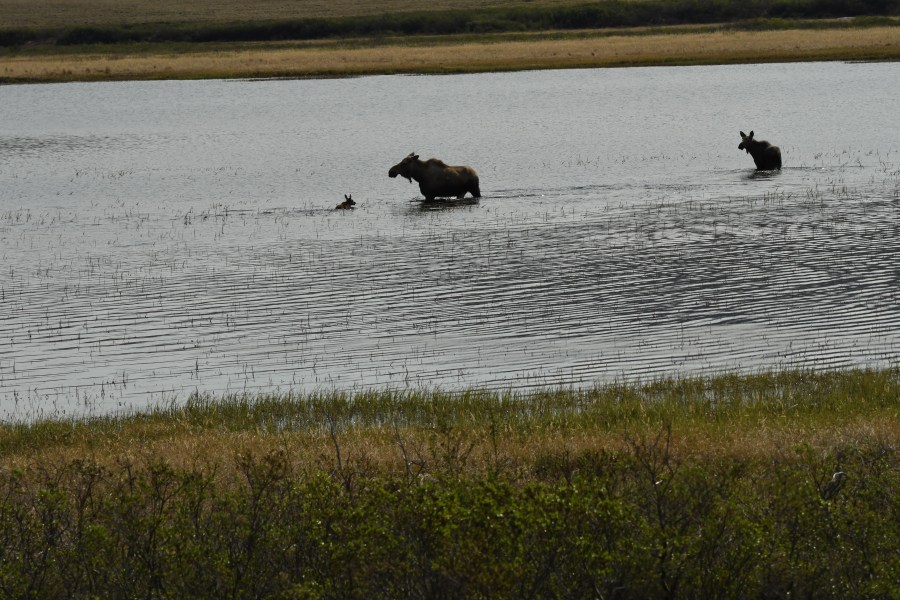
Sometimes life get complicated and the kids return from college and want to live at home… oh no that’s another species. With moose it sometimes happens that last year’s youngster wants to stay with mom but mom has a new baby. Out on the Kougarok Road we watched these three moose for quite a while. The mother (middle) chased last years kiddo (right) away over and over again. Each time she gave chased the baby from this year (left, with ears like a jack-rabbit) would follow her, keeping right underfoot. The teenager (right) didn’t want to leave and I don’t think this was to be resolved easily. The most likely outcome seemed to be that the little one would get trampled in the continual replay of the heedless chases.
DSC_2824
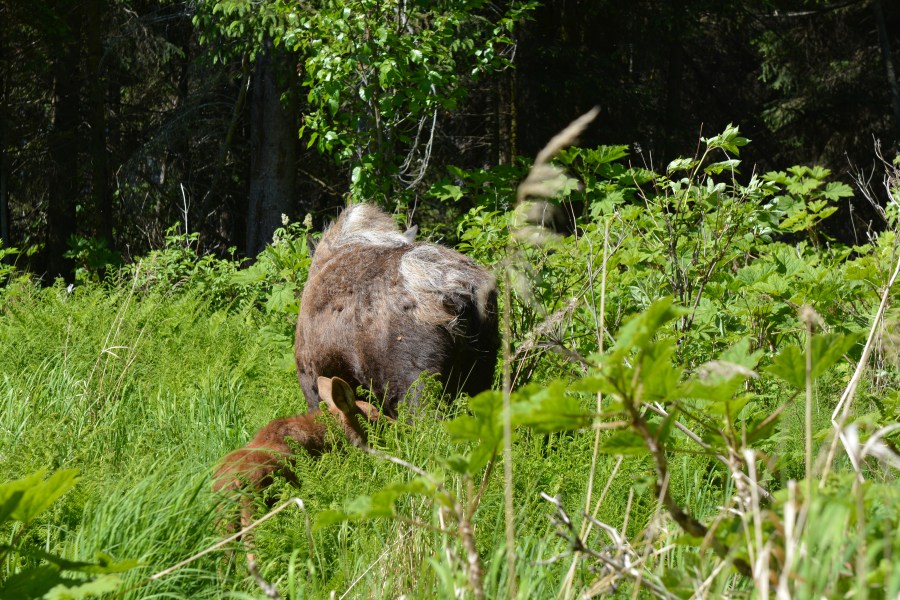
While walking on a tiny bit of conservation land in Homer, actually right in Homer, when we happened on this female moose with a small youngster. This image was taken just as I decided to leave the area. Mothers can be a bit unpredictable in all species and this is a big mother. I am inserting what is a rather lousy image just to show the long grayish hairs on the rump and mane that the moose is shedding as summer approaches. The baby is the warmer brown bit in the left foreground. The ears are silhouetted against the mother’s belly.
DSC_2775
At the Ellison Nature Center way out the Denali Road the moose takes its rightful place an emblem of the great remote lands of this region. You can see that the upper jaw has no front teeth but does have molars. The “horns” are not horns but are antlers which are shed each year after the “rut”. It is a very taxing (energetically) process to grow these things each year. They can weigh 40 pounds and can be six feet across. Only caribou (called reindeer in Europe) females have antlers otherwise it is only the male of the deer family that grow them. Evolutionarily the antlers seem to have replaced the tusks that ancient deer fossils show.

Alaska; a boat ride out of Homer

Please consider all images as copyrighted and ask permission if you want to use them in some way. Thank you, DEClapp.

I should first say that Homer is a very crisp town at the end of the Kenai Peninsula about 225 miles from Anchorage and up against the waters of the Cook Inlet. The Seward Highway out of Anchorage (a real city) down to the Sterling Highway and then 142 miles on to Homer is all it takes to reach this little bit of paradise. Homer really is a very nice place. It has residential and wilderness living, with spectacular views, and great fishing, birds, mammals, and waterways and hosts a much more moderate climate than does most of Alaska. The road, Route 1 or the Sterling Highway, hugs the coast and rivals any highway anywhere for scenic vistas (the blog post on eagles was all shot along this road near the town of Anchor Point). This area is very accessible from the Anchorage airport and offers most everything that Alaska is known for. Over the past several decades the Homer Spit has served fisherman, college kids looking for summer work, birders, and now tourists. 

The Spit is about four-and-a-half miles long reaching out to separate Kachemak Bay from Cook Inlet. Forty years ago I was here and there were fish processing plants, a strong fishing fleet, and summer jobs for kids who would camp on the beach and save money (and have fun) during the summer. The Spit is now mostly art galleries, restaurants, and fishing charters galore. There are still lots of boats but way more recreational craft than ever before. There are walkways and boardwalks to get you near the boats.

DSC_2798
Like much of Alaska the beauty around Homer is inescapable. Here along the harbor in Homer the mountains to the east have snowy shoulders throughout of the year. As you drive along Route 1, heading to Homer from Anchorage, the mountains to the southwest include a few of Alaska’s volcanoes; the currently active Iliamna, and the recently (1980s-90s) active Redoubt, Douglas, and Augustine.
AlaskaMap
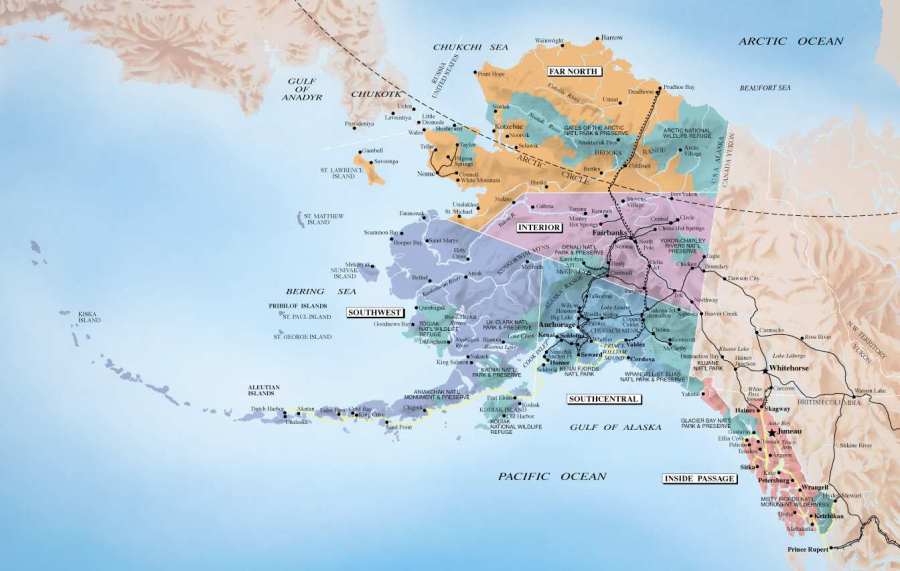
I’ll use this map off and on as it shows the entire state – though specific locations are hard to locate. The great Aleutian chain of islands runs off to the west from Alaska’s Southwest corner. The island below the starting point of the Aleutians is Kodiak and Anchorage is up that waterway above Kodiak to the northeast. Homer is at the tip of the lower bulge. Nome is up near the Arctic Circle line on the southwestern corner of the Seward Peninsula. The three roads in Nome (see other posts) that we traveled are represented by the trident-like lines reaching into the peninsula. Notice that much of western Canada is actually Alaska and part of the USA. This area, called the Southeast, has Juneau, Petersburg, Sitka, Scagway, Haines, and Ketchikan as small but important cities. This lower area is largely temperate rain forest and all but one of the listed towns are only reached by plane or boat.

Anyway, what I am finally getting to is that we took a several-hour boat ride out from Homer to see what we could see. Fran and I were hoping for birds; but whales, eagles, sea otters, and fish were all options we wouldn’t have passed on and we saw all of them. We had called Karl Stolzfus, a native-born Alaskan, who operates the Bay Excursions boat called Torega. We had signed up for the boat trip before we arrived in AK but it turned out the boat wasn’t full and we had good company and plenty of room. We also had a chance to choose where and what we might look for. Karl has run this route for years and knows where each species is likely and where the least common are nesting. He was very informative and a very capable captain.

Version 2
As far as birds go Alaska has some specialities. Many of the state’s land birds migrate north on the Russian side of the Pacific after wintering in the waters of the Japanese (or similar) islands. There are many sea birds that use this regions remote nesting rocks in the well-lit but short northern summer. Many of these birds species are oceanic (pelagic) migrants but some stay out to sea in the winter – many are simply hard to find without getting to the west coast or better yet the Alaskan coast.

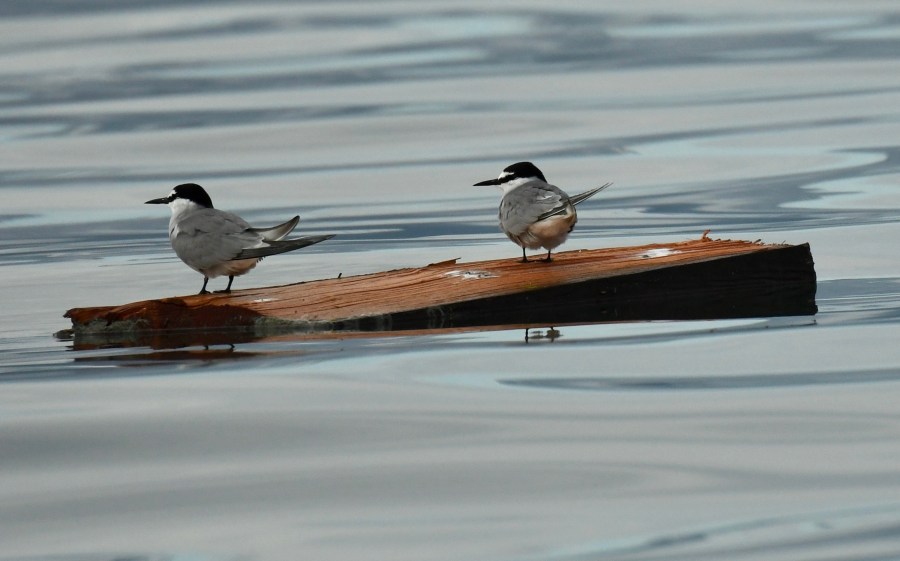
The terns above are Aleutian Terns though they were not known to nest in the Aleutians prior to the early 1960s. The introduction of foxes was probably what killed them off (by the thousands) in the previous two centuries. They arrive back in Alaska to breed but their wintering grounds are still unknown; the Pacific is huge.

AK KE sea otter
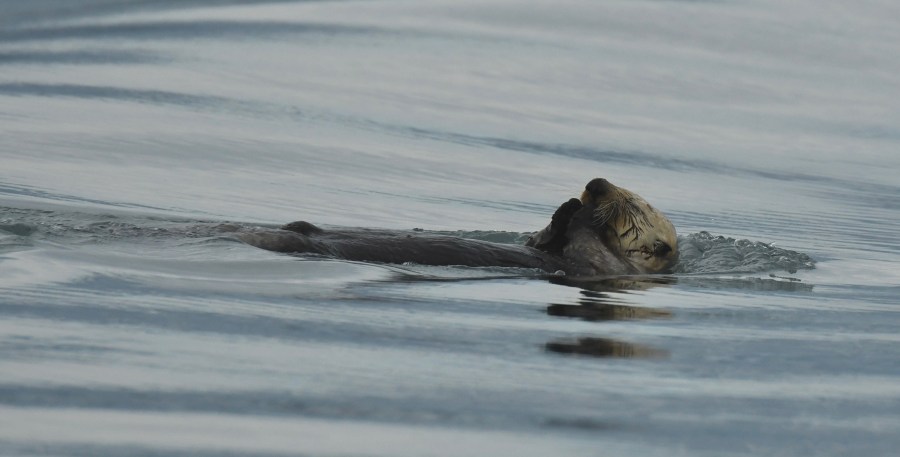
Any boat trip can be waylayed by marine mammals and we stopped for many a sea otter. These animals are recently returned to the sea (evolutionarily speaking) and can best be described as well adapted land mammals now well-suited for this cold water marine life. They were the basis of the Russian invasion of the northeast Pacific in the 17-1800s and their complete removal for the fur trade was one of the reasons Russia was so willing to sell off their land rights to what is now Alaska and was then Russian America. There are two books about Georg Steller; Where the Sea Break’s Its Back and Steller’s Island. They are both good and both introduce Alaska to the world – and they introduce Steller as well. When Steller was forced to winter on a remote Bering Sea island he wrote that the Sea Otters came to the shore to bask, nurse young, and interact socially. That seems to be a characteristic that has pretty much disappeared. Grooming, nursing, eating, and sleeping all seem to done in the water, usually in or near kelp forest.

Sea Otters (and Murrelets) deserve a page of their own and some day will get it, but here are a few fun facts about Sea Otters. They have the thickest mammals fur known, with 850,000 to one million hairs per square inch. (In my prime I probably never had the human average of 2,200 hairs per square inch and now, whew way fewer.)  The skin of the Sea Otter never gets wet as the longer guard hairs shelter the air-holding undercoat. Thus they are warm, dry, and bouyant. Youngsters are so bouyant they cannot get below the surface and are left floating like bobbers often wrapped in kelp fronds. Females weigh about fifty pounds and males about 80, though the heaviest male can reach 100 pounds. The water here in Alaska is quite cold, so the mammals need to burn lots of food to create the warmth needed to survive even with the dense fur coat they wear; they eat 25% of their body weight each day – or even a bit more. They eat some fish but lots of urchins, crabs, and shell fish.

Version 2
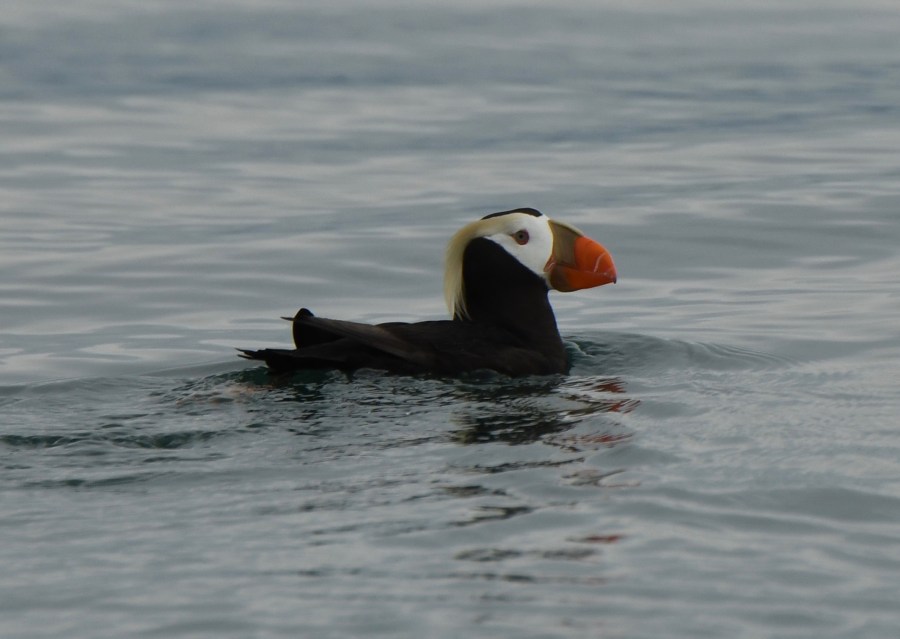
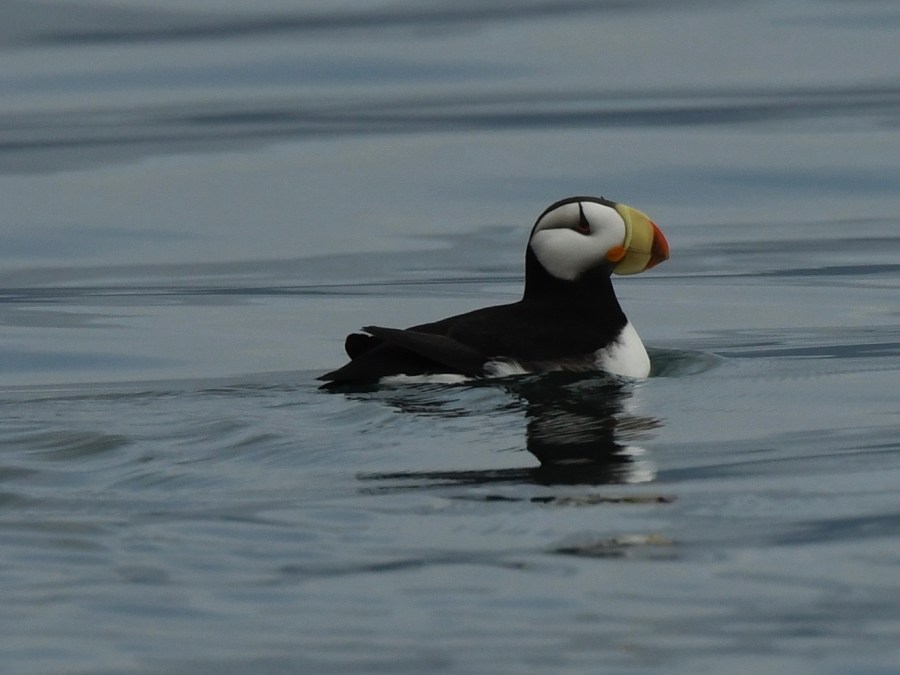
There are three puffin species in the world and two of them are here in Kachemak Bay; above is the Tufted Puffin and below the Horned Puffin (the third species is the Atlantic Puffin which is very similar to the Horned). They both breed commonly on the northern parts of our continent’s west coast and in the Homer area the Tufted is very common and the Horned much less so. After breeding, both species head southward into the great expanse of the northern Pacific where little is understood about their habits. The Horned Puffin is rarely seen from shore as it remains well out to sea through the winter. The Tufted does much the same thing but is found a bit closer to shore in some locations during some winters.

DSC_3089

DSC_3133
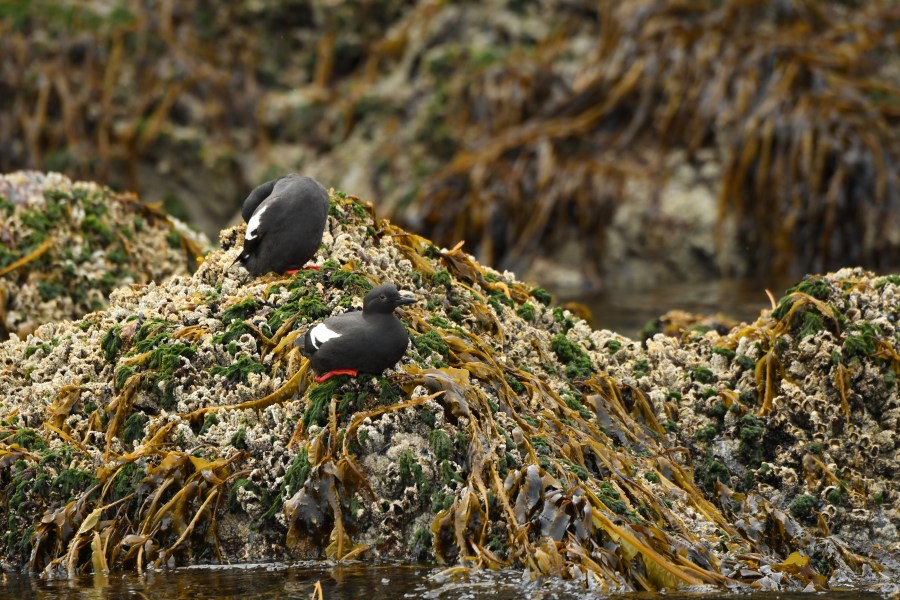
The Guillemots are medium-sized sea birds of the rocky shore line and are characterized by a large white wing patch and black body when in breeding plumage. These two are Pigeon Gullemots and have a dark bar intruding into the white patch as a species-specific marker.
DSC_3193
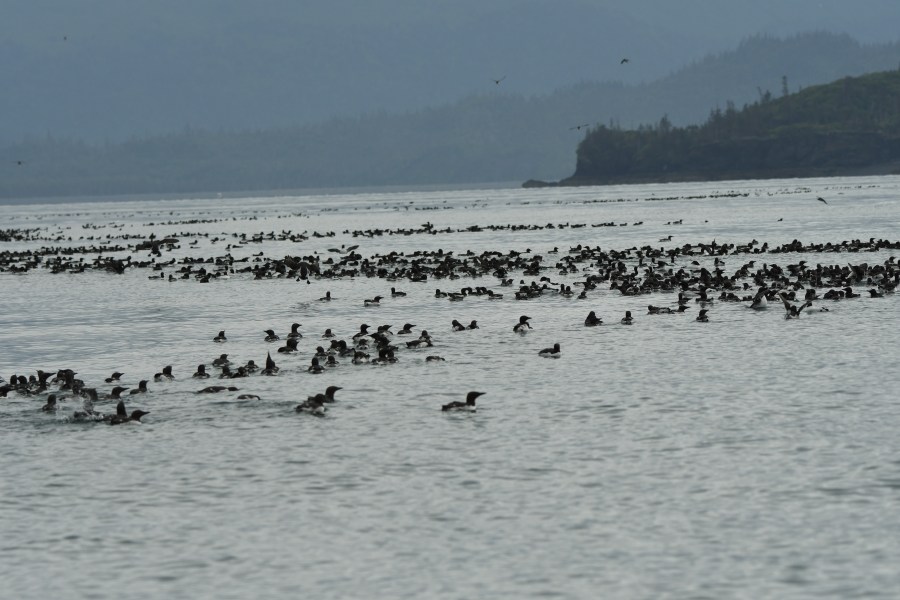
One of the highlights of a boat trip out of Homer is a visit to Gull Island where thousands (5000 or so this year) of Common Murres nest along with Pelagic Cormorants, Black-legged Kittiwakes, Pigeon Guillemots, Tufted and Horned Puffin, and Herring and Glaucous-winged Gulls. The numbers of nesting murres overall seems to be negatively impacted by warming sea water temps. Young fish and many “krill” larval forms are in need of a specific water temperature and warm water is not what they need to survive – and then further along the animals (fish, birds, mammals, including people) that need to feed on the smaller prey find there is not enough food to raise young or (perhaps) survive.

Alaska; A Typical Day’s Problems

As you probably can tell when we are on vacation birding and photographing great places there really are no pressing problems. Except that we bounce from one place to another and I’m always leaving something next to the car or on the roof or hanging from a post. It happens all to often; I’d worry about my aging brain if it hadn’t always been this way. I’ve left stuff all over the world, kind of a foreign aid ambassador. Or perhaps I started this phase of aging in my thirties.

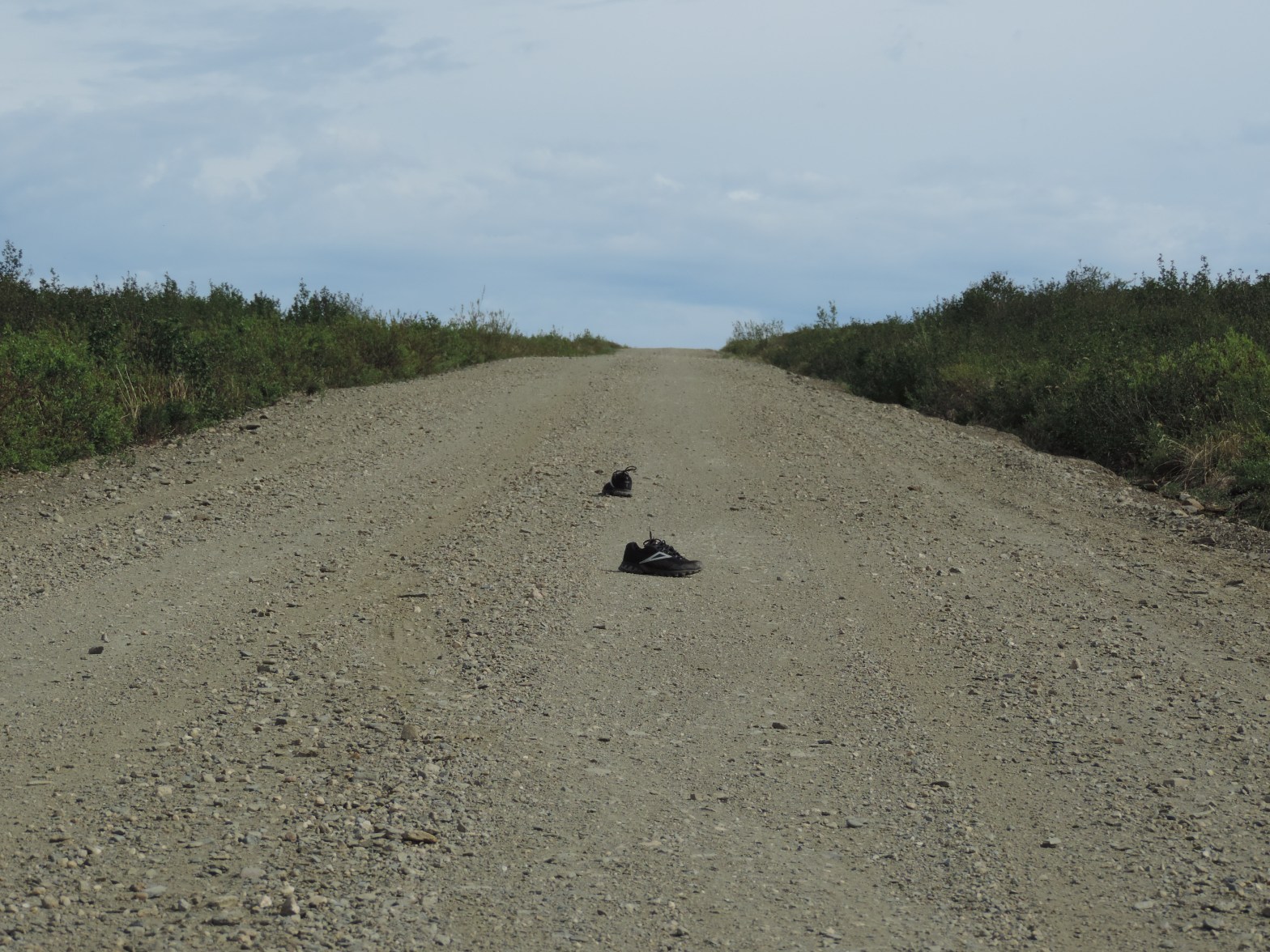
So there we are about 75 miles of dirt road from Nome out near a landmark called Coffee Dome. Coffee Dome is a dark-topped hill in a rolling land of lesser dark-topped hills. Not that much of a landmark really. The roads have green mileage markers out here and those are the real locator devices; no cell phones, no wifi, but there are mileage signposts. Anyway, we arrived in the target area and were about to climb up onto a tundra plain well above the road level to look for the very uncommon Bristle-thighed Curlew. This is the only place where they nest within a mile or so of any road in the US or Canada. It was here or no where. We slipped into our Muck Boots and left our sneakers with the car. Mine were a bit wet so I stuck them on the roof near the driver’s door so they would be easy to spot upon our return.

Off we trudged. It was about two hours later when we met again to descend to the car. We had seen two curlew flying and calling just after reaching the upper tundra plain and had then walked all over the place looking at Lapland Longspurs, American Golden-Plovers, Savannah Sparrows, and whatever else we happened on. Much of the tundra vegetation was in bloom and the hot weather and long days of sunshine had things popping.

We split up for about 45 minutes and planned to reconvene at a shrub (yes, really just a shrub) that was near the path we had followed to get up to where the birds were and the path we needed to follow down again. The terrain looked rather smooth but was pretty rugged. The path was one footprint wide and wandered through the driest, less damp would be better, part of the landscape. We slogged up and would slog down over muskeg, sedges, mosses, puddles, and drainages; it was very very nice.

I happend on a pair of Caribou antlers while up on the tundra and returned to the shrub with one of them. The antler was left leaning against the shrub to help provide a better landmark for the next birder to make this pilgrimage. We found each other, found the shrub, found the path, and started down. Here is the odd part I guess. I kept my boots on when we reached the car and drove off as we were going to stop again and again on the way back to town. We were in no hurry and planned to take 5-6-7 hours to return. It seemed wise to keep the boots on. We started back slowly, looking for Alaskan birds in the wet draws and roadside shrubs and moose and musk ox on the hillsides.

DSCN3886
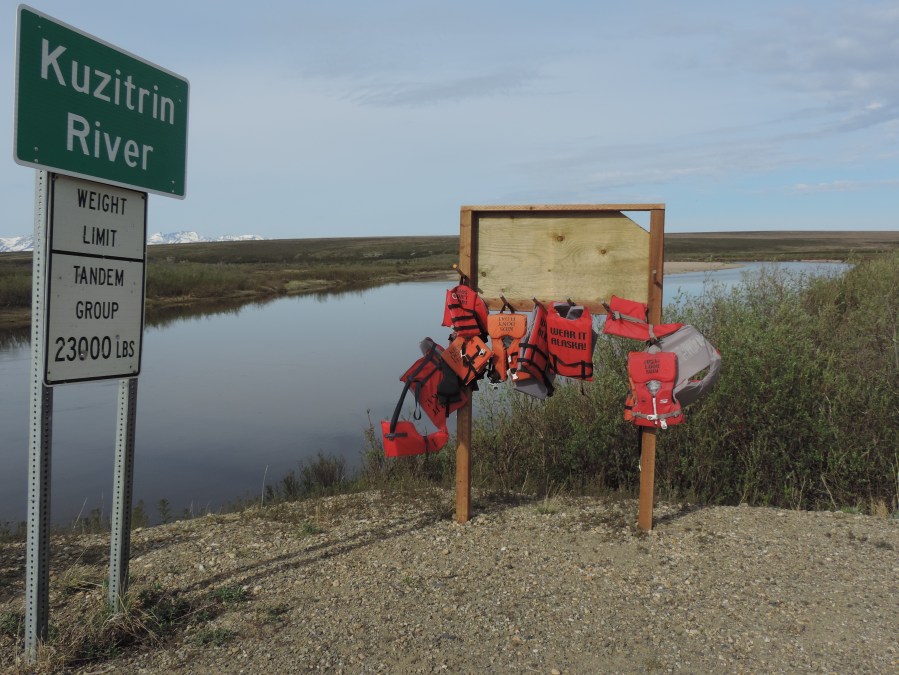
People in Alaska harvest the natural resources of the area. They shoot moose, caribou, and geese and they catch lots of fish. Every river crossing has a boat launching ramp and each of these access points had personal flotation devices free for boaters to use. They were marked “kids don’t float”. It seemed a pretty good idea.
DSCN4024
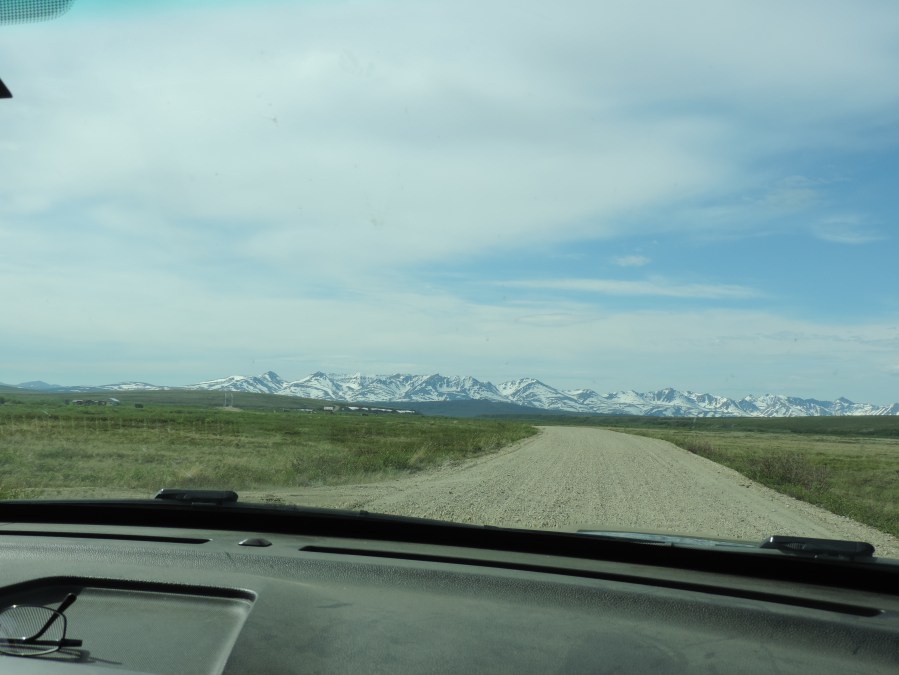
The view from the car’s windscreen was always enjoyable. The roads were all dirt and in good shape. The state benefitted greatly from the political weight that Senator Ted Stevens exerted during his forty years as one of the state’s senators. He died in a plane crash at age 87 on his way to a fishing lodge.
DSCN4016
After a couple hours of wandering we met back at “the bush”, me with the caribou antler that was about to become part of the vertical landscape in Bristle-thighed Curlew country.
AK Nome arctic warbler
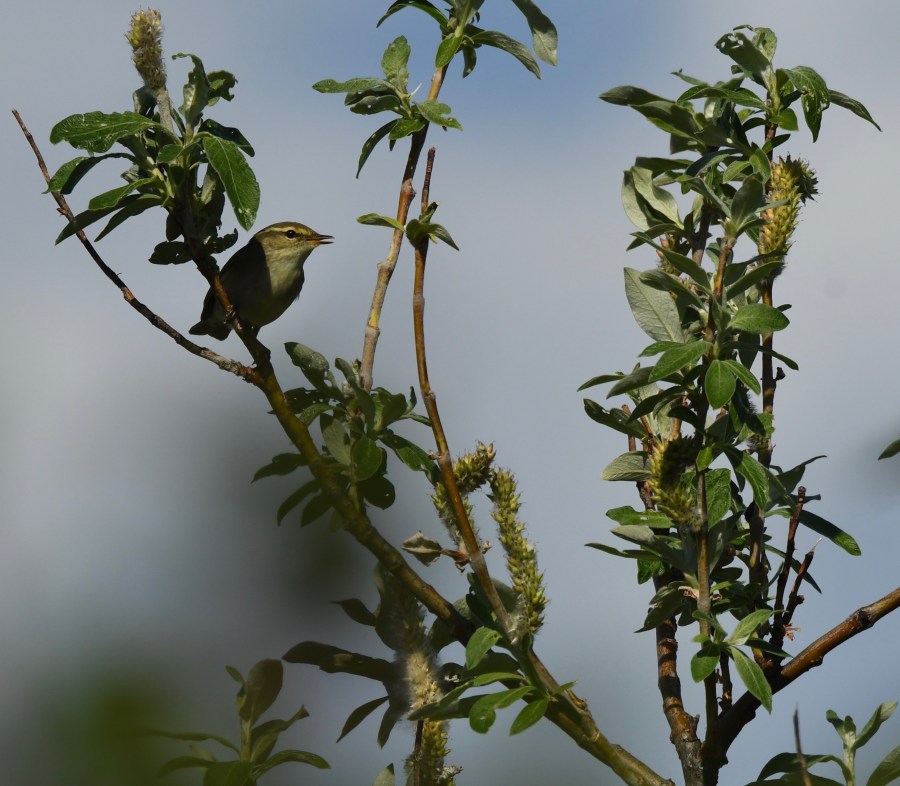
We watched moose in a shallow lake (separate blog post) and looked for birds along our return route. This is an Arctic Warbler one of the state’s rather special avian creatures. There are several birds that are native to Russian Asia that reach into Alaska during their breeding season. They then migrate back in Asia to spend the winter. The Arctic Warbler is not an uncommon bird but one that is not likely to be seen elsewhere in the US.
DSC_2719
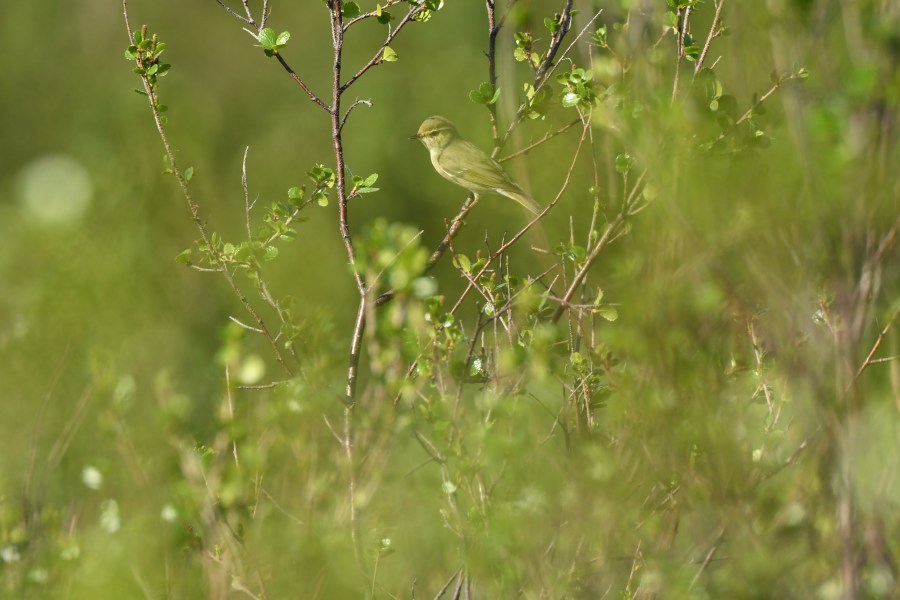
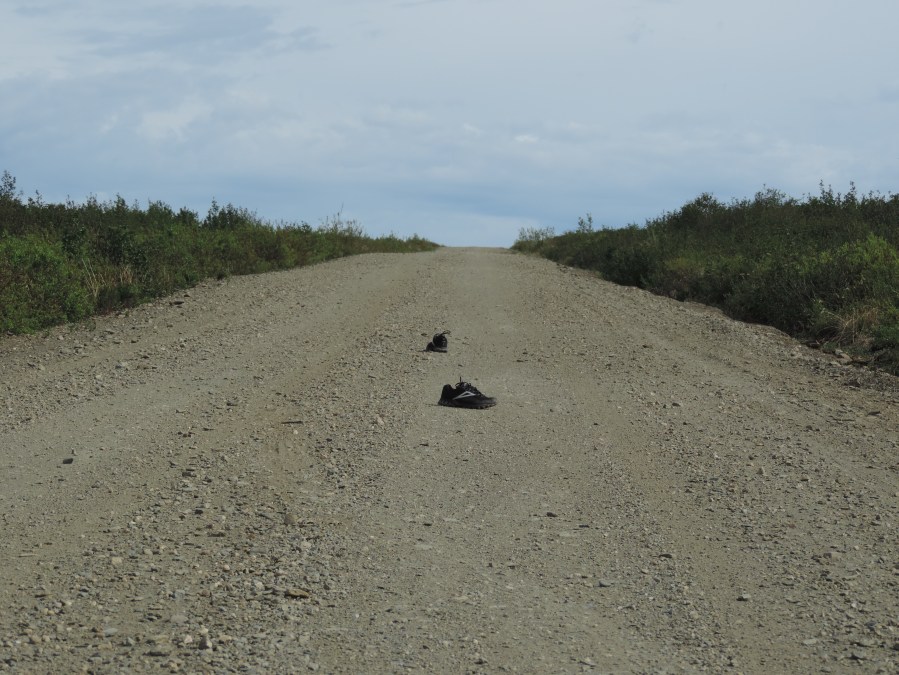
A softer picture of the Arctic Warbler. We were now about forty miles back toward Nome from the Bristle-thighed Curlew spot (Coffee Dome) and the landscape was drier than where we started. It was time to take off the boots. Ooops, my sneakers were missing. We replayed the morning and figured that they must have fallen from the roof somewhere along the road. We had seen almost no traffic so we turned around and headed back out into the hinterlands with me a bit shame-faced but somewhat optimistic.
DSCN4023
Forty miles later – there they were. A year or two ago I left my prescription sun glasses on the roof of our rental and we drove off down another remote dirt road, this one was in New Mexico. We were out about 17 miles that time when we turned around to look for the glasses – and to find them smack dab in the middle of the road in perfect condition. Again we were in an area where we didn’t see another vehicle all day.

Alaska; Nome, Historical and Beautiful

Most certainly Nome was a gold-mining town. There had to be something special to get people to move here and for some of them to stay on after the gold dried up. The rivers have been dredged and sifted and the mountain’s quartz veins have been chipped. Today there are still many active mines but they are not always looking for placer gold and in many locations they are sieving tons and tons of crushed stone every day. There are a few other miners who suck up the sands along the edge of the Bering Sea hoping to find a pocket full of the heavy brassy mineral. This work is done from small floating platforms (boats) and uses centrifigal pumps. The sand is brought onto the boat and run through a sluice box which washes the sands back into the water while the heavier gold sinks into the washboard grooves of the sluice box.

That isn’t where I was going with this blog … but after a big storm it is common to see the local Nomeites (or Nomeians or Nomesters) with their own small sluices on the beach checking to see if the storm exposed a sand strata that has easy-to-get gold. The small one-person dredges sell for as little as $300 and who knows what you might find.

DSC_1833
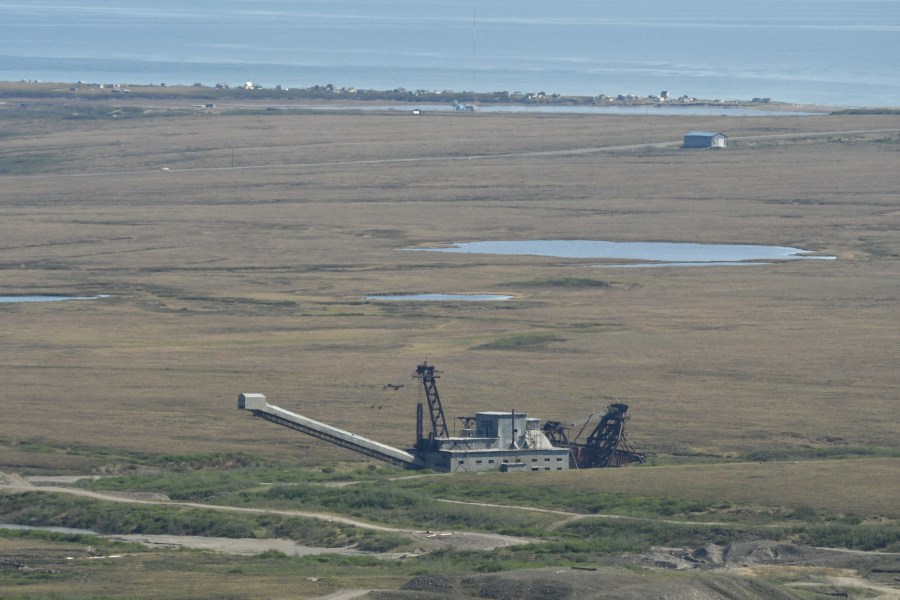
That is Nome in the top of the image. It is very coastal and just to its interior is the very wet tundra. There is no soil. There are no gardens. There are very few trees and those that are there are small and hardy. Large gold dredges dot the landscape reminding you that the lure of gold and wealth caused people to start all sorts of unlikely enterprises. Dredges like this one operated into the 1940’s and one was even maintained into the ’50s. They sit now like giant praying mantis’ abandoned in the old gravel-floors of the stream beds they scoured many years ago.
DSC_2632
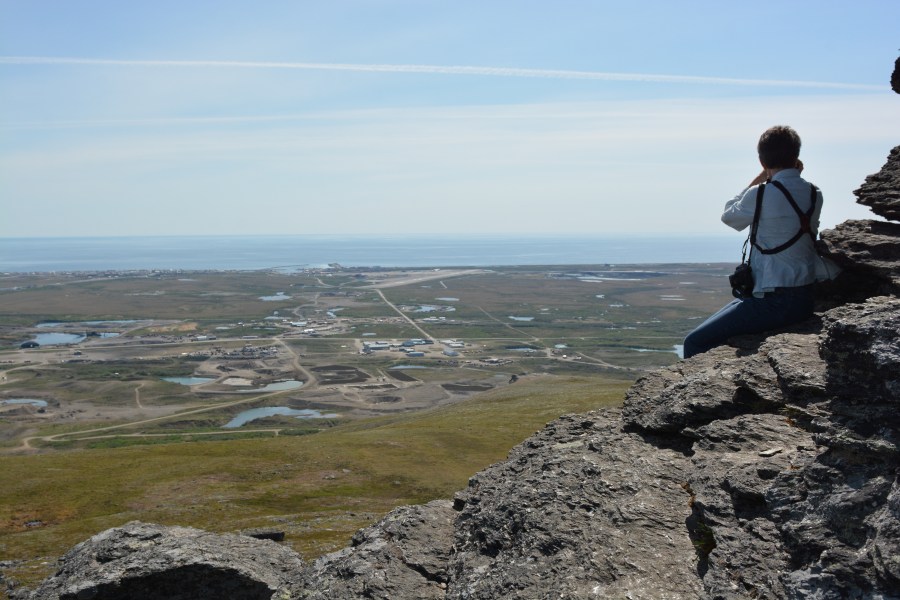
Nome doesn’t really have suburbs but houses have to built where they will remain reasonably dry throughout the year. Thus many of the old gravel ridges are where the residential sections are located. In between these sites is tundra or ponds or wet muskeg. There is one non-mountainous rocky outcrop right in  town and that is called Anvil Mountain. This is/was the site of radar towers (see image below) but now offers a grand overview of the town. We had thirty or more Musk Ox on our way up the hill and a couple pairs of Northern Wheatears preparing to nest on the rocky hillside. We returned here a few times, mostly for the view.
DSCN3842
These structures are remnants from the White Alice Communication (WAC) system that was installed over the top of the world during the cold war; 1950’s. The antennae could pick up radio waves from 200 miles away and send the information another 200 miles further. The structures were also tied into the Distant Early Warning (DEW) line that kept an ear out for incoming Russian aircraft during the same era. In the years just prior to this installation communication in and out of Nome was very sporadic and still relied on dog sleds in the winter. This site has been cleared of asbestos but probably still has PCBs in the ground and lead paint throughout. There is/was a chain link fence around the site but that has long been knocked down in several locations. We had Red Fox, the Musk Oxen, nesting Ravens and American Golden-Plover while we were up on top.
DSC_2658 2
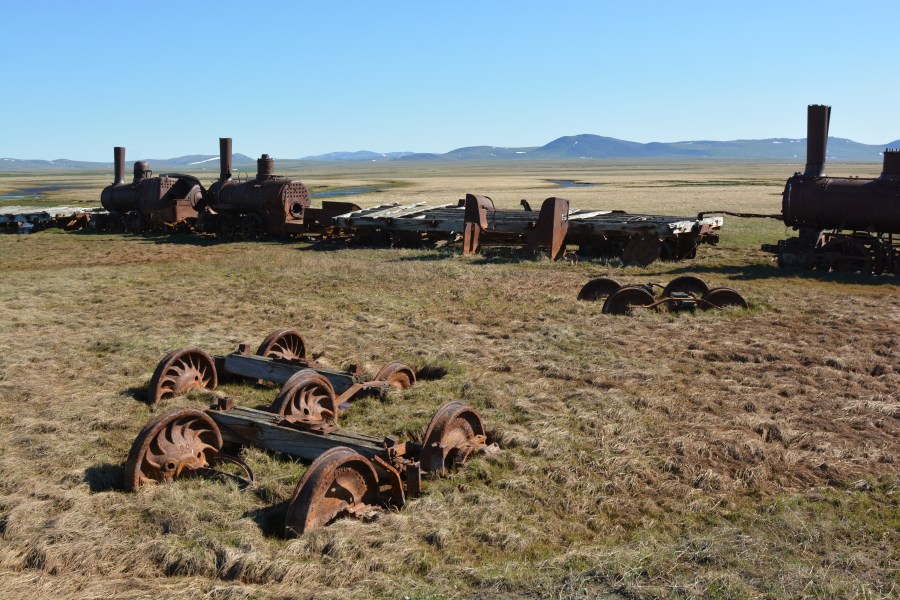
Gold was powerful. This abandonded train, actually three locomotives, weigh many many tons. About 1903 some Chicago investors felt that a railroad might be just what this remote gold mining area might need. They bought a disused train set (circa 1885) from the New York Elevated company and shipped it to Nome on the steamer Aztec. The ship also brought rails, ties, and fittings for the construction of the planned 51 mile long rail line. They got about 35 miles of track in place before they ran out of money and out of gold as well – the remnants remain very visible, and with a melancholic air, slowy sinking into the tundra out near the Soloman River.
DSC_2093
The shore line around Nome is sometimes sandy and sometimes rocky. The coastal coves catch all sort of oceanic flotsam. Not only is there a huge amount of driftwood in this area (remember there are no trees within a couple hundred miles) but those tiny dots in the very upper right are a small group of Musk Oxen just hanging around enjoying a great view of the Bering Sea.
DSC_1983
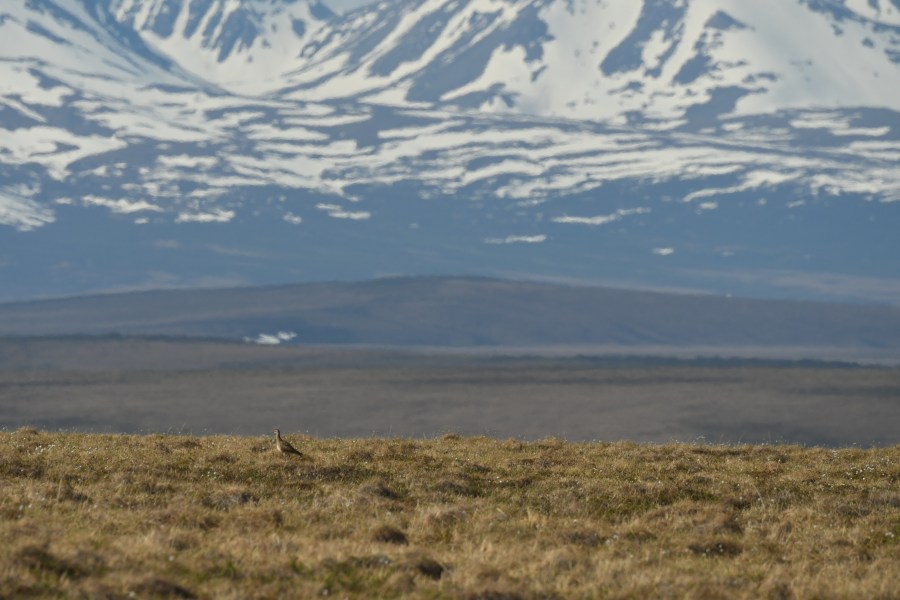
The vistas out on the tundra remind me of the great expanses of the East African plains. Here we have one Whimbrel watching over his nesting territory and no wildebeest at all. There was a continual grandeur to the scenery. It seemed that mountains always formed the outer edge of whatever view you took.  They lined the tundra views and ocean vistas as well.
DSCN4013
It was pretty spectacular. There were patches of snow every here and there but we had hot weather – not warm, but hot. The tundra surface was wet pretty much everywhere and the streams were running nearly full. Where there were Alders and Willows they were in leaf and flower. Spring had come to Nome even with the snow still on the mountains.
DSC_1932
We could walk all day and see nothing but birds and mammals. On this day we covered more than 150 miles round-trip and saw two other cars;  briefly saw two other cars. Fran wants me to do a blog page on the ancillary activity of this day and I guess I will. The next blog will be about sneakers and Arctic Warblers — don’t miss it.