Please consider images to be copyrighted and ask permission to reproduce. Thank you. DEClapp
In the olden days I would travel and blog; The Galapagos, Australia, New Zealand, Brazil, Tanzania, Zambia and so on. It was exciting for me to both travel and relive the travels in the blog. The past couple years have been pretty awful. I have been waiting and waiting to do something that streams the adrenaline through me and then write about it. It isn’t happening and it may never happen until this virus fades away. With that in mind I am going to dive into the marvels that I live amongst; ocean birds, marine mammals, salt water fishes, deciduous forests, and so on.
Most of the images that I have been taking recently are birds and they get posted on eBird. If you have never looked at eBird, please do. It is a huge free data base on bird sightings around the world. You can join for free and then search by country, by state or province, by county or parish and then by (very) local hotspots. It provides endless bits of information and keeps all your data in a personal file as well. Look at it and marvel. It its really cool.
I am going to stick in a few images every now and then and hopefully develop some sort of rhythm and pattern to these pages. Let’s look at a few recent sightings.
Heading for the coast from our house offers me the choice of the southern waters of Nantucket Sound, the constrained waters of Cape Cod Bay, or the colder water of the North Atlantic. Each has its own character and wildlife despite considerable overlap. The time of day, the tide, and the wind all feature into planning a day. But in almost every scenario you can find gulls, sea and bay ducks, and a few surprises.
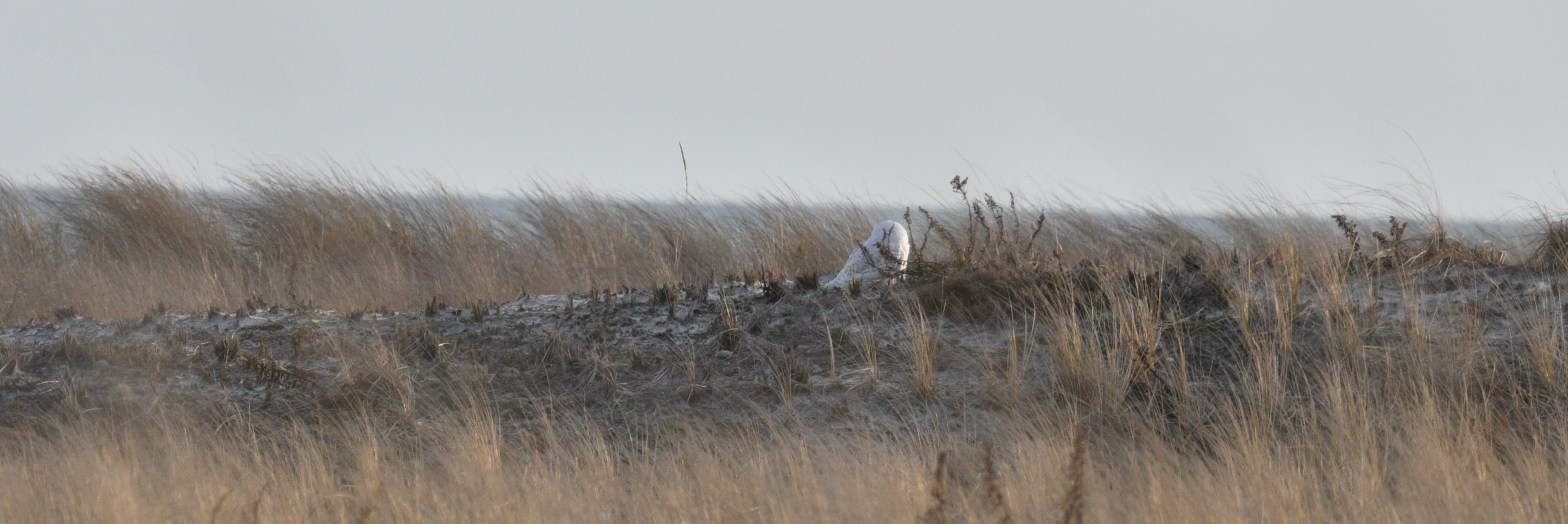
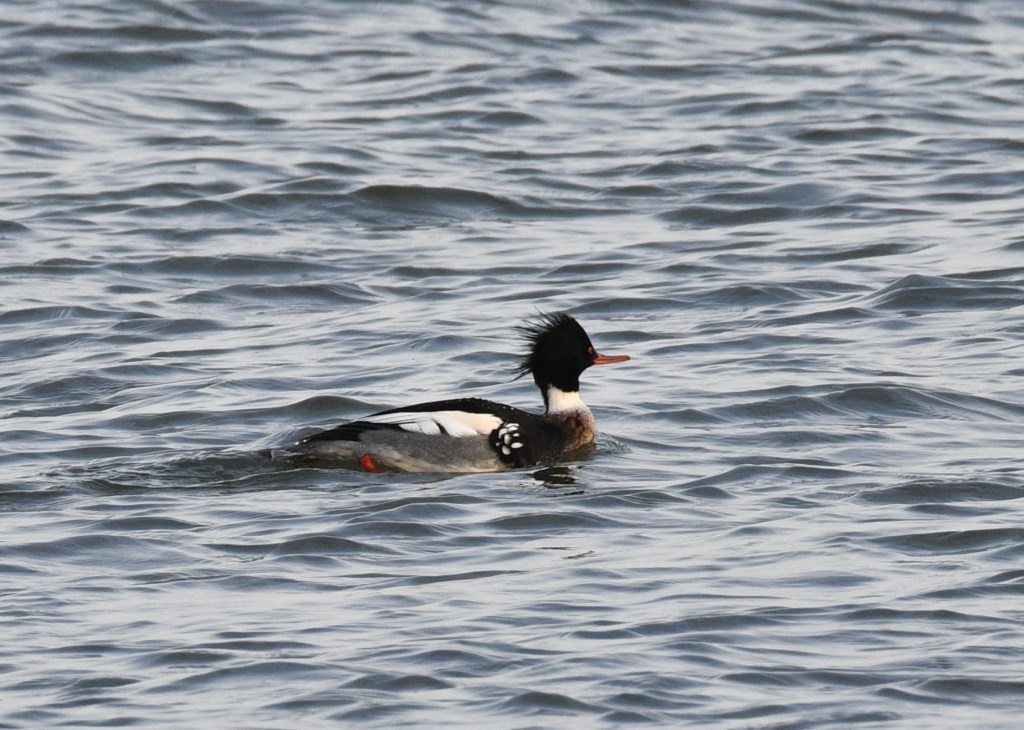
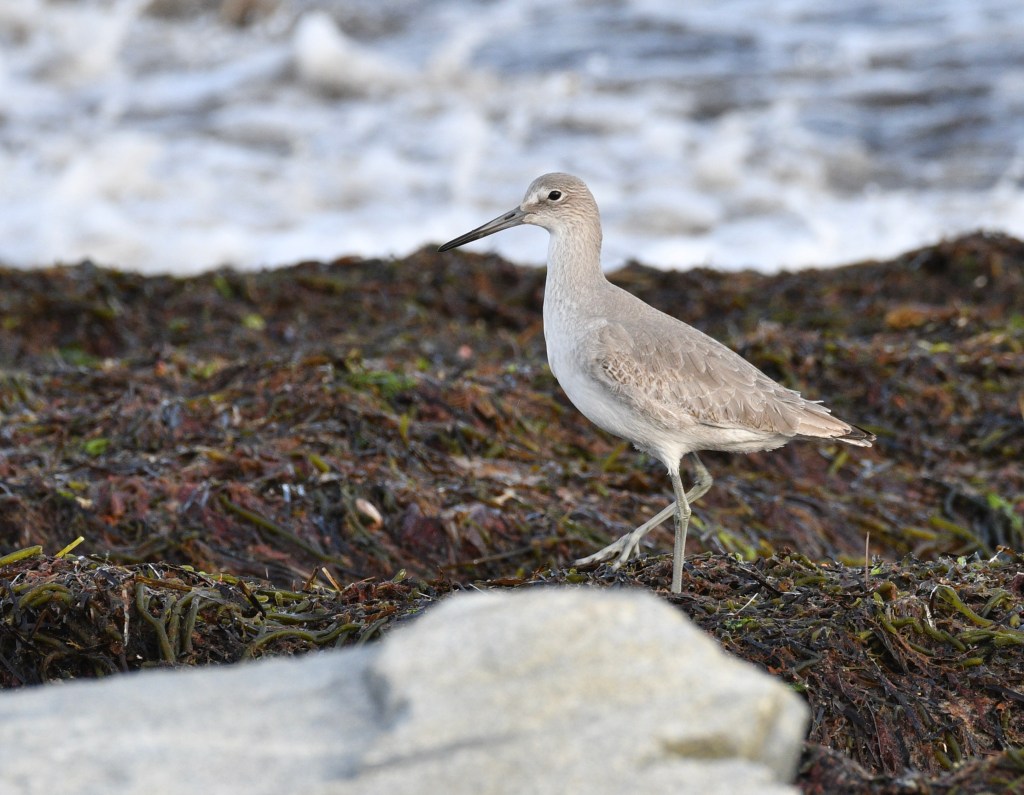
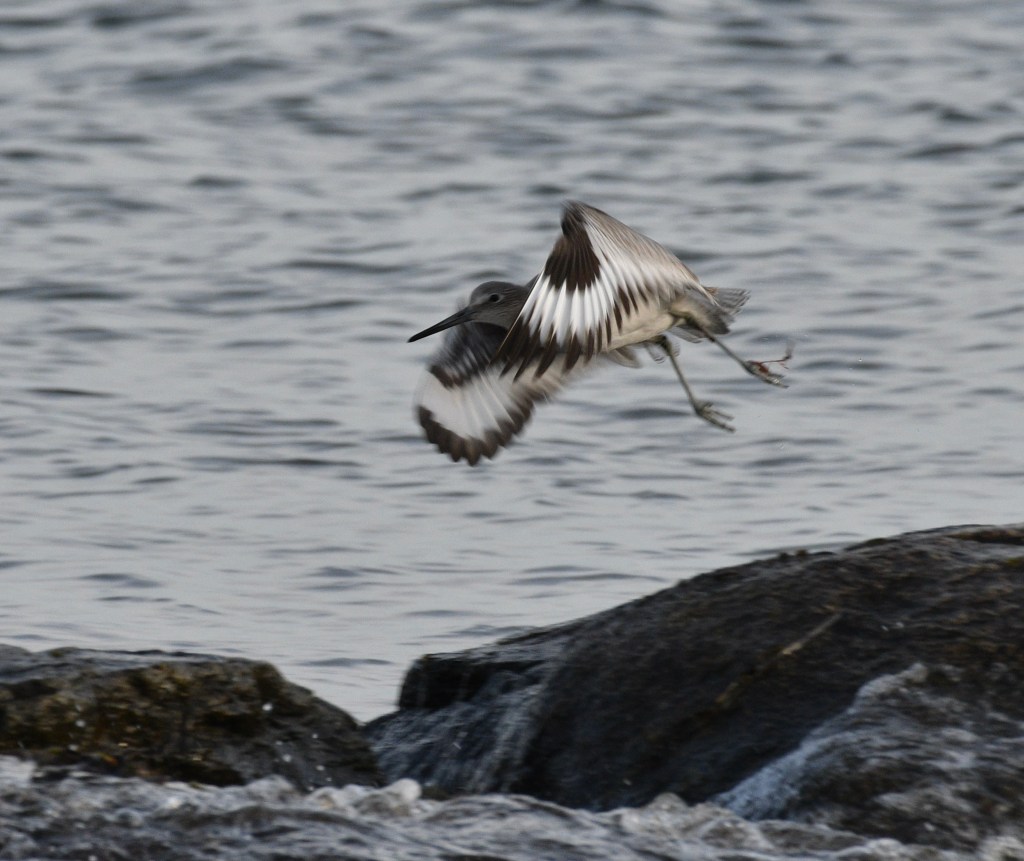
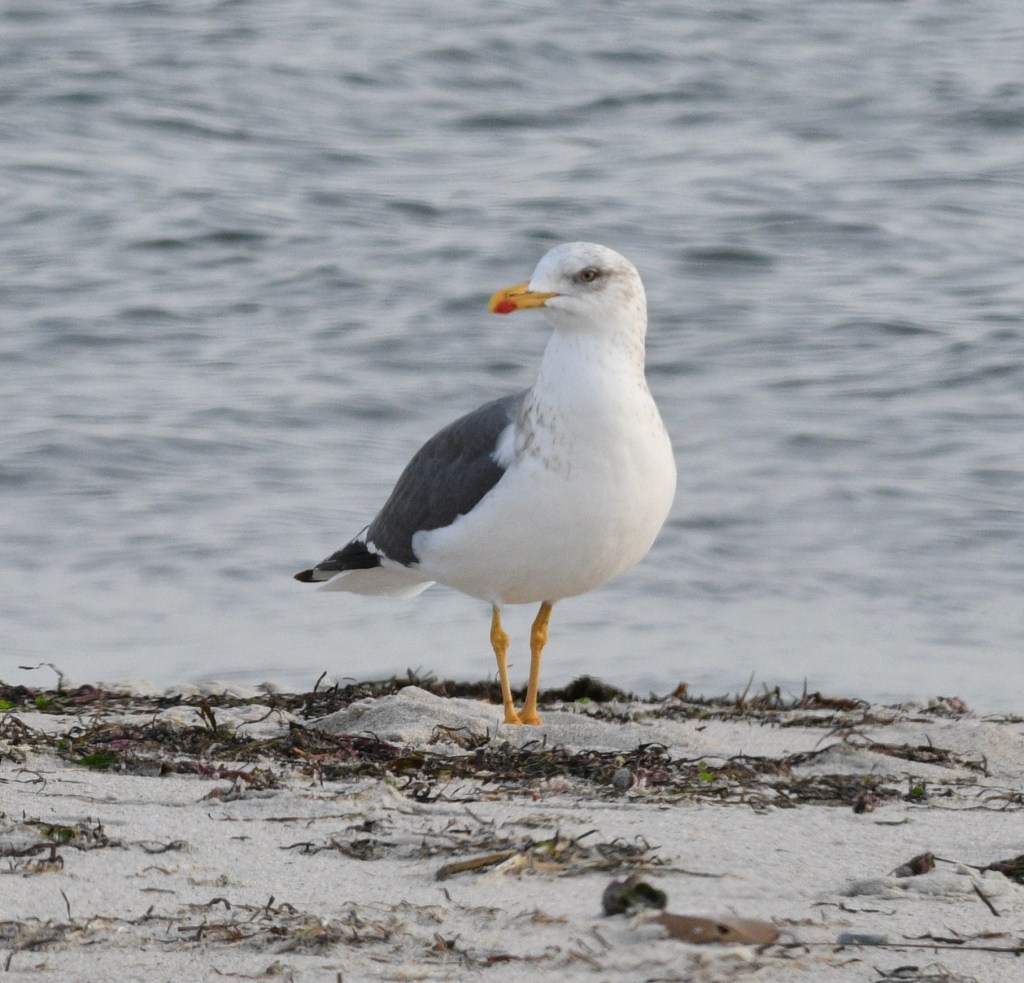
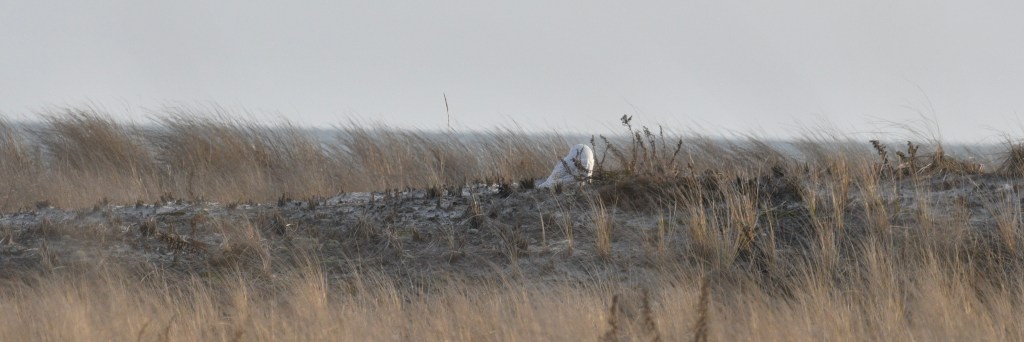
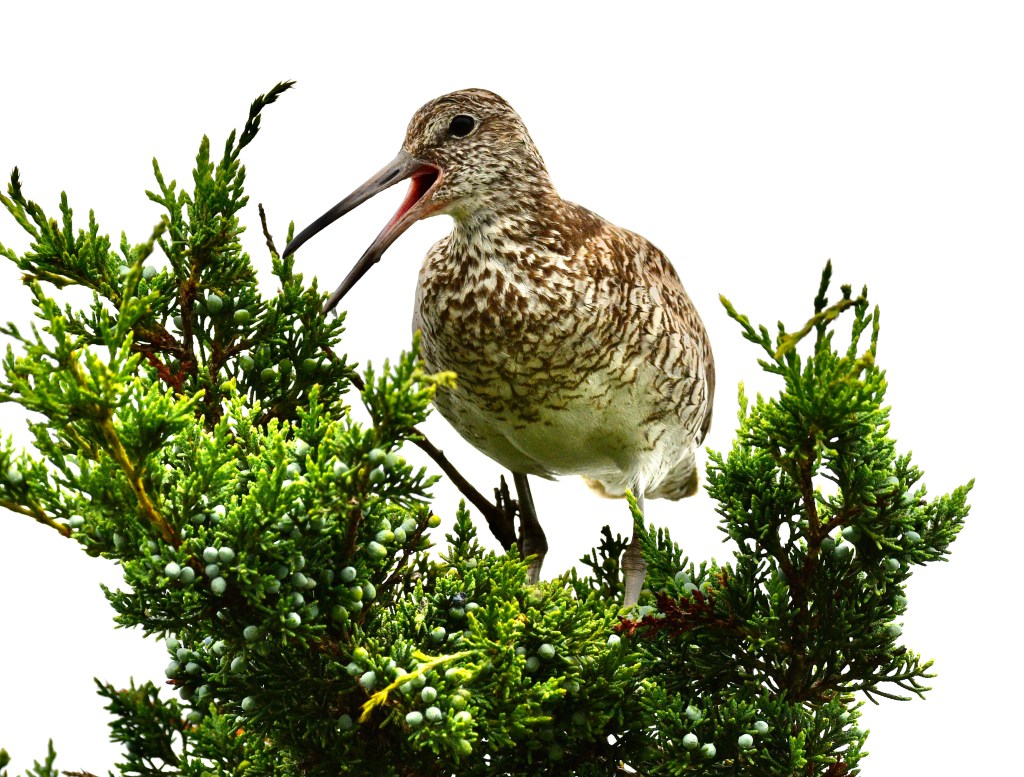
We will see three mergansers in the winter: Hooded Mergansers are found commonly in fresh water ponds, Common Mergansers appear in the large lakes as winter sets in, and the Red-breasted Mergansers (above) are common in shallow salt water including salt marshes and most open salt water. Mergansers are diving birds with a narrow beak, quite unlike a duck’s beak. They will swim after fishes under water and the serrated bill will “hook” the prey. The males of all three mergansers are quite flashy and the females are exquisitely dull. This is a very attractive group of birds.This image and the two below are of a bird that may or may not be a species – it is a Willet. But that may not be enough. It is a “western” Willet in that it is uniformly gray and a bit larger that our noisy breeding Willet. Perhaps this different looking bird with different habits is actually a separate species. Our resident/breeding Willet are long gone to the south. Our western Willets are likely to be from populations in North Dakota or Montana but possibly from southern Alberta, Saskatchewan, or Manitoba. A flight of nearly 2000 miles is a piece of cake for large shorebirds – the record holders (godwits) fly about 7,500 miles non-stop from Alaska to New Zealand. Oh yes, these 10 ounce birds, then return to Alaska (or Siberia) via China and North Korea – a bit of a longer route but allowing for feeding stops along the way. China’s coastal development of seaports has impacted the feeding areas greatly. But North Korea’s coastline is still very much undeveloped.We see Western Willet every year here in Massachusetts in the late summer and fall. Sometimes, like this one, they linger into the winter. Though they breed in south central Canada and western USA they winter along both the Pacific and Atlantic coasts. The nesting preference is in prairie pothole habitat and the wintering preference is tidal flats, especially those with seaweed wrack lines deposited by tidal action. This one is exploring a wrack line of Codium, a green algae (a seaweed Genus with about 50 species) that is scoured up by our fall storms. It is not eating the seaweed but the creepy/crawly things that make a home in the wrackNot a great picture – but I wanted to show the surprise that this rather large dull gray shorebird is hiding as it walks the beach. It has a very splashy wing pattern that seals the ID once you see it.One of the oddities of birding is that weird still happens over and over. That is the fun of birding in part. In this case the uncommon Lesser Black-backed Gull(LBBG) has been frequenting the same 100 meters of beach in the winter for at least three years. Where it goes to breed or what it does when not around here is a mystery. There are few breeding LBBG in North American and most of those are up in the Canadian Maritimes. Perhaps our bird its just a pure and simple loner who has no breeding place to go each spring. Or, more likely, it heads back to its annual breeding area and, perhaps, finds that same mate and raises a youngster or two – and then bids them all good-bye and heads south again to our winter beach as they watch and wonder.Gulls are a northern hemisphere feature. There are gulls worldwide for sure but the northern hemisphere has the majority of the species. Many of them look like this bird, a Ring-billed Gull (RBGU). The Herring Gull (HEGU) in similar and larger and the Great Black-backed Gull is similar but both larger and blacker (instead of gray). Then there are kittiwakes, Ivory Gulls, Ross’s Gull, and an array of European gulls as well. They all look like gulls; but they are all different and adapted to specific habitats and specialized ways of life. Gulls have been around a while and when the most recent glacial epoch arrived it reached fingers of ice down (or up as well) from the poles and separated the land mass in fragments. The gulls in each fragment could die off, move somewhere else, or adapt to the new circumstance. I am sure all three things happened and our gull species (and sub-species) are the result.In the winter the Canadian barren lands might become snow covered, very cold, windy, and perhaps empty of small mammals called lemmings. When this happens the Snowy Owls of the area will move south. In most years they arrive in tundra-like areas and hang out. They are from a treeless region of the planet and so are quite happy in our salt marshes, dunes, and airports. Each of these locations is a bit barren and the owls settle in. However when they are at Logan Airport in Boston they can be deemed a threat to aircraft and the powers that be allow them to be live-trapped and relocated. It is thought that moving them south during the first half of migration and north from Boston in the second half best mimics what the birds would normally be doing. The fellow that has done this trapping (for 40 years or so now) has probably handled more Snowy Owls than anyone else in the world. It amazes me that these birds can sit around an airport full of jet noise and still hear and hunt with ease.On the Massachusetts Coast we see Snowy Owls from the New Hampshire state line on down below Cape Cod. Some years there are a few and other years there are dozens. They tend to sit out all day and feed at dawn and dusk. The wintering birds are more likely to eat bay and sea ducks though mammals (rats to a large extent) are still sought out where they are common. One year one of the Logan owls roosted near a small fresh water pool that had about two dozen Black Ducks in it. Every evening he would capture a duck and feast as the sun set and then sit until the next night when he would again catch a duck from the pool. This went on for three weeks. The Snowy Owl has been know to capture Great Blue herons and cormorants as well as mammals and ducks.
Please regard all images as copyrighted and ask permission before using. Thank you, DEClapp.
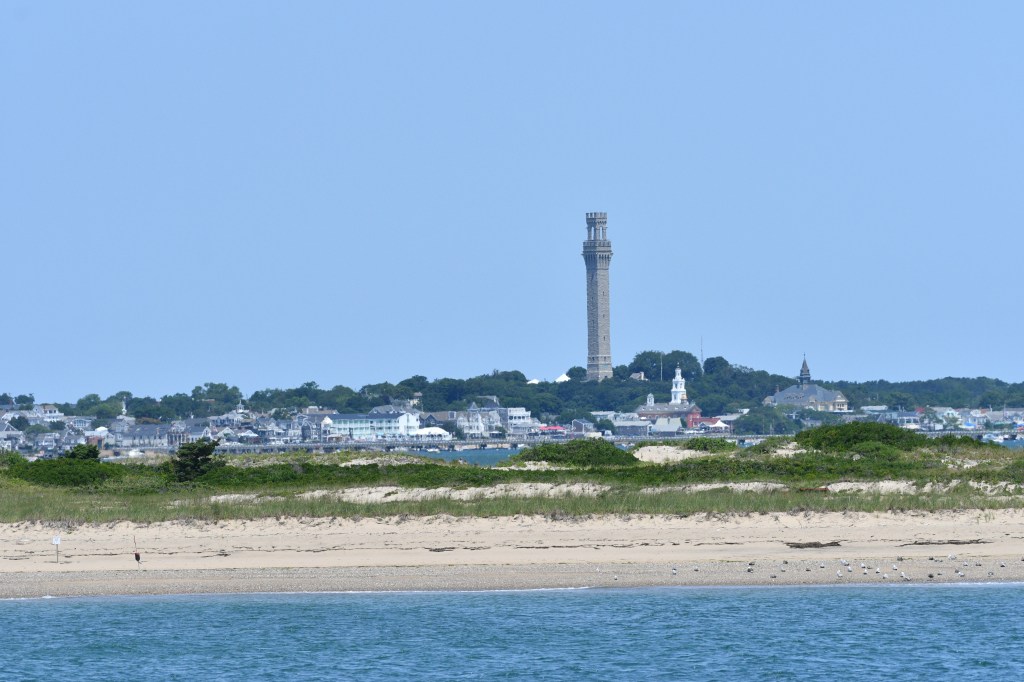
The sandy spit of land that heads east and then north from Massachusetts is called Cape Cod; after the great fisheries of yesteryear. The major fishery in this region now is for Spiny Dogfish Shark; not famous, not a sports fish, and rarely sold in the US. But anyway, Cape Cod is a remnant of glacial periods past. The Cape Cod Canal has been cut near the mainland to facilitate and shorten the shipping lanes from the Atlantic coast (New York for instance) to Boston and north. From the canal it is 30 miles to the Orleans rotary and then another thirty or more to Provincetown and the end of the road.
For the summer vacationer Provincetown is a destination for theatre, bars, food, whale watching, and more. It is the liveliest town on the Cape. In the winter there isn’t much life north of the rotary and only an aging residential population between the canal and the rotary. The Cape isn’t the Jersey Shore.
But for a mature person the outer Cape is pretty special. From the rotary towns (Eastham, Orleans, and the more southerly Chatham) heading north there are lots of Atlantic beaches. Newcomb Hollow, Marconi, Coast Guard, White Crest, and Nauset are a few names the visitor might remember. On the Bay side there are also beaches in Wellfleet, Truro and Provincetown. The fresh water ponds add to the possible biodiversity. At the far end of the Cape is Provincetown and all it has to offer. For most it is the hustle and bustle of an energetic small town. But for the nature folks it is the extensive outer beach that starts by heading north out of Eastham, Wellfleet, and Truro and then curls almost 360 degrees before stubbing out in Provincetown Harbor. This outer beach offer miles of sand and pummeling ocean edge but for the birder it offers a winter’s smorgasbord of oceanic specialties.
There can be unusual gulls such as Little, Black-headed, Ivory, Kittiwakes, Iceland, and Glaucous. Then there are the little cold water birds that so resemble tiny penguins. Birds like Puffin, Murres, Razorbills, and Guillemots. Then the departure of Shearwaters may not be complete, certainly there are days with hundreds of Northern Gannets and the avian predators (the Jaegers) are in and out of the scene as they harass the fish catchers.
We spent a few hours out on the sand a few days ago and here are a few of the things we saw. This bit of geography has great opportunity and I am sure it will reappear in other posts.
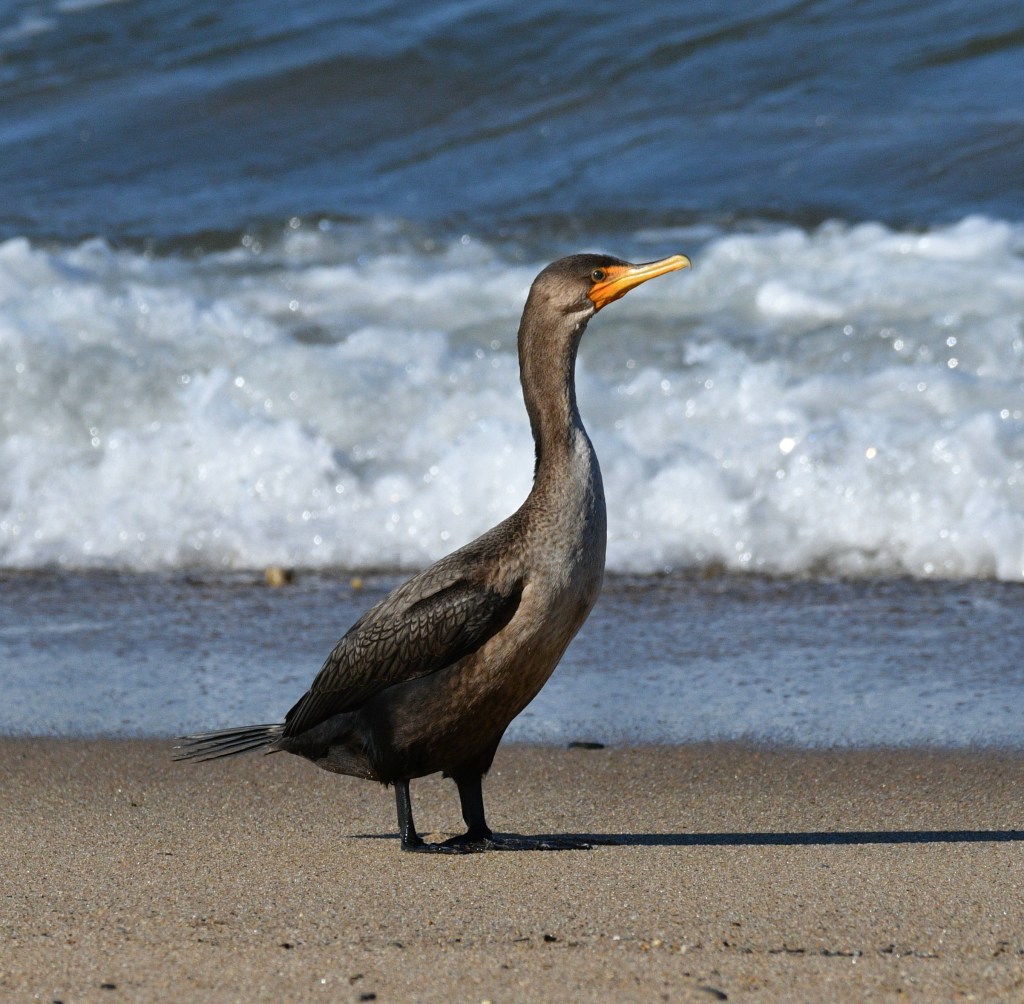
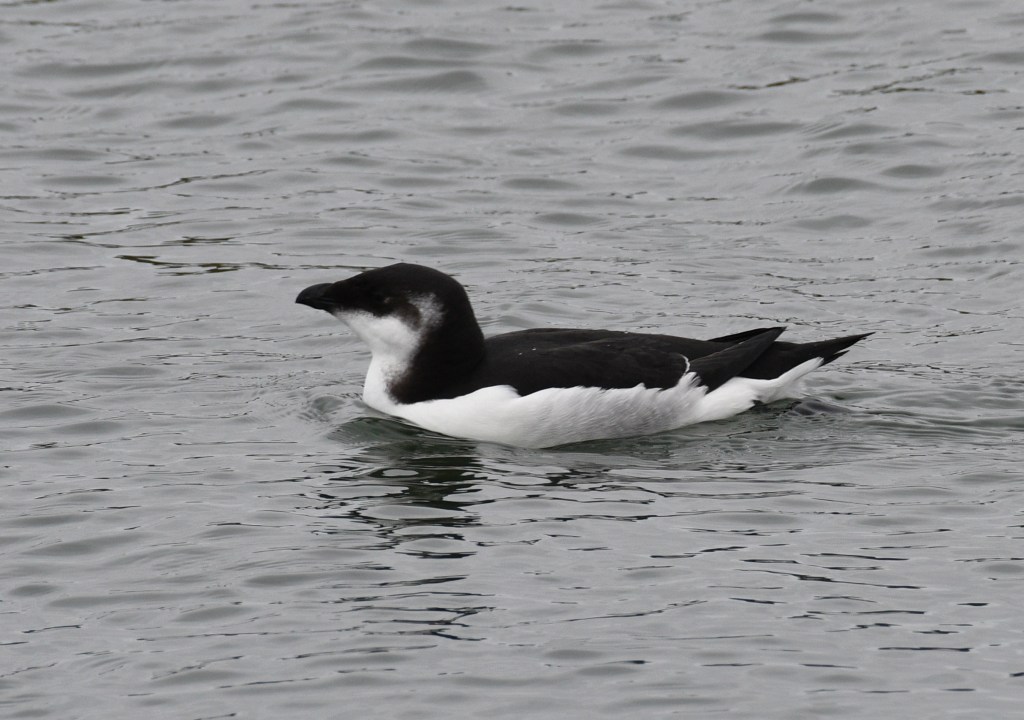
This is a Great Black-backed Gull. It is a common coastal bird, larger than the Herring Gull which might be called the medium-sized gray-backed gull. The Ring-billed Gull is also rather common and patterned much like a Herring Gull only smaller. The Black-legged Kittiwake is a cliff nester from the northern coastal edges. There are no white spots in the black-tipped primaries and the smudgy head of the wintering bird has replaced the full black head of the breeding bird. It is a bird of both coasts of North America reaching up and around Alaska in the west and then over the top of Canada and down the eastern side of the continent. It is a salt water bird for the most part and has the tern-like habit of diving into the water.The world has lots of cormorants. Here we have the nesting Double-crested Cormorant and the much less frequent winter visitor from the north, the Great Cormorant. This is a Double-crested. By November most of our DCCO have migrated in large goose-like V’s to the south. But there are a few that linger and even fewer who might stay through the winter. They nest on breakwaters and are doing rather well. They have a hook-like bill and are adept at catching fish underwater. They are not exclusively salt water birds and can be found nesting in trees in and around large lakes.The cute little black and white bird in this image is a Razorbill. This is an Alcid; a group of stocky, mostly black and white, sea birds best known by the cute/odd/colorful/toylike puffin.
Please consider all images to be copyrighted and ask permission to use. Thank you, DEClapp
It was many decades ago that Walt Disney decided to photograph and display nature to the public and he started with the goose-sized, fish-eating diving bird called Northern Gannet. We all know Canada Geese; large, chunky, dark, and pretty big for a bird. They eat grass and hang out in parks and on golf courses. They used to be a common spring and fall migrant honking and calling in the clear blue skies as the V’s passed overhead; but lots of grassy fields, warmer winters, and much less hunting has allowed many, perhaps most, to become quite sedentary. But I want to talk a bit about gannets – they are a few inches shorter in length than Canada Geese but have a wingspan that is about a foot wider.
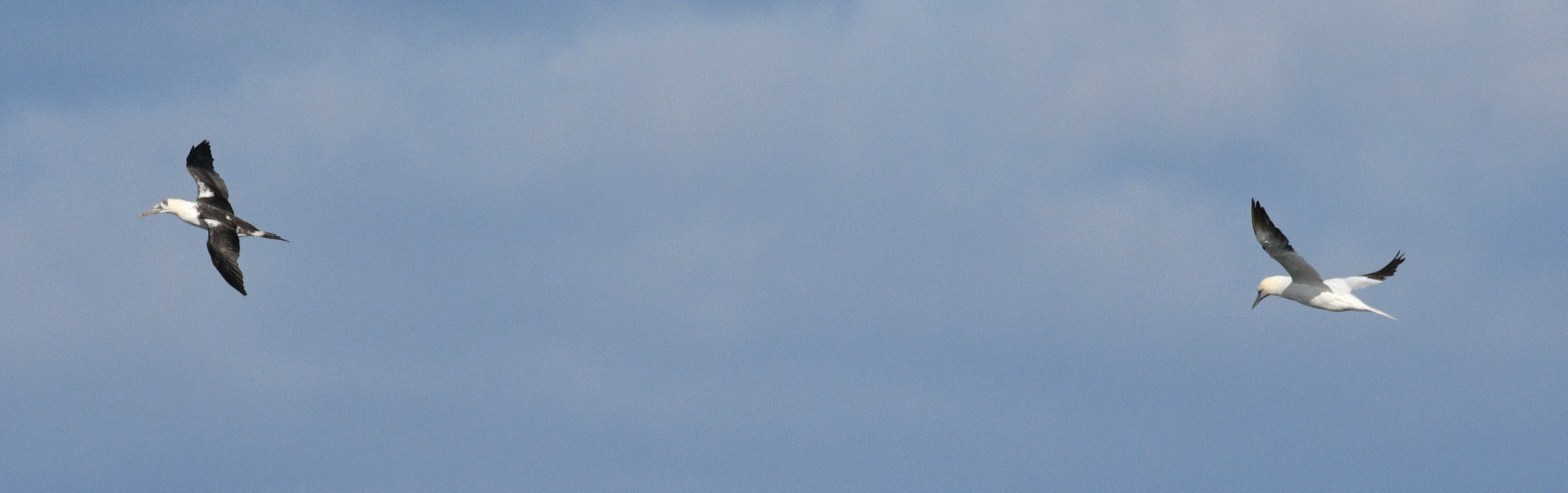
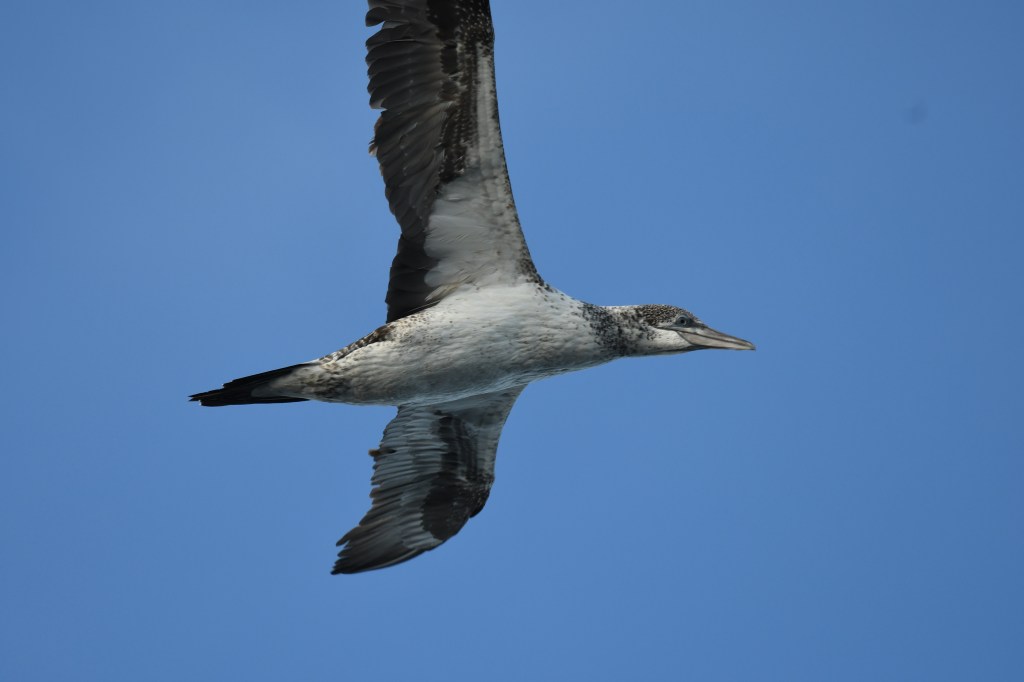
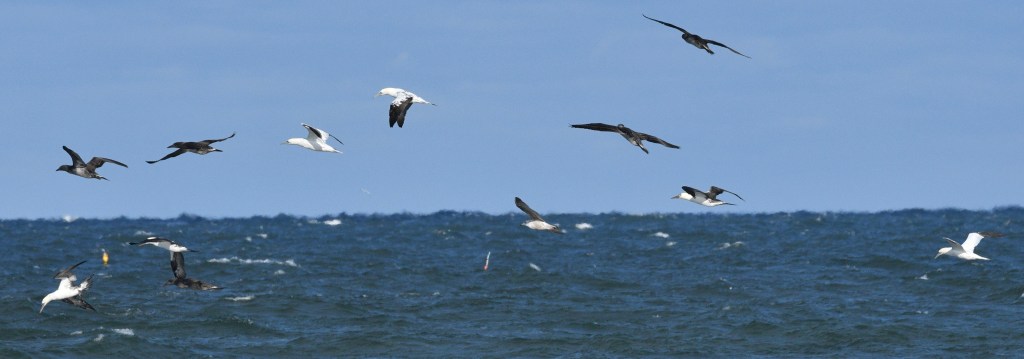
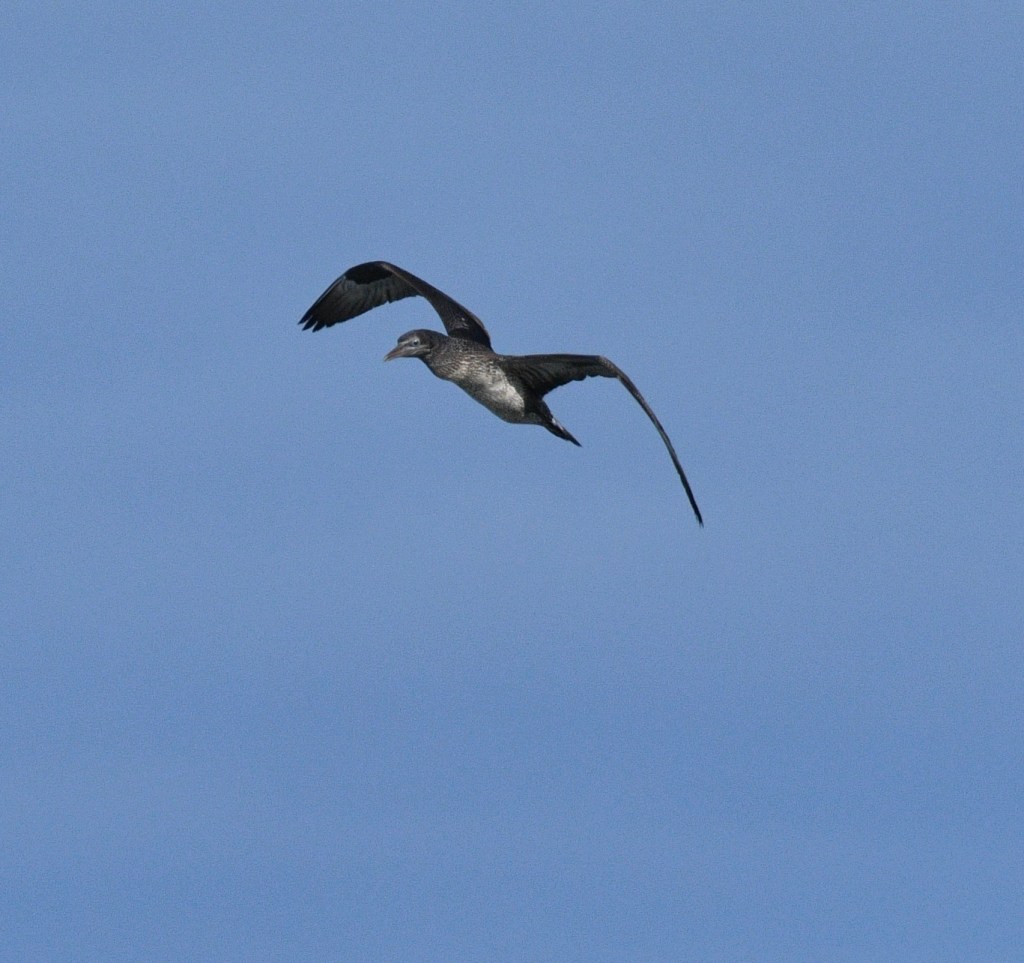
The gannets are closely related to the boobies of more tropical parts of the world and the fast, sleek, dives they make into the water brings this group down to where the fish are. They are large and rather ponderous creatures, often traveling in small groups but part of a large migratory movement. I had well over a hundred gannets close to shore today and was able to get a few images I’d like to pass along. The all white, well they have black wingtips and a yellowish-green face, plumage take four years to develop. The young are, at first, almost totally dark and when they molt over the next few years and become the shiny white adult. It is interesting to note that the young of the year weigh in at about 150% of the adult weight and are so heavy when they first enter the water that they cannot fly off the surface. They start their first migration by swimming southward.
The feeding dives that gannets make are quite fast and even though the birds enter the water smoothly they need to be cushioned and skilled. The cushioning comes from a sort of bubble-wrap layer that absorbs the shock of diving from fifty-to-a-hundred feet or more at faster than thirty miles and hour. Any of us who have belly-flopped into the water from a diving board or pool edge know that water is really hard and can hurt. The diving skill is learned, though they start off with an innate understanding that they are gannets and this is what they do. Our birds of the western Atlantic all originate in one of only six colonies up in the Canadian Maritimes.
Feeding Northern Gannets hit the water with speed that can carry them more that thirty feet deep. It is here, under water, that they will swim (fly) after shoaling fish and catch their meal. It is swallowed under water. Young birds will migrate south of the adults and they will spend about three years at sea before returning (at about a 95% rate) to the colony site where they were raised. Here on Cape Cod, Massachusetts we are still seeing lots of southward moving birds, both young and adults, as November draws too a close. We will start to see northward moving birds in late February most years.
The Walt Disney reference was to both start the gannet discussion and give credit to Disney for starting the nature TV shows that have given us Wild Kingdom, Nova, National Geographic specials and all the David Attenborough presentations.
The images below show a few of the Northern Gannet and then a couple albatrosses and a Blue-footed Booby (Galapagos) for comparison.
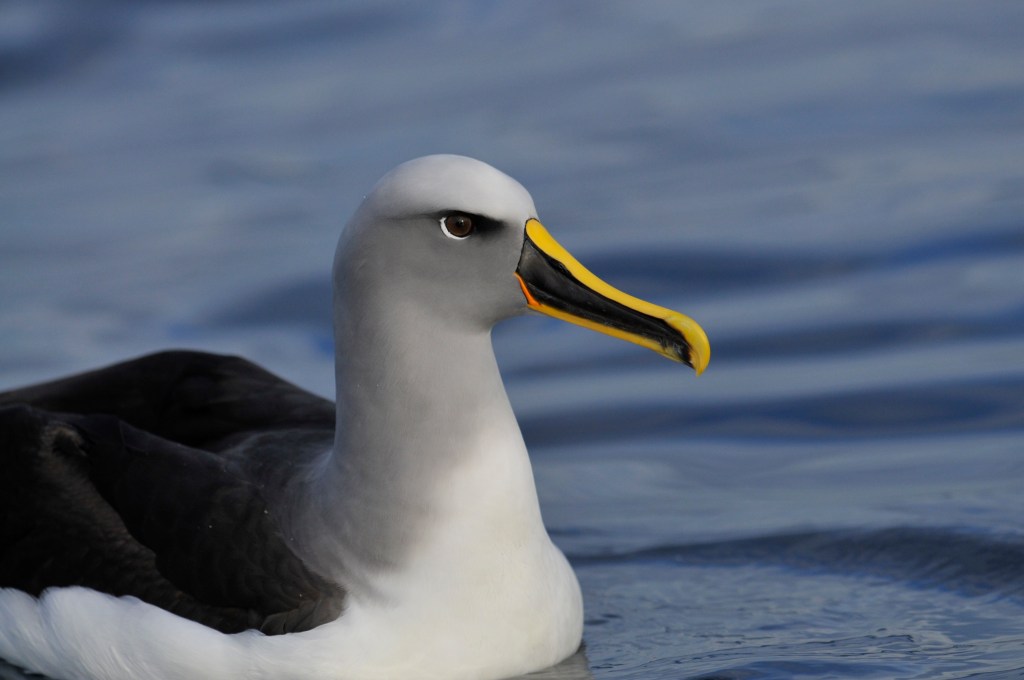
This nearly adult Northern Gannet shows the sleek tropedo-like body and long narrow wings of the species.This young bird is probably 4-5 months old. As juveniles they will migrate well to the south, further than adults. But as they pass into years 2, 3, and 4 they will stay a bit closer to home. As first year birds the head is entirely brown and transitions into a splotchy white in the first year.An adult and a few youngsters pass by a Cape Cod parking lot. They rarely fly over land but are comfortable close to shore. In this case there was a low tide, a str=ong wind, and some sort of shoaling fish pushed toward shore. Our gannets will eat squid, mackerel, sand lance, and menhaden as they pass by. They are not picky about the species but they surely favor the larger and oilier fishes.There4 seems to be no evidence that related birds (families) travel together but the age groups are mixed regularly.On this particular morning there were about 100 gannets in the air and 20-30 on the water. If the dive is unsuccessful they will usually launch into the air again right away. If they capture a fish they often linger on the surface for a few minutes.This is almost certainly a bird of the season. Just a few months ago it was fledging into the ocean and now is headed to the Caribbean on its own; although traveling with other gannets.This is a Blue-footed Booby; one of the highlight birds of the Galapagos Islands. Gannets and boobies are related and further related to pelicans and cormorants. The tropical boobies are smaller than gannets and though they wander quite a bit their migrations are rather short. The shape of the bird is much like that shape of the gannet.Another look at a Blue-footed Booby in flightThis is a Buller’s Albatross from the coast of New Zealand South Island. Though the albatrosses have very long narrow wings and fly with ease you can see here that their beak is not spear-like at all. It is a thick hooked beak that snares squid and fish near the surface.This is a Shy or White-capped Albatross also from New Zealand waters. It isn’t really surprising that many sea birds have long wings that make flying easy and almost energy free. The pelicans, boobies, gannets, albatross, and shearwaters all travel great distance looking for food and if you are at sea for days or weeks (or longer) it pays to be energy efficient. The long slightly arched wings provide lift with a minimum of air movement. These birds are superb in the wind.
Please consider all images to be copyrighted and ask permission to copy or use. Thank you. DEClapp
At first I thought I’d do posts about my wildlife travels from days past. And, I will do more of that I’m sure. I then thought I’d make a sort of page by page presentation with a theme and sense of progression to it. Neither of those is working out; quite frankly I am too lazy and too busy to plan out more than one step at a time — and I have no idea where the next post will come from or what it will be about. With that in mind I will continue to do posts as they come to me, day after day, random topic after random topic. I think that means that I will do more but will have repetition and predictability that I hope to avoid – but I’d rather do more posts than wait for that special moment.
The Covid situation has limited travel so I am kind of stuck with ignoring the blog or doing something sort of bland more often. So I choose to do more bland stuff, perhaps with repeats of species and more of a transitional (seasonally) series that just offers some highlights. Maybe I’ll stick in a lion or leopard or marine iguana every now and then but more likely it will be a collection of fall migration images from the northeastern part of the US; mostly out on Cape Cod.
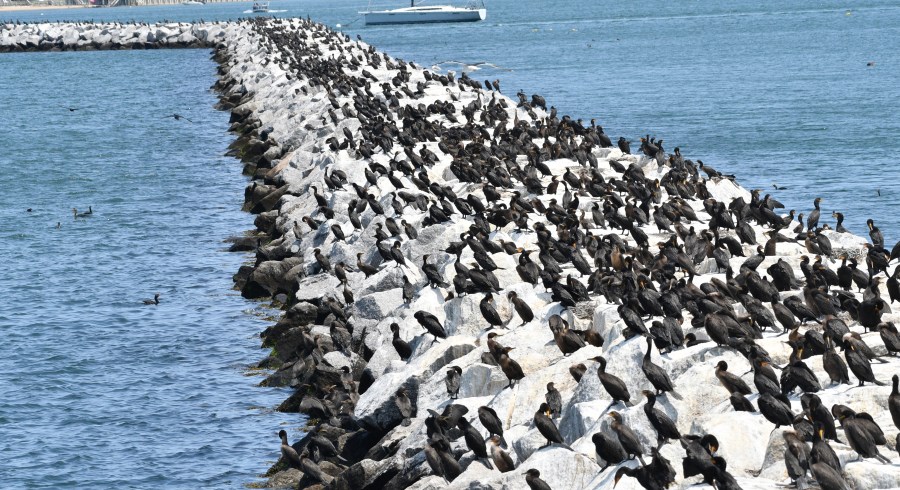
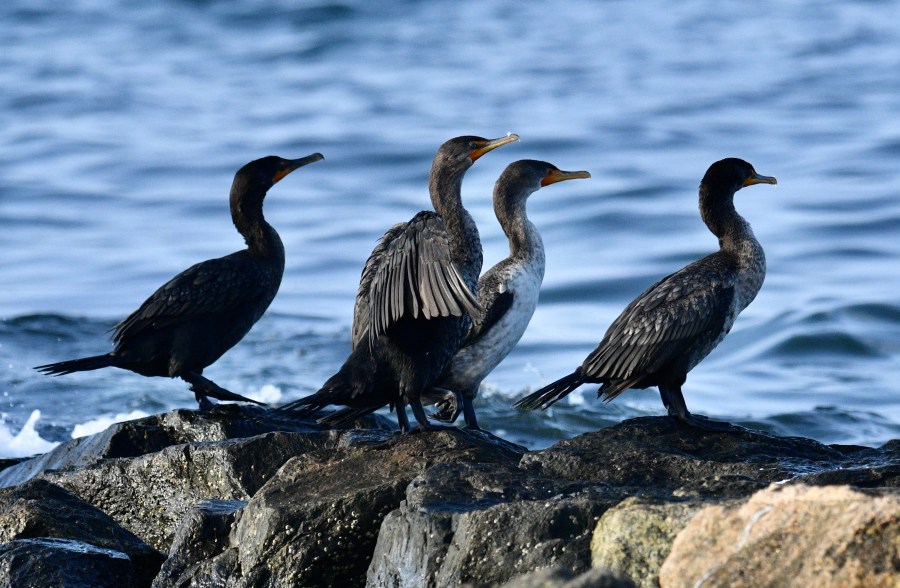
These cormorants are not specific to the roost but I mention the breeding colony in Provincetown harbor and just though I’d stick in an image taken from a Dolphin Whale Watch boat. The large Gray Seal population and the Double-crested Cormorant population point to the fish-rich waters of Cape Cod.
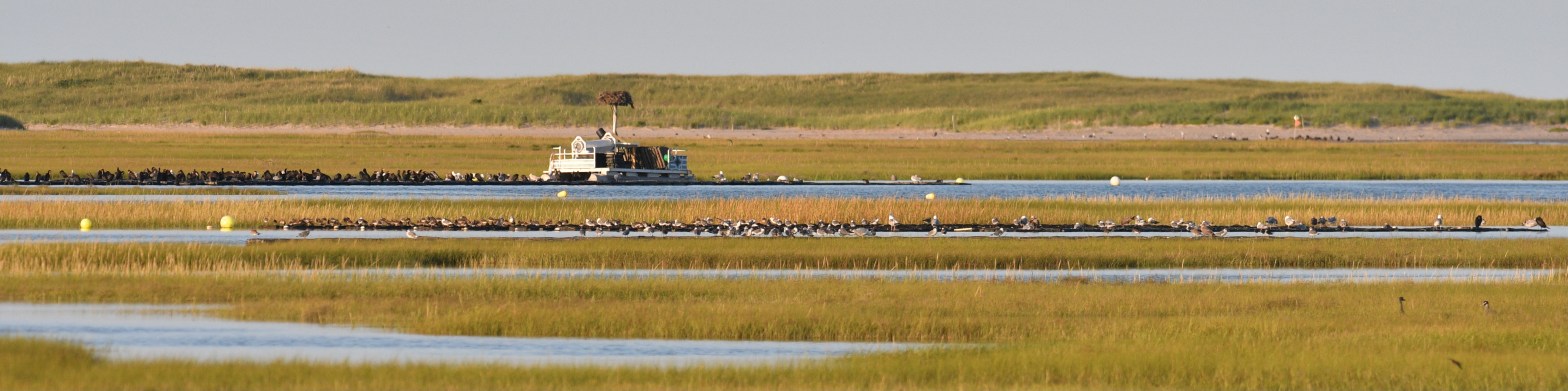
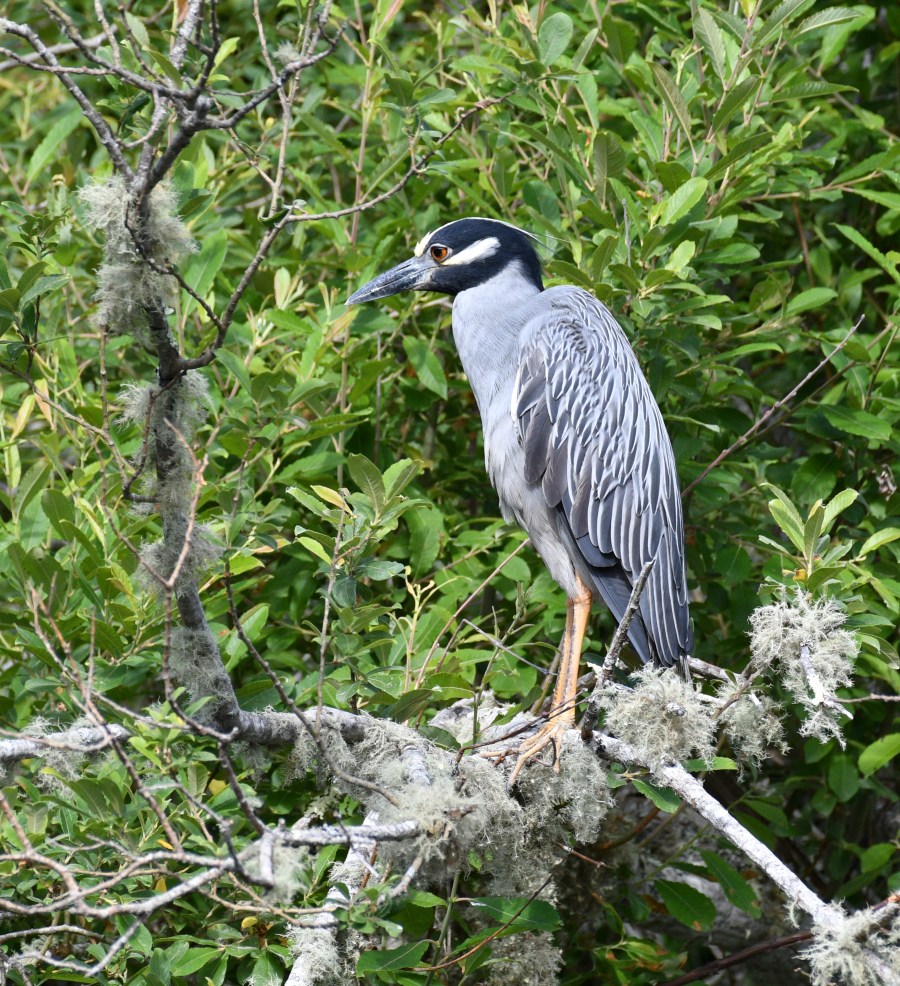
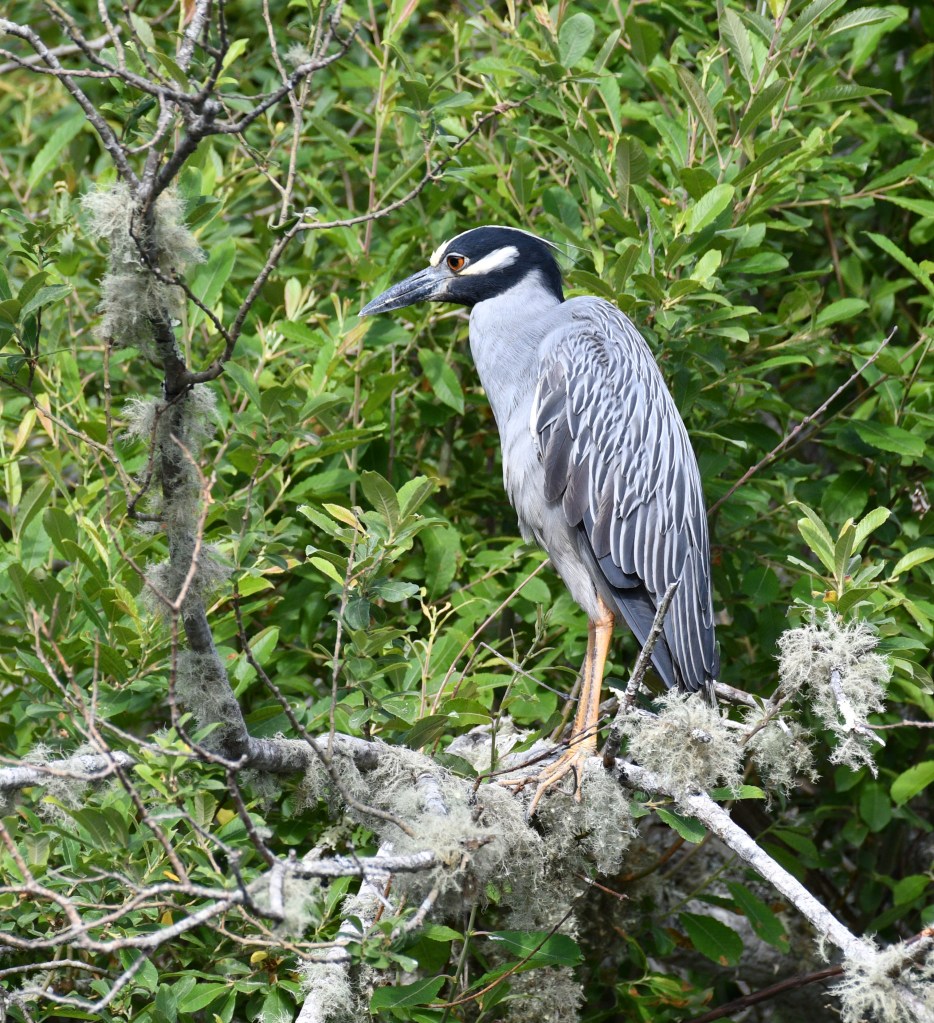
One of our favorite late summer evening haunts is the boat landing called Hemenway Landing. Looking north there is the big old Coast Guard Station and to the northeast and east there are expanses of salt marsh that eventually reach the edge of the Atlantic. We can grab our fried clam take-out at Sir Cricket and hang out in the usually vacant parking lot watching birds. This spot has had a summer time Night-Heron roost adjacent to it for thirty years. Most people arrive at sunset and are happy enough to watch the Black-crowned Night-herons depart in the gloom, but about 90 minutes before sunset is when the real action occurs. The Yellow-crowned Night-Herons, not a usual New England bird, leave first and well before sunset. They will fly out into the salt marsh going to join Great Blue Herons, Snowy and Great Egrets, as well as Eastern Willet and lots of Greater Yellowlegs. There are rather extensive oyster farms in the area and the Double-crested Cormorants and the yellowlegs are often in that area.
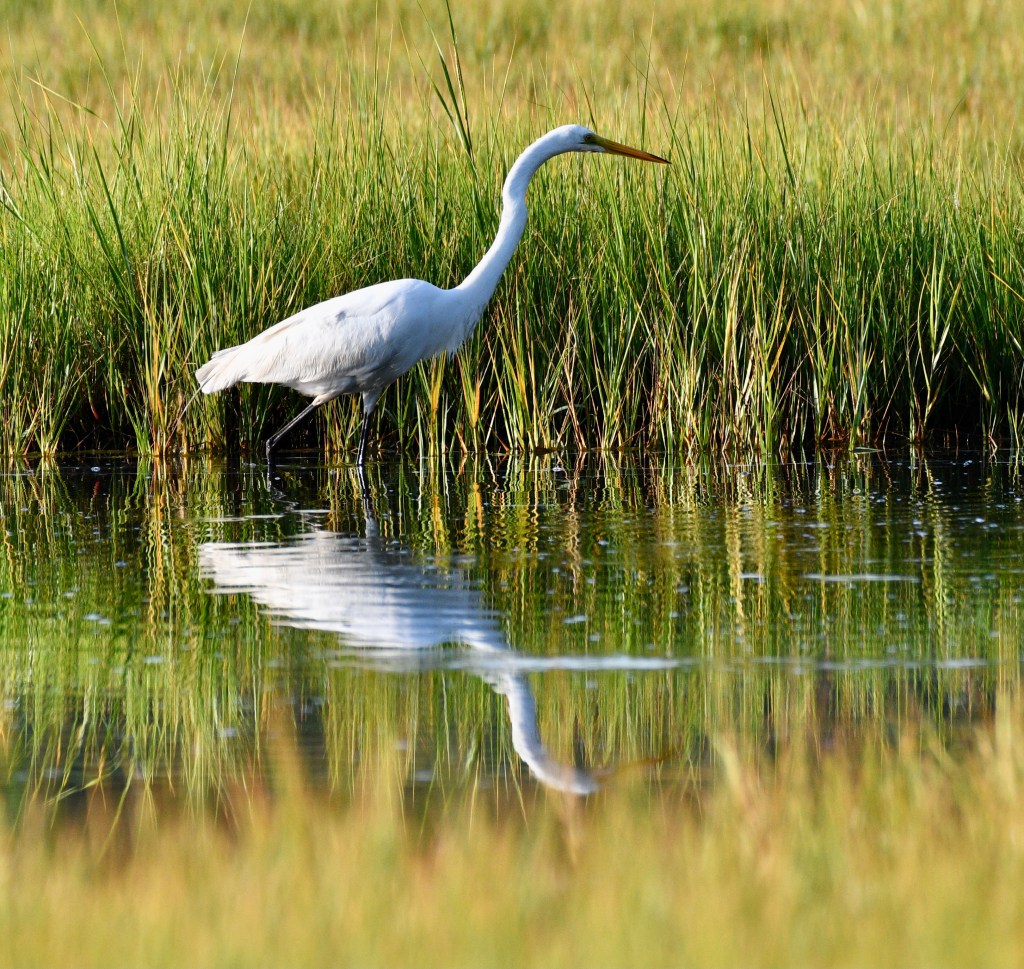
An adult Black-crowned Night-Heron (BCNH) is about two feet tall with a three-and-a-half foot wing span; solid and large but not huge. They are coastal nesting birds all over the USA. The roost at Hemenway has been in the same place for at least fifty years. I think that many of the birds that arrive at this roost in mid-summer are post-breeding birds from further south. There are nesting BCNH in Massachusetts but the roost has more birds than one expects from the local population. They nest in colonies and feed after dusk in the salt marshes or along the edges of ponds. Young Black-crowned Night-Herons are brown, striped, with a yellowish bill. In many late summer roosts the young birds predominate. But as they tend to fly later than the Yellow-crowns it is often too dark to be sure of the plumage and hence the age of the BCNH that you see heading out into the salt marsh.The Yellow-crowned Night-Herons (YCNH) are actually a bit smaller that the BCNHs, but as their posture is usually more elongate and not as hunched as the Black-crowns, they seem to be larger or at least taller. The YCNHs are crab eaters and they appear in Massachusetts when the crabs are flush. We have been seeing more of the usually southern Green Crabs recently and we are certainly seeing more Yellow-crowned Night-Heron.Another bird we see in the late summer in numbers that probably exceed the breeding population is the Great Egret. This tall white heron/egret is about 40 inches tall and has a wingspan that exceeds four feet. The other night at Hemenway Landing I saw no GREGs as I watched the whole show from YCNHs through the last BCNH departure. That is, I saw none in the marsh but a few minutes after sunset almost 90 birds flew over me coming from the north.The Great Egrets passed after sunset in surprising numbers. There are a few places where they might be headed to roost overnight, but this was not a repeated action – I have no idea where they were going or where they came from. But it was nice.These Double-crested Cormorants are hanging out on rocks, while at Hemenway they tend to stand on the aquaculture racks that hold a crop of oysters. There is a large nesting colony of DCCO up in Provincetown Harbor, just off the long breakwater near the main piers. Whale watch boats steam past hundreds of them both coming and going to the whales. We will get some Great Cormorants in the winter but they are in the Canadian Maritimes for the most part at this time of year.,Willet are a rather common nesting bird in the dunes and humps adjacent to the Cape’s salt marshes. This is a rather recent situation as there were very few Willet in Massachusetts, and none nesting, until the mid-1970s. This was about 100 years after they had last nested in the Commonwealth – egg collecting and shooting had eliminated them as nesting birds for a century. They are very noisy during the breeding season and it quite nice too hear the salt marshes ringing with their calls.The Hemenway marshes harbor large numbers of Greater Yellowlegs (GRYL) as the summer fades away. The herring and alewives that hatched during the summer have now entered the salt and brackish waters by the millions and the GRYLs chase after them (they are all lumped together as “minnows”) in the low tide shallows. There is also a Lesser Yellowlegs but they are more of a placid water, surface feeder and not usually found in the actively tidal waters where the Greater seem so comfortable. The GRYL is about 14″ tall and the Willet (same Genus) is a bit taller at 15″. The Greater Yellowlegs are breeding birds of the taiga spruce forests and tundra edges well into Canada and Alaska.
Please consider all images to be copyrighted and ask permission to copy or use. Thank you. DEClapp
I am usually looking for, and at, birds. But they live amongst trees, shrubs, ferns, mosses, algae, lilies, insects, fish, reptiles, mammals, fungi by the tens of thousands and bacteria and viruses yet to be named. They are part of our complex world – as are we. In my time birding I am always struck by the number of dragonflies and damselflies and just plain flies. There are plants flowering or growing leaves or shedding leaves. A pond or a forest or a field may seem static as we wander through but in fact these habitats (micro-ecosystems) are dynamic and full of life and death, action and relaxation, growth and pause.
It is with that in mind that I deviate a bit from the migratory bird scene and insert a few things that popped into view this week. Snakes, turtles, beetles, and carnivorous plants to name a few. But there is always something to admire or enjoy; for instance, I like the tiered growth pattern of Tupelo trees, and the sandy nesting bowls made by sunfish and bass, or the seemingly overnight arrival of dozens of Common Whitetail and Twelve-spotted Skimmer dragonflies, or, yes, the surprise arrival of Monarch Butterflies and migratory sandpipers.
So, below I am inserting an array of images from this week – next week’s array would likely be somewhat different – to stimulate you to look at not just the birds but the pond edges and the trees and the summer flush of insects. Oh, by the way the lead image is just a reminder that the wonders of summer will have to tone down as winter approaches and the world or each species changes dramatically. Here we go.
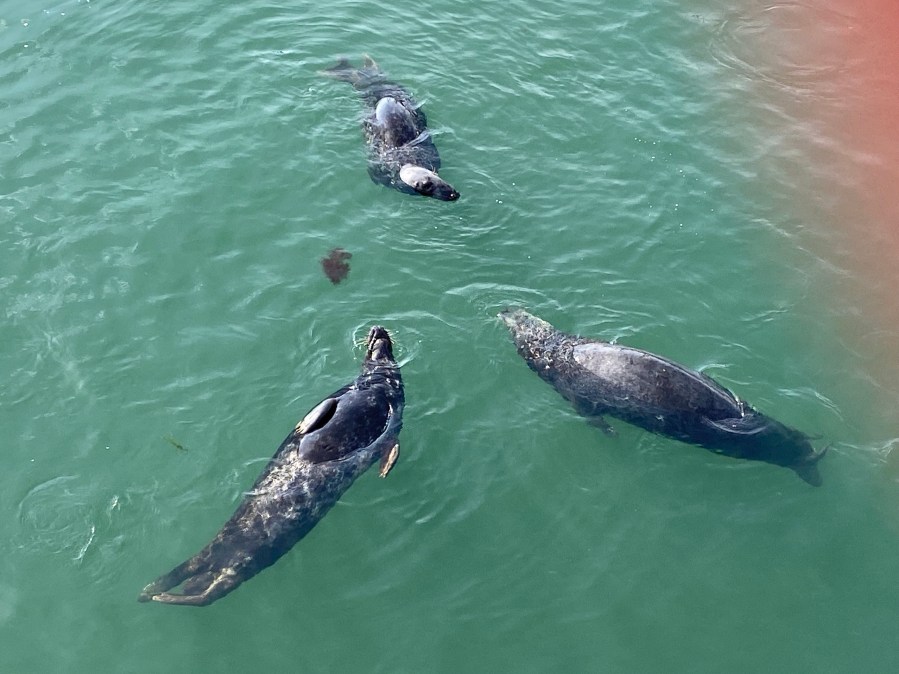
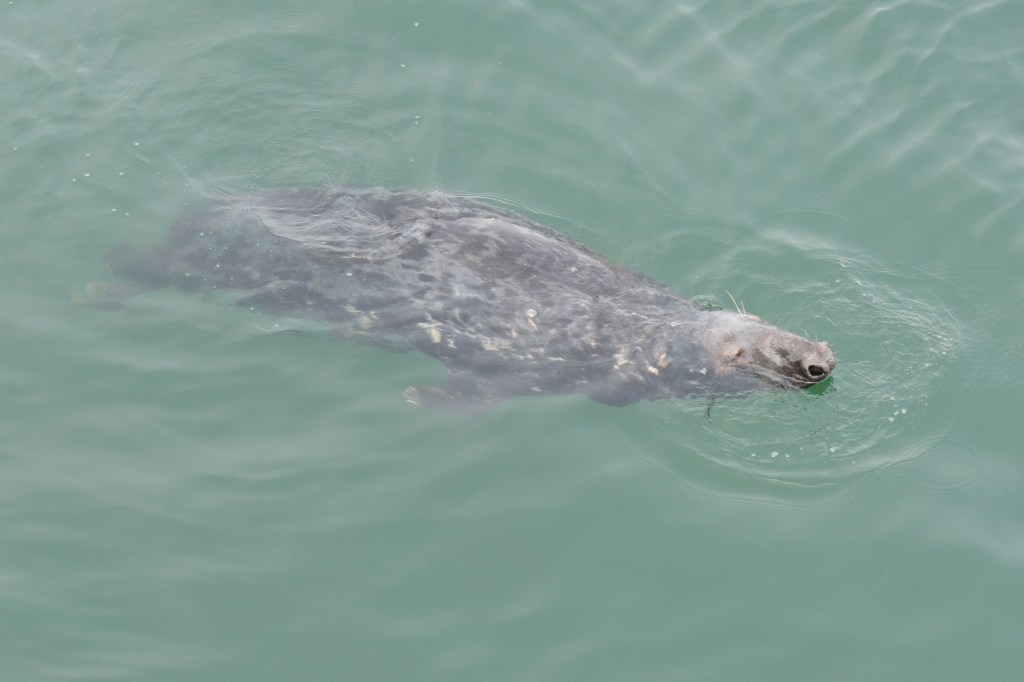
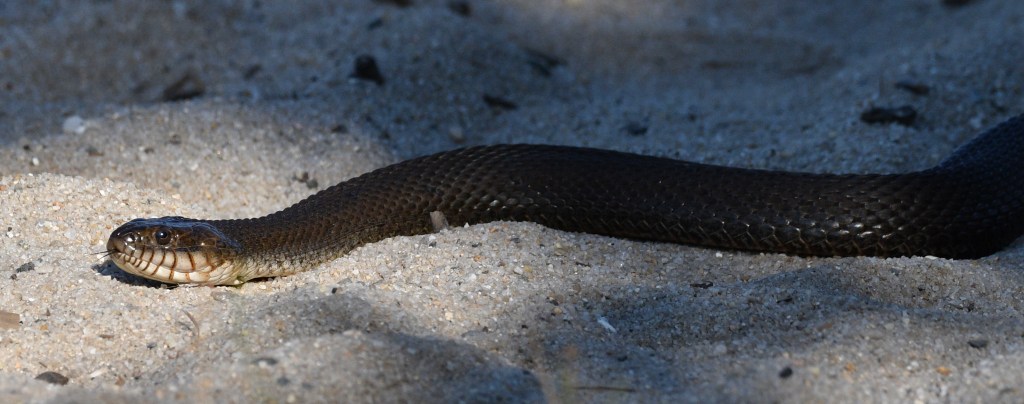
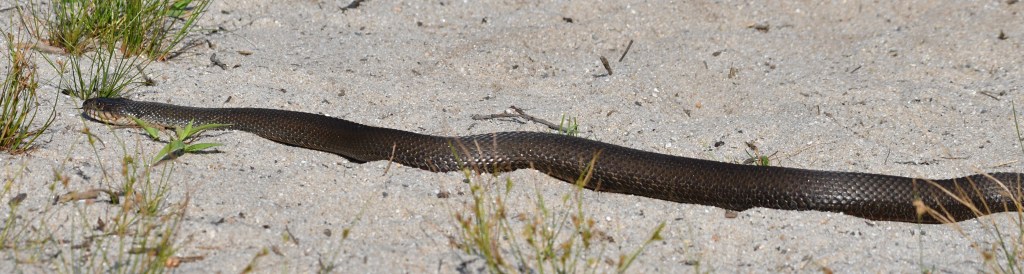
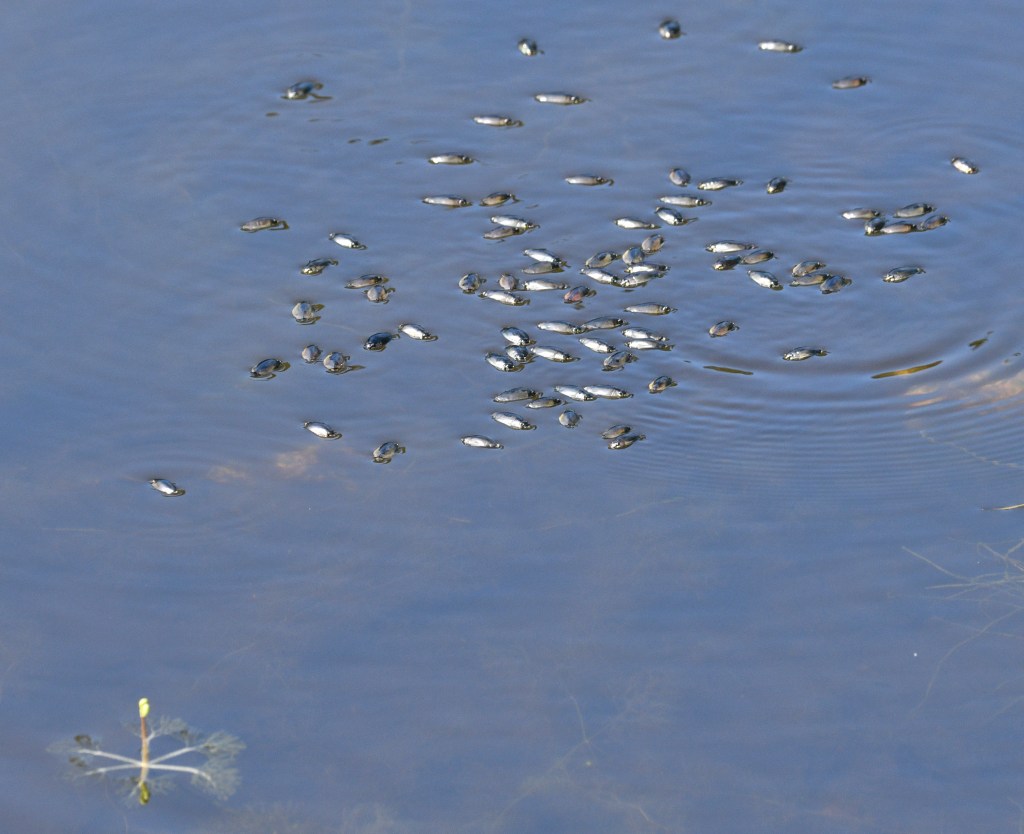
There is an underwater bank just off Provincetown, Massachusetts called Stellwagen Bank. It is a raised plateau under about 65 feet off water where most of the whale-watching boats go. The water varies down from 65′ to more than 600′ in a few places but closer to 300′ on average in the region. The moving water, our water moves from the south to the north and then east, hits the walls of the bank and rises, bringing nutrients from the deeper water to the surface. The waters off Provincetown are green with photosynthetic algae and then teeming with little creatures that eat the algae. Then of course there are things that eat the small stuff and larger things that eat those creatures – on and on until you become a bit afraid to fall overboard. Some of our summertime predators are Sand Lance, Striped Bass, Blue Fish, Tuna, Gray Seals, and several species of whales. The Sand Lance are about the size of a pencil and occur in shoals of many thousands. They are a forage fish for many predators including the whales.The header image of a speckled seal belly-up shows what is likely a youngish female Gray Seal. When the shark boats come in with their load of Atlantic Spiny Dogfish Shark the animals gather to grab whatever gets thrown over. There can be large, up to 600+ pounds, males and some smaller, sleeker females. There are lots of seals in the area and lots of dogfish as well.Big males will have a horse-like head. Females are smaller and sleeker and the head is more typically seal-like; that is pointed and maybe even funnel shaped. A large bulk Gray Seal will approach 3 meters (10′) in length and weight more than 600 pounds. Females can get to 500+ pounds but are often smaller. In Maritime Canada as well as Maine and Massachusetts there were bounty placed on seals as they were perceived as “thieves” stealing the fish that belonged to humankind. In Massachusetts the bounty persisted until the 1960s. The Cape Cod population has gone from about 2,000 in 1994 to about 16,000 in 2011 and now in 2021 the estimated population (by some accounts) is over 50,000. They wouldn’t be here if there wasn’t enough food. However the fisherman that enjoyed surf casting now see a lot more seals along shore than they see Blue Fish or Striped Bass.The Striped Bass is too small to be a keeper and the fisherman himself is a representative of a very small group of surf fisherman that persist in Cape Cod’s seal-rich waters. Most fishing now seems to be from boats or with fly rods in tidal shallows.This boat is loaded with the sharks as it comes in from retrieving its long lines. The lines are put out and then hauled back in almost immediately. There are sharks on most every hook. They have been harvested in huge numbers around the world. In the US fisheries management is presumed to keep the harvest on an even keel, but time will tell. In much of the world the Spiny Dogfish Shark is considered to be threatened from over fishing.In order to leave Provincetown Harbor one has to get a feel for the last glaciation as well as today’s erosion and shoaling. The boat is boarded at MacMillan Wharf and then you head south and turn west and then turn north in order to escape the inner hook of Cape Cod. Once on the Atlantic side of this great sand bar it is a run of a few miles to Stellwagen’s southwest corner. You pass three lighthouses along the way; Long Point as you start to turn to the northwest and Wood End as you head off to the northwest and away from land and a look over your right shoulder will give you a look at the Race Point Lighthouse back along the beach a bit to the south on the Atlantic side.Long Point Light Station is on the last curve as you return to Provincetown Harbor. It is a long walk to this location but some intrepid paddlers get there on stand-up or paddle boards and small boats are pretty common as well.. As you leave the shore and head for the Bank there are lots of private boats trying for the thrill of a lifetime – the hooking and boating of a tuna. It is a hobby for many and few of the cast from Wicked Tuna are here – but everyone has a dream. Cape Cod Bay will have Bluefin Tuna in it during the periods of warm water, June through September. These are migratory fish that make the trip across the Atlantic or up from the Caribbean to eat our summer fish stocks. Yellowfin Tuna are also here but stay pretty much in the warmer waters south of Martha’s Vineyard and Nantucket. Our forage fish include pogey (menhaden), mackerel, herring, as well as the small Sand Lance. Tuna will also chase down and eat the stripers and blues.A day in Provincetown will be interesting on many many levels. The commercial boats are in and out with fishermen and fishing gear, a bit gnarly and truly work boats. The clean and shiny charters are out looking to make the tourist-fisherman happy. The whale-watch boats run in and out all day. But in addition to these somewhat expected activities will be a research boat or two. Some of the research will be centered on our newest big fish; the Great White Shark. There are now all sorts of monitoring buoys to catch the “ping” of a tagged shark as it passes by. When this happens a scene from Jaws occurs and everyone on shore enjoying a day at the beach is told/asked/cajoled/ordered to get out of the water. The devices in the image are not rockets they are listening devices that hear the beep from a tagged shark. Dozens of sharks have been jabbed and a device implanted. Nothing is perfect but this mechanism has been helpful in following and identifying sharks and in clearing beaches. The Cape Cod Great Whites start off as fish eaters but as they grow and become stronger and faster they can hunt and kill seals. Cape Cod has a large Gray Seal population at the moment; probably well over 30,000. Fishermen think that is many many thousands too many, but neither the sharks nor the seals would be here if the ocean wasn’t providing enough food. In one way the seals are an example of a rich and teeming ocean. And that is good.“Portuguese women faced the sea in many ways: as mothers, wives, sisters, friends and family of fishermen, as cooks, laundresses, nurses, teachers and telephone operators. They kept the culture alive, sang the songs, danced the dances, buried the dead, gave birth, cooked and kept the church at the center of their lives. Above all, they were resilient through good times and bad, their strength and courage easily matching and supporting that of their male seafaring counterparts.” See http://www.iamprovincetown.com/PortugueseWomen/ for more information. This quote is from their website.The two ladies pictured on one of the walls of a wharf side storage barn are Almeda Segura and Bea Cabral. Eva Silva, Mary Jason, and Frances Raymond also appear. It is a touching, and fitting, representation of the weave and complexity of a working persons life. The idea was from Ewa Nogiec and the photos by Norma Holt.In the winter our Whitetail Deer population hunkers down in a sheltered patch of woods. But in the summer, with food everywhere, they might be found at fresh or salt water or in a field or woodland. This doe was wandering along the edge of a saltwater bay as I happened by. We were both a bit surprised.While driving in Maine a couple weeks ago we came upon a rather surprising reptilian form. Nicely done! We have a boulder near home that someone has drawn over in a “Snoopy” face. But the snake is pretty good.To my surprise the warm weather has real snakes out and about. The other day I stopped by a shallow pond looking for Solitary Sandpipers along the now muddy shore and there was a nice, heavily keeled, water snake on the mud. As I turned back to get the camera I saw this Black Racer along the edge of the water. The Black Racer can be found throughout eastern USA from Maine to Florida and Wisconsin to Texas. It favors an open habitat and around here the woodland cutting for the passage of high tension electric lines makes for perfect habitats.The Water Snake eluded me but the racer paused and posed. This species will grow to about 60″ if given enough food and time. The scales are smooth, not keeled. The white under the chin is usual and the belly could be gray or black. In early summer they can be territorial and will sort of bluff you away – I have had them vibrate their tails (sounding a bit like a rattlesnake I suppose) and rear up in an offensive posture.This summer has been dry out here on Cape Cod for the most part and the ponds are warm and lower that usual. These little grayish silver critters are a water bug called Whirligig Beetle or Gyrinidae. They gather in groups on the waters surface if things are safe and they are not panicked but they will dive underwater and swim away if something threatens them. It is probably surprising that they have eyes that are half and half; designed to work above the water in the air and the other half designed to work underwater.One last thing that caught my eye the other day was the yellow flowers of the carnivorous plant Bladderwort. The plant is not rooted but has floating roots. The roots have small bladders or little suction bags on them. The bladders can capture a food item (usually some small crustacean or insect larvae) so fast that it seems magical. There are a few U-tube videos that are slowed down and you can see the plant suck in the passing item. The very idea that a plant’s suction system can be triggered by and then inhale a passing creature implies that the plant has sensory nerves and muscles. There is a lot to learn. The genus Utricularia contains more than 220 species of carnivorous plant – through you rarely hear of them.
Please consider all images to be copyrighted and ask permission to use or copy. Thanks. DEClapp
Here in the northeast of the US we have all sorts of weather; cold winters, hot summers, comfortable springs and autumns and (like everywhere else these days) surprising weather of all sorts. This summer has been mostly warm and wet in much of the region. Out here on Cape Cod we have has only a little bit of rain but 50 miles to the west they have been inundated. My rain gauge shows a few drops over one inch for the summer where many places to the west have between eight and ten inches. The summer rains are most often in bands of thunderstorms that come (generally) from the west or southwest. Our clearing weather is usually from the northwest. Much of that weather falls apart as it reaches the coast.
I mention the summer weather not only because it is getting weirder and weirder around the world but because it impacts our wildlife and especially the migratory birds. I will spend a bit of time looking at what our birds do in the early summer, through the breeding season, and into the fall. Our spring migration here is mostly in the month of May but birds are moving north both earlier and later. We also get some birds in June that are the young-of-the-year from Florida and other southern locations. Many of our neo-tropical migrants head northward into the Canadian boreal forest and many of our sandpiper-types head even further north to nest in the tundra regions of both Canada and Alaska. The same thing happens in Scandinavia and Russia. The southward migration is spread out as there are waves of birds heading “home”; first we get those birds whose nests have failed (as early as mid-July), then we get the successful adults heading south after breeding and now leaving precocious young behind (mostly August and September), and finally the birds of the year who now migrate southward on their own without experience or leadership (usually September and October).
We’ll take a look at some of these migrants over the next couple posts (and months) as they come and go from eastern Massachusetts. Long distance migrants are strong flyers with a penchant for flying. They can appear most anywhere. We see oddities every now and then, some of them from way down south and others that must have crossed the ocean. Each story is different and each species in not really homogenous in its planning and execution.
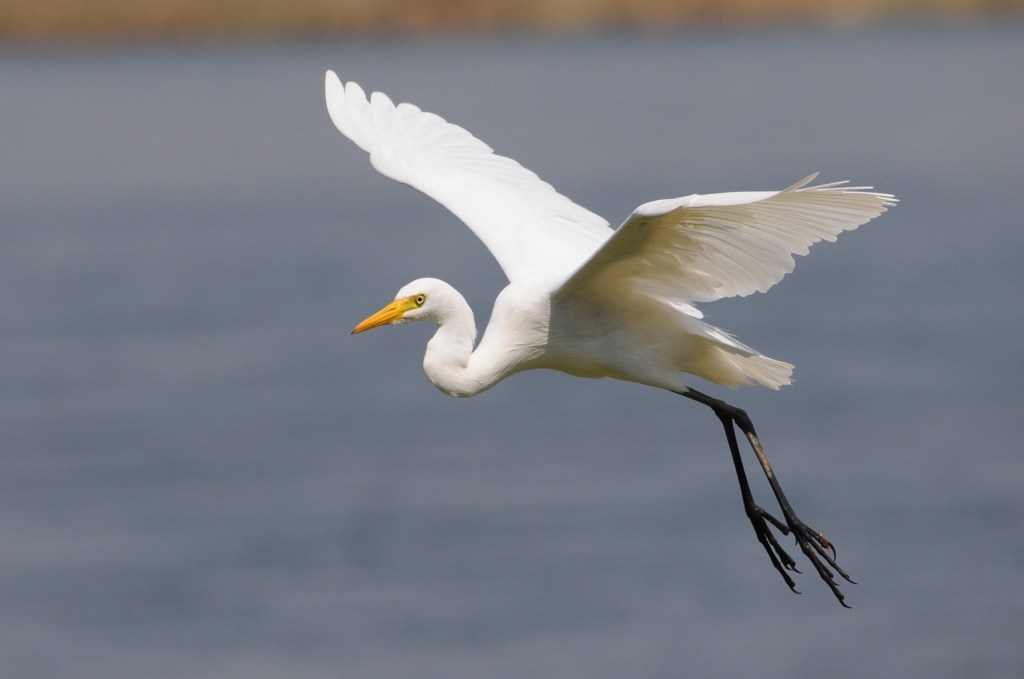
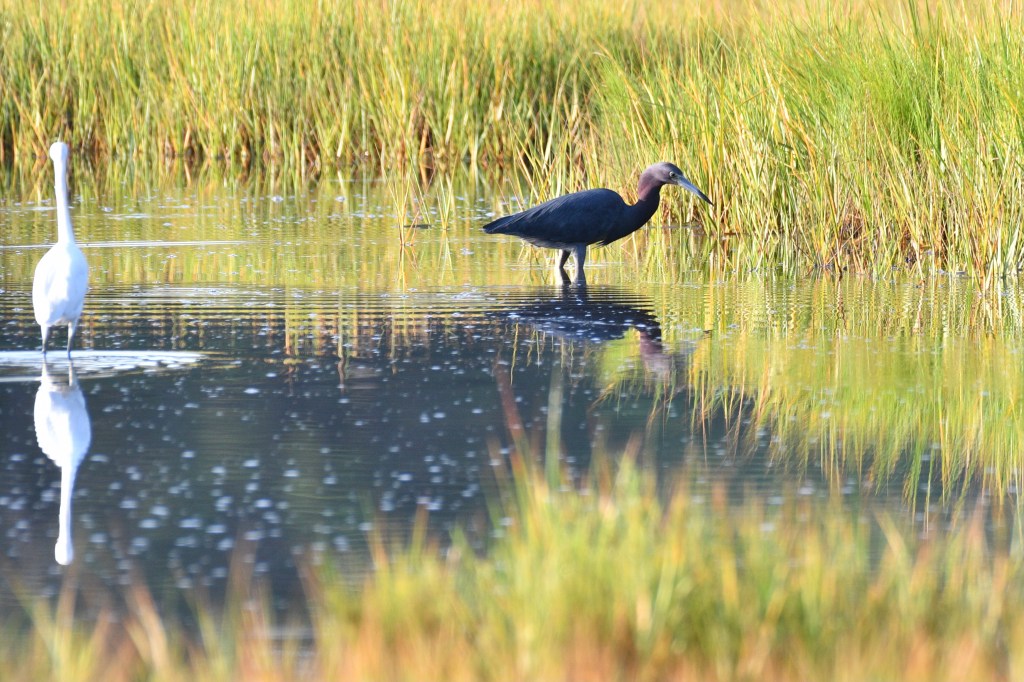
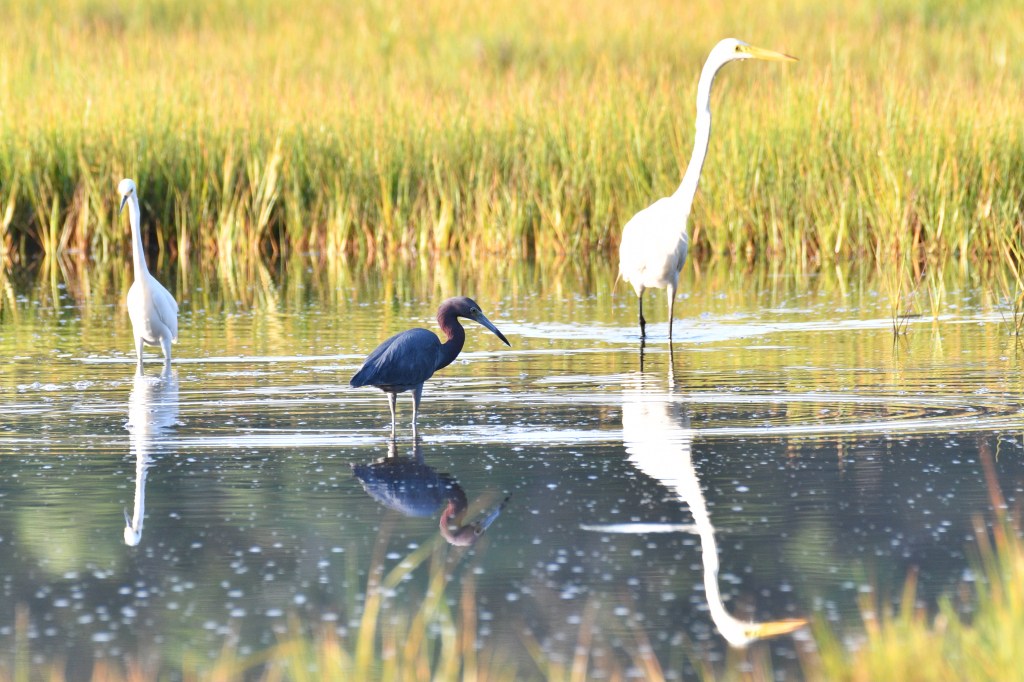
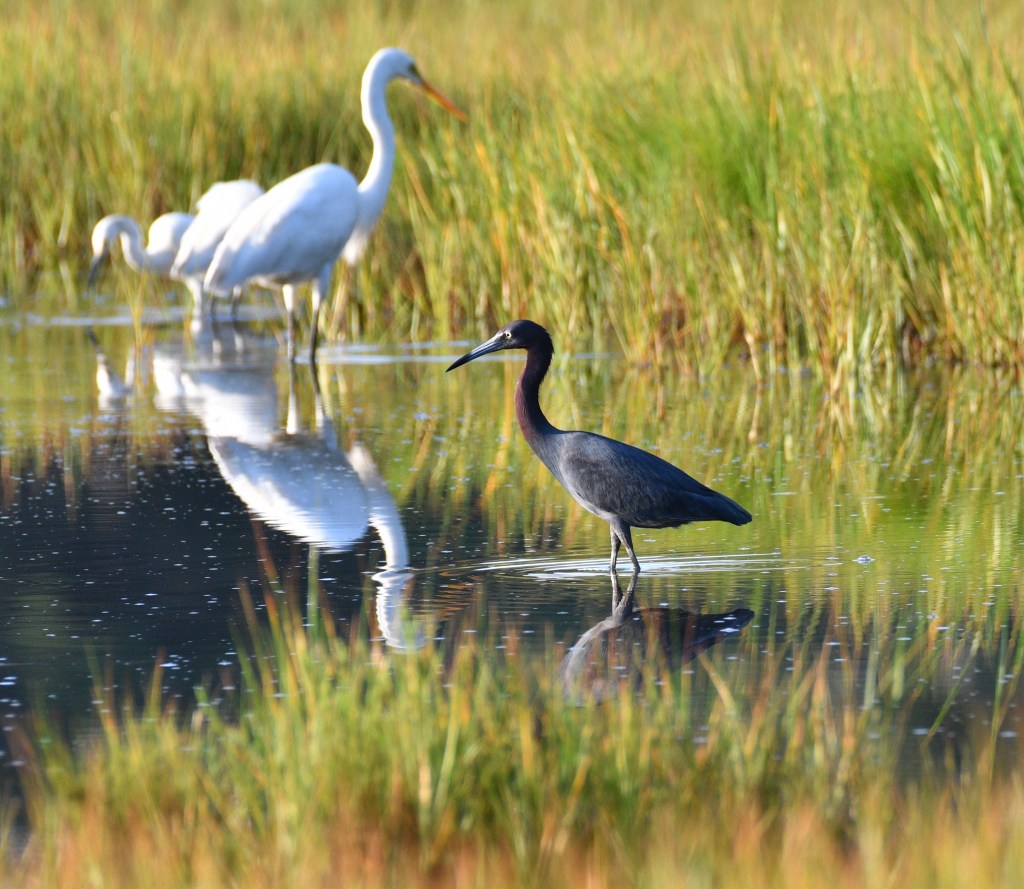
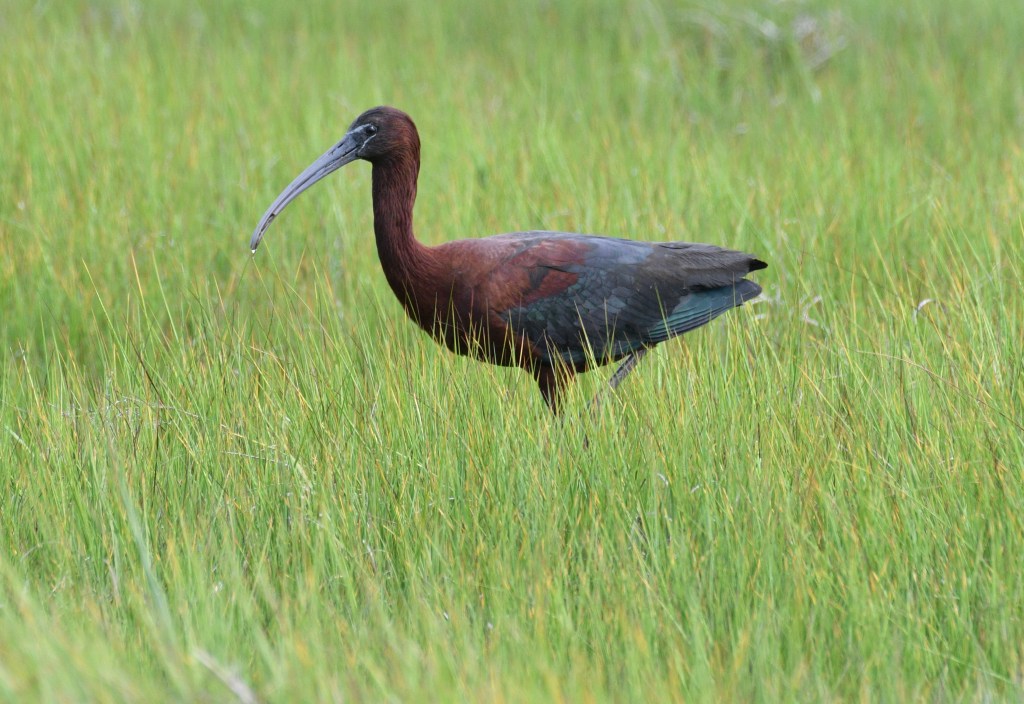
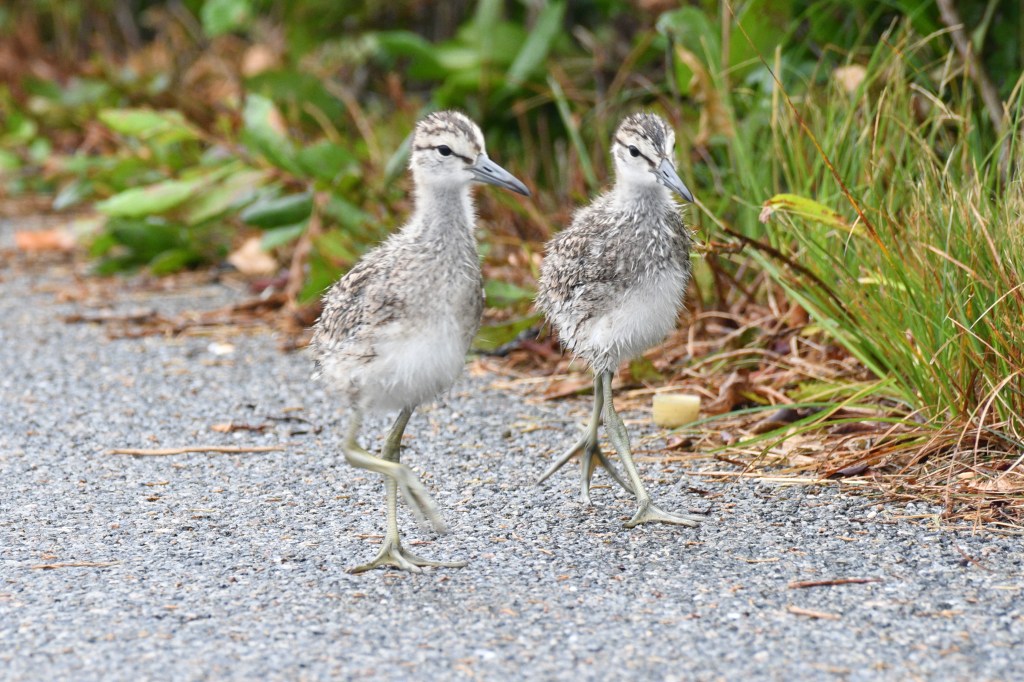
There was a recent post on Night-Herons. This is a rather young Black-crowned Night-Heron. This is a species that can be found through the continental USA but is mostly a coastal breeder. They seem to follow crab populations and as coastal waters warm and crab populations expand northward we are seeing more and more up here in New England. They roost and nest in loose colonies often with other herons and egrets.The Great Blue Heron is a large bird and a strong flyer. They are also found well offshore on island chains, like the Galapagos, are often seen well out to sea in migratory flight. This is a rather common bird and is found from coast to coast. They nest colonially in stands of dead trees, often over water. A single large tree can hold several nests. They stand over four feet tall with a six foot wingspan. Young birds are grayer and have a mottled front to the neck and they lack the white and black pattern on the head. There are only a few nesting colonies up here in New England but the birds are common in both fresh and salt marshes. Our resident population is augmented by a northward post-breeding dispersal of birds that nest earlier in the southern part of the country. (This is the same reason we get Osprey and Bald Eagles moving through our region in the summer – they are birds of the year, or nesting adults, from southern states.)One of our nesting (though in smallish numbers) egrets is the Great Egret. This is a very common bird in the southern tier of states and a species that we are seeing in larger numbers here in the north. None of the herons are musical or even melodic – as a matter of fact they are often gruff, squawky, grating & gravelly (Sibley), hoarse, rasping, or some other nonmusical appellation. The Great Egret is a few inches shorter than a Great Blue but with a shorter wing span. The bill is yellowish, the legs and feet are dark. The lack of yellow feet and the larger size separate it from the Snowy Egret, In our area they are easiest to see in a swath of salt marsh but they are also found in freshwater wetlands.Another heron that we are seeing annually is the Little Blue Heron. This is a bird of our southern coastal states and often shows up in New England in mid-summer. It is quite common to our south and has even joined a few of our local heron colonies on occasion as a breeding bird. The little Blue Heron will often use the same pools and marshes as the Snowy Egrets (more common by far) but will not join the group. They are almost always off by themselves, even when other Little Blues are in the area. The young of the year are white with a two-toned bill. At about 7 or 8 months, when their first spring arrives, these young will still be white with blue-gray patches. The will not be fully adult-plumaged until their second spring. The bill remains two-toned. Here on the Cape we usually see Little Blues in salt marshes but they are very comfortable in fresh water fields and marshes. This image shows a Little Blue in a tidal pool, probably with a lot of fresh rain water in it, associating with a Great Egret and a couple Snowy Egrets. Another of our tall wading birds is the Glossy Ibis. This bird is found east of the Rocky Mountains and is not uncommon in its breeding range; primarily the very south coast of the USA. We see them more and more but they have been recorded annually since the 1940s. In the 1970s they extended their breeding range into Massachusetts and for a while there were more than 150 pairs breeding in the Commonwealth. Though we see them annually the breeding numbers have dropped significantly. The Glossy Ibis has a very close relative, the White-faced Ibis. We do see them also, maybe annually in the state. The glossy has a very dark eye, blackish face, and modest white lines on the face.As I started with migrants and migration and shorebirds as well as herons and egrets; I think I’d better stick a shorebird in this post. This is an Eastern Willet. Twenty years ago it was an uncommon breeding bird along our beaches but now it is by far the most common (and loudest) of our coast nesters. The first nest in 100 years was found by Dick Forster in 1976 out on Monomoy Island. It is a “sandpiper” of a size similar to a Greater Yellowlegs (almost pigeon sized). It is a solid looking bird and displays a large white flash in the wings when flying. As mentioned, they are noisy and obvious.Just to prove it is a breeder here are a couple somewhat gawky, flightless, young teenage willet chicks. The nest was along a main road into a large and well-visited public beach. They seem to have settled in to our region with great confidence.
Please consider images to be copyrighted and ask permission for any use. Thank you. DEClapp
The heron family is a bit of a hodge-podge. The flamingoes, storks, ibises, Hammerkop, Boat-billed Heron, and Shoebill are often included but sometimes separated out into their own group(s). Genetic similarities will aid in the development of a taxonomy based on heritage. Historically tall, long-legged birds that generally hang around wetlands have been lumped in a larger “heron” group – but that is changing. Consensus says that there are four heron groups that are similar enough to be grouped almost together – but not really together: there are (day) herons (34 species), night-herons (9), tiger-herons (5), and the bitterns (13). Egrets are just medium-sized herons, that in the US, often have predominantly white plumage. On a world-wide basis the medium-sized herons (egrets) range from totally black to totally white.
Most taxonomic lists show at least 60 herons world-wide. eBird, the large data base for bird records, shows a total of 75 birds in the four heron groups. The International Ornithological Congress (IOC) says there are 72 species. So 60 to 75 it is. Some species have appeared on islands and have moved from one continent to another – whether these have become new and separate species leads to differing opinions and differing lists.
The herons will nest in colonies or separately depending on the species. Males establish a territory and display to attract and gain females and probably to repel competing males as well. The males will develop a breeding plumage that features plumes or long showy feathers. Some herons will have a single rather thick plume like a pony-tail, others will develop long loose feathers like sun-dried hair and a third group will develop aigrettes or loose flowing feathers that can be on the head, neck, or body depending on the species. It was these feathers that drove the slaughter of birds during the breeding season toward the end of the 1800s and early 1900s. This feather trade killed millions of birds – so many that feathers were often sold by the ton!
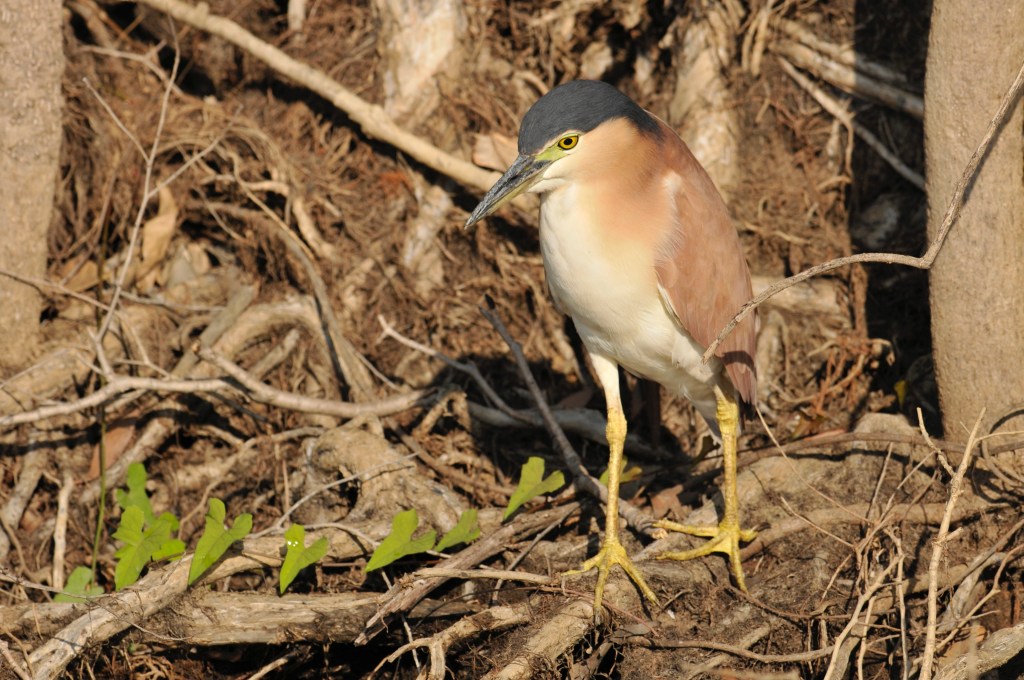
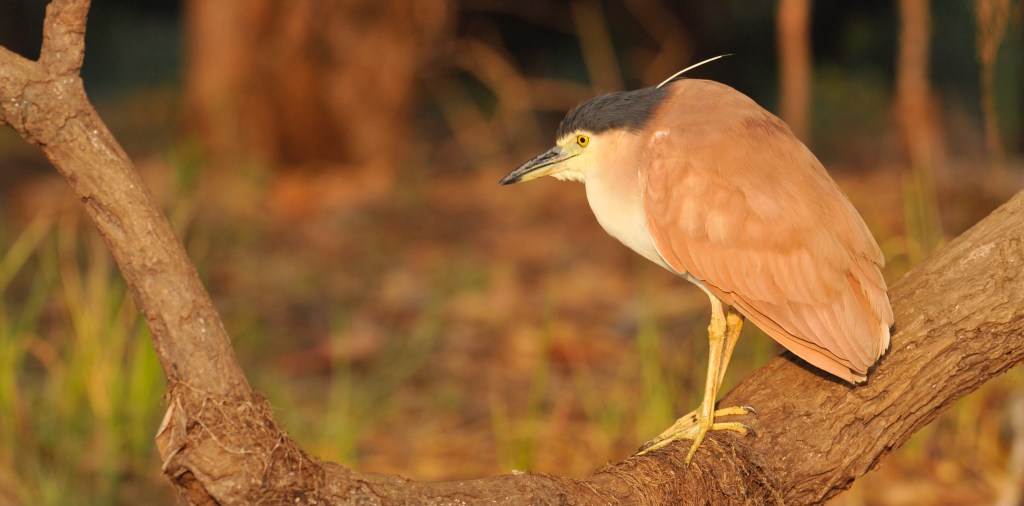
There are two common Night-Herons in the US; the Yellow-crowned and the Black-crowned. This species also extends south along the Atlantic side of South America to southern Brazil and on the Pacific side down to the Peruvian coast. They have also established on the Galapagos Islands. The bird above is on the Galapagos and is being watched by a couple Marine Iguanas basking behind it.The Yellow-crowned Night-Heron is a rather long legged Night-Heron. They are typically birds of the salt marshes and marine shores. They tend to feed on crabs and most anything else that they can grab as they slowly work along the shore or along tidal creeks. As the name implies these birds, and this group, feed at night; though not exclusively.The Yellow-crowned Night-Herons breed up into Massachusetts in years, or times, when crab populations are booming or when an invasive crab makes an appearance. We see them eating Fiddler Crabs and the rather new arrivals, the Green Crab and the Asian Shore Crab. The Green Crab has been in the US for about 200 years actually but has boom and bust periods. The Asian Shore Crab is now (probably) the most common crab in the Commonwealth. The population of Yellow-crowns will continue to grow in areas where the two non-native crab populations are growing. In many cases the birds will swallow the crabs but not start digestion until they have found a quiet spot where they will regurgitate their crabs and then eat them slowly. The young of both Yellow- and Black-crowned Night-Herons are brown. In flight the Yellow-crowned is a bit more gawky and has legs that extend well past the tip of the tail. In many places the herons are most easily observed as they fly out from a roost onto a salt marsh to feed. The leg length is a characteristic easily noted in the dusk as the birds pass overhead.This adult Black-crowned Night-Heron shows the shorter legs of this species.In Australia and on many south Pacific island the Nankeen Night-Heron is the replacement for the Black-crowned Night-Heron. As matter of fact many taxonomists feel that they are the same bird (species). The color change is obvious but just about everything else speaks to a Black-crowned. Like many herons (and egrets) the Night-Herons will wander extensively after the breeding season. They are not really migrants but there is a post-breeding dispersal. The plume is an accoutrement that develops in the males and females during the breeding season. This is very similar in size and shape to the plume that Black-crowned Night-Herons develop. This is a bird that will nest right in the city as does the Black-crowned. I have seen Nankeen nests along the Esplanade in Cairns, Queensland, Australia. These nests were right over the pathways and sidewalks and the birds were almost never noticed by the sun bather, walker, and the people passing by.Though there are a few other forms of Night-Herons that could be mentioned (White-backed, White-eared, Japanese, Malayan) I’ll finish with a bird that belongs in its own taxonomic tribe – the Cochleariini – but seems to really be another Night-Heron. This is the odd Night-Heron type of bird called Boat-billed Heron. This is a South and Central American bird of wooded wetlands and mangrove swamps. It is found in the low wet areas of the continent and has a broad flat bill and develops a bushy black crest in the breeding season.
The various Night-Heron species are often geographically widespread and this results in a range of populations; perhaps some of these populations represent different species. For instance there are five subspecies of the Boat-billed Heron, four of the Black-crowned, five of the Yellow-crowned, and four of the Nankeen. Birds like this, that are strong fliers and that establish widely over the planet, are often genetically dissimilar to the original population. The longer the separation the greater the differences. Genetics will probably allow for more population/species/types of Night-Herons in the future.
Please consider all images to be copyrighted and ask permission to use them in any manner. Thank you. DEClapp
Maine is a treat and a retreat. Traffic into Maine on a summer weekend is steady and seemingly endless. The exiting traffic on a Sunday evening is either slow or very slow. It is the vastness of the state and the low resident population that keep these wooded lands relatively unpopulated. I am sure the coastal spots are more hustle and bustle but, aside from logging trucks, the remote areas are pretty quiet. Much of this post is from a logging road, visited after hours, in eastern central Maine.
By the way, the logging equipment is pretty amazing. The cutting machines clip the trees near the ground and remove the branches by dragging the main trunk through a series of cutter bars. The cleaned stem is then piled like giant pieces of fire wood to be taken to the road edge and loaded onto trucks headed for the mill. The coniferous trees become pulp and the smell of the mills, through pretty local, is memorable. Much of the paper produced in Maine is for kraft (brown) paper. The cutting machines clear a path into the woods as if they were a giant brush hog. It is very efficient but leaves a real mess.
However the forest regenerates quite quickly where harvesting occurs and the open patches created by the harvest are often the places where second growth shrubs can get a life. It is also where birds and small mammals can find sun-supported plants and their seeds and fruits. Remember the spruce forest allows almost no light to reach the forest floor, but after the cut there are swathes of open space. It is a hugely impactful operation; but life is complex and often messy. Giant clear-cuts are a thing of the past.
The warblers depicted in the post are small – weighing about one third of an ounce!! They have migrated thousands of miles from the tropics to reach these northern breeding grounds. It is remarkable! Oh, the young will migrate southward a few thousand miles on their own at about three months old.
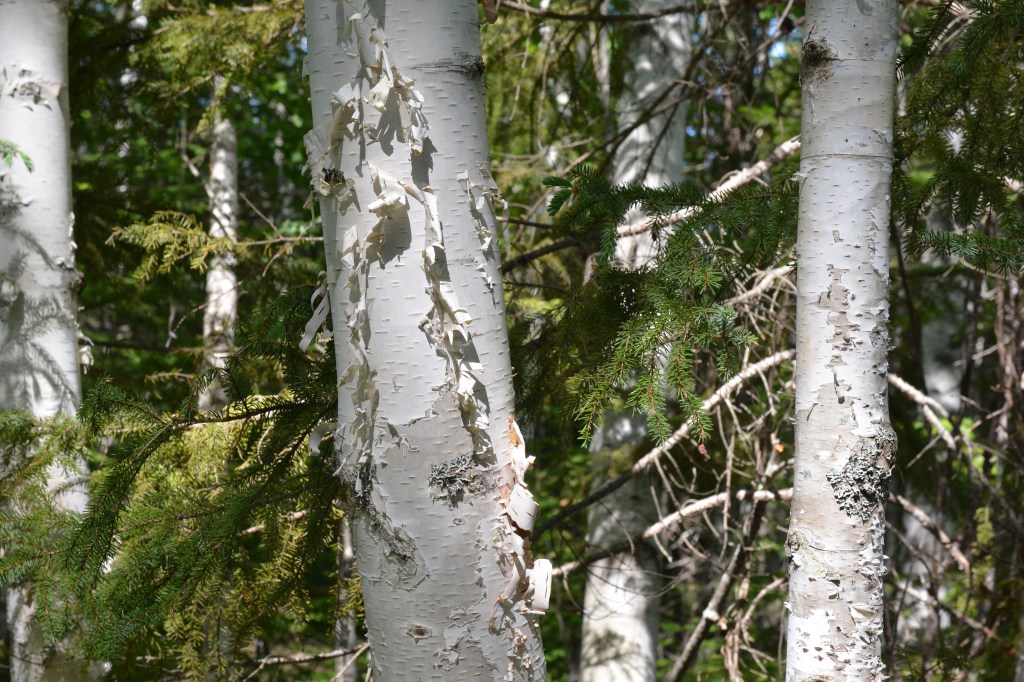
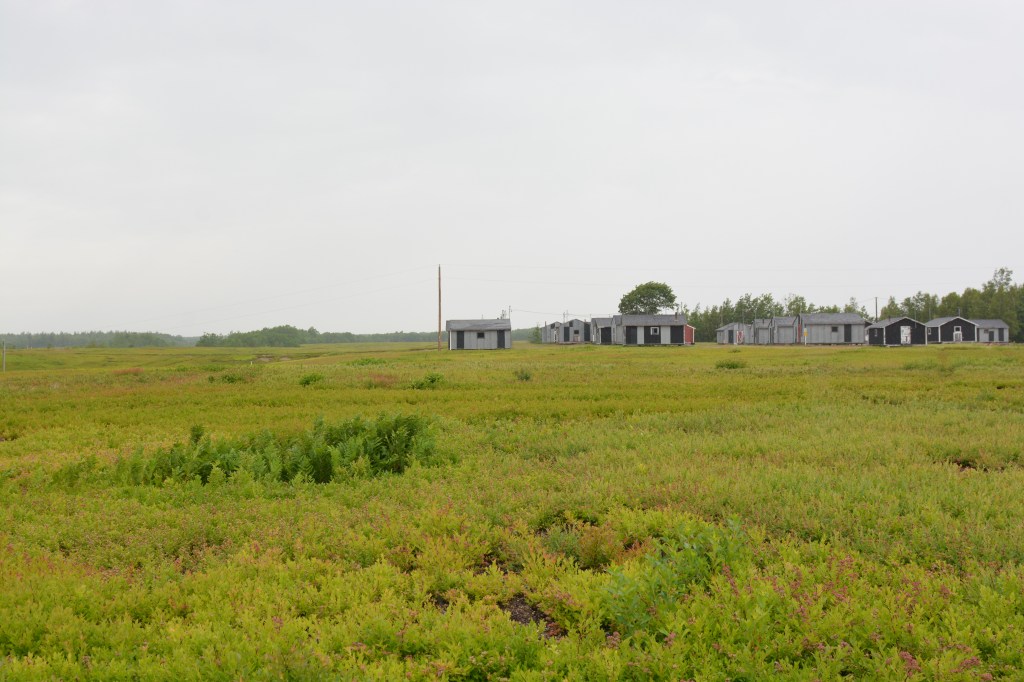
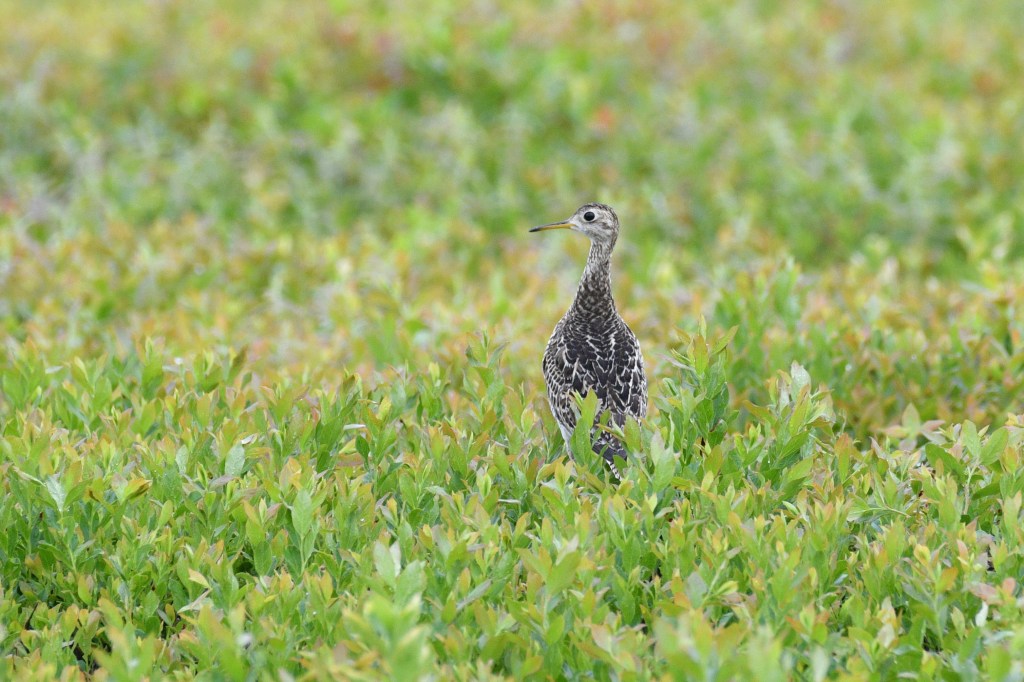
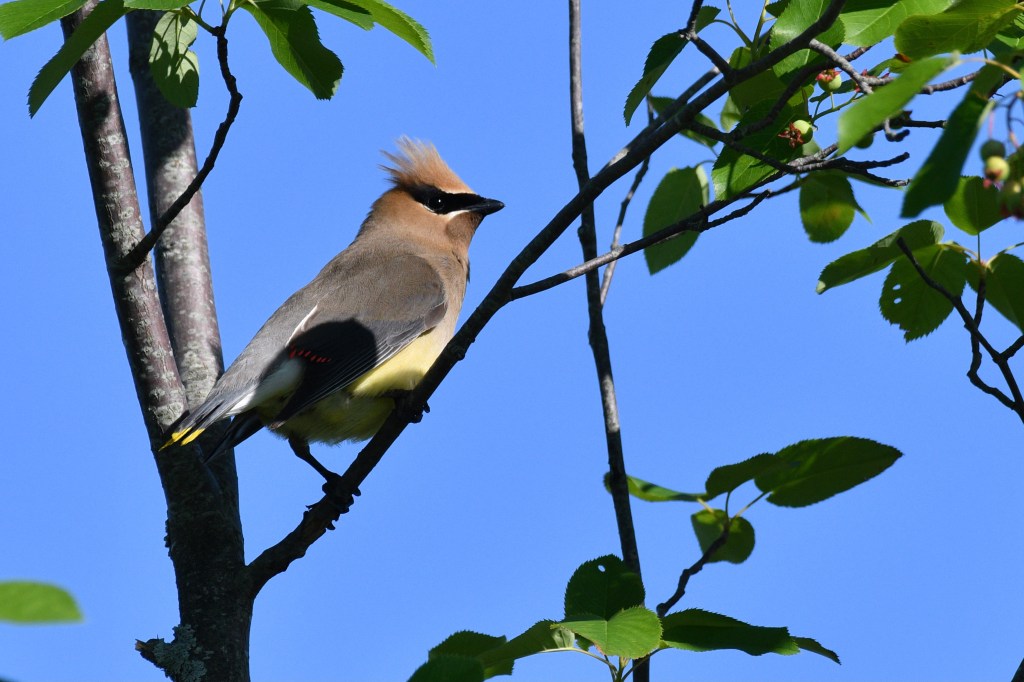
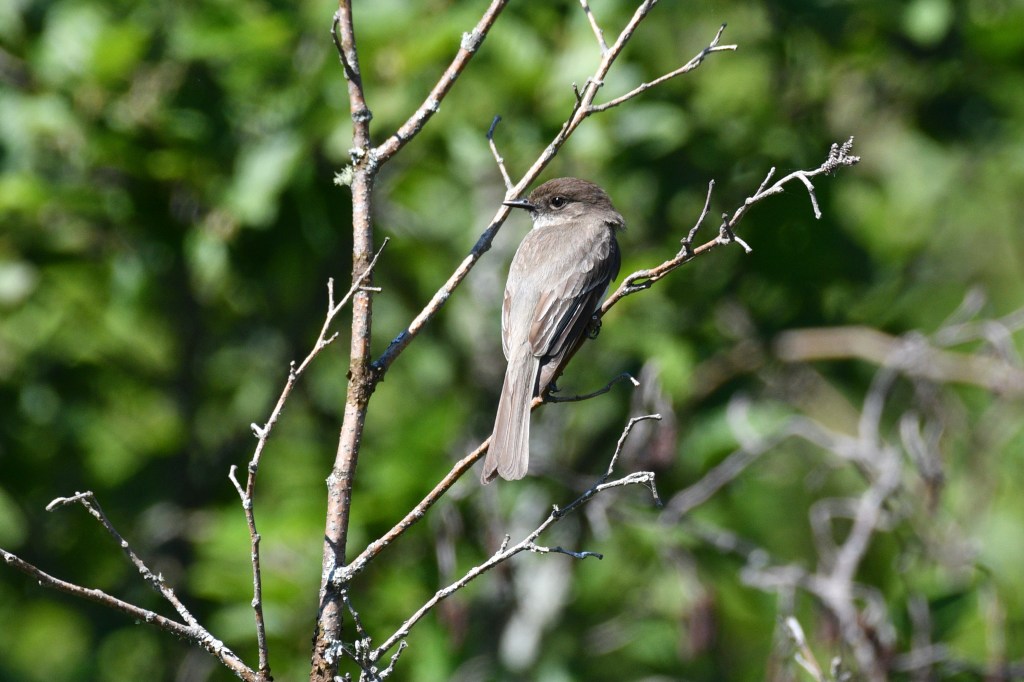
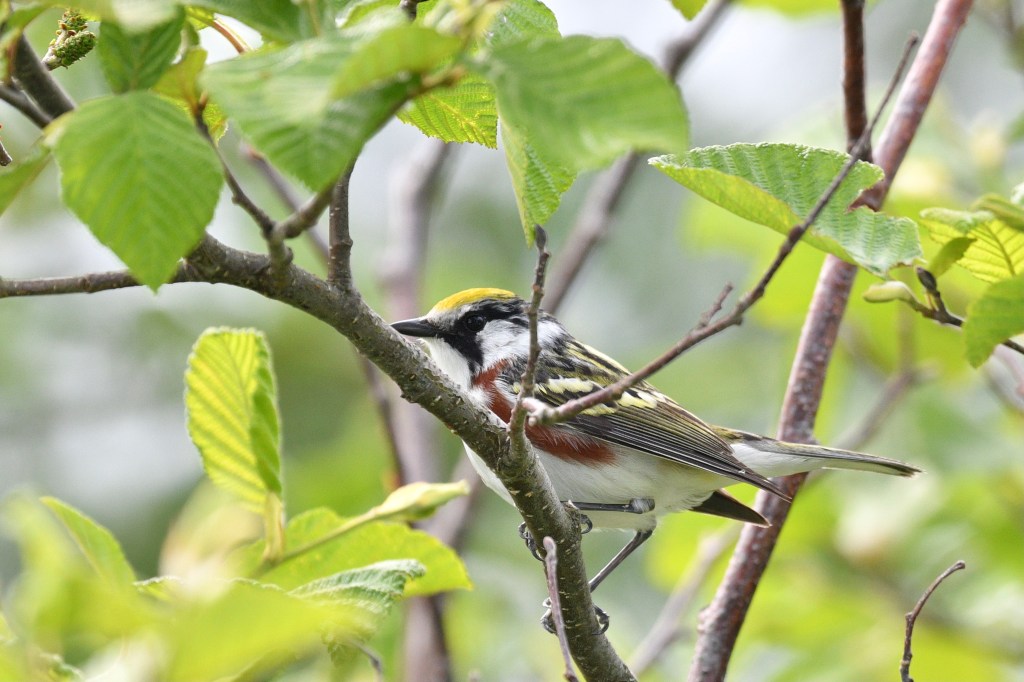
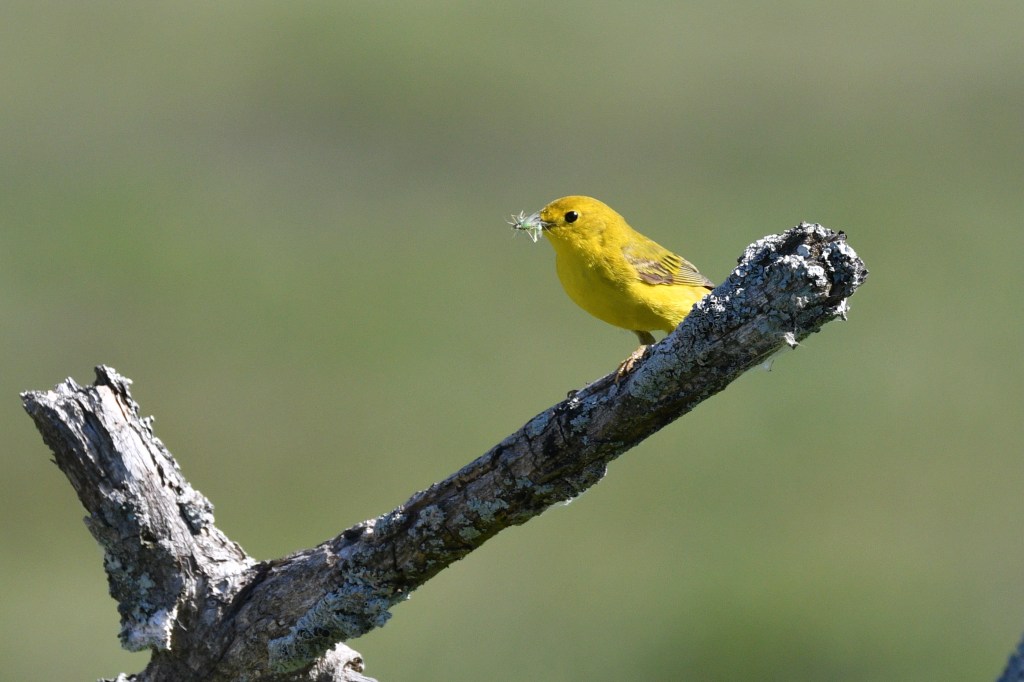
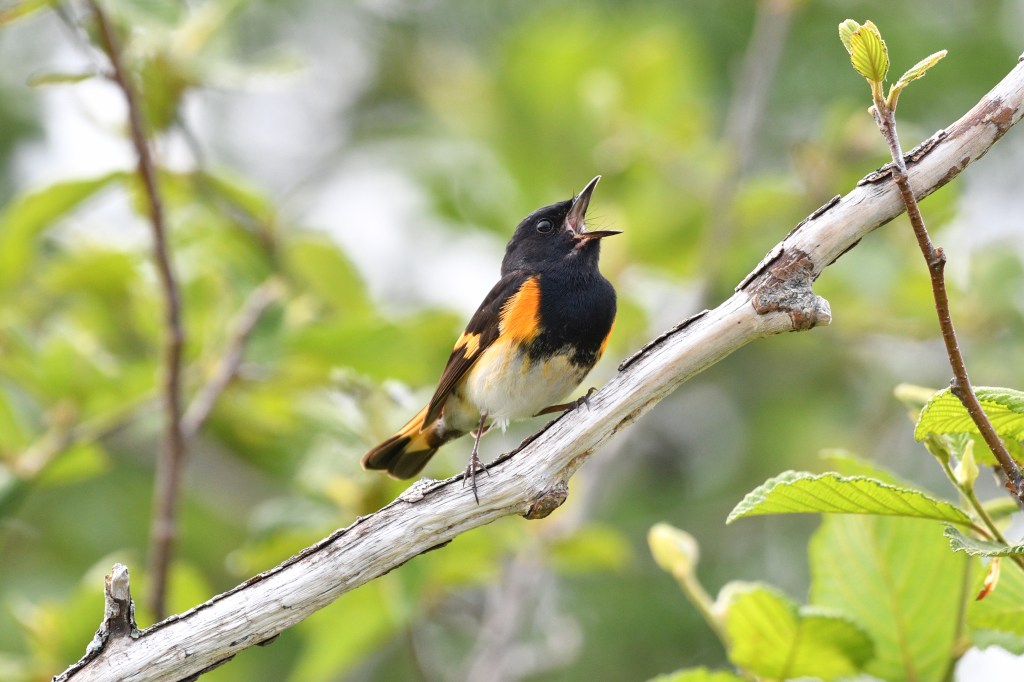
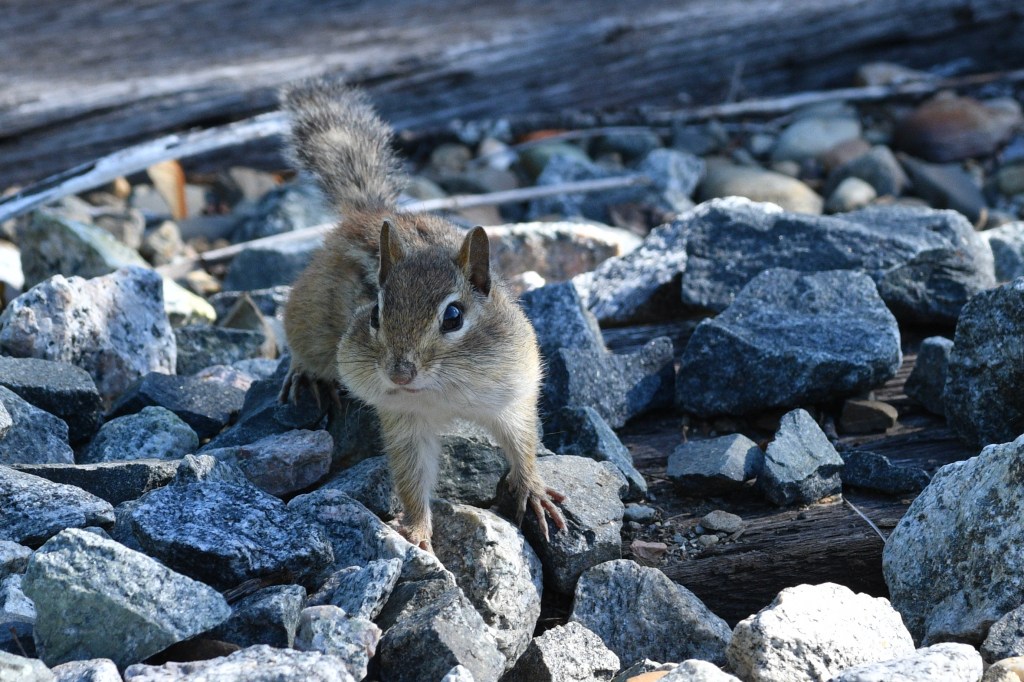
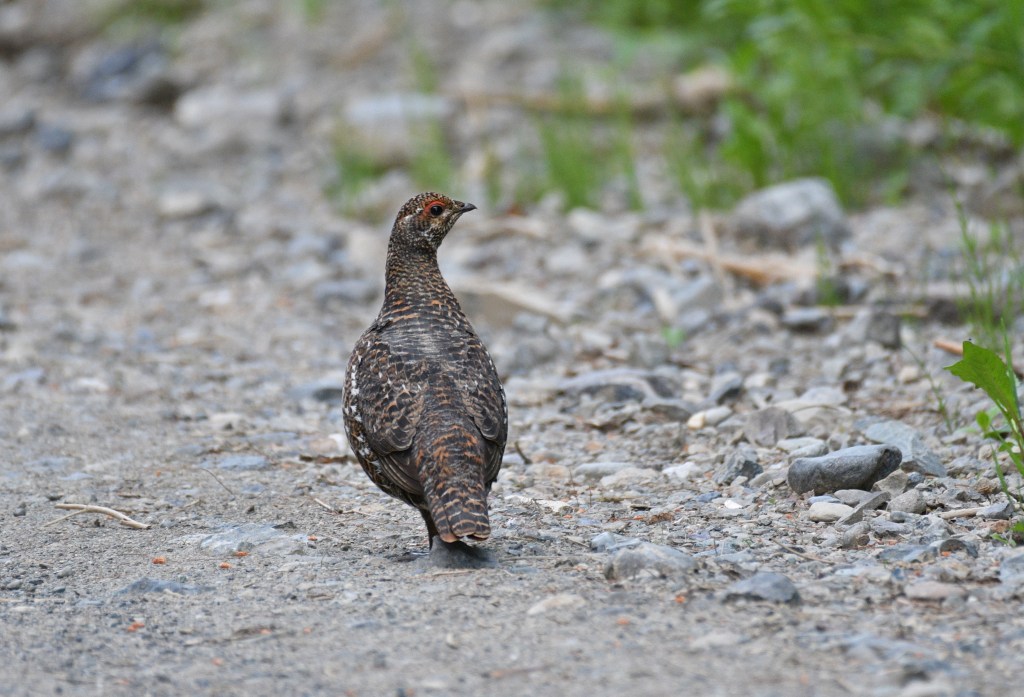
I mentioned that the hardwoods are used for clothes pins and dowels. This is true but hardwood is a funny and somewhat inaccurate term. Those of you that have used birch for fire wood know that the wood softens and rots long before the bark. So is this a hardwood or a soft wood? It does not have a sap that is a pitch so it is a hard wood, I guess. The common Gray Birch of the continental US is found up in Maine but so are a few related types of birch. The Paper Birch hybridizes into the Pink Birch and has a fine and delicate exfoliating bark. The Gray Birch is darker and the flaps of bark are stiffer.In many places there are native patches of wild blueberries and in other place the blueberries are helped along. It has become a huge agricultural crop in Maine. The “barrens” are areas of shallow acidic soil where blueberries grow in profusion. The berries are small and sweet as they are usually not irrigated. The barren lands are so extensive that agricultural workers are imported and housed during the harvest. This image is of one such “farm” and is but a small fraction of the land in berry bush.The big-eyed Upland Sandpiper is a breeding bird of the blueberry barrens. This sandpiper, close to the curlews, is widespread and extends its breeding range northward into Alaska. They are birds of the short grasses (low bush blueberry will do) and nest in appropriate habitat from coast to coast. The old bird books always said that Upland Sandpipers have “shoe-button” eyes; a dated reference to the big round eyes of the bird. They are an uncommon nesting bird in the northeast and are most frequently found on grassy airfields.Perhaps the most velveteen bird we have is the Cedar Waxwing. It has a thin bushy crest and a yellow band toward the tip of the tail. Aside from the far northern tundra regions this bird can be found anywhere in North America at some point during the year. But they are a bit of a wandering bird and you can go months without bumping into them and then see them daily for the next several weeks. The undertail is in shadow in this photo but the Cedar Waxwing has a pale undertail; its cousin the Bohemian Waxwing is a bit larger and has a rufous (reddish) undertail. There are lots and lots of flycatchers around the world and some 44 or so in the USA. The American tropics have dozens. In the northern part of their range these insect-eaters have to migrate southward in the fall as the insects die off or migrate. A few insect eating birds will switch to berries and fruits, but almost all of them eventually leave the colder regions. This is a bird that is quite hardy and often returns north in chilly weather and occasionally stays here in New England until December. It is the Eastern Phoebe, There are several flycatchers that live around here but the Phoebe can be identified by the dark face and cap and the tail-wagging that seems constant. It will nest in door jambs, rafters, or under bridges.There is a whole class of birds that we call neotropical migrants. Many of them are wood warblers (56 species) and they are the birds that birders chase, seek, find, covet, and awaken early for in May as they return to the north lands from their tropical wintering grounds. This one is called the Chestnut-sided Warbler. It is named for that patch of brown on the body just below the wing. This is a male; the female is similar but the brown is less extensive and the black facial feathering its much reduced. They both have the yellow cap.This is a Yellow Warbler female carry ia mouthful of insects back to the nest. All but a few doves feed their young protein rich food during the first couple weeks after hatching. The male Yellow Warbler is a brighter yellow and has reddish streaks that seem to drip down from the neck onto the breast and flanks. They are very widespread, again from coast to coast and up into Alaska, and very common. Their preferred habitat is shrub or brush adjacent to wetlands or ponds. Many forms of the Yellow Warbler occur in non-migratory populations. There are a couple morphs that stay in the Caribbean year round. The American Redstart is a common and widespread nesting warbler in North America as well. This is a male, in its second year at least. A one-year old male will be gray instead of black but usually with a few black feathers scattered in the gray. The female are gray without the scattered black feathers. They will breed as one-year old males but they don’t get the adult male plumage until the second year. They like second growth vegetation and are very common in Maine especially in the areas that were logged a few years earlier.Maine mammals are always a treat. It is not uncommon to see White-trailed Deer, Moose, Otter, Red and Gray Squirrel, and Black Bear. We had a lean mammal list. This Eastern Chipmunk, with cheeks full of foodstuff, entertained us as we walked an abandoned rail bed near the Canadian border. We were so close to the Canadian birder that we attracted the attention of the US Border Patrol . We had a nice chat with the officer and tried to interest him in the birds of the area.When in Maine, especially in the spruce forests, we always look for the uncommon and hard to find Spruce Grouse. They are found in dense spruce forest with a mossy understory. That habitat is impossible to wander through so we slowly drive the logging roads or walk trails looking for this big but well camouflaged bird. This trip we found two females, one with six chicks in the road. There may be two species of Spruce Grouse but the white chevrons down the outer left side of this bird are more like what is usually depicted on the western form – so I don’t feel comfortable putting this into either population….it is a Spruce Grouse though.
Please consider all images to be copyrighted and ask permission to use in any manner. Thank you. DEClapp
The habitats within the northern tier of states here in the USA, range from wet forest in the far east and far west with deciduous forests and prairie lands in the central part of the country. Here in New England, the furthest northeast, we have bits and pieces of boreal forest in New Hampshire and especially in Maine with deciduous forest to the south. Most of the USA is covered with deciduous forests and the conifer woodlands are restricted to higher elevations and northern latitudes. There are exceptions of course but the generality holds. In Canada the conifers rule and in the Appalachians the deciduous trees dominate. But, as an aside, the maple/beech/birch forest is very common in southern Maine and around the larger lakes. The logging within the spruce forests for soft wood (pulp) is extensive and the harvesting of hardwoods for dowels, clothespins and laminate is also widespread. Maine is called The Pine Tree State and pine, especially White Pine, was harvested heavily from 1630 onward. Now the harvest is mixed as just mentioned. The big pines were originally used in the sailing industry but now the uses are much more pedestrian.
Maine is a rather large state for New England, it is about the same size as Indiana. It may rank only 39th in size but it has more than 50% of its land in “northern” habitats and these areas are sparsely populated. There are plenty of bear, moose, deer, beaver, and millions upon millions of mosquitoes but the human numbers are pretty low in the great spruce woods of northern Maine.
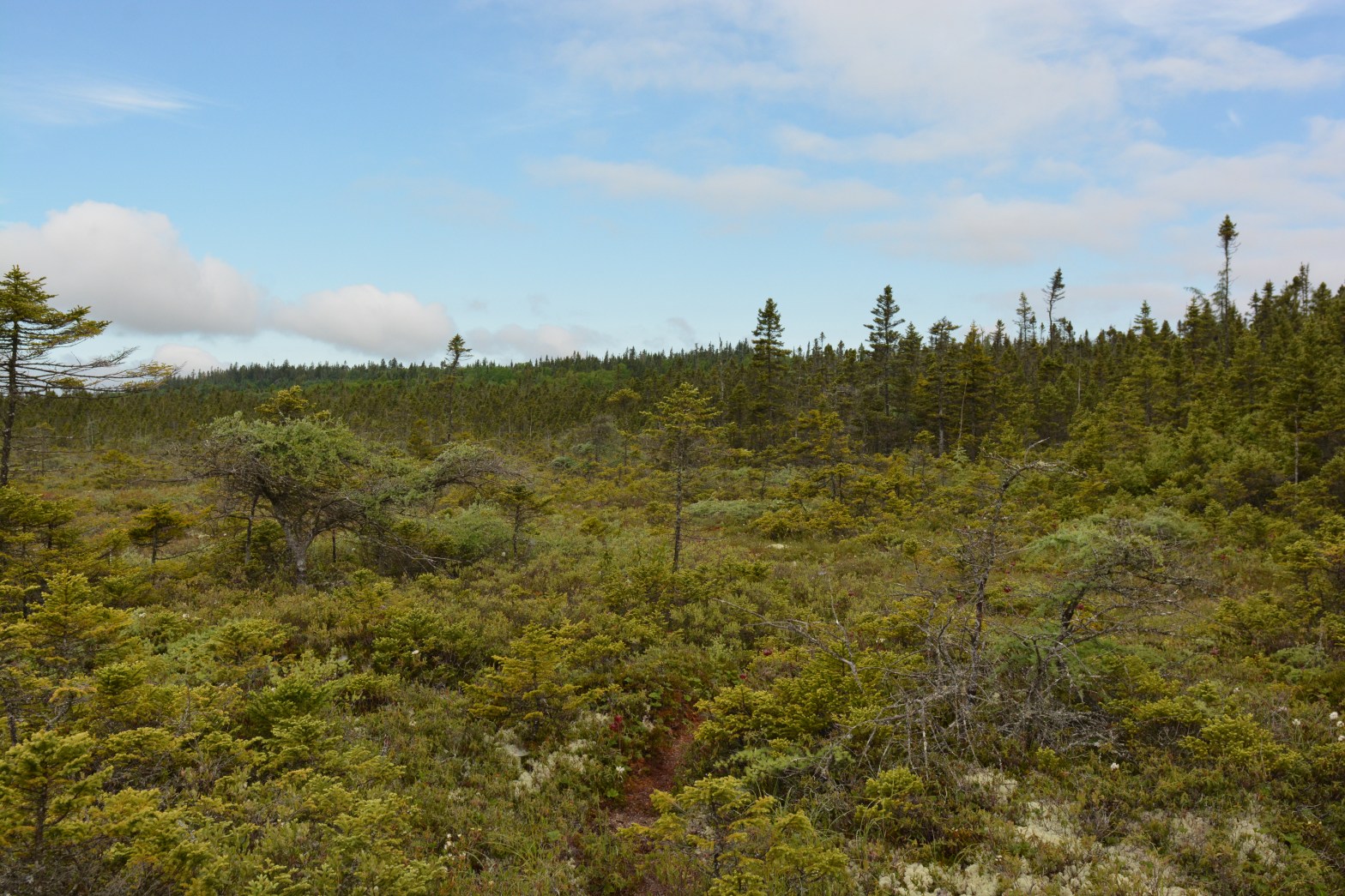
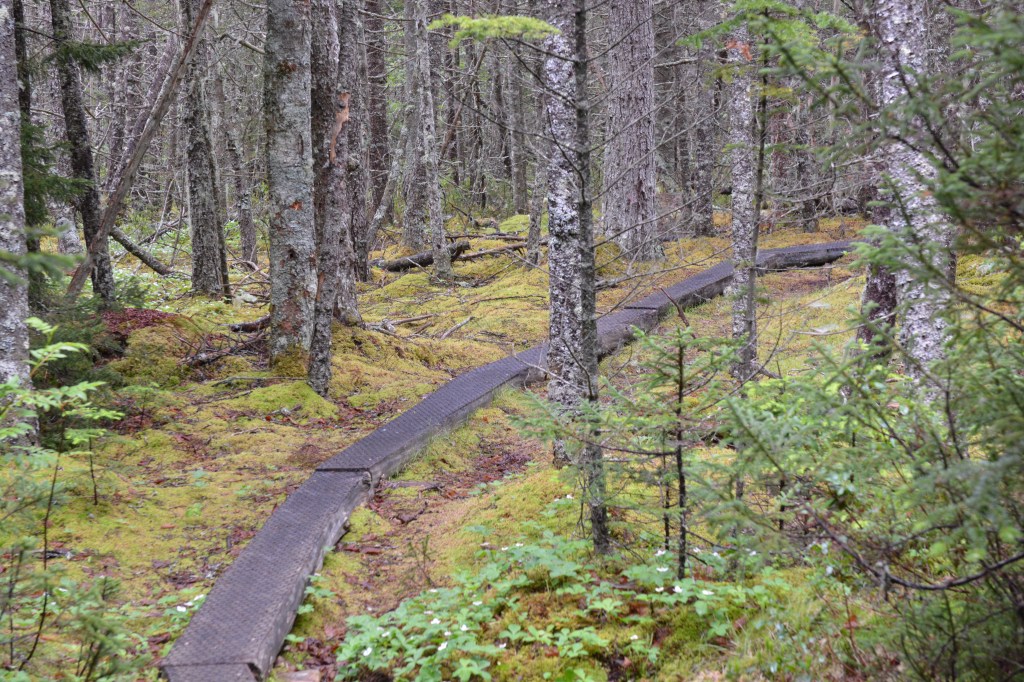
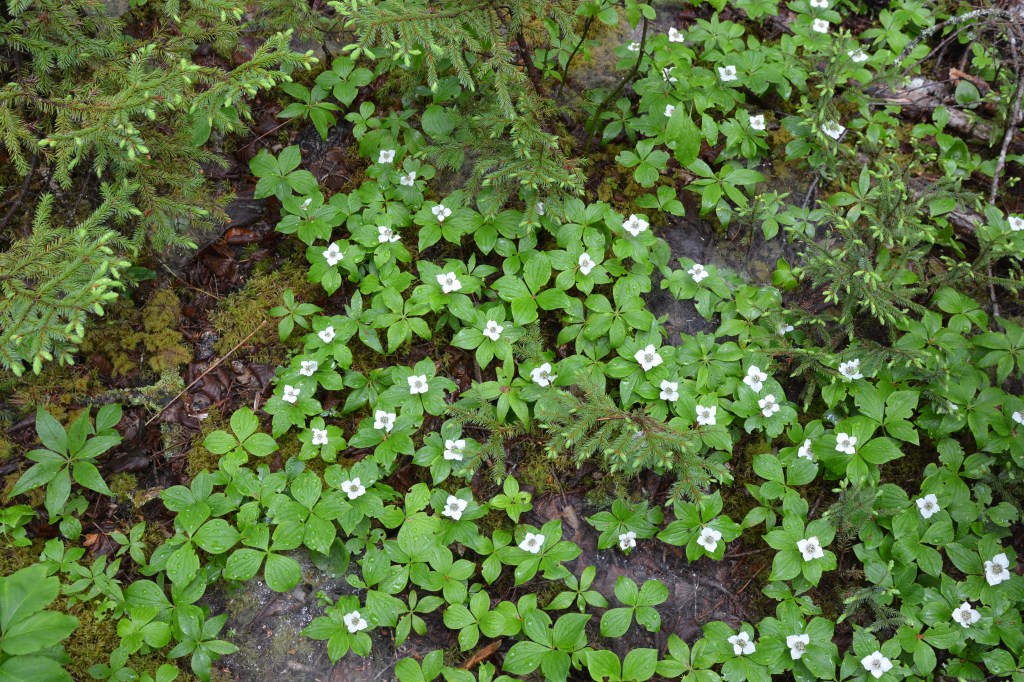
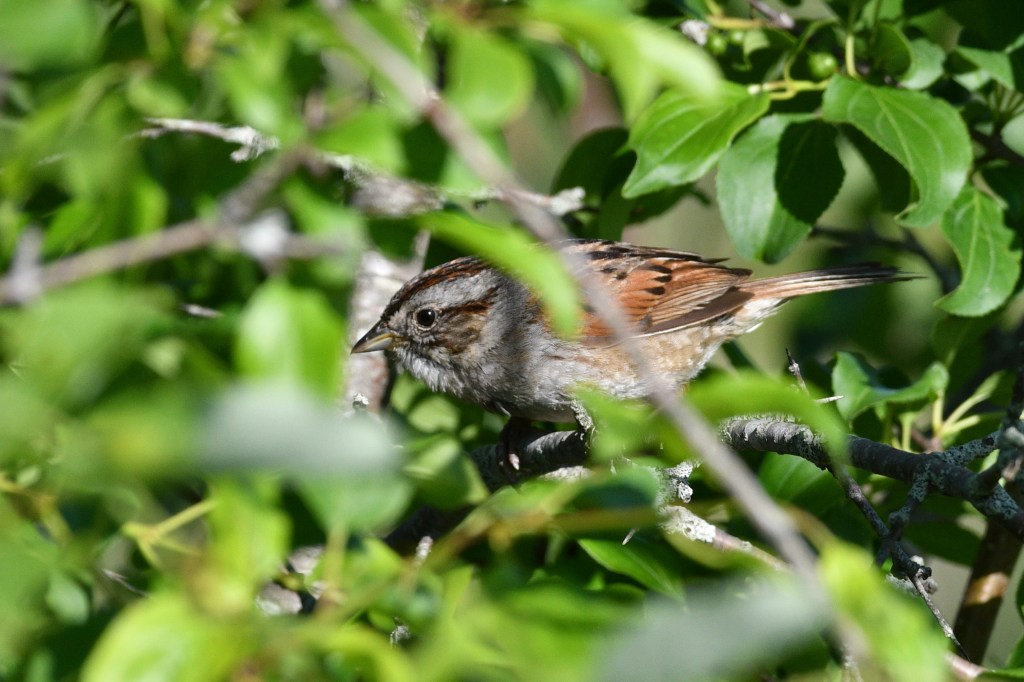
Much of Maine is covered in forest lands of spruce (black, red, and white), larch (tamarack or hackmatack), cedar (red, northern white, and Atlantic). These are generally wet forests and have an understory made up of lichens, mosses, ferns, and small trees. The small trees might be alders, birches, goosefoot maple, or mountain ash but are usually younger trees of the dominant conifer group. The forest is quiet and the ground acidic. There are rather few leaves that fall annually and the rate of decay is slow. The buildup of a soft mossy (often sphagnum) layer is readily seen and felt under foot. The trees are often coated with lichens.This image shows a fallen young spruce tree edging a bit of mossy ground and shows the thick layer of un-decayed vegetation that is usual in the spruce woods. On the edge of the image there are spruce branches and at the top a very small dogwood. The webs and fungal mycelium catch moisture most every night giving a sunny morning an extra bit of sparkle. We really didn’t have any sunny mornings and the spruce woods are so thick with vegetation the sunlight never really reaches the ground anyway.One of the more common ground cover plants is the Canada Dogwood; also called Bunchberry Dogwood or Creeping Dogwood. This is really a dogwood; a member of the genus Cornus. Most of the stems have six leaflets. All the vertical stems rise from extensive rhizomes that thread along underground. There are only a few plant types that have opposite leaf and branching arrangements and dogwood is one of them. “Mad horse” gives you a clue to the other opposite-branched plant groups . M is for the maple family. A is for the ash trees. D is for the dogwoods.Horse is for the Horse Chestnut. All the other forest plants have a branching arrangement that alternates from side to side on the branch.There are several spruces in the Maine forest. This is probably a Black Spruce in the spring where the new growth is a light green and the needles (leaves) that overwintered are a darker green. Black Spruce is the more common tree in the wetter ground and is often the only species in and around acidic bog lands. When associated with another species it is often White Spruce in Maine and Lodgepole Pine in central and western Canada. It is a very widespread tree and found in every Canadian province. As we saw in coastal Maine woodlands it often grows in dense mono-crop patches. I have no idea how a big broad animal like a moose can move through this sort of dense woodland.The recent glacial melt-back left much of northern North America with wet and patchy ground. There is sand and gravel and rock every where, washed into piles, layers, and eskers by meltwater rivers and rivulets. The forest here and further north didn’t exist a few thousand years ago as this was all ice covered land with no vegetation. In many places huge chunks of ice were buried under the sands and gravels and were slow to thaw. When they did thaw, a depression formed what we call a “kettle”. The kettle hole ponds have, in many cases, filled with water and vegetation has encroached from the edges. This vegetation often formed a floating mat on the ponds and this bog habitat became special and important to carnivorous plants and terrestrial orchids. Throughout the forest many of these bogs remain as floating mats or as areas where only Black Spruce persists as a tree. They are areas where not much can grow and are referred to as Dwarf Bog Forests. The dying vegetation from the underside of the mat sinks into the old pond and slowly it fills with what we know a peat moss.,A closer look at a spot in a bog shows the red flower of the carnivorous Pitcher Plant, a few leaves of Bog Rosemary, Labrador Tea, Leatherleaf, and a lot moss, and lichen. There is no soil here and the plants bind together to form a floating mat. The clumps of white on the left are reindeer lichens.The Swamp Sparrow is a rather quiet and secretive member of the camo-gang. They are not really uncommon or infrequent but simply live in habitats that aren’t easily visited and thus are a bit hard to find. They have a gray face and a reddish cap setting off the rich browns of the back and flanks. Its is a rather pretty sparrow. It is about the size of a Song Sparrow and a bit larger than a Savannah or Chipping. The Swamp Sparrow is well named as its favored habitats are wet and it often feeds on the wet ground near ponds and streams.This sparrow, and final image of this post, will take us out of the wet woodlands and into the second growth and fields of Maine. Of course it is difficult to avoid the Maine woods so we will jump back into the dark forest on occasion but the next post will not be totally about the woods. This is a Savannah Sparrow. The SASP is very widespread as it nests in almost any open vegetated area throughout North America. The majority of the breeding habitat is probably tundra and prairies. They nest throughout Alaska and southward across the northern half of the contiguous 48 states. They winter into Central America but can be also found in all the southern states as well. A very widespread bird of grasslands, tundra, and farm fields. The yellow spot in front of the eye is characteristic and can be expanded and flashed to threaten other males and impress females. The song is insect-like.




































 On The Road With DEC