A Wee Bit On NZ Sheep

DSC_9057
Morelea Farm is in Fairlie, near Geraldine; on the plains west of Christchurch, New Zealand. Stan and Angie have welcomed visitors over the past many years as they farmed beef stock and sheep. As they head for the lake and a bit of R&R their son Mitch is taking over the farm; but not the group education aspect that his parents embraced. Mitch and his wife have three young boys and enough is enough – sheep, kids, and the development of a juicier lamb through genetics keep him pretty busy for now.  
DSC_9069
Mitch chats with us while Beau keeps the sheep just were they should be. Beau is getting on on years but still lives to chase sheep around the paddock.
DSC_9056
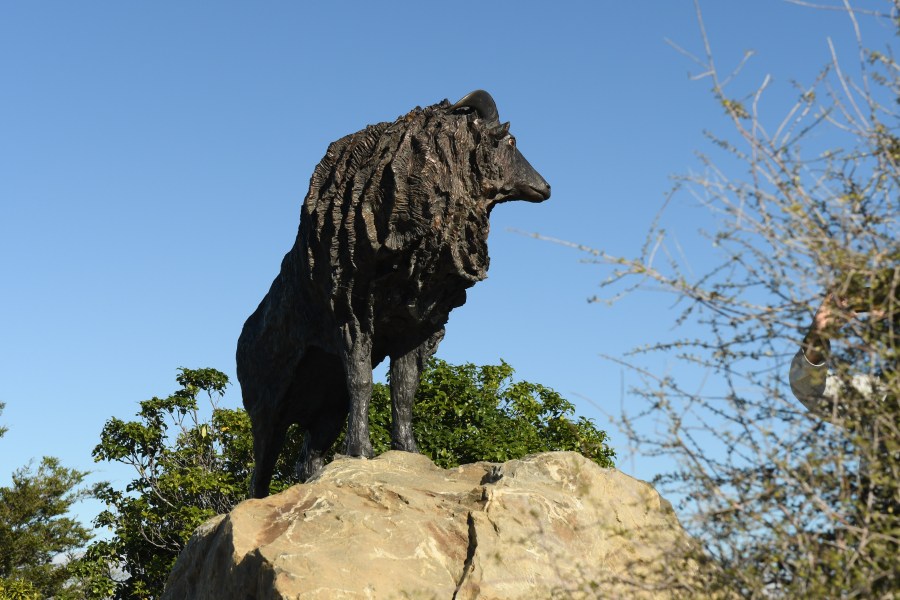
A breeding ewe might live 6-7-8 years and donate a few pounds of wool each year. But the farmer needs money and that comes from selling her two lambs each year. One-lamb-females go down the road as well. Wool isn’t very valuable these days so heftier lambs are important. They are working to create a juicer lamb, one that will taste sweeter and more tender than lamb already does. Mitch has started a group headed in that direction with a product called Tamana Lamb.

New Zealand’s high country

DSC_9089
Tahr were introduced into the high country for hunting; as were chamois, red deer, and wapiti. The Europeans were somewhat obligated to recreate a British countryside when they established in New Zealand – and later they brought in their recreational animals as well. Many of the introductions have established and seriously impacted the native environment. Animals like stoats, possums, cats, goats, and rats have devastated the native bird life. And, in the beginning here on these remote islands there was only bird life – essentially no mammals and very few predators.

Heading west from Christchurch the country is a gently rising agricultural plain. Once heavy with sheep and farm crops it is now turning to dairy cows and grazing paddocks. The wind-rows of evergreens are disappearing and the quaint British landscape is opening up. The foothills soon appear and eventually high lakes and mountains take over the vistas. The Southern Alps are a tectonic range of mountains along New Zealand’s South Island’s western edge. The outer side (the western facing side) is against the Tasman Sea and Australia, while the inner side slopes to the east and the greater Pacific Ocean. The elevations in the west as you approach the mountains are only at about 2,300 feet but are quite alpine in appearance. The grassy expanses are shadowed by mountains topped with snow and sometimes with glaciers.
DSC_9078
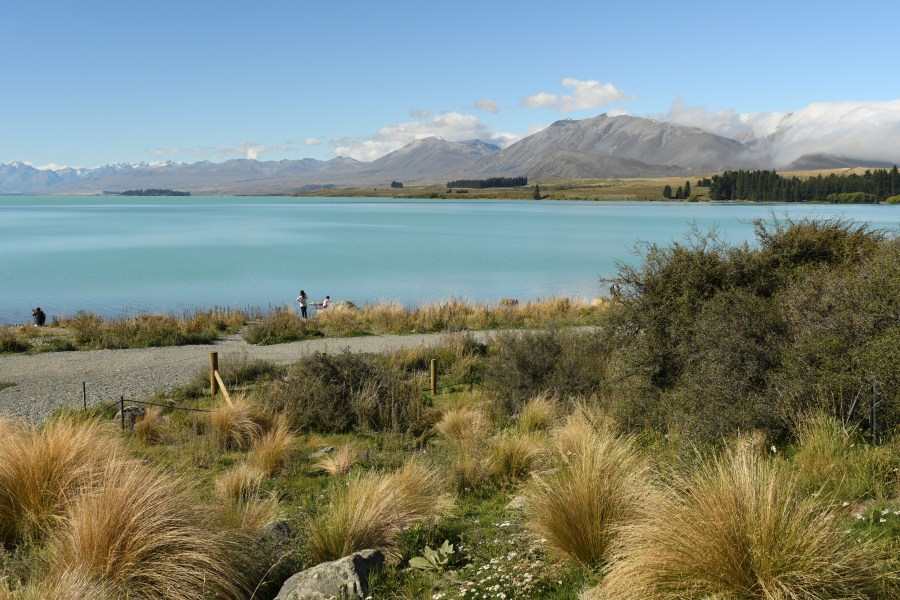
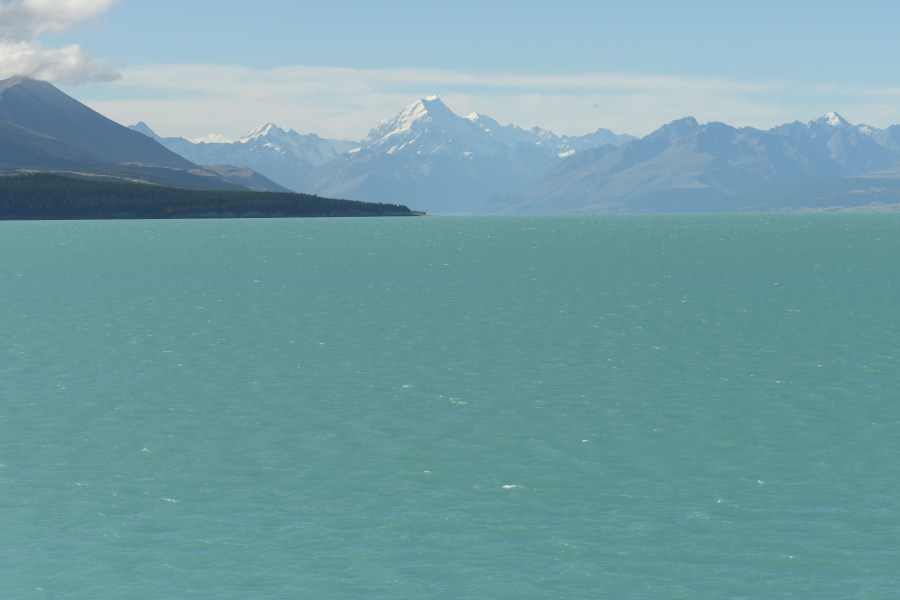
These pictures, above and below, give you an idea of the beauty of the high country and the extent of the lake/hydro region/system. The view here is north up Lake Pukaki. The water is transferred by large canals to another lake and then to another and so on; each time delivering irrigation water to farming operations and turning turbines to produce electric power. It is a clean and neat system.
DSC_9086 2
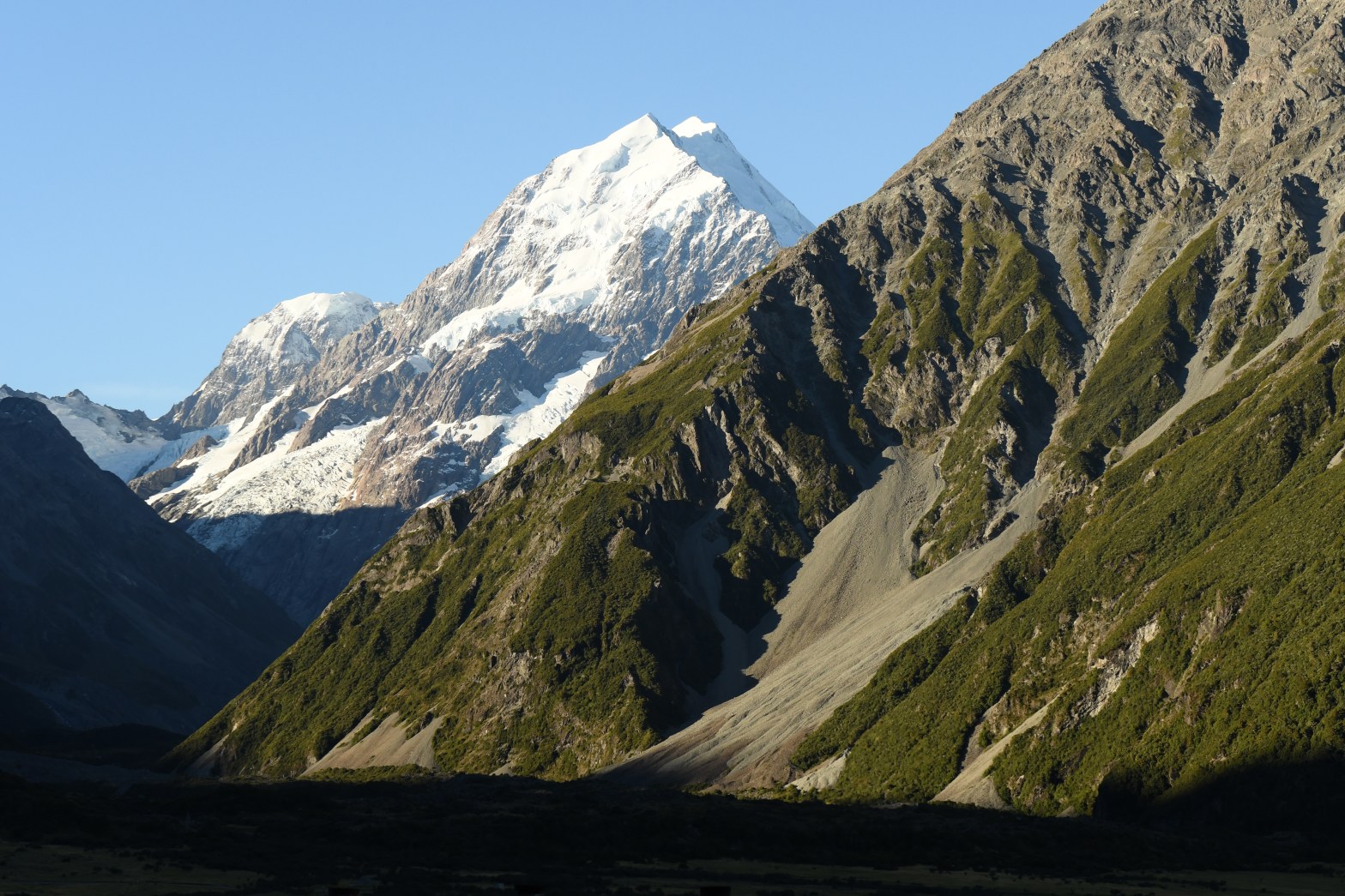
Looming in the distance is Mount Aoraki, Mount Cook on most older maps. This is the mountain that Sir Edmund Hillary cut his teeth on and the highest peak in the great Southern Alps range. Under its shadows Mount Sefton and Mount Tasman feed the Tasman Glacier which eventually flows into the wide Hooker Valley.
DSC_9092
Up close Aoraki is a jewel. The eroding sides of surrounding mountains point up the ephemeral nature of our geology while the icy rock face of Mount Cook displays a sense of ruggedness and permanence. But it isn’t so, not at all. 

Sydney’s park lands

Sydney has lots of open space. It is a city on the water with over 230 miles of coast line. It also has many open spaces. The most obvious of these is the Botanical Gardens which cover a couple hundred acres and allow easy and green access to the Sydney opera House and nice views out over the harbor toward the bridge and the aforementioned opera house down on Bennelong Point.

I walk the gardens when in town and always see numbers of Australian ibis, sulphur-crested cockatoos, rainbow lorikeets, dusky moorhens, maned ducks, pied currawongs, and noisy miners (these are all birds). There are large eels in the pond and golden-orb weavers (spiders) on super-sized webs overhead. One of the interesting displays in the gardens is the Wollemi Pine. This isn’t really a opine nor is it I. opine pine family, but it is certainly interesting. It is related to the monkey-puzzle trees in the Araucaria group. These very large trees were discovered about 100 miles west of Sydney in 1994. A ranger of a walk in a rugged and remote part of a national park in the Blue Mountains found a small group of trees ha had never seen before but reminded him of a display he had once seen in Denver Colorado. There are fewer that 100 of these trees in the wild but they are being grown and established in many locations to help ensure a future population.

Here are some images from Sydney’s down town park land.

DSC_8976.jpg
The Wollemi pine has flattened linear leaves not needles as the real pines have. The branches grow in whorls and the trees can reach great heights and girths.

Miners are part of the honey-eater complex. Here a Noisy Miner rests between bouts of chasing other birds (ibis, currawongs, and other minors). This particular species has a couple look-alike cousins separated more by habitat than obvious visual characteristics. For instance in Alice Springs in the hot center off Australia a very similar bird (yellow-throated miner) occurs.

DSC_8936

DSC_8959.jpg
The last two images are of a pied currawong; a crow-like bird from a rather widespread group when its relatives (butcherbirds and Australian magpie) are included. Their range expansion and population increase has made them more common on the coastal edge of Australia. This puts them in a bad light as their habit of eating eggs and babies from other birds’ nests make them rather unwanted visitors of local landscapes. The one below is eating palm nuts but the earlier reference to the Noisy miner chasing currawongs relates to their undesired presence.

DSC_8946 4.jpg

Nocturnal Animals are a Pain

People dream of koalas, kangaroos, Tasmanian devils and other uniquely Australian animals and are bummed when they find they are nocturnal and nearly impossible to get a look at. It is just to hot for animals to be out in the day time during the Australian summer – way to hot.

For that reason there are animal parks scattered around the countryside offering a chance to get a look at many of there creatures that you have read about. We visit one of these facilities so people can get a look at these creatures. It isn’t a perfect solution but it is much better than nothing. So here are a few things that you might occasionally see outdoors but will likely see at a wildlife park like Featherdale near Sydney.
DSC_8839.jpg
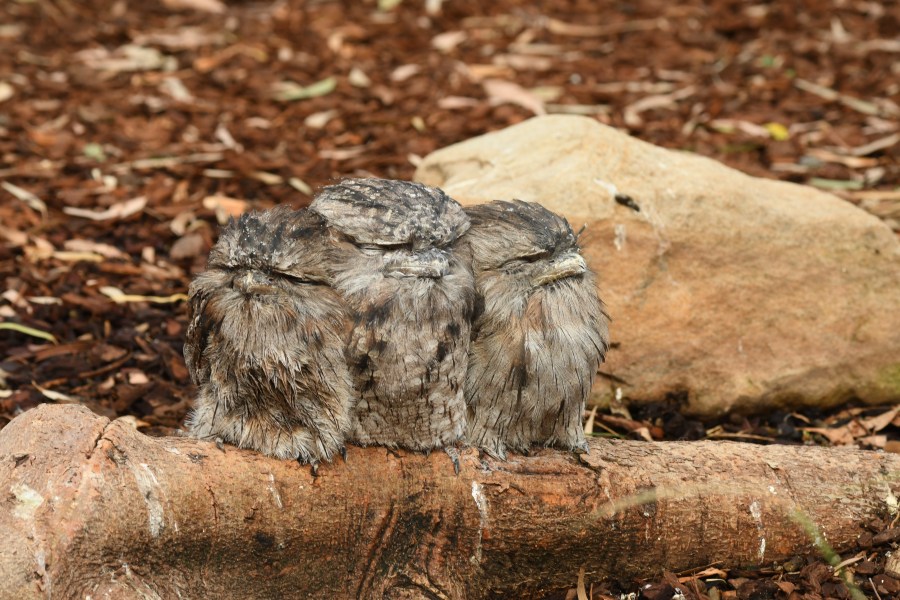
These three frogmouths look like grumpy Ewoks. The frogmouth is a bird related to whip-poor-will and similar species. There are a few species around the world; in tropical climates mostly. These are adults though have a somewhat adolescent look to  them.
DSC_8893.jpg
Australia has many reptiles; lizards and snakes predominate. These goannas are like monitors through much of the world. They are/were an important food source for the aboriginal peoples.
DSC_8842.jpg
Here is a koala in action – inaction perhaps. They sleep or rest most of the day. Their food source (a few types of eucalyptus) is pretty lean and eating and resting pretty much makes up a koalas day.
DSC_8880.jpg
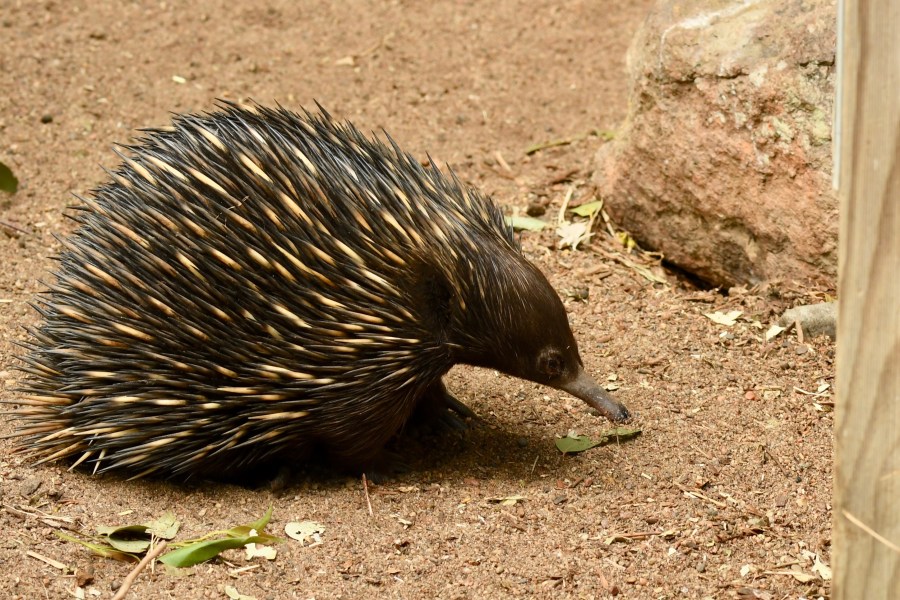
Monotremes lay eggs and this echidna is one of the two monotremes in the world (though there are more than one species of echidna. The echidna looks like a hedgehog/porcupine sort of animal and is about the size of an inflated (go Pats) football. Where the platypus, the other monotreme, has thousands of electroreceptors on its bill the echidna has just a few hundred. But, in both animals it is assumed that they can use the electroreceptors to find prey or determine the distance to prey. Though echidnas can and do eat ants and termites they are not closely related to anteaters (a South American group).


The Road to Uluru

Australia has done well by the land use heritage of its first residents, the Aborigines. The land was settled by people coming from coastal Sri Lanka as much as 60,000 years ago; certainly 40,000 years ago. These wanders/explorers/adventurers survived; maybe even flourished. They traveled during a period where the great glaciers of the last ice age held b billions of tons of water on land and the seas were much smaller. Any ocean water now less than 3400′ deep was dry land back then.

The Europeans (British actually) came in numbers only as a means to ease the burden of petty criminals and indentured servants on their British culture. Britain shipped folks by the hundreds, then the thousands, to a land no one had seen or visited in a decade. James Cook discovered and claimed the region (in a European colonial sense) and then when he departed it was again Terra incognito until the ships with criminals, marines, and public servants arrived ten years later.
The Europeans lived on the coast in scattered prison-town communities, the aboriginal peoples lived pretty much everywhere. They were adapted and survived. The coastal groups had life easier perhaps than did the peoples of the interior, but they were living throughout what is now Australia. When the Europeans arrived it is estimated that there were about 350 aboriginal languages being spoken throughout the land by about 750,000 people – there are now about half that many.

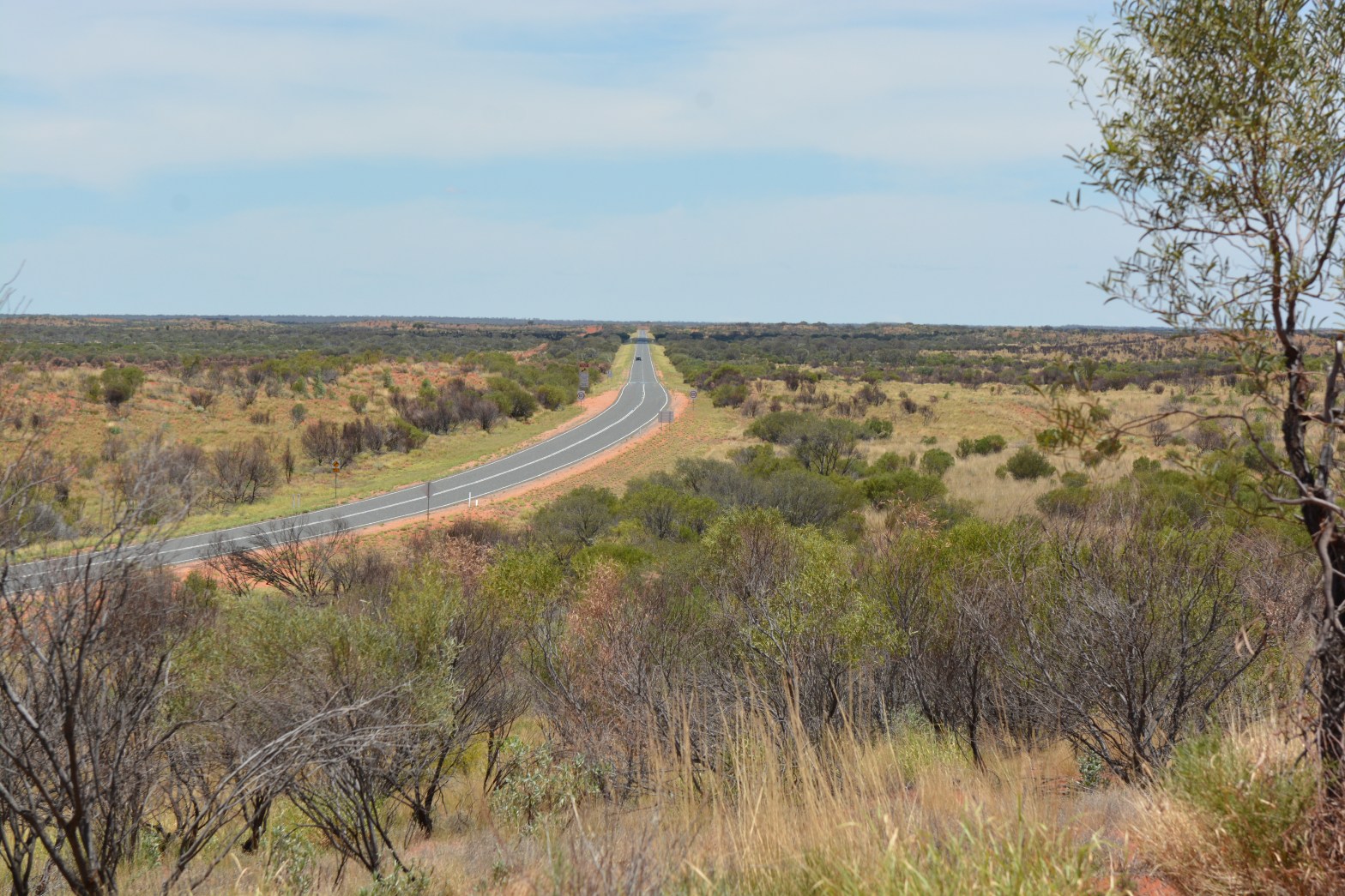
The interior is arid. It has had some rain the past few years and the desert oaks and mulga (acacias) are fully leafed out and quite green. The pictures below give you a sense of what the drive from Alice Springs to Yulara (where Uluru/Ayers Rock is located) looks like. Occasionally a flock of budgerigars or a kangaroo might be seen but generally it is just you, the vehicle, the vegetation, and the road. The geology has been designed by ancient water courses; for example the Finke River bed is well over 300,000,000 years old; the Todd River in Alice is maybe the same age. Wind and rain have worn away two great mountain ranges in the past billion years or so. Australia is quite flat now.
DSC_3070 3
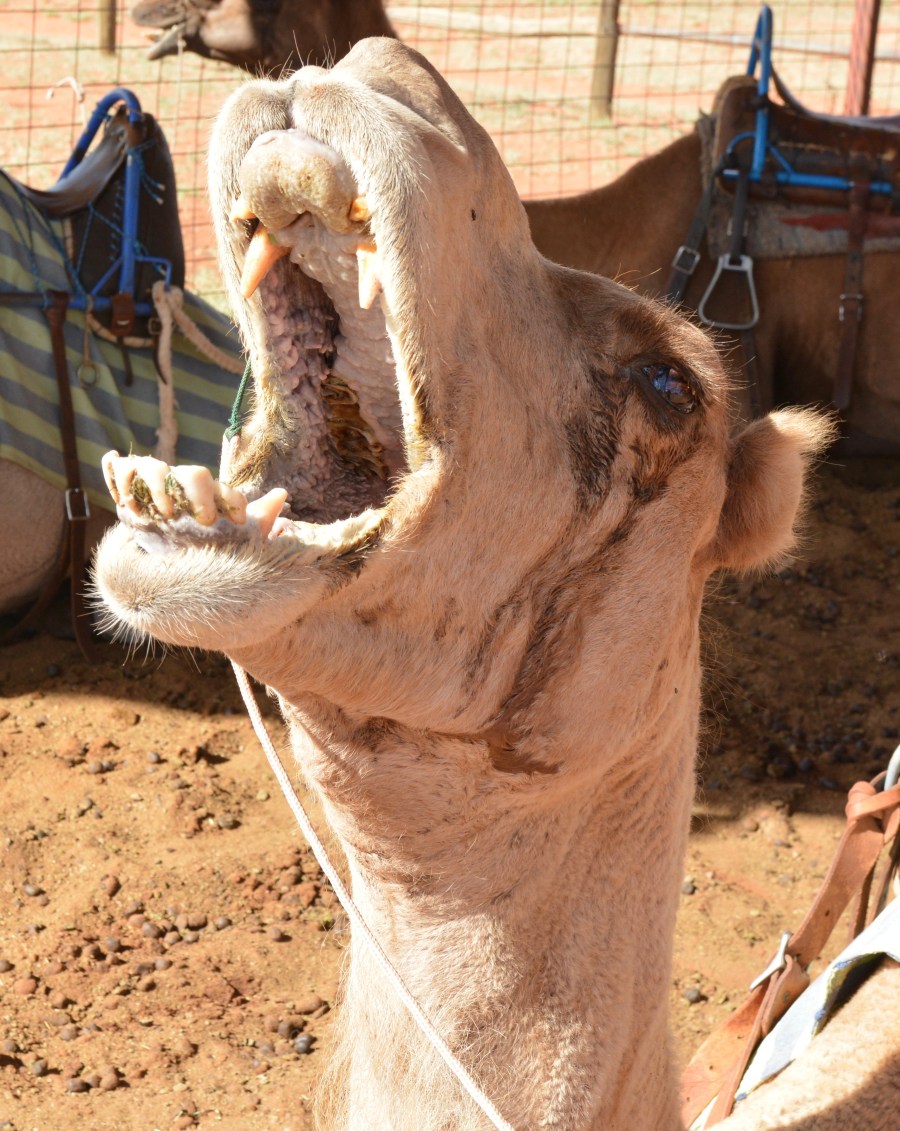
Along these remote roads there are a few roadhouses; a place to stop and stretch and grab some water or chips. One of the first roadhouses you come to is the Camel Farm where Neil offers camel rides and other stuff to keep the curious around. Dental care is not provided for the camels as you can tell. Australia exports camels to the middle east and has more camels than any other country.
DSC_3097 3
One of the creatures living at the Camel Farm is an emu. This one was near several others which were sheltered in the shade (it was 111.2 degrees for there third day in a row) of a large propane tank. The emu is native to the region but not commonly seen.
DSC_3096 3
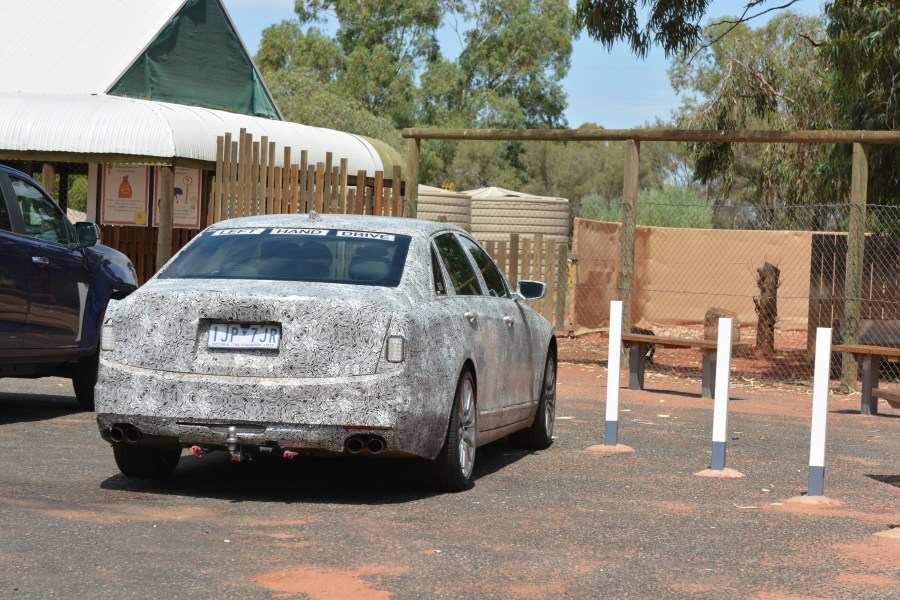
We were treated to a chin-scratcher of a sight; three cars which were decorated or camouflaged were being attended to by a few other vehicles and a small quiet group of people. They each had a computer array in front and no one had any real idea what they were doing. Someone said they were 2020 cars being road tested in the outback and another story was that the nearby US (spy/communications/satellite tracking) military base was testing out some new satellite communication system. The cars were left hand drive and very cryptic. Cool, but no idea what they were or what they were doing.
DSC_3111 3
So here is what it looks like….for a couple hundred miles. Old salt pans, clumps of mulga, and red sand along the edge of the road. The mesa in the distance is called Mount Connor and represents the height of the land a few hundred thousand years ago. Most of those old mountain ranges now lie in sandy bits in the great Amadeus Basin.

DSC_3109.jpg

Standley Chasm, near Alice Springs

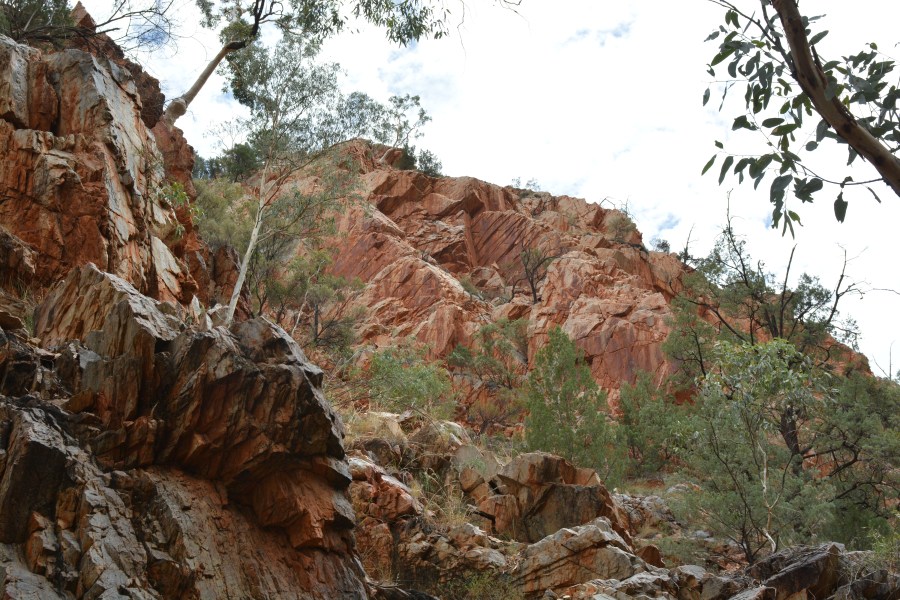
The landscape here is arid but spectacular. In the US we have Utah, Arizona and New Mexico, all rather dry but all stunning. This page will show happens when very old ocean sediments and eons of time and tectonic pressure work together. About 2.2 billion years ago this area was covered by a great and long-lasting sea. The sediments that built up were huge and many layered. They weigh on each other eventually forming a sandstone that was obviously sedimentary as it became exposed. Sheet after sheet of sediment can be seen. But, about 900 million years ago they were the base of a great mountain range with immense pressure now compacting them and changing the sand to rock-glass; quartzite.  There followed an array of tectonic actions and then a second orogeny which finished this transition, after another several hundred million years that is.

Now there are but mere fragments of these mountains; merely the basement sedimentary layers. Now, however they are bent, folded, and tilted. They appear here and there and then dive under the ground only too reappear many miles away. The stone  links like chunks of glass. It is now covered with iron oxide and manganese dioxide which color it reddish or black.

Here we stand more than two billion years into this areas geologic time and we are treated to some spectacular scenery.
DSC_3017
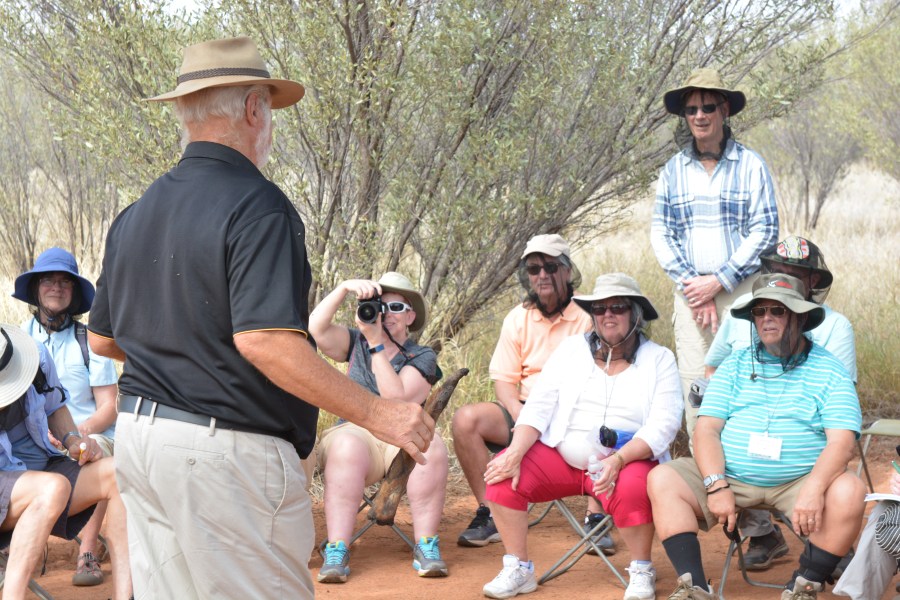
Our day begins with a close-up encounter with the Australian Outback bush and its original (local) Aboriginal inhabitants; the Walpiri people. But first we get to hear about them from Con, a great lecturer and nice man. Here we are treated to some pit-roasted kangaroo tail. Just prior we were shown the bush fruits, seeds, and food stuffs that were gathered for sustenance by the original land owners. It may surprise you to learn that the aboriginal folk have been on this land, as a culture, for at least 40,000 years and maybe as long as 60,000 years.
DSC_3047
The walk into Standley Chasm is amongst ancient cycads and picturesque eucalypts. The site is on Aboriginal Trust land and is well worth a visit.
DSC_3025
The hillsides are rock, mostly bare rock. But the trees and grasses hang on in pretty good numbers.
DSC_3062
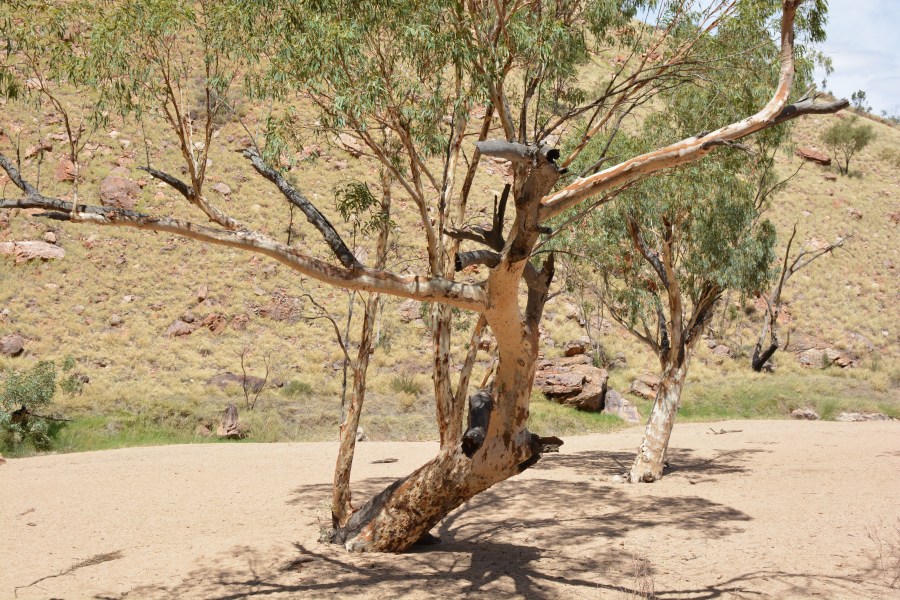
The river bed at Simpsons Gap is decorated with large, and old, Red River Gums. In both locations there is water in the old gorge up to a level that is below the surface. Digging a hole will often expose a seep and the hole will slowly fill with water.
DSC_3063
These rocky sedimentary (altered) hillsides are made of quartzite. This hard glassy rock will wear very slowly and won’t interact chemically with much of anything. These walls have been around for a very long time and will be around for a very long time.


Welcome to Alice (Springs that is)

Alice is always hot and dry unless it is raining and hot. I have seen the Todd River overflowing on three occasions; this is a river where the boat races feature boats which are carried by the participants as there is rarely any water. The Todd is usually a sinuous sandy serpent with no bite. That is how it is today for certain. The riparian eucalypts’ leaves are hanging down and the river is dry. The air temp is above 100 but it is a dry heat – people say that like dry heat won’t kill you. It will and quickly.

Anyway, we arrived and loaded up our coach and headed off for the Telegraph Station and possible Euros (a large gray kangaroo). No kangaroos today so on to the School of The Air. This is the central schoolroom for over 100 children scattered over thousands of square kilometers of red outback. They are station (ranch) kids, policemen’s children, park ranger offspring, and migrant workers’ youngsters. It is a nice educational stop. We then head to the Royal Flying Doctors main office where we learn how doctor services are provided to outback folks. Another eye-opener of a stop. Then on to the reptile place where we were shown snakes and lizards of the area. The poisonous snakes of Australia are really poisonous for sure but they have very very small fangs and most can’t penetrate clothing. Not rattlesnake-type fangs here.

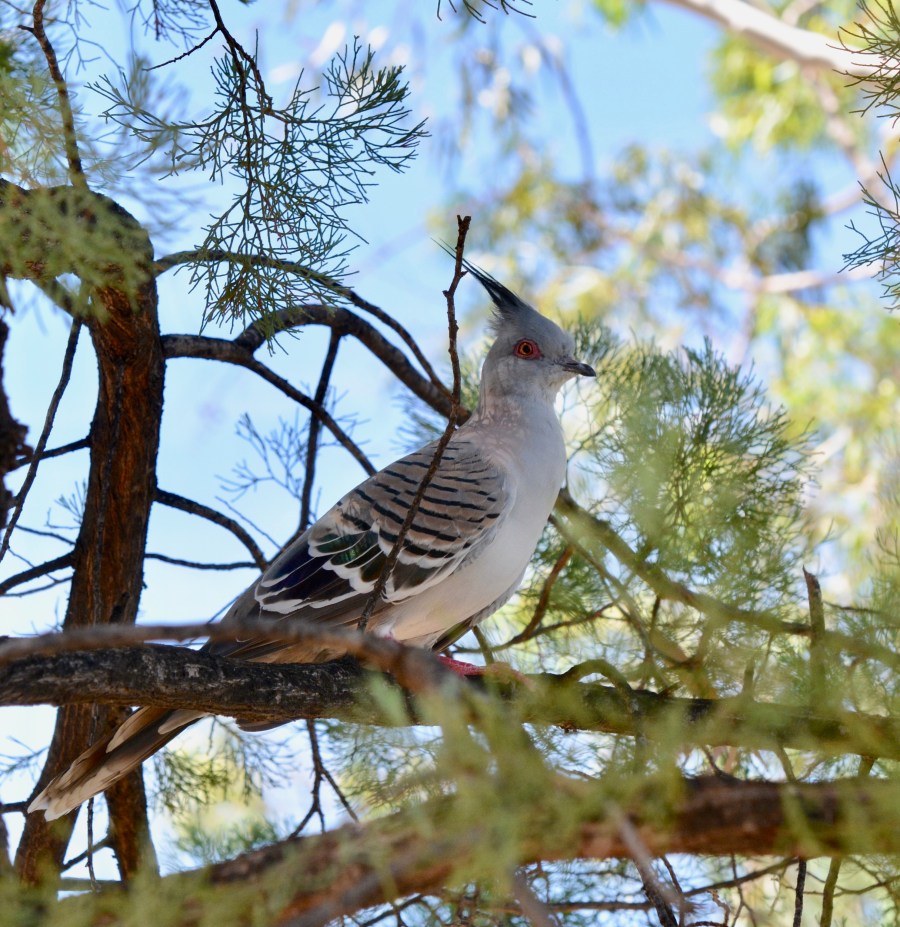
I was welcomed to Alice Springs by a couple old friends; a Crested Pigeon and a Yellow-throated Miner (one of the many honeyeaters of this island continent).

DSC_2995
Geography helps separate the Noisy and Yellow-throated Miners. They are in the honeyeater complex and are noisy and obvious.
DSC_2997
Yup, Down Under!
DSC_2998
Sort of an elegant feel for a pigeon don’t you think. This handsome fellow is found just about everywhere in Australia. 

Up to the Kuranda Rain Forest

The small town of Kuranda is a bit of a tourist trap, but it is well up in the forest and has walking trails into the forest and that makes it worthwhile. Also it houses, in addition to a hundred trinket and post card shops, a gallery with the exquisite photos of Ric J Steininger and the stunning art work of David H Stacey. Google these two for a look at some quality Australian art. Ric has one image of the southern cross through a six hour plus exposure. Wow. Fran and I have a Stacey print of the living room wall that depicts a Buff-breasted Paradise-Kingfisher pair, the termite mound nest site and associated habitat depictions – just great!

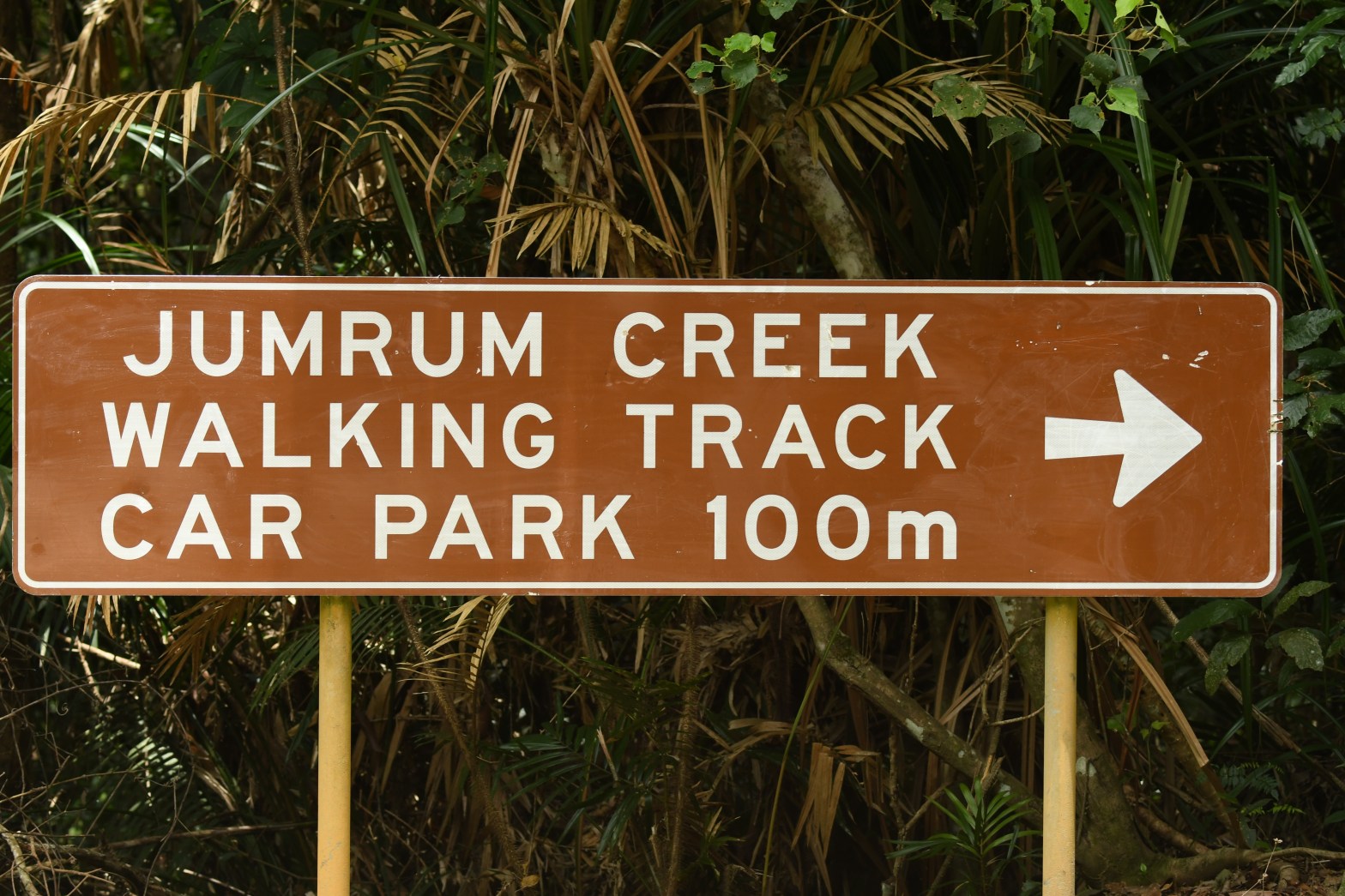
But that isn’t what I wanted to mention — I walked the jungle trail (Jumrum) and happened on a lizard, some very well protected plants, and of course, a bird or two.

DSC_8298
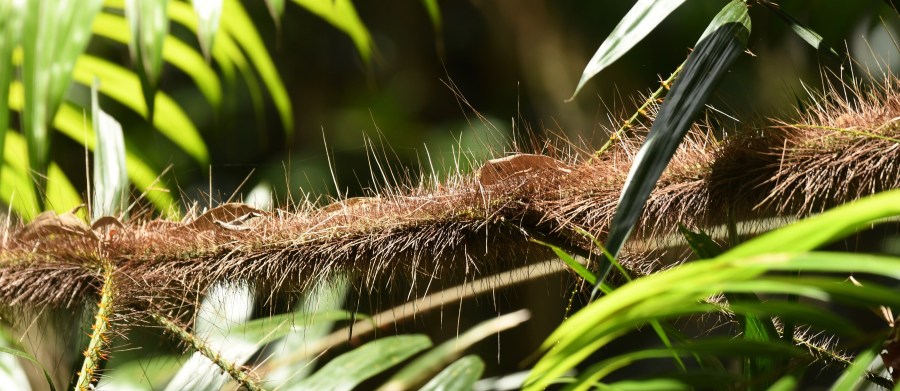
Insects, birds, and others like to eat fresh vegetation. Vegetation doesn’t think that is such a good idea; hence poisons snd spines. the two pictures here show one way to protect your valuable resources. Few birds can manipulate a barrier like that and probably no mammals at all.

DSC_8297

DSC_8293
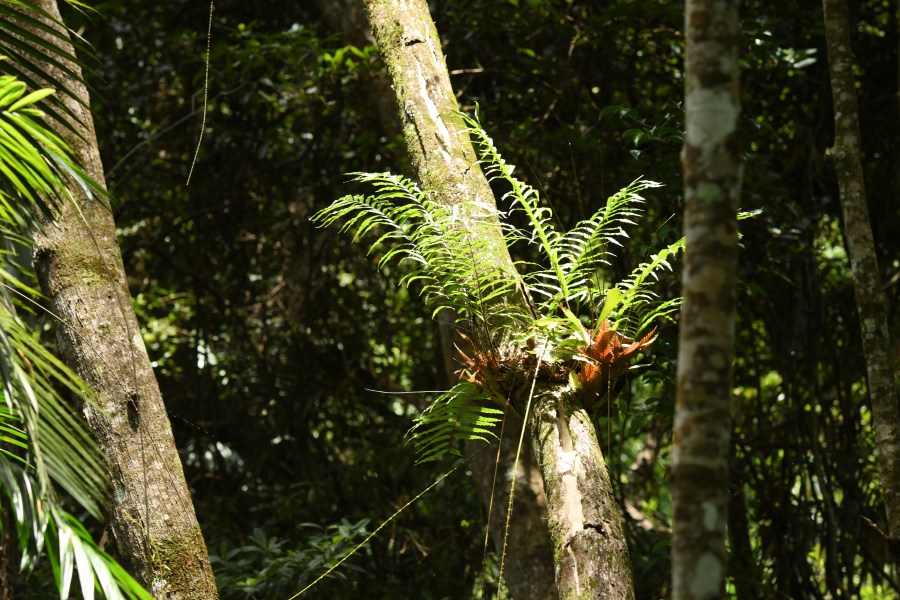
Epiphytes grow on something else; like this fern on a tree trunk. There are orchids, ferns, mosses, fungi, figs, and much more that live all or most of their lives as residents on somebody else trunk or branch. 
DSC_8280
The little Carlia pectoralis actually has a common name; Open-litter Rainbow-Skink. It was on the same trail I was on and we had a few moments together. He didn’t seem as hot or as humid (sticky and grumpy actually) as I was feeling.
DSC_8335
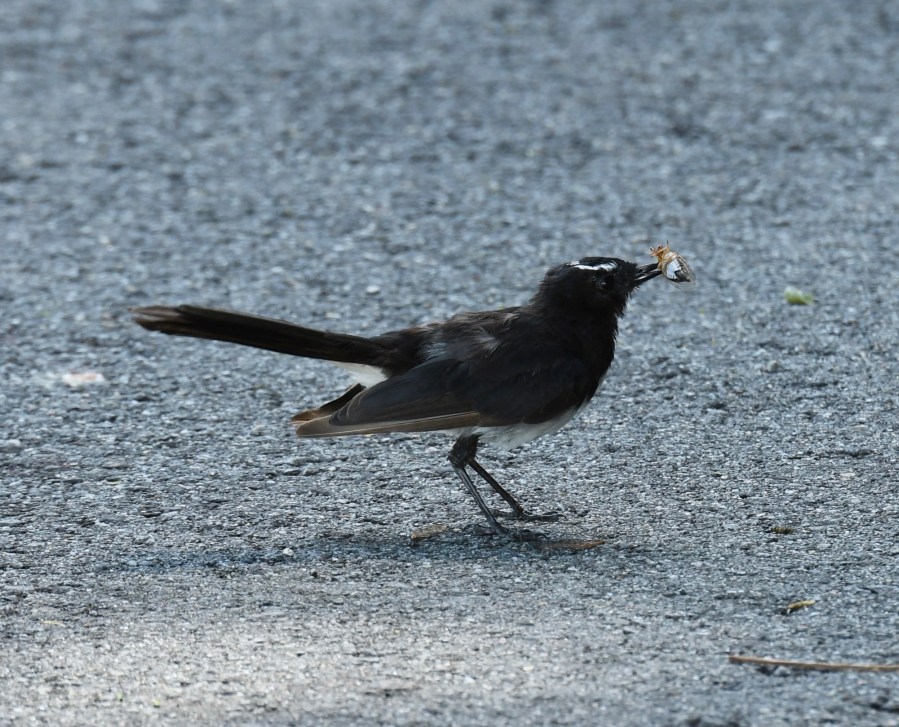
Back in the parking lot, waiting for everyone to gather, I watched a Willie Wagtail chase around and finally subdue a rather large insect. 


The Coast north of Cairns

The island continent of Australia is about the same size and shape as the continental 48 states of the USA. Cairns is where Boston is, Perth is San Diego, Melbourne is New Orleans, and Sydney is Washington DC. Just about the same. Now the weather is a different story; February in most of Australia is very hot. It is in the 90s and humid in Cairns and over 100 but drier in Alice Springs. The Australian Open played in January in Melbourne is usually played in unbearably hot stadia.

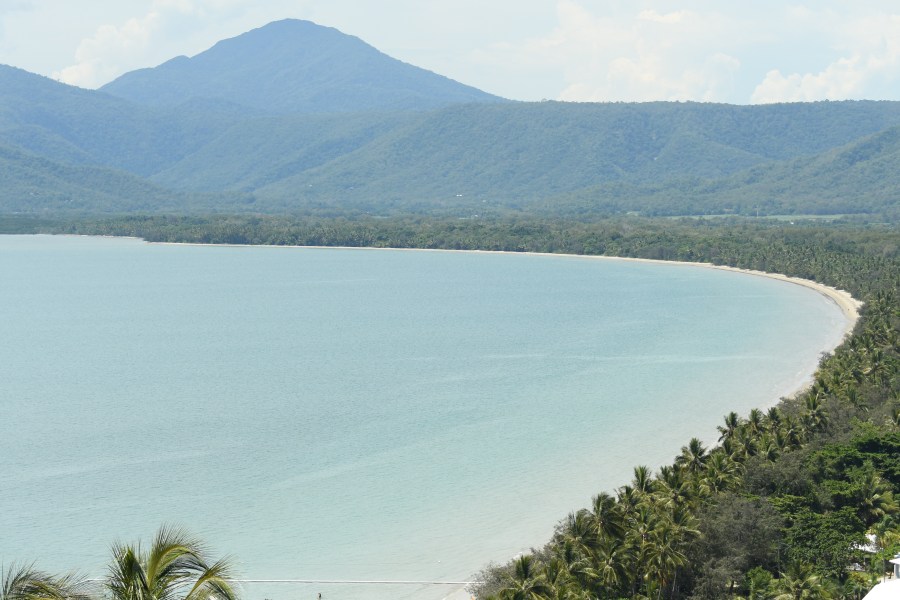
Well, all that aside the coastal road north from Cairns to Port Douglas, Mossman, and Daintree is a treat in any weather. What a lovely uninhabited coastal edge. The tropical rain forest reaches nearly to the sea the whole way and the vistas are easy on the eye. There is a bit of sugar cane grown here and that has altered the native flora    significantly … but it is still a very nice road. I was driven by a birding friend over this route as we chased after a flock of Spotted Whistling Ducks. We never found them but we found where they were the day before. The large open area, a paddock in these parts, with the grassy wet spot they were once in was being mowed and surveyed and no self-respecting duck would have hung around – and these didn’t. But, we did have some good luck, good birds, and a very nice morning. Below is a scene or two and a bird or two.
DSC_8183
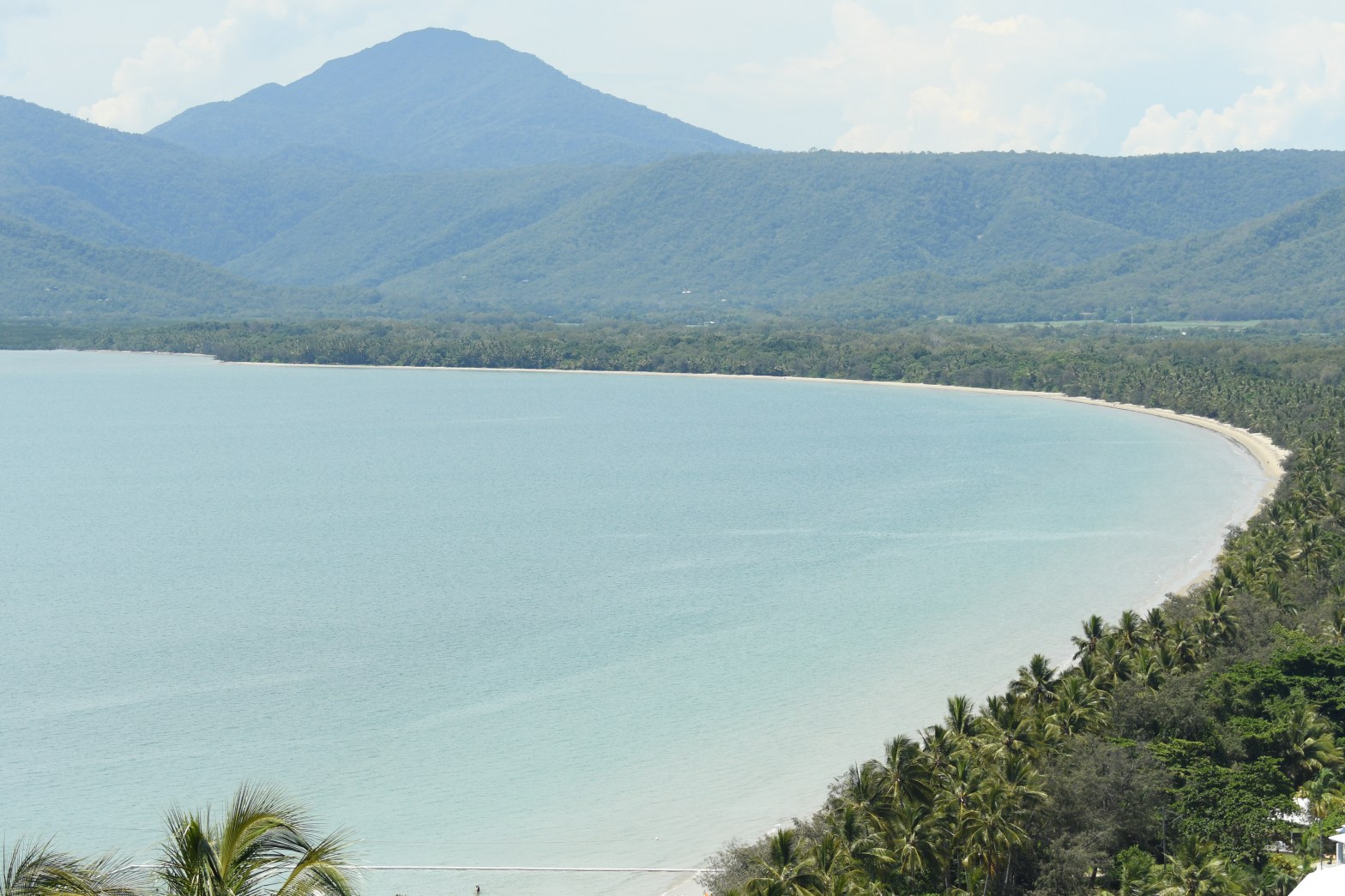
This was a taken on the return trip looking south. There mountains are part of the tropical rain forest and the very north portion of the Great Dividing Range which runs the whole eastern edge of Australia. Most of the people in this country live along that eastern shore line; the whole of the country west of the mountains is arid, often very arid.
DSC_8195
The water is lovely to look at but you should only swim inside the “nets”. There can be stingers (nuisance) and box jelly fish (deadly) along the shore. In certain seasons great care should be taken when thinking about swimming. There are occasional floats in the water with netting hanging down to the sandy bottom to keep the bitty stuff outside and allow for safe swimming inside. This sort of signage is found at most roadside pullouts. 
DSC_8207
Bar-shouldered Doves are quite common but not as easy to see was I thought they would be. This one sat still as we looked up and down the beach for waders (shore birds); but we had to settle for this guy as the waders were just not there.
DSC_8263
The honey-eaters are a large group of birds that are honey and pollen eaters. They have a long, brush-tipped tongues to help gather their food. This Brown Honeyeater is quite common and widely spread throughout Australia
DSC_8240
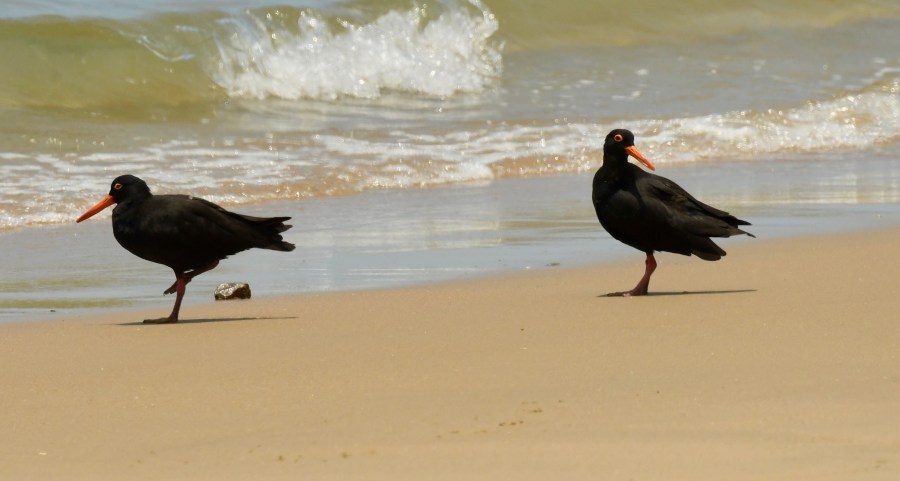
Aaah, finally found our target birds – at least the best target after we missed the ducks – a pair of Sooty Oystercatchers. Though this bird can be found on rocky shores all around Australia it is rather uncommon up here in Far North Queensland. Obviously this pair was looking for a sandy spot to vacation on, getting away from the rocks for a while I guess.