Summer is a dull time for most nature stuff around here. The birds are either further north or just starting to head south. They are through singing and are now and have been restoring themselves after the rigors of the breeding season. The plants are a bit stressed due to the high heat levels and lack of rain; and are feeling the peak of insect and fungal attacks. The ponds are low and the algae is thick. There are some butterflies and dragonflies and the yellow jackets are around all the sweets. Even the whale numbers seem low despite there being large forage fish numbers. But as the weather cools and the days shorten things will become more active for both humans and wildlife. The shorebird migration has started and the land birds are starting to appear as well.
Here are a few things that popped up this week that might be kind of fun to look at and think about.
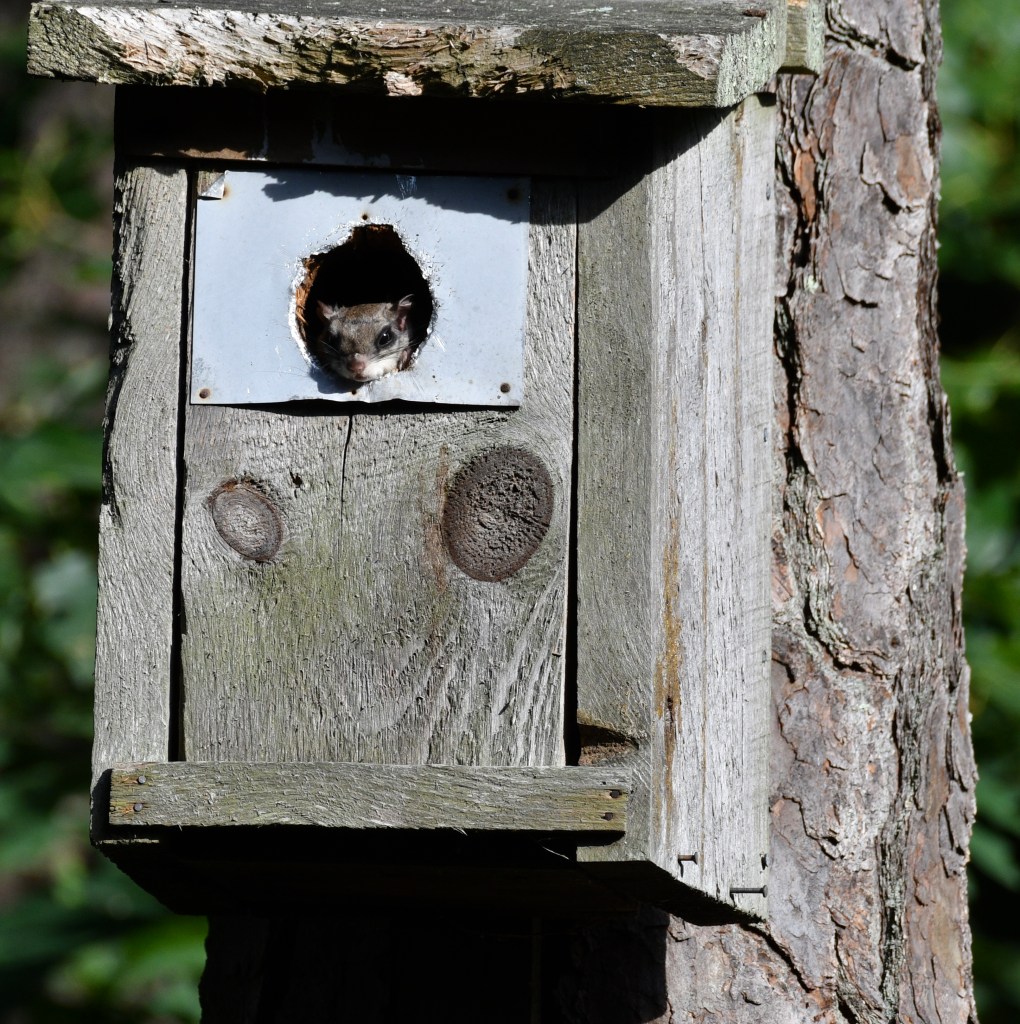
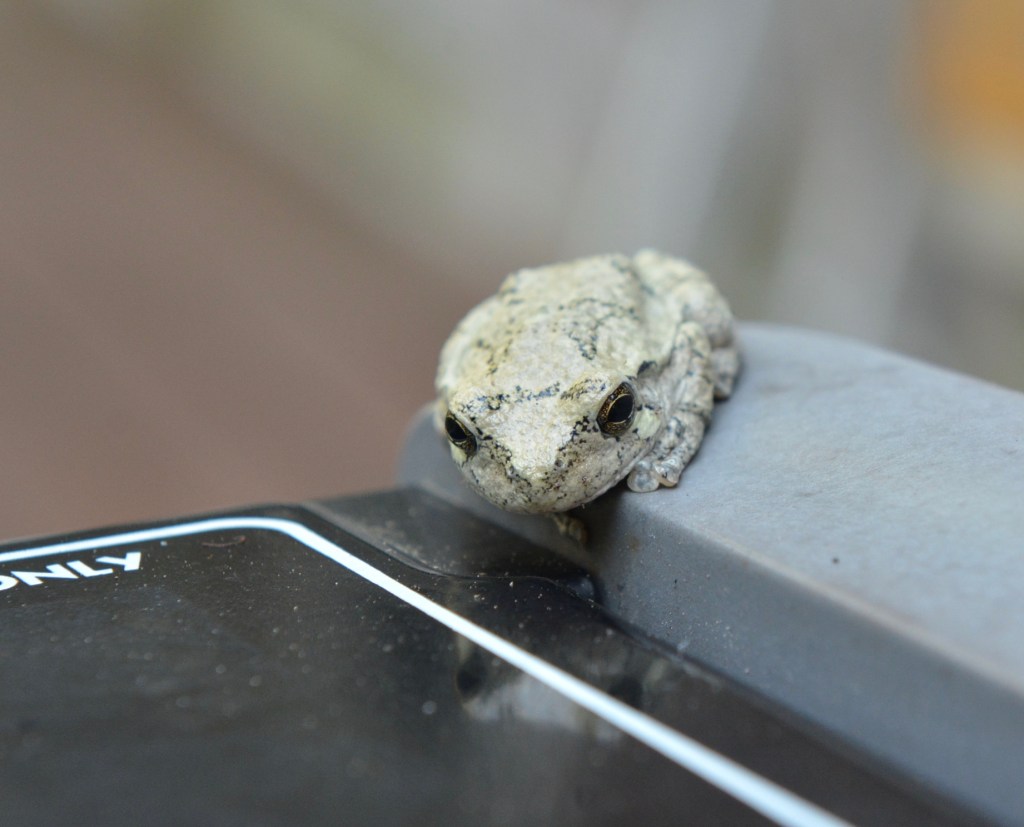
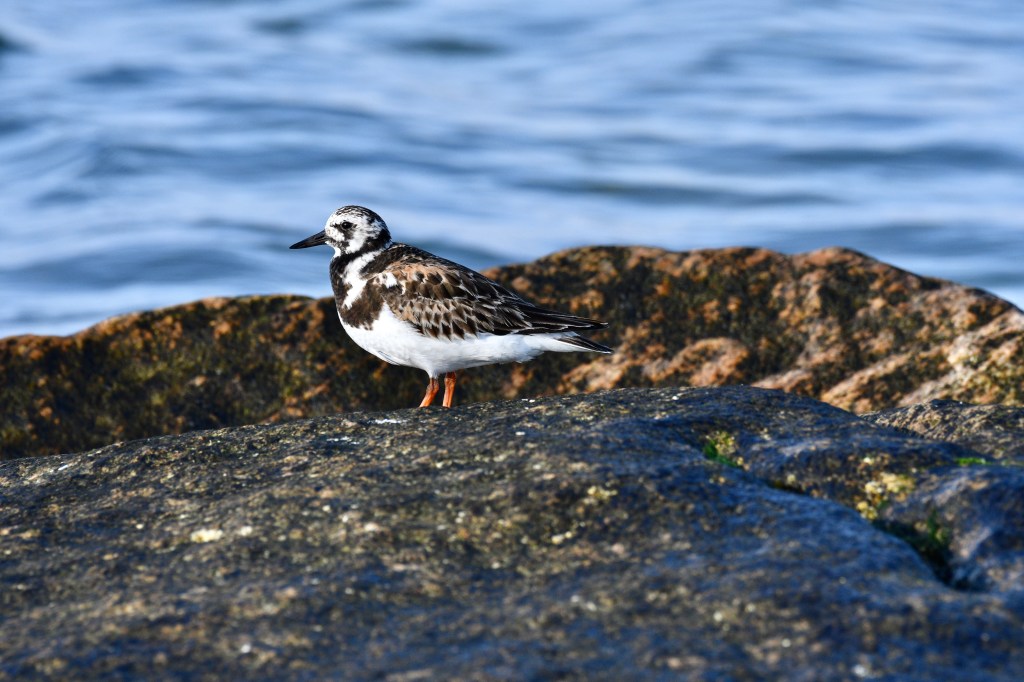
We have a few bird boxes around the yard. The Eastern Screech Owl use the larger one and we hope for Great Crested Flycatchers in the others. There is one smallish nest “box” made from 4″ round PVC pipe, that looks like a birch log, that Black-capped Chickadees use. The boxes for Great Crested Flycatchers get looked at each year and sometimes a nest looks likely – but in general they are not used. However a few months ago as we tried to move a box a Flying Squirrel ran down my extended arm and then glided over Fran’s head to escape the intrusion on what turned out to be their nest box. We have since assumed that the fliers were still in the box but it wasn’t until yesterday that we saw one in the day time. They are smaller than chipmunks and much smaller than both Red and Gray Squirrels. I am sure they visit the sunflower feeders every night.Here is a shot of a Great Crested Flycatcher starting a nest in the box. They brought lichens to the box and seemed to be pleased – but they left for a better location, location, location; as they say.The Eastern Screech Owl comes in both a reddish and a gray form (morph). This is obviously a red morph bird (probably the female) in a box just a bit smaller than a box made for Wood Ducks. It is a very common owl of the northeast with populations (sub-species, race, types, or populations) found throughout the Americas. The female in our box raised two gray youngsters last year and one reddish young this year.In the last blog post, I mentioned the Eastern Gray Tree Frog that we found in the grill – Diane, here it is! Small, gray, and seemingly nonplused by the grill cover being removed. We found this fellow on three different occasions and put it in the woods each time. I have no idea why it returns to the grill.It is a nocturnal amphibian and one that makes a loud musical (to some ears) trill. It is common throughout the eastern half of the US. They average 2″ in length (nose to butt) and are rarely more or less that half-an-inch off the length. The other common night noise in the eastern woodlands is the call of the katydid – or perhaps a cricket. The katydid makes a sort of grinding staccato noise. The males call to let the females know they are around and that they are cool.As I mentioned the shorebird migration has started. Adults have a four egg clutch and the young are precocious – walking and feeding within a few hours of hatching. Thus the adults are able feed themselves; regaining strength, weight, and vigor. The adults then migrate south on their own, leaving the now- teenage young to finish growing and then migrate on their own later in the summer. This bird is a common migrant along both the east and west coast; a Ruddy Turnstone (RUTU).
The Ruddy Turnstones used in the lead picture (at the top of the blog post) includes a banded bird (YJ=). At the moment I don’t know where or when it was banded, but I’ll check into it and post the information. There are several studies being done on these long distance migrants; I mean shore birds overall, not just turnstones. Many of them nest in northern Canada and Alaska and winter in Argentina and Tierra del Fuego. There are also species that nest in Siberia and winter in New Zealand and Australia. Amazing stories….
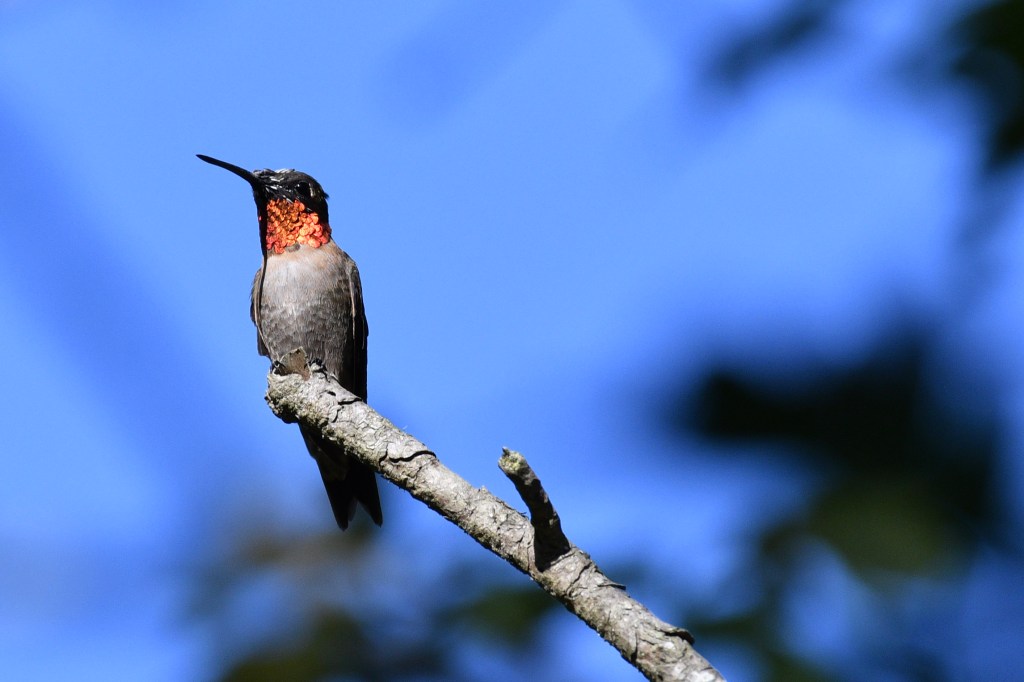
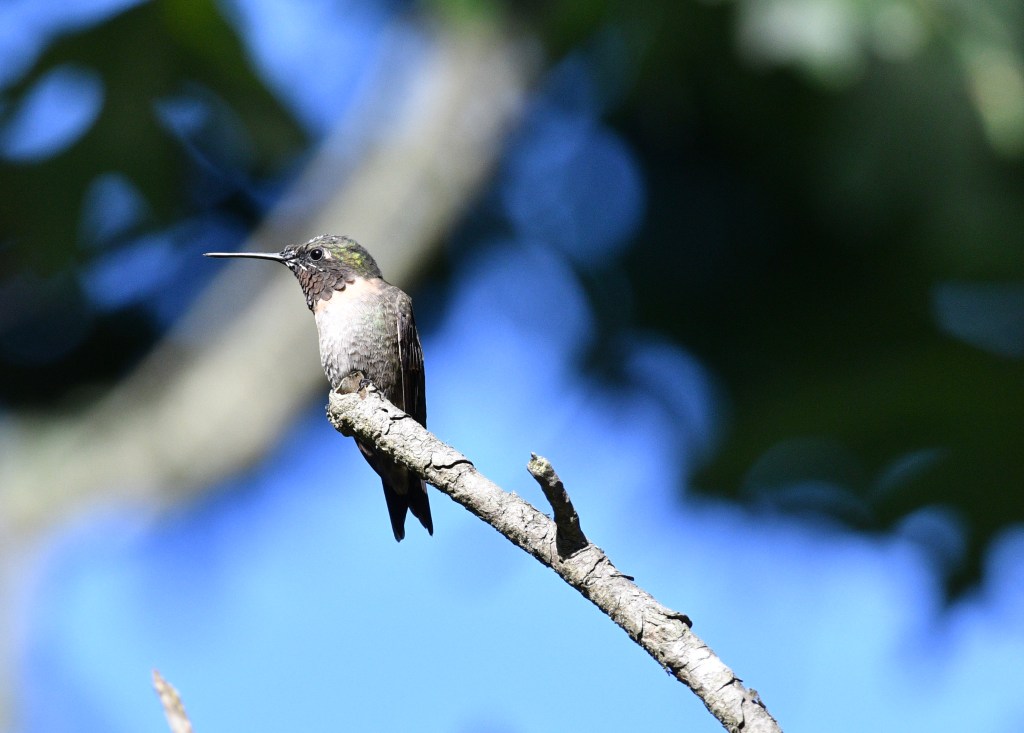
At the same time that the turnstones are migrating through our area we often see piles of Horseshoe Crab exoskeletons. Many people think these are dead crabs and wonder what is going wrong. In fact these are shed skeletons and the animals are alive and well in the water with a new outer layer. When very young the Horseshoe Crabs will shed several times a year. An older one, 6-12 years or so, will shed maybe once a year. The shell opens (unzips?) along the front arc and the crab walks forward and out of the old shell. A new shell is in place and is expanded with water and soon hardens.The hummingbird feeders are still active. We have at least two female and two male Ruby-throated Hummingbirds. Yesterday a male sat in the sun and sparkled – as you see in this image. The color is a structural or mechanical feature — as you can see below.The same bird, same stick, and only a second after the first image. it turned its head and the color was gone. Hummingbirds have a layer of air bubbles, tiny air bubbles, that reflect light in different ways as the light hits and bounces from the feather surface or the bubble (air) layer. Color can be fleeting and the sparkle of an iridescent gorget is both remarkable and surprising. It is not really the feather color we are seeing in the little gems. but the reflected wavelength of light that is dependent on the angle and intensity of the light that reflects back to us. A similar example would be if there is oil on a puddle and when you walk around the puddle the colors will change based on the same features (the angle of reflection mostly) —this is pretty much how a hummingbird shows its colors.
Please consider the images to be copyrighted and ask permission to use or reproduce them. Thank you. DEClapp
I have several pictures of a cute little Gray Tree Frog (or Treefrog) – or at least that’s what got me started this evening. I can’t find the image. The frog is a woodland species that is found throughout the eastern United States from central Maine down to northern Florida and then west into the central states of Texas, Oklahoma, Kansas, Nebraska, and the Dakotas. This particular individual would climb up under the cover to the barbecue grill and spend the day in the warmth and darkness that it provided. I would look for it as I opened the grill each evening. And, there it was crouched, compactly on the edge of the grill tray waiting for evening when it could descend to the deck and partake of the insects that would be attracted to the house lights.
Well, I can’t find the darn Treefrog pictures – maybe next time. But, I grabbed a few images from the past week and will post them with captions (and with very little thematic sense) and maybe they will let you have some idea of what is happening here as summer begins to wane and the animals begin to get set for the fall and its ultimate change to winter. It is time to fatten up and get ready to migrate or hibernate; as a matter of fact that is visible in both plants and animals right now in what most humans see as the middle of summer.
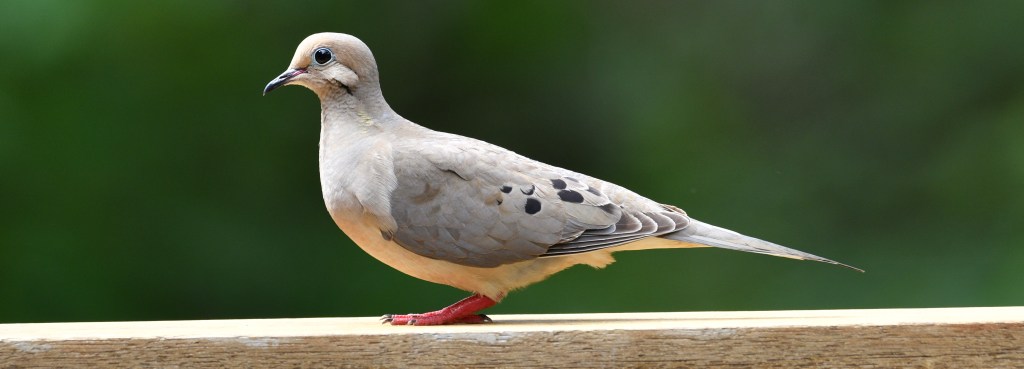
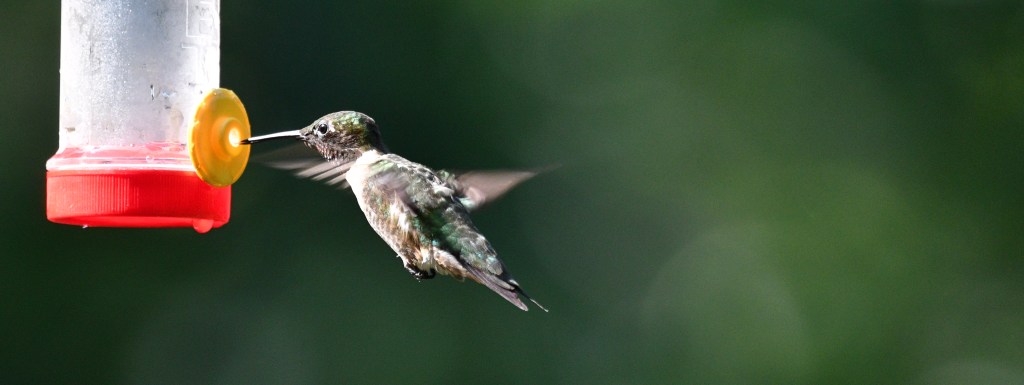
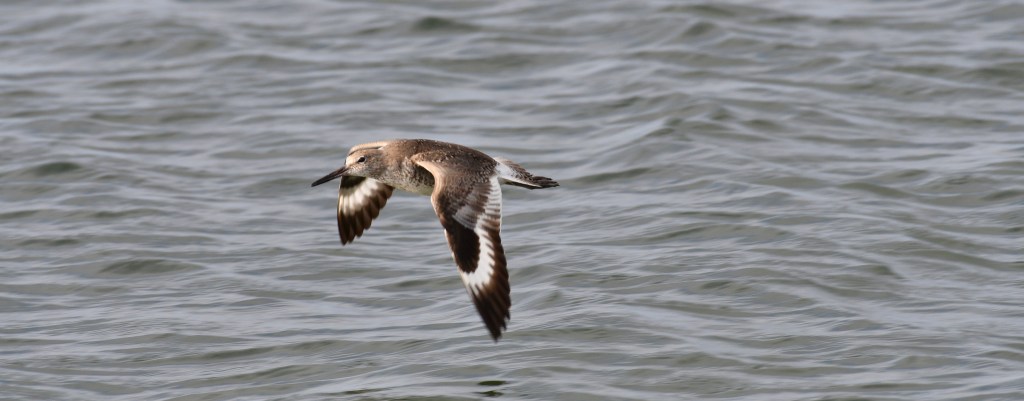
It is always nice to have a bird bath in the yard. Occasionally an American Robin will bathe but mostly it serves as a drinking spot for Mourning Dove, Black-capped Chickadees, Tufted Titmouses (or is it Titmice), and American Goldfinches. But it seems that Cooper’s Hawks like to bathe as well. We have seen this hawk splashing in roadside puddles all summer – but we haven’t had rain for weeks now. So, the bird bath was a real draw – and quite a surprising treat for us. The Cooper’s Hawk is an Accipiter, a bird-chaser related to the Sharp-shinned Hawk and Goshawk. The former is smaller and the latter is larger. The Accipiters are a group of forest birds found throughout the Americas.Speaking of Mourning Doves – here is one. There are about 350 species of doves and pigeons in the world. They are found everywhere excepting Antarctica. They have small heads and sort of bob as they walk. There are seed-eaters and fruit-eaters. Some species have acclimated to humanly occupied areas and can be found in cities and towns as well as on farms or in the forest. They are widespread but about one-third of the species have been impacted severely by habitat change and introduced mammalian predators (human pets that is). Most pigeons/doves do not migrate but often travel long distances to and from food sources. They have a well developed homing instinct and are very strong fliers.Searching for a segue here is a bird that is an abundant migrant through Oklahoma each year. It is a Mississippi Kite and the population nests almost entirely in the south central and perhaps the southeastern part of the US. I say almost because it is a species that occasionally does weird stuff – for instance there are at least three nests in New Hampshire several hundred miles from any place you’d expect to find the birds. It is a bird of prey but not what you might think – they eat and feed their young cicadas, grasshoppers, dragonflies, and beetles. They catch dragonflies in flight and are very skilled fliers. They are long distance migrants and leave the US in late August headed for Paraguay where lots of them seem to winter. They are also found in northern Argentina and parts of Brazil and Bolivia. It was quite a treat to see this bird (at a nest) without having to drive to any of the south-central states.The Ruby-throated Hummingbirds are still around. Like all of our birds they have finished nesting and are rebuilding in preparation for a long migratory flight. These tiny birds will fly south to the salt water and then across the Caribbean to eastern Mexico (the Yucatan) to even northern South America. These birds are so small and so light that is takes about 6 or 7 to weigh an ounce in total. Sugar water is similar to what they look for in flowers but they also spend time picking small flying insects out of the air and off screens.The Yellow Jacket, Vespula maculifrons, is one of several wasps that frequent the east coast and share the sweets with the hummingbirds. They often, perhaps usually, nest in underground tunnels that are excavated to hold the colony. They will kill insects to feed the large but do enjoy a sweet drink on occasion. These are the little gals that hover around, and occasionally descend into, your picnic beverages – especially sweet sodas; but trash cans and outdoor eateries are also frequented. The colony is mostly female as the males die after mating and the queen is usually a singular animal. The first frosts will kill the colonies up here in Massachusetts but some can over winter in the warmer southern states. As summer ends and fall approaches the colonies will “make” new queens that will over winter and start new hives next year.Most of the plovers and sandpipers nest further north. Many are tundra nesters and migrate quickly through as they head north in May and then return on a less hasty schedule in the summer and fall. The adults will nest, laying rather large eggs, and hatching precocious youngsters. This allows the young to forage and feed themselves which in turn allows the adults to feed themselves without having to share or offload food to the babes of the year. This system allows the adults to start southward as soon as they replenish the body mass lost during nesting. Hence we get many adult sandpipers heading south by the end of July. The youngsters eat and grow and deport about a month later. So we (sort of) get two flurries of migratory birds along the coast. All that being said – the bird above is an (Eastern) Willet, a species that now nests rather commonly in our salt marshes. Twenty years ago it was a special occasion to see them around here but now they are the voice of the spartina marsh lands.One bird that we don’t have nesting here is the Whimbrel, the old name was Hudsonian Curlew. This is a migratory bird that also frequents the salt marshes as its favorite food, the Fiddler Crab, is found in the marshes. This is a tundra nesting bird, mostly in northern Alaska, but also in a few spots in northern Canada. It is not an uncommon migrant here in the northeast but birds that we see in our salt marshes have already flown more than 2000 miles southeasterly to reach us from (mostly) their Canadian nesting grounds. Some will depart from the Canadian Maritimes or New England in a single flight of 2500 miles to northern South America where they will spend the winter.
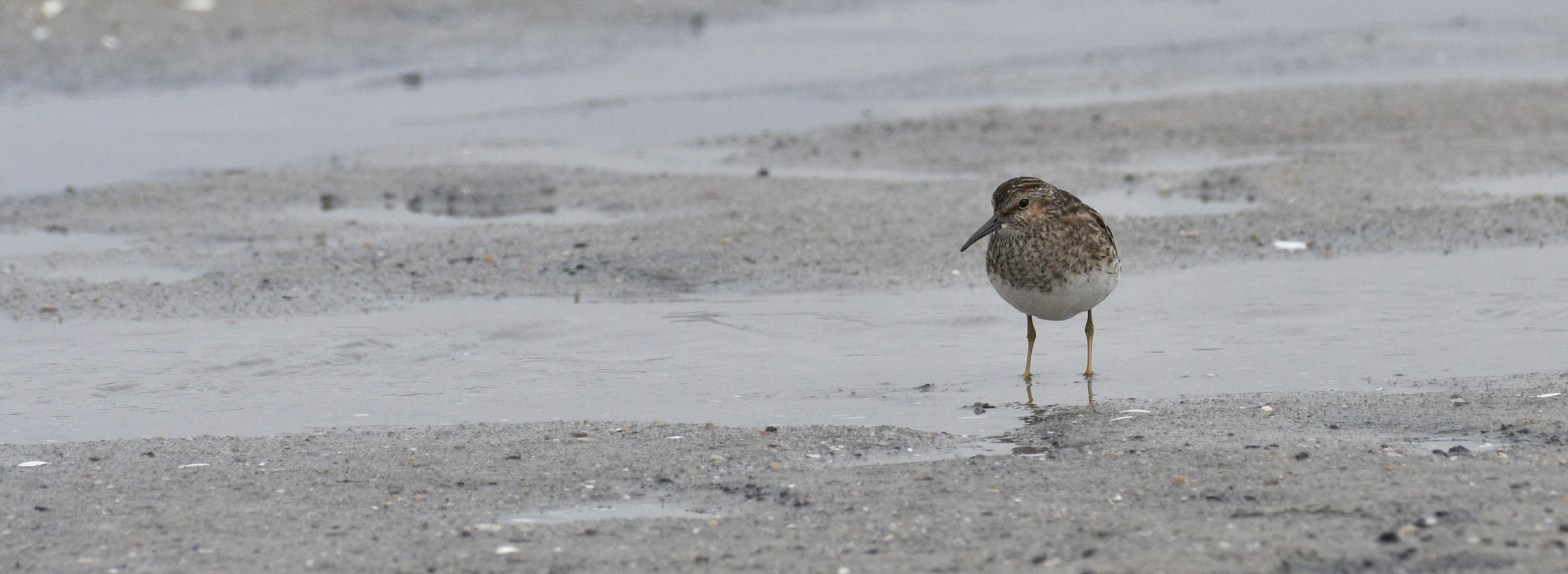
The lead image is a small sandpiper called Least Sandpiper. It is shown in a rather nice brown plumage; its breeding attire. These birds will migrate south until they are in the Antilles or even northern South America. A chubby Least sandpiper still won’t weigh one ounce and often they are only much lighter. They nest in the northern regions and migrate throughout the country. They are the most common “peep” (small sandpiper) in the central part of the US and are expected on wet grasslands as well as river, lake, and pond shorelines.
When I find the Gray Treefrog images – I’ll get them posted right away ….
Please consider images to be copyrighted and ask permission to use or reproduce. I wish I could remember the source for the Africa habitat maps – they are valuable teaching tools. Thank you whoever you are. DEClapp
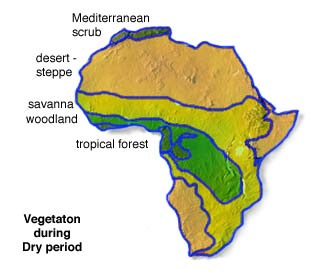
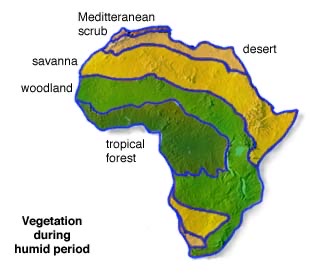
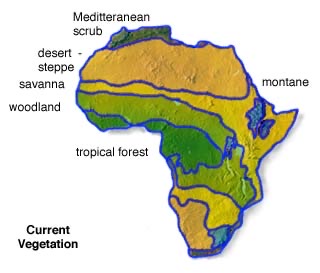
This is important – you can’t understand Africa without this!! It probably applies everywhere throughout the world but it is easy to see in Africa and I am doing a series of African posts right now … so here it is. Keep it in mind with all wildlife populations, distribution, migrations, extra-range sightings and more.
The climate changes.
It is the determining factor for vegetation types and thus feeding the animals that can live in specific places and eliminating those who can’t. Climate is long term. Dry periods and wet periods can last hundreds, even thousands of years. Modern African wildlife has been divided into sub-species and scattered populations by changes wrought over the past several thousand years. There have been dry periods and wet periods; long periods of dryness and long periods of wetness. What we see today is not permanent or static – it is merely what we see today. It will change and when it changes the animals and the plants will change as well. Populations will be divided as habitat grows or lessens. Divided populations will breed and evolve along their own track, depending on the local climate and its effects.
Look at these maps and note the changes in woodland habitat; in savanna habitat, and in tropical forest habitat. During dry periods (and today) the Sahara desert is significant. During a wetter period the desert is turned into a grassy savanna and associated woodlands. This was a time when lions and antelope lived in the northern part of Africa.
The wetter epochs saw tremendous increases in the size of the woodland and tropical forest habitats. The savanna land was pinched and the desert was squeezed northward. This situation allowed for an increase in woodland vegetation and animal species and divided the savannah animals into a southern group and an east-west group well to the north. When this sort of division lasts for tens of thousands of years the animals adapt as needed to their locations and often become something different from what they were originally. Thus we have different forms of Wildebeest, Hartebeest, Zebra, Impala, and Giraffes along a north-south line. This is the result of population isolation as the habitat constricted and was fragmented. When climate changes and a habitat grows these populations may spread and overlap. It will depend on the evolutionary circumstance as to whether the two new groups will recognize their shared heritage and interbreed. (These would be experiments that need hundreds of years of data collection.)
Today the African continent is somewhere in the middle; between humid and dry. Savannas are still divided by woodlands and thus there are two great savanna lands. The safari destinations in Kenya and Tanzania are in (central) East Africa and there is a lot of savanna there; the Maasai Mara and the Serengeti are iconic grasslands in East Africa. There is also a patch of savanna across the southern part of the continent. This is where the great game parks of Botswana, Zimbabwe, and Zambia are located. The country of South Africa has a nice variety of habitat types including mountains along the eastern edge and the Cape habitat in the very southern bit of the continent.
Each of the habitats provides specific circumstances that determine the metabolic and genetic requirements needed to survive.
The point is that these habitats change with climate change and then everything else changes as well. Deserts grow or contract. Woodlands grow or contract. Grasslands; the same. Each hiccup causes a great ripple through all the life forms associated with these landforms and ecological communities.
Please consider all images to be copyrighted and ask permission to use or copy. Thank you, DEClapp
The antelope are a common part of the African scene because of the grasses and shrubbery of the African plains. The vegetation drives (allows) all sorts of things to survive by providing nourishment and moisture. Unlike the Giant Panda and Koala who eat almost valueless food stuffs, the African grasslands provide food rich in carbohydrates, minerals, and protein – it isn’t always easy to get at. But, a great percentage of the savannah biomass is in ruminants (ungulates). These animals are even-toed and utilize a four-chambered stomach. They are cud-chewers for the most part. Of course the vegetation is quite seasonal, in many places, and requires either periods of hunger or a migration for animals to make it through the year.
Despite this sort of generalized introduction, the existing antelope vary greatly in size, habitat, shape, and behavior. Some are singular in life style while others group together and seem to need company. There are about 78 members of the Bovid family in Africa. These are the Duikers, Dik-dik, Steenbok, Klipspringer, Gazelles, Reedbuck, Rhebok, Waterbuck, Lechwe, Puku, Hartebeest, Topi, Wildebeest, Impala, Bushbuck, Kudu, Eland, Cape Buffalo, and Giraffe.
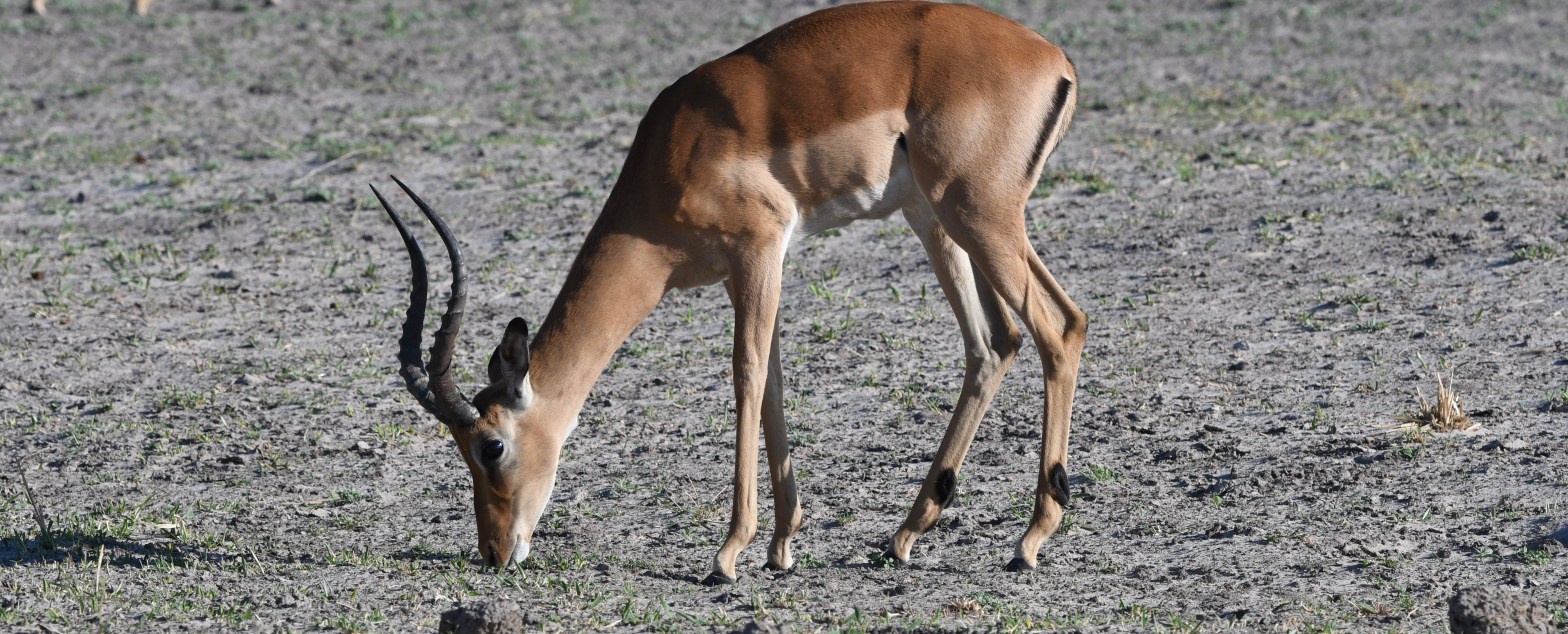
This grouping consists (again) of cud-chewing, four-chamber stomach, even-toed animals that look like antelope or cows or giraffes. The sweetest looking and probably the second-most abundant, behind the Wildebeest, is the Impala. This is a sleek animal weighing about 150 pounds for males and 100 pounds for a female. The males have horns that are sweepingly wide, ridged, and up to a yard long (36-37 inches or 90 cm). They are two-toned brown with white bellies, rump, and facial marks. The Impala is an animal of the brushy edges. It can be seen in light woodlands and grassy plains.
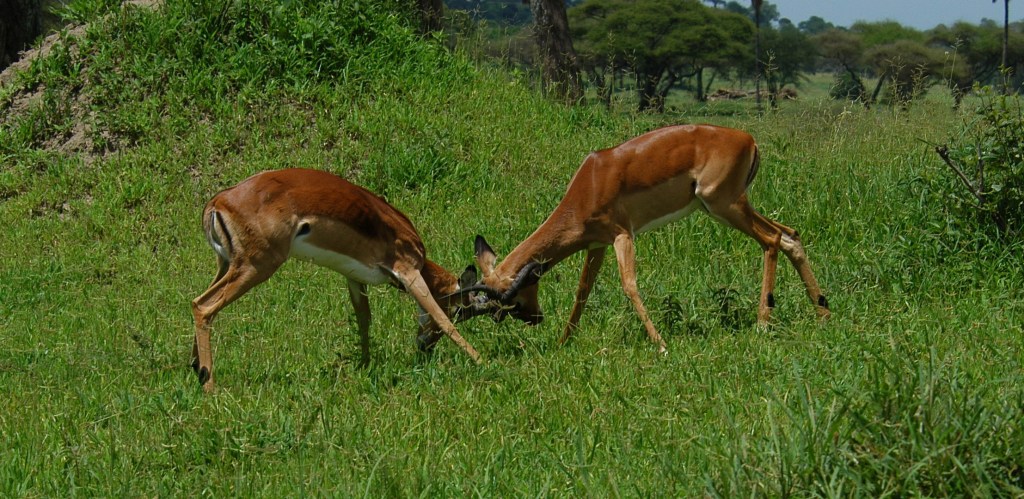
Impala are largely browsers taking pods, buds, fresh twigs, and new foliage from grassy woodlands (mostly during the drier seasons) but will graze heavily on fresh grasses during the wet season. They are often seen in rather large groups with 30 to 120 females in a rather stable group and males in bachelor herds for the most part. Males will compete for dominance and then try to hold a group of 5-20 females on a territory for breeding. The male-male competition continues throughout the breeding season. The dominant males do get to breed the most, but they also forgo feeding to shepherd females and chase intruding males. Few males have the stamina to hold both females and territory throughout the breeding season.
Impala numbers are quite patchy. They are very common in good habitat and uncommon in less suitable locations. There are scattered populations from Kenya on south into South Africa. There is a small population of the “Black-faced Impala” in southern Angola and northern Namibia. This form is usually lumped under the same specific name as the other populations.
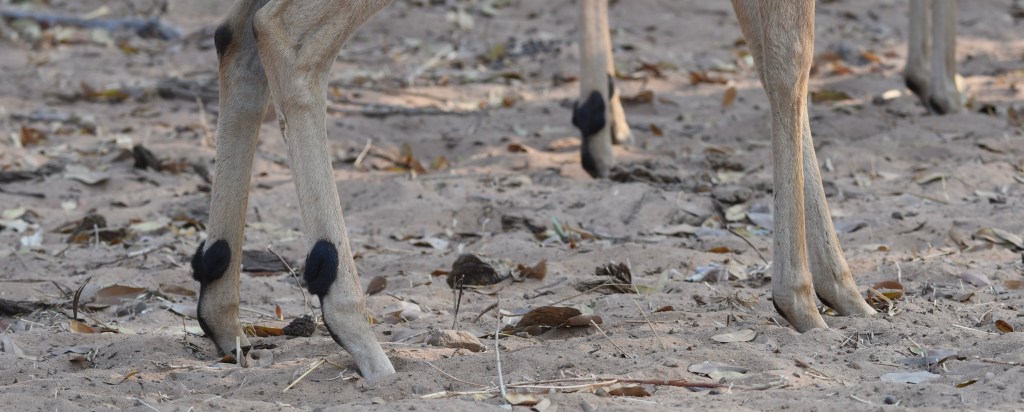
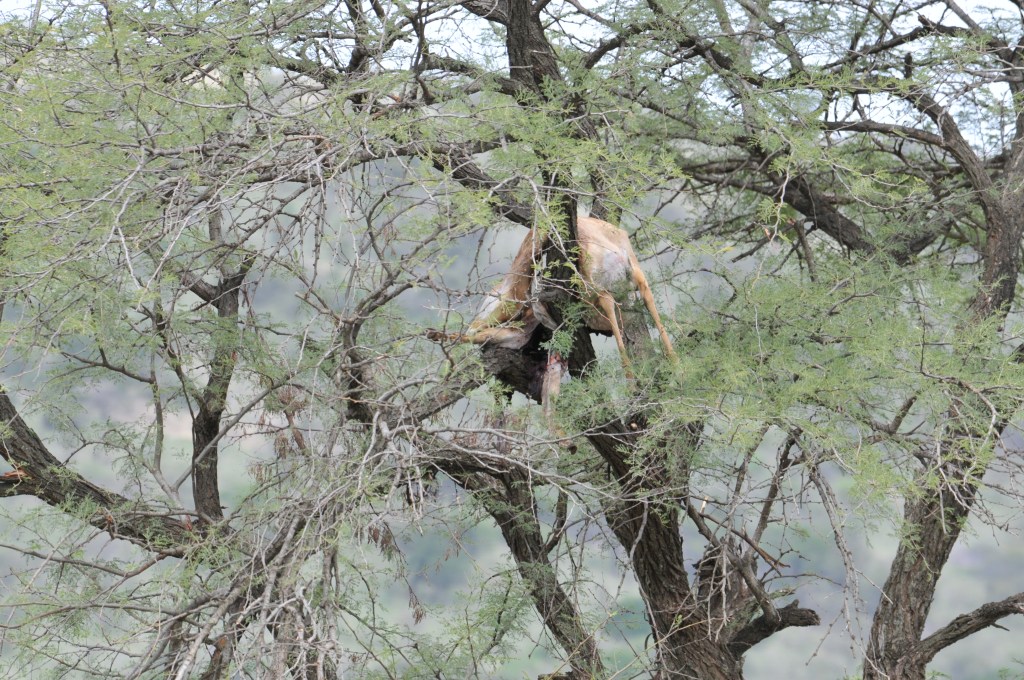
Males will test each other and measure themselves within the bachelor herd. The winner, the strongest usually, will move out from the boys club and try to create and hold a group of females on a territory during the breeding season. Mating, herding, chasing other males (from the females and the territory) and all the related stresses will wear the males down and they are often usurped by a stronger fresher male. The defeated male will return to the bachelor herd and regain strength and (perhaps) try his luck again later in the season.Young males will begin to sort themselves out long before they are sexually mature. Notice here the two-toned brown body with a mostly white belly. There are two black rump stripes with a third one on the tail. Males will leave their mothers and join bachelor herds at about 8 months of age. Female Impala do not carry horns. The horns are mostly hollow and are not shed annually like the deer family (White-tailed Deer, Moose, Elk, Reindeer/Caribou). This is probably a good time to mention that deer and antelope are not too closely related. The deer are Cervidae (47 species) and the antelope are Bovidae (135 species of cattle goats and antelope). And further along the taxonomic line it should be noted that Impala have no close relatives within the Bovid/Ungulate/Ruminant group. They are rather unique; following their own evolutionary line. The group that they are in also has the similar Hirola, as well as the much less similar Topi, Bontebok, Kongoni (Hartebeest), and Wildebeest, a rather unlikely assortment of animals.The female impala are sleek and rather elegant looking. They are always in some sort of group. When startled the group will bolt and animals will leap and bound in long mammalian flights as they escape from the danger. They can leap 10 feet (3m) in height and 30+ feet (10m) in length with ease. It is quite a scene when a group of thirty of forty or more animals depart in a hurry, scattering in all directions; like mammalian fireworks. The youngsters often chase and leap for exercise, practice, and seemingly, the fun of it.Female Impala will bear their first young when they are about a year and a half old. One or two young is normal. The young can be left out for a few days but are soon brought into the group where they form creches with other youngsters. They nurse from their mothers but generally hang with the other kids. Males won’t breed until they are at least four years old and can hold a group of females and a bit of territory. Impala carry scent glands in black tufts of hair on the rear legs. Males will also exude scent from glands on the forehead to mark territory and announce their presence. The chemistry is just now being unraveled and the real intent of the glands is not yet nailed down. It is surmised that the scent glands inform other group members as to where the animal is located; but how transmission occurs is not well understood. It was thought that the scent was a “follow-me” scent but that requires immediate dispersal in all directions. It may be more likely that the scent is a steady-state odor that informs regarding health and reproductive status (an olfactory Face-Book page). These scent-emitting black leg tufts are found only on Impala and not on any other antelope or gazelle. Many other species have scent-emitting glands but not on the lower part of the rear legs.Impala will drink daily if they can. They will also forgo drinking when new grasses or other foods provide enough moisture. You might notice that the second animal in from the left is a bit bigger and has horns just visible under the female on the very left that second-in Impala is a male.One of the dangers in being a common herbivore is that you taste good and are available. Predators will eat herbivores throughout the year. Lions often need larger prey than Impala but a smallish group of lions will take iImpala on occasion. Leopards find Impala just right and often seek them out. Hyenas and Wild Dogs will hunt Impala and Cheetah will take youngsters and occasionally full grown animals as well. The Impala in the tree (above) is a cached leopard kill.
Please consider the images to be copyrighted and ask permission before using any of them. Thank you. DEClapp
This is a much delayed return trip to Africa. I spent many many years with at least one visit to Africa. I ended up with well over fifty safari outings and a lot of time crammed into an airplane. These were my favorite trips (even with the flights), my favorite ecosystems, my favorite animal assemblages, and my favorite people. It will be difficult not to spill all my stories in this first Africa post in a couple years. But I am going to pace myself and start off with maybe ten posts that deal with the grazers and browsers of this great continent. If you look back through the ontheroadwithdec posts it is back in 2018 when I last did a series on Africa and then in 2017 and all the years before that there are lots of African posts. In most of those posts there was a lot of predator imagery and gee whiz moments. But the great game parks of southern and east Africa are huge complex systems all functioning from the ground up. Or perhaps from the sun down. It is sunshine, water, elevation, soils, vegetation, microbes and fungi that provide the matrix for those predators to exist. The next level down from the predators are the masses of warthogs, antelope, gazelles, buffalo, zebra, giraffe, hippopotamus, rhinoceros, and elephant; the vegetation eaters – the great mass of vegans that roam the land and feed the lions.
So, I am going to do a series on those aforementioned mammals. Many are called ungulates which nowadays refers simply to a “hoofed” animal. In the earlier days the word ungulate referred to specific groups of hoofed animals but taxonomy has developed to the point where general terms are left behind and specific nomenclature has developed that is more accurate both in field use and now in genetic relationships as well. A bit of background is needed and then we will move right into some chatter about the striped horse of Africa.
There are lots of smaller animals that are usually preyed on and don’t usually predate. These animals include rodents, rabbits & hares, hyrax, elephants, and the various ungulates. There are predators that don’t get our (human) juices running; smaller animals like the bats, moles, shrews, monkeys, aardvark and pangolin. Each of those is in fact a hunter, a predator, but somehow we don’t get all excited about fly-eaters and termite-hunters. So for now we will leave those alone and in the wings waiting for their day to arrive.
There is one last bit of information needed as we look into the grazers and browsers of the African plains (grasslands for the most part) and that is how they are generally divided and classified. About 65,000,000 years ago mammals were sprung free from the dinosaur-dominated world when an asteroid crashed into our planet causing a great and nearly complete annihilation of life at that time. This was the end of the Age of Reptiles and the beginning of the earth and wildlife that we see today. Oh, there have been tens of millions of changes in the past 65,000,000 years but it was at the moment of that great collision that the door opened to life as we know it and the flighted dinosaurs (birds) and shrew-like mammals oozed out from under the diminishing reptilian shadows. The dinosaurs still exist as our feathered vertebrates, the birds; and those tiny mammals have taken over the air, land and sea as bats, gazelles, and whales; oh yes, and as humans, rats, chipmunks, and lemurs.
The common ancestor for all the horses and asses (donkeys) is seen in fossils about 4.5 million years ago; found (surprisingly) in Canada. They entered Eurasia about 3 million years ago (other references say as many as 11 million years ago) and into Africa about 2.3 MYA. The equines (horses) started to develop from a small animal with five toes. Over time the group has evolved to have only one toe on the ground. The many-toed equines and the single-toed group coexisted for millions of years. They were only 20 inches tall back in those post-asteroid millennia and slowly evolved in what is North America today and eventually spread back to Europe, Asia, and finally down into Africa. As the climate changed and the land dried out the more efficient single-toed horses were best suited and survived; the three-toed horses disappeared. There are three zebra types in Africa, all now in the same Genus; The Plains (Burchell’s), the Mountain, and the Grevy’s. There was a fourth, though perhaps it was just another form or population, called the Quagga that lived in southern Africa into the 1800’s.
Let’s look at some images….
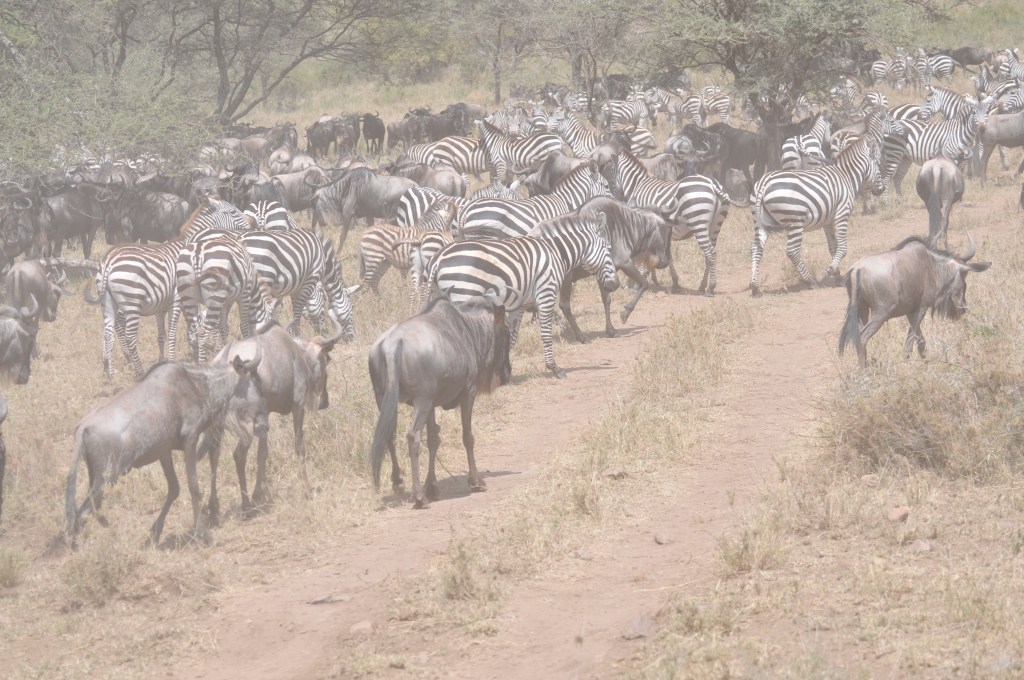
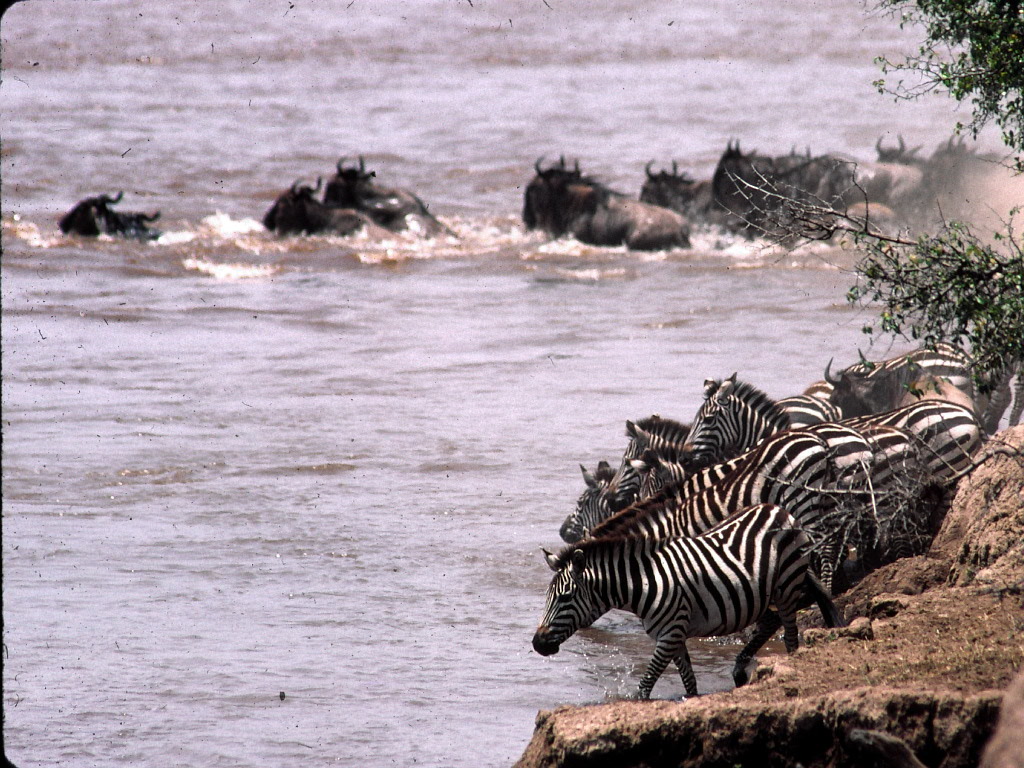
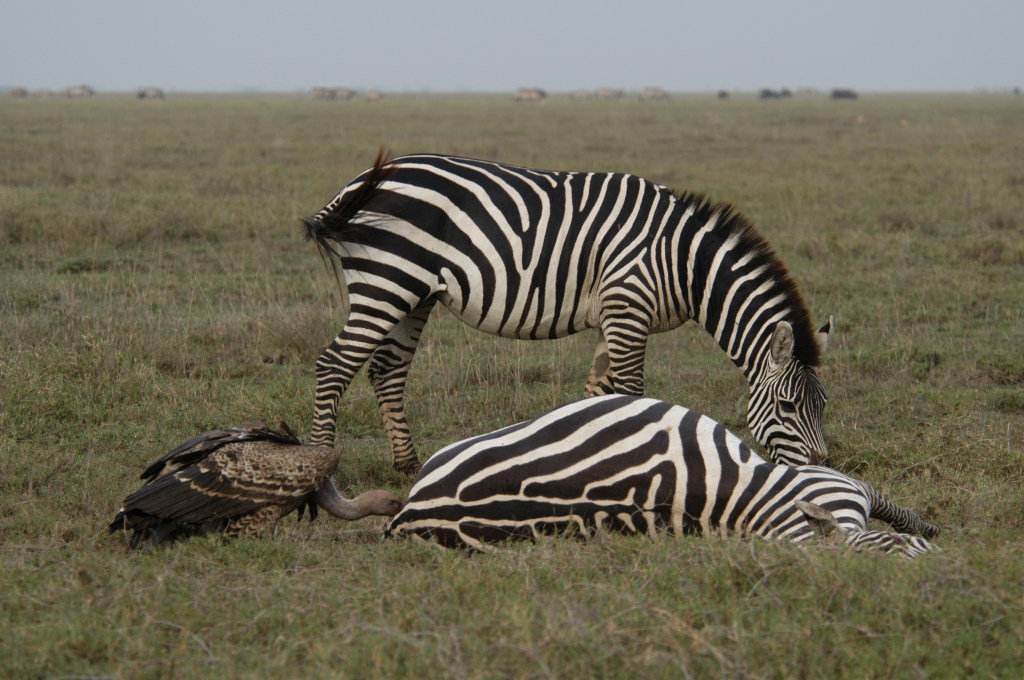
The Migration is a never ending year round event; following the rains and locating green grasses. The wildebeest (White-bearded Gnu), zebra, and many antelope move from the Maasai Mara in Kenya to the east and south over the Ngorongoro Highlands and down into the grasslands of the Serengeti well into Tanzania. Once on the Serengeti they drop their young and rebuild their bodies. They have found the rains and the green vegetation that they need. However the Serengeti grasses wear out and the rains stop and the herds are again forced to move; this time to the west and then north back into Kenya and up into the Mara grasslands. It is here that they can again stop for a few months and eat and mate. But again the rains stop and the need to move arises — this is the annual migration. The renowned anthropologist Mary Leaky always wrote of, and spoke of, the migration in capital letters; it was always The Migration, and she tried throughout her life to get out to the Ngorongoro Crater area each year to be awed and humbled by the moving streams of animals passing southward into the grasslands below.When heading back north into Kenya there are two river crossings. These sites are not on most safari routes and I am afraid that the image above is pretty bad – it was a “film” shot that I have digitized; sorry. But it shows part of the greatest show on earth. The migration is mostly wildebeest and zebra. They are not one huge mass of two or three million animals but more like streams running parallel to each other head down into the sea of grass. Some groups may be only a few dozen and others may be a mile-long train of hundreds. Once they reach the grasslands there can be tens of thousands together, great beasts by the thousands all enjoying the new grasses they traveled so far to intercept.Those river crossings are especially chaotic. Zebra travel as a family, or so the stallion would like to think. There is one stallion, a few females, and the young of that year. The male wants the group to stay together but there are hundreds and hundreds of family groups trying to get up the courage to enter the water. So like a good male he starts yelling – and like kids everywhere – he is often ignored. In a normal day of walking on a trail through the Serengeti the male can keep track of his gang pretty easily. But when they get to the river he loses control. Youngsters start to swim away toward Kenya, he calls them back and they sometimes turn and start swimming back into the hundreds of animals heading toward them. Families of zebra and hundreds of wildebeest are soon mixed up in the blender of the river crossing. Thousands of wildebeest and hundreds of zebra swim with passion and purpose to get to the other side, only vaguely aware that Nile Crocodiles have been waiting months for them to arrive. It is a noisy, dusty madhouse.Once on land and stopped to eat they are immediately sought out by pesky flies. Though is seems that the black and white stripes may have evolved to keep tsetse flies at bay, they often stand as shown above and shake their manes and flash their tails to keep the insects moving. Always good to have a friend. The stripes have been explained many ways; to disrupt predators, to camouflage in the wooded savannah, or to help regulate body temperature but the most convincing research suggests that tsetse flies don’t like to land on a ruptive surface and so they generally keep away from zebras. I have been bitten by many a tsetse fly over the years and I think it only reasonable to evolve stripes to repel them; I would ooze DEET if only I could. The tsetse fly is the carrier of a parasite that can cause East African trypanosomiasis. Most flies do not carry the parasite but the bite is quite a painful nuisance. Tsetse flies are not very common and are rather specific to their chosen habitat. On most safaris the tourists will never see or feel a Tsetse Fly; but it is something to ask about each day as you start off into the bush.The zebra stallion has to stay with his family group. The females can be stolen and the youngsters are, well, they are youngsters. This is a stallion standing over the body of one of his females as they were arriving onto the Serengeti near Naabi Hill and the Ndutu road. She is full with child and simply dropped dead as she was walking along. You never know about these things and conjecture is merely conjecture; perhaps something to do with her pregnancy, perhaps some bad food or water, or a genetic disorder, we don’t know. But the picture tells a tale. The male stayed for maybe five minutes but had to leave her and gather the others together. The rest of his family was moving along with the migratory wave and he would lose all and everything if he waited to long. He checked her and nuzzled a bit. He looked toward his receding family. He scattered the arriving vultures once or twice and then turned and followed the remaining mares and young into the grasslands. By the way, a White-backed Vulture, like this one, cannot open up a newly deceased zebra. The carrion-eating birds will eat the soft parts (eyes, tongue, lips, anus) and wait for hyenas, lions, or the passage of time to open the body.
The zebra of the southern countries (South Africa, Botswana, Zimbabwe, Zambia, Angola, and Namibia) are a bit different. Climate change during the past few thousand years has isolated populations of all sorts of animals and zebra are no different. The habitat and climate of East Africa requires a great migration where the habitats in southern Africa do not. Oh, the animals move according to the weather and the loss of food sources but they do not move in the great waves that we see in east Africa. They are on different land, different soil, with different plants, and have had to accommodate different pressures. Thus they look a bit different and behave differently as well. This is simply survival of the most fit, the best adapted to the current habitat, and the tendency for a population to look different over time.
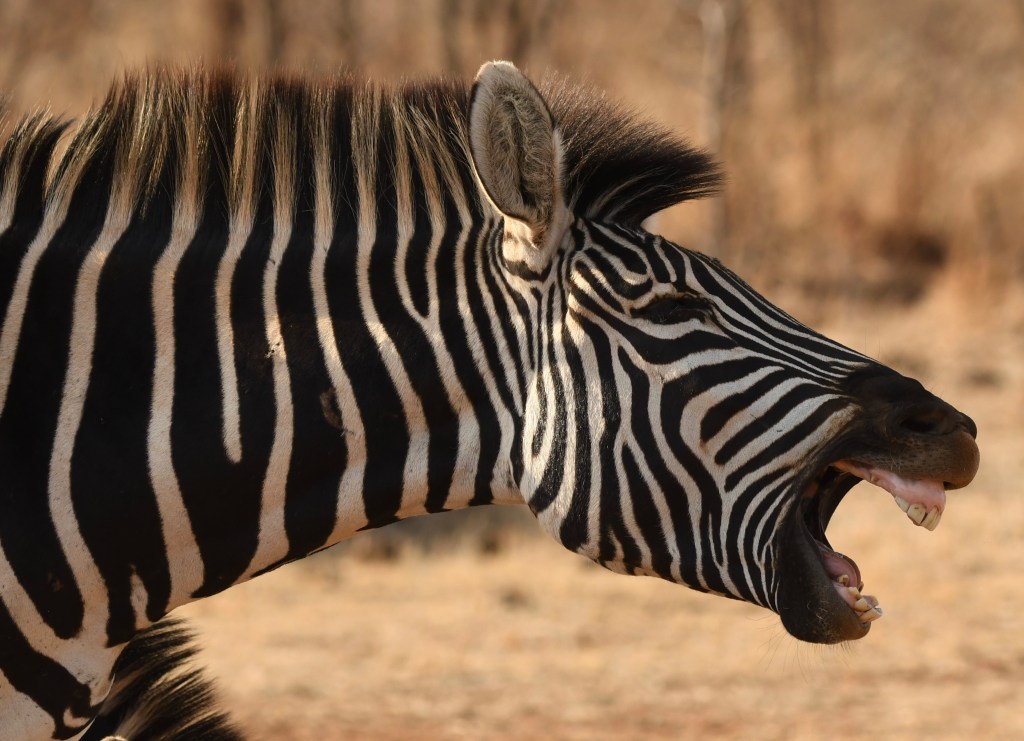
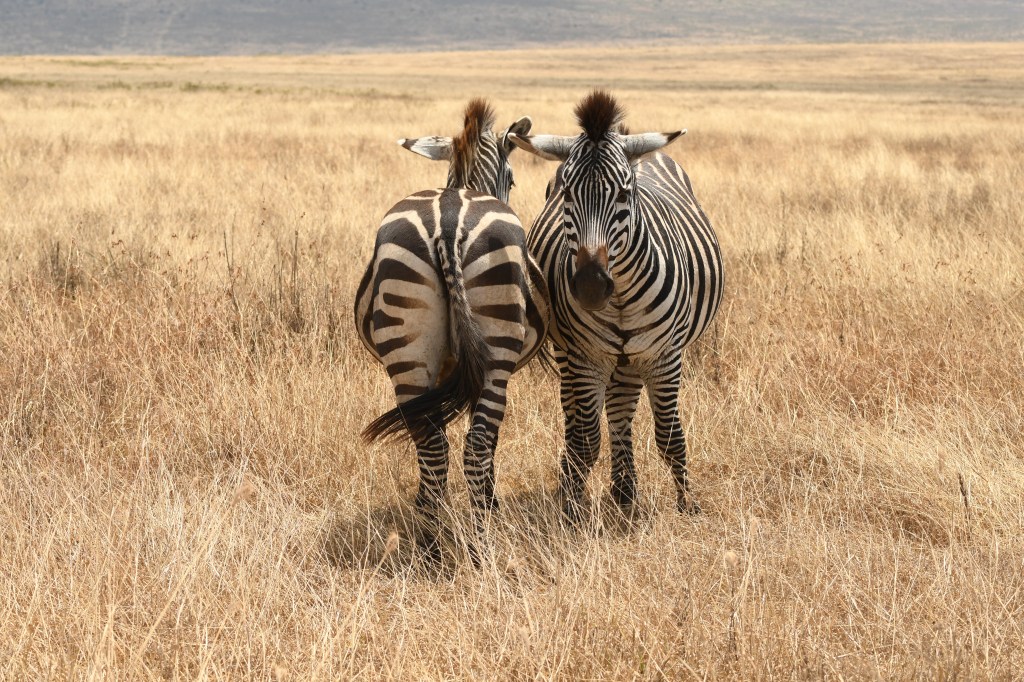
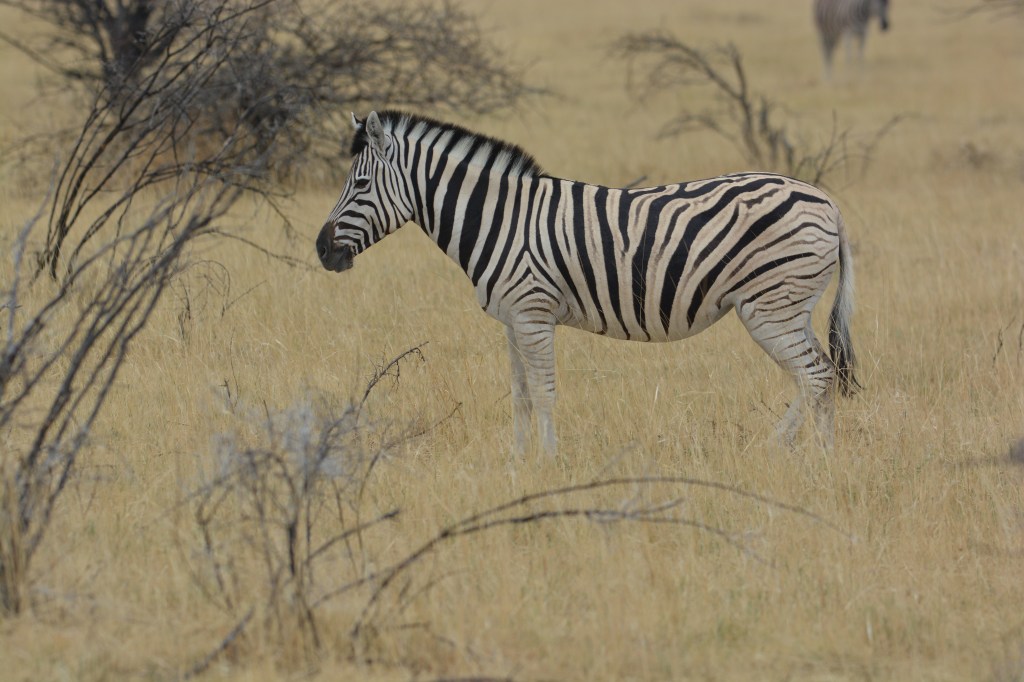
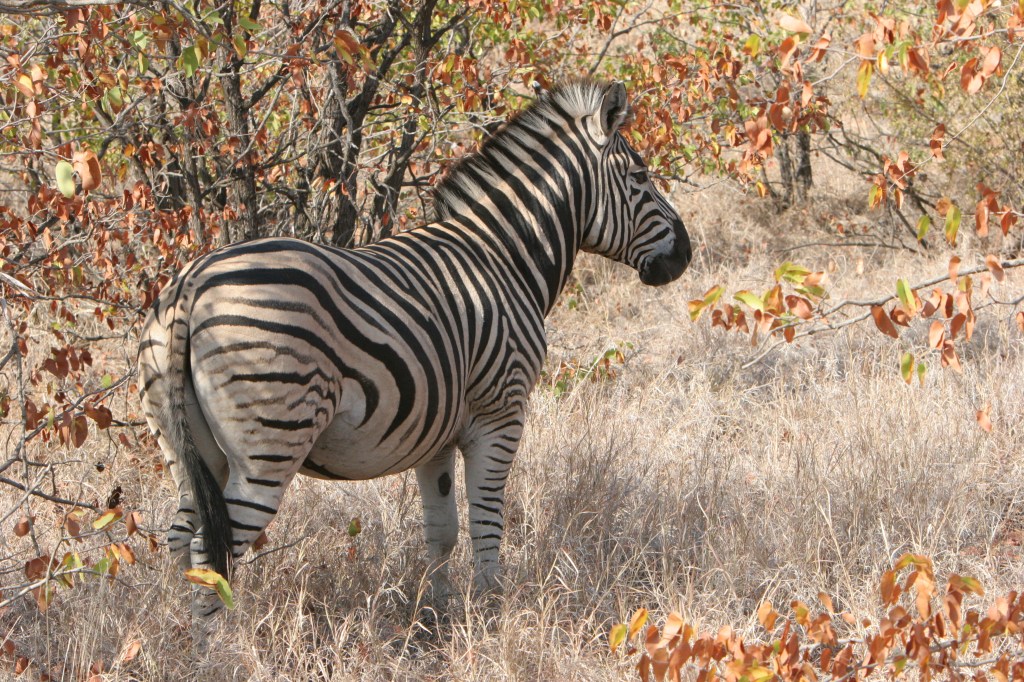
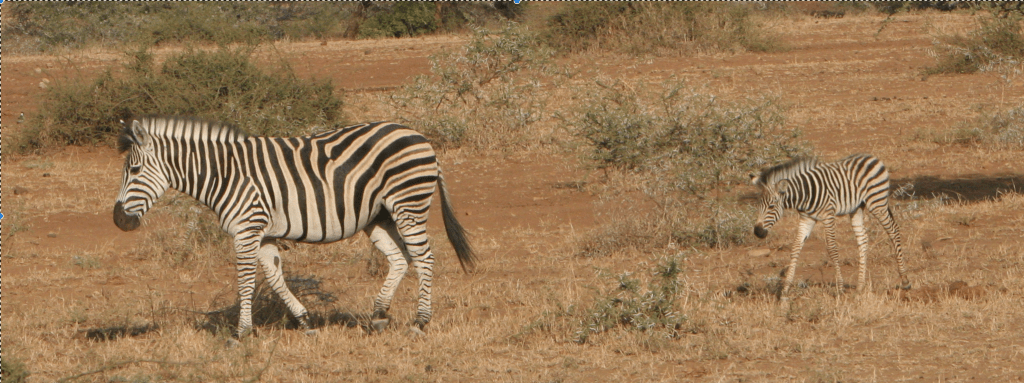
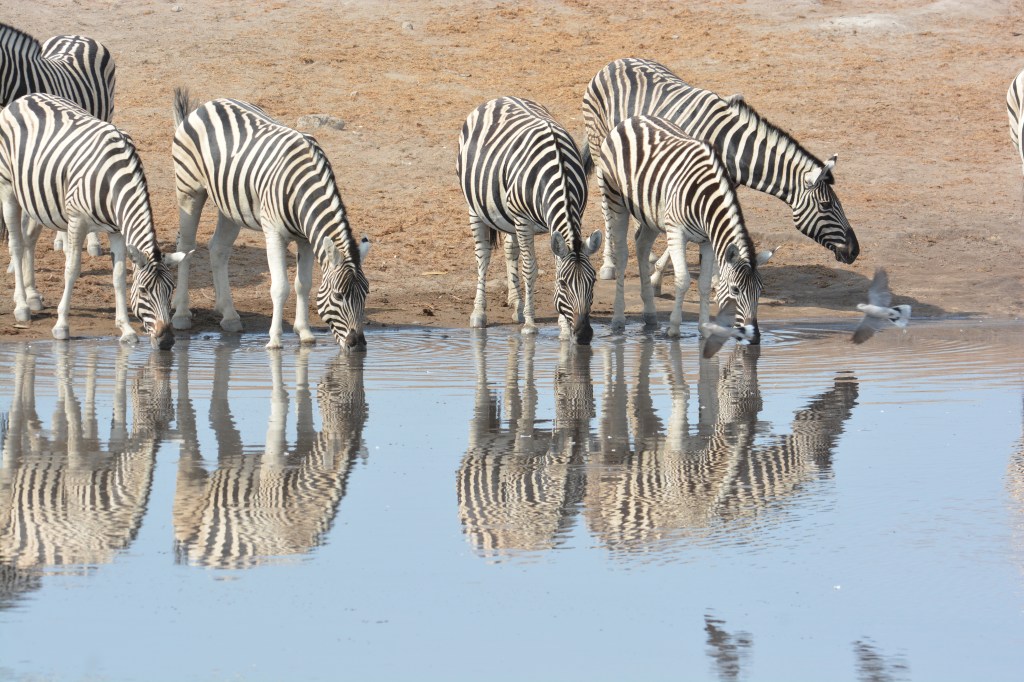
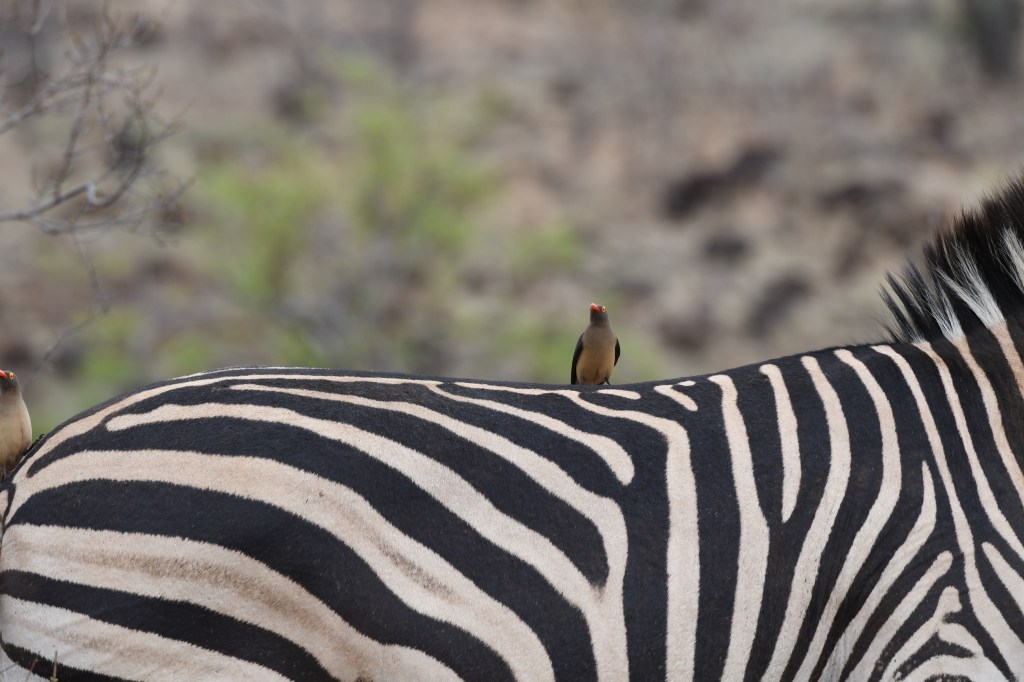
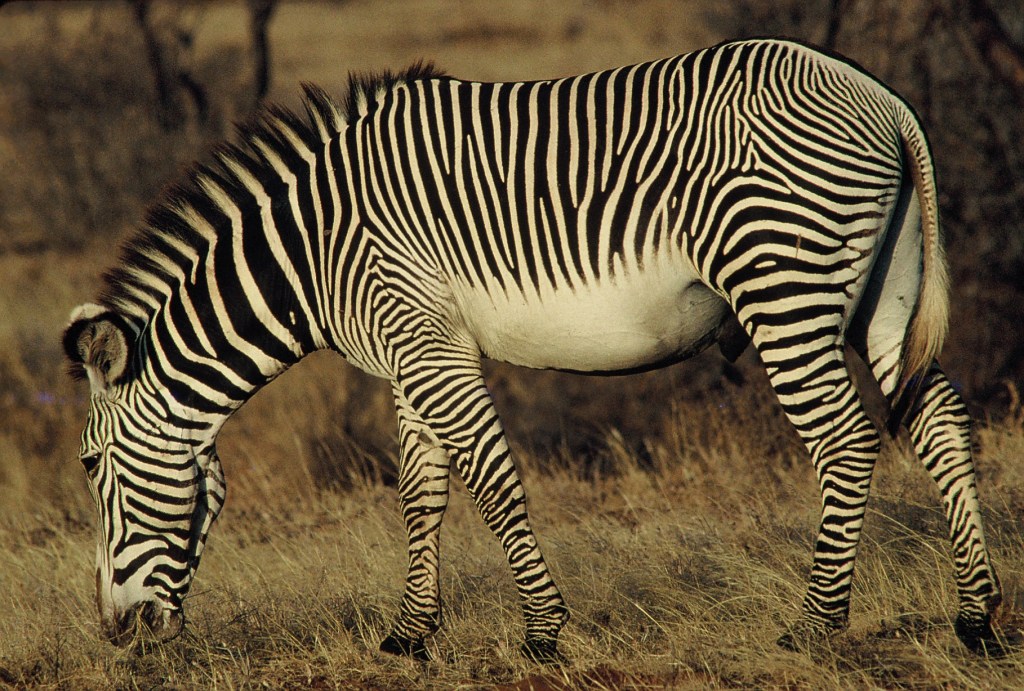
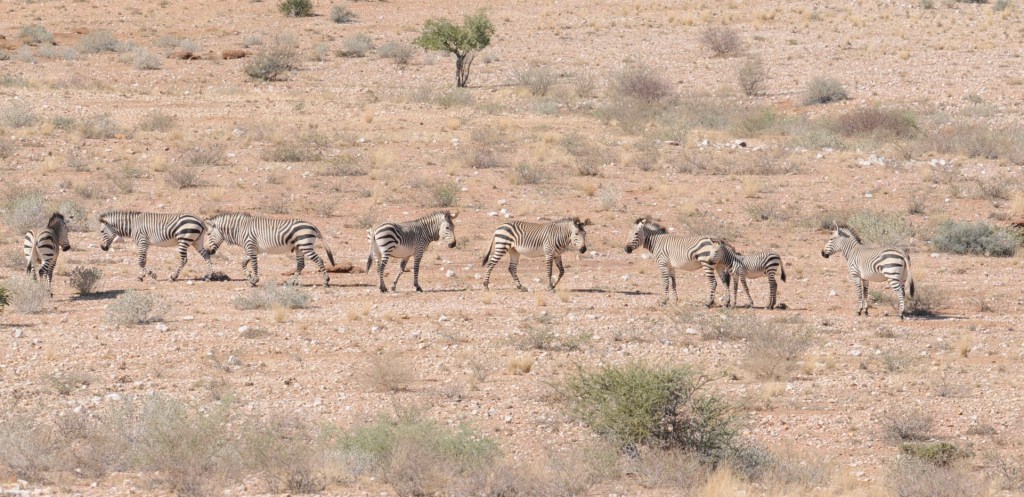
The zebras shown in the first images were all Plains Zebra; or Common Zebra or Burchell’s Zebra. They are rather sharply marked with black and white stripes. As you move south the animals become a bit more hazy with a dusky gray “shadow” stripe often showing in between the black stripes. The zebra above is from South Africa and is rather typical of zebra in the southern part of Africa. Most of the open grassland habitat is found in Kenya and Tanzania where the sharply black and white zebra live and the southern animals have habitat that is a bit more wooded. Perhaps this has something to do with their tendency toward shadow striping.The shadow stripes are more obvious on the rump as you can see in this animal. This habitat is also rather typical of that found in the southern african country’s of South Africa, Botswana, Zambia, Zimbabwe, and parts of Namibia. The dry rugged portion of Namibia has another zebra type called the Mountain ZebraYoungsters are born in December-March in the Serengeti as the herds arrive in the southern part of the migratory route, but in southern Africa there is much less of a migration and youngsters are born throughout the year. The gestation for all zebra is about 380 days or a year and a few weeks. The young will stay with the family unit for about one year and then go off and join a “herd”. As they mature they will form their own family units.They will live to be thirty years or more in the wild. But many don’t.Many of the safari destinations are national parks. Many of the national parks manage water to move wildlife around and to keep naturally wet areas from being over used. A water hole offers photographic opportunities and you can find animals at water holes most any time of day. Grazing animals get moisture from the grasses they eat but almost all large animals will use a water hole at some time each day.This zebra could be from the northern population as it has sharply black and white stripes, but it also has a modest shadow stripe. It is from the northern population. The bird on the zebra’s back is a kind of specialized starling called an oxpecker; a Red-billed Oxpecker in this case. This species, and its Yellow-billed cousin, make a living by cleaning the larger animals of the plains. They will travel in smallish groups, family groups most likely, and stay with the big mammals day after day. They will pick ticks, and lice and flies from the ears and noses of Cape Buffalo, giraffes, zebra, and most antelope and gazelles. They will find ticks and insect larvae in the “legpits” of the big herbivores. They will also peel and eat scabs from the skin of these animals and return the next day to get the newer scab as well. There is a starling called Fischer’s Starling that travels in more starling-like tight flocks that is also a predator of the insects that bother big mammals.This is another older image take north of the equator in Kenya. North of the equator doesn’t seem like much of geographical designation but in east Africas there is quite a real meaning to the phrase. There are Reticulated Giraffe, Gerenuk, and Grevy’s Zebra north of the equator but not south of it. It’s a wonder. Anyway, this old image is of a fine, and finely striped, Grevy’s Zebra. It is a northern animal of east Africa, and one at great risk for reasons I will explain in the future . The legs are well marked and the belly is white. As I said there will be more later of these “north of the equator” animals.Lastly a rather hot and hazy image of the Hartmann’s Zebra, one of the Mountain Zebras. This is a species (most taxonomists think it’s a species) that is found in arid, high rugged locations in South Africa, Angola, and mostly in Namibia. They are in mountains that get moisture from the ocean and thus provide water year round. But it is not water from rainfall for the most part. These animals are more solidly built than the Common Zebra and the three or four very broad and bold rump stripes are a definitive marker. As there are no other zebras in the habitat these animals utilize, identification can be done by geography. If you are in a very remote part of western Namibia or southwestern Angola in hot and arid region with some elevation and you see a zebra – bingo, it’s a Hartmann’s Mountain Zebra. There is still a tiny population of the Cape Mountain Zebra in South Africa, but a very small population and for the most part not really wild.
Please regard the images in this post as copyrighted and ask permission to use them in any way. Thanks. DEClapp
Before we get started I want to refer anyone who develops an interest in this topic to two very entertaining and educational articles: one in the Daily Hampshire Gazette, a county newspaper from central Massachusetts, written and illustrated by Kevin Gutting and published 9/15/18 and another in the Greenfield Recorder by Dominic Poli from 9/15/2019. These both speak to tobacco farming in the Connecticut valley. These articles bring you back to the early 1800’s and on into the 2020’s and today’s crop.
Well, here’s the story. Fran and I are avoiding people, much like everyone else in our state. We miss the kids (they are only 9 and 11) and are living in the attic we think. But like everyone else, in order to keep the peace and good health until we can develop cultural immunities and vaccines we are sheltering. The good news is that we both like empty and lonely countryside and each others company. So we wander the beaches before most people have brushed their teeth and our road trips are not to CostCo or the supermarket; they are to parks, beaches, and locations where nature abounds.
One great adventure that anyone can do (alone and away from people if need be – and at the moment there is that need) is to start a bird list around the yard or neighborhood. I warn you early on that it can be as addictive as any other stimulant and has the potential to be surprisingly expensive. But just to ally those fears your binoculars don’t have to cost $3000 nor does your spotting scope. You can get away with an aluminum tripod; though the carbon fiber tripods are alluring. If you want to take photos as you note your neighborhood birds there are now dozens of digital cameras that have a 50x (or more) reach. Enough so that your heartbeat makes the images blurry. Or you can just walk around and try to identify what you see and what you hear. There will be clues everywhere.
You can start this hobby simply with a pencil and a sheet of paper. Or bird feeders. Or a walk around the block. Or better yet by Googling eBird and opening a free eBird account. eBird will serve as your bird book, list keeper, geographical servant, and provide information on hot spots and migration and it will even rank you among the other area birders – if you want. But that is where the competitive spirit lurks. The Lovely Frances was a quiet research taxonomist (aquatic insect larvae) and a backroom problem solver in the banking world until she found that eBird compared her to other birders in the area. Now she checks each morning to see if she is in the county’s top 10 or if we (yes we) need to bolt out the door and add a species or two to her year list so she can regain he rightful spot near the head of the list. eBird can speak in short sentences or in volumes. It is a wonder of our modern age.
One last topic is stimulated by the word list. You see there are many lists; yard lists, day lists, month lists, year lists, outing lists, Big Day lists, and so on. If Tom, Dick, and Harry see a Blackburnian Warbler then dammit I want to see one as well. Where did they see it? eBird will not only tell you where they saw it but it will show you their list and link you to a map on how to get there from anywhere so you can put it on your list. But, the really great thing about eBird isn’t what it does for you and me though that is amazing and much appreciated; the thing about eBird is that the datum we submit is blended and collated with other data points and a picture of our world is created based on bird movements and bird sightings. In a time of the dismantling of environmental regulations and protection we need a baseline of real data – of trends and changes – so we can defend environmental causes.
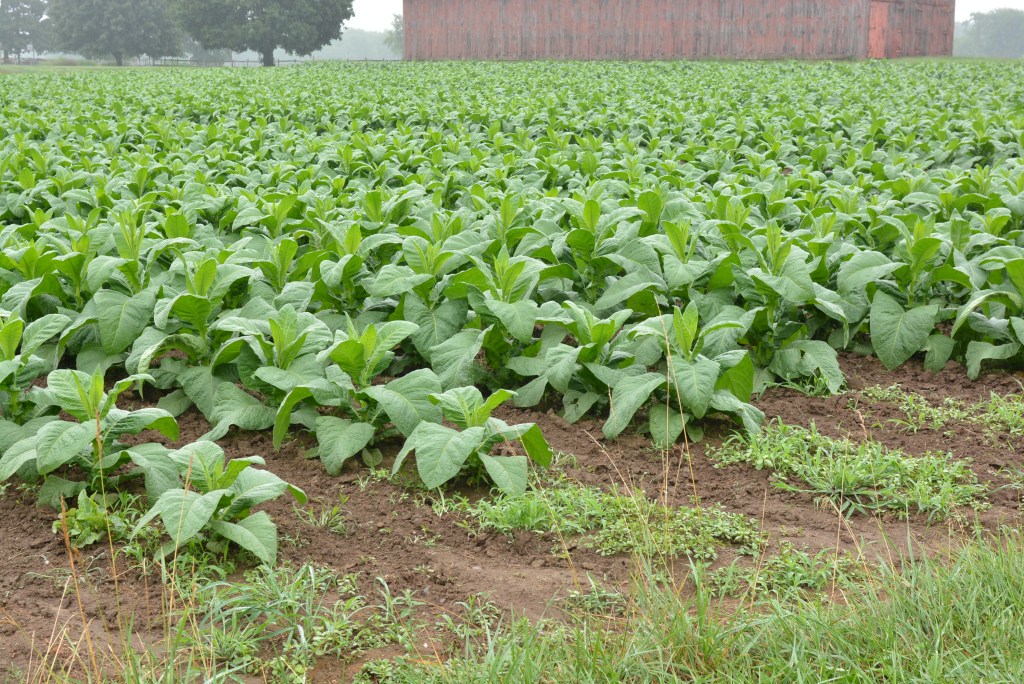
So let us move on to the tobacco and birds – the birds are going to be Cliff Swallows, a species found from Alaska to Massachusetts in breeding season and one that now nests on buildings more than cliffs. In New England they converge rather nicely along the Connecticut River Valley.
PS – just kidding about the kids in the attic
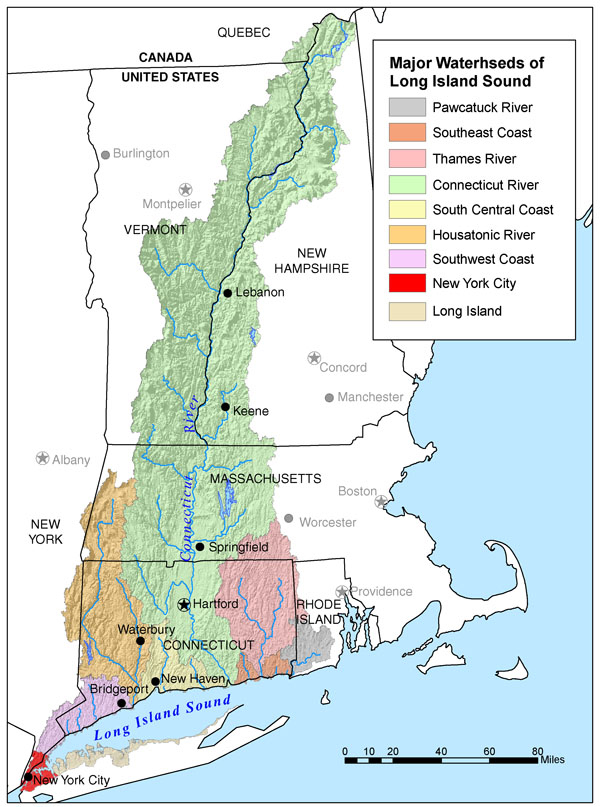
The Connecticut River Valley drops almost due south from northern New Hampshire (the Canadian border actually) to Long Island Sound. The 406 mile long waterway is fed by a myriad of smaller rivers and streams and eventually carries a good deal of New England’s surface water and collected sediment into Long Island Sound.
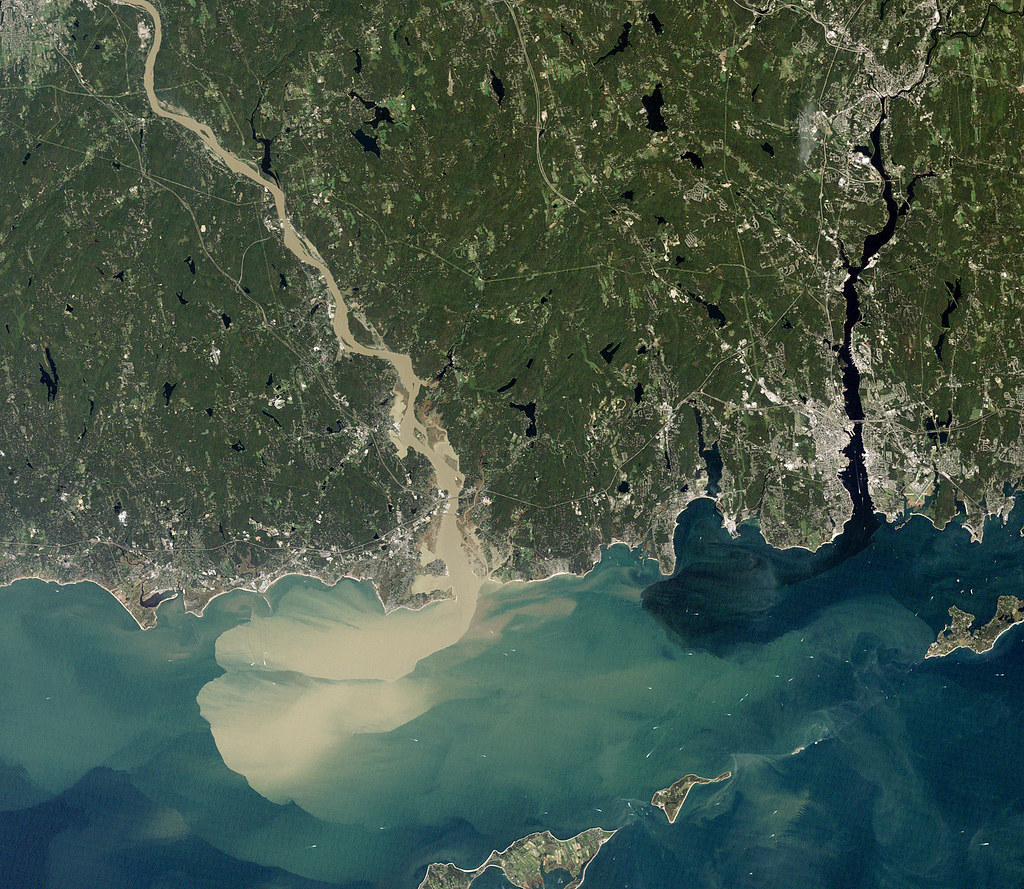
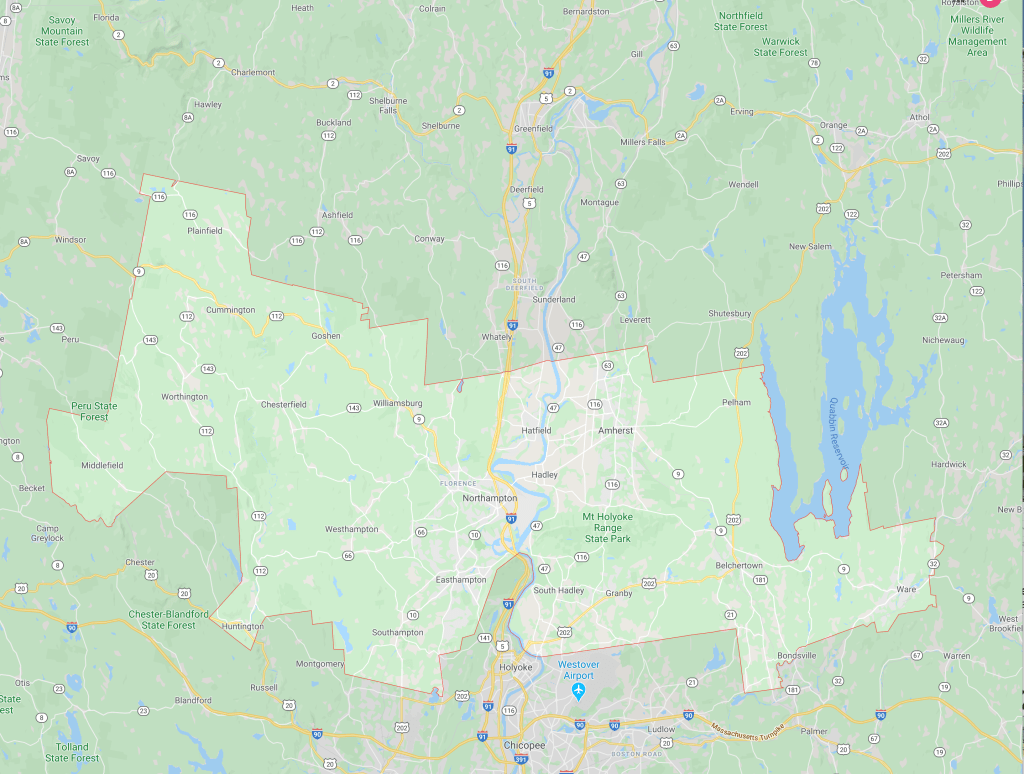
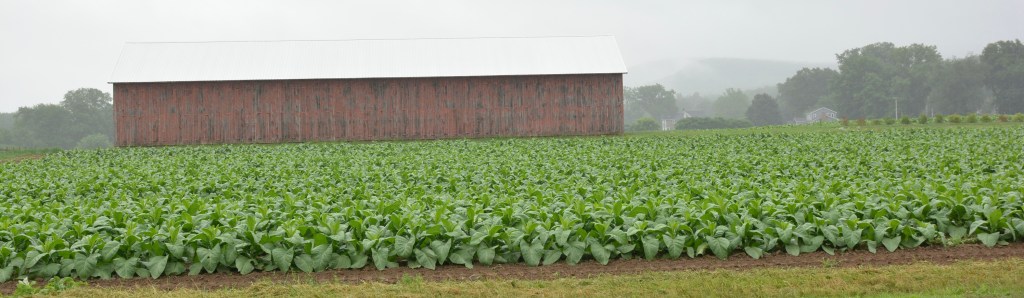
Much of New England was rock. The rock was ground by glaciers. The gravels and sands that were thus created are carried in our rivers to the sea. This image shows the siltation from the Connecticut River as it enters Long Island Sound.The river passes southward through Franklin, Hampshire, and Hampden counties in Massachusetts and into Hartford and then into Middlesex counties in Connecticut. The valley of the Connecticut is the place where in the mid-1800s a tobacco farming economy developed. It is still there; small acreages perhaps, family operations for the most part, but still part of this swath of flood plain.These counties are hazy hot and humid in the summer. During the Civil War the southern states were unable, and perhaps unwilling, to grow, harvest and sell tobacco to the northern states.. Something had to be done – tobacco was essential! It turns out that the three Massachusetts counties and the one Connecticut (with a bit of southern Vermont as well) were ideal for tobacco growing. It has been grown in that area for 160-plus years now. Hampshire County shown above has tobacco farms on both sides of the Connecticut River. From Greenfield on down through Hadley, South Hadley, and Hatfield you can still see acres and acres of broadleaf tobacco being grown.When I was a kid we would drive for hours to visit my mother’s mother and father. In those days the roads were smaller and much less direct. On many occasions we passed through the Connecticut valley of either Massachusetts or Connecticut. There were a scattering of long, rectangular, unpainted barns that I was told were tobacco barns. I am not sure if any of us had any understanding of the crop, the reason it was in Massachusetts, or the economy it supported. I wondered whether the tobacco in my father’s Chesterfields came from these patches of stubby plants.For many years “shade tobacco” was the main crop in Massachusetts. It was tobacco grown under white cheesecloth coverings. It grew to eight feet in height and was used as a wrapper for the best cigars. Nowadays the main crop is a broadleaf tobacco but one grown in the sun. The plants grow to 3 feet tall or so. In harvesting they are chopped at the ground and the whole plant is slipped onto a wooden slat or pole and that pole is hung in the rafters of the tobacco barns. It dries for a couple months (or so). The leaves (as big as rhubarb leaves) are then stripped from the main stem and taken to market. They are still used in cigars as it always has been. Many farmers in the 1940s grew a tobacco called Havana which was a smaller plant and often grown from seed. The tobacco plant is sensitive to air pollution and does not do well in wet seasons. As a matter of fact many of the Connecticut Valley farmers dropped out of the business back in 1954 after we had two very wet hurricanes pretty much ruin that years crop.
Anyway what we were doing had little to do with tobacco or even the Connecticut River Valley. We were looking for a rapidly declining species of bird in a group that is rapidly declining overall. Our burgeoning world population (of humans) needs food; lots and lots of food every day. The best way to grow food is in huge mono crop fields. These fields are ripe for plunder by invasive fungi and insects. In order to develop a profitable crop chemical controls are used to control weeds and plant predators. This has resulted in more efficient poisons. Killing insects is sometimes nothing more than killing insects: aphids, ants, dragonflies, and butterflies can all be impacted by the same insecticides. Some insecticides are quite specific and the use of pheromones is increasing – but poisons, and now nicotine-based poisons, are having a damaging impact on insects overall. I remember the days when cleaning a car windshield was to remove bugs collected as we drive along.
The insect eating birds are suffering population losses. Their food sources are being impacted and the long term impact is not understood at all. These insects feed multitudes and pollinate a great many plants. We will miss them some day – I think we can count on that.
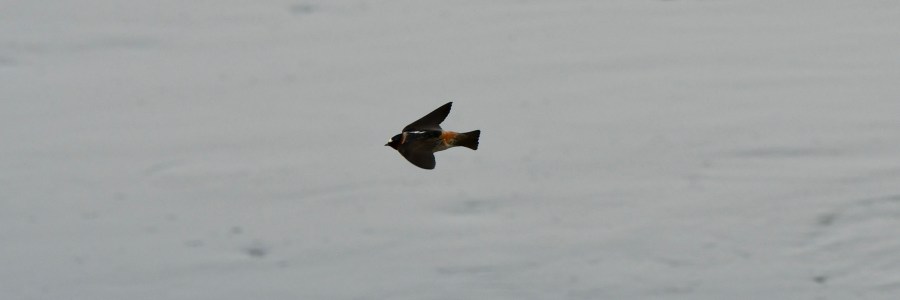
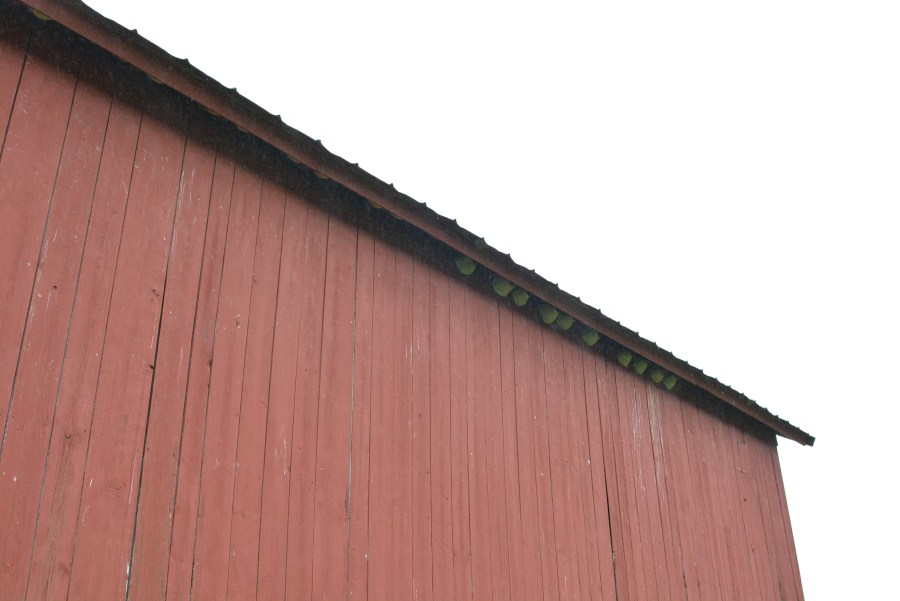
One of the birds that we see occasionally in Massachusetts, and mostly in the western part of the state is the Cliff Swallow (CLSW). Swallows as a group are insect eaters although some switch to seeds and berries in the fall. The Cliff Swallow is a builder of mud nests and is not a common bird in Massachusetts.In flight, as you often see them, the CLSWs have a rusty colored rump and a very light forehead. When overhead you can notice the squared-off tail. It is most likely that you will be looking for CLSW rather than just bumping in to one. They nest under roof overhands and are pretty dependable in the same location year after year. In a few places, especially the rock faces of our western mountains, they may nest on the rocks as long as the site is umbrellaed by the rock above.The view of the nests is not always easy. This is how they look from the ground. There are no where near enough birds to make use of all the barns in the area. The birds in this image have been offered pottery nest frames on which to build. In many cases they will build their own mud nests instead. On this barn you can see the free housing but you can’t see the ten bird-built nests tucked up under the eave.These man-made nests are built onto pottery bases to both entice and aid the birds. The use of these nests may help increase the local population. I once had a colony in the eastern part of the state that I watched for several years. One afternoon as I was watching the swallows a small group of House Sparrows (HOSP) arrived and threw all the eggs and just-hatched babies out of the nests to the ground below. There were 23 nests in that colony that year and about 100 eggs and young were killed in just a few minutes. In many cases the HOSPs will take over a nest and use it for their own eggs, but, sadly, they will occasionally take over a complete nesting colony. (The image is grainy because it was raining.)With a tobacco barn in the background, we look for (and at) the Cliff Swallow colony. This is a bird that has a synchronous nesting cycle; pretty much all the eggs in the colony are laid at the same time, hatch at the same time, and fledge at the same time. This is what allowed those previously mentioned House Sparrows to impart such complete devastation on that colony. In order to get this synchrony working many birds will lay their eggs in nests that are not completed. One of the other things that helps attract and keep Cliff Swallows is to have a muddy area nearby. The nests are made of mud collected at nearby puddles and formed into a hardened earth hollow ball with a spout that is used as an entrance and exit. The second image above shows the man-made nests and they do not really have the spouts extended.
The Falkland islands have been featured in a few posts as have the Falkland Island penguins. There are lots of Rockhoppers, Gentoos, Magellanic, and King Penguins on these rather remote and unsettled islands. The Falklands consist of 780 islands, islets, and protruding rocks; only two of the islands (East and west Falkland) are of any size at all. Size enough for humans to live and prosper that is – there are many that are excellent for sea birds, whether they fly or swim. The islands if all lumped together are about half the size of New Hampshire; maybe three Rhode Islands. Almost 50 island groups would fit in Kenya and about 41 Falklands would snuggle within Spains border.
Please treat all the images as copyrighted and ask permission to reproduce them. Thank you. DEClapp
The Falkland Islands are a rather remote and rugged group of 780 islands, islets, and above sea level rocks totaling about 4700 square miles. This is about half the size of New Hampshire and would fit about 53 times within the boundaries of France. There are only two large islands (East Falkland and West Falkland). The capital is the town of Stanley, where about two-thirds of the 3400 residents live, and is situated on the easterly point of East Falkland. The islands are dependent on fishing and tourism and a bit on a declining wool industry. Perhaps, surprisingly the two largest economic/trade partners are Spain and Namibia.
In the late 1980s they started selling fishing licenses to foreign countries and that brings in a large portion of the country’s annual income covering the cost of health care and other governmental responsibilities. Most of the industrial fishing in the area is for ilex squid as they migrate southward past the islands. The Argentinians have started fishing heavily just north of the Falkland waters and the jousting for rights and ownership is festering again. The economic value of the squid is significant to both or either country. The market value of the catch is about 50 million and the license fees are about 40 million. We may see more tension developing between Argentina and Britain due to these impending “squid wars”. (There are also reports that say that illegal fishing, mostly in Argentine waters, (unlicensed and non-Argentinian) takes an estimated 300,000 tons of squid annually). The squid population cannot maintain under this unregulated competitive siege.
The highest elevation on any of the Falkland Islands is about 2300 feet above sea level; but when you are as far south as the Falklands (51º-53º south latitude) there is little chance for forest type of vegetation. As a matter of fact the only treed areas are around the buildings that have been built in gullies and creases in a rather heath-like landscape. There are many harbors along the coastline and also many quartz beaches with white sand. A soil cross section will go down from peat on the top to clay and then rock. It is a poorly drained region and the ground is often thoroughly waterlogged. The peat has been harvested for fuel throughout the time of settlement down there.
The islands are closest to the South American continent at the tip of Tierra del Fuego. Though the islands are pretty much due east of the spot where Argentina and Chile come together the Argentinians have always laid claim to the Malvinas Islands. In 1982 the British and Argentinians came to blows over the dominion of these islands. The British retained their oversight after a brief but focused “war”. There are currently less that 3,500 people on the islands and about two-thirds of these residents live around the one major town; Stanley; on the east-most edge of East Falkland.
The penguins are everywhere. There are five breeding penguin species on the Falklands; King, Gentoo, Rockhopper, Macaroni, and Magellanic. At least four other species are listed as vagrants and are very rarely seen; but these five (excepting perhaps Macaroni) are really quite common and easily found. Because of the 1982 troubles many of the beaches were dressed with land mines. This has kept people off the beaches and allowed the penguins (especially Magellanic and Gentoo) to live pretty much unfettered lives. What was bad for soldiers, and remains bad for residents, has been helpful to the penguins.
If you become interested in the Falklands there are several other posts that refer to these islands and the creatures that live on and around them. These posts are from February 23, 16, 12, 12, and 1 of 2020. There is also a post from September 25, 2019 that helps set the scene.
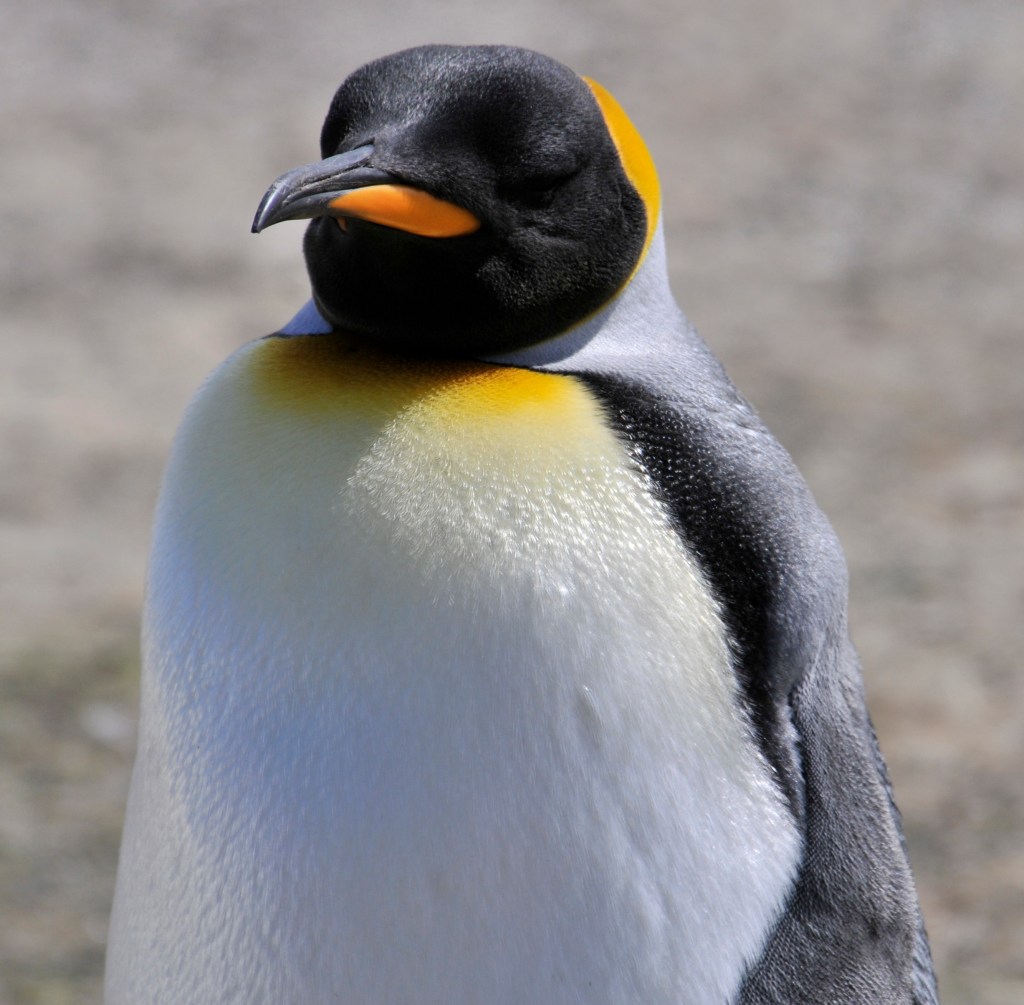
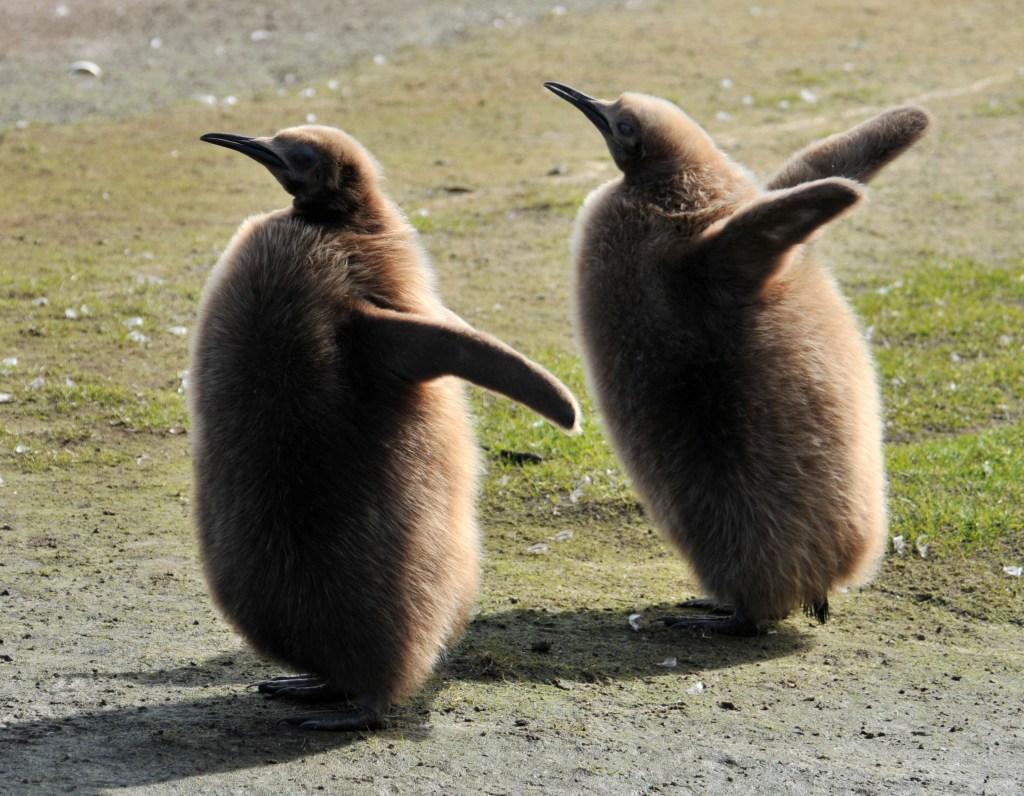
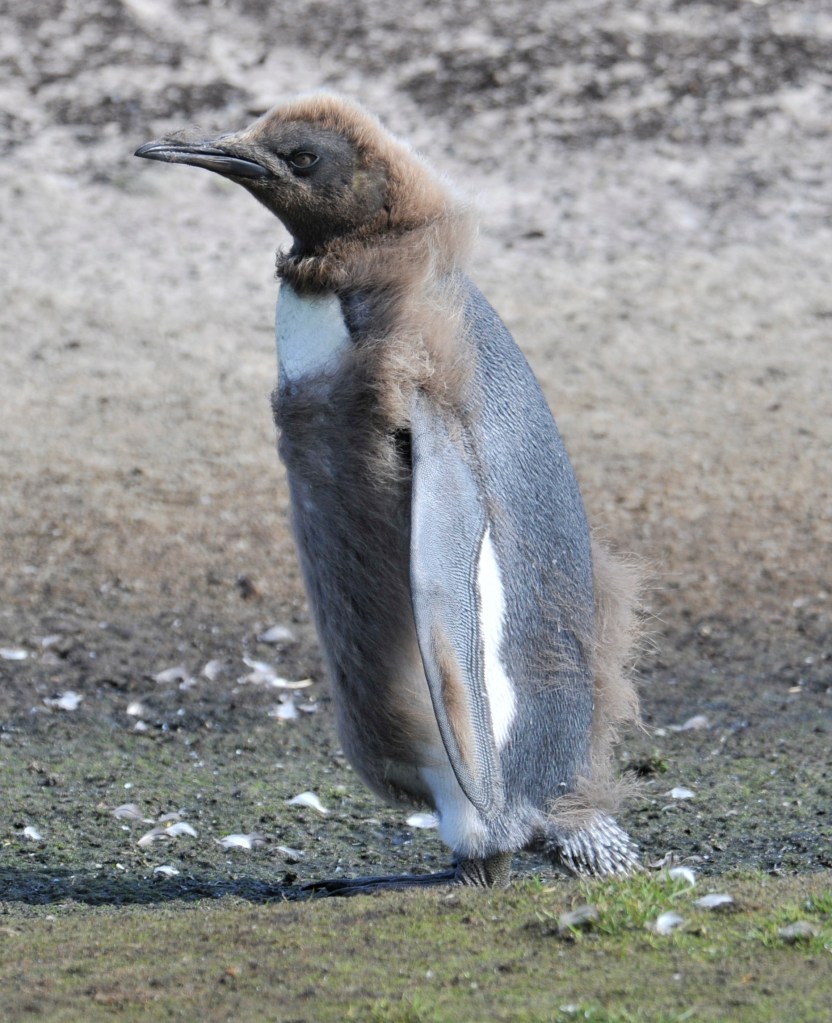
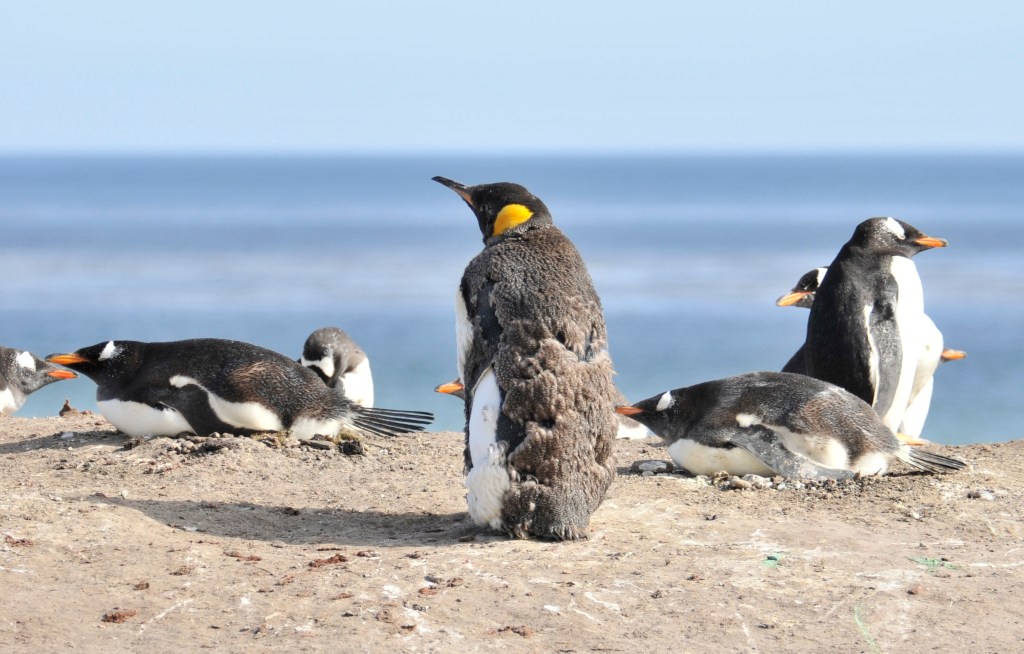
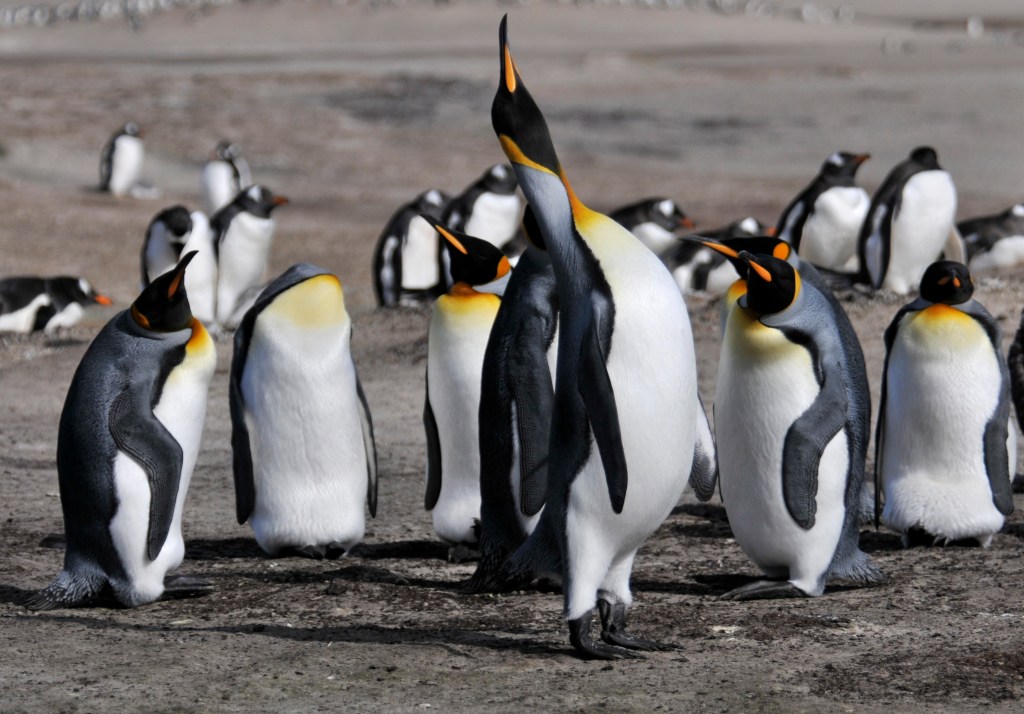
These are Gentoo Penguins – in this post I will feature King Penguins but this image gives an idea of the landscape and the number of penguins you might encounter on the Falkland islands. The Gentoo nest on the flat low areas and are very common throughout the Falklands. There were estimated to be over 314,000 Gentoo in the last population estimate, but like all penguins they are being impacted by changing environmental conditions due to climate change and commercial fishing. Many of the colonies located near commercial fishing waters are seeing rapid and serious declines.In amongst the Gentoo there are groups of King Penguins. This is the second largest penguin standing at an average of 90 cm or 35 inches tall. They average 30 pounds and have young that are dependent on the adults for a long period. Female King Penguins tend to be average or less while males will be average or more; both larger and heavier. They do not breed annually but breed twice in three years, a unique strategy among birds. They are less seasonal with their breeding calendar than the larger Emperor Penguin which nests in the very cold regions to the south and is featured in the movie March of the Penguins. King penguin breeding colonies are a mixed bag of ages.Feather care is essential to all birds. Whether you fly through air or water you need to be neatly arranged to streamline and protect the body. The under-feathers of penguins are almost twisted and felt-like. This inner layer holds air and provides insulation. The inner feathers compress during a dive but spring back into shape as the bird rises and the pressure lessens. There are outer feathers that are a bit longer and help shed water but they have none of the elaborate and showy feathering that aerial birds often have. Like marine mammals they have a fat layer under the skin to help manage body temperatures.The King Penguin is a bird found all around the southern curve of the earth but not down toward the South Pole. There are more than 2.2 million of these birds and they are found in the Falklands, South Georgia, and a great ring of islands above the Antarctic continent all around toward Australia and South Africa – but on remote islands for the most part. They are not birds of the deep Antarctic. The young are quite different. Fuzzy and brown they are dependent on their parents for more than a year. The incubation takes about eight weeks and it is another 50 weeks before the youngsters are on their own. The breeding colony is a hodgepodge of ages as molting adults, young adult non-breeders, and families of all sorts of ages gather in the same area. They can and sometime do breed when about 4 years old but probably aren’t very successful until they are 6-7-8 years old.There are awkward teen-age moments when they feel that life will never go right. The flippers are too long, the hair is never right, clothes don’t seem to fit, and the kids next door always look better.But sooner or later things start to look up. Especially if you hang out with those kind of plain Gentoo Penguins.And at some point these ugly ducklings will become part of the noisy (and smelly) colony. Standing tall and honking loudly to let the ladies know that he is sharp looking and a really cool guy. An adult King can dive to a depth of 1000 feet looking for squid and fish. Most of their hunting (and hence swimming) is done at depths of about 30-60 feet. They can easily stay underwater for ten minutes and swim at an average of 4.5 miles per hour. The atmospheric pressure increases by one atmosphere every 33 feet you go down in the water column. So, much of their diving is to a depth of two atmospheres but the 1000 foot dives are to the equivalent of 30 atmospheres. The maximum “safe depth” for an outfitted human diver is about 190 feet. We cannot hold our breaths and the intake and exhale of air will allow nitrogen to enter the blood stream and the nitrogen will expand as the diver rises, causing the bends and possibly death. The Navy allows a diver only 5 minutes at 160′ and then the driver has to rise slowly to allow the nitrogen to leave (decompress) the blood stream.Molting and feather care are essential for life in these cold waters and cold air and lands as well. Adults will spend a good deal of time on land as they molt. Once the young are able to stand and walk they will often gather in kindergartens or creches and thus allow both parents to forage at the same time. The islands that the Kings use are all around the great Southern Ocean and those found in the Falklands represent a small percentage of the overall population.
Please consider the images to be copyrighted and ask permission before using them. Thanks. DEClapp Thanks to GoogleEarth for its wonderful access and to affordable-cape-cod-vacations.com for posting the town map.
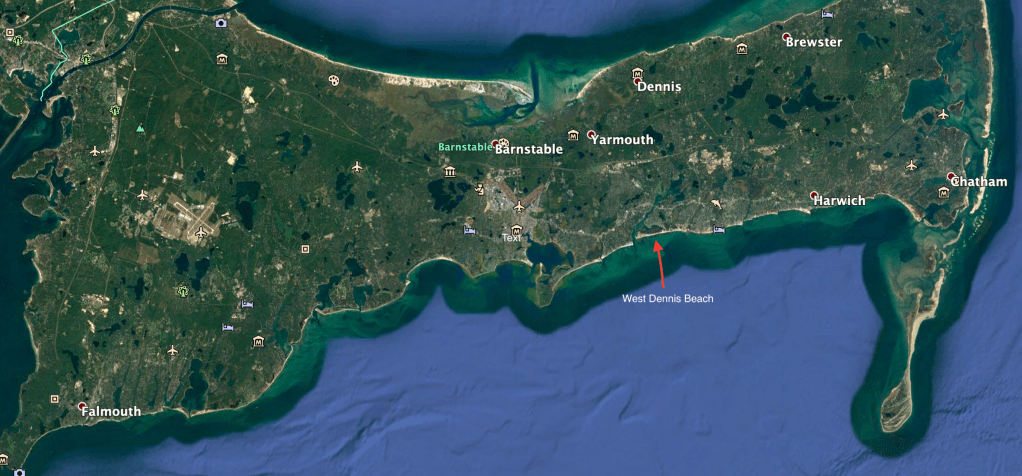
On a summer Saturday with a weather forecast for hot, sunny, and humid we avoid the glorious quartz sand beaches of Cape Cod at all costs. Many people, and most vacationers, look forward to these summer days with sand in their shoes and sandwiches. But the heat and chewing crunchy sandwiches aren’t any fun for us so we get to the beach about 6AM and try to be off the beach a couple hours later. That is what we did today; a quick visit to West Dennis Beach in Dennis (no surprise there) Massachusetts. Dennis is in the “mid-Cape” with Yarmouth to the west and the stacked towns of Brewster and Harwich to the east. The northern edge of Dennis is Cape Cod Bay and the south side is on Nantucket Sound. This arrangement makes it a great beaching spot for families as the waters are rather calm and not windswept with rugged waves like the Atlantic facing beaches of Truro, Wellfleet, and Eastham can present. In Dennis there are three east/west roads that cross town in three stripes – they are Route 6A on the north, Route 6 in the middle, and Route 28 on the southern side. On the Massachusetts Bay side of Dennis (the northern edge) there is another great expanse of open space called Crow’s Pasture. It has miles of trails, sandy beach, and oyster farming along the shore. On the western edge of the north side of Dennis is another beach and parking area at Corporation Beach – a great birding spot during and after winter storms when northeasters blow hapless birds into Cape Cod Bay.
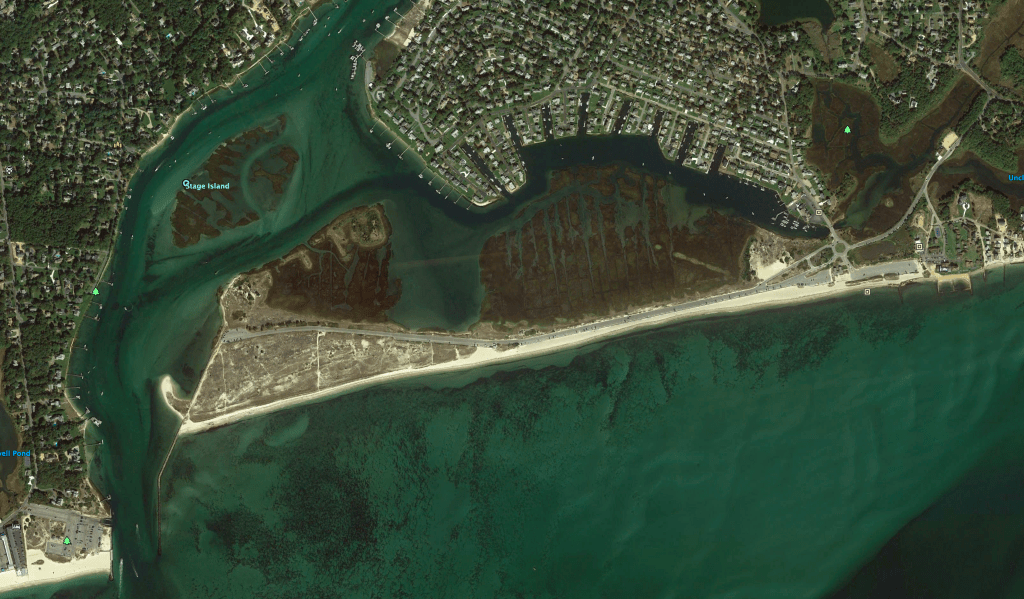
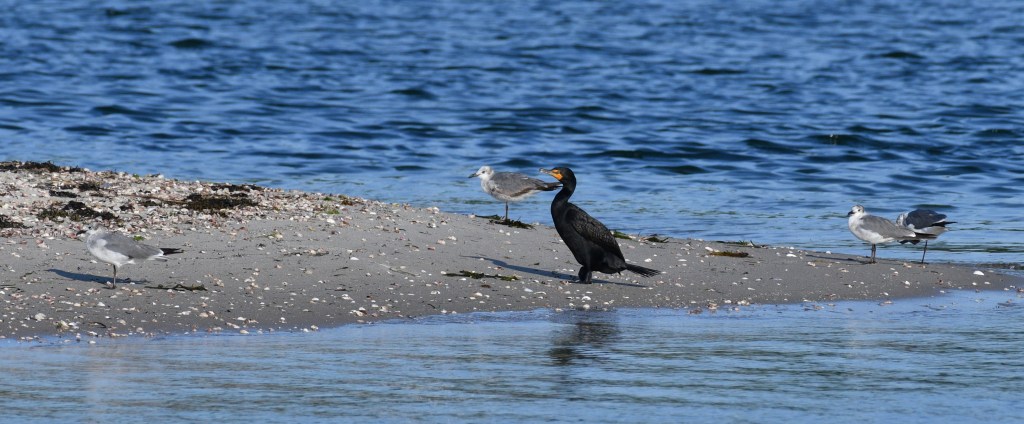
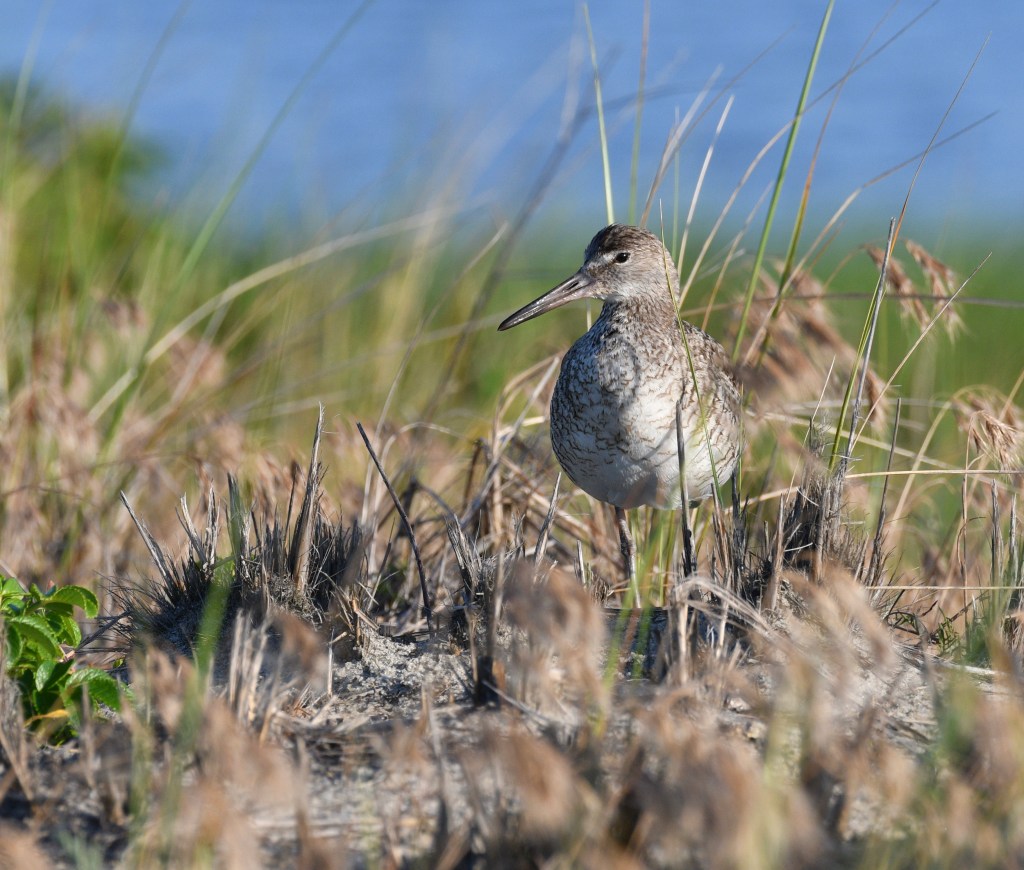
Cape Cod is a glacial remnant that heads east from the Massachusetts mainland before turning north and terminating in the sandy curl of Provincetown. It is about 70 miles (112.5 kilometers) from the canal to Herring Cove Beach in Provincetown. About half the distance is from the canal to the rotary where Route 6 turns northward in Orleans. There is about 500 miles of coastline on the Cape and it often surprises visitors (and many residents) that there is no official town of Hyannis. Hyannis exists as part of the Town of Barnstable. The Town of Dennis is near the middle of the mid-Cape and has a western boundary with Yarmouth on the Bass River which reaches well north of Route 6, nearly dividing the Cape in half.Here is a similar view from GoogleEarth that shows the geographic mid-Cape. Notice that there are dozens and dozens of ponds in this part of the Cape. The fine silts that settled out of glacial pools and outwash over the last 10-15,000 years have created non-porous sediment layers in the outwash plain and the bottom of the old kettles. This allows fora surprising number of ponds in an area that is mostly cobble, gravel, and sand. Martha’s Vineyard is in Nantucket Sound just south of Falmouth. Nantucket is further offshore and is located pretty much south of Harwich.Let’s get back to our morning visit to West Dennis Beach. The long sandy spit above is the beach. It ends to the west in a breakwater at the Bass River mouth and a small sandy spit curling to the north a bit. The beach is well used by windsurfers, sunbathers, walkers, and birds. There is a rather large colony of Least Terns (LETE) and the now-ubiquitous shorebird called Willet (WILL). There are also a few pairs of the the little Piping Plover (PIPL). In most cases people respect the simple ‘stick and string” markings that delineate the area where the birds are nesting. Dogs are not allowed during nesting season and so (generally) the plover and terns do pretty well. West Dennis Beach has a great deal of dune and grass habitat which is good for the Willet and for Horned Lark (HOLA). It also allows for loafing and nesting areas for more common birds like Song Sparrow (SOSP), Common Grackle (COGR), and Red-winged Blackbird (RWBL)Common birds are seen every day by visitors – but how many actually know what they are? These birds are four Laughing Gulls (LAGU) and one Double-crested Cormorant (DCCO). The gulls are a species more common to our south but one that has become well established along our coast line. In adult breeding plumage they have a black hood on the head and then lose it in late summer, keeping only a single dark spot on the side of a now-dusky head. The Double-crested Cormorant is our summer cormorant – in winter we get one from the north called Great Cormorant. The DCCO nests on jetty and rock piles and can be seen swimming in most wet habitats – especially in fresh water when the herring are running. They can also be seen sitting around with their wings partially open as they dry out and warm up after being in the water. They are not as waterproof as you’d think, thus drying is important.The Horned lark is a little bird of dry areas and we find them in small numbers in many of our dune habitats. Again this is a population that departs in the fall – but fear not, if you want to see a winter Horned Lark you can – but it will be one that has migrated here from the west. The back edge of the black feathers above the eye can be erected into little “horns” – hence the name.I have mentioned Willet in several recent blogs. They are our most common dune/salt marsh nester at this point. We have only a few sandpipers and ducks that nest in Massachusetts and just a couple decades ago the Willet was not on that list. Its population is growing and its nesting geography is expanding. Pretty nice. On West Dennis Beach they are noisy and pretty much always in sight. We entered “23” as the number sighted during our one hour walk on our eBird filing. The highlight of our morning was the sighting of these four Black Skimmers. (The feathered blobby thing above them is the rear end of a Canada Goose (CAGO)). The skimmers have an orange and black bill in which the lower mandible is significantly longer than the upper. They fly low over the water with that longer mandible tracing a line in the water and snapping shut with the upper mandible when a fish is contacted. They fly buoyantly, gracefully, and quite fast; the whole concept seems impossible when you see it in action. Do they hit seaweed or sticks? Do they ever hit rocks or shells or the bottom? Can they feed on windy days when the water is choppy? This is a successful strategy as skimmers of one sort or another are found in Africa, South America, North America, and the Indian subcontinent. Black Skimmers are not common in Massachusetts waters and when here they will nest in Nantucket Sound on a “new” island called Minimoy and occasionally out at the end of Plymouth Beach. There are rarely more than a couple pairs around the Commonwealth and the pairs we see are not very successful as breeders. It was a treat to see these birds today.
Please consider the images to be copyrighted and ask permission before using for any purpose. Thanks. DEClapp
There are lots of herons and egrets around the world; about sixty species or so. They are capable of flying long distances and have established populations on many islands and all of the continents excepting Antarctica. In doing this they have developed (evolved) populations that are somewhat dissimilar from the original birds. For instance there are about thirty populations (sub-species) of what we usually call the Green Heron (also called Striated Heron). These populations probably could inter-breed if they had the opportunity; but on each island, in each separate location, they develop traits best suited to local survival.
The larger taxonomic group of long-legged wading birds will contain not only herons, egrets, but also night-herons, tiger-herons, and bitterns. The next taxonomic level will draw in other long-legged birds of the wetlands (mostly). Scattered around the world there are also flamingoes, storks, ibis’, shoebills, and hammerkop. All of these are recognizable as wetland or grassland birds but they are not all closely related. As a matter of fact the storks are genetically closest to New World vultures than they are to herons and egrets. There is a lot more to decipher here – genetics have not opened as many doors as it has created questions — pretty cool. Adaptation and environmental pressure have caused many crooked paths for evolution to follow.
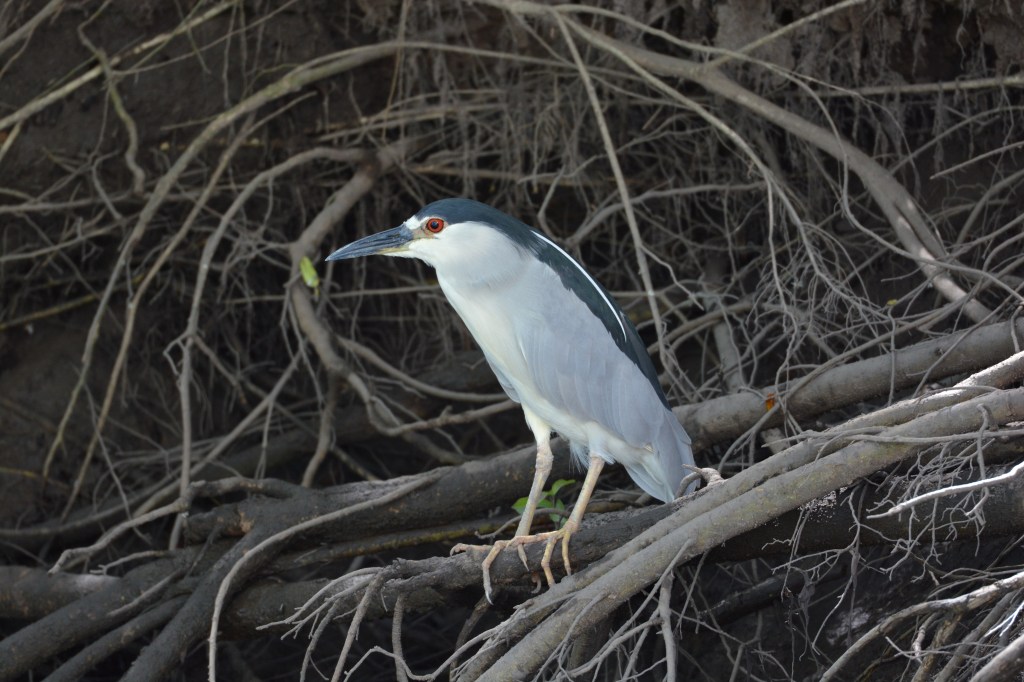
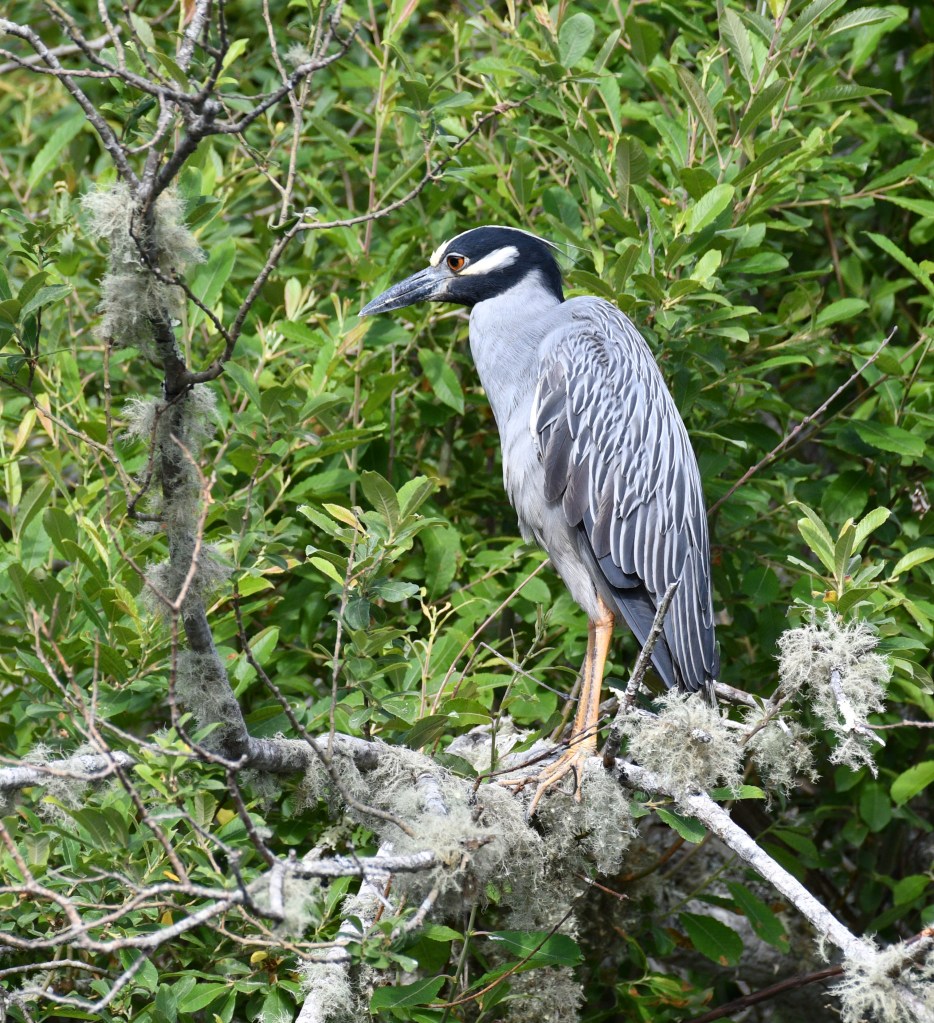
Here are three of the four Night-Herons of the world – enjoy.
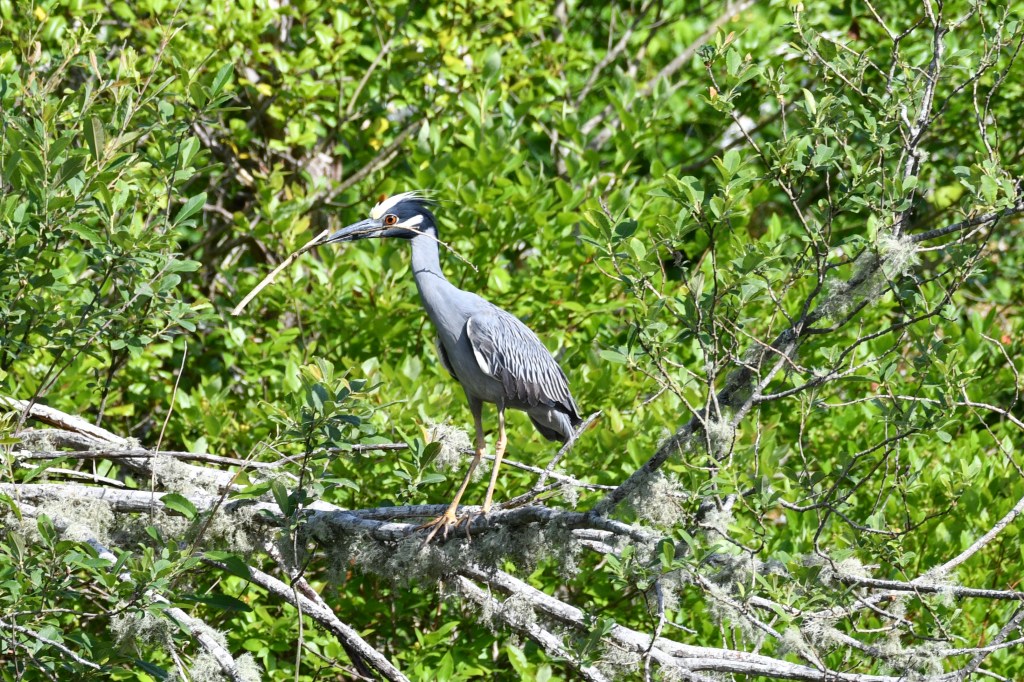
The Black-crowned Night-Heron (BCNH) is the most common of the Night-Heron group in the northeastern part of the US. We also get Yellow-crowned Night-Herons (YCNH) but not very often as nesting birds. The Yellow-crowns usually arrive in mid or late summer after the nesting colonies to the south break up and the birds disperse. The above is a Black -crowned Night-Heron showing the nuptial plume that adults get in breeding season. This is a common and widespread species.Another of the Night-Heron group is the Nankeen Night-Heron of the south Pacific. They are found in Australia, New Zealand, many of the Pacific island groups and on up into the Philippines. This one was photographed in Australia where they are widespread and found everywhere but the far western part of the country.However, today’s bird of the day is the Yellow-crowned Night-Heron. There is a pair that is sort of nest-building in the area. They are probably a little late in getting started, likely young birds, and they may not nest successfully. But who knows! There was an old-time Massachusetts State Ornithologist named Archie Hagar and in his retirement years we used to chat a bit – he told me that there had been a pulse of nesting YCNC when the green crab (Carcinus maenas) population bloomed. The YCNH are crab eaters and that relationship makes sense. When there are small numbers of breeding pairs there may be no relationship between crab numbers (a population explosion that is) and birds; but YCNH are dependent on crabs of one type or another as their primary and nearly sole food source. Like all predators they will take other foods (insects, lizards, small fish, and so on) but they really depend on crustaceans as the predominant food. The green crab is native to the European and north African coasts but has been spread around the world in ships ballast over the last few centuries. It was first seen in Massachusetts in 1833.Here is one of the local YCNH returning to, what might be, the nesting platform with a stick that looks like something pruned and left on the ground. They will make a nest woven of sticks and looking a bit scraggily in the first year. The birds often return to the same site and the same nest year after year, enlarging the nest each year. The male starts the nest but soon both sexes are actively building. They may start nests in several locations but soon focus their energy on one site. It takes three years for a YCNH to develop adult plumage – but they may still not get the breeding stuff right for another year or two.


























 On The Road With DEC