Minnesota in the Winter

Please treat all images as copyrighted and do not use or reproduce – thanks. DEClapp

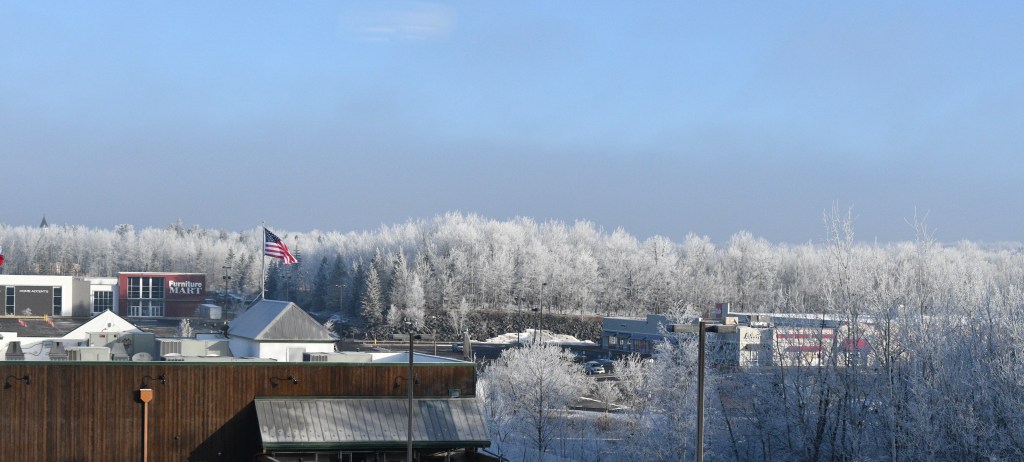
Cold, snowy, and gray might best describe the usual winter weather around and north of Duluth, Minnesota. In February of 2024 not so much. For a naturalist the northern parts of Minnesota are a draw; Black Spruce, bogs, uncommon birds and mammals, and very modest traffic are all the bright side of the colder months in rural and remote Minnesota. The image below is a hotel room view of the hoar frost (rime ice) that coated everything during the week we were in the area. We had little sunshine but nice winter views every day. The sun did give us a couple spectacular sunsets.
For a birder the Great Gray Owl, Northern Hawk Owl, Boreal Owl, Bohemian Waxwing, Boreal Chickadee, Hoary Redpoll, Pine Siskin, Canada Jay, Black-backed and Three-toed Woodpeckers and a couple grosbeaks are almost magnetic. For a mammal person there are possible sightings of Pine Martin and Ermine to keep you going. Good sightings, life birds, are worth all the the cold and wind the north country can offer.

Once you are in the Duluth area* and settled into some sort of lodging it is time to make a final plan. Check the hotspots on eBird and create a map. In general birders head or the Sax Sim Bog area. This is a block of land about fifteen by twenty miles (300 square miles or more) that holds a variety of habitats but features Black Spruce woodlands located about an hour to the north. It is well known and well visited.

*Duluth is barely in Minnesota when approaching from the east. It is where Minnesota, Wisconsin, and Lake Superior meet. We drove 400 mile across Wisconsin and only about 5 miles into Minnesota to reach our lodging.

The Sax Zim area is varied; frame, forests, and folks getting away from it all seem to dominate. The woods is dense, Black Spruce are thin inverted cones and the sun doesn’t reach the forest floor – that is, when there is sunshine.

There are a few feeding stations stuck in the woods and a few homes that keep feeders full and an invitation out for birders. In rural cold areas bird feeders are most helpful in getting a sense of activity. There is a map of the Sax Sim birding area that is available on line or at the Visitor’s Center. Some of the bird feeding areas also have port-a-potties! As most birding can be done from the wide gravel roads and very wide road shoulders you will likely find photographers or birders near every good bird or mammal. You may find the bird yourself but once word gets around about a speciality there will be cameras and listers nearby. Everyone we saw was respectful and polite….hopefully that is the norm.

There may be Ruffed Grouse feeding along the edge ion the road or walking down the road. There are also Spruce and Sharp-tailed Grouse around the area, but Ruffed Grouse are much more common and certainly easier to see.
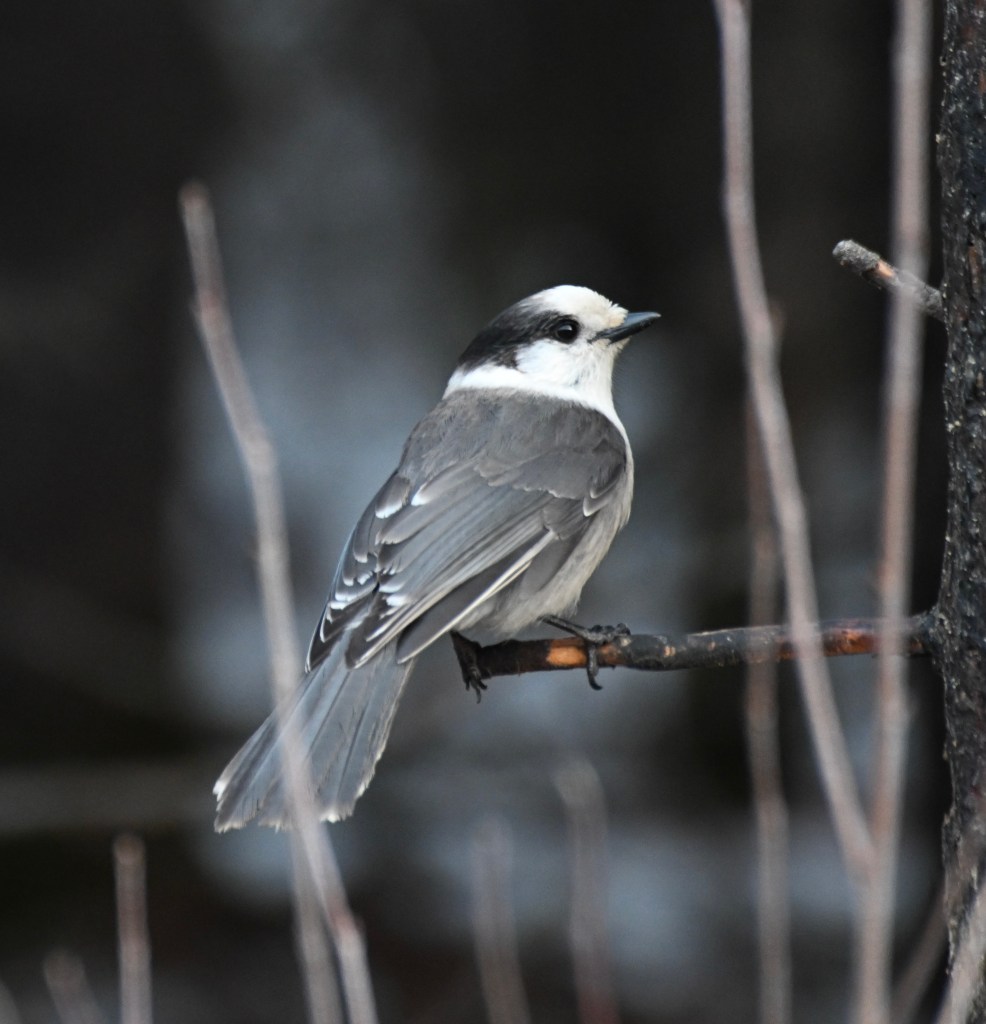
The Canada Jay is a regular in the spruce woodlands and it is quite fond of free food and seems to really enjoy peanut butter. The woodland and residential feeders will have beef suet and black oil sunflower seed and then there will be brown smears of peanut butter on the trees at many of the feeding spots. The jays and Boreal Chickadees seem to favor the peanut butter offerings. As a kid I used to bore holes in a birch log and fill the holes with peanut butter and hang it out for the birds. Maybe I’ll start doing that again.

The two images above are of a Northern Hawk Owl that was hanging around a main road (a blacktop road in fact) and was easily seen but not always easy to photograph. We saw it every day we drove this road and had good looks each time. This long-tailed owl hunts small mammals during the day and is a breeding bird (though not at all common) in northern Minnesota and almost all of Canada. It is a tree-top bird making it easier to locate that many birds and almost all mammals.

Many of the creatures, plants included, in the northern lands have had to adapt to long dark winters and long bright summers. The days vary greatly throughout the year. The temperatures also vary. It is not unusual for owls to hunt in the day time when the day is 14 – 15 – 16 – 17 hours long and the night is not really dark. This habit has become a life style for Snowy and Northern Hawk and Great Gray Owls. The small mammals have adapted to life under the snow. The Ermine (Short-tailed Weasel) and the various Microtus (voles) have tunnels in the snow for months on end. But Great Gray Owls can find them in up to 18 inches of powder snow.

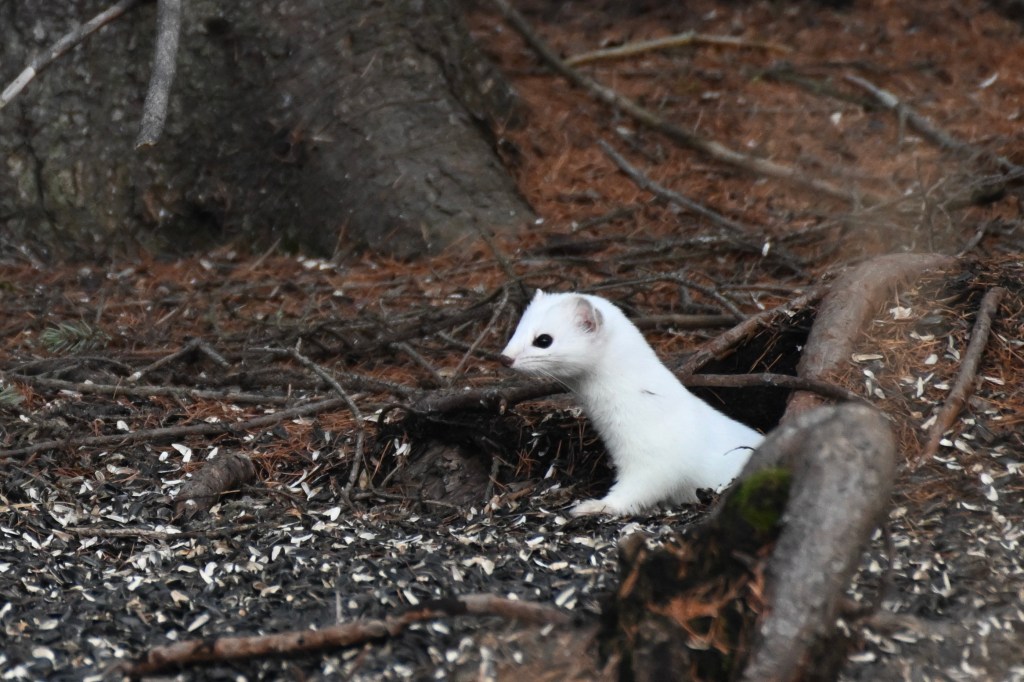
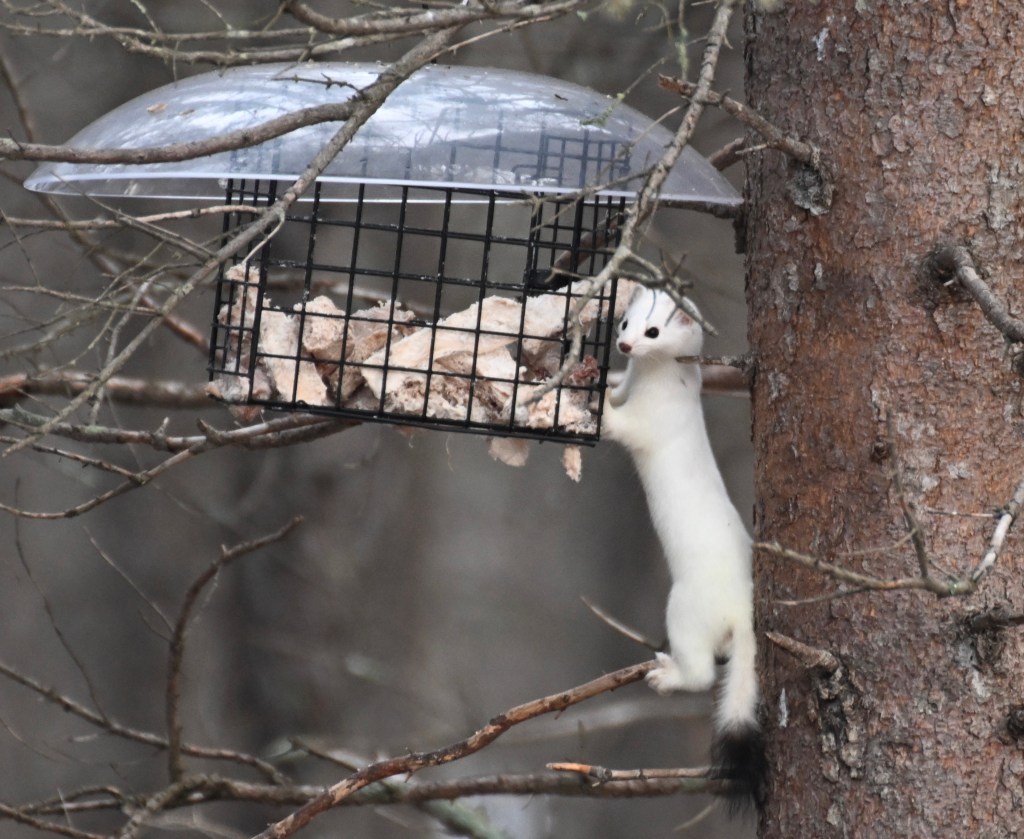
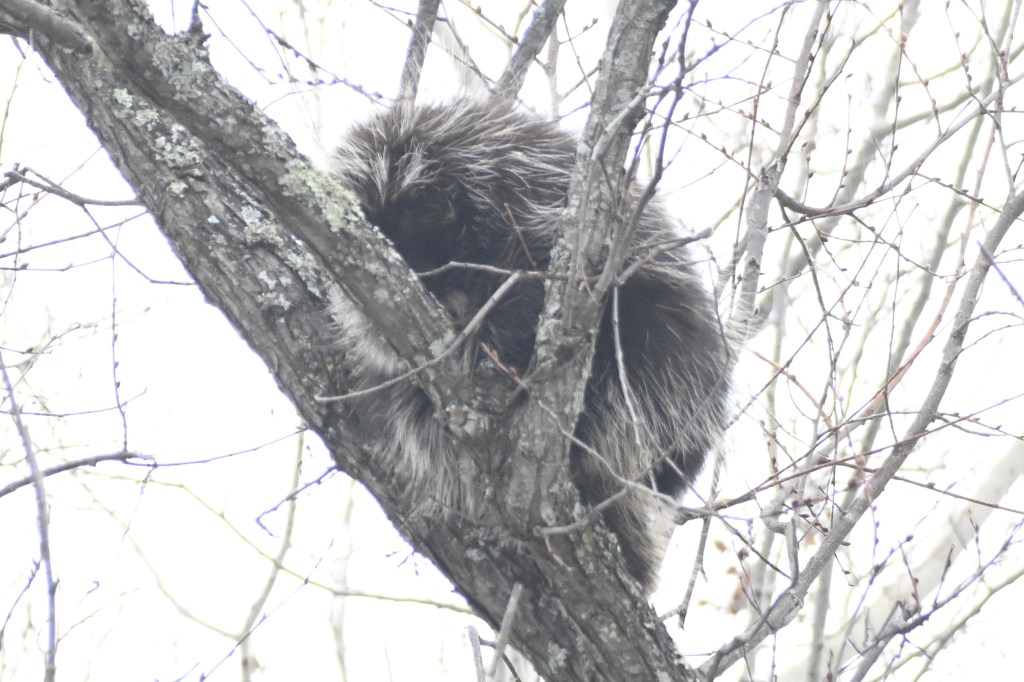
Yes, mammals were there in the spruce forest also. The most common furred animals were the White-tailed Deer and the Red Squirrel. The deer in the farm lands and the squirrels at that peanut butter and sunflower seed mentioned before. But northern woodlands have some special mammals that I/we rarely get to see in New England; Pine Martin, Ermine (Short-tailed Weasel, Porcupine, and some mammals more common out there than elsewhere like Bobcat, Coyote, and even Lynx and Wolf). We did see many of these and the images below depict the Pine Martin and Ermine – winter pelage for this weasel that far north is white, and a rather blurry Porcupine.

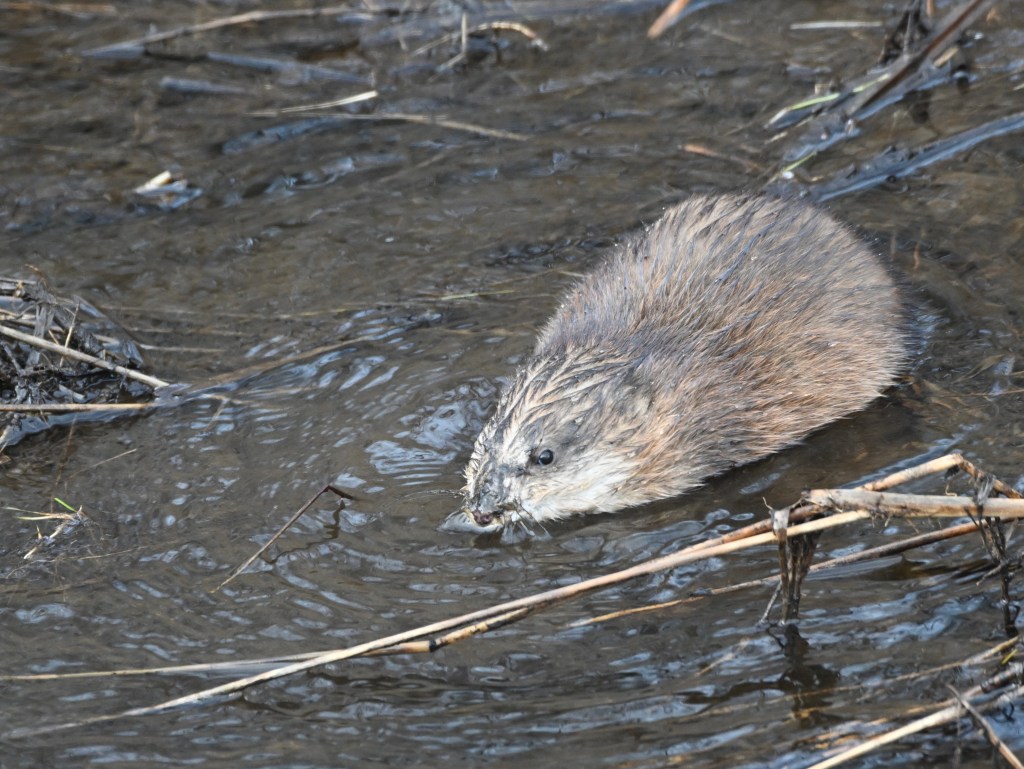
The Porcupine is a bark-eater and is found in deciduous trees. The hairy look is from there guard hairs that are quite a bit longer than the quills. The lower, and last, image is of a surprise mammal in February – though not uncommon most of the year – it is a Muskrat. It should be curled up in a house made of cattails and reeds avoiding the frozen waterway it calls home. But we saw it in open water and gathering food! A Muskrat in February in Minnesota!?! . A most unexpected animal; but perhaps something that we will see more and more of as the winters become much more gentle.
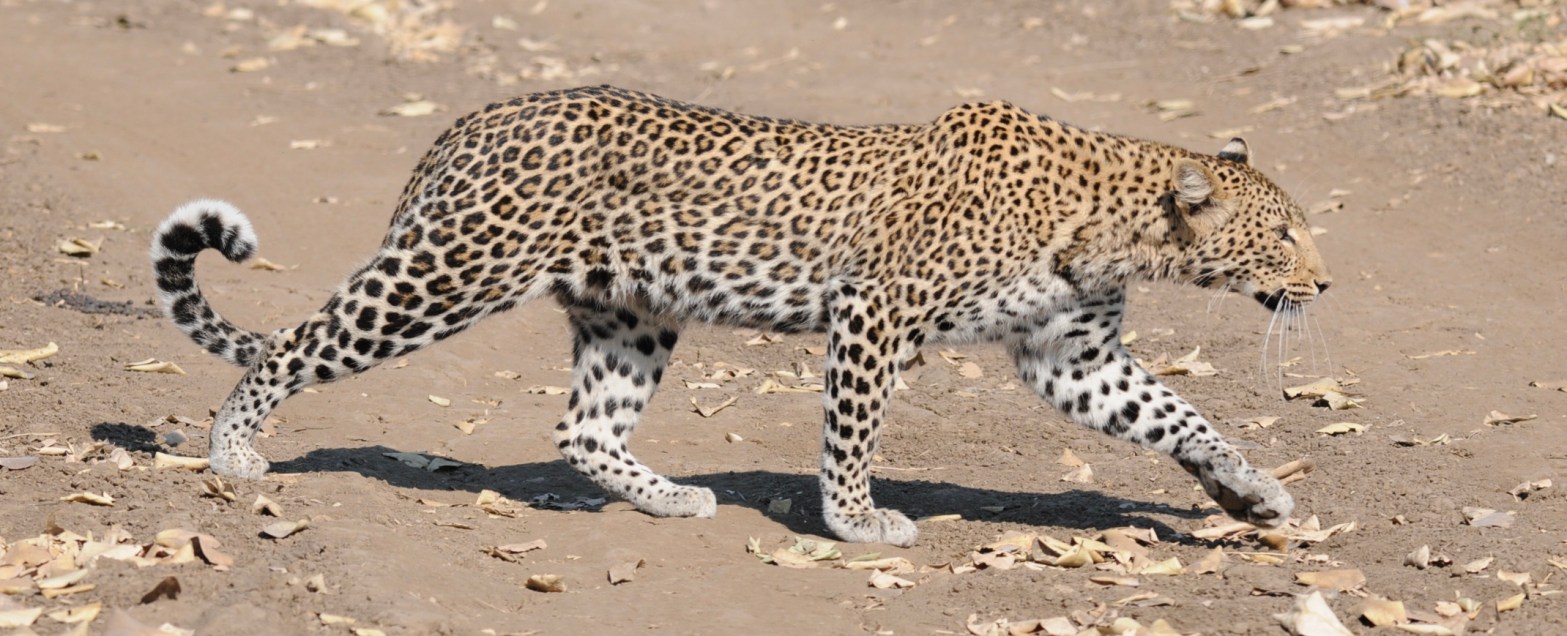
Uganda/4 … baboons

I know its a bit of a tease to start a post on baboons with an image of a leopard, but in much of East Africa these two species are paired as a result of their immense dislike for each other. Baboons would love to disrupt a leopards routine and do physical damage to the cat if they had the chance. The leopard feels the same way. On several occasions I have watched a well-hidden leopard wait along the path a troop of baboons uses to get to their night-time roost tree…and then grab a youngish baboon and run off with it. On other occasions I have seen a dead baboon in a tree, draped there as if to warn a troop that the leopard is ready willing and able to wreak havoc on the baboon troop. They dislike each other and relish the chance to do damage to the foe. The image is a bit off a reach perhaps but leopards always attract the eye…..

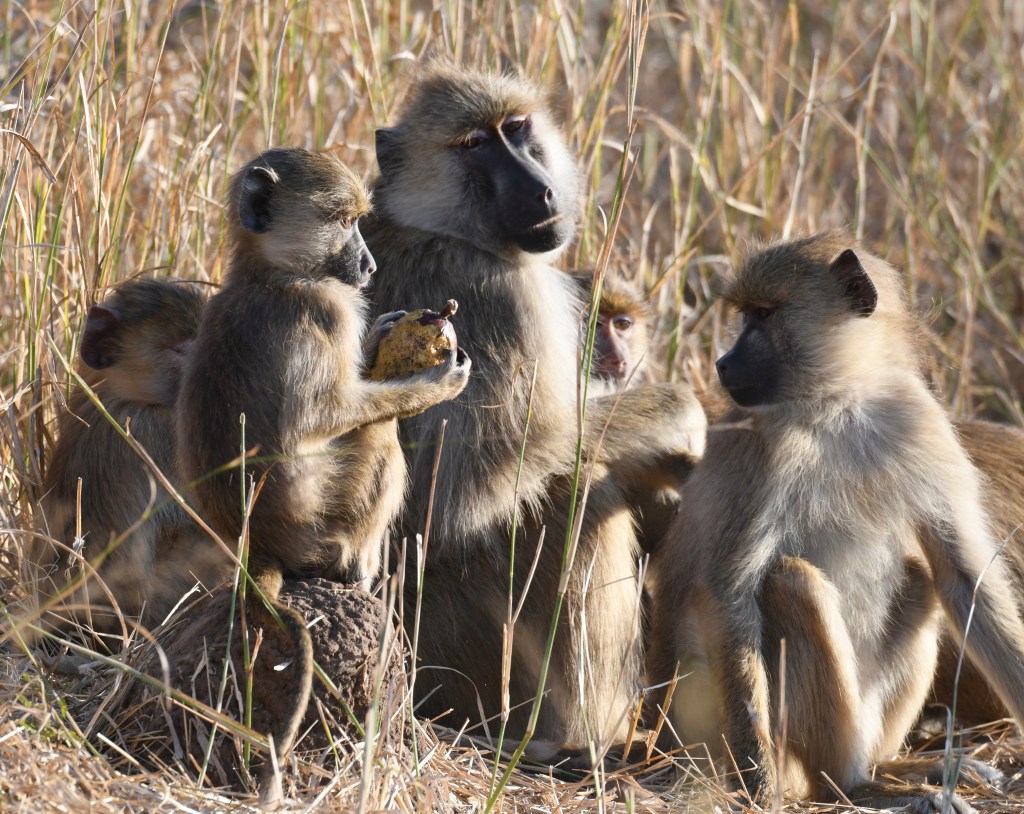
But this is more about the very social, ground-dwelling (for the most part), terrestrial primate we call the baboon; Olive baboon in Uganda and most of Kenya and Tanzania as well. There are five African baboon types; Sacred, Guinea, Olive, Chacma, and Yellow. In East Africa there are Olive and Yellow. In Uganda there is just the Olive Baboon. Males can weigh as much as 100 pounds and females just more than half that. This baboon species ranges from the Atlantic coast in the west to the Indian Ocean in the east. It is sub-saharan and quite common. In appropriate habitat they will depend on the seeds from grasses or perhaps fruits as the main part of their diet. They are omnivorous and will eat insects and grubs and hunt smallish mammals including young impala and gazelles.

Baboons form male-dominated troops that can contain 40 or more members. There are dominance layers within both genders and age cohorts; the young of higher ranking females will dominate other youngsters. Coalitions and associations form between males as well as with, and between, females. It can be as complex as a seventh grade social. Males have a cape of heavy longer hair while females are shorter-haired over all. The young are rough and tumble little gymnasts. Females sexually mature at about six years of age and have a young about every 24 months following a six month gestation. The baby is nursed for six months or so and stays with the mother until it is about two years old.

Olive Baboons form large troops. There are a few large males, quite a few females, and usually lots of youngsters. They look out for each other in a group sort of way and are typically rather casual and self-assured as they move about. Youngsters run and play without helicoptering parents. The males are fierce guardians of the troop and will move toward predators and sometimes attack to repel the threat.
Sometimes a baboon troop will consider the road to be theirs and almost demand that you pay a toll for using the highway. The Olive Baboon is much like any animal (including humans) as it will look for repetitive success and appreciates handouts and easy luxury. In this area there are people who will slow down or stop to throw food to the resident troop. As might be expected they get used to the attention and gifts and begin to expect them from passers by.
In this case a male baboon has climbed onto the hood/bonnet of our vehicle and is looking to see if we have any food on the dashboard. The windows were rolled up, there was no food available, and we were soon able to slowly drive ahead. This was a remote spot but a spot that seems to get enough tourist passage to keep this troop near the road and ready to share grub with travelers.
Females (on the right) are slimmer and lack the heavier cape of shoulder fur that males (young male on left) develop as they age. It is well known that primates groom each other. This body-maintenance helps remove parasites and pests but probably is more important in forming alliances, friendships, and relationships. Females groom males to gain a protective umbrella and youngsters groom everyone to become established and known within the troop.
Males are willing to be a part of the troop at all levels but they do establish a male/male hierarchy through battle. The females tend to do the parenting but males are often involved with youngsters as well. Young males can be a bit rough when playing with small baboons and are often the ones that get chased or chastised by the older females. The social structure depends on age, gender, and social history. Males will occasionally move to another troop where acceptance is not guaranteed and often requires the development of a relationship with a breeding female.
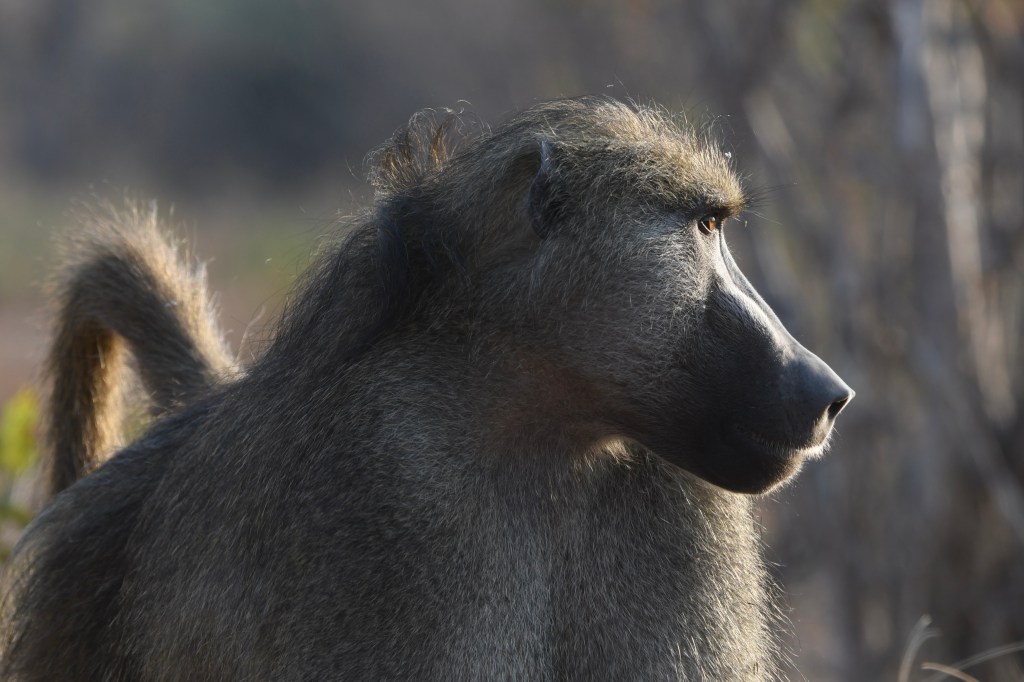
Baboons are often referred to a “dog-faced” and this profile shows why. They are also called “dog-shaped” as they have narrow bodies and a deep chest. They have a longish tail that has a “broken” hitch in it near the body. They do not use the tail when climbing trees except for balance.
The primates are divided into a few large groups; man and ape, monkeys, and cheek-pouch monkeys. There are also the more primitive, smaller, animals, called pro-simians which include the galagos or bushbaby and the lorises. These smaller types of arboreal animals have been classified as advanced insectivores and early primates. They are not very monkey-like in many ways.
Baboons are in the cheek-pouch group along with mangabeys and all the guenon (regular monkeys to most of us) types. Maybe in the next post…..
Baboons do climb well and will eat flowers, buds, nuts, and fruits while perched up in a tree. They also spend the overnight in trees away from the ground dwelling nocturnal predators like the leopard and run for trees when danger threatens.
One night the lodge our group was staying was overbooked and I had to walk well out into the bush to a workman’s house for the night. Walking at night was a risk so I headed out at dusk, only to find that the large tree looming over the dark and empty house I was to stay in was the night time home to about 60 baboons who were also walking along the same path that I was using. It was a bit disconcerting and they were noisy both coming and going.
Is here any doubt that animals can think, relate, compare, wonder, or perhaps plan? Looking into the eyes of a gorilla or chimpanzee or baboon certainly gives me pause. They are most definitely looking at me and assessing me I’m sure.
Nature is such a treat.

Look what FLYed in….

An avian bulletin from the west!!

Avid birdwatchers here in eastern Massachusetts have been pleasantly surprised by the arrival of two flycatchers that were/are totally unexpected. We have had a very warm spell recently with lots of westerly and southwesterly winds. These sorts of weather conditions just might sweep migrants, especially, wrong-way avian migrants from the west and southwest into the eastern states. As the ocean forms a rather significant boundary after arriving in this region, many of these birds drop down onto islands and into coastal habitats instead of heading out to sea and a likely demise. Locations like Martha’s Vineyard and Nantucket or Tuckernuck or the Monomoy islands are well known vagrant stops. These two flycatchers were a bit more inland but surely they were smelling the salt air of the ocean for the first time.

The first, a Vermillion Flycatcher, (VEFL) was discovered in a bit of sandy coastal scrub and stayed for several days allowing birders to visit from near and far. The other bird arrived a couple weeks later and stayed for quite a while also; it was a Hammond’s Flycatcher (HAFL). The Vermillion Flycatcher is found in the southern states of the US from east Texas west to southern California. It is not common but not unusual in a variety of arid habitats, usually near whatever water is available.

The Hammond’s Flycatcher is found normally in tall, usually coniferous, forests in the far west. In the right habitat it can also be found as far east as Wyoming and Colorado. It is one of a group of flycatchers in the Empidonax group. There are about 11 species of Empidonax species in the USA and they are all quite similar. Those birders with good ears can tell them best by sound and song. The taxonomy of the Empidonax is a history of lumping and splitting types into or out of species groupings.

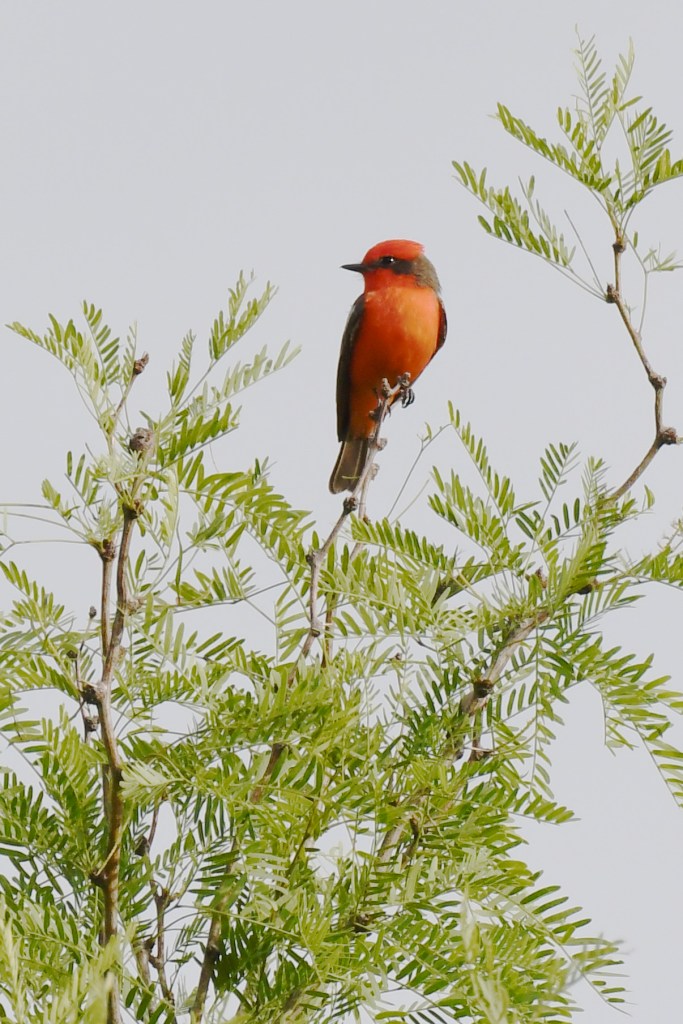
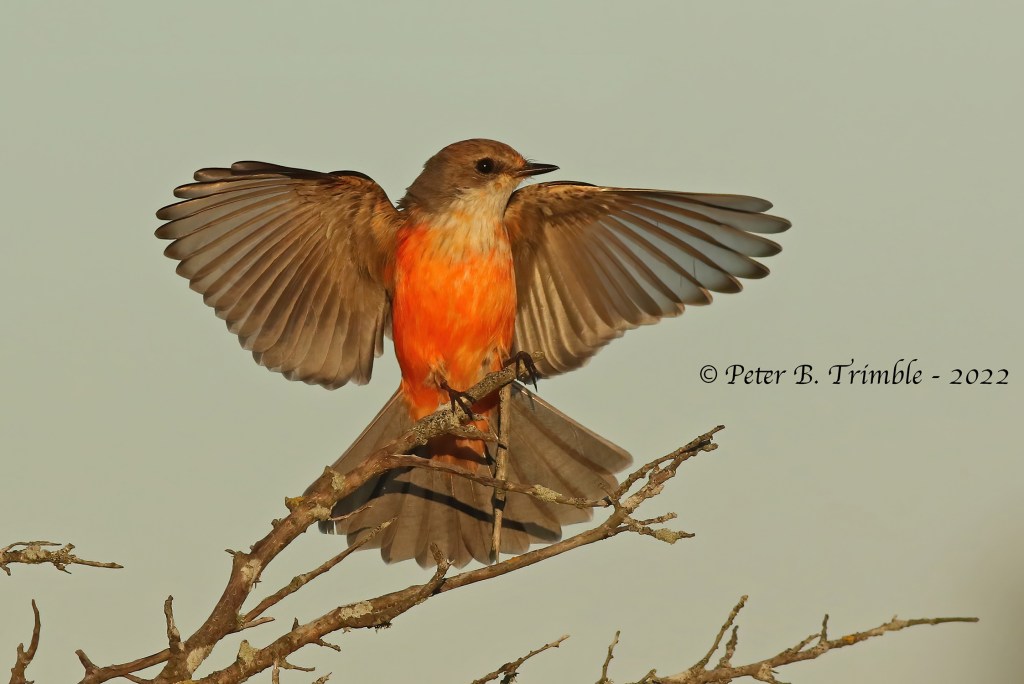
I didn’t get any photos of the visiting Vermillion Flycatcher but will insert images from the western USA above and below to highlight the bird. This image is of a vermillion Vermillion Flycatcher; that makes it a male. These birds are a bit smaller than a Tufted Titmouse, and perhaps a bit slimmer. The red on the top of the head and the black patch behind the eye show this to be an adult male. The bird that was in Massachusetts last month was a young male; it didn’t have a red topknot or black patch but was smoothly reddish underneath pretty much from throat to vent. See the image, 2nd below……provided by local birder Peter Trimble.
This is a female Vermillion Flycatcher and the shaded under tail is usually red in the females. The bird that was here in Massachusetts was quite reddish underneath. As with many birds the female VEFL are often less vibrant than the males. This more drab plumage likely makes them more difficult to spot as they sit day after day on eggs at a nest. The Massachusetts visitor is shown below….
This image is of the surprise visitor to Cape Cod. The amount of red coloring and the lack of a white throat make this a young male – not a female. As an adult it will develop the red crown and post ocular black patch. It is always a melancholy moment to realize that a bird this far out of its normal migratory route has great challenges to return to the west and then south … it seems like a huge challenge; but it is also a challenge to reach the Atlantic coast in the first place. Good luck.
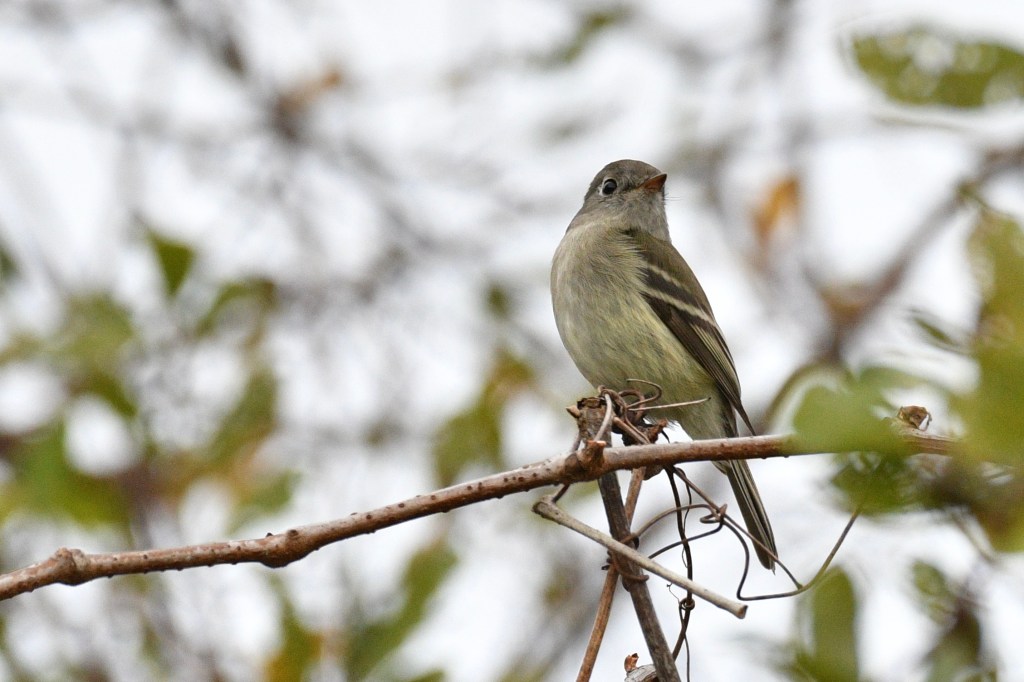
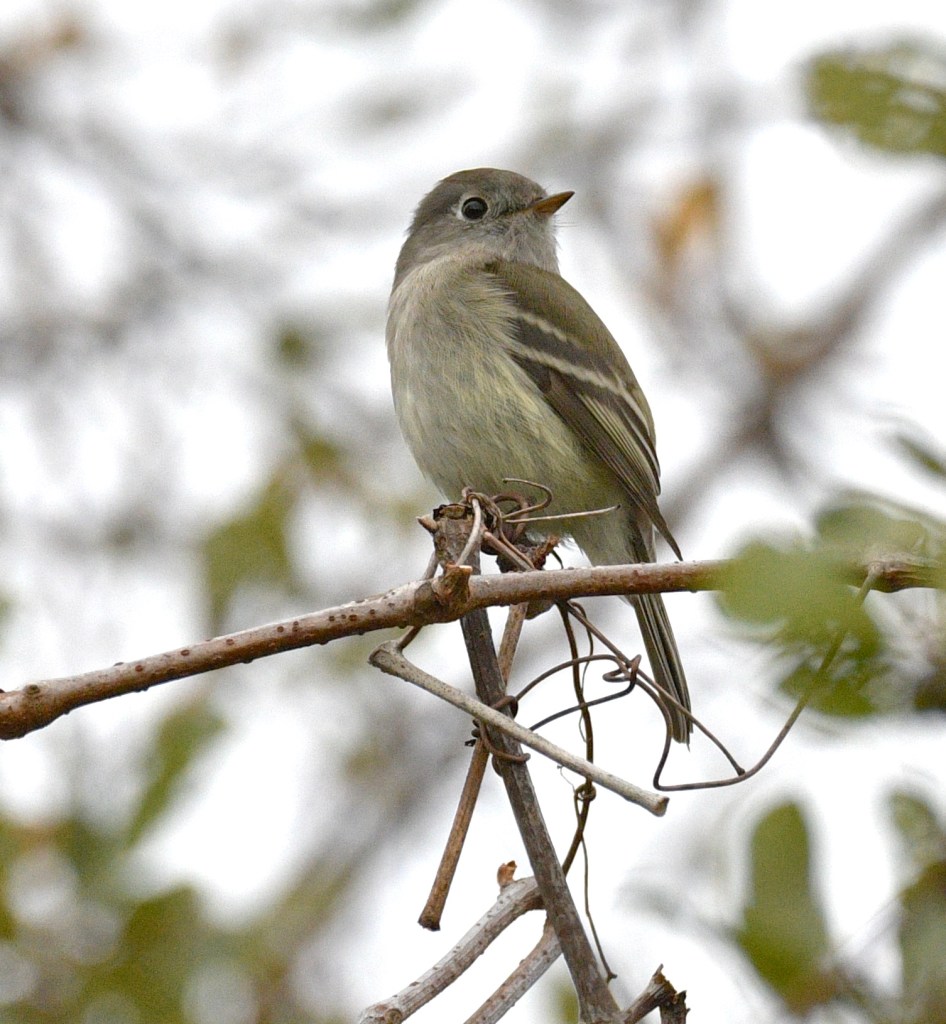
The Hammond’s Flycatcher is also smaller than a Tufted Titmouse. The Hammond’s is not easy to tell from its Genus (generic perhaps?) relatives. All Empidonax species are quite small and have a bold eye ring. The birds of this group tend to have an eye ring that flares a bit toward the back of the birds head. The wing bars, always two of them, are bold and obvious as well.
The bird that is/was here in Massachusetts may have started the month in California or just east of California and ridden the atypical winds to the east and northeast. This sort of wrong-way migration is not really uncommon, but usually is a dead end for the bird. This flycatcher remained in Massachusetts, in the same spot, for about two weeks. It remained in the low scrub habitat adjacent to the field shown in the top image, not coniferous nor tall.
In the spring we get quite a few southern warblers that overshoot their migratory goal and end up in the northern tier of states. But, in the spring they have time, feeding opportunities, and weather on their side and can head south again or try to make a go of it further north than their kinfolk.
During the 1800’s the US expanded greatly through treaty and conquest. The Smithsonian Museum was founded in 1846 by an act of congress and a surprise gift from an unknown source; a man named Smithson, but that is about all is known of him. A man named Spencer Fullerton Baird was the first curator of the Smithsonian and he expanded the collections from 6,000 to 2,000,000 specimens/items/things during his 35+ years at the helm. He stationed naturalists, usually doctors, at forts in the untamed west and gave them permission (urged them actually) to collect birds, mammals, plants and other natural features and send them back to the Museum. This flycatcher was discovered in California by one of these men (John Xántus) and he named it after another of these collectors (William Alexander Hammond).

Thanks again to all those who visited these birds and left them to their own activities. All the visitors I saw were respectful of the birds space and nature. It may be a bit pointless as I don’t think these two will survive to breed back in their home lands – but at least they will have the chance. It was a pleasure to have them here for a while….I wonder what’s next?

Uganda/3 – great apes

Uganda has 20 primate species. Seven are nocturnal and the others are diurnal. The smallest are the nocturnal potto and bush baby. The others are old-world monkeys like the Colobus, Patas, and Vervet. We will get a look at many of these in later posts but let’s start with the largest and most charismatic of the group – no not humans – Great Apes; the Chimpanzee and the Eastern or Mountain Gorilla. In addition the Democratic Republic of the Congo has the Lowland Gorilla and the Bonobo, also Great Apes.

Many tourists visit Rwanda, Uganda, and the Democratic Republic of the Congo (DRC) with the explicit goal of seeing these close relatives of ours. Both of these apes are highly social, staying in family units and hanging out with each other eating leaves and twigs and shoots all day. They are also rather easy to locate in the mountains of western Uganda. Humans, like you and me, have about 98.3% the same genetic makeup of these large primates. The differences appear to be great as we look at each other externally, but the similarities between humans, chimps, and apes are much greater than the differences.

Both chimpanzees and gorillas are forest creatures living in Uganda, Burundi, the DRC and Rwanda, at rather high elevations and in dense forests. The Chimpanzees are in trees more than the gorillas are. The average male/female gorilla weigh about 250/450 pounds and the Chimpanzee weighs about 65/135 pounds. If all goes well they both can live about 50 years. Habitat loss due to human agricultural expansion is the greatest threat to the animals. There is a Lowland Gorilla as well in the eastern part of the DRC and each type of gorilla has two somewhat different populations. The fourth Great Ape of the region, the Bonobo, is only found in the jungle forests of the DRC. Gibbons (often called a Lesser Ape) and Orangutans do not occur in this part of the world.

In Uganda the apes are doing well in the protected forests, although habitat loss, primarily to agriculture, limits their potential for population increase. The same in the DRC and Rwanda though the DRC is vast and mostly still undeveloped. Gorilla and Chimpanzee tourism has been a game changer for these countries and for the local people as well. Nowadays there is a good deal of income based on the American, Asian, and European visitor who pays just under $1000 to get to stay an hour with a habituated gorilla group. Chimpanzee tourism also exists but chimps are less predictable and are often moving about – and significantly less expense to visit. Our group stumbled on both gorillas and chimpanzee as we traveled about the countryside.

As you can imagine there have been many books written and extensive research undertaken on both Chimpanzees and Gorillas. Dian Fosse and Jane Goodall have become common, almost iconic, names in America as they have studied and written about these animals. They, and many others, have dedicated (and even given) their lives to further an understanding of these animals. One last note before jumping in to pictures and stories from our trip – humans, chimps, and gorillas are in separate taxonomic categories. These categories have no other relatives interjected; in other words we are all a bit different but the similarities are pretty much linear – we are each others closest relatives.

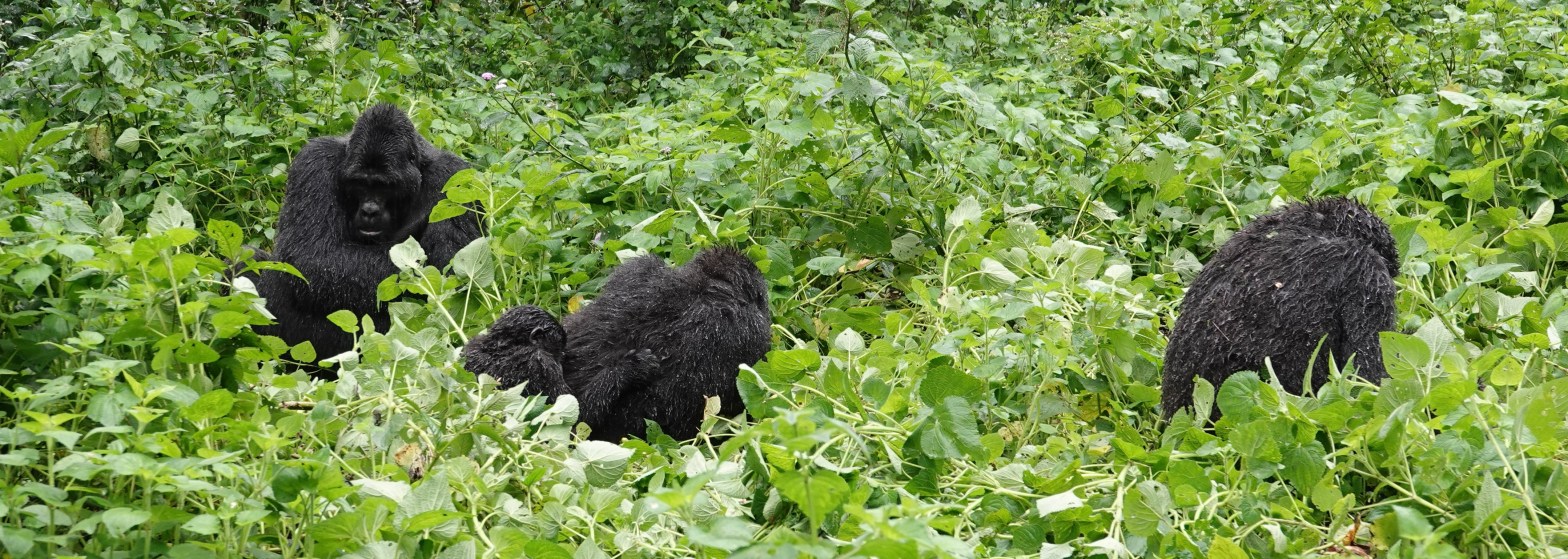
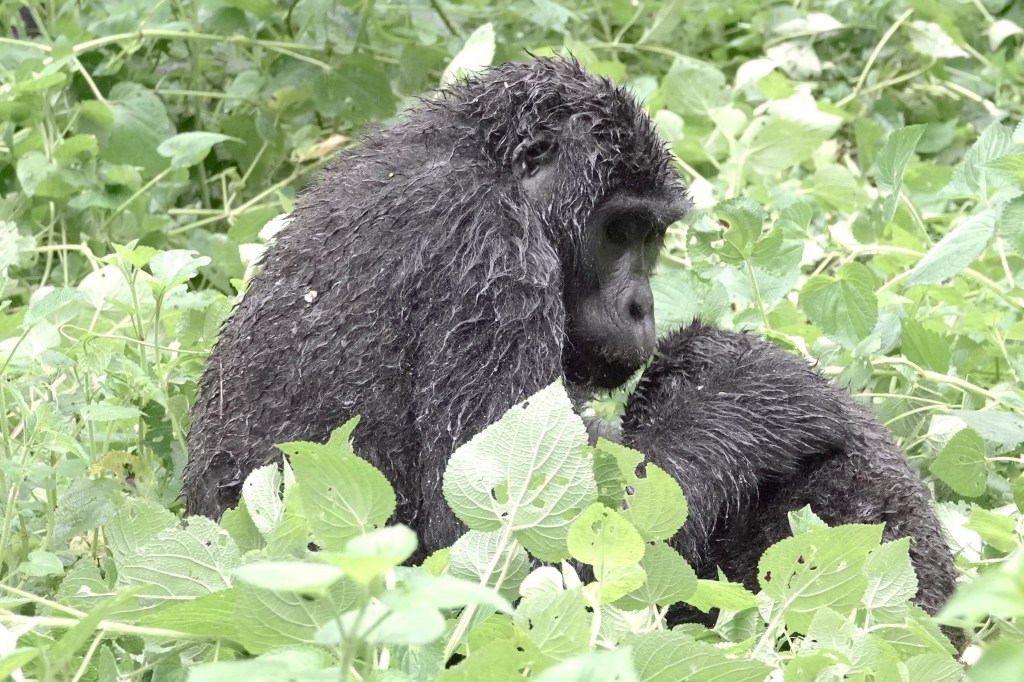
Gorilla families consist of a large male; aptly named the silverback, several females and young. In this image the male is on the left sitting and looking unhappy. It was a rainy day and they were all quite content to just sit. The young didn’t play and the group didn’t feed. They pretty much just sat. You can get a sense of the Impenetrable Forest by looking beyond the apes. They are in a clearing and surrounded by all sorts of short and tall vegetation. You don’t just walk through this sort of habitat. Our group approached to within 10 feet or so in some instances and there was never any notable interaction between the human and gorilla groups. They ignored us and we ogled them.
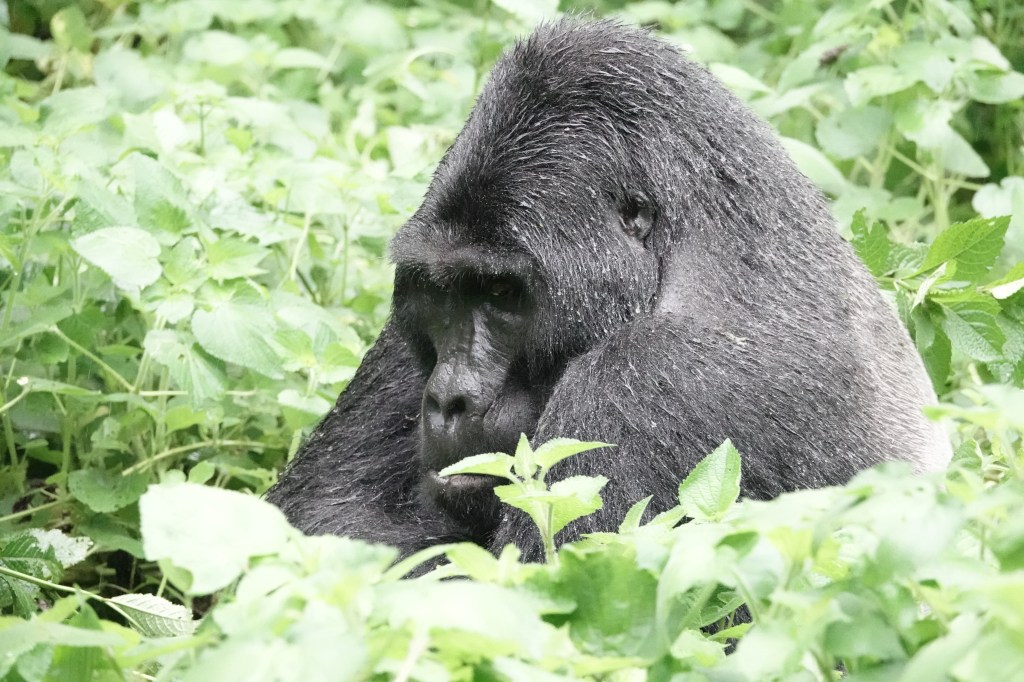
The group of observers walked to where the Gorilla family had settled and both humans and apes sat or stood around looking at each other; though the humans did most of the interspecies looking, This is the big male, the family silverback. In the Impenetrable Forest at Bwindi where we were there are a dozen or more gorilla families that are used to being visited by curious humans. There is an equal number of families deeper in the forest that are not habituated to humans. This is the same relationship used in Rwanda and in the DRC. In the three countries where habituation has been successful there are about 40 habituated gorilla families.
In this image the silver back, showing an older male, is visible. We were brought to where the group had hunkered down for the morning by ranger guides with porters hired to carry gear if you wanted. The guides, both men and women, had been informed by scouts who had gone out very early and located the family. The humans started at about 8:30 am after a briefing. The scouts had gone out at sunrise to locate the Gorillas. Once the people and apes were together the guides were able to “speak” with the apes and assure them that everything was OK. There are about twenty known sounds that the great apes use as language and the guides are familiar with them and mimic certain sounds to keep things on an even keel. The local folks can book on as porters and make some cash money. Even where there are daily gorilla treks there are more potential porters than are needed each day. In our group the porters said they are called only once a month or so to rotate in with a group.
The females are quite a bit smaller than the silverback and there are almost always several females in the group. In todays forests it is nice to see that the females are reproducing and that there are young animals in each family unit. Sadly there isn’t enough forest for this to go on forever, but it is a good thing right now.
The youngsters and females are quite close in most cases and many of the young males stay in the family even as they reach adulthood. They just don’t become dominant and rarely breed. In other cases the younger males head off and live alone or try to create their own family group. As females grow older they stay with the family until they are sexually mature and then move off to join another group. They are not always happy with their first choice and may move around for a while before settling in with a new group. They are usually ten years old (or so) when they are first able to bear young. The youngster will nurse for about two years though they will have been nibbling vegetation for well over a year by then.
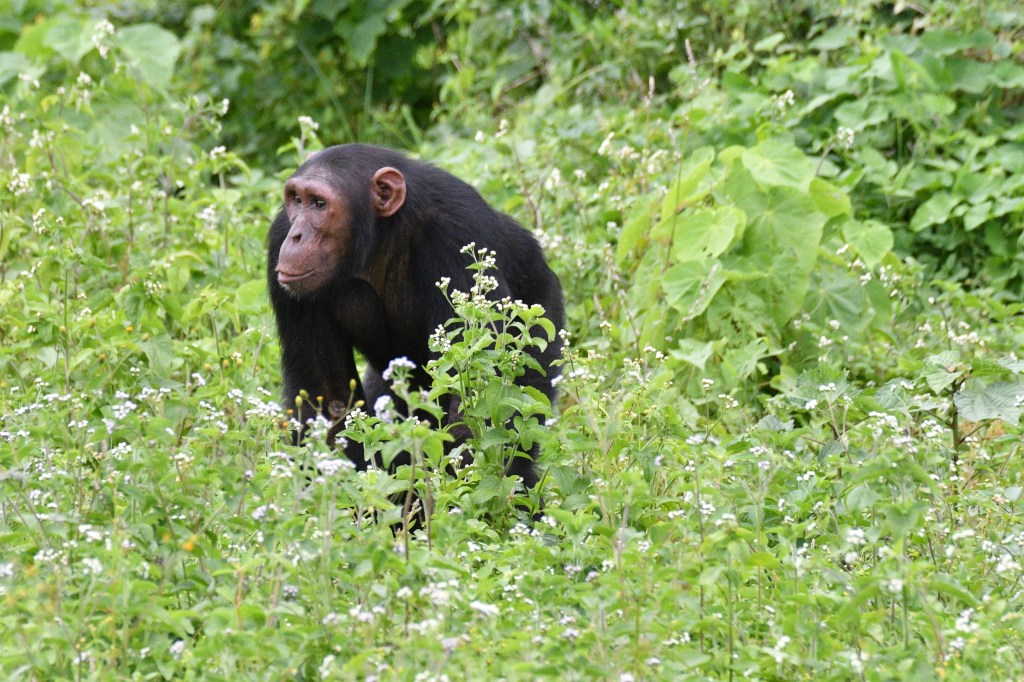
Chimpanzees are a bit more mobile than gorillas and being quite a bit lighter in weight they are more fluid in the trees. They are scattered all over the area and, although they are in family units, they are not as property oriented as the gorillas. You can find chimps most anywhere in the forest but you don’t always find them in the same place they were in yesterday.
All of the great apes can walk on all fours as well as bipedaly and they also can move (brachiate) through the trees. Silverback gorillas are too heavy to climb and swing once they mature but gorillas of all sizes are in trees at some point. Usually to make a sleeping nest in the evening. Chimps do much the same thing but spend more time in trees seeking figs and fruits more often than do the gorillas.
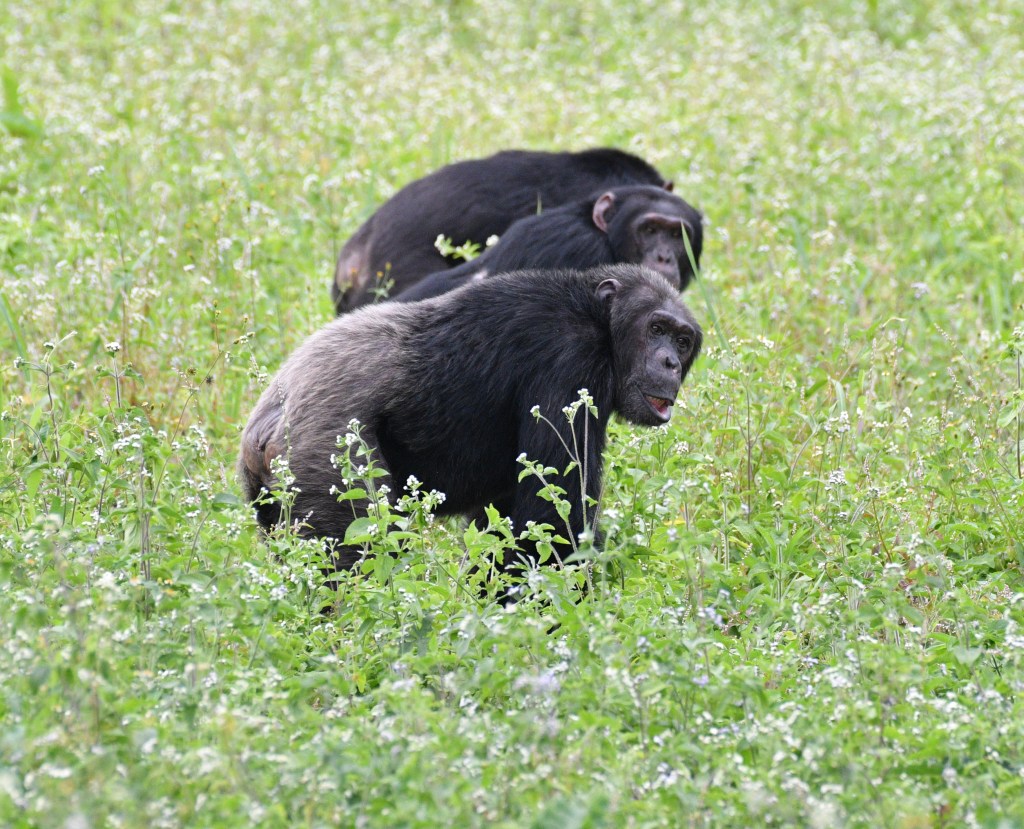
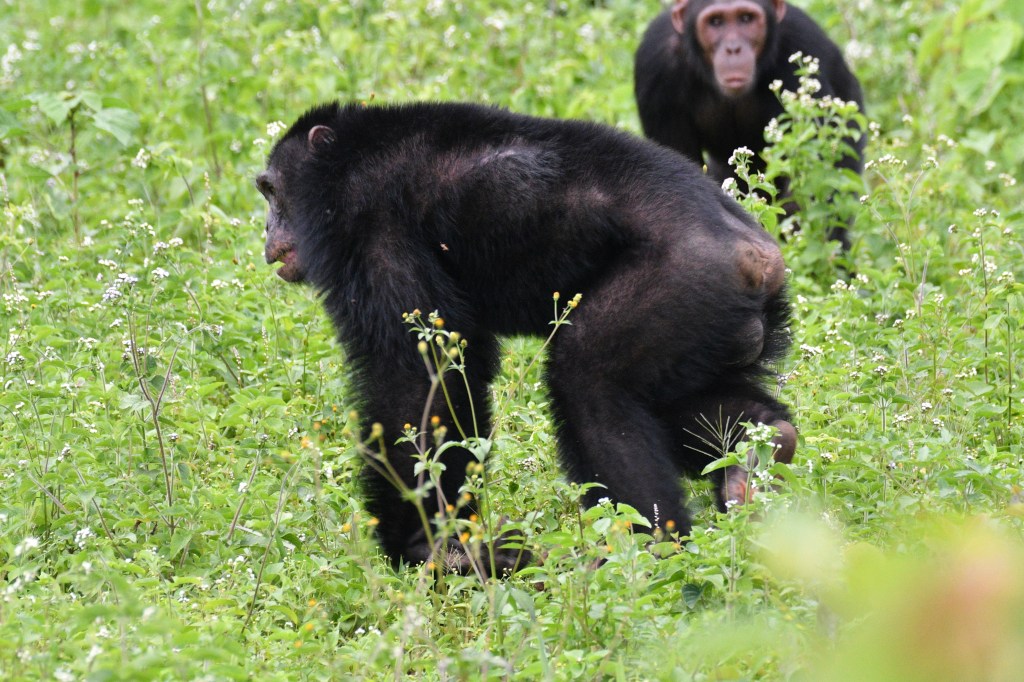
These chimpanzees were a group of four that had just crossed a road after (probably) raiding a family crop field. The interaction between chimps and local people is a bit strained and not as comfortable as is the relationship with the more sedentary and forest loving gorillas. Note the large ears on the chimpanzees and then go back and look for ears on the gorillas.

The next post will show the Olive Baboon and its skills, brazenness, and introspection. Gorillas and Chimpanzees may be in groups that occasionally reach twenty members, that would be a small number for a baboon troop.

Uganda 2 – more culture

I think a little background might be useful. I like Africa, African people, and African wildlife. I have spent more than 700 days on safari. And a related 100+ days on airplanes. I have shared my affection with lots of travelers. My wife TLF, The Lovely Frances, has been there several times as well and now understands and shares my affection for this continent and its residents. We went to Uganda because it was part of our home away from home, East Africa and because it would be new for both of us. For all the visits to Kenya and Tanzania (and Botswana, Zimbabwe, Zambia, Namibia, Mozambique, Zanzibar, Morocco, Mauritania, Gambia, Senegal, Egypt, and South Africa) I/we had never visited Uganda. There were good birds, we were part of a good plan — after three year of pandemic delays we were finally able to undertake a trip planned for 2019. It was worth the wait.

As I mentioned in the last post, the land that is Uganda was greatly crumpled by unimaginable earthly pressures during the rifting and the volcanic episodes that followed. It is mountainous on the western side abutting the Democratic Republic of the Congo and less so on the eastern side toward Kenya. The lakes created in the rifting are evident to the west and south. The Great Rift Valley runs about 4,300 miles from Mozambique up to Lebanon and the Dead Sea, just east of the Mediterranean. This is a huge rip in the African continent.

There are lots of people living here. There are many languages spoken. There is relative harmony and cooperation. As an American I am always pleasantly surprised that the residents of these countries having hundreds of languages and tribal affiliations live so well together. It is a testament to thoughtful and caring political leaders like Nyerere of Tanzania and Kenyatta of Kenya. These two men essentially led the formation of these countries after they gained independence in the early 1960s. Uganda was developed during this period as well, excepting that Idi Amin took power in 1971 and ruled for eight years with military might as his driving force. This period delayed Ugandan development and for years it was the poor cousin of Kenya and Tanzania. That is a circumstance that has been changing during the past few decades. Ugandan economy and growth has been laudable recently.

There are cultural circumstances that have allowed Uganda to change and grow and there are cultural factors that describe the people and the economy. This post will help set the scene further and perhaps describe how and why Uganda exists in the form it now does. Again this will be pictures and captions.

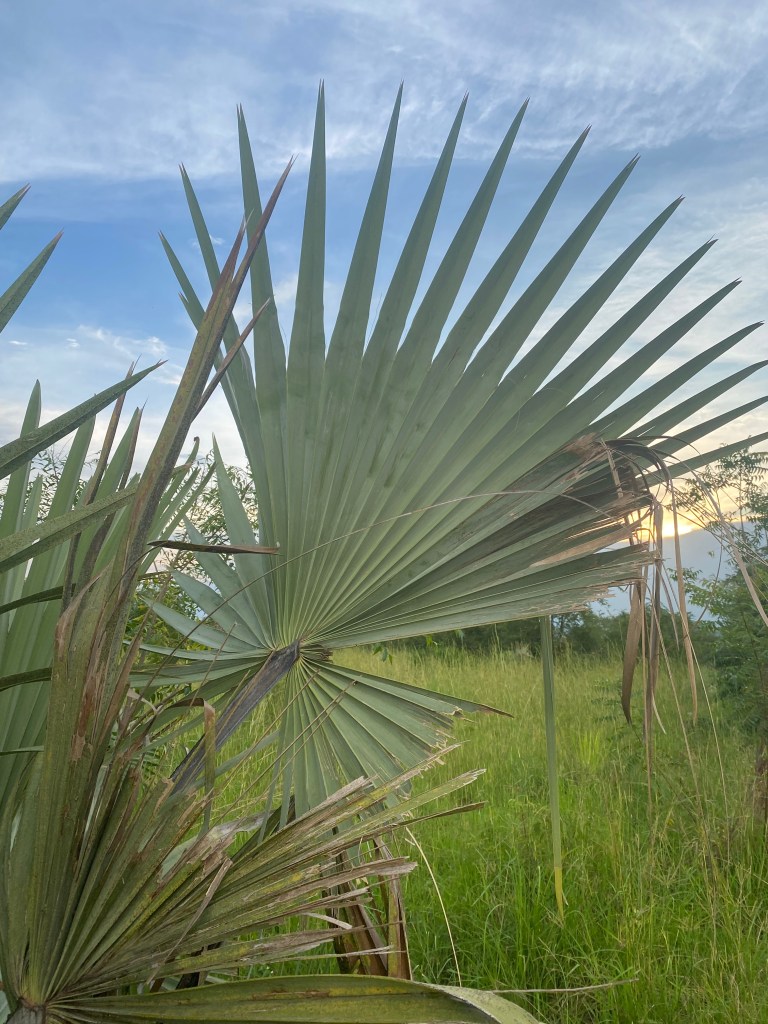
This vista image is dominated by a tall Bossaras Palm. It is from the lower side (eastern) of Uganda and depicts savannah land and lowland forest. This is the most common habitat on the eastern side of the country and throughout most lower elevation areas. In Uganda lower elevation is about 2-3000 feet above sea level. In the montane forests you will hear about later the average elevation is about 7000 feet..
Bossaras Palm dominates as a low growing plant in the lowlands and eventually as a tree-like palm scattered across the savannah lands. Grasses grow between the palms in these areas and this is where many of the grazing animals reside.
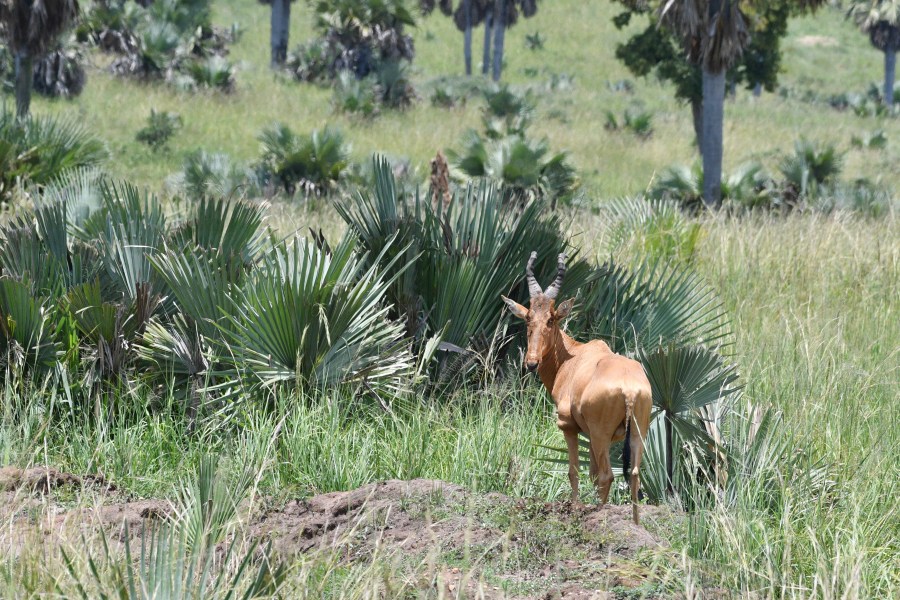
This is rather typical Bossaras palm habitat with smallish young plants and the stems or trunks of older palms as well. The long-faced animal in the front right is a Kongoni or Hartebeest. This antelope has adapted to many African habitats and occurs in some form or another from South Africa up through northern Kenya.
But the savannah palm habitat is replaced by montane forest on the western side, the highland side, of Uganda. This image is of one of the many figs that grow in the forest. Most of the native trees are known by scientific name only and most of the plantings that are being undertaken are of “crop” trees and fruit trees. Crop trees are often the Australian Grevellea and Eucalyptus. These are plants that grow quickly and are harvested after a few years for poles that are used in small home construction. In some places where reforestation is done with native plants the underlying reason is to recreate or maintain habitat for Chimpanzees.
Coffee is grown through out the equatorial world at moderately high elevations. Coffee plants seem to do best in older volcanic soils, places with no frost and no searing heat, and lots of water. The two beans are inside a cherry and “washed” out and dried and roasted. Most coffee is the Arabica type though Robusta is easier to grow. Robusta is not as tasty and is seen as bitter – thus it is primarily used in instant and mass-produced commercial coffees. The flower is a bright white jasmine-scented flower that is quite striking. Picking is still done primarily by hand as the berries on a bush ripen at different rates and need to be picked when ripe.
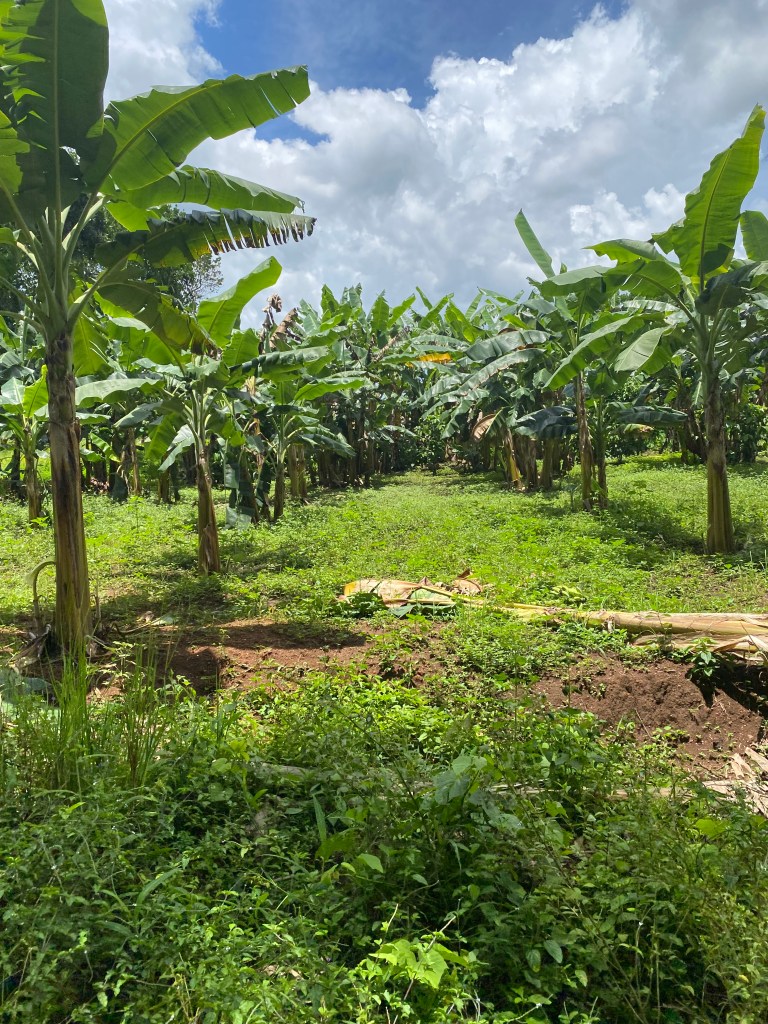
Like coffee bananas are grown worldwide in the equatorial belt. There are more than 100 kinds of coffee plant and there are about 1000 kinds of banana. They vary in size, sweetness, color and nutritional value. Almost all bananas that are shipped into America are a type called Cavendish as they can be picked a bit early, travel well, don’t bruise easily, and are tasty. We also see Gros Michel and occasionally the smaller Lady Fingers or Red Bananas. Bananas and plantains are a staple food item in lower income countries around the world. Like the cassava/manioc/yucca plant in the next image bananas can be propagated long-term from a single plant. The banana tree will die after producing a single banana “growth”bunch”. But the root structure will send up new growth that can become another generation of producing banana “tree” (it is really a herb). It is never-ending with appropriate care.
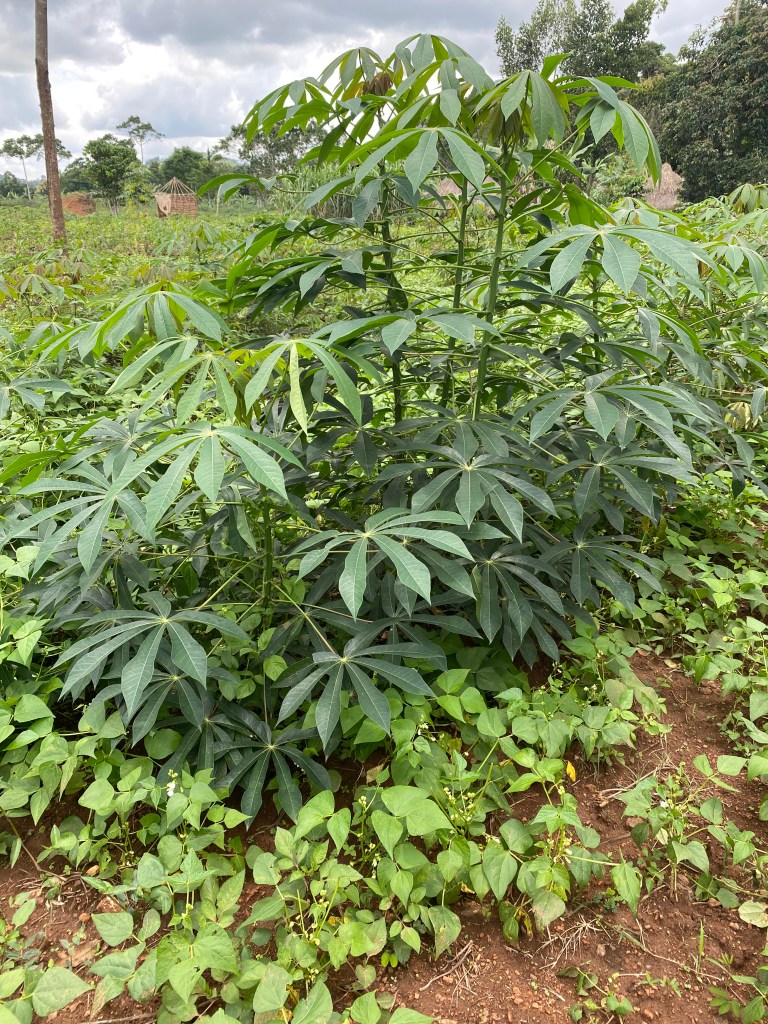
On the front page of my fifth grade history book was a drawing of a tropical person sitting on a lever attached to a woven sleeve hung from a low tree branch, from which a white liquid dripped. This was manioc production. The plant is called Yucca, Casava, or Manioc depending on where you are and to whom you are talking. It is another world wide equatorial food staple. Like the banana it is a brilliant plant – it can be grown from a 12″ piece of old stem and harvested in a few months by digging out the longish, potato-like tubers. The stem can be cut at that point and replanted. It is a never ending food stuff grown widely in remote and rural villages. Also like bananas it produces enough food stuff to sell and can be a cash crop for local folk.
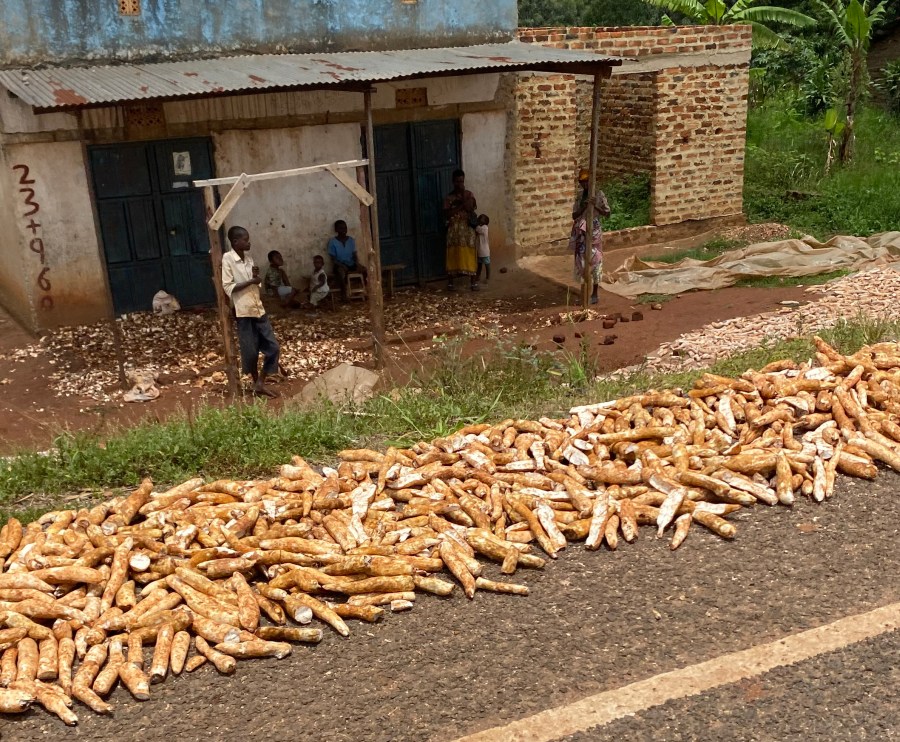
The roots or tubers of Yucca/Manioc/Cassava are now sold in your local super market. These roots shown above have been dried and are for sale along an Ugandan road. The tuber dries and can be flaked and then ground into a flour. In the USA we often see the flour as tapioca.
Growing tea plants is something done in Africa, India, and a few places in the US; like the Pacific northwest. Tea seems to like higher elevations with half-day sunlight and a good deal of rain.The plants are called “tables” and are pruned to be about waist high and spaced so you can walk between them.
The emerging leaves are twinned – a pair of fresh leaves are the target of the teas pickers. They walk between the tables picking just those two leaves. The leaves are tossed over their heads into a large woven basket that they wear on their backs. The baskets are brought to the shed and weighed and the worker’s salary is figured by weight.
The tea is then bagged and trucked to a production house where it is dried in the open and also in heated chambers.
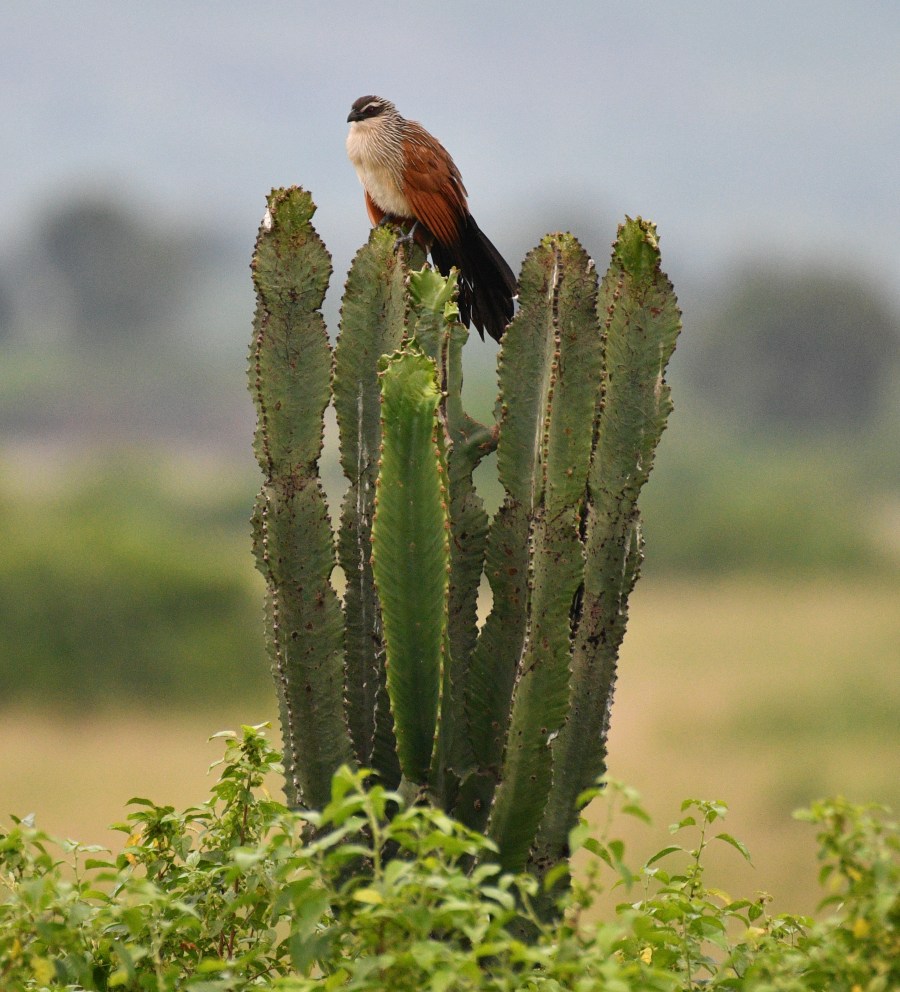
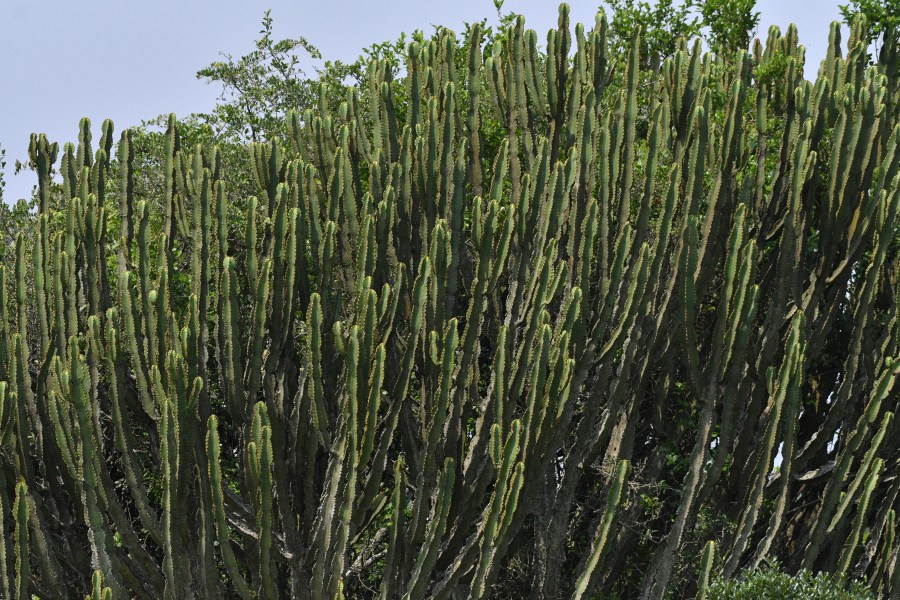
Africa has no native cactus plants: but it has branchless, green skinned, prickly, white sapped plants that sure look like cacti. These are Spurge or Euphorbia. The sap is toxic and usually causes an irritation or burn when touched. The Euphorbia above is a favored perch of this White-browed Coucal. One type of Euphorbia is used as a fence when planted tightly making a boundary line. But there is no real commercial value to this group in Uganda.
The large Euphorbia is often called Candelabra Euphorbia and can be found scattered across the Horn of African down into the other East Africa countries. If you have been to Kenya or Tanzania you may have noticed it growing in parks and reserves mostly on the eastern side of the country/coast of east Africa. As a succulent it doesn’t survive well in areas that burn regularly. In Uganda , especially in the Queen Elizabeth NP, it is quite common. This is probably because there is a high population of grazers, mostly Ugandan Kob which keep the grasses cropped low making the fires less intense.
One of the plants that you probably have heard of is the wetland grass, actually a sedge, called Papyrus. This is, or was, a famous Nile River plant in historic times in Egypt. It is still rather common in Uganda along the many waterways that feed into the Nile system. The grass can be an inch or two thick at the base and grow as much as 12′ in height. It is topped off with a wispy cluster – this inflorescence is botanically an umbellate inflorescence.
The wet areas where papyrus grows can have all sorts of wildlife nearby. There are herons and egrets as you might expect and kingfishers as well. There are Nile crocodiles in the waters near by and fisherman looking for Nile perch, tilapia, and any of many catfish. As we were on a bird trip we were looking for birds – really good birds that is. This bird shaded by the fluffy umbel of the papyrus is a Papyrus Gonolek. It is a richly colored bird that I will share in some detail later….feel the tension and anticipation building?
The population of Uganda is largely rural though its cities are highly populated and quite cosmopolitan. Once the national parks were established and the boundaries set the people stopped clearing land and allowed the parks to remain pristine, or mostly pristine. Perhaps it was Dian Fossey’s work and worldwide acclaim that started the country planning to save and manage wild areas, or perhaps it was the release from the Amin period when so much wildlife was killed. Whatever the reason it is now a national goal to protect wildlife and manage wild areas – or allow them to manage themselves. This picture shows the stark boundary between the forested National Park and the cleared land of the agricultural Ugandans. It is here that the Impenetrable Forest and the Bwindi NP begin – and it is from this area that tourist can join groups to see the Mountain Gorilla.
As I said in the first post – we went to Uganda to see birds. The group list is over 500 species of birds and individual lists vary, but are all (probably) in the 400s. In the next posts I will share images of apes and chimpanzees, birds, other primates, reptiles, mammals of all sorts, and more birds. The birds will be featured because creatures like the Papyrus Gonolek, the prehistoric Shoebill, hornbills, and sunbirds deserve their own post.

The Europeans invaded/claimed/usurped and colonized Africa in the 18th and 19th centuries. Most African nations didn’t have independence until the mid 1900s. Uganda was first managed by Great Britain in about 1860 and was a protectorate into the mid-1900s. The early years were during the period when the source of the Nile was a burning question and great white hunters wrote books. Names like David Livingstone, Henry Morton Stanley, John Speke, Mubarak Bombay, and Richard Burton all played a part in the late 1800s as the Royal Geographical Society sponsored the search for the Nile. Much of this happened in what is now Uganda and makes for exciting reading as trials and tribulations, egos and arguments, exploration and illness and eventually death followed the trail as Speke and Burton worked their way into the forests and mountains of Uganda and under each others skin.

A great book on the topic was published this year (2022) called; River of the Gods; Genius, Courage, and Betrayal in the Search for the Source of the Nile by Candice Millard.

Uganda/1 – East Africa

Most of us think of East Africa with grand images of migrating wildebeest and zebra moving from the Maasai Mara in Kenya heading down the slopes of the Tanzanian highlands and onto the great grassy plains of the Serengeti. Politically East Africa has more than one configuration – and that is changing and has changed over the past few decades. Kenya, Tanzania, and Uganda have always been part of the East African Union (EAU). Today the countries of South Sudan, Rwanda, Burundi, and The Democratic of the Republic of Congo (DRC) are often included. There are discussions underway right now to determine what the EAU should be and someday will be.

For us nature people, and nature itself, the political boundaries don’t matter much; we want to see the forest, the savannah, the birds, mammals, and butterflies. And, specifically in Uganda, we want to see the mountains and the great apes. For birdwatchers it might be the Shoebill or Papyrus Gonolek or the endemic birds of the mountains along the Albertine Rift. Over the next few posts we will look at the primates, birds, and ecosystems of Uganda; but this first post will set the scene. Where is Uganda? Who lives there? What are the major geographical features? How many birds? How many Mammals? Any reptiles? And so on……

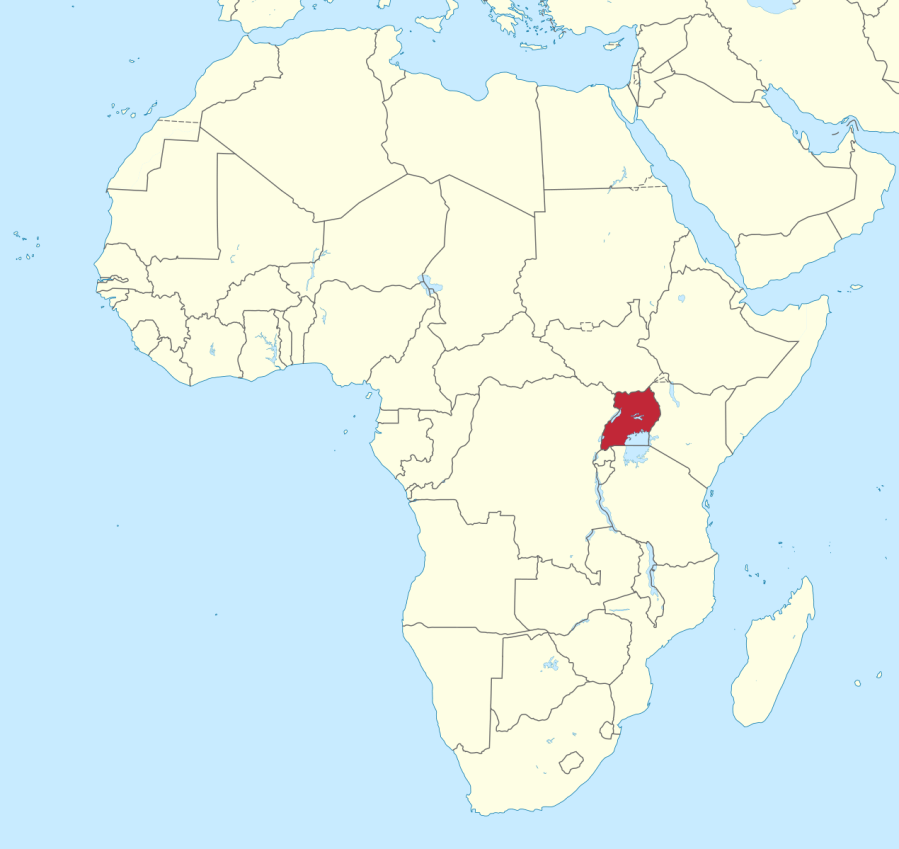
Uganda is on the equator. It should be hot – and it is at its lower elevations, but the mountains reach almost three miles upward and some have permanent snow. The great Rift Valley cracked this part of the planet and opened a long scar in the earths surface. The Red Sea, Israel, Ethiopia, Somalia, Uganda, Tanzania, Kenya, and Mozambique all bear the mark of this fracture. There are a few things to note on this map: the lake is Lake Victoria, the two little counties south of Uganda are Rwanda and Burundi, the country to the right of the lake is Kenya and the lower half of the lake is in Tanzania. The great big country in the middle is the Democratic Republic of the Congo.
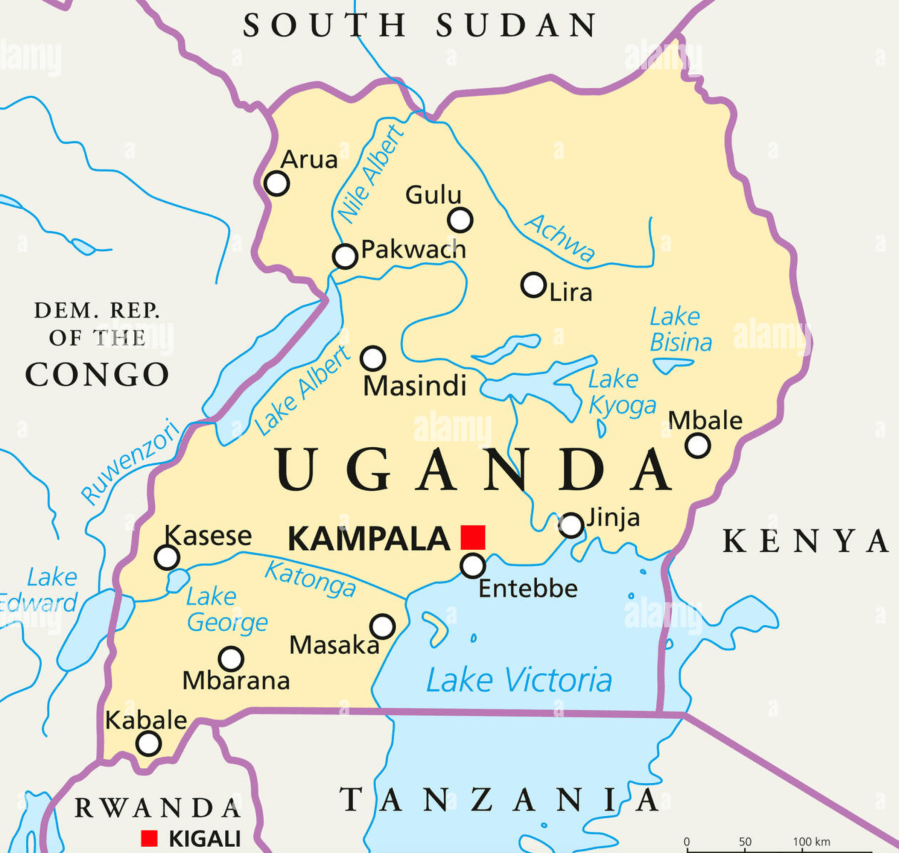
A closer look at Uganda shows the lakes that follow the rifting along the western edge of the country. The border between Uganda and the Democratic Republic of the Congo is very mountainous, as is much of both Rwanda and Burundi. When flying into Uganda most flights stop in Kigali, Rwanda and then on to Entebbe, Uganda. From the USA we fly to Amsterdam, London, Brussels, or Dubai on Delta/KLM, Qatar, Emirates or Turkish Air. You can figure 22-28 hours travel to get to Entebbe from most anywhere in the US.

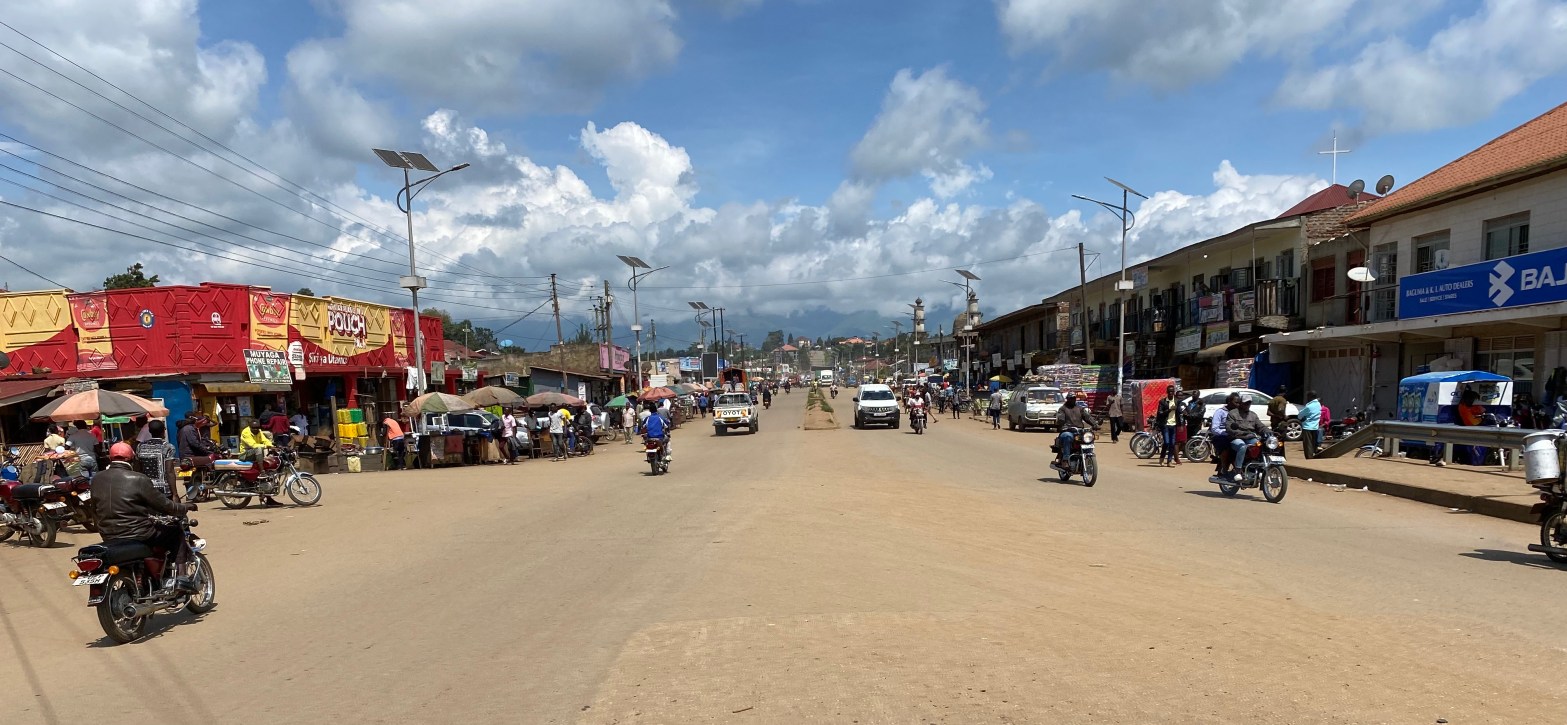
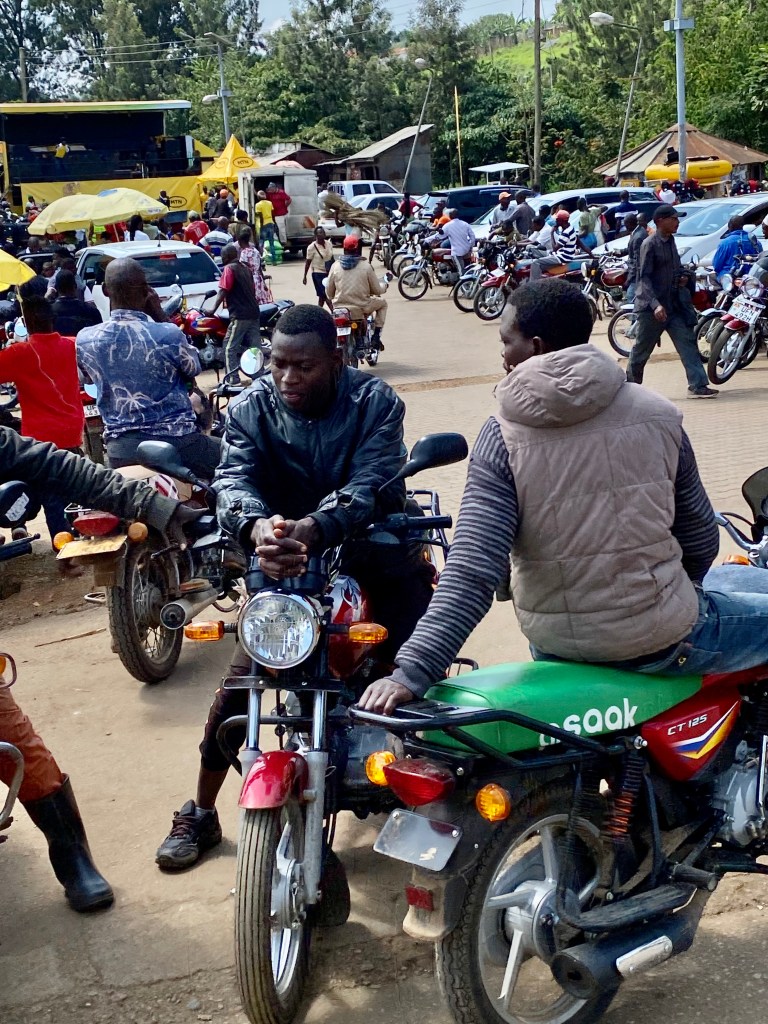
Once in Uganda your escort/guide will get you to a hotel and settled for a day of rest and recuperation. Kampala is the capital of Uganda and is a very busy town but Entebbe is where the airport is and most tourism visits begin here. As in most African countries individual and family wealth is modest. Most families have a plot of land upon which they reside and produce crops for the table. Most rural plots are sold in the half-hectare size (50m x 100m) which is about 1.23 acres in our measure. Many houses do not have running water and electricity. Very few people own automobiles. Most transport and locomotion is done by walking although there is a recent surge in the use of “border border” (boda boda) for taxis and transport. The “border borders” are small (very quiet, thankfully) motorcycles that will act as Ubers, taxis, pick-up trucks, and messenger services. They pick up and move most anything from place to place; people, pineapples, lumber, pipes, chickens, families, commuters, and we saw one with a cow strapped to a board and balanced on the motorcycle. There are swarms of them in every populated place. They are driven by young men almost exclusively and the vehicles are owned by some entrepreneur who hires them out to the drivers. It is quite a change from seeing decades of people on foot to now seeing about half the population riding on the back of a motorcycle.

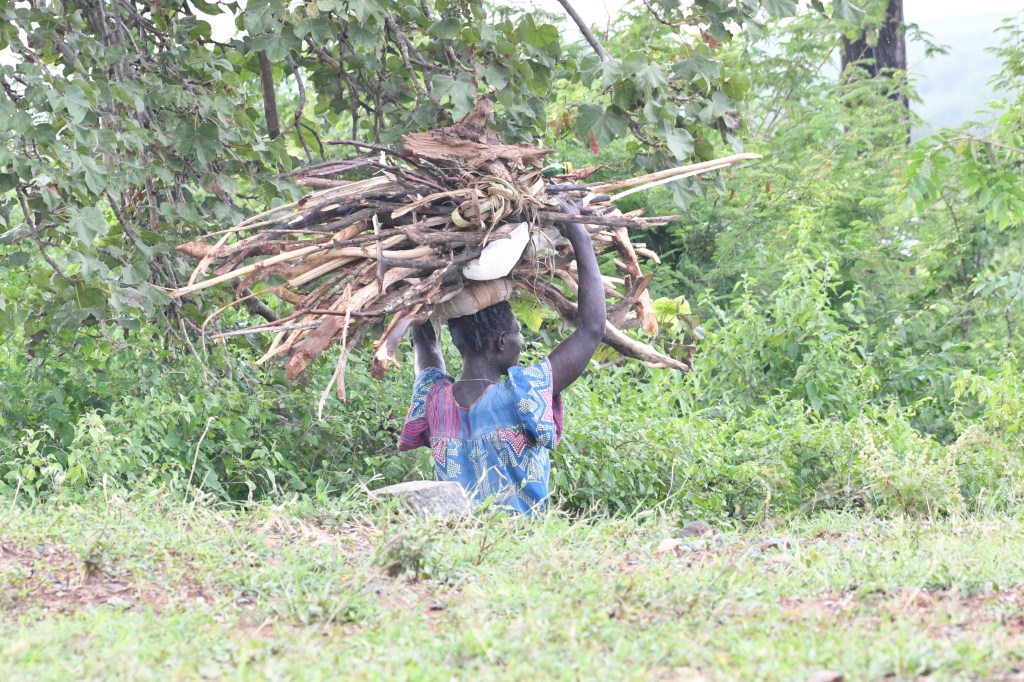
There are few ways to carry things; on a vehicle, in a cart or wagon, on a beast of burden, on your shoulder, or on your head. In much of the world it is a physical effort to get things done and that is true for much of Africa. I have been told over the years that there is almost no osteoporosis in these countries as the exercise gained from daily living keeps it at bay. Wood gathering is a woman’s task during the week and the kids help on the weekends when they are out of school.
We were birding along an old pathway called The Royal Mile when these ladies passed by on the way home with a day or two’s supply of fuel. Forest wood is burned as gathered and also as charcoal that is produced and sold as a cash crop by many residents.
The “border border” (often written and pronounced as boda boda) mode of travel has become ubiquitous. The motorcycles are from either China or India and there are hundreds and hundreds of them. Both plantain and bananas are grown widely in Uganda. It seems to me that all the bananas and all the citrus and all the charcoal vendors are clustered together by type. Lots of bananas in one place and so on. I think I’d move further on down the road. BUT, I believe they gather in clusters because they share a part of the economy. Africans are friendly and hang out with friends at every chance. The citrus people gather and talk about family, weather, and citrus and the same with the plantain people and so on. These folks probably speak Lugandan to each other. But they certainly speak English and Swahili as well. In addition they will have their home/tribal language and perhaps a couple abutting tribal languages as well. There are about 50 active languages in Uganda. Thus they all speak three base languages and probably can use two to four other languages as well. It is a rare African who cannot speak at lease three languages. These East African countries have long had ties to coastal economies as well as inland economies. Thus they are cosmopolitan in the same way Europeans are. Swahili is a coastal tribal group but the language is a dynamic blend of Arabic, Kiswahili, English, and other useful words from other languages. Kiswahili is spoken throughout Kenya and Tanzania and less so in Uganda.
If you were to see 100 internal combustion vehicles on the Ugandan roads there would be about 50 little motorcycles (boda boda), 10 taxi vans, 10 trucks, 10 tourism vehicles, 10 official/government vehicles, 5 buses, and 5 privately owned vehicles. The luxury of a private vehicle is uncommon. Gas is sold by the liter (about 3.8 liters to the US gallon) and the cost was just over $6 a gallon in most parts of the country. Much of Africa has been hurt by both supply chain issues and the impacts of the Ukrainian situation. Petroleum and grains are harder and harder to come by south of the Sahara.
I mentioned taxis – this is a taxi; full of people and topped with lots and lots of stuff. There are point-to-point taxis as well as flag-me-down taxis. In the past years I have rarely ridden in one of these but I traveled for hours and hours in one in western Africa and it was a bit crowded and really rather pleasant – aside from the language problem that I had. You can see from the writing on the vehicle that the Chinese and Muslim cultures are part of African life.
I guess I would call this a taxi stand. Lots of young men waiting to get a call to pick up a fare. As I mentioned there are scenes like this in every populated place. The motorcycles are often Bajaj. Bajaj is one of Indias’s leading makers of motorcycles and three-wheelers.
This is my favorite. I don’t know if this is a child, two parents, a suitcase, a bag of clothing, and a couple chickens or if this is a mother and a boda boda driver. But it is cool. This is how travel takes place for the majority of the population in rural Uganda.
Everywhere we went we were scrutinized. Not many white people wander these hills and fewer still look at birds and then move on. We were a wonderment for the people, especially the kids. You might note that the three year old on the right has his machete ready to help with weed control or wood gathering or crop harvesting. Not a scene we would see in the US.
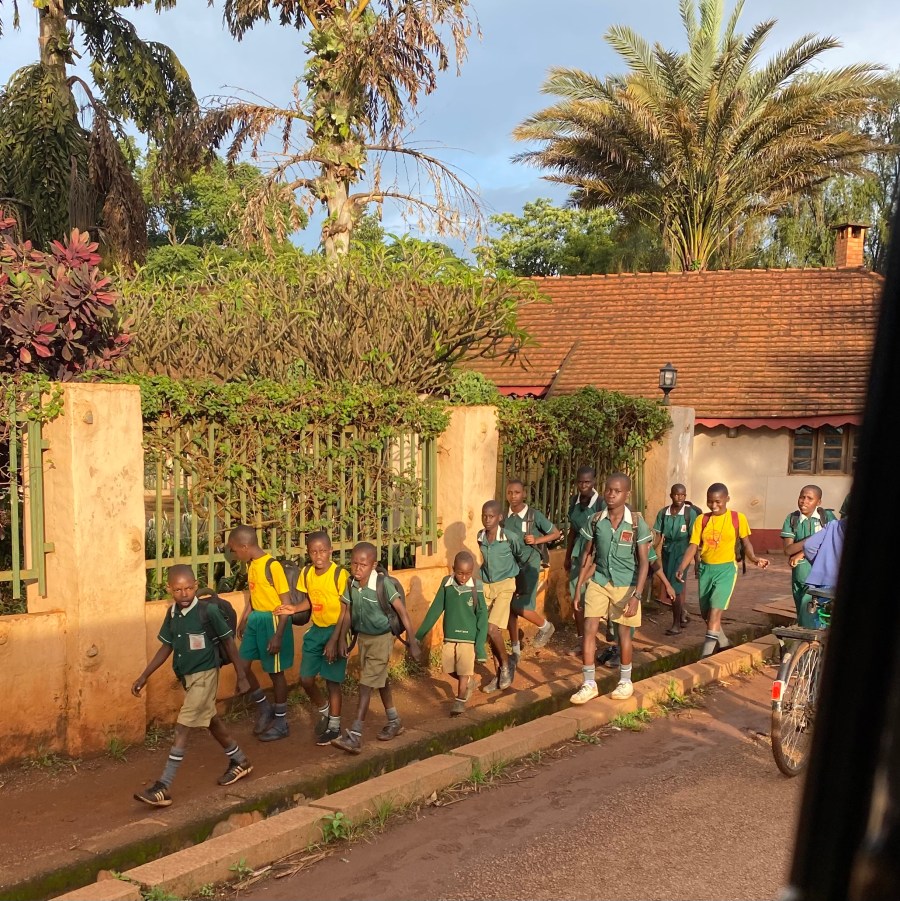
Children love school. They can learn and socialize. Whenever I have stopped near a school on the weekend there are always children that appear out of nowhere to look at us and try out their English. It is always heart warming and a treasured safari moment.
School children have uniforms. As you can see here the upscale city schools have more upscale and city outfits. As I mention these are friendly people and seeing young teens walking with little children is common and not a real chore for these kids.
Yes, I know we went to Uganda for birds and mammals – and they will be along shortly. I do want to do a post on food and crops and such but will get into the wildlife shortly. The group saw over 500 species of birds and we had 12 or 13 species of primates…pretty impressive

Our New Neighbor

I have not had much chance to do a post – but this little note might start me up again.

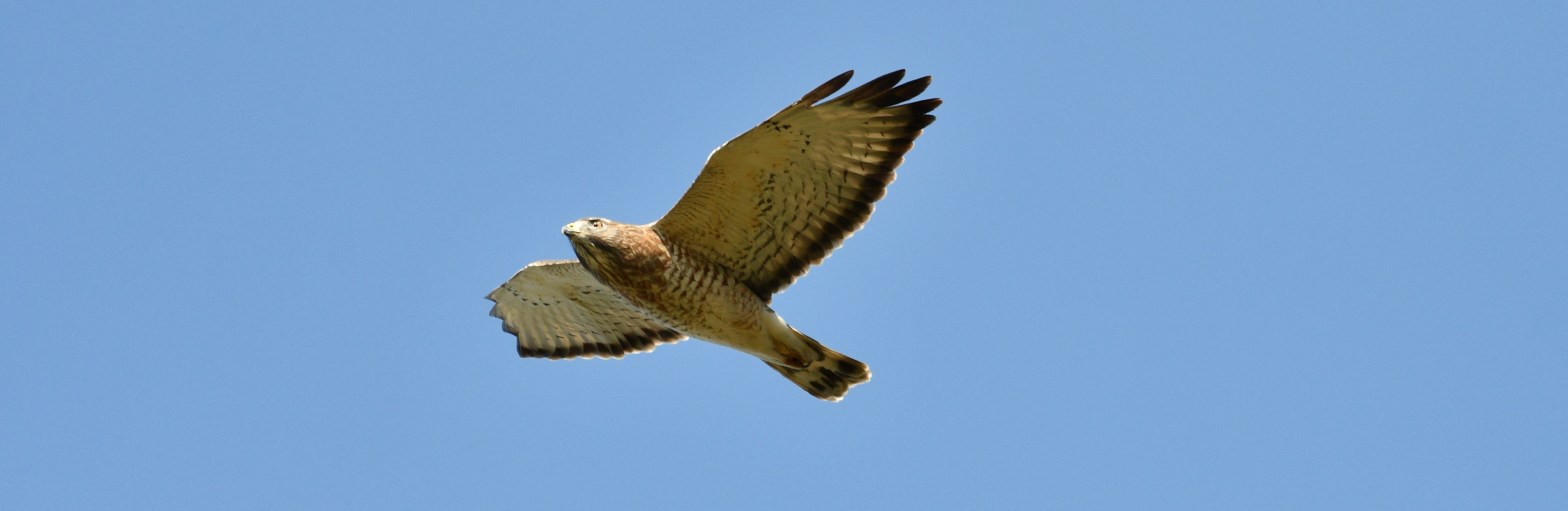
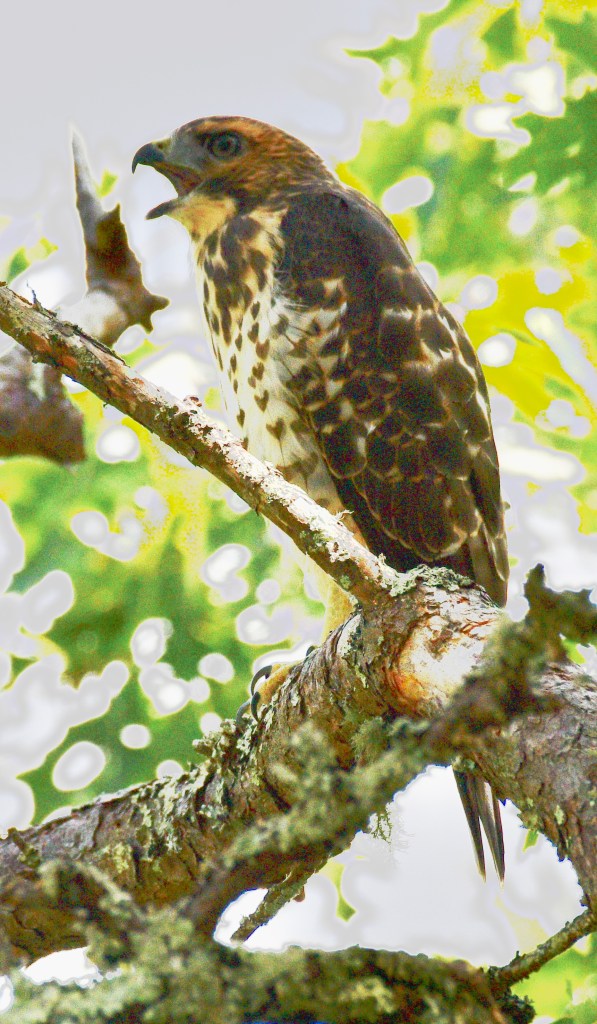
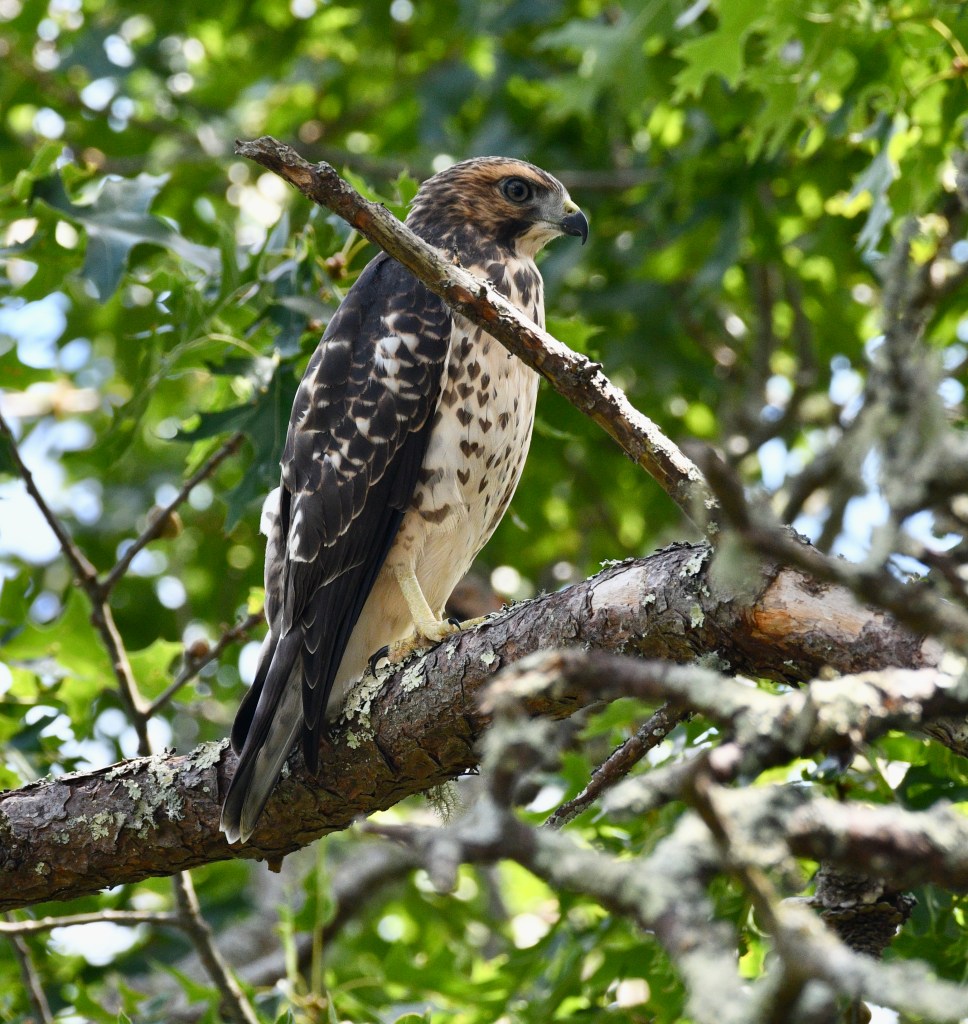
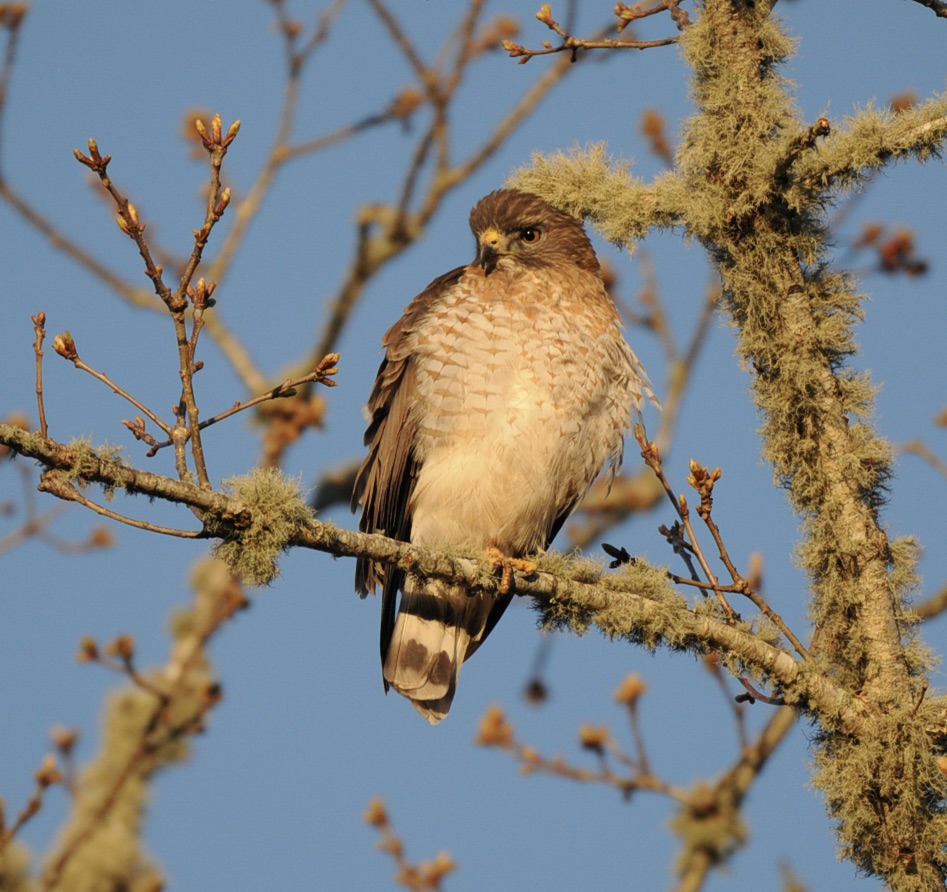
We have had a pair of Broad-winged Hawks (Buteo platypterus) nesting in the yard, or neighborhood, for a few years. Mostly they are quiet neighbors and seen infrequently once the eggs are laid. However this year there are two youngsters and the adult(s) have been strafing the area for well over a month as the youngsters slowly develop survival skills. The parent birds fly down from a tree perch and sweep over your head ruffling your hair. They have been doing this much longer that they should. Usually the young are out of the nest and on branches for a week or so and the adults patrol the area. But this has gone on for a rather long time. Perhaps the young are slow learners….

The Broad-wing is a small forest hawk that migrates well south of the US in the off season. In April’s past I have seen them in the tens of thousands migrating north back into the US to breed, crossing down near the Rio Grande River along the Texas/Mexico border. Once back in the woodlands where they will nest they are usually inconspicuous and quiet. Even when they are calling and making noise they are generally squeaky and high pitched; a sound often overlooked in the woods.

This is a blown up image of one of the youngsters sitting and whining for parental help.
This is the same bird waiting and watching near the bird feeders. This hawk will take all sorts of smallish animals; birds, mammals, reptiles, and large insects as well.
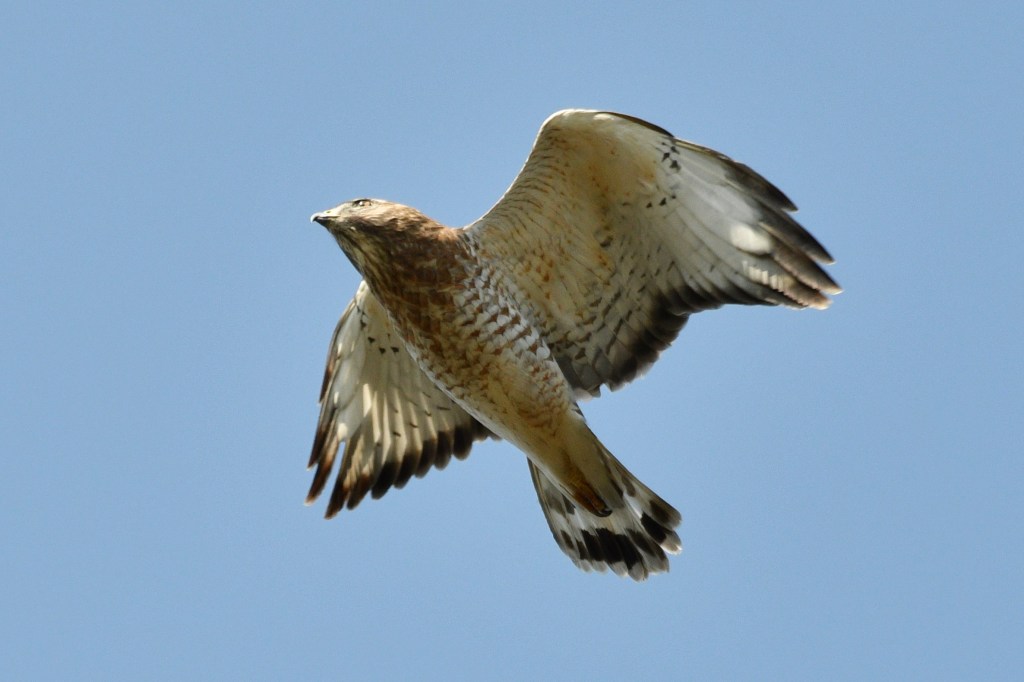
This is one of the adults looking over the area for a nesting site. The banded tail of an adult shows here and then again in the less crisp image below. In many species the wing tips reach to or past the end of the tail – not so with the Broad-wing.
In migration the breeding birds return earlier than the one year old birds which are less likely to breed. As they group up waiting for good winds, prior to crossing a lake they will form large kettles. The adults pass by and then a couple weeks later the yearling birds arrive. The one year old birds are often molting wing feathers (primaries) and central tail feathers as well. This gives these first year birds obvious translucent “windows” in the wings and a “swallow-tailed” tail. This is seen in late May and June as the younger birds move northward. The bird shown above is termed a “light adult” as there are darker forms – though dark birds are much less common. Light birds have dark borders (edges) to the wings and a broad white band in the tail..

A Midwest Trip

Please treat all images as copyrighted and ask permission to use in any manner. Thank you, DEClapp

There are a couple quick trips to the central USA that I am going to pop in here. Both trips were to Kansas with one heading to northern Nebraska as well. The first was an autumn trip to see to great migration stops; Quivira NWR and Cheyenne Bottoms. Quivira is a National Wildlife Refuge and Cheyenne Bottoms is owned and managed by Kansas Department of Wildlife and Parks. Each of these is about 20,000 acres in size and are two of the great wetlands in the central prairies that host thousands of migrating ducks, geese, swans, teal, and all sorts of waders (shorebirds) as well as a huge portion of the Franklin’s Gull population.

The midwest was settled to be farmed and grazed. Natures grazers were butchered by hunters and “recreational shooters” as the west was settled and the numbers of Black-tailed Prairie Dogs, Mule Deer, American Bison, and other herbivores was drastically reduced as was the population of First Nations people who had lived here for generations. It was agriculture and oil that drove development in this part of the country and attracted settlement during the late 1700’s and throughout the 1800s as well. Water was valuable and both mineral and water rights were often bought and sold separately from the land itself.

From the Permian Basin in Texas north well into the Dakotas the country has a great deal of oil and gas beneath the surface. “Texas Tea” has created great wealth in the USA as it has elsewhere throughout the world. Over much of the midwest the pumps are small and on family farms. The oil is collected in small tanks and sold by the barrel lot to middle men. This oil works its way up the chain eventually to a refinery. These small pumps are working again in 2022 as oil has increased in value again and the opportunity for wealth has risen.
This bit of grassland is a portion of the Dayton Aviation National Historical Park (Ohio); it is the field where Wilbur and Orville Wright developed the airplane after their first very short, but memorable, flight in Kitty Hawk, North Carolina. They were flying a glider sort of plane in NC and it was back in Ohio that they spent the next year and a half developing a new look and a better machine. We stopped here for the birding but the aviation history was very interesting.
One of the smaller mammals that was abundant in the prairies land was the Black-tailed Prairie Dog. They burrow in the ground and live in colonies. Farmers and ranchers tried to eradicative the Prairie Dogs to facilitate farming and keep the land unbroken for the safe passage of cattle and horses. They are encouraged on most prairie reserves.
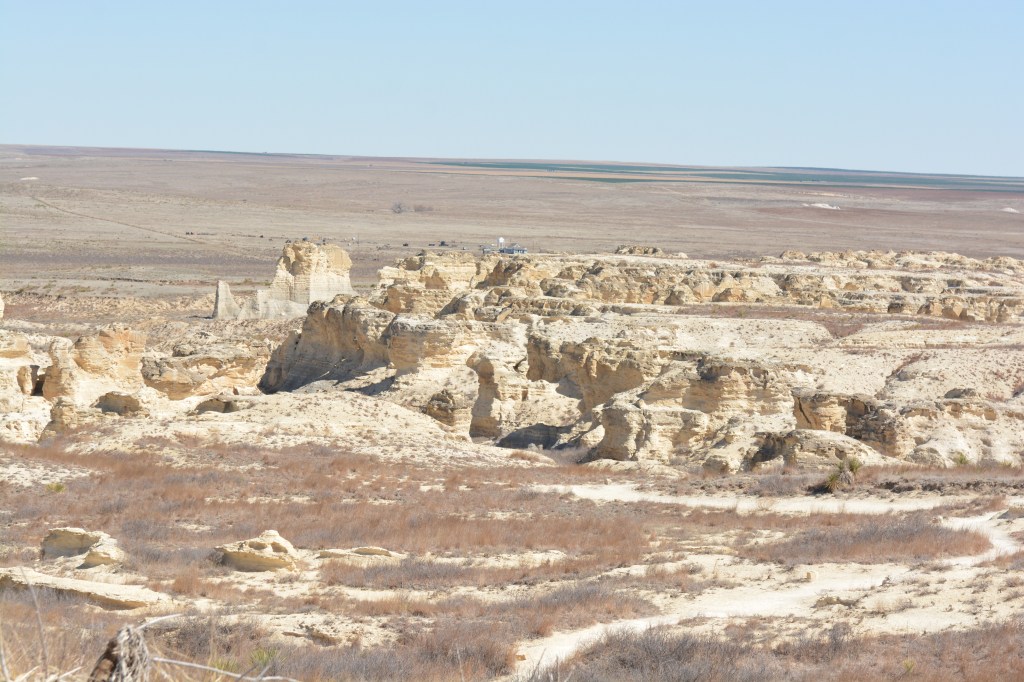
It should be remembered that the whole of central USA, 70 million years ago, was the bottom of an ocean. The Rockies and the Appalachians edged a sea that ran down from Canada to the Caribbean. Thus the ground is some sort of lime based stuff; chalk or limestone predominating. This also has allowed sea grown mollusks to be found easily in the raised land and low mountains. The Kansas Badlands are eroding in a manner that exposes both vistas and limestone or chalk.
Through most of the midwest you expect to find fields of corn, lots and lots of corn. But things are changing a bit as Soy Bean and Sorghum have become cash crops of significance. As a younger man I had friends with a broom corn farm in Dalhart Texas. It was a sunup to sunset work day and totally dependent on decent weather and a lack of hail and plenty of rain. The rain was not at all dependable. however. Nowadays milo or sorghum is grown for biofuel, vegetable oil, and animal food. It can be popped and eaten, mixed with wheat to make noodles and breads. Its is high in antioxidants and in areas where it is consumed regularly the cancer rates tend to be low. It is a heavy headed grass with many species within the Genus Sorghum.
The great wetlands of the prairie states are quite remarkable as magnets for migratory birds. Many plovers and sandpiper migrate north through central USA and teal, ducks, pelicans, heron and egrets, and geese also use the grasslands for grazing and the wetlands for safety. For those of us who live along the Pacific or Atlantic coast it seems the most likely pelican is the Brown Pelican; but once in the prairie states the American White Pelican becomes the resident nesting species.
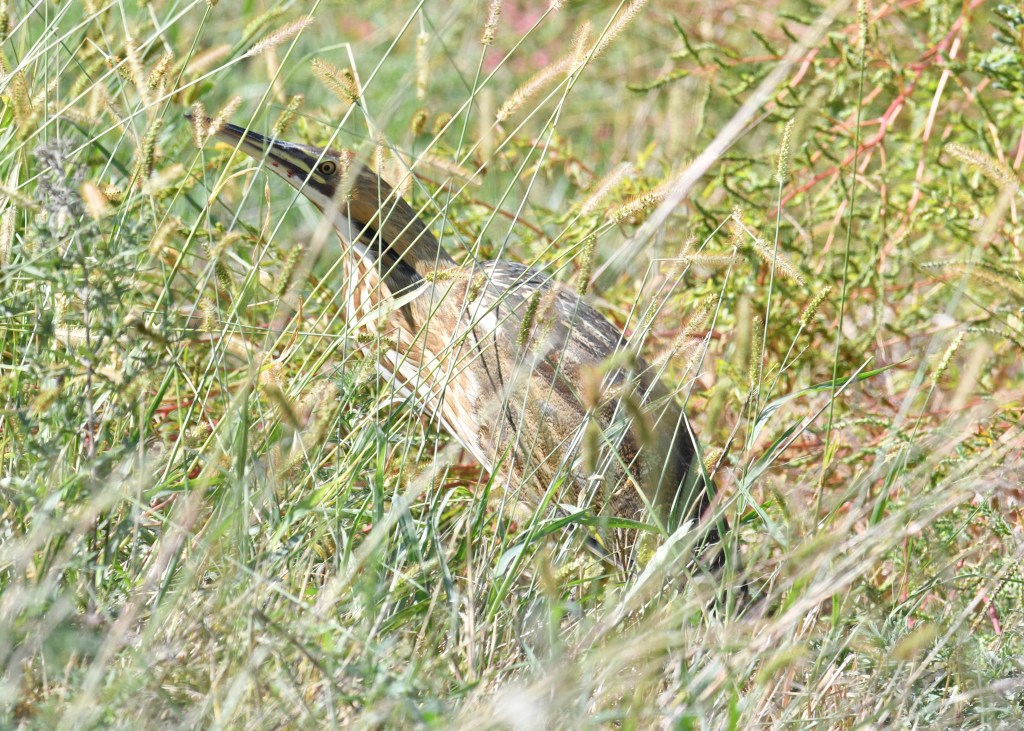
The best part of these central grasslands and wetlands may be overlap between land birds and wetland species.The blackbirds and sparrows are often new to an easterner and the wrens and ducks are also different. Always a pleasant surprise is the number of and the openness of the American Bittern. This is not a flashy heron but one that is hard to see in most parts of the east. In. the midwest it was rather common and, though still in the grasses, rather easy to see.
A real surprise for us was the number of Franklin’s Gulls that we encountered in the fall out in Kansas. There were tens of thousands on several lakes. We would occasionally pick out a Bonaparte’s Gull and a Herring Gull or two but Franklin’s were present in huge numbers. They migrate south, often below the equator, along the west coast of Mexico and South America for the winter. Here in the Northeast they are a bird seen once or twice a fall or winter and only then if you are in the right place at the right time – not a dependable species.
Whether it is private land or Bureau of Land Management or some other ownership much of the protected land is leased out to ranchers. Here is an appropriate shot of a couple hundred Brown-headed Cowbirds consorting with a few Angus in a wet spot within Cheyenne Bottoms.
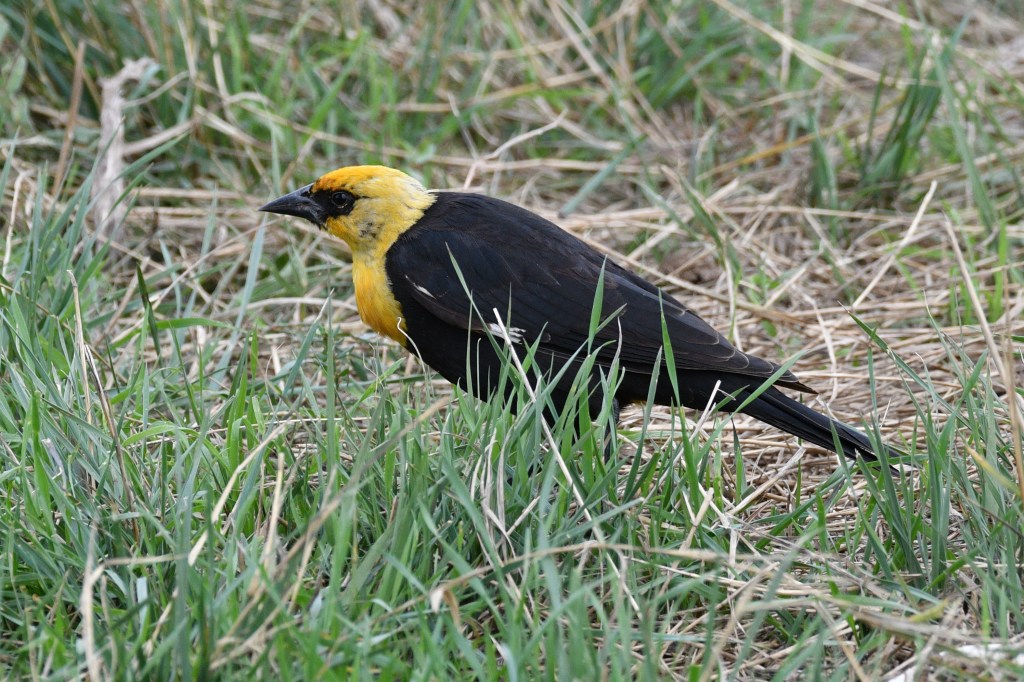
As I mentioned there are blackbirds that are found out here that are much less common to the east. The Brown-headed Cowbirds are now widespread though they also originated in the prairies when the were likely the Brown-headed Buffalo Bird. But the Brewer’s and Yellow-head Blackbirds are still pretty much birds of the central USA. They favor wet and coarse areas where they nest in loose colonies and often mingle with other blackbirds.
Here in New England both Turkey and Black Vultures have been increasing in numbers for a decade or more. The Black Vulture is a bird of the southeast but the Turkey Vulture (pictured) is widespread and in central and western Kansas the only vulture to be found. They are an import part of the ecosystem as they help recycle organic material and prevent pandemic circumstances. They turn dead things into molecules that can be used by the soil, fungi, plants, and animals.
The central plains has its own collection of sparrows, finches, and buntings. Not a very flashy group you might think until you take a close look. They sport colors like ochre, pale yellow, tawny brown, and more bays, sorrels, chestnuts, palominos, and roans than you’ll see at a busy race track. They may lack the blues and reds of many tropical birds but they are pretty spiffy overall. This Dickcissel looks a bit like a House Sparrow in shape but has been placed with Cardinals, Buntings, Sparrows and others as it true origins and relationships are looked for. They winter for the most part in the llanos of Venezuela and throughout northern South America in flocks that can number in the millions.
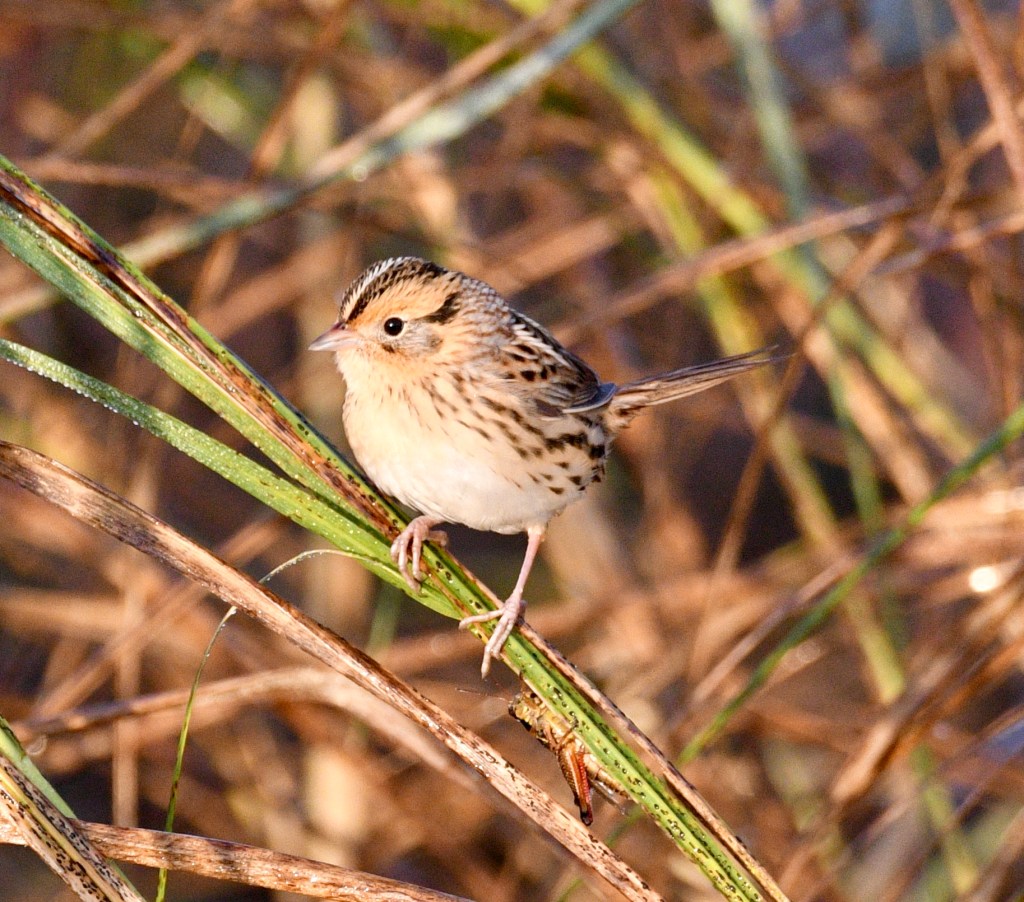
The LeConte’s Sparrow is widespread through the central plains states as a breeding bird but a very uncommon vagrant in the northeast. They are shy and usually in thick sedge vegetation. This bird was photographed as it was singing at day break in a wet weedy field.
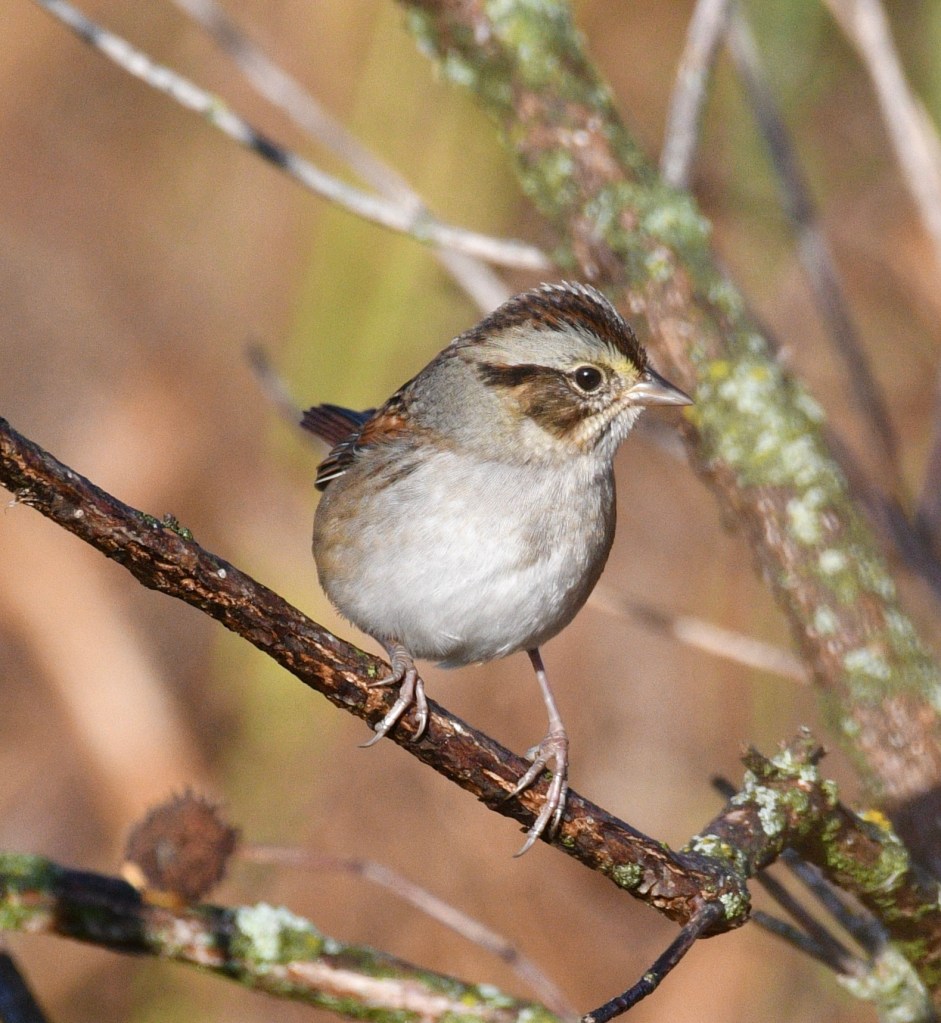
Many of our sparrows are dismissed as common or just brown birds or as too difficult to see well. But even the common sparrows like the Song Sparrow or this Swamp Sparrow are worth looking for and looking at. The pattern of the feathers is often rich in detail and surprisingly unique. No two people are exactly the same and that goes for birds as well. The amount of streaking or the richness of the brown on the flanks or the gray on the nape and head can all vary; but you can still see the Swamp Sparrow within. Every state, country, habitat, and island has birds that may not be easy to identify. But, like the sparrows, they are all worth a good look.

Day to Day

Please treat the images as copyrighted and ask permission to use. Thank you. DEClapp

Winter is ending here; it doesn’t seem too happy about it, but it is ending. We have had a mix of cold and warm, wet and dry, rain and snow, and wind. Sunset is an hour later than a few weeks ago and the sun is much higher in the sky. It isn’t yet a really warm sun but it’s getting there. However, with the virus around and precautions necessary I haven’t been too far from home. And home in the winter means mostly birds. The Right Whales are appearing in the bay and we had a fisher wander through the yard last week. So nature is on the move. But as I say, it is mostly birds for the camera. Oh, part of that is the sun and it’s tendency to make you think that spring is actually here. Some days are simply gorgeous when viewed from the inside looking out. But those days turn on you when you go outside in spring time clothing.

What this all implies is that I will do more posts and continue with current local stuff.

There has been an unusual visitor to the northeast recently; a Steller’s Sea Eagle. The is a bird of Kamchatka and Japan and is rarely seen in the US, even very rare in Alaska. It seems that one has wandered across the Bering Sea through Canada and down into Texas and then north again eventually reaching the Canadian Maritimes and then dropping south into Massachusetts where it hung out on the Taunton River for a week or so. It then headed north and has been around Booth Bay and Bath Maine for the last month or so. This is a birder’s big deal. Sadly at this point I/we have not seen it and have little to report except that coastal Maine is lovely in the winter. There are a few Golden Eagles and lots of Bald Eagles up there and we are told there is a Steller’s Sea Eagle as well. Maybe, some day soon, this blog will have images and personal proof. Until then, we hope it stays and will post a couple more reports from Cape Cod and coastal Massachusetts.

We have had changes in landscape and climate during the past 200 years. There is little doubt of that. Many plants and animals have been introduced for hunting, fishing, and agricultural commerce. At the other end of that are the plants and animals that have been eliminated or reduced in numbers due to habitat changes. We now have earth worms and honey bees. We don’t have Passenger Pigeons or Carolina Parakeets. We have an array of European weeds that have escaped agriculture and now blanket our roadsides and woodlands. We have lost elms and chestnuts and gained alders and various fruit cultivars.

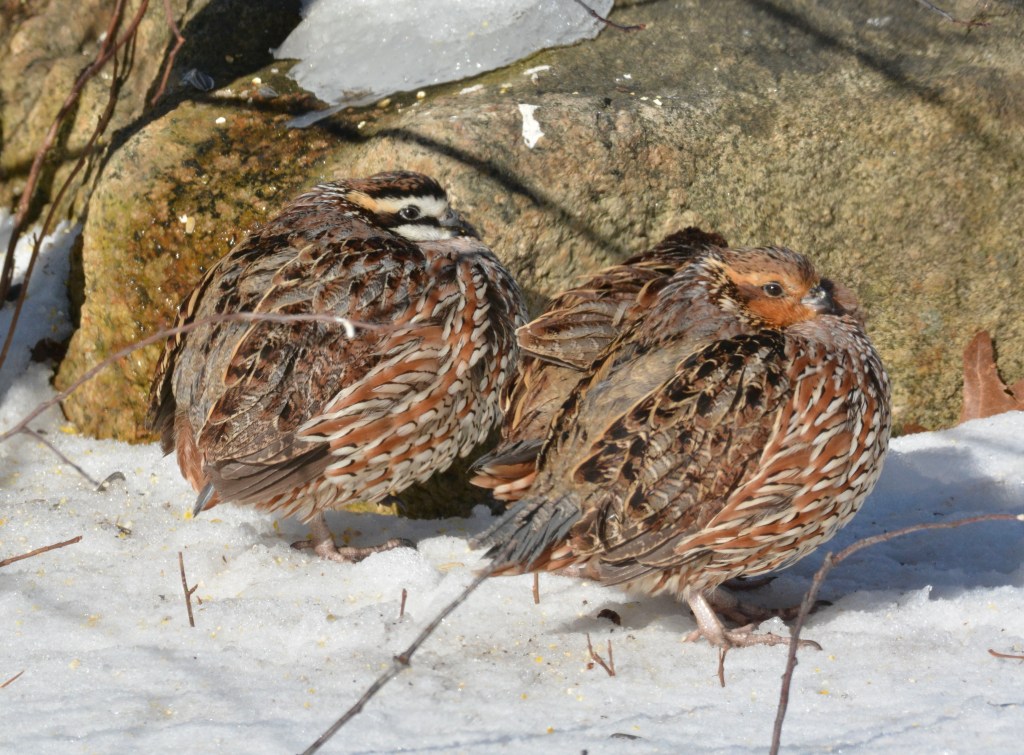
One of the bird groups that has had a great population drop is the game bird populations. For a while Turkeys were rare and non-existent. Shore birds were hunted and ducks taken year round. Pheasants and quail were repopulated mostly by hunting clubs and harvested by hunting club members. The same for ducks and geese. The other day Fran and I were looking at a flurry of birds feeding on seed when three Northern Bobwhite Quail emerged from the shrubbery.

These birds are now uncommon. They are birds that have bred around here over the past fifty years or so and were often the survivors of hunting stocks released each fall. As suburbia spread and hunting declined (fewer hunters and less habitat) the bird population could be replenished only by breeding. Winters and predators are hard on species like this.
The males have a rather bold pattern on the head. But, as they are pretty much ground birds it is important to be as camouflaged as possible. Thus the face is bold but the rest of the bird looks like a pile of dried leaves.
Massachusetts is about the northern limit for this bird now, though it is found to the west through Ohio, South Dakota and Nebraska. They are more common to the south where they are found to the tips of Florida and Texas and everywhere in between.
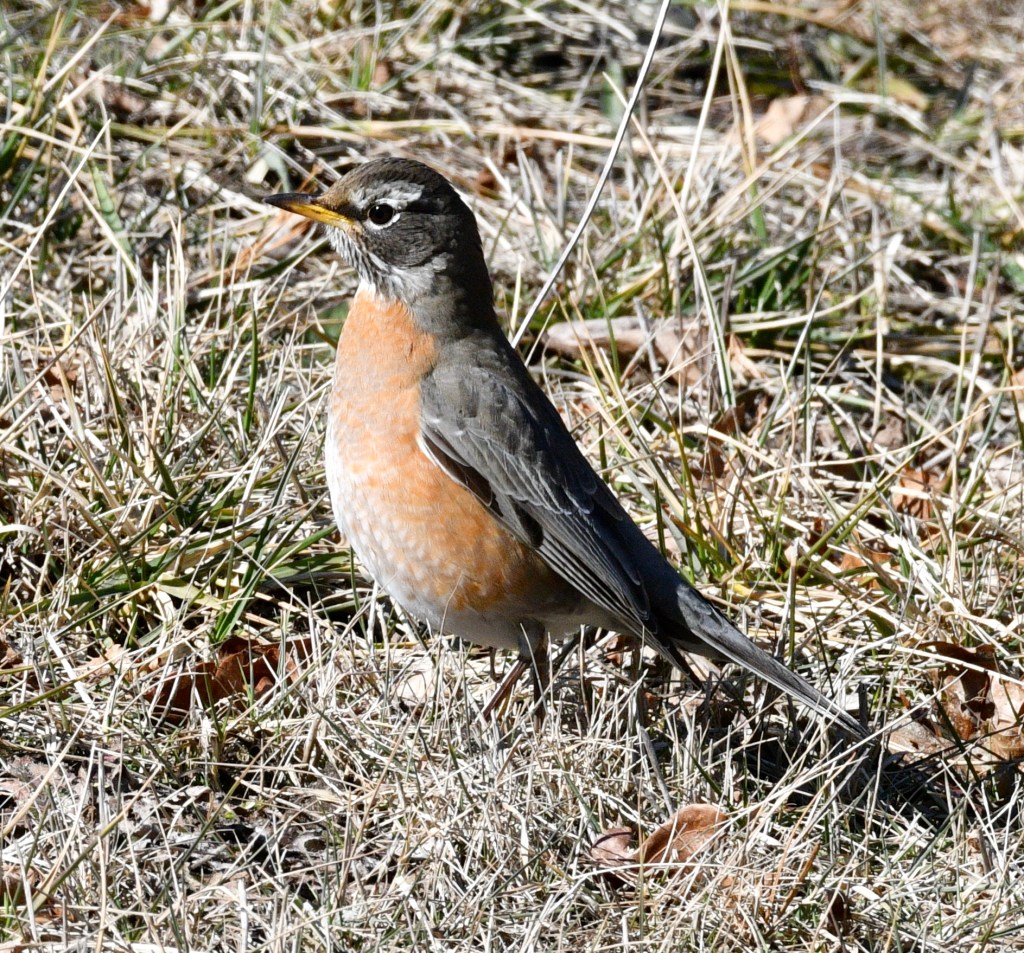
One of the birds that seems to have boomed in the past few decades is the American Robin. Here on Cape Cod we have a few large winter roosts of 10-15,000 birds and they appear in large numbers all over the place the first week of March. I remember them as a sign of spring but now they winter in our hedges and hollies. The birds from the north are quite dark
The southern breeders are paler. and they are the ones that return here after migrating south for the winter. The Canadian robins are hardier and are what we see most of the winter. American Robins always show a good bit of white, usually under the tail.
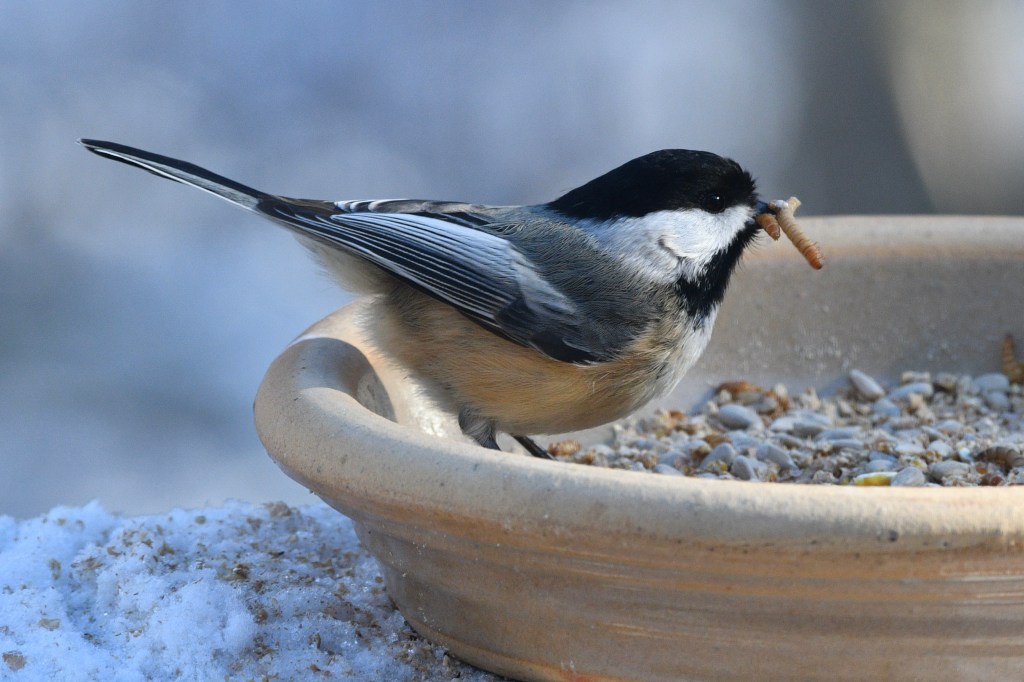
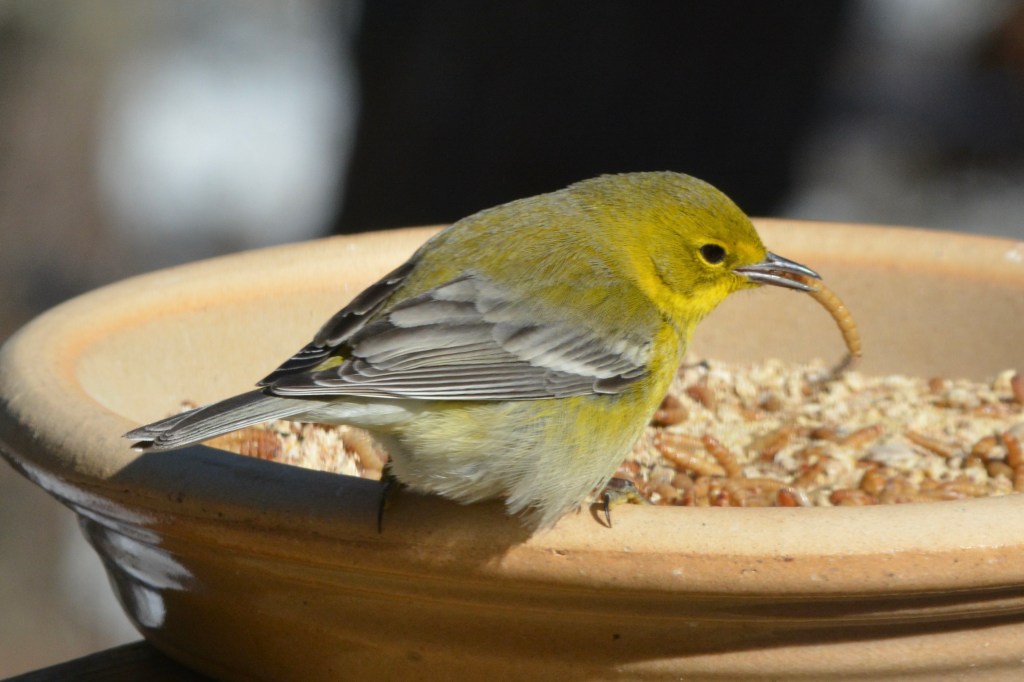
We put out meal worms. They are the larval form of a Darkling Beetle and grow very slowly in cold weather. Ours are kept in a plastic storage box in the garage. I buy them 30,000 at a time and they are a big hit in the cold weather. When it warms up the birds seem to favor natural food and the meal worms will be ignored. As you see here Eastern Bluebirds like them as do Pine Warblers, Black-capped Chickadees, Tufted Titmouses, both Red and White-breasted Nuthatches, Carolina Wrens and occasionally a Red-bellied Woodpecker and male Northern Cardinal.
The Black-capped Chickadee is a regular visitor and a hungry opportunist at the worm dish.
Pine Warblers are not that common as you walk through the woods, but we get 4-5-6-7 at the worms. When we come downstairs in the morning they often fly at the slider door or kitchen window to remind us to set out the dish filled with worms.
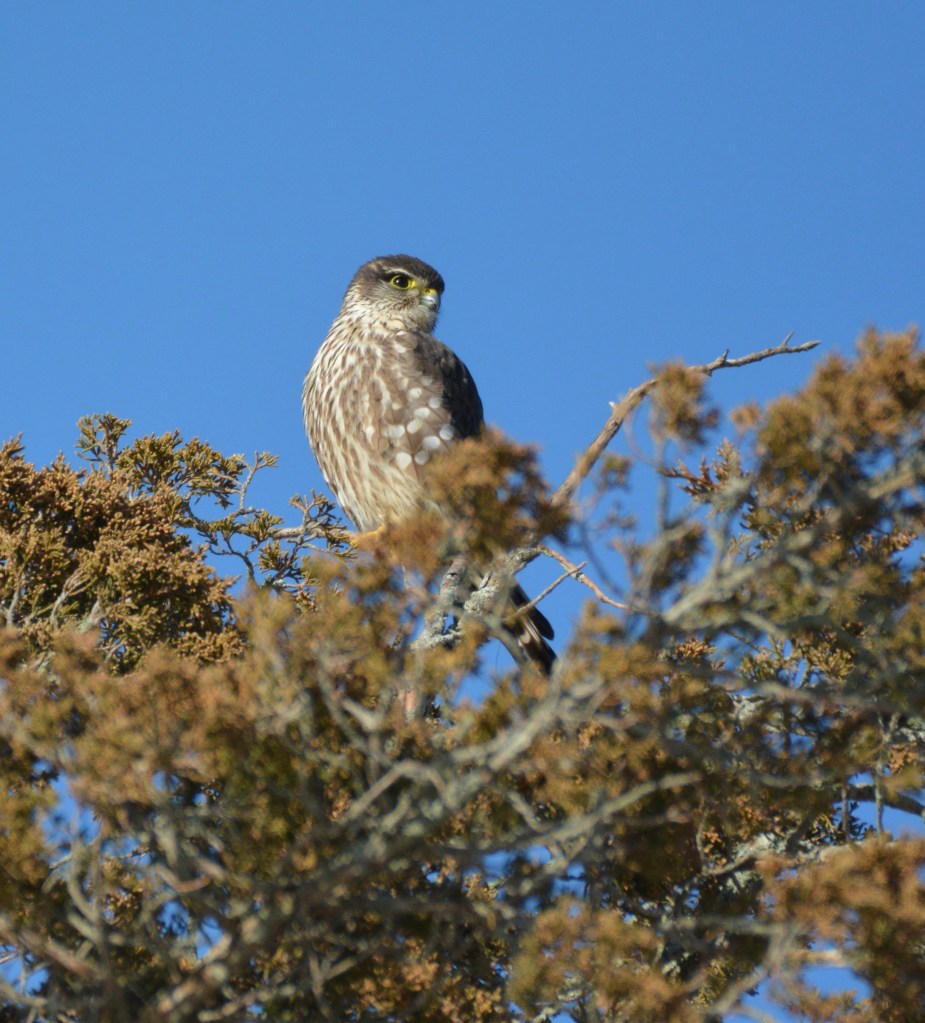
Birds of prey need prey. Many eat birds. Some eat insects and others eat mostly mammals. In the winter the mammal eaters and the insect eaters struggle a bit. If you can adapt and eat both birds and mammals things work out better for you. The bird shown here will take birds and insects and is not really uncommon here in the winter. As a matter off fact there have been a couple breeding reports for this bird around here as well. In most cases it is a forest bird. These two images are of a small falcon called Merlin. It is a very self-confident species and will chase and bully just about any other bird.
Merlin are often seen over a beach where Dunlin or Sanderling might be taken or zipping over a small field or airport where Horned Larks and European Starlings are found.