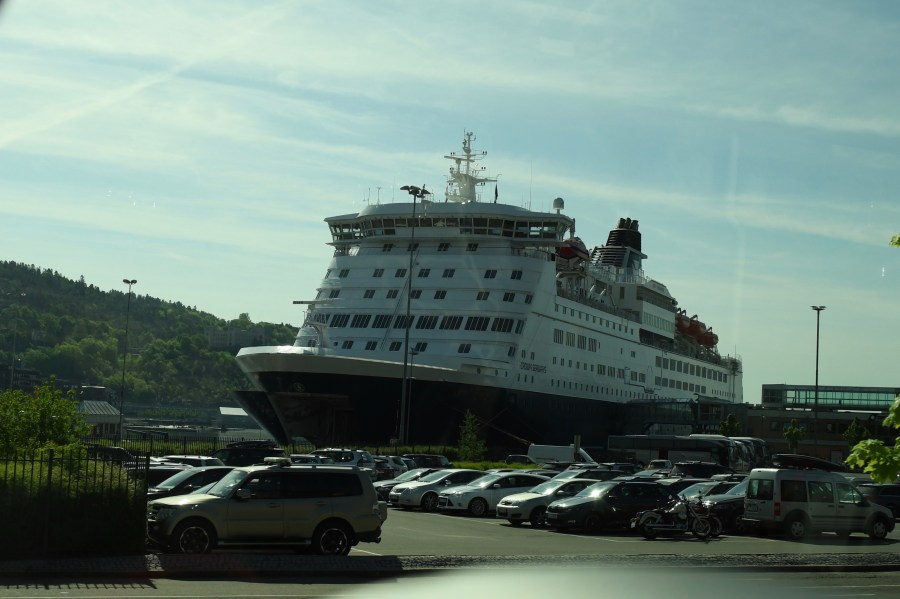
The ride across the strait from Denmark into the Oslo Fjord was on a ferry-boat – sort a cruise ship ferry boat. Great food in several restaurants, good rooms, clean and quiet over all with a huge shop (but everyone has a huge shop). It really seemed more like a cruise ship. Anyway, we ate and slept and spent the early morning up on the top deck to watch our ship sail up the 100 kilometer long (62+ miles) Oslo Fjord. Most of Norway’s fjords are along the western edge and drain into, and are flooded by, the North Atlantic. The Oslo Fjord aims due south toward Europe. It is a wide waterway and the scenery was of islands, ocean, eider duck, and woodlands. It was very much like the other great fjordlands that you can access; New Zealand and Southeast Alaska come to mind. But the fjords on the west side of Norway are even more spectacular and we will look at those down the road.
The ferry did carry cars and trucks but there was no exhaust, oil, gas smells, or humming engines as we enjoyed a rather luxurious crossing from Denmark to Norway.
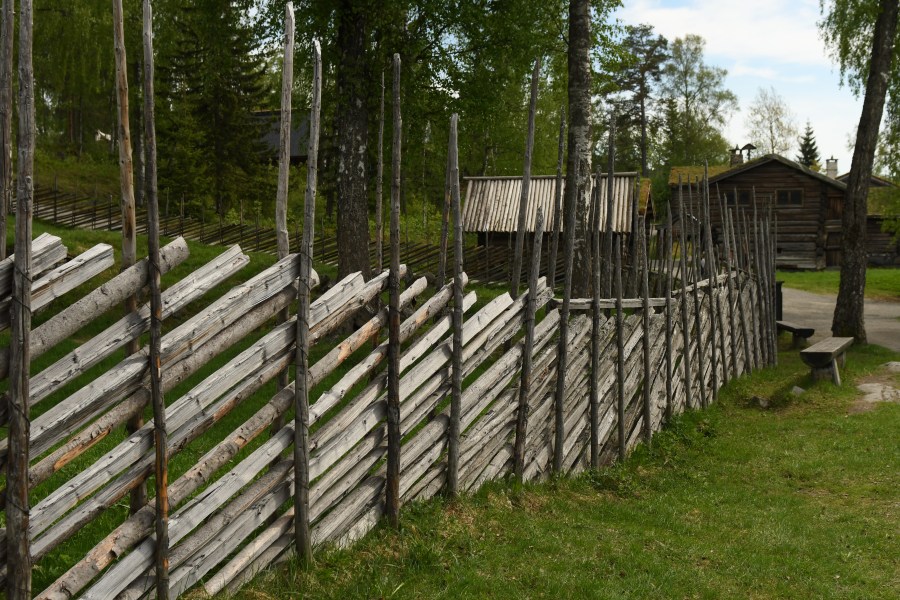
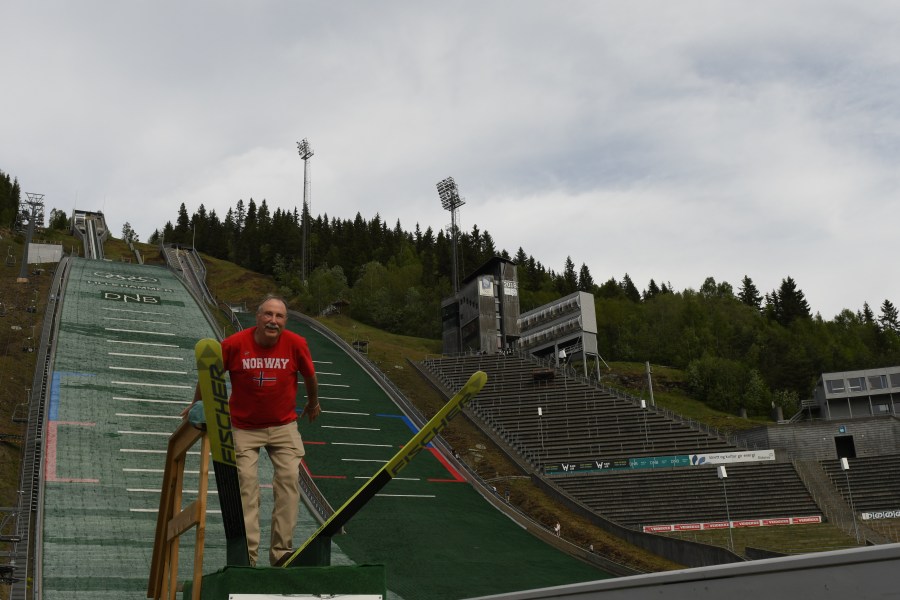
The Nobel prizes are given in six categories: physics, chemistry, physiology or medicine, literature, economic sciences, and peace. The Noble Peace Center is one of the many buildings involved with the Nobel prizes. The construction cranes all around the building speak to the vibrant city and the many new structures being built. The city is a mix of old, the inner city, and new, the outer perimeter.Fences and buildings generally use materials that are readily available; rock and wood usually make up houses, barns, and fences. Maihaugen is located in the town of Lillehammer and is an open air museum of older rural Norwegian buildings.Each valley in Norway has a regional look. The dresses, hats, pants, and other trappings are specific to an area. This mother and daughter were going out to dinner and were in their locally derived outfits.Much of Norway is covered in snow in the winter. They like skiing and ski jumping. This is the famous Lillehammer ski jump, built in 1989, which you may remember from the 1994 Winter Olympics. This is one of the first places where we realized to the overwhelming challenge of the Norwegian language. The Lillehammer ski jumping arena at Olympic Park is called Lysgårdbakken by the Norwegians. The Norwegian alphabet has three extra letters in it – well maybe we have three fewer letters (everything is perspective) – any way they have æ, ø, and å as well as the 26 letters we know and use. However c, q, w, x, and z are not used in spelling any indigenous words. Pronouncing those three extra letters is beyond my linguistic skills – by far.
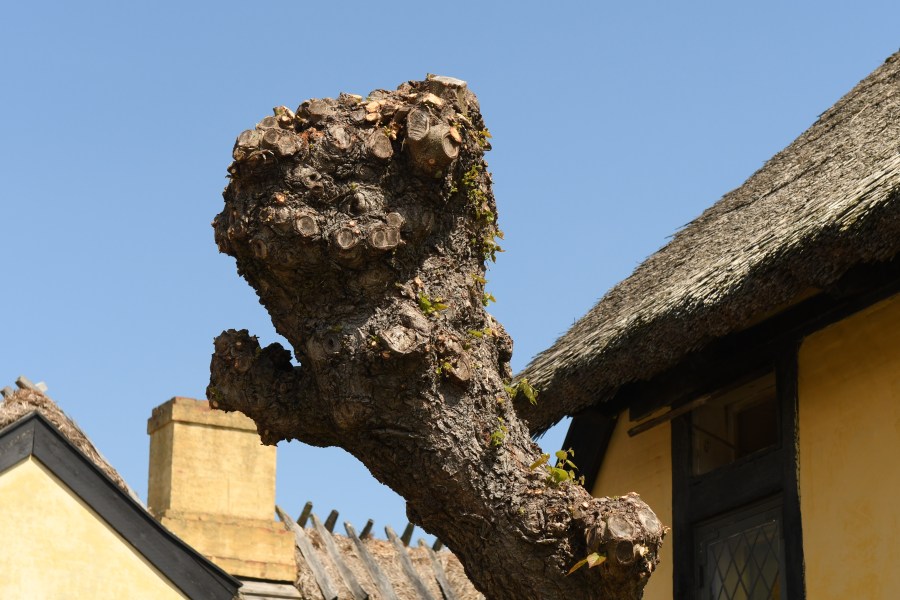
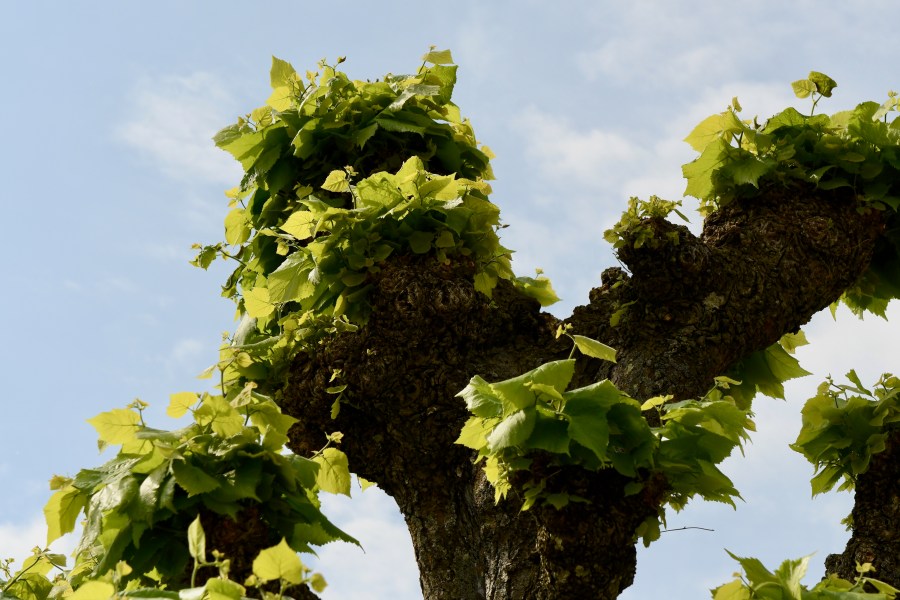
Over the centuries the land has provided. For the first several hundred years of European life the land was the basis of life itself. It was the landowner that ran the show; along with the developing royalty and powerful religious leaders. But the serf, the farmer, and the landlord were the base of the economy for a very long time. Our American countryside is littered with people named Woods, Forest or Forester, Carpenter, Pollard, Cooper, Ash, Atwood, Boyce, Holme, Holt, Marley, Perry, Ryder, Sawyer, Walton, and Woodward — and many more. These names are all derived from trees and tree management, be it from fruit or forest. These people were the tree cutters and the fruit growers of days gone by. Two of the traditional forest management concepts are still seen in pollarded trees throughout European cities and coppiced woodlands scattered through the countryside.
I am not showing coppicing in the images below, but coppicing is a technique in which trees are cut off at ground level and then sprout many new small “trunks” from the stump or “stool” left after cutting. These sprouts will be allowed to grow years, twenty years or so in some cases, and are then harvested as staffs (staves) or poles and are used (or were used) in building houses and barns or wagons and silos. If they were harvested at five or six or seven years they would be made into handles for farm tools or even wagon tongues. A person with a coppice plot would harvest from a different section each year, eventually rotating back to the first section years later. Coppiced trees could be Alder, Ash or Beech (3-4 year cycle), Hazel, Willow, and Chestnut (7 year cycle), Hornbeam and Oak (50 year cycle!!), or Sycamore and Chestnut (20 year cycles). This was truly a family, or multi-generational, business.
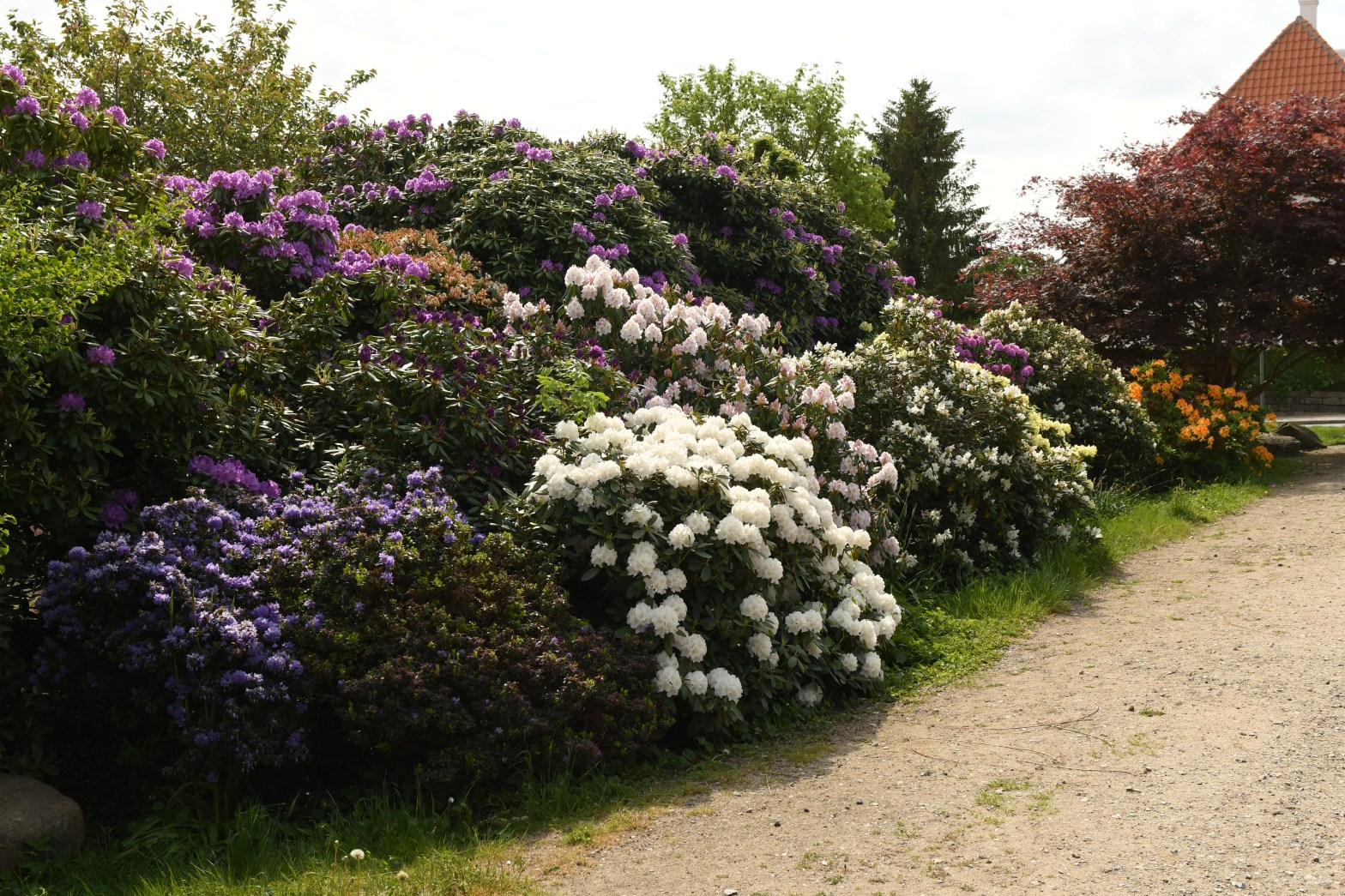
Oh, the top photo merely shows some of the thousands of flowering rhododendron plants, (a group with a center of diversity in the Chinese Himalayas, but with native populations pretty much all around the Northern Hemisphere), now resident in Denmark. The rhodies and lilacs were in full blow when we were traveling.
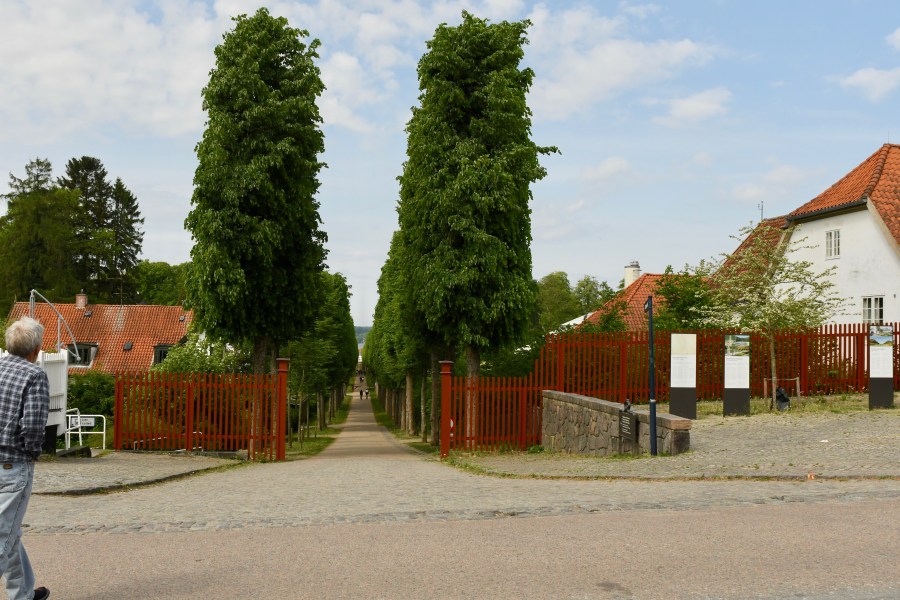
Trees are maintained at a specific height for many reasons today. Beauty is one reason but it is also helpful to have smallish, stout trees to better resist storms and wind. But the reasons for tree management go back into deep pre-industrial times. Trees would be cut back and then would produce twigs (sprouts) over the next year or two or three; the sprouts would be harvested and made into brooms, brushes, kindling, and woven into all sort of household containers. One of the most widely used plants for pollarding is/was the willow. The young supple branches could be made into brooms, baskets, or woven into sheep fences. Beech, Catalpa, Linden, Hornbeam, Mulberry, London Planetree, Black Locust, and Horse Chestnut are also commonly pollarded throughout Europe. Horse Chestnut was used a path/road marker (a tree was planted every mile or two or ten and served as road signs) in olden times and is a very common tree in Denmark – and they were in full flower, large white clusters of flowers.There are a few places where trees are allowed to reach a height higher than the nearby buildings, but this isn’t the usual situation in most towns and cities. Despite the added height these trees are still maintained and have not become “branchy”.It seems a bit brutal, even cruel, to cut back all the new growth year after year. But, remember that most fruit trees and grape vines are treated in the same manner. The trees are not killed and the new growth is buoyant and rich. Thus the street trees managed this way are lush and luxurious each year; and of a comfortable, homey size .The new growth is mostly leaves. The branches (sprouts) that do form will be pruned off during the next winter.The trees are deciduous and are not much more than stubby little fire plugs of a tree through the winter, but spring and summer sees them green, tidy, and all in line. It is management for sure, but over all saves time, money, and property if you consider the damage that wind-torn trees can cause. A penny for prevention is worth a pound of cure I guess. Or maybe not a Pound but a Kroner.
Denmark is small. If you visit only the Copenhagen area it will seem a mix of urban and rather dense suburban; green for sure, but easily seen to be (or have been) under the hand of old time agriculture and modern economy. It has a very nice vibe however; a smallish city, historic sites all over the place, and pleasant welcoming people.
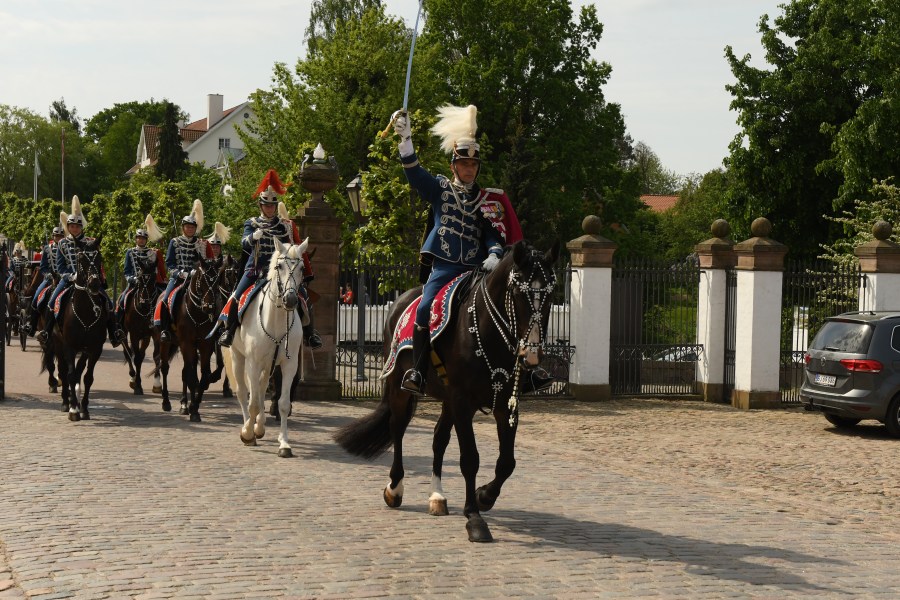
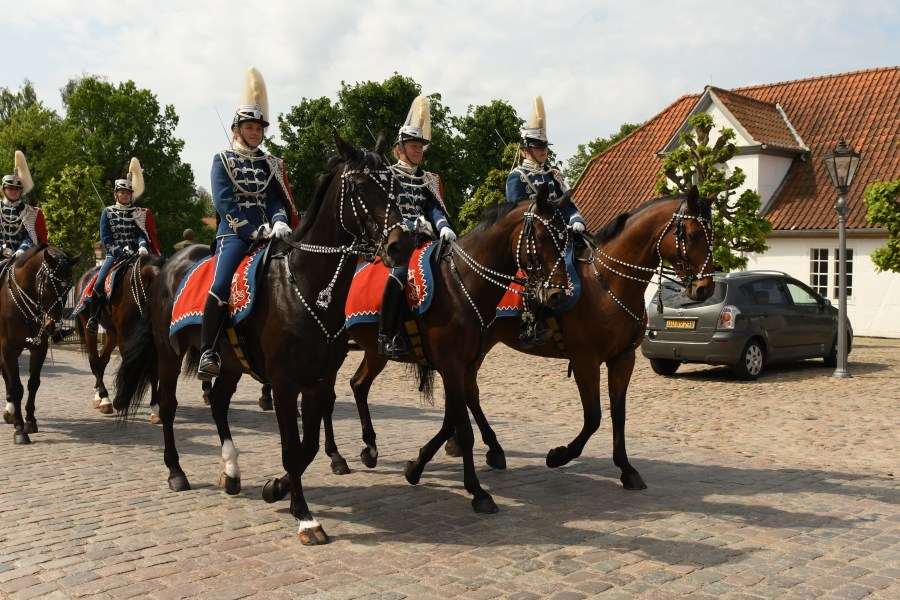
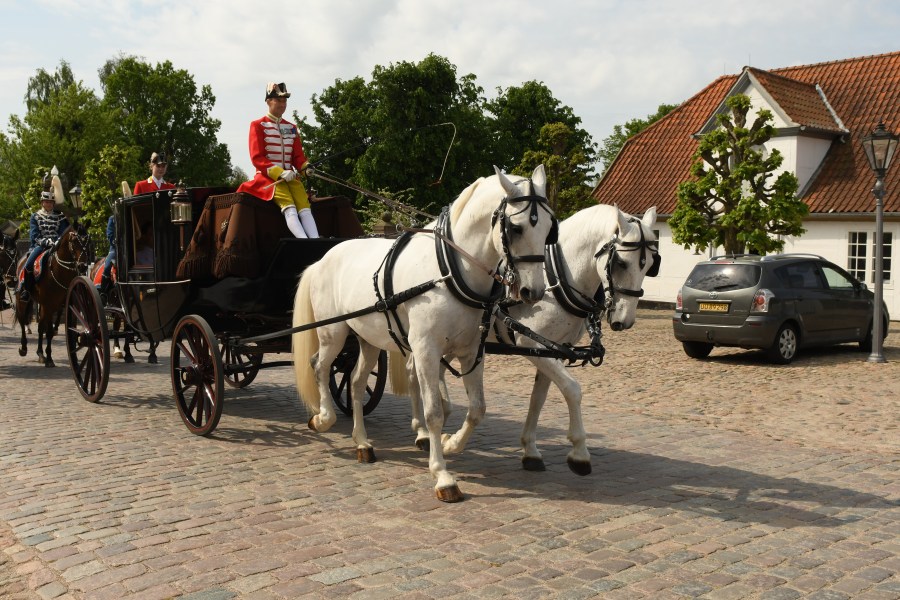
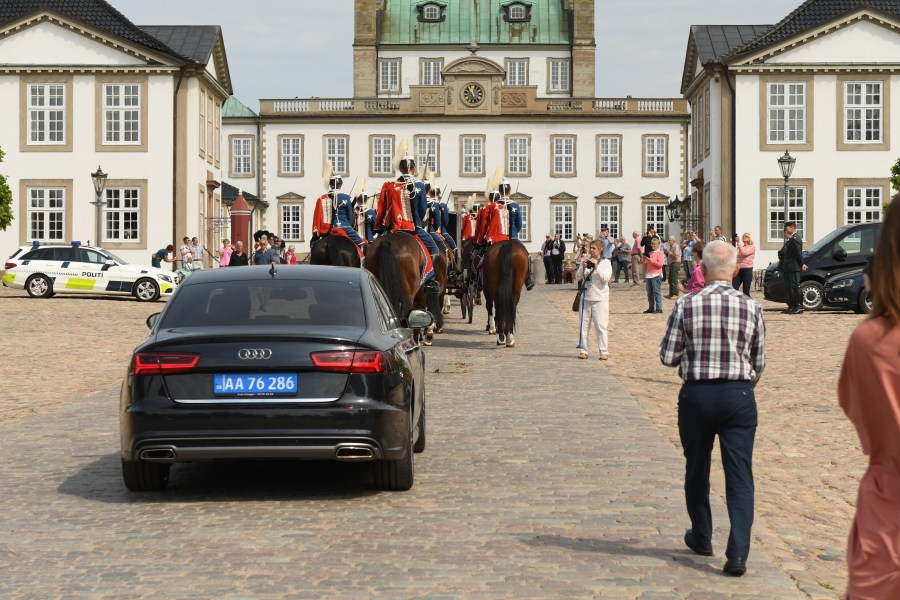
We spent a couple days here before heading to Norway and got a look at several royal locations. The Danes enjoy their royal family and the royal family is pretty much a group of normal Danes. They ski, they shop, they wander about town. But, there are also estates, castles, and parks. We had the opportunity to see the arrival of some national ambassadors at the Fredensborg Palace. Just by chance we swung off the main road to see the summer palace which just happened to be near our route north. We parked and walked up the cobblestone roadway toward the palace when there was a clatter of hooves and a phalanx of glorious horses entered, followed by a shiny horse-drawn carriage. As they went past the red-jacketed driver and footman were on either side a passenger inside the carriage. It turned out that the Queen was welcoming, and receiving the papers from, several new ambassadors to Denmark. The images below show the pomp and spectacle of this occasion – as done in a European monarchy.
Our first view of Fredensborg Palace was rather typical of a history-based semi-tourist site in much of Europe. Those countries with monarchies parade their guards in costumes based on 18th century (or other) wars and 21st century cameras do much of the real security work. We saw a placid scene with few people, a patrolling guardsman, and no sense of impending activity.First to arrive were the horsemen (actually many were horsewomen). They preceded the arriving politicians and the staff members escorting them to the palace. The horses were quite stunning and the tack was equally shiny. I am sure the horses, the horse color, the headgear on the riders, and the uniforms all have a story – sorry, I don’t know the whole story.These three are horsewomen. The saddle cloth is similar to the leaders’ saddle cloth but a bit different in the rear lower corner. Perhaps the saddle cloths are like stripes on your sleeve. The uniforms, in general, represent tasks and assignments. In all these photo note the trees in the background. They are all pollarded in order to maintain a specific height and shape. The next blog may well be on coppicing and pollarding; two methods of creating needed wood products and maintaining trees for economic purposes.Then came the carriage. We think that the person inside was a staff member with the papers to be presented to the Queen. The new ambassador rode out in the carriage as an ambassador but probably didn’t ride in as a “mere” citizen. The carriage ride (we figured) was special.The procession went up to the palace doors and the soon-to-be-ambassador was taken inside to be officially welcomed by the Queen. This is a royal function and a symbolic political function. The Queen, and the royal family as a whole, are not deeply (daily) involved in politics. Except to say, in Denmark, the royal family is respected and their opinion matters. The black Audi seemed to be transporting the family of the new ambassador. Denmark is a bit like a small town, or an island community; where everyone knows everyone and they tend to work toward the common good. I never heard our saw an inkling of cynicism.
When I visit Zambia I am usually up along the Zambezi River staying in the Royal Zambezi Lodge which is just outside the Lower Zambezi National Park. It is a place you fly in to in a nice-sized small jet. There is a (track) road but it takes hours and hours longer. The lodge is right on the river and situated just below a scarp left from ancient rifting. The Lower Zambezi NP is relatively new and not well appointed – which is a good thing for us. It is rare that we see another vehicle and not at all rare to see lions and leopards. The lodge is very nice with good food, very nice bungalows, and great staff. The lodge is not fenced and to have elephants wander through is a daily occurrence; generally that isn’t a problem. The highlight in this area over the years has been the ease with which leopards can be found and observed. They are often on the ground and quite easy to see. Many, perhaps most, leopards are found in trees and can be difficult to observe.
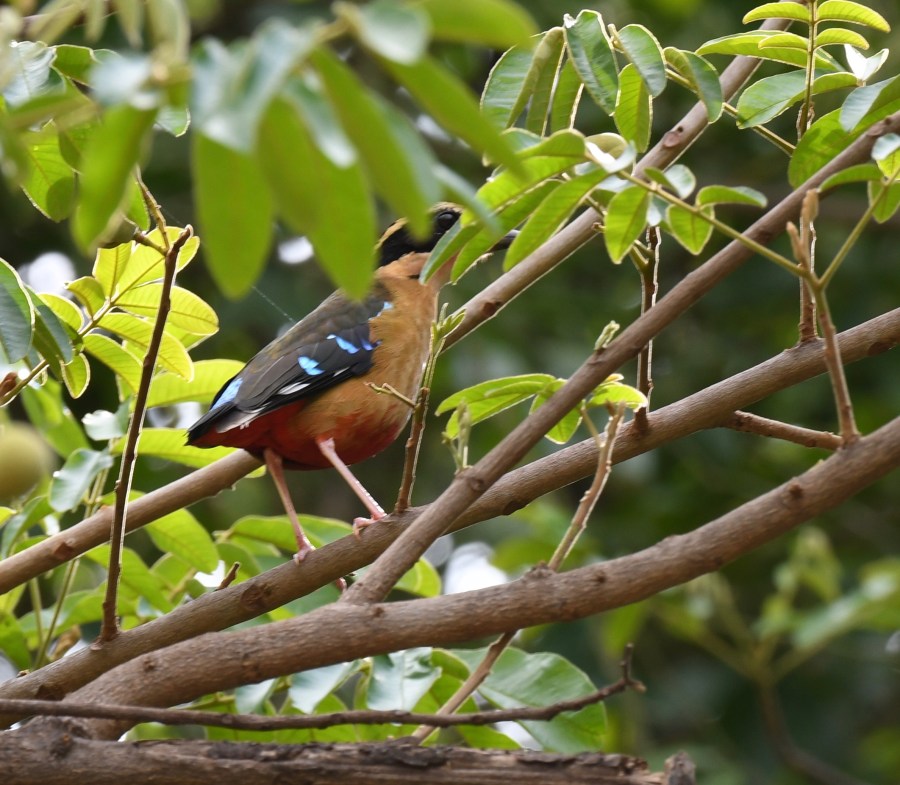
But the Lower Zambezi NP and the lodge itself has more to offer that this spotted cat. I like the mix of animals found here; mongooses, cats, birds, ungulates, and reptiles all can be seen on most every game drive. One time I found a very uncommon bird which was a highlight for me and the driver/guides. The guides see lots of things every day and when we see something uncommon they get excited – and then the rest of the group gets the vibration and we all get deeper and deeper into the safari. This bird, the Angolan Pitta, got us going, but there was more. Here is a sampling….
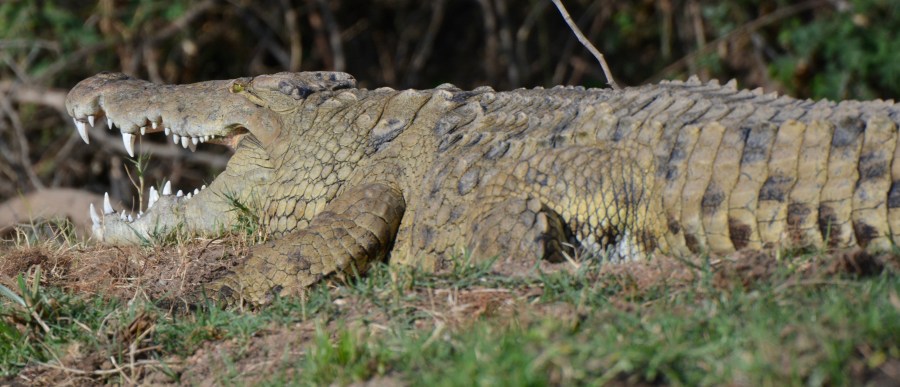
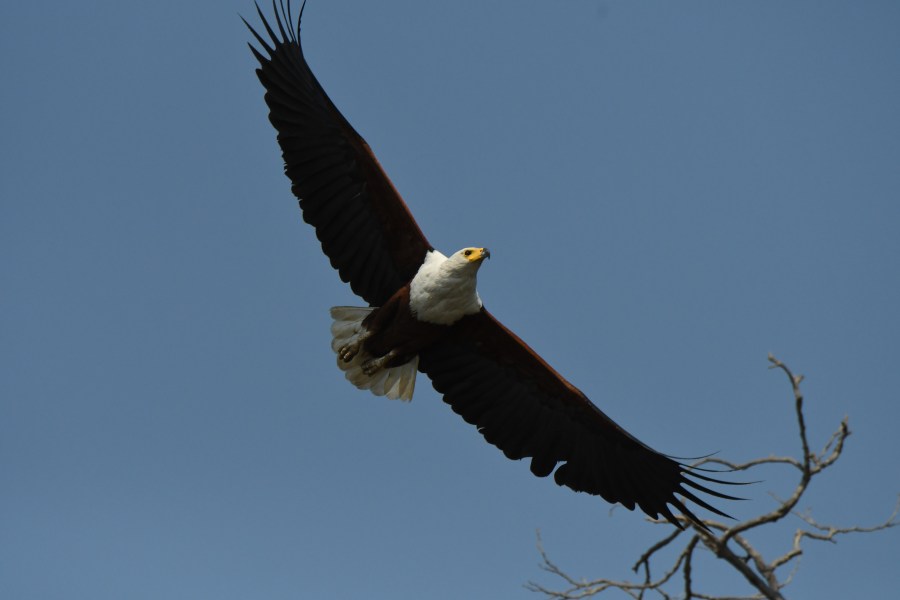
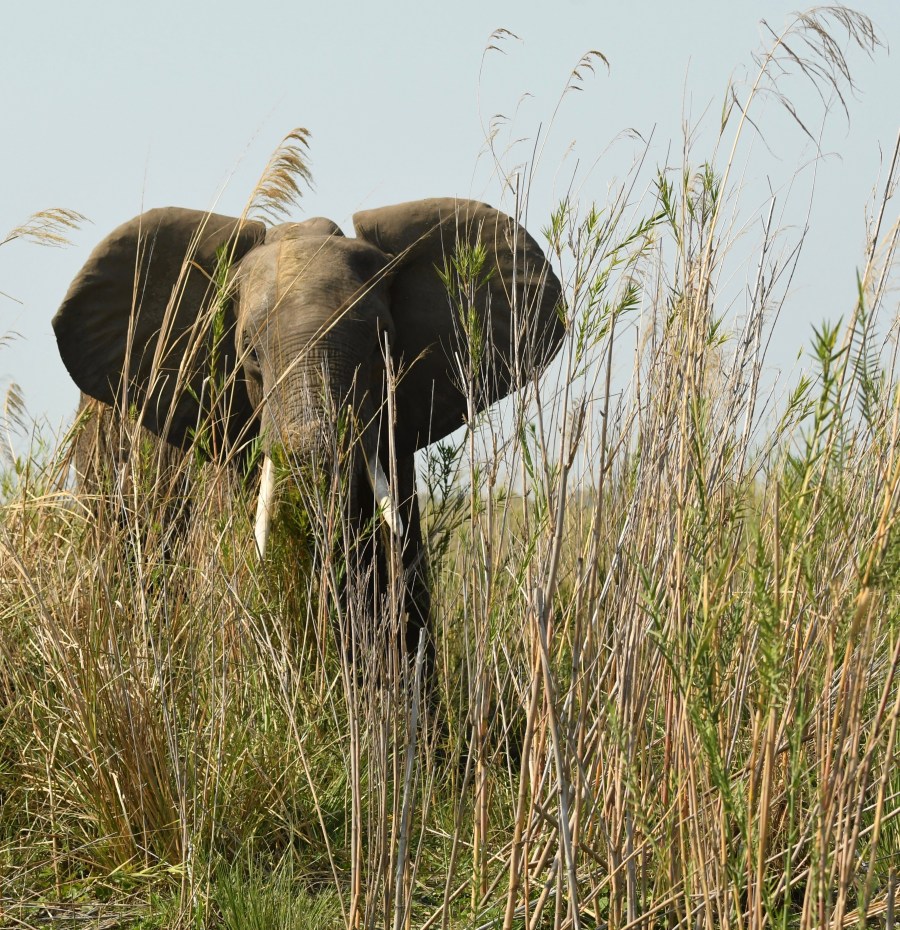
The Grey Foam-nest Tree-Frog does just that – the female, or rather the attendant males, make a foam nest for the eggs. This is a rather common amphibian in southern Africa, often found in our rooms or bathrooms. It is a rather plain grayish arboreal frog of medium size with no markings of note. However, they can change color to help get along in a hot, often dry, countryside. They are darker in the cooler times and lighter in the hotter times. They also have something very unusual for an amphibian; a rather leathery waterproof skin which helps keep moisture inside. But the nest is really different – and the mating routine a bit bizarre. The female goes up into a low tree or shrub and starts to lay eggs on a branch. Then males arrive, lots of males, and they produce a sperm-fluid which they whip into a froth with their rear legs. This is a bit haphazard and seems more likely to knock the eggs off the branch than anything else. The tennis ball sized foam nests in which the tadpoles develop are then left to hang from the branch. As with much of nature; strange but true. If it is successful it persists. Wherever there is water in sub-Saharan Africa there are crocodiles. No alligators or caiman but lots of crocs. These are reptiles with a four-chambered heart and a maternal instinct. They are ancient and successful. They are also predators of some significance. They probably kill hundreds of people each year and are known for taking zebra, large antelope, turtles, and fish. The females will lay 40-100 eggs and bury them in nest-pile of vegetation (like a compost heap). After three or so months the babies will peep from within the shell and the female will uncover them and take them to the water after they hatch. She will guard them when they are young but still most will never reach full size. Probably only 1% of there youngsters will live a life that can be measured in years – days, weeks, and months is more likely. Actually the Nile Crocodile can be found from parts of the Mediterranean coast down in to much of southern Africa.The Hamerkop is related to the Shoebill (Google that one!) and the pelicans. You can assume that it has not been closely related to these birds for countless generations and is quite distinct from the other wading birds. It is a common African species and still one that birders look forward to seeing. There are several iconic African birds and the Hamerkop is one of them. The nest they build can be five feet long and will support a full grown human. It is a huge undertaking for a modestly-sized bird. Being a bird associated with wetlands it eats mostly amphibians, insects, fish, and small reptiles.Another bird associated with water is the African Fish Eagle. In the USA we call our fish eagle the American Bald Eagle. These two species are in the same genus and look very much alike. The African Fish Eagle is quite common and will be seen daily.The Lower Zambezi area has lots of leopards. They don’t always sit out like this one is doing, but they are rather common and visitors usually get to see a leopard or two. This is a cat much smaller than a lion but much bigger and stronger than a cheetah. If they were dogs a lion might be a Saint Bernard or Mastiff and a cheetah could be a Whippet or Greyhound. The leopard would be something like a Doberman Pinscher. They are muscular and graceful. In many habitats they are the top predator; but lions and hyenas can easily take their kills from them. Leopards are solitary; lions and hyenas are not.Elephants need to eat a lot of vegetation every day. Perhaps 2-300 pounds for a biggish female and 400 pounds for a big male. Thus the like areas where there is rain of prominent water. As a matter of fact elephants move to wet habitats as they get old (45 years and older perhaps) and their teeth start to wear out. Wet, squishy plants may be less nutritious but they are easier to chew than clumps of dry dirt-coated grasses. This guy is standing and grazing on a sedimentary island in the Zambezi River. Elephants can cross very large bodies of water with ease. I was in a boat. You have to be careful where you walk in this part of the worlds as the wildlife is still quite wild and poaching keeps them on edge.Well, this is the bird that got our blood coursing. It is the Angola Pitta and isn’t seen very often. It appears tailless and is seen low to the ground; either on the ground or in low bushes. We were working on a leopard sighting in this area and the bird was seen as we headed toward the leopard – can’t stop for a bird when people want to see their first leopard – so we did the leopard thing and then returned to this area to confirm the original, and brief, sighting. No good photo, but this is proof. Pretty cool – it was almost as nice as the leopard.
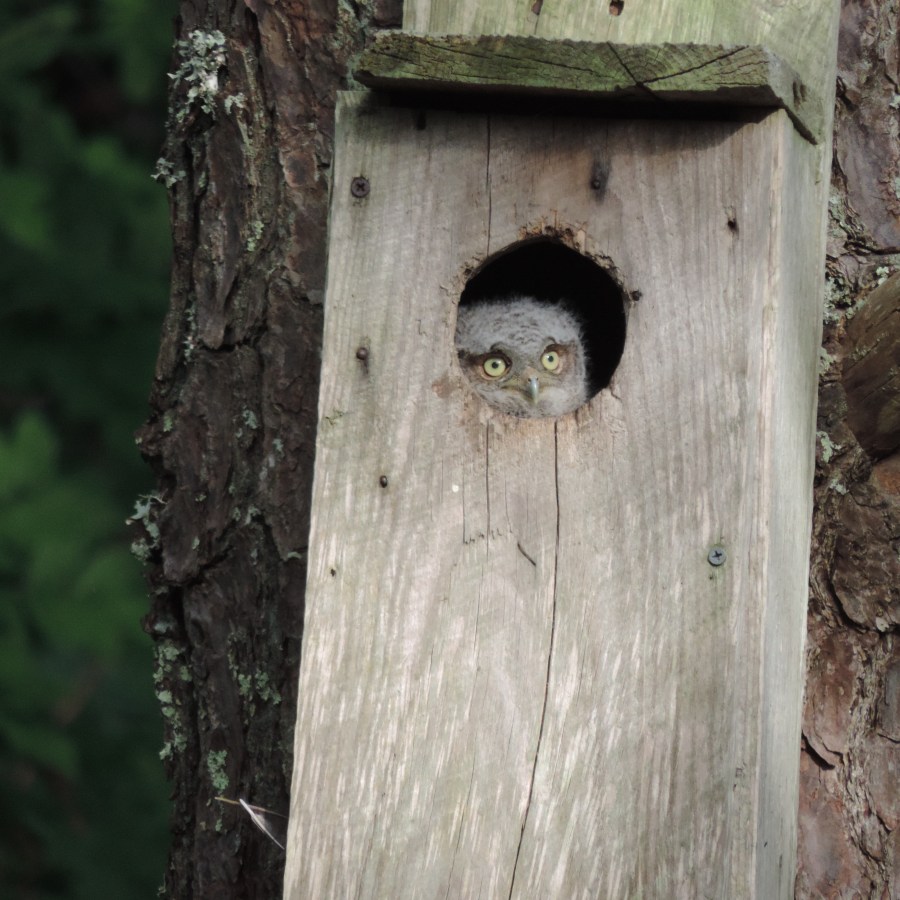
We have had an owl-box on a pine tree at the edge of the yard for several years. Off and on an Eastern Screech owl Owl pair uses it for nesting. Usually we don’t realize that they are in residence until the babies crowd the mother (we assume it is the mother) into the opening during the day. The adult will seek a bit of “me time” while loafing in the opening of the box. The youngsters remain in the dark inner cavity. But eventually they start to get curious about what mom is looking at and they make their way to the opening and get a look at the big world that awaits them. This little guy is one of the two gray phase youngsters currently being raised in the box. The adult that we have seen is a red phase bird. Perhaps both adults are red phase birds. The genetics of Eastern Screech Owl coloration is beyond me – gray parents have red or gray young and red parents have either gray or red young. The mixed generation will be either red or gray; not some sort of reddish gray or grayish red.
Anyway they are cute. Lately the mother has been out of the box whistling softly in the late afternoon, seemingly too encourage the kids to move about and start to flex their wings.
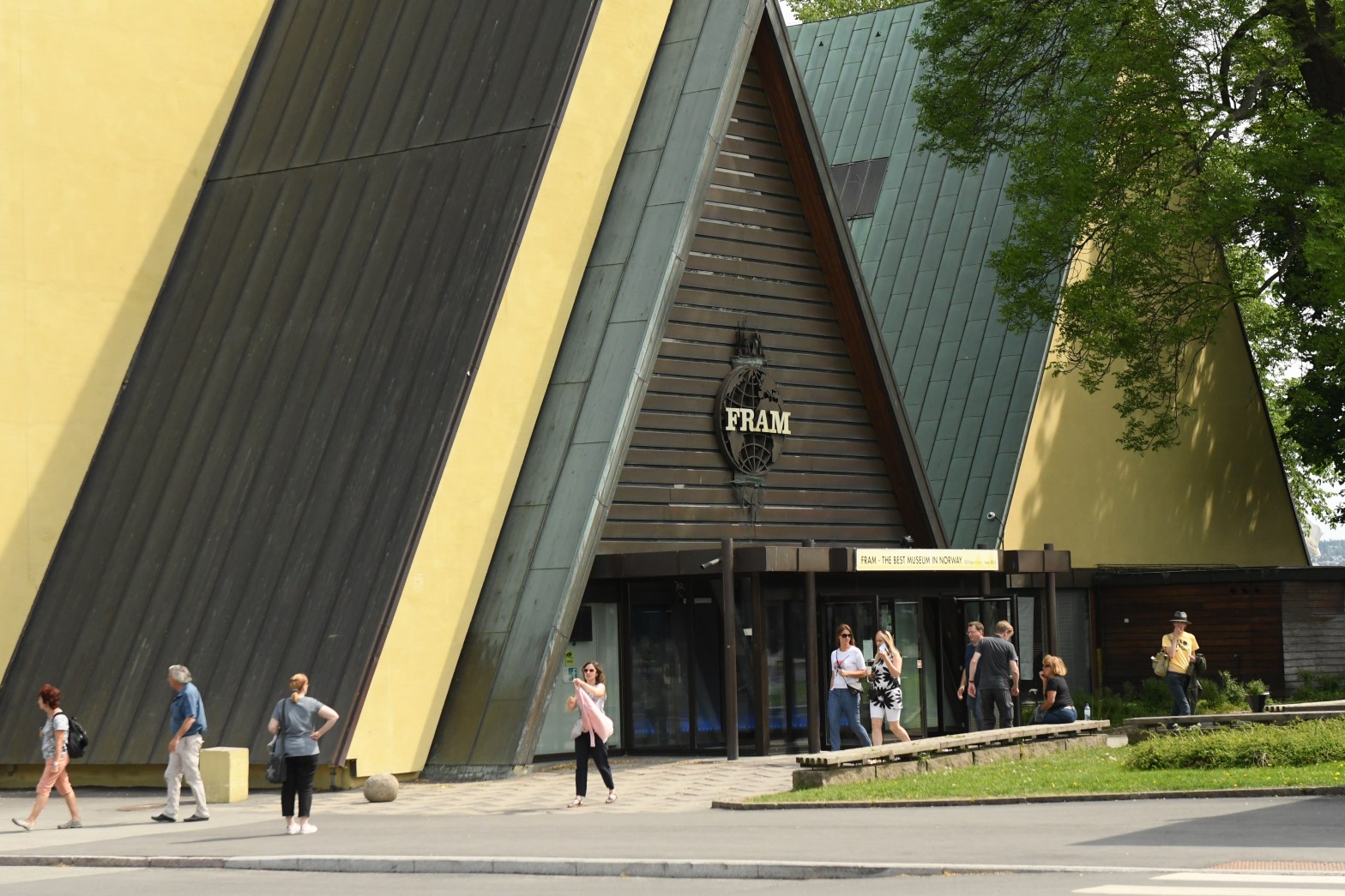
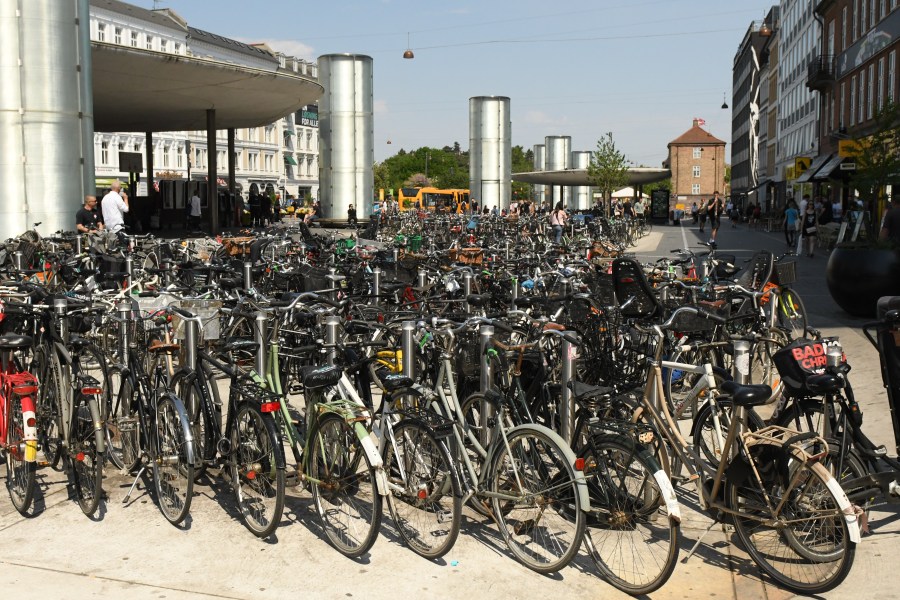
A visit to Denmark (3 days) and Norway (11 days) was surprisingly sunny and hot. The weather was nice as were the people and the food. Copenhagen is a very flat city – perhaps not the first thing everyone notices until you realize that the hundreds and hundreds of commuters on bicycles really aren’t working to hard. They will build a road with lanes for cars and another lane for busses; then along both sides they build a lane for bicycles and lastly another for pedestrians. The bicycles zip along their lane knowing that they have the right-of-way and they growl and grumble if you venture into their travel-way. Hundreds or even thousands of commuters on bicycles will come into the city to their jobs every morning; it is quite remarkable.
Kobenhaven as it is called locally is a very intimate city. Quite walkable and mostly built low to the ground. I walked pretty much across the whole town one afternoon and my iPhone said that I walked about 17,000 steps. That seems a lot but I ambled mostly and remember that its is flat land, no hills. Aside from the older building there is an array of lakes to walk along., The lakes are scattered remnants of the old moat that surrounded the city (constructed for the most part in the 1400s). I had nesting great crested grebe on one lake along with a few other urban birds.
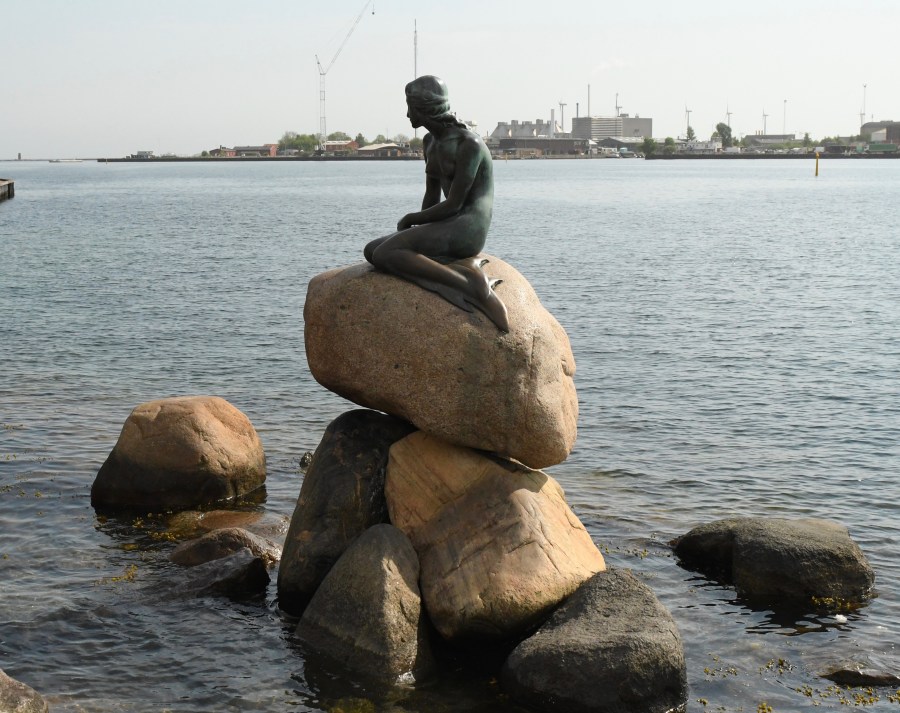
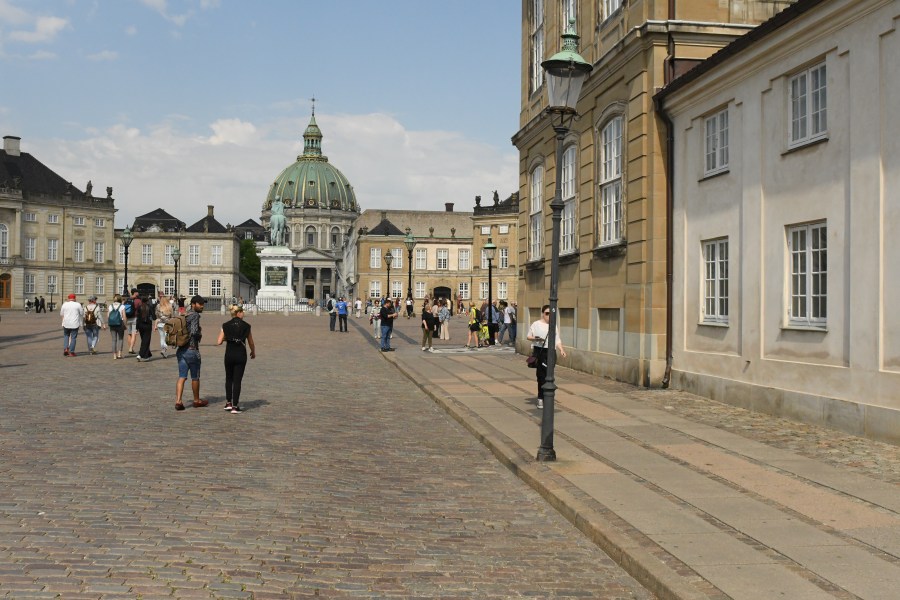
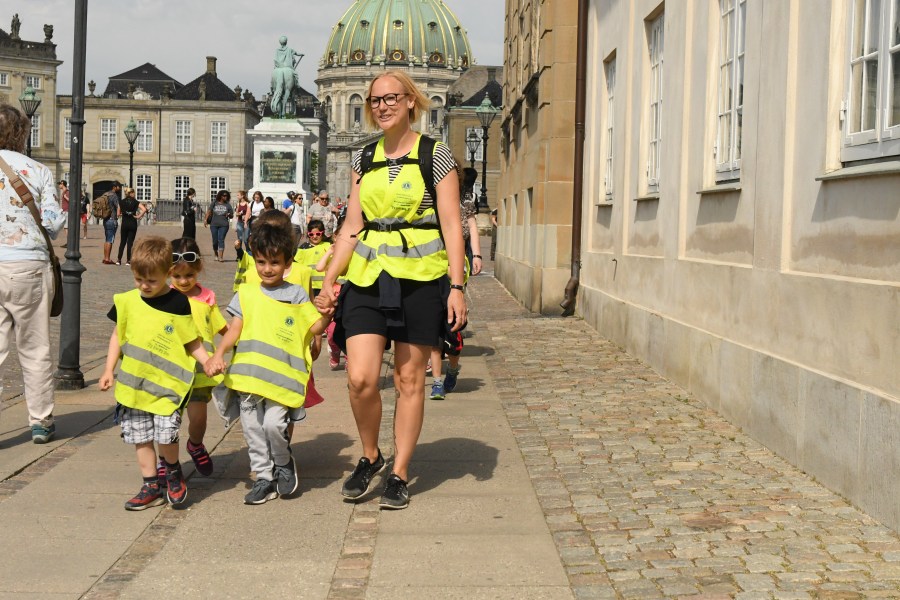
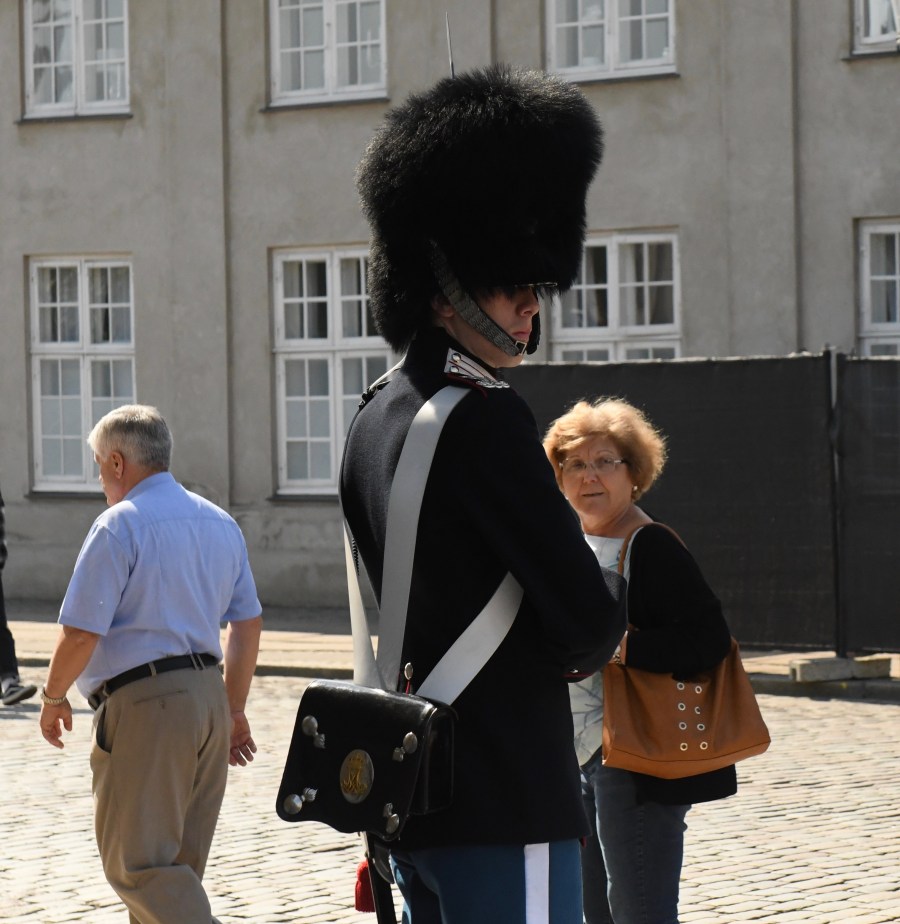
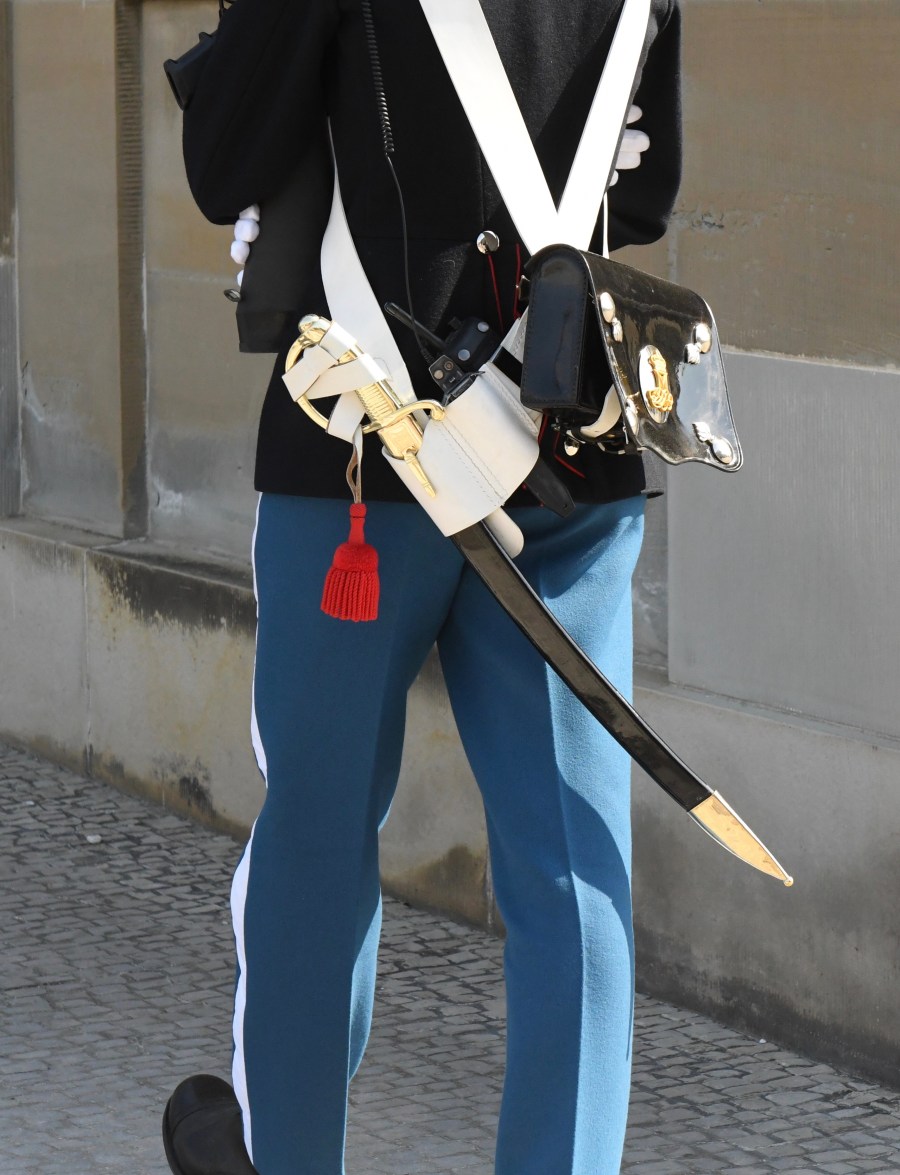
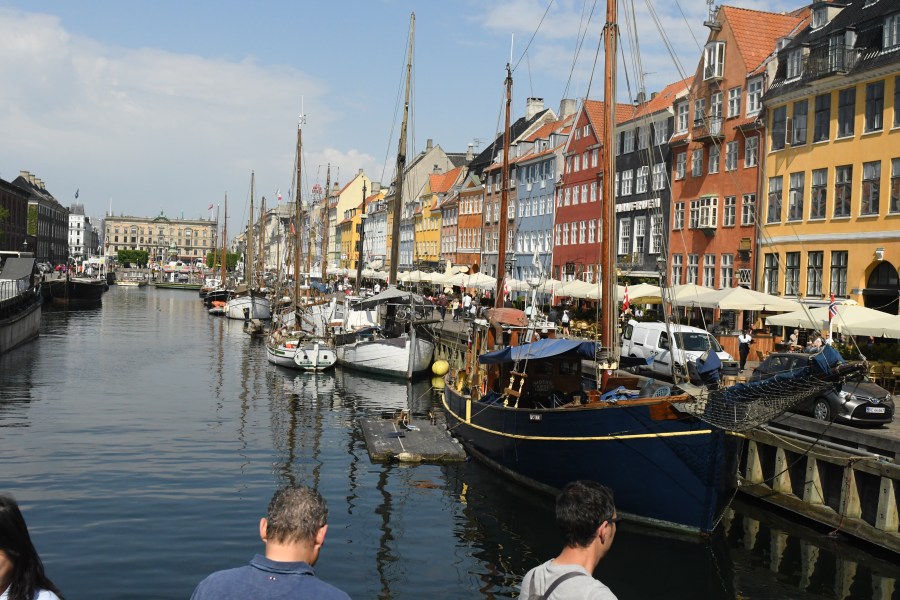
The mermaid statue (officially The Little Mermaid; Den Lille Havfrue) is based on the image developed in a Hans Christian Andersen fairy tale of the same name. It was commissioned in 1909 and out for public viewing in 1913. The man who commissioned the state was the son of the Carlsberg beer founder and he asked that the state be modeled after a ballerina of the time; Ellen Price. She allowed that her head be part of the stature but her body was not to be unveiled to the sculptor – so Edvard Eriksen created the body using his wife, Eline Eriksen, as the model. The statue is quite small at about 4’1″ (1.25m) in height, but it attract tourists ands tour busses all day every day. Despite the age of the city and the size of today’s coaches the layout at the Langelinie promenade where the statue sit is quite amenable to visitation. You would expect continual traffic snarls and snarls of all sorts…but it is quite efficiently managed.The Royal Life Guards is a 470 year old group of Danish soldiers (they are actually much younger, many receiving training right after high school) tasked with protecting the Danish monarchy. They are also considered as a regular front line unit in times of war. The Copenhagen contingent is bivouacked at Rosenborg Castle and each day march through the city streets to Amalienborg Palace where they monitor activities in and around the royal residences. Their passage through town, when the Queen is in residence, is accompanied by the Royal Guards music band. The changing of the guard is a noontime activity every day. They wear bearskin hats that require the entire pelt of one black bear. The pictures, both above and below, looks into the courtyard at the palace where there are four large buildings used as offices and residences. The palace is domed and the statue just in front of the palace is of King Frederik V on his horse.It was cute to see little school kids visiting their national buildings. We saw school children in palaces, museums, and parks. The wearing of the yellow vests seems a good idea and probably works on many levels. Both Danes and Norwegians are very fond of their homeland. The civic and national pride displayed in these countries was both charming and remarkably simple; as in not complicated by politics and sharp cultural edges. Immigrants were welcomed (at least received) and brought into small towns where they were taught their new national language and given jobs and provided the social benefits that these countries are famous for. The guardsmen are not conversational but they are a real part of the experience. You can get close and gawk and take pictures. They are on duty for twenty-four hours before being relieved; two hours on duty and four hours off duty throughout their time at the palace. The outfit and the trappings are a collection of war-won items (French swords) and traditional gear, some of which goes back hundreds of years.The men are color-coded to a certain degree, or that is the story that we were provided. The red tassel means the guard is over 6″3″. There are three colors of tassels each encompassing a few inches of height; however when you wear a heavy bearskin hat that is probably 18 ” tall your height is not likely to matter to much. You can walk to the palace; you can walk just about everywhere in town. But the locals use bicycles, lots and lots of bicycles. A ride of a few miles on flat ground will take only 10-15 minutes and people of all ages, sizes, and sexes ride daily. Bicyclists have their own travel lanes and their own sets of traffic lights. It is odd at first to see a looming mass of bikes and riders waiting at an intersection only to pour toward you as the light turns green. Most bikes are parked near to the place of employment but there are massive parking areas scattered about. I have no idea how you find your own bike in order to start home. I never heard anything about larceny but it seems likely that people will occasionally take a bike that isn’t their own either by mistake, or out of frustration, or thievery. An iconic look down a canal in Copenhagen. Within the old city limits the buildings do not exceed five levels, making it very comfortable and homey.
The ancient bed of the Peterman Range and the more recent Alice Springs Orogeny have had well over 350,000,000 years to wear away; and they pretty much have. The old sedimentary layers occasionally show above the red sands and the very hard quartzite will be around for many millions of years.
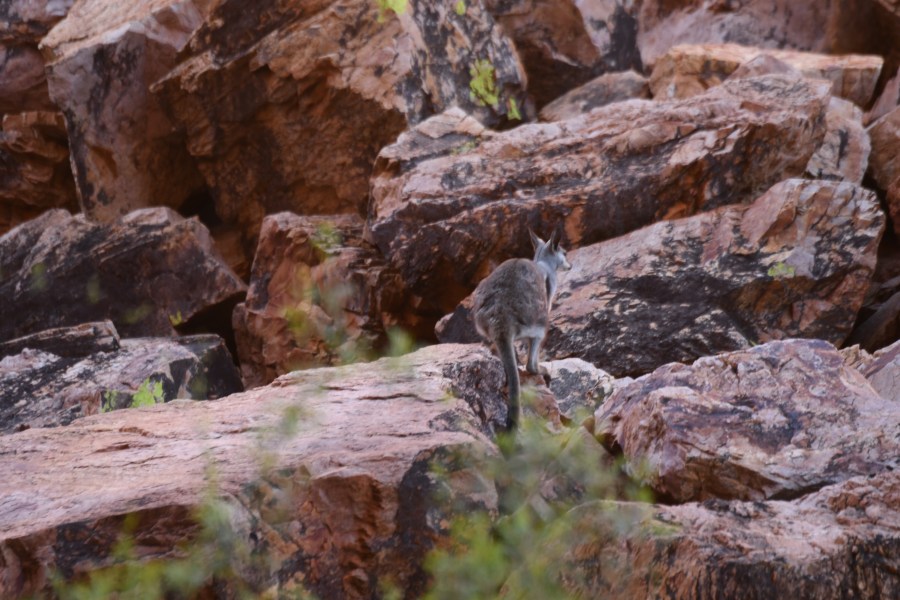
In one spot, at Simpsons Gap, there is a rubble of rocks at the base of the quartzite walls and here live the small macropod (kangaroo types) called Black-footed Rock-Wallaby. Most of the time our mid-day arrival and short walk is not interrupted by wallaby viewing. But this trip was different. Is was coolish for the Outback, probably only eighty degrees or so and there were half a dozen wallabies gambling in the rocks. They are widespread and not uncommon, just not usually out in the day time.
Here are a couple long-distance images of these small roos.
This is an example of the base rock from the very old Peterman Mountains. The sedimentary layers were laid down in an old sea, then compressed and lifted over the ensuing millions of years. The mountains themselves have eroded away, filling the huge Amadeus Basin and leveling off much central Australia. As is to be expected in sea bottom accumulation most of the layering was originally sand and when compressed became sandstone and even later it became the hard glasslike quartzite. It took millions upon millions of years…pretty cool huh.
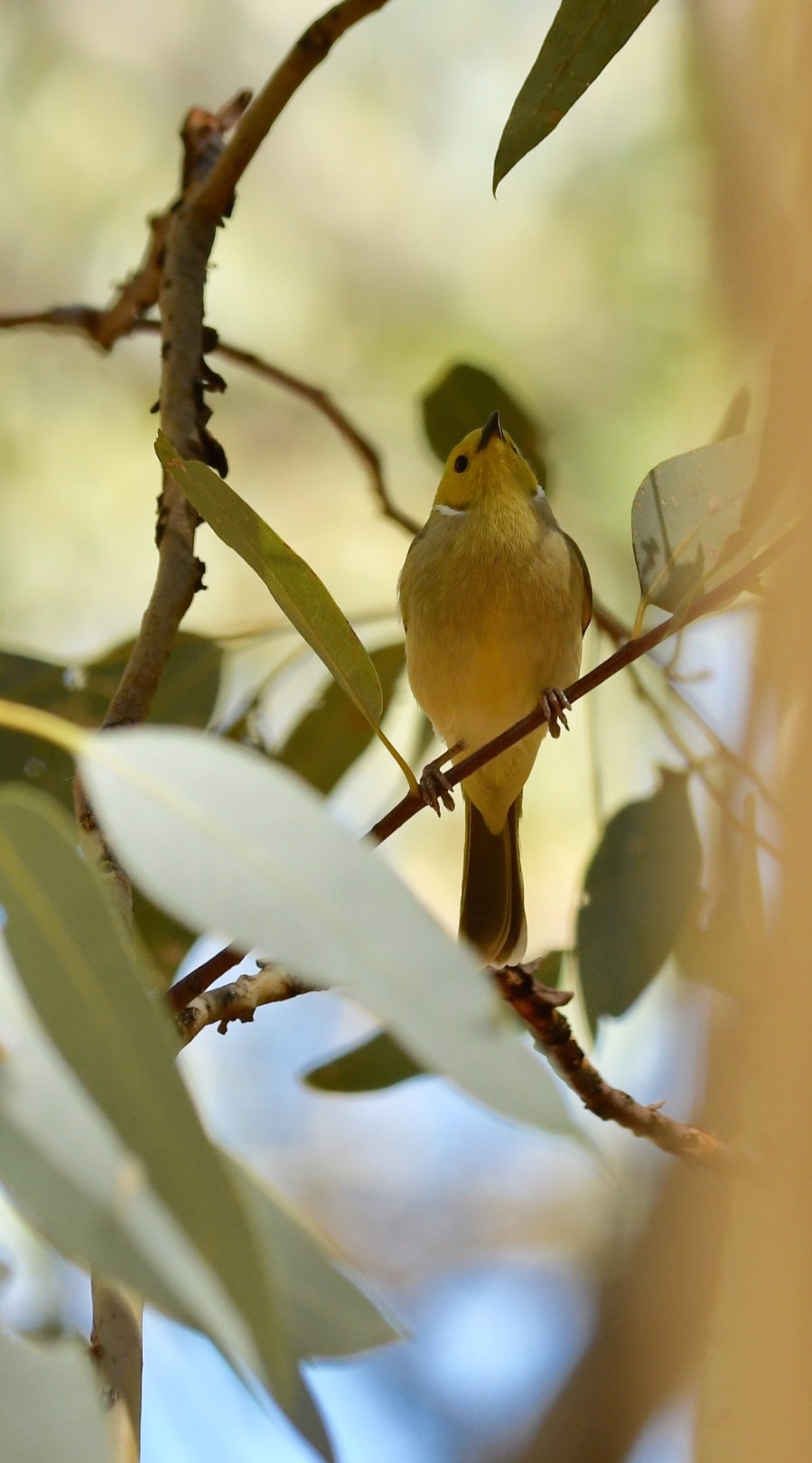
The two images above are of adult rock-wallabies. They have become rock dwellers, perhaps to avoid dingoes. There are also kangaroos in the grasslands and on the beaches. Perhaps the most unique is the Tree Kangaroo group. Yup, they live and hop, up in trees in the tropical northeast and in New Guinea. The bird below is one of Australia’s many honey-eaters, the white-plumed honey-eater. It is a rather common bird species of the mallee and eucalyptus lands in the arid center of the country.
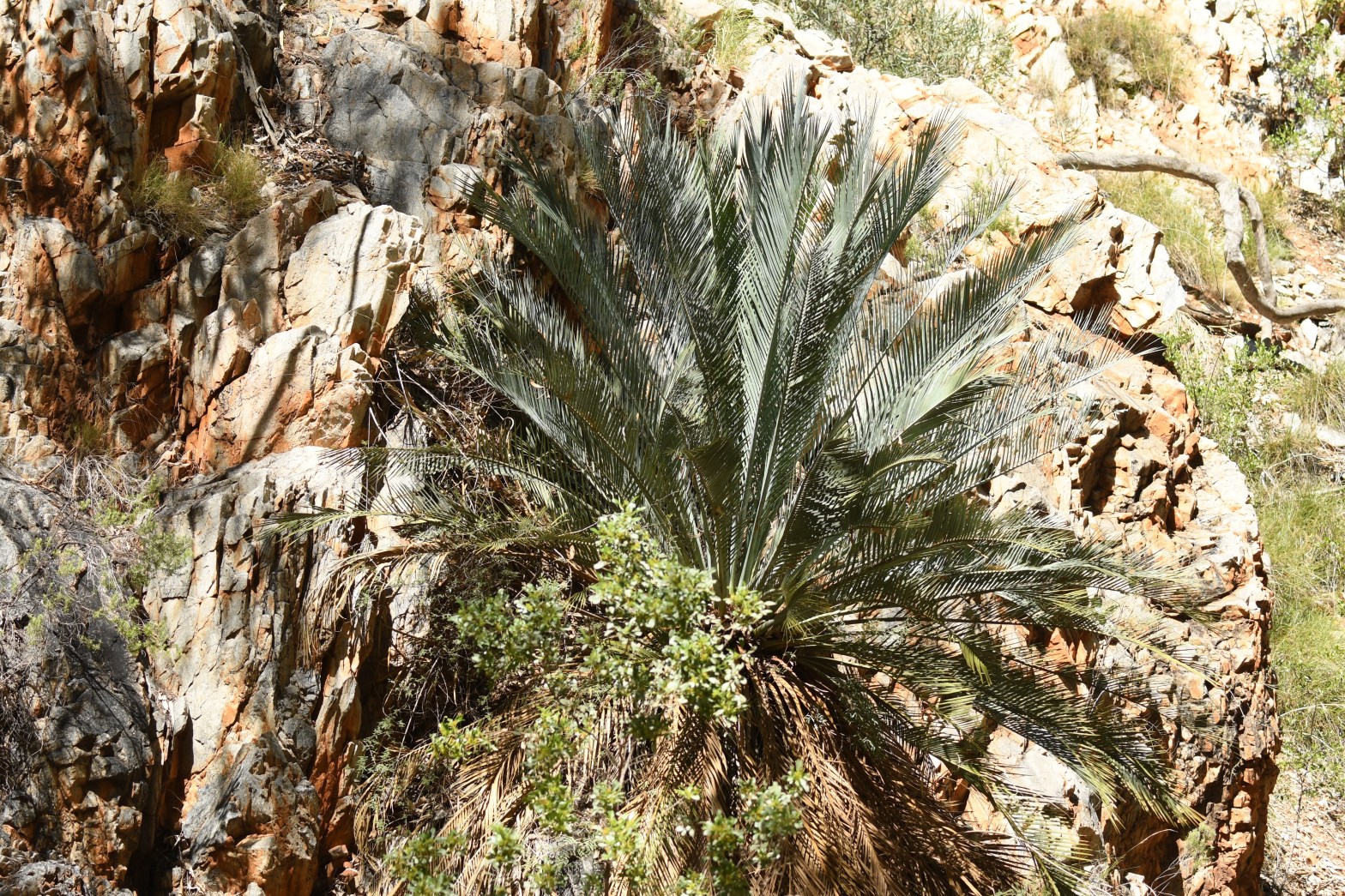
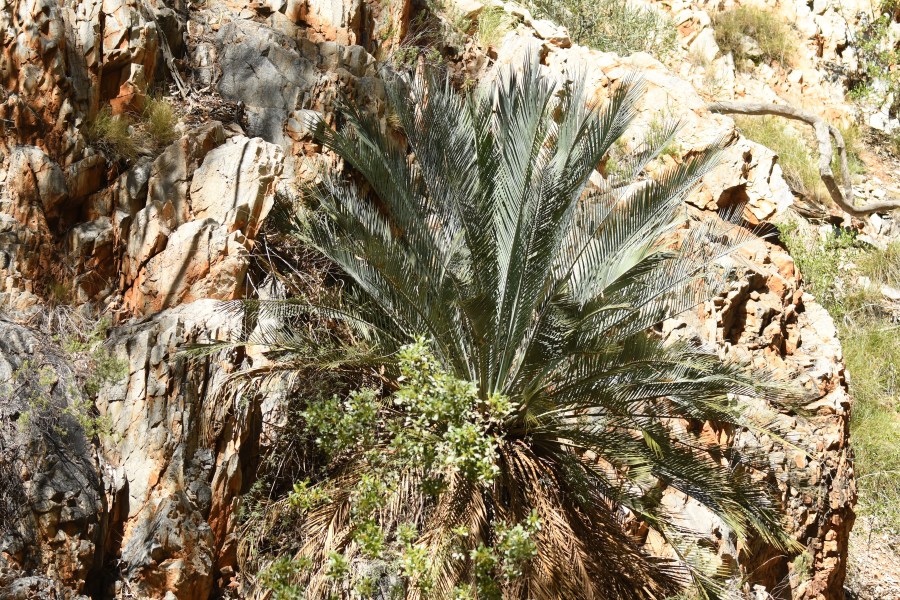
The image below is of a MacDonnell Range cycad. Cycads are ancient plants which as a group are course and spiny. As they developed this morphology as a protection from browsing dinosaurs, they are now dressed in a somewhat unnecessary suit of armor. This particular plant was along the trail into Standley Chasm, a quartzite-walled slot, or chasm, that was once filled with a seam/squirt/or oozing of light colored dolerite (now eroded away).
There are two kinds of sheep dogs in New Zealand; huntaways and border collies. The huntaways are a rather new breed (late 1800s) of working dog; solid, rugged, strong, and deep voiced (noisy actually). The border collies are usually black and white and love to run. When sheep are scattered over high mountains covered with matagourie or gorse, or some other tight spiny vegetation; where horses, boots, ATVs, and dirt bikes can’t go, you need the huntaways. They run all over those hills and dales barking and chasing the sheep from the steep canyons and hidden copses. The collies than surround the sheep and herd them downhill to the sheep guys’ location. This is a muster. The sheep are not fenced and can wander quite freely and on occasion the dogs will miss one. Well, Shrek was discovered after avoiding the dogs and herders for SIX years. He was a woolly mess.
Huntaway dogs are not small. They are solid and very hardy. The breed is a bit over 100 years old and is more of a blend; defined by the job it can do rather than its pedigree.The border collie is smaller than a huntaway and a zippy, intense, focused sort of dog. They really think that sheep should do what they are told and are often willing to nip at the heels of the sheep that are to slow or uncooperative.
Shrek was a wonder. He eventually made it out to an ice flow, appeared on television, visited parliament, and has had a book written about him. He was eventually shorn on live TV and his fleece is memorialized in several displays around the country. He was a castrated male, a “wether”, in sheep talk, and must have ducked off into a cave over the years when the mustering took place. Most wethers are sold for lamb at about 9-10 months of age. Shrek was kept around as sort of pet/icon until he was 16 years old – making him perhaps the oldest sheep that New Zealand has ever had as well as the fluffiest. And yes, he was named after that lovable ogre also called Shrek.
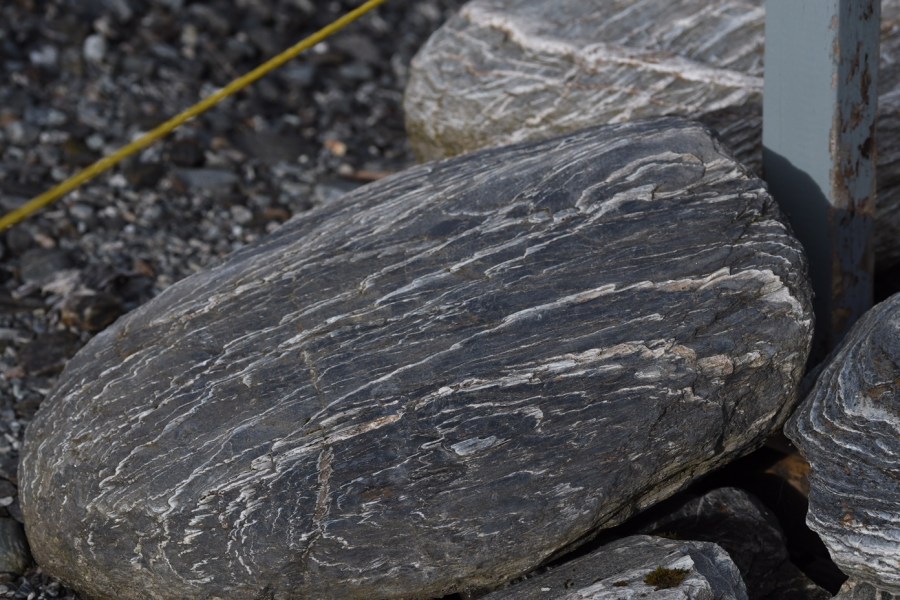
Greywacke is the base rock of New Zealand’s South Island. Along the west coast of South Island the Australian Plate is being forced under the Pacific Plate resulting in the mountains known as the Southern Alps, as materials are accumulated and forced upward. This is a mountain range that is growing at about 3 inches a year but not really gaining in height as it is eroding at about the same rate. Greywacke is the stone that is being bulldozed to form these coastal mountains. It is a young stone and was a bit of a puzzle for quite a while. The stone is made of rough sand, muds, and clays; at least 15% clay. These sediments should have settled out of a water (flow) stream at different places with the heaviest dropping first and the clay stuff dropping last, usually in very still water. But they are all mixed in greywacke – how?
Greywacke falls apart easily. Water, heat, and especially glaciers really break and grind this stone down into bits and pieces. Here walls of greywacke are shedding pieces that have fallen into the drainage below. Water will then carry the debris lower and lower in the system until the fines are dropped in a lake or perhaps a fjord.
It is probably the result off old underwater mudslides that brought all the stuff down at the same time in a great storm of mixed materials. Then time, compression, and intrusion by quartz and after a while you get greywacke. Our mountains in Glacier National Park are not exactly the same material but they are also of a loose shale sort of rock and are crumbling and washing downhill as rapidly as the Southern Alps. It seems that nature and time merely want to wear down the mountains, fill in the valleys, and make the planet smooth.
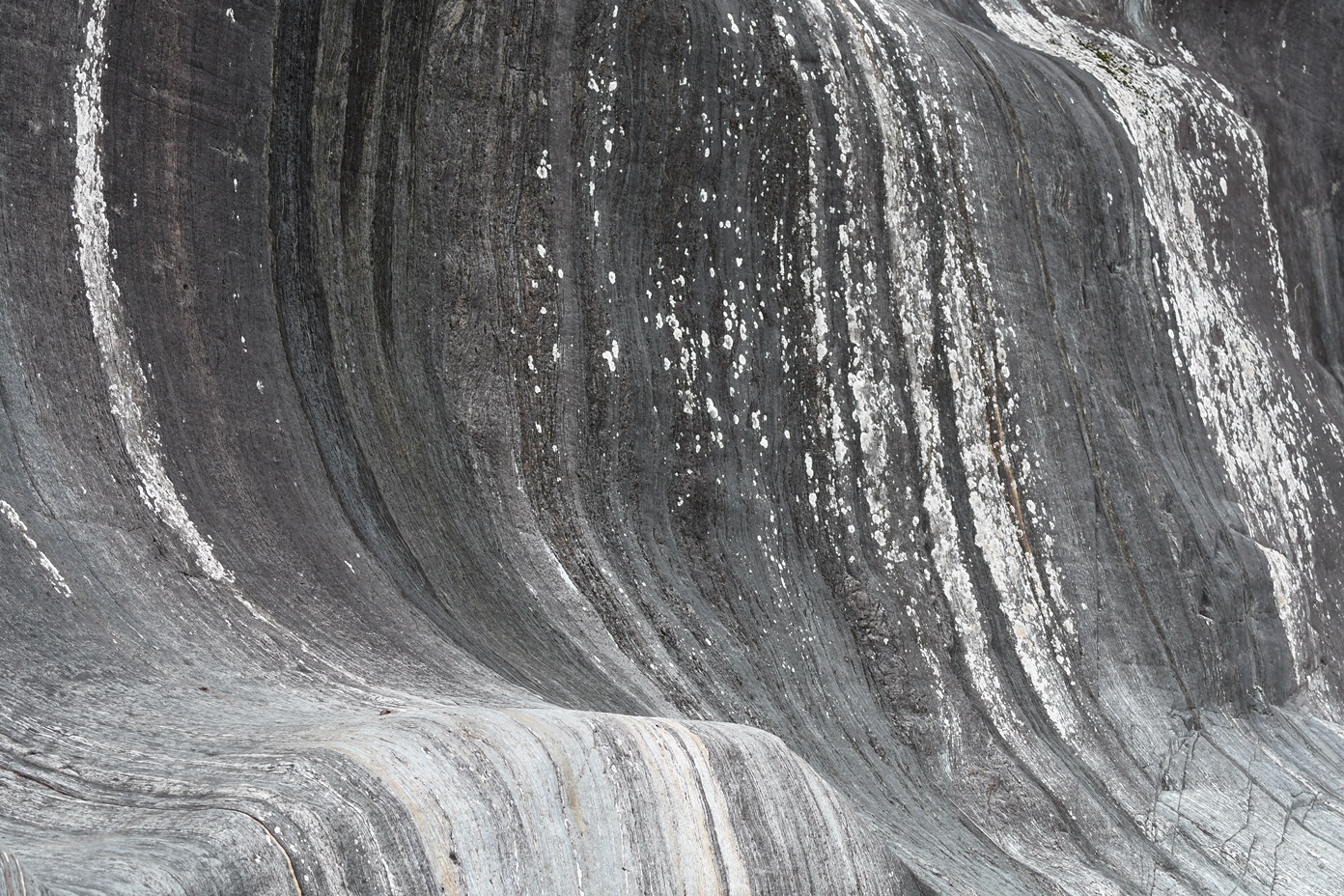
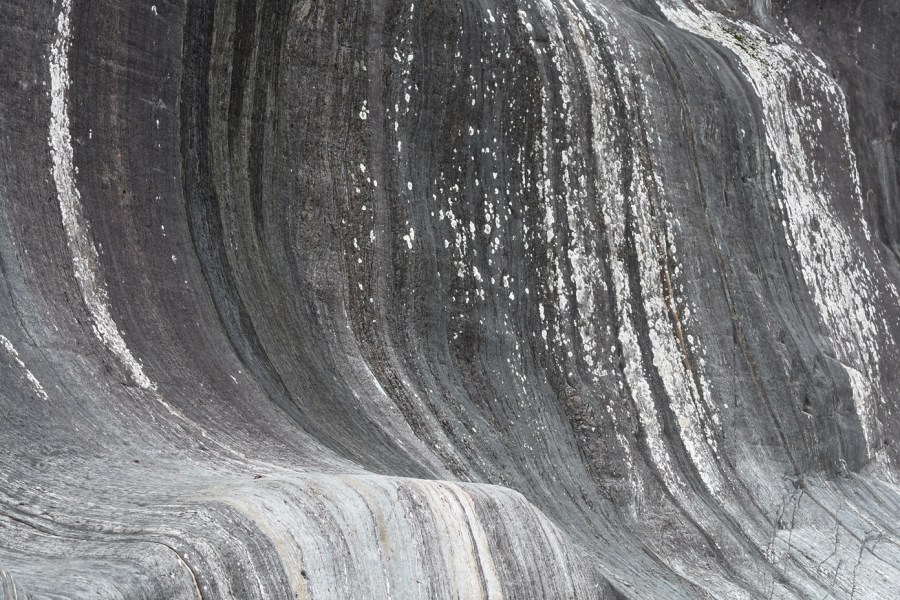
The quartz in greywacke can be very obvious. It has intruded into the thin cracks or between the sedimentary layers of the mudstone.This is a wall of greywack about ten feet tall. It has been shaped by a glacier that was flowing from left to right and scouring the greywacke as it passed. In this instance the original stone was laid down in horizontal layers which have been turned 180 degrees by tectonic action, so they are now vertical.














 On The Road With DEC