Please consider these images to be copyrighted and contact me for permission to use.
It was mid-June and the ocean water had warmed to about 64 degrees in the inner bays, but it was still in the mid-40s when we arrived off Monomoy (Chatham, Massachusetts) near Crab Ledge and there was a real chill in the air. It may have gotten into the high 70s and low 80s on the mainland on Father’s Day but it was damp and chilly out on the ocean. We were about 18 miles east of the sand spits that make up the Monomoy Islands; an ever-changing collection of sandbars and dunes reaching down to the south of the Cape Cod’s elbow.
The boat trip was arranged by Krill Carson of the New England Coastal Wildlife Alliance (NECWA). She does two of these outing each year, June and September, as fundraisers for NECWA. The fundraising may be modest but the educational value isn’t. We have seen and identified many whales over the years and have added a great many pelagic bird sightings as well. Sharing these opportunities with interested folks is a real treat. This year it was Wayne Petersen, Tom Robben, and me on the microphone; though Krill and her interns were very adept at working the great feeding displays of Humpback Whales that we saw. (We saw the old lady of whale-watching out there – Salt is an animal that was first seen back in the 1970s and is known to have at least 14 offspring!)
Krill does a great deal of work with ocean Sunfish (Mola mola) and her website is well worth visiting. The fall trip will be out of Gloucester, Massachusetts this year, a great time for both sea birds and marine mammals.
Most years there are lots of Humpback Whales along the coast of Massachusetts in the summer. Tourism depends on them as they attract people like magnets attract iron filings. In 2019 they share the spot light with Gray Seals and Great White Sharks; but the whales are much more easily seen than are the sharks. Seal tourism is modest but whale-watching is big business.

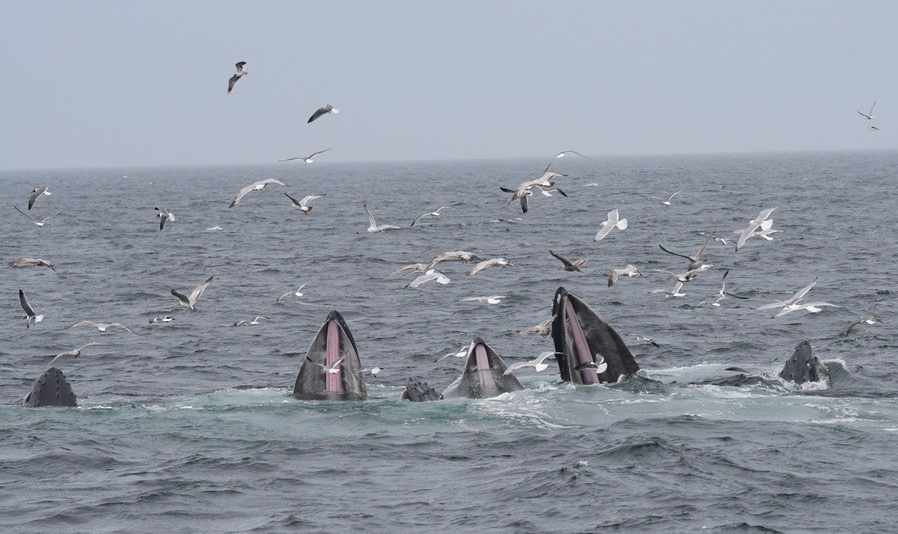
Our boat ride was a bit testing for the first hour or so. No one seemed to be ill and that is always a good thing. There is nothing quite as contagious as sea sickness on a smallish boat. We looked around as we traveled and had very little to talk about. There were a few gulls and terns and a Common Loon as well. But when we found whales there was a great deal of activity. We couldn’t decide on a number for the humpbacks (on the way back in to port) but the most conservative number was forty. There could have been sixty whales in our view! It was very impressive.
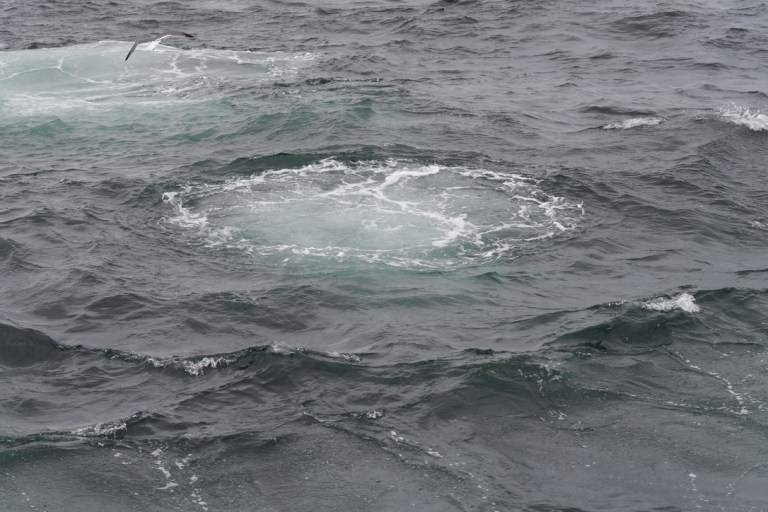
The best part was that they were bubble feeding in many small groups. Several whales would get together and dive, shallow dives as they were not down for more than a minute or two in most cases, and when under water they would exhale streams of small bubbles as they swam in a circle. This created a rising tube of bubbles that constrained the fish that were enclosed in the “bubble net”. The whales would then turn and rise through the water inside the bubbles, expanding the rorquals and collecting a throat-full of fishy water. When two or three or four or five whales do this at the same time it is very cool.



 On The Road With DEC
Love the pics and info Dave
LikeLike