Lima; A Second Look
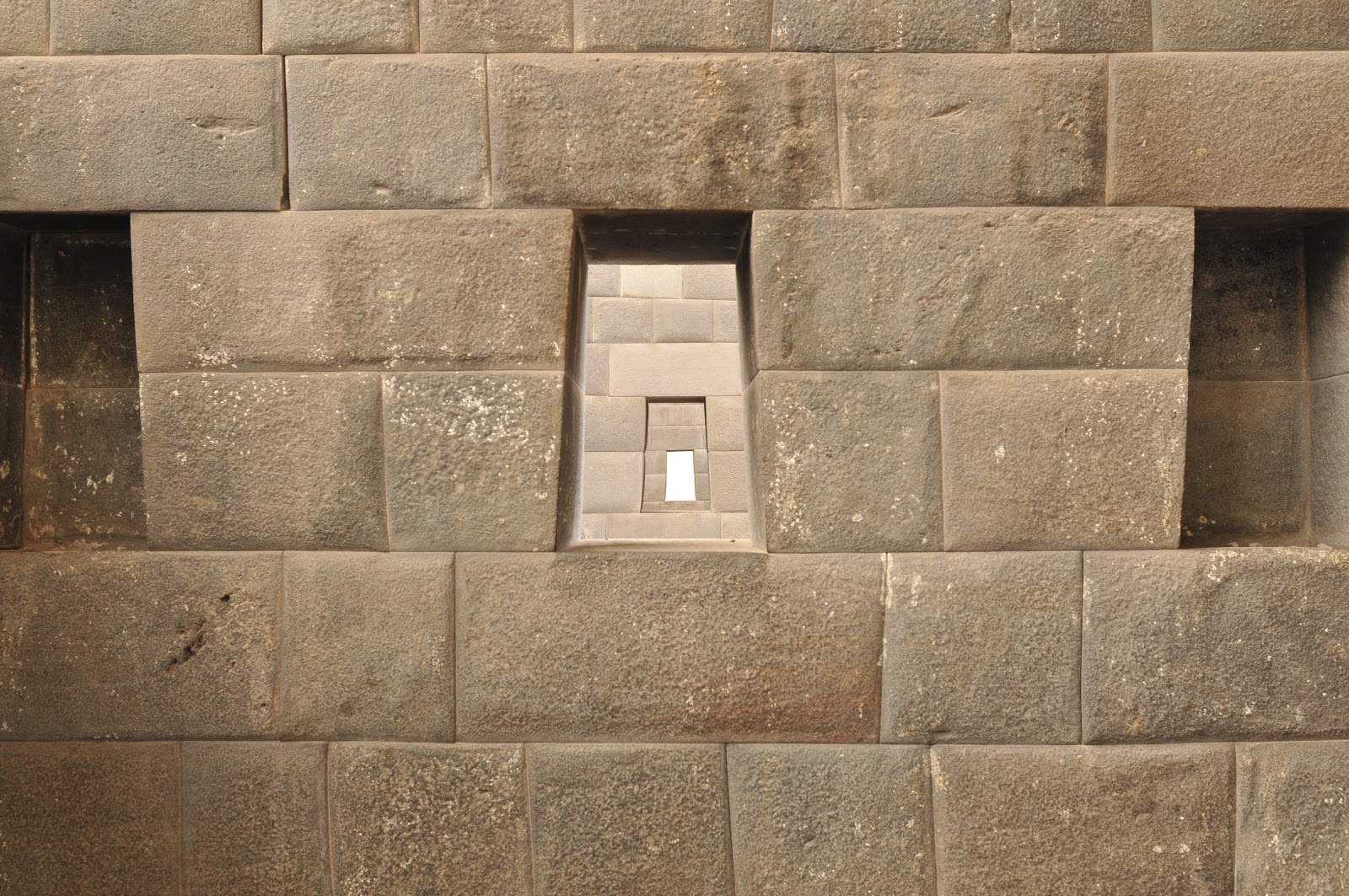
The Spaniards did a real number on the cities and cultures of what is now Latin America. In the Peruvian Andes there are a few remnant facilities like Machu Picchu that remain unexplained but mostly intact. In Lima there are a few places where the precision of the Inca stonework persists. In many places the Spanish built on top of the most religious Inca places in order to establish dominance. In these cases there is sometimes preserved work hidden underneath or used as a foundation. The walls below were part of a main building in what is now Lima. The windows of the three walls line up with each other and the joined areas of the stones are remarkably exact. The few places where there seems to be narrow cracks are the result of subsequent earthquakes
Peru; starting in Lima
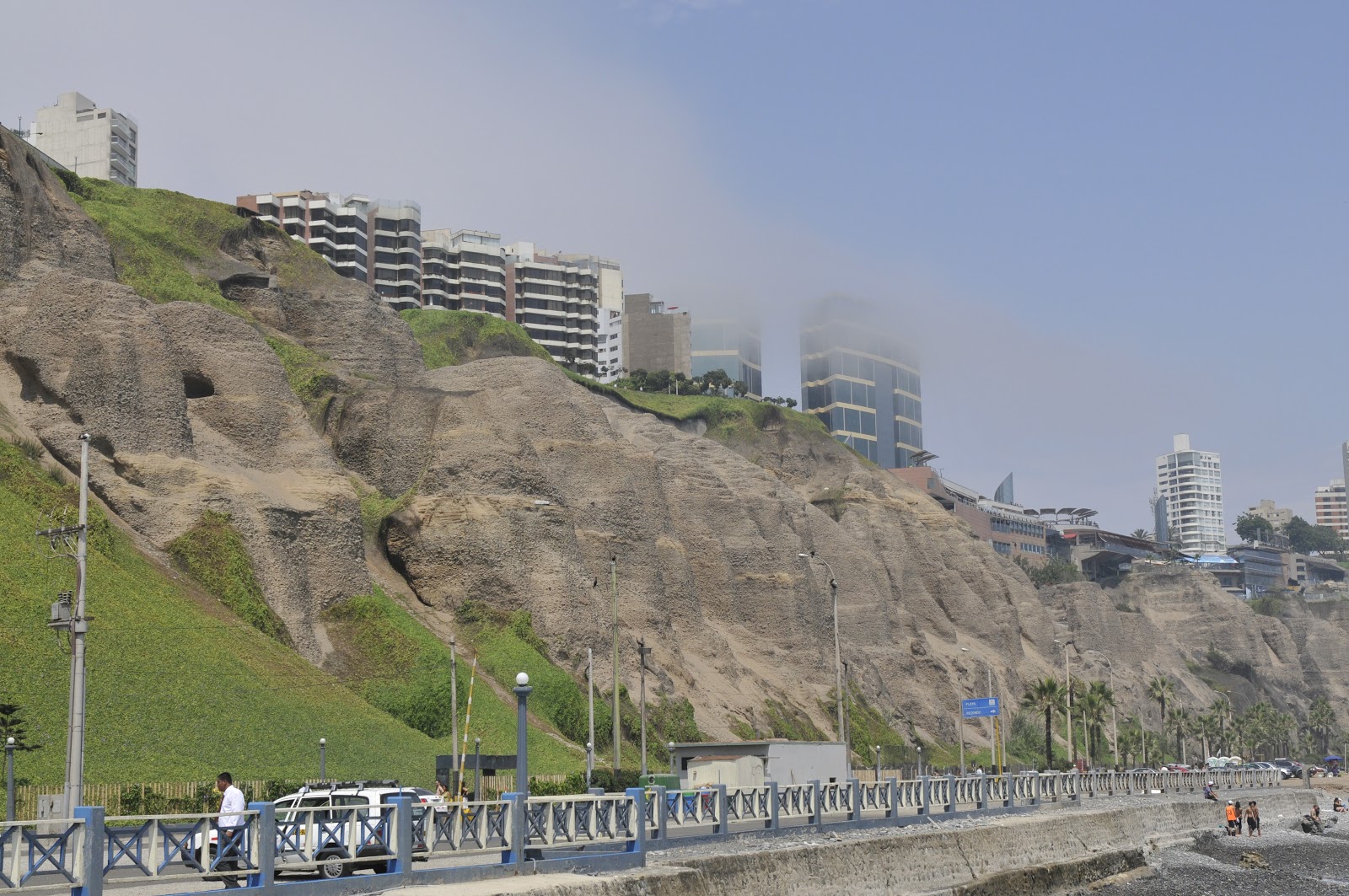
It is always a bit of a surprise to see that Lima is a very coastal city located on packed gravel/stone rising from the Pacific. The 300′ drop to the sea from the front rank of urban streets and parkland is walkable in a few places but a taxi is the best way back up to “street level”. Once you make your way down to the sea the view back up is very glacial looking, but it isn’t glacial. The sands of northeastern North America were washed out of the rubble and debris collected and moved by meltwater from glaciers that covered the area in the most recent ice age. My Cape Cod beaches are ephemeral and each northeast storm batters and erodes them more and more. The mountains of South America were also glaciated but the coastal material along the shoreline is from uplift and mountain-building more so than from glacial sorting. The stones are rounded and worn smooth from transport in plate movements. They have been rolled and rubbed and tumbled in a tectonic rock-tumbler. The cobble/puddingstone face of these cliffs looks to be welded together with a marl-like limestone. This material was derived from incursions of sea water and the resulting calcium carbonate creatures. Though the cliffs seem solid they do break apart; the beach substrate is all cobble or large pebbles as the limestone dissolves and there is little sand.
As the above images show there is often a fog layer where the cool ocean air hits the warm ceiling of air that sits over the land.
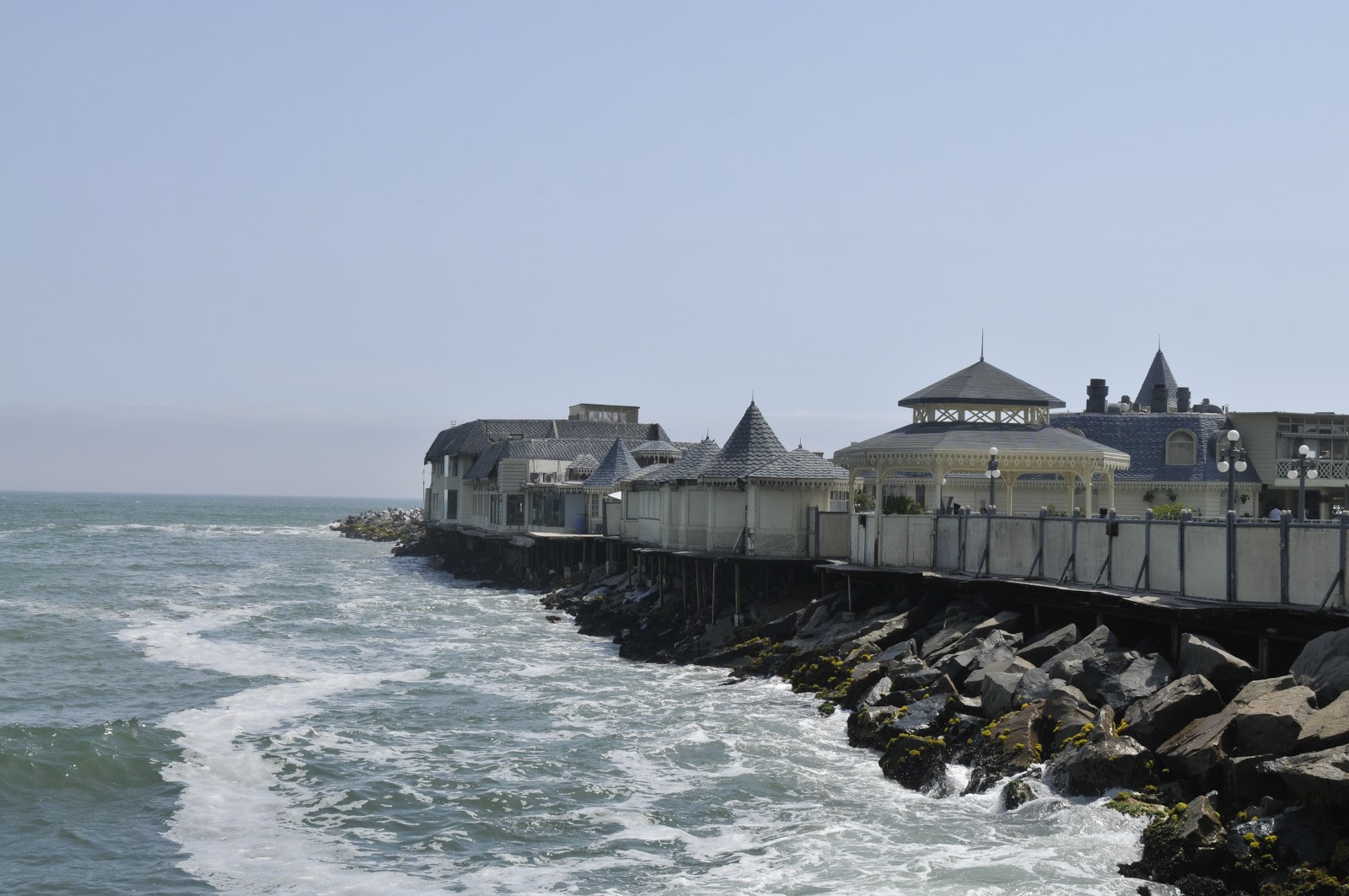
The coast for the most part is not suited to recreation. It is bony and rough. However the city has developed stretches of beach and the surfers and sunbathers enjoy the water and the cobble strewn beach. In the Lima area the beaches are certainly not southern California, coastal North Carolina or the Gulf; but it is more varied than much of our coast.
The cold current that is skived off by the tip of South America is redirected northward along the Chilean and Peruvian coasts. This cool water is what makes the coast, nearly at the equator, something less than tropical. It is not a welcoming sandy beach. It is a surfers beach perhaps, with a hard shoreline.
![]() |
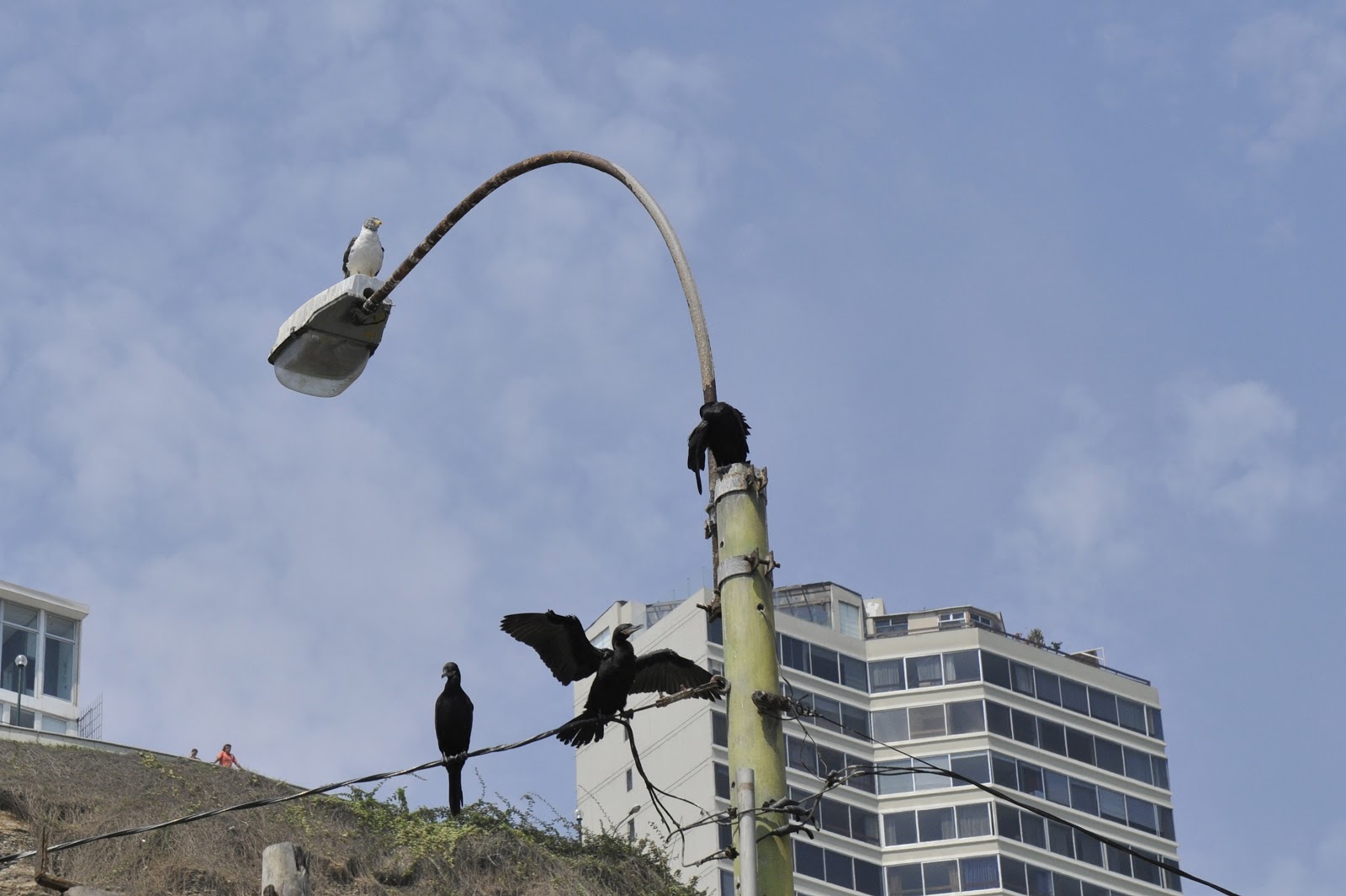
| The shore is used by small scale local fishing operations as well as surfers, joggers, and some sunbathers (mostly tourists). |

This group is four adult Inca terns and one still-begging youngster (closest and back-to). The youngster could fly short distances but was not yet ready to begin the work that comes with being an adult. The adults in this case were quite skilled at ignoring the teen, seemingly aware of how much he had had to eat recently. The Inca Tern is endemic to the cool waters of the Humboldt Current. It is gregarious and easily identified.
![]() |
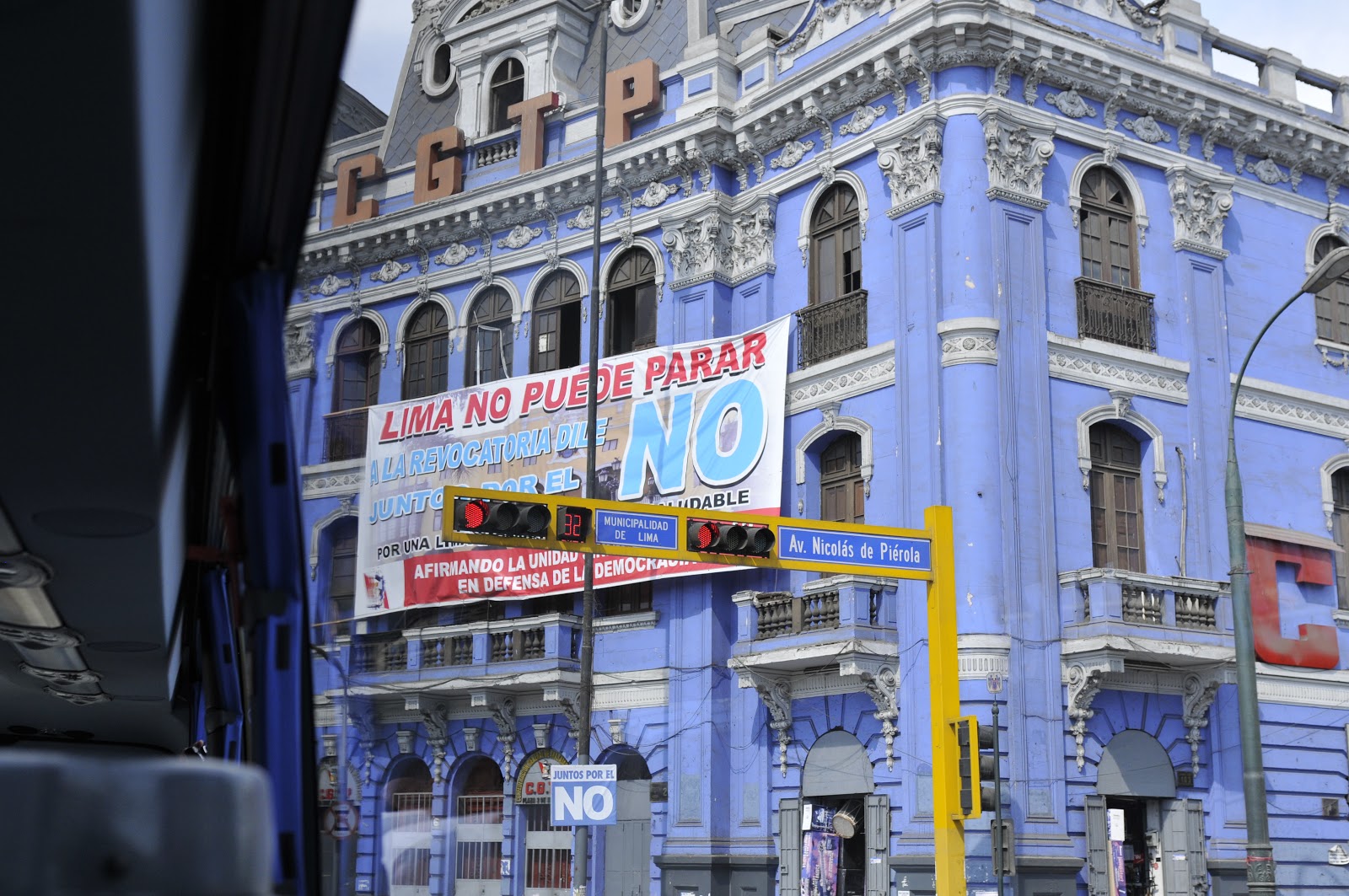
| Political statements are made on a grand scale in the city. In most cases the messages are spray-painted on wall but, as this banner shows, not always. |
Pine Creek, Northern Territory, Australia
Pine Creek; an instant home
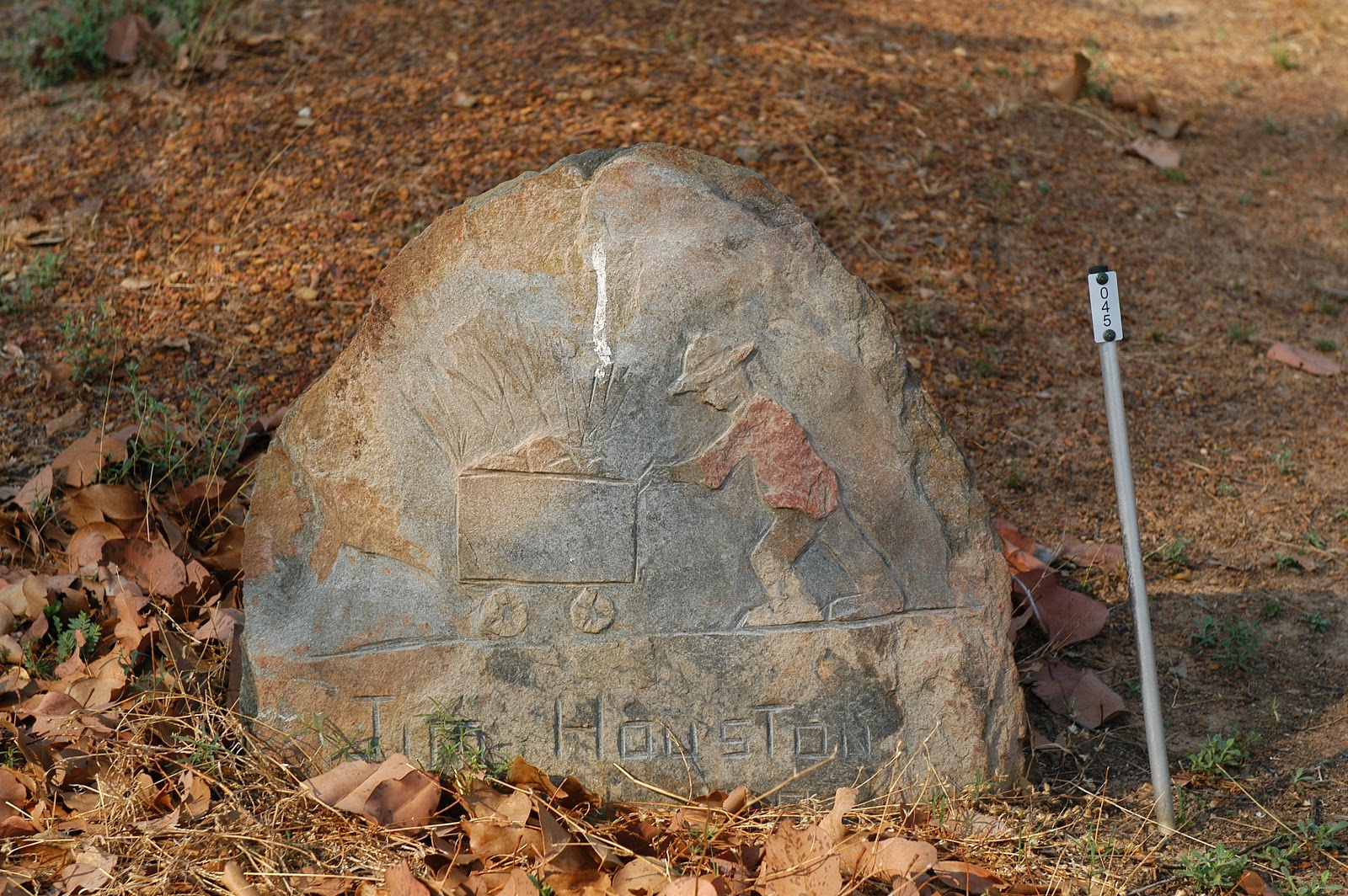
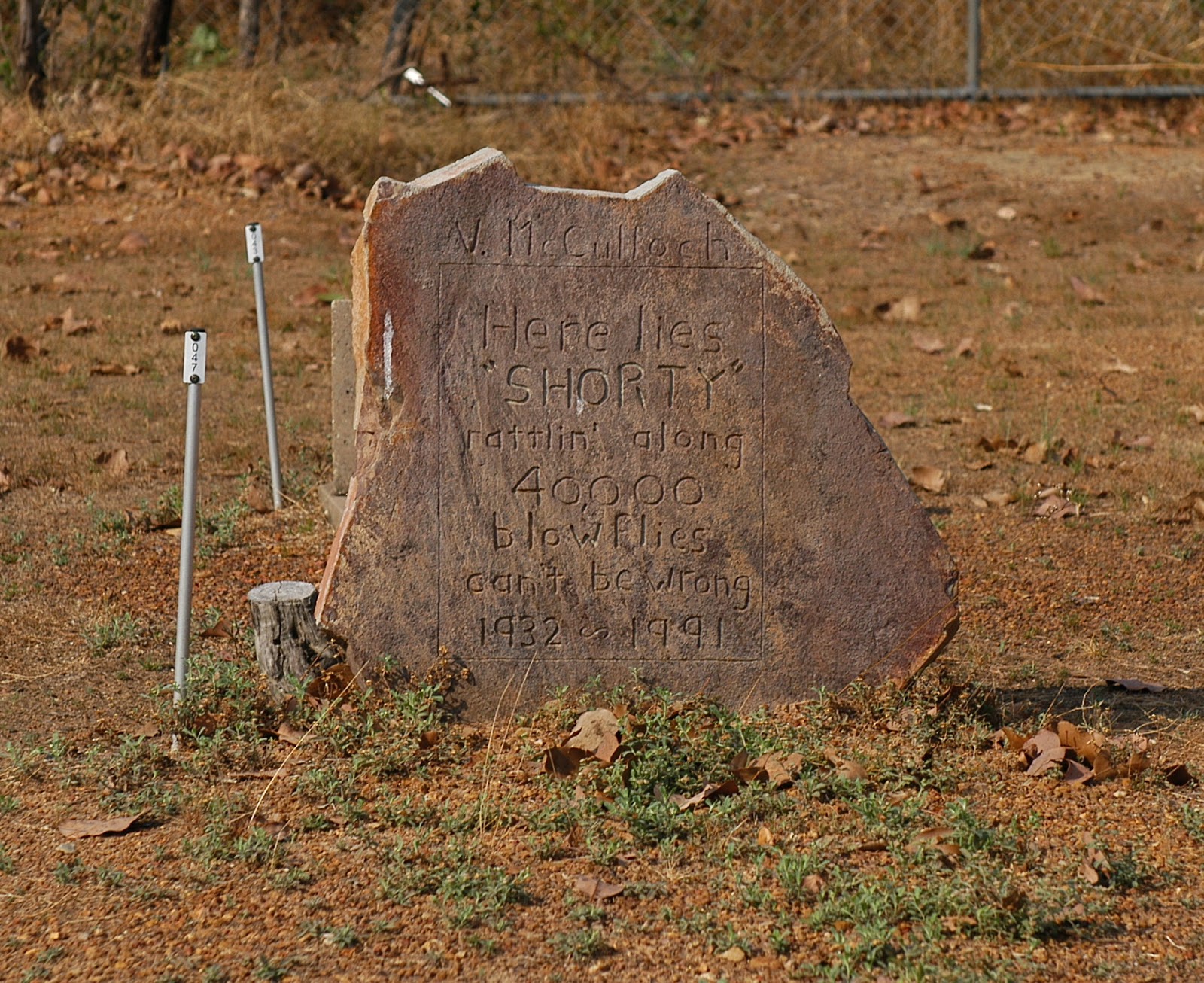
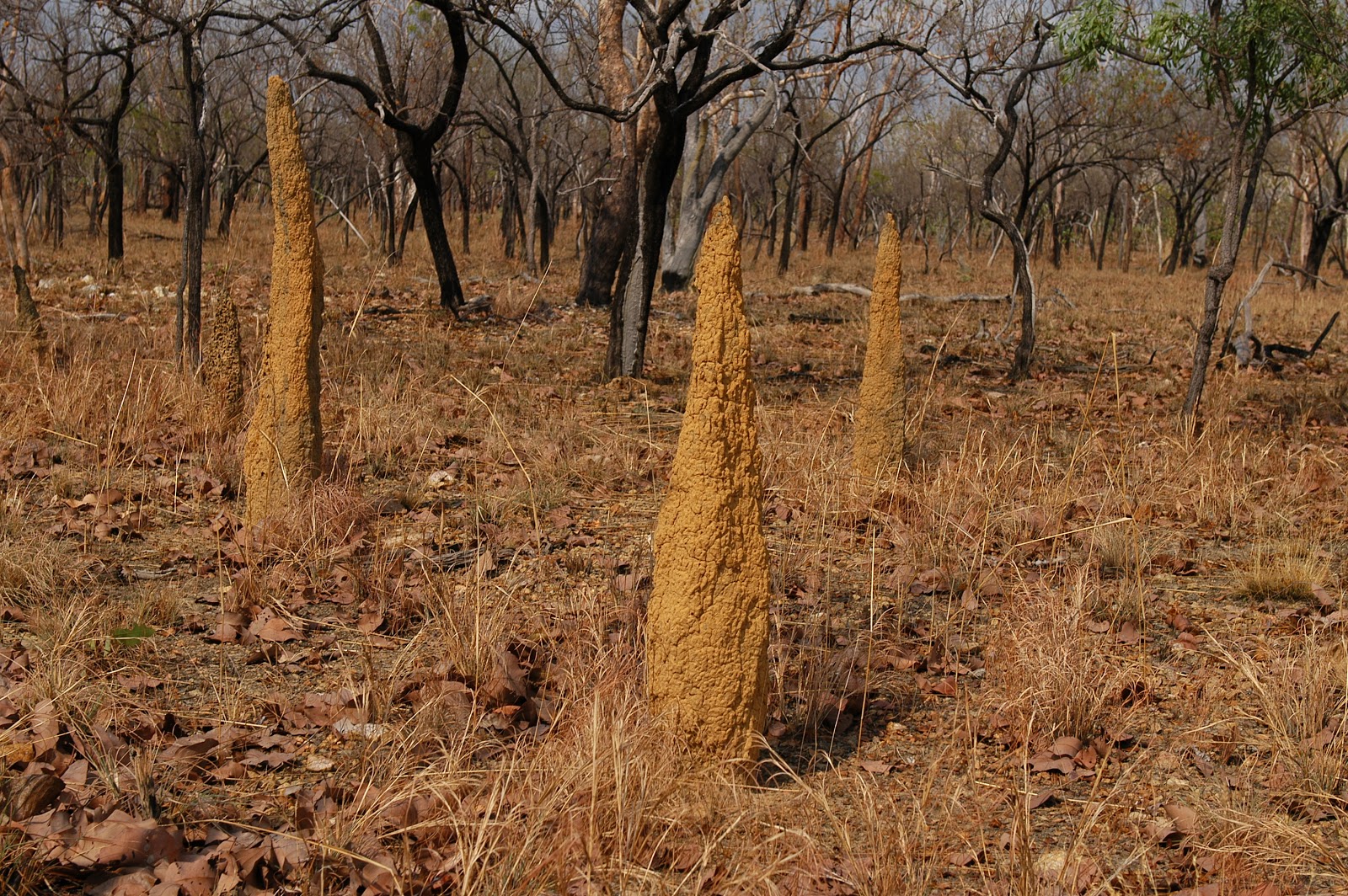
The blog page on termites (see previous entry) was done with termite mounds from the Pine Creek area. The local cemetery was a birding destination and it turned out to have local color and termite mounds as well; trifecta for sure. It was also near the town’s sewage treatment plant (why do all the other places in the world have treatment plants in every small town – and we in the US continually complain about costs and rarely build them). The cemetery was dry and dusty with as many termite mounds as there were head stones. Three of the head stones were done with the deceased specifically in mind. Jim Honeton (immediately below) was obviously a miner or prospector. The second stone, for Shorty, is more explicit but less informative. Obviously Shorty was a beloved (or at least memorable) town character. 40,000 blow flies!!! Hmm; lack of bathing facilities, sloppy eating habits, ……. poor Shorty for whatever reason.
![]() |
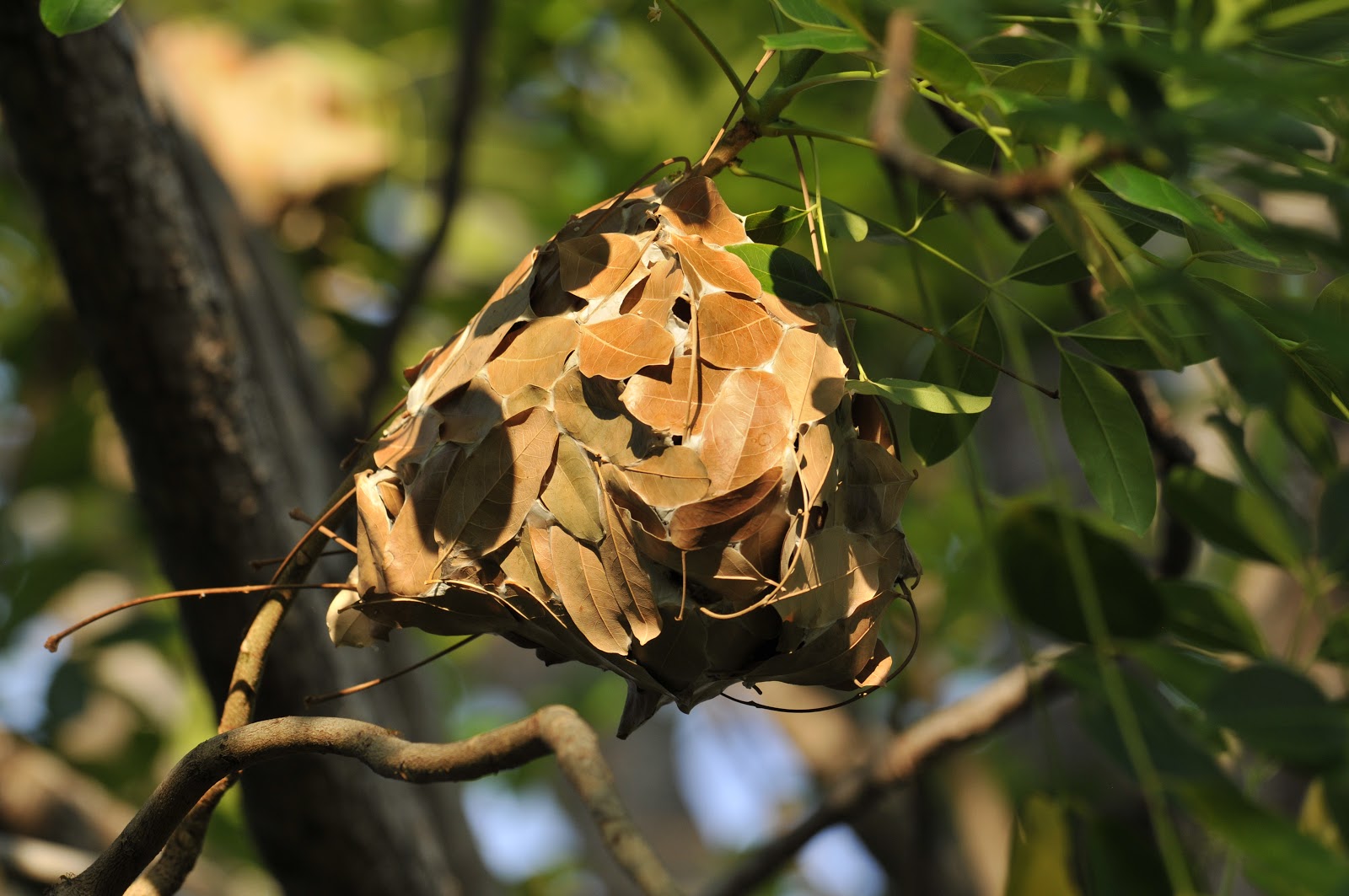
| There are hundreds of Green Ants in each of the scores of small nests that make up the much larger colony. |
![]() |
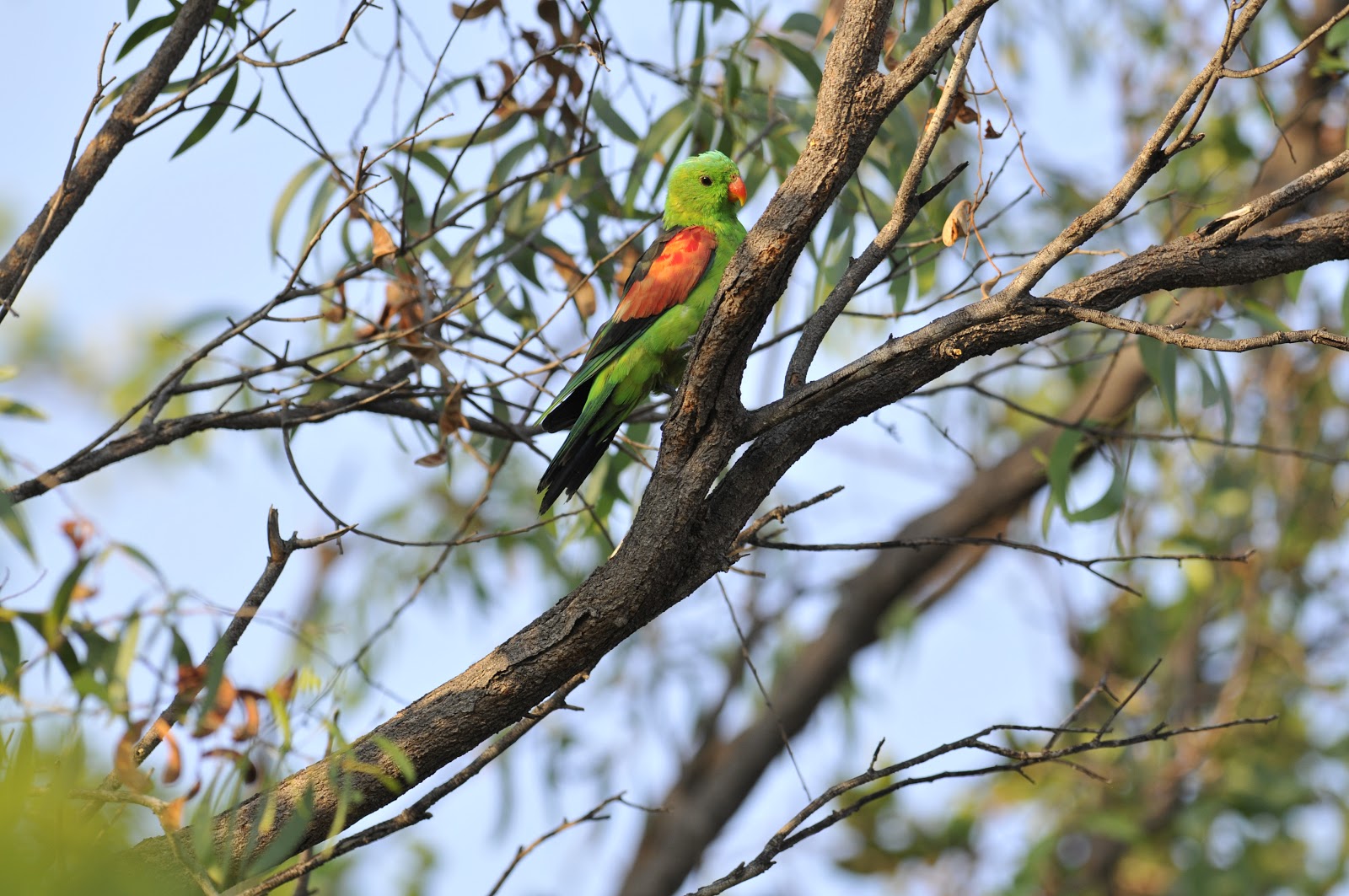
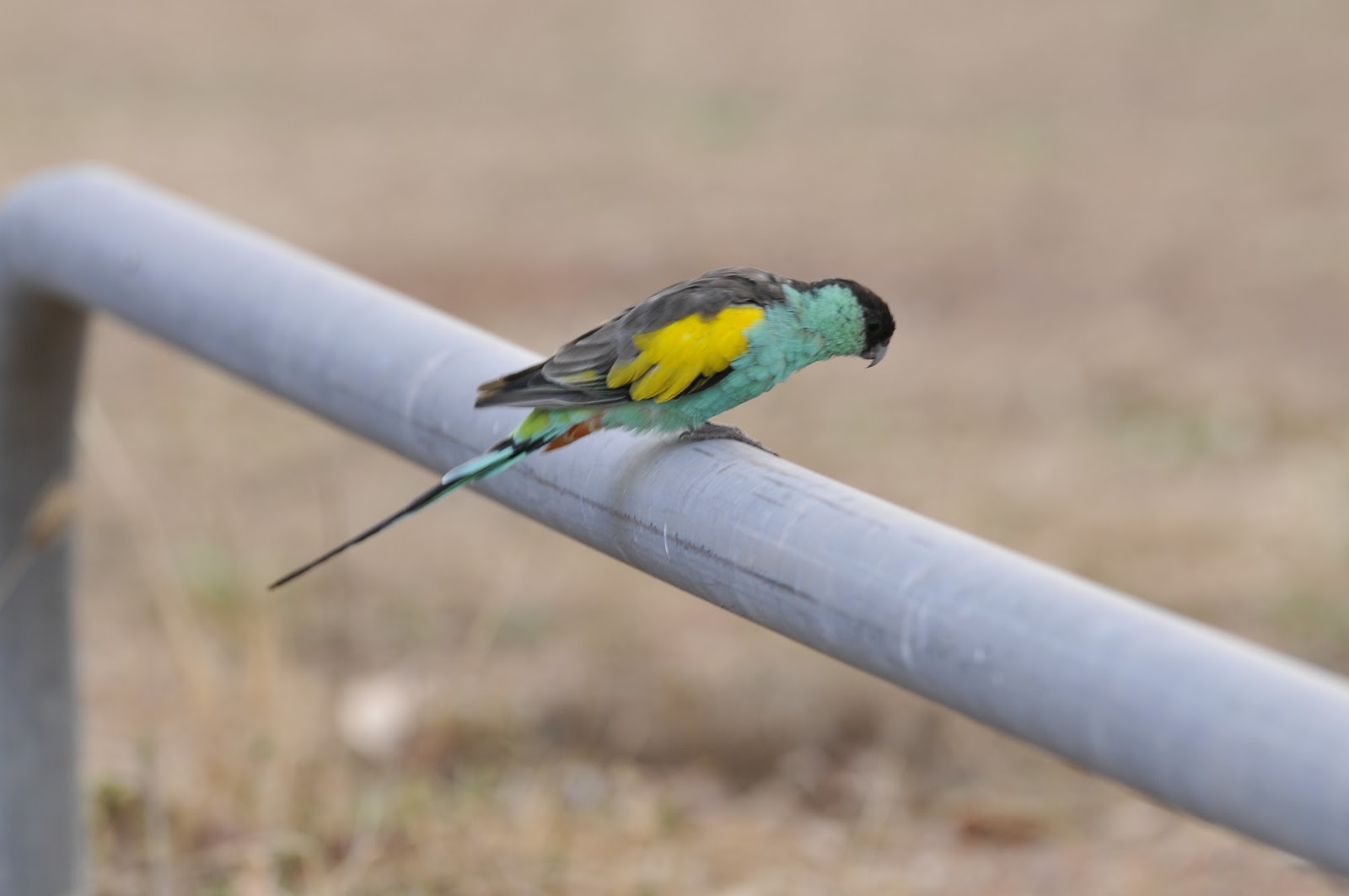
| The Red-winged Parrot was a regular member of the avian group using the town’s central park lands. This species seemed to favor mangoes and spent a good deal of time peeling them. |
![]() |
| The tail of the Pheasant Coucal is truly pheasant-like. |
Outback Termites
Outback Termites are Everywhere – and they are very cool
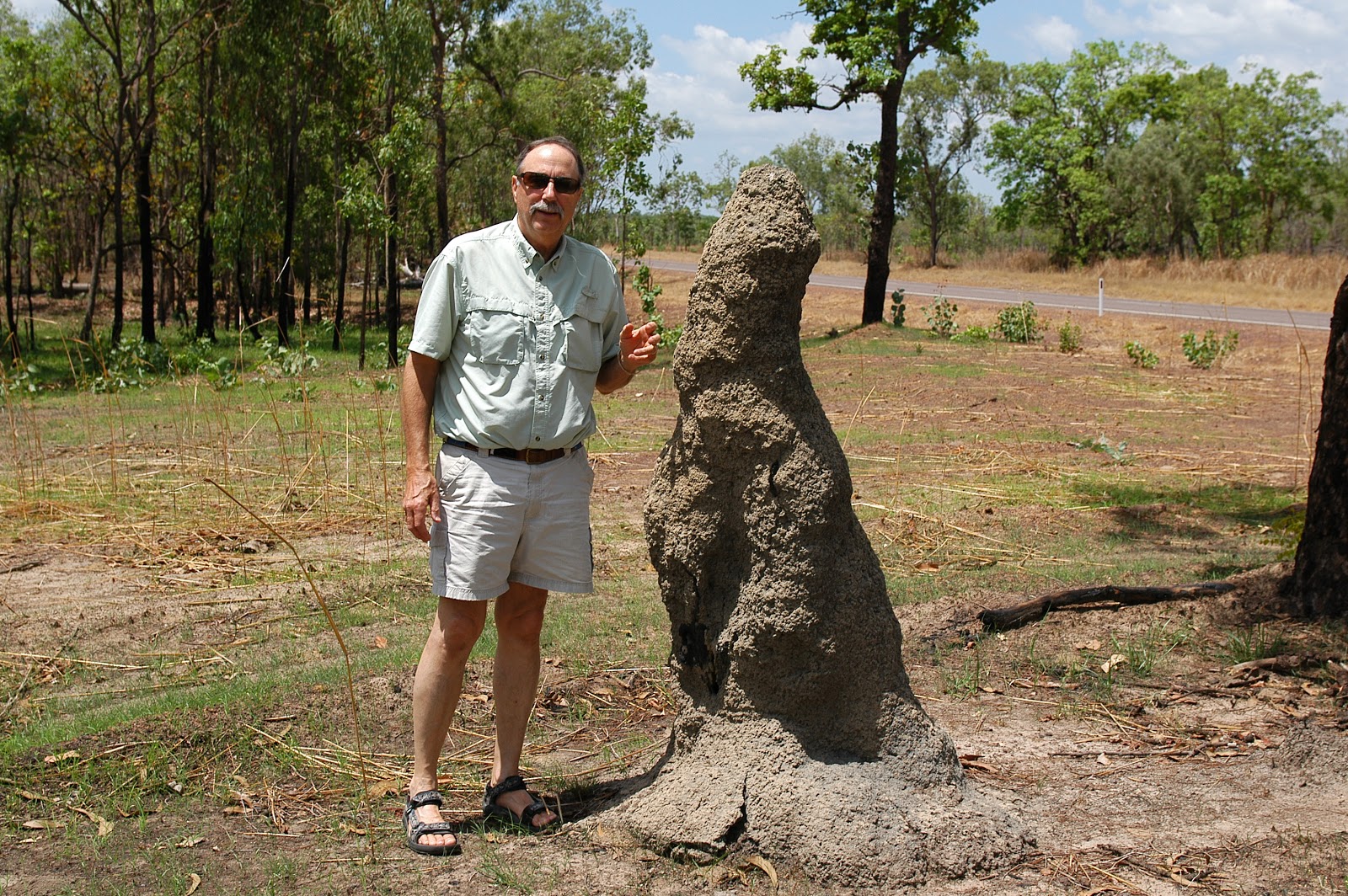
The amount of work involved in building one of these larger mounds is mind-boggling. The interior contains a stuff called carton; a mix of vegetation, waste material, and (incidentally) clay. Carton is in just about all arboreal nests (tree types) and makes up some part of the innards of other mounds as well; looking like dried wet cardboard. In most cases it is dry and can be crushed by hand in other cases it is quite hard. The outer shell of the termite mound is almost always hard.
Termites are social; social insects. They are not closely related to ants but are related to the widespread and very successful cockroach line. The start off as eggs, then larva, and finally into one of three adult forms (worker, soldier, reproductive). Most colonies 90% workers and 10% soldiers. There may be millions of termites in a mound so the one reproductive female (and one male) doesn’t have any statistical position. She may live for 30 years or more and be the mother of tens of millions of workers and soldiers. As the rainy season approaches there will be a time when millions of hopeful females will leave the mound, rise into the sky, find a male, and (perhaps) start a new colony. The millions of termite females provide a huge surge in the food available to quolls, lizards, dragons, skinks, bandicoots, woodswallows, swifts, dollarbirds, and other inhabitants of the outback.
The soldier termites should get a bit of a mention. They are often small, delicate, and many types do not have fierce pinching mandibles. Many are specialists in chemical warfare. Some have poisons they squirt, others have sticky goo that immobilizes the predators, and other do carry a mean set of sharp, plier-like pincers. To a marauding ant the mincers must look like the horns of a Texas longhorn. As a matter of fact the predator that bothers termites the most are ants. Ants are also social insects but unlike termites they are agile, predaceous, and mobile during the day. In some cases colonies of ants will move into a termite mound or chimney.
The image below depicts one of the cathedral mound builders, probably one of the Nasutitermes. Like so many features of the Australian Outback the termite mounds were lovely, impressive, and other-worldly. In order to adapt to a challenging environment many creatures follow slowly along a successful lifestyle line. In the case of the termites they have adapted in many ways to the challenges of Outback living; enough so that they have become a major source of nutrients for all the other residents of the countryside. The Outback vertebrates are small and often dependent of the copious biomass of the termites.
Far Northern Queensland – #1
![]() |
| The mountains of Far Northern Queensland are tropical rain forests for the most part. They descend to the coast north of Cairns near the Daintree River and a regular feature of the eastern slope of the mountains from Cairns northward. The Atherton Tablelands are less than a mile in elevation and spread westward on a high plateau. The elevation moderates the climate allowing for dairy farming and agriculture in this region. The variety of habitats in the area are all within a couple hours drive of Cairns, but going further and staying in local accommodations offers a better experience. Where the forest remains intact the birds and mammals are largely endemic. |
![]() |
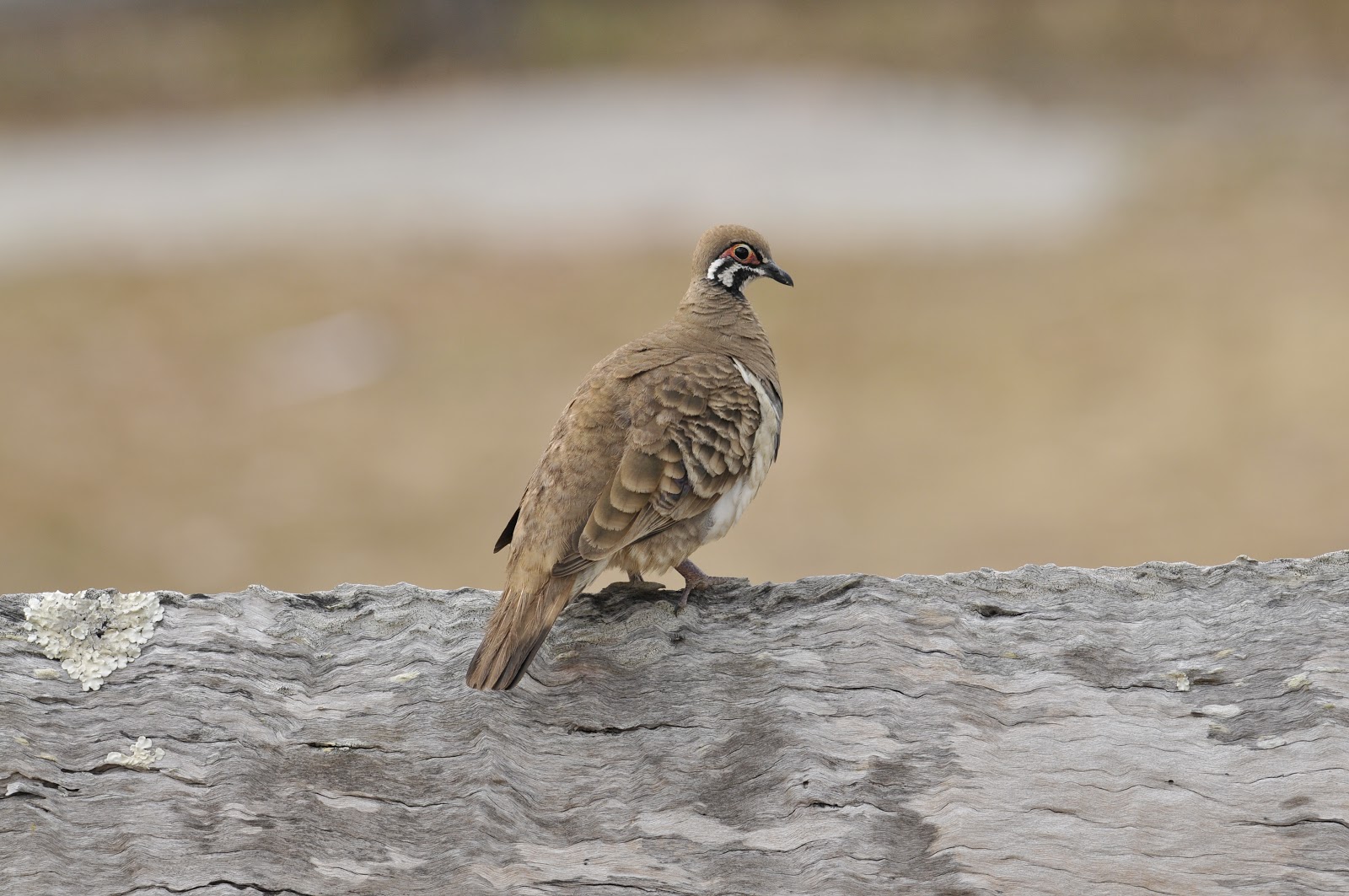
| There are many large and showy doves and pigeons in Australia. Some, especially the Fruit-Doves, are like painted ladies (butterfly reference) having greens, reds, and pinks as predominate colors. There are some pigeons with very tall crests and others with striking white and brown patterns. Others are bronzed and flash golden colors in the sunlight. There are fifteen species that are the same size or larger than the common pigeon. The dove pictured above is a Squatter Pigeon; a bird of grassy woodlands found west of the great Dividing Range. |
![]() |
| The Bar-shouldered Dove was common throughout our travels. At Kingfisher Park they were regular at the bird bath. |
Because Australia is low in human density the various habitats are in rather good shape. Some of the arable land has been cleared of forest and taken over for agriculture but there are still forests that remain. The less attractive land (by human standards) remains in large, often huge, blocks. This is true throughout the continent but remains true even in more populated areas like the land east of the Great Dividing Range. In FNQ there are forests that protect residential areas from flooding and others that serve as freshwater recharge areas for developed areas like Cairns. The further out one goes from the cities the more undeveloped the land is. It should be remembered that Australia has huge mining industries and there are places that are being excavated and devoured ruthlessly and thoroughly, at least from a naturalists point of view.
![]() |
| Water dragons are not uncommon but not always easy to see. This one was in a creek just below a small bridge. As with many creatures they are easiest to see in areas where they have learned to live with people. City parks (Brisbane for example) often have rather low key (relaxed) Water Dragons in residence. Wildlife exposed to bustling human populations often acclimate and in turn make very good photographic models. |
![]() |
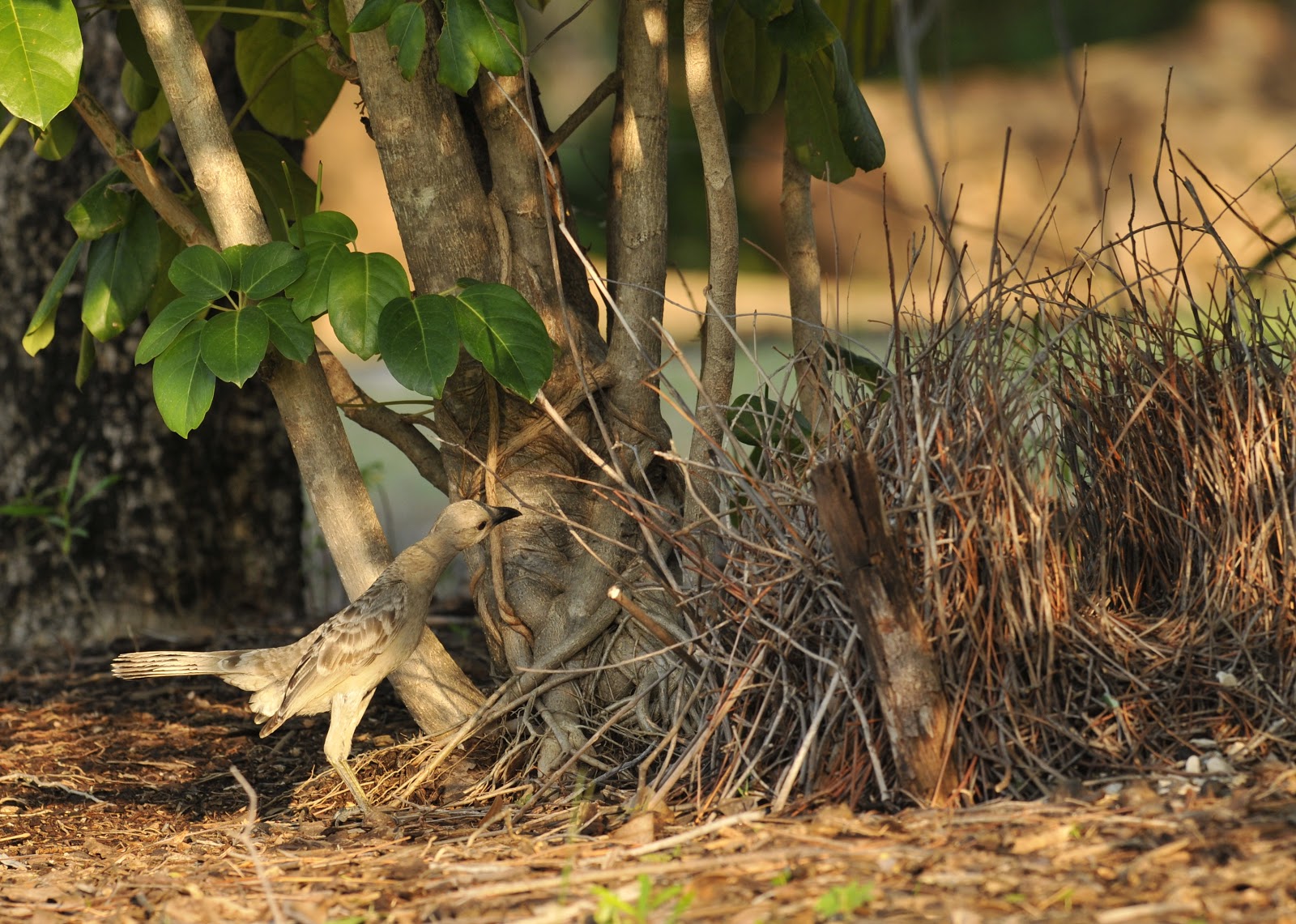
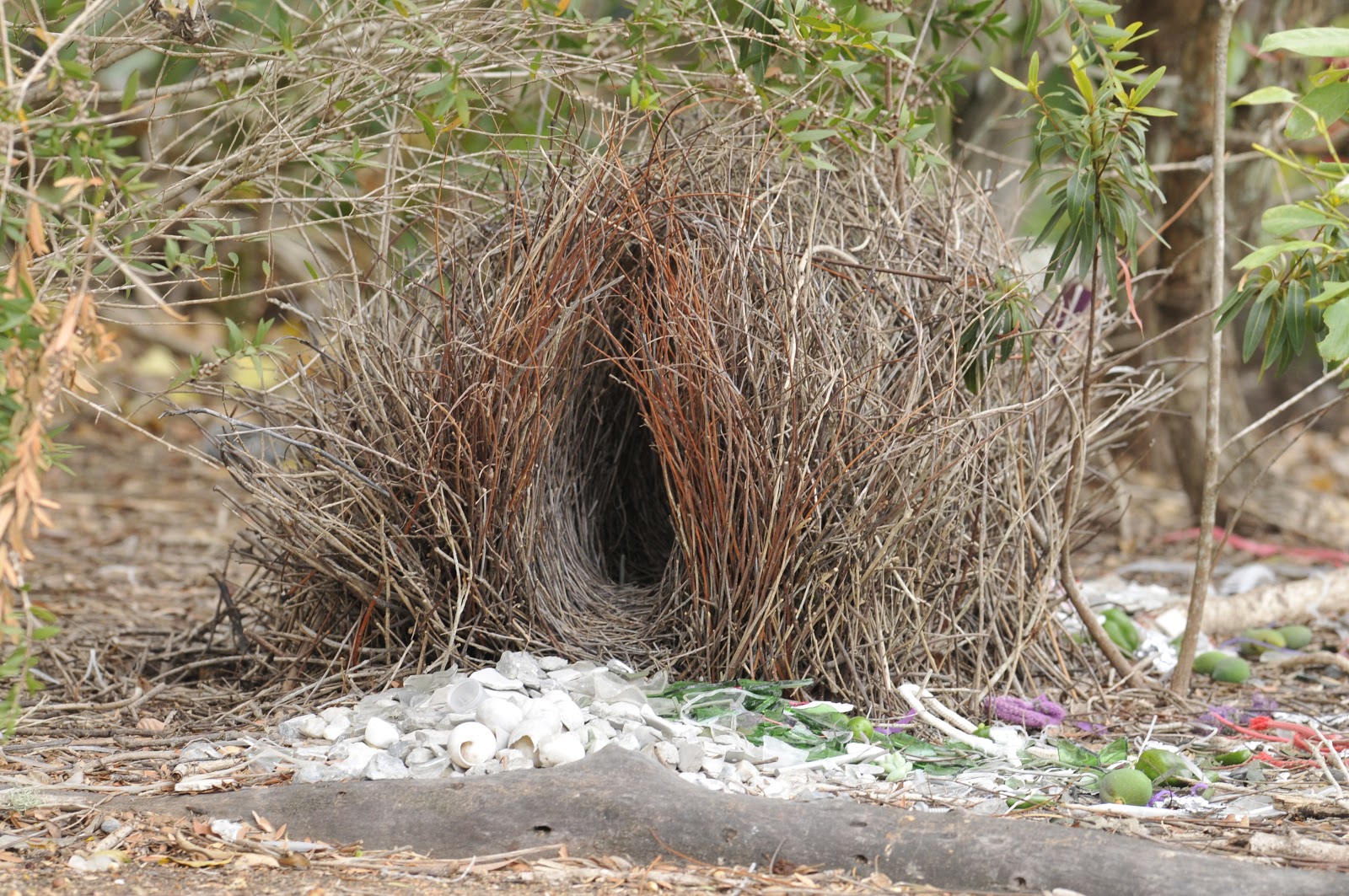
| We found bower birds from Darwin and Pine Creek east to the tablelands, The Great Bowerbird is shown on other blog pages but this bower was the richest. It has separate piles of glass and shells, each further separated by color. This bower was right in town, a small town but still a town. It was also adjacent to a sidewalk and no more than four meters off the road. Maybe he was looking for a rather urban female. |
I mentioned that fisherman use the coast and waterways of FNQ. One of the most highly regarded fish is the Barramundi. It is now farmed extensively and serves as the piscine mainstay of Australian restaurants. The Barramundi, or Asian Sea bass, is a native of northern Australia and the islands to the north all the way to Thailand where it is a routine component of the diet. It is a catadromous fish living mostly in warm fresh water and breeding in shallow sea water, mostly in estuaries and over tidal flats. The fish usually mature as males and breed as males for at least one season then they transition into females and become egg-layers for the rest of their lives. Thus most large fish are females.
![]() |
| In Julatten there is a large Barramundi farm. As birders we enjoyed the White-bellied Sea Eagles and Osprey that were attracted to the site. |
![]() |
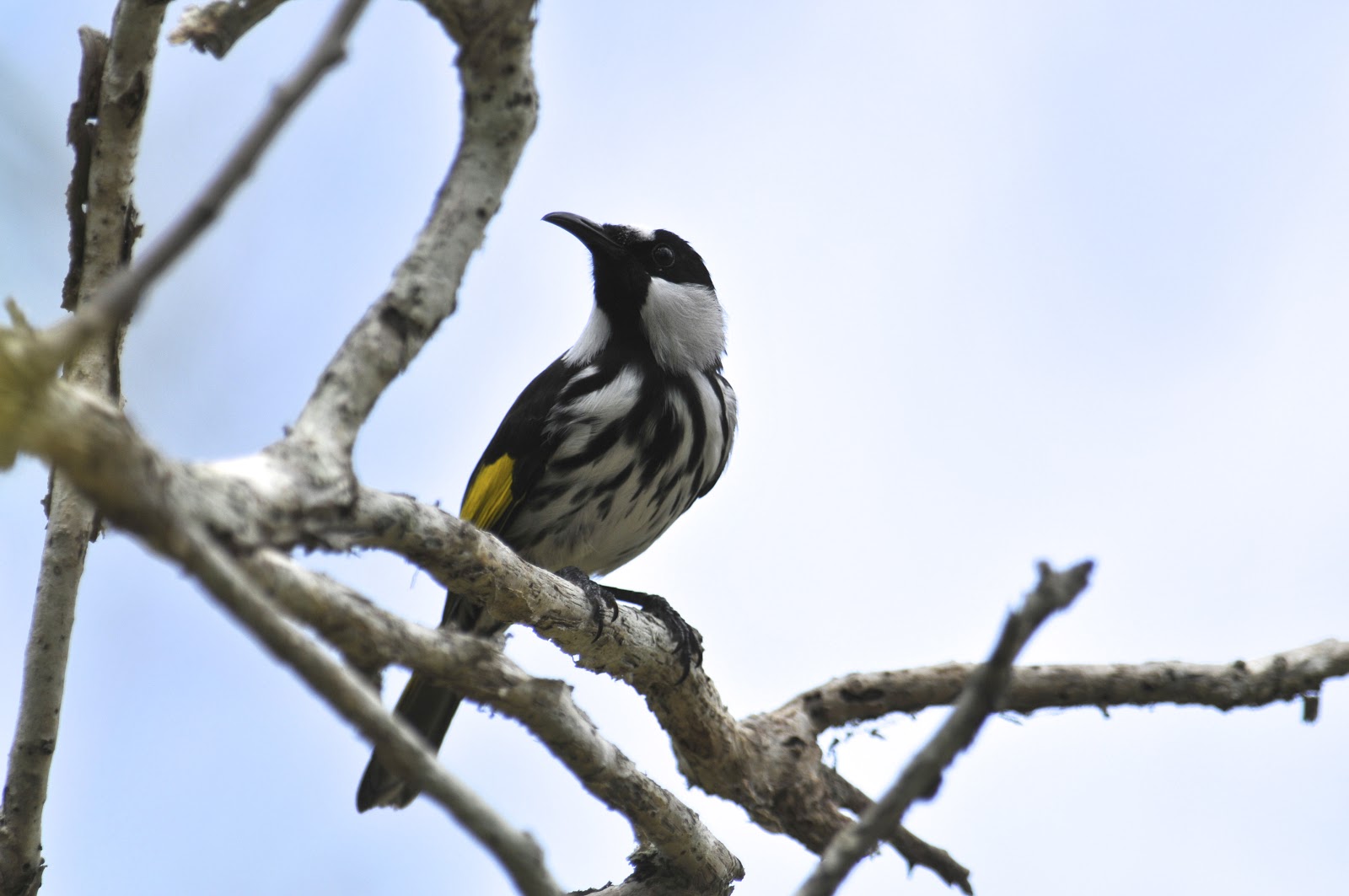
| The White-cheeked Honeyeater is very similar to the New Holland Honeyeater. |
Some Southern Africa Birds
Southern Africa: South Africa, Botswana, Zimbabwe, Zambia
The opportunity to visit southern Africa was very exciting. Anticipation and planning were the order of the day. I was to be with a Smithsonian Journeys group for most of the time but I thought a day or two of birding prior to the trip would be in order. Through a web site called BirdingPal I found a wonderful South African birder named Andy Featherstone. He met me about an hour after the plane landed (almost 16 hours after take-off and overnight) and we went right out to a great reserve called Marievale Bird Sanctuary which part of the Blesbokspruit Wetland (a RAMSAR site), more than 16,000 acres and full of wildlife. It was a treat. This blog page will show some of South Africa’s wetland birds and the next blog will also feature birds. The remaining pages (whenever they get done) will be mostly mammals from the trip.
The Hadada Ibis has a heavy decurved bill like all ibis’. It is a widespread and quite common bird of parks, savannas, hotel grounds, and wet fields. It is loud and raucous and often calls in unison with others. The name “hadada” comes from the sound the bird makes. They are a common feature of the morning and evening sky as they depart and return to roosting areas. In many places they can serve as an alarm clock as they call loudly just after sunrise.
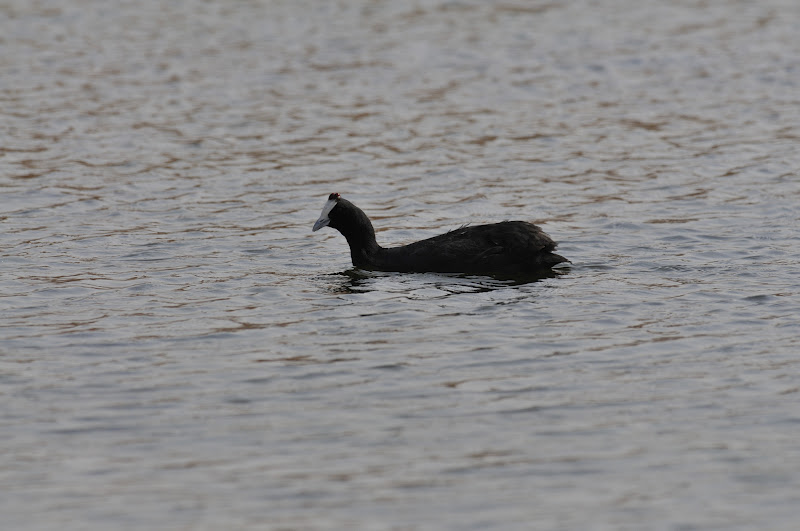
The bird below is familiar to many of you as a coot.The two little round pea-like knobs on the head are red; hence this is the Red-knobbed Coot. This is a common bird of wetlands that have reeds or cat-tails around the edge. Coot are not too closely related to ducks and geese but are related to gallinules, moorhens, crakes, and rails. In the United States many of our coot winter in southern Florida and are a common feature of the Everglades and almost every golf course pond as well.
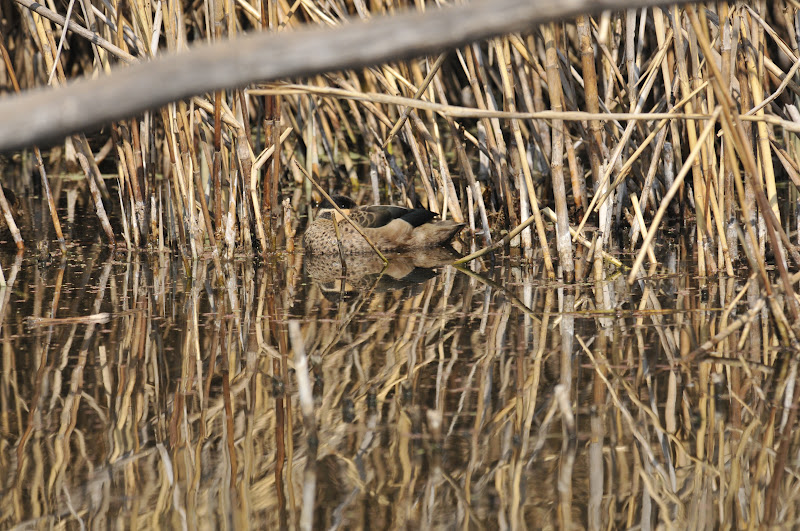
In the center of the image below is a Hottentot Teal; head turned to the rear and bill tucked into the feathers of the back. This is an exquisite little duck and one that a visitor looks forward to seeing. Though this teal belongs to a very common Genus (Anas) it only has one similar-looking relative, the African duck called Red-billed Teal. His Genus-mates include mallards, American Black Duck, Green-winged Teal, Pintail, and American Wigeon.
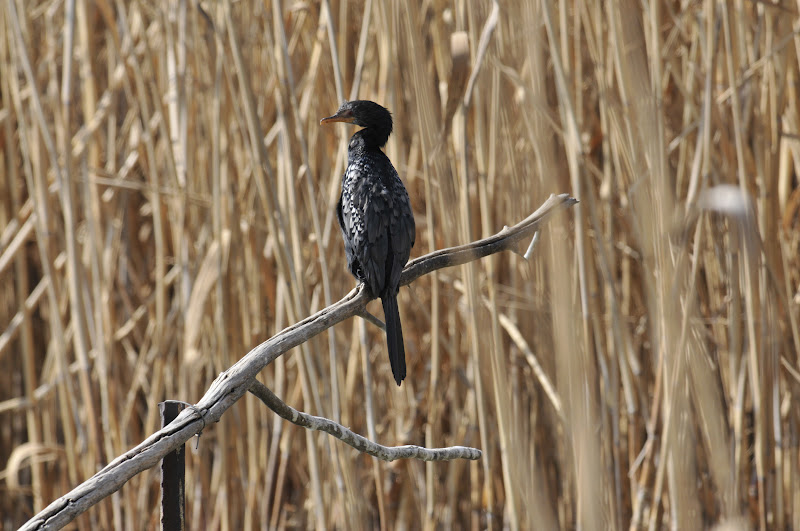
It seems that cormorants are everywhere and that the taxonomy is a muddle. This small thin cormorant is the Reed Cormorant and is found in fresh water in most every reed-lined pond and wetland. Like all cormorants it swims and dives and eats things caught in (under) the water. Also like many cormorants it develops a set of plumes, on the head, during breeding season not unlike the Double-crested Cormorant here in the USA.
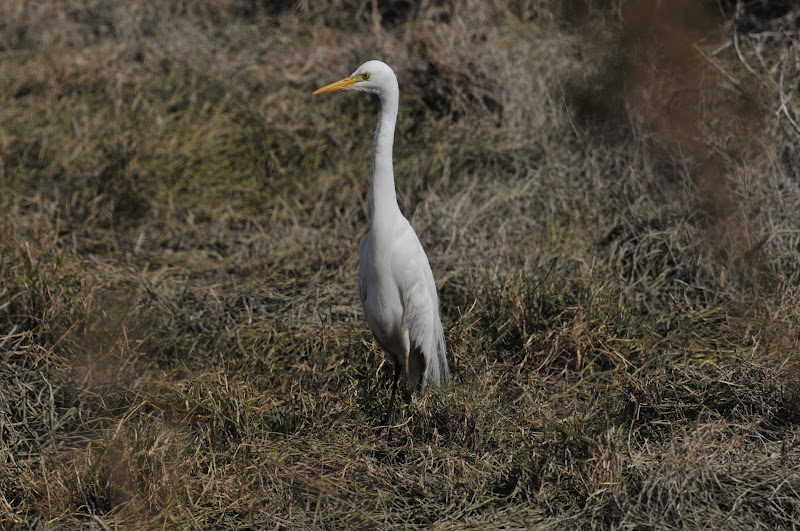
The Intermediate Egret (sometimes called the Yellow-billed Egret) is in between the Cattle Egret and the Great (White) Egret in size. It rarely has plumes and is built quite solidly making it have a different jizz (from general shape and impression) from the other egrets which are a bit more elegant looking.
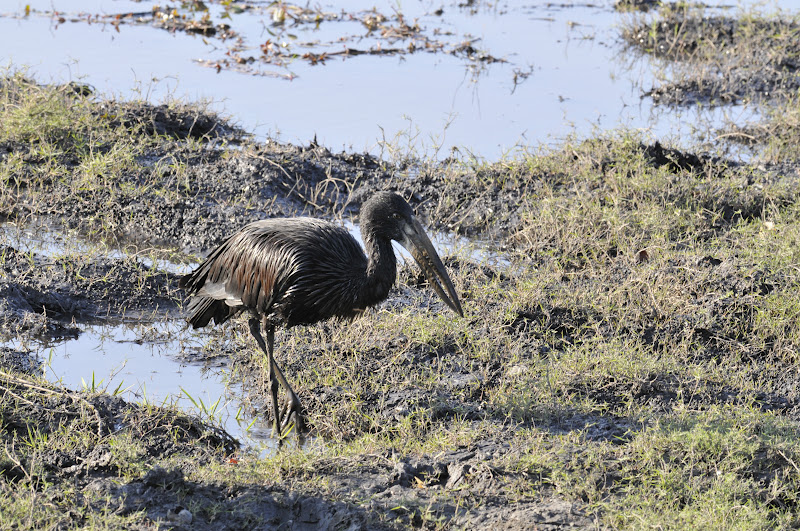
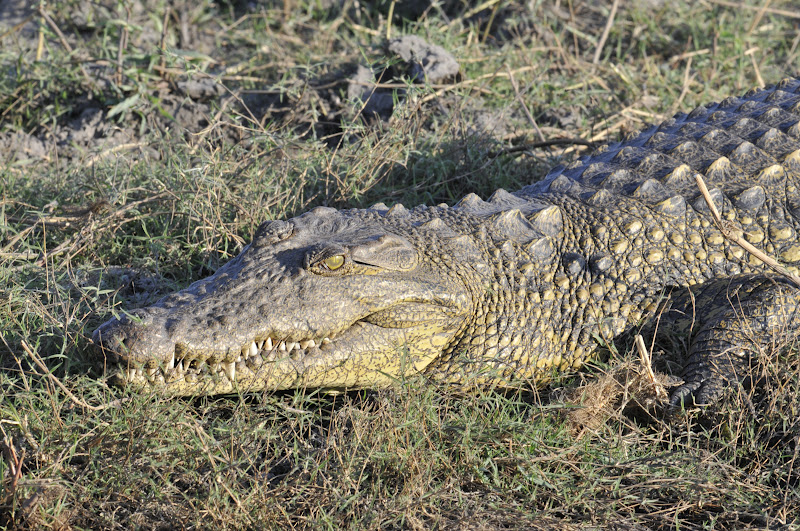
Much of southern Africa is drained by either the Orange River, the Zambezi River or the (dead-ended) Okavango River. I was along the Zambezi most of the time and Nile Crocodiles were regular companions; along with the wetland birds and tons and tons of Hippopotami.
Though the next blog will likely be on more birds of the region please stay tuned (and follow along) for blogs on the mammals and adventures we found in southern Africa.
Kudzu in North Carolina
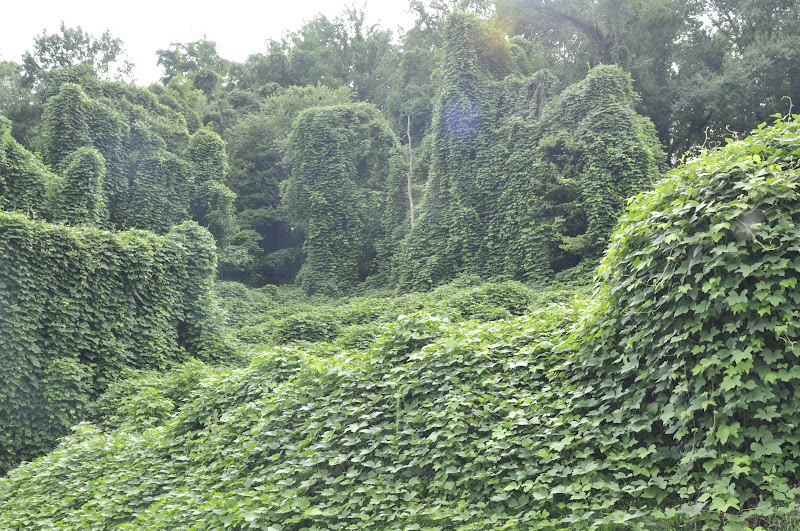
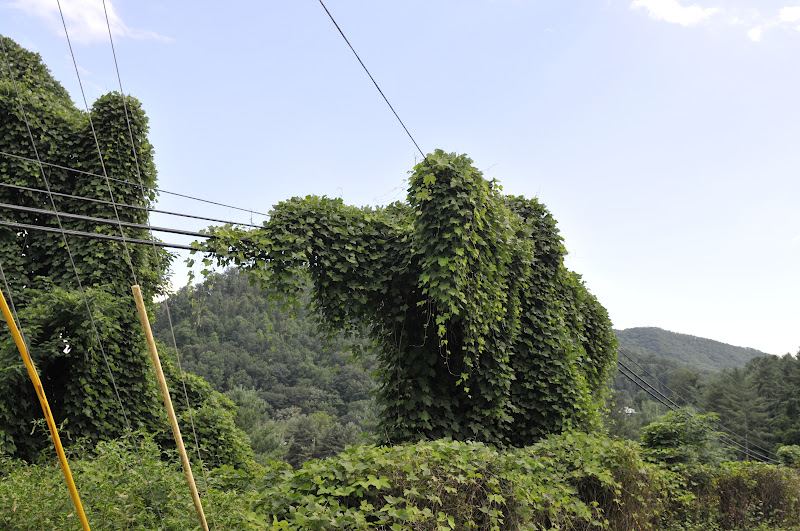
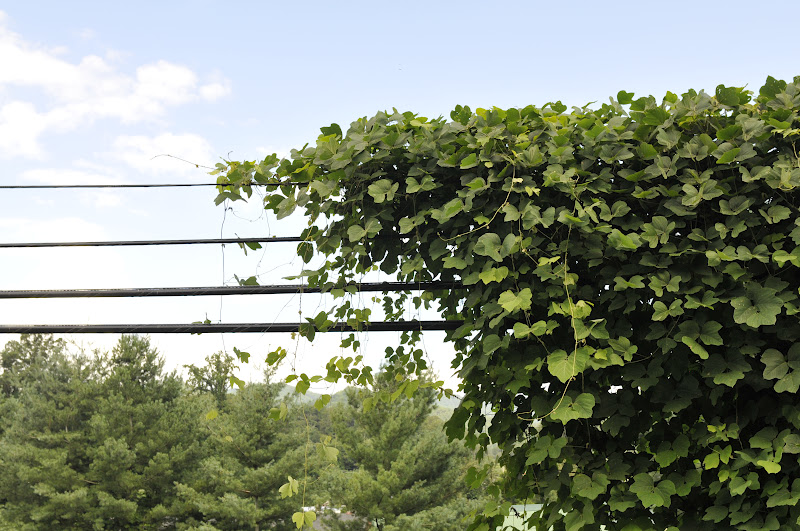
This energetic plant caught my eye while in western North Carolina
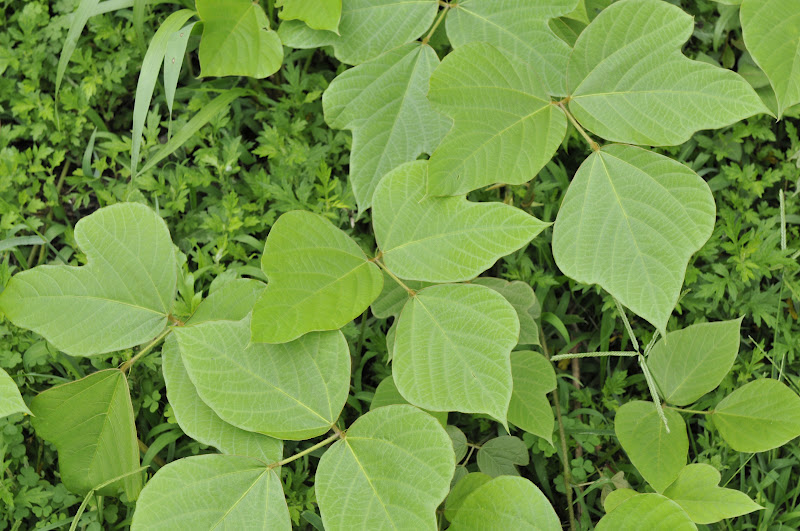
Kudzu is a member of the pea family that has found a home most anywhere it lands. In 1876 it arrived here in the United States at the Centennial Exposition. It was displayed in the Japanese section of the Expo and from there it was taken throughout the country. It is a plant of warmish ground and we now see it widely throughout the southeastern USA. It did not establish in any other part of the country though there is one very small section of Ontario Canada that has Kudzu growth. It is covering an additional 150,000 acres per year in the south.
Though it seems a scourge it has many benefits – if it can be managed. It is a good forage crop for domestic animals and has been used with just about all the grazing animals. It can be baled and kept under cover as a winter feed. Your opinion can’t be predicted about this bit of information; after three or four years of grazing the plant will die back. As for human use it seems to have potential as an antioxidant and as a source of starch. It is used as a food in some countries and as a base for beverages in others.
The negative role played by Kudzu as an invasive and deadly plant comes from its lush growth pattern. It shades the plants it grows up and over and the lack of sunlight, through the growing season, will often kill the plants underneath the Kudzu vines. Even though it is a nuisance plant in much of our southeast (Georgia especially) is is still widely used to control erosion. In the Amazon Basin it has been used to cover over area of illegal mining and limit erosion from exposed land cuts. Hopefully it won’t run amok in that great and diverse forest.
In the US it is rarely used for anything beneficial except as a feed for goats. But the chemicals in the roots and leaves (especially) have been shown to have significant potential for controlling alcoholism. There are also chemicals that seem to work well on migraines and cluster headaches. Perhaps we will be raising Kudzu on elevated strings and nets (like hops) and using it as a medicinal plant in the future. But right now, however, it remains the least favorite plant in the southern US.
Monomoy’s Nesting Birds
South Monomoy’s Grassland Nesting Shorebird*
The Willet (and the Laughing Gull) also nested in the census area
The Willet is a rather large, rather plain shorebird that has returned to the northeast’s estuaries over the last fifty years becoming what is now a rather common nesting bird in the right habitat. It was almost exactly a century from the previous nesting record when, in 1977, Dick Forster (et al) discovered a nesting pair of Willet on Monomoy Island. The previous nesting instance (1877) punctuated the disappearance of Willet due to the impact of egg-collecting and market gunning in the late 1800’s (Veit & Petersen).
When we censused the Common Terns on the north end of South Monomoy Island we found (and heard) a slew of Willet. Finding them is not for the faint of heart as they wait until your foot is descending toward the nest before they burst up-and-out with a squawk. We didn’t step on any of the nests and we found and flagged 25 such nests just on the north end of the island in the tern colony area. There are certainly many more on Minimoy, North Monomoy, South Beach, Nauset Marsh, North Beach Island, and the rest of South Monomoy.
From 1974-1979 Massachusetts birders censused the breeding birds of the Commonwealth (Breeding Bird Atlas = BBA); Willet were recorded as “possible”, “probable” or “confirmed” breeders in four topographic (map) blocks. In the latest Breeding Bird Atlas (2007-2011) they appeared in 97 blocks including the South Coast, Nantucket, Martha’s Vineyard, and densely on the North Shore and Cape Cod. They were confirmed in 53 places. They have returned with a vengeance – good for them!
![]() |
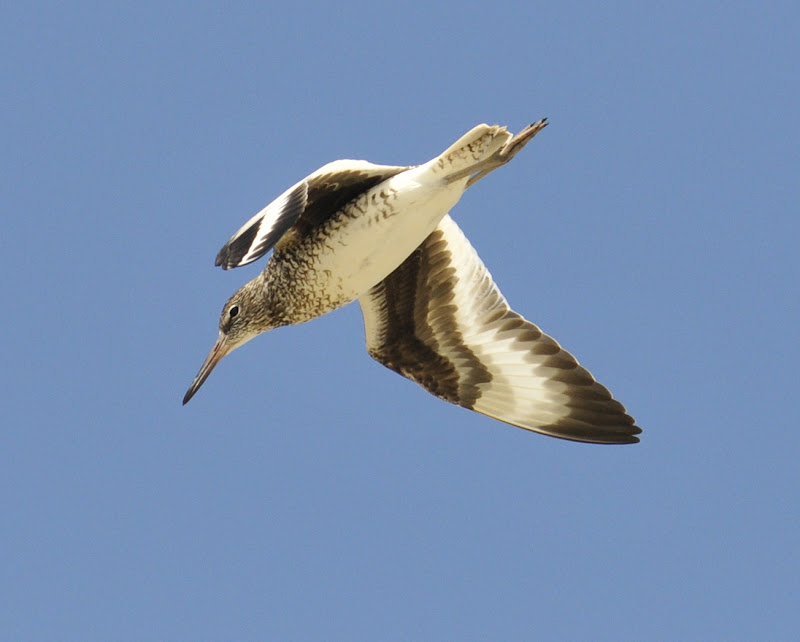
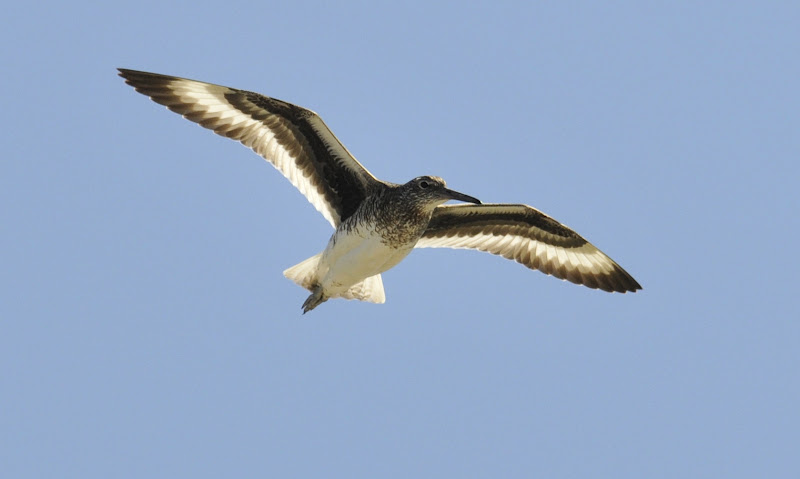
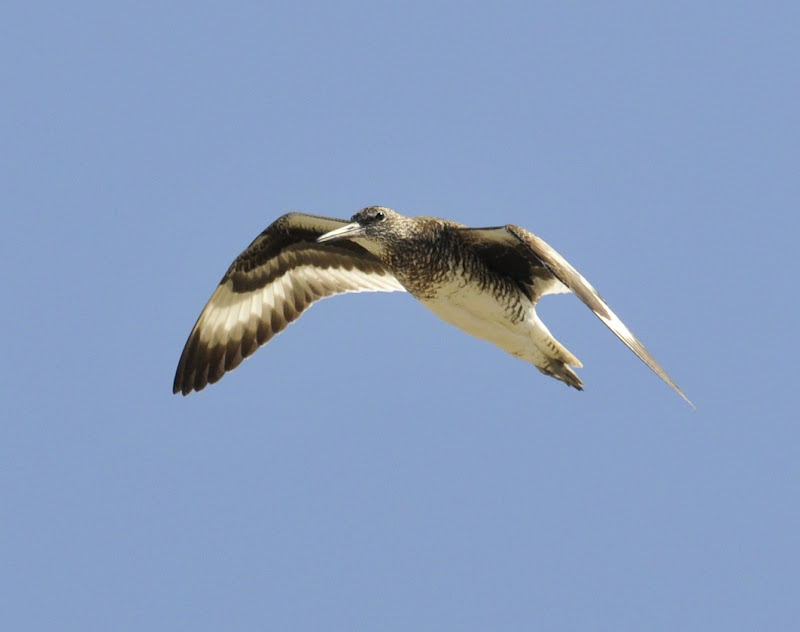
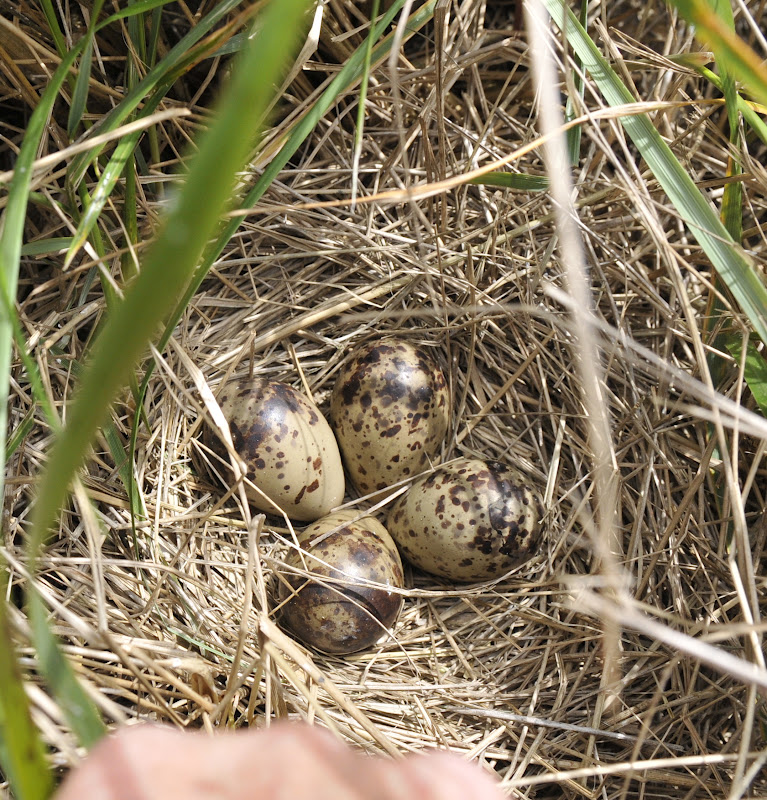
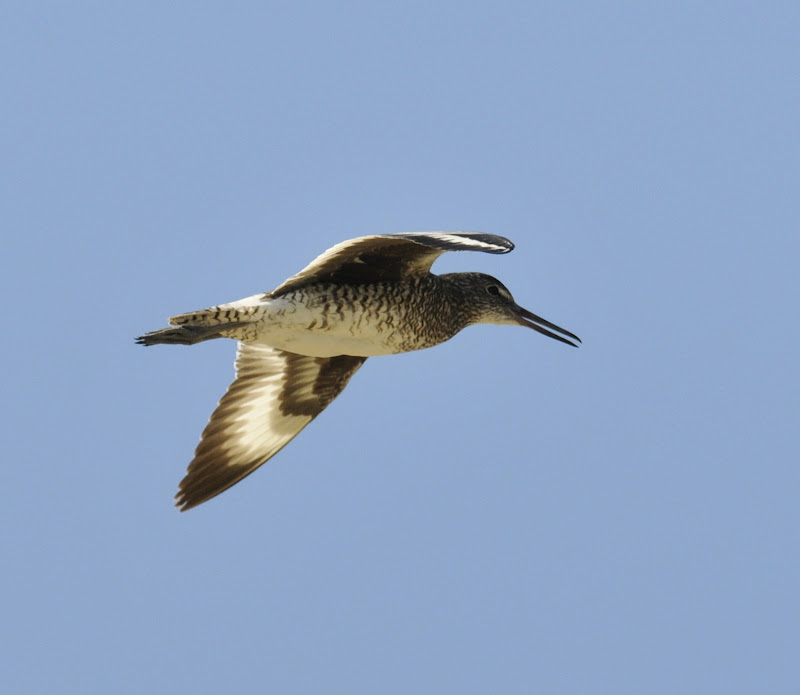
| The Willet is a rather plain bird on the ground but once it spreads its wings it becomes very visible and strikingly patterned. It is also very loud in defense of its nesting area and thus they are very easy to spot – the nests are not so easy however. The eggs are colored much like Common Tern and Laughing Gull eggs as convergent evolution has determined that this is pretty successful pattern for beach and dune nesting birds. |
To many it seems odd that the Cape is known for sandpipers of all sorts in large and small numbers but that almost no species nest here*. The Piping Plover and Willet are pretty much it as far as the casual observer goes. The rest of this highly mobile group stage here as they head both north and south on their lengthy and often mind-boggling migrations. The northward moving birds are all adults and most species are capable of breeding in their first adult season; providing the females can get enough food to allow for the development of eggs. They pass along the coast in late April and May. Most will be on nests in various tundra habitats by mid-June. Many of these adults, leave their energetic and capable young on the nesting grounds, start southward in July, traveling slowly with longer stops than they had on the more urgent trip northward. The adults pass through Massachusetts mostly in July and August to be followed by a surge of youngsters in late August and September. But all sorts of rarities show up throughout the year on these remote sand and mud flats and barrier beaches.
![]() |
| Aerial images of Willet were not too difficult to get as they hovered overhead as we passed through their nesting sites. It is one of those things where you shouldn’t do it at home – stress and teaching predators where nests are always concerns when censusing ground nesting birds. |
![]() |
| After the female bursts off the nest the eggs are not always easy to find. They are often in tall grasses and the nests are made of the same dry vegetation that tangles your feet at every step. |
![]() |
| The Willet is one of only two shorebirds to commonly nest in Massachusetts; the other is the Piping Plover which nests on the edges of sandy beaches. Piping Plover numbers are actually quite small though their impact on beach management remains quite large.We also have a small population of American Oystercatchers breeding as well – perhaps this will be the next bird to increase on our remote coastal dunes and flats. |
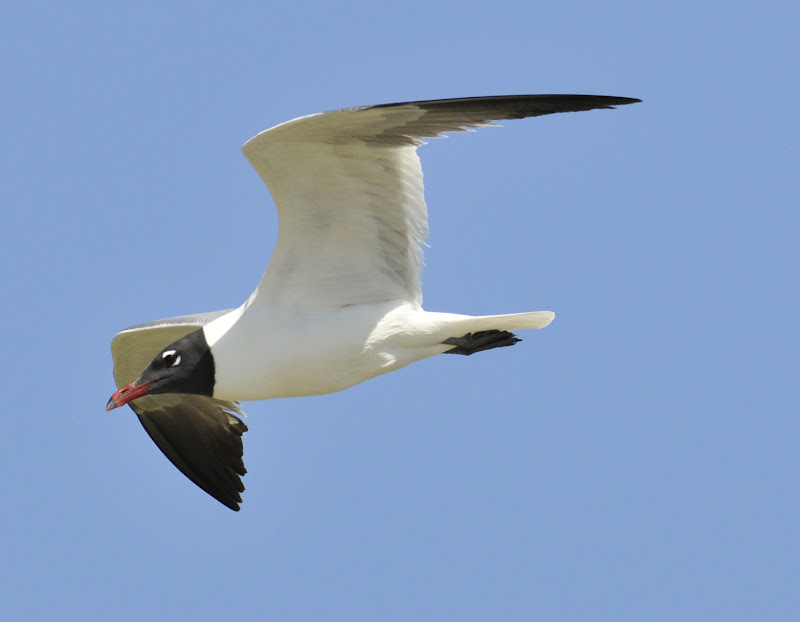
The Laughing Gull was confirmed was a breeding bird in only two blocks this past BBA however it was observed in eight blocks during the nesting season and as a visitor in 70 more blocks. This is another bird that was decimated by plume-hunters in the late 19th century. They have been expanding northward over the past fifty to seventy years.
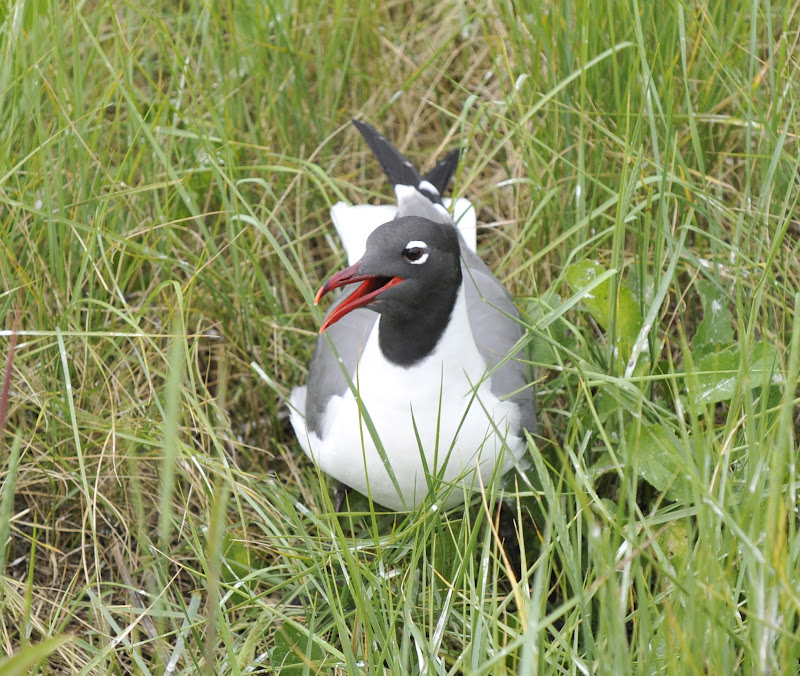
The Laughing Gulls nest in thick, and seemingly moist, vegetation in swales and hollows in the grassy dunes. They are often associated with Poison Ivy patches, Beach Rose, and Seaside Goldenrod. One of the great treats that the Laughing Gulls provide is at the end of the summer when the common ant of the sand dunes sends forth tens of thousands of gravid females prospecting for drones and suitable habitat to start a new colony. The Laughing Gulls “flycatch” these ants hour-on-end sometimes following them inland as the sea breezes carry the ants away from the dunes.
* The Breeding Bird Atlas (BBA1) shows that Piping Plover1, Killdeer2, American Oystercatcher1, Willet1, Spotted Sandpiper2, Upland Sandpiper2, Least Sandpiper1, Wilson’s Snipe2, American Woodcock2, and Wilson’s Phalarope3 nested in Massachusetts. The more recent BBA2 shows the same species again. Those birds with a 1 adjacent to their name are beach nesters, those with a 2 are inland (woods and grasslands) nesters, and the 3 is for a usually grassy swamp nesting species.