Namibia’s Oceanside

Most of Namibia is quite dry. Most of Namibia barely supports vegetation. But, as it is along the southeastern part of the African continent and is against the Atlantic Ocean for about 1000 miles, the Namibian coast is quite wet and quite interesting. The Namib Desert extends a bit northward into Angola and southward into the Republic of South Africa after running along the entire coast of this smallish (certainly in population numbers) African country. The coastal edge of Namibia is almost all sandy desert (not just dry); more than half of the coast is sandy and is only rocky for about 20% of its length. There are some areas of gravels and cobble as well. It was into this bit of ocean that we ventured for a few hours.

The water isn’t very warm here as the currents run northward from the south bringing cool water from the great Southern Ocean. There are birds and marine mammals like in most temperate waters. The sea lions, dolphins, and whales are a mix of residents and migrants.

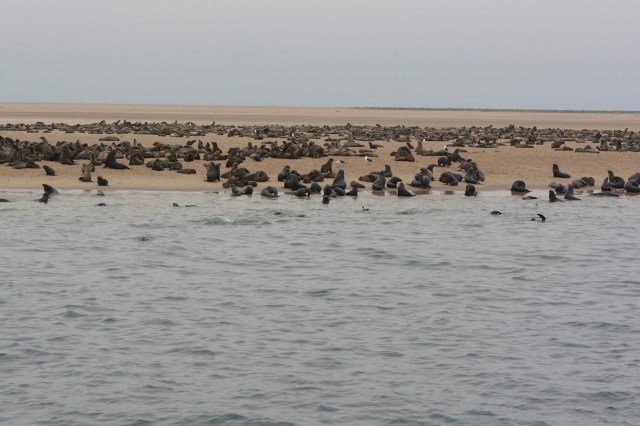
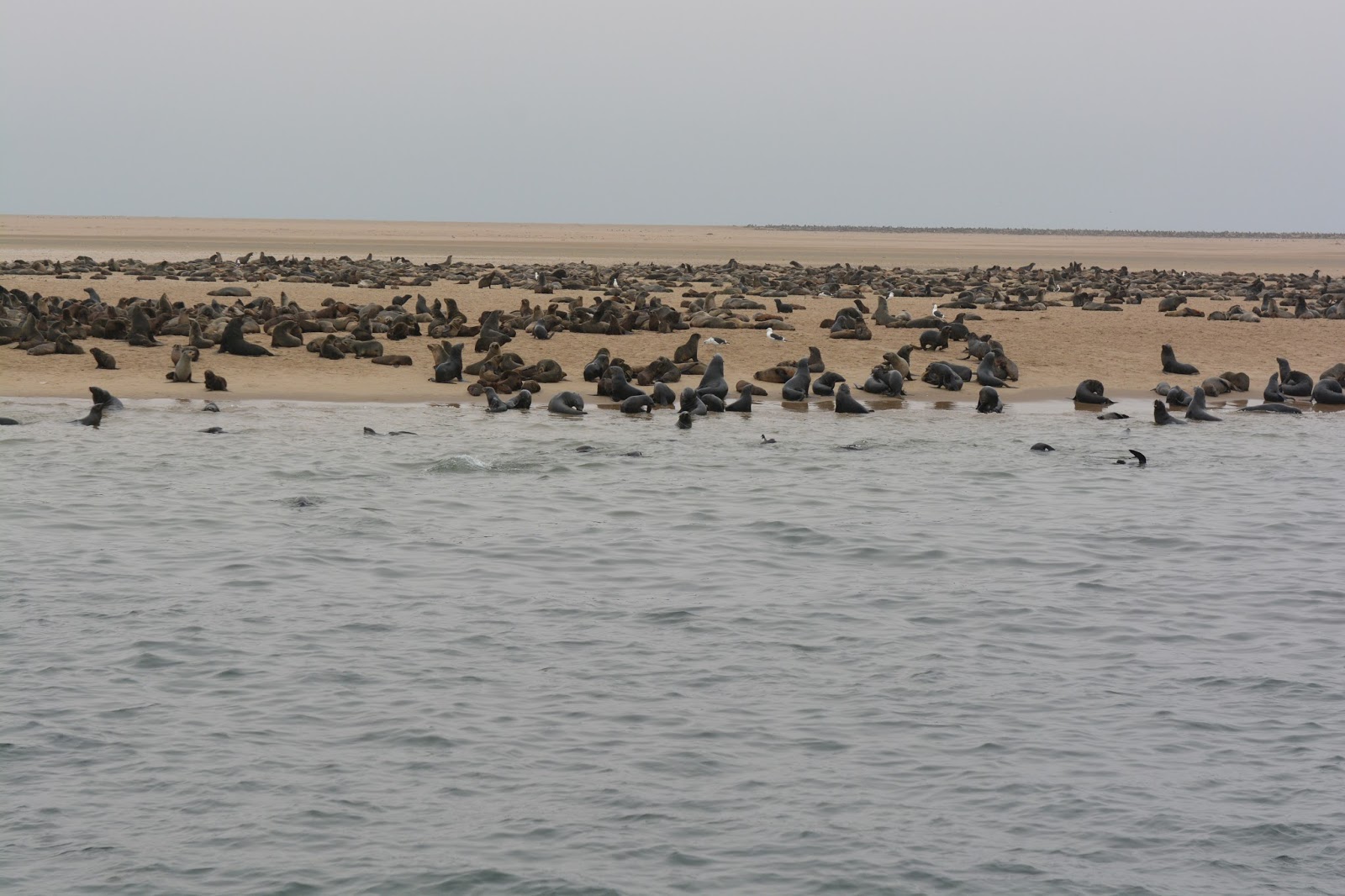
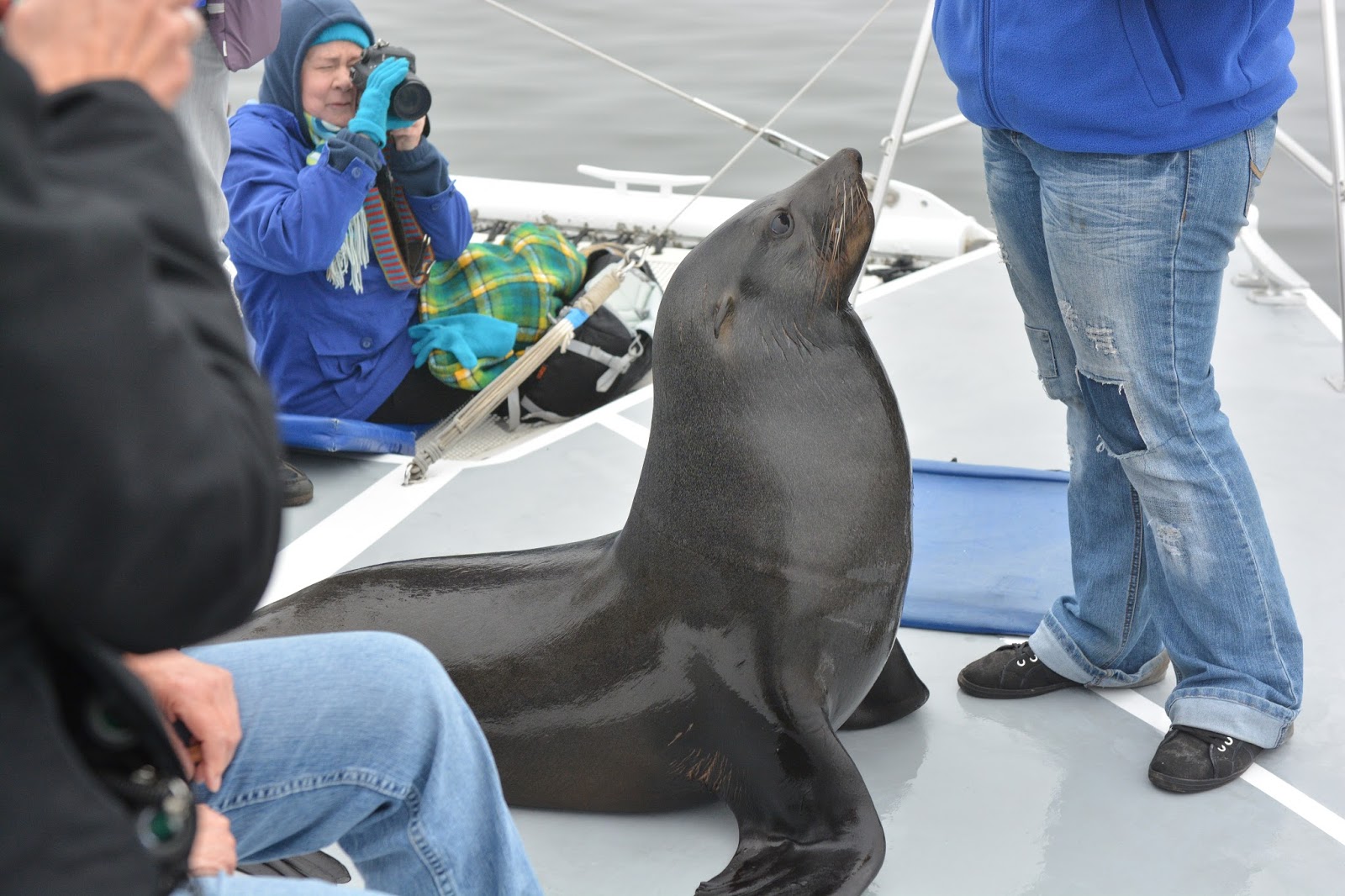
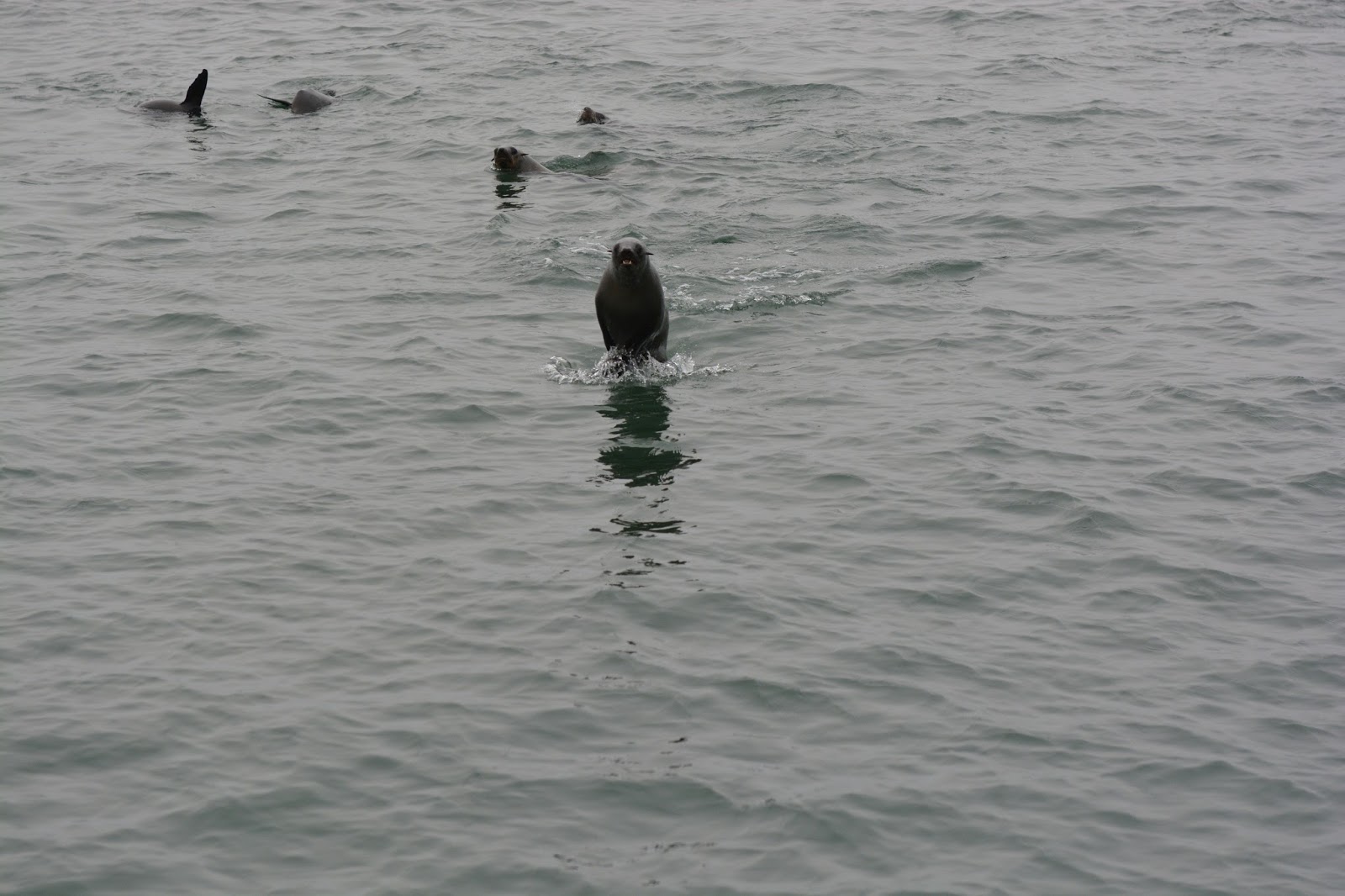
The “fur seals” of Namibia are actually sea lions (note the ear of this beggar that joined us for a while); but are commonly called fur seals. The real common name is Cape Fur Seal or Brown Fur Seal. The bay at Walvis Bay provides shallow water, sandy haulouts, and plenty of small fish – thus there are lots of fur seals in the area – thousands and thousands actually. The young don’t venture as deeply or as far as the adults so there are always hundreds of younger animals rolling and splashing in the shallows. 
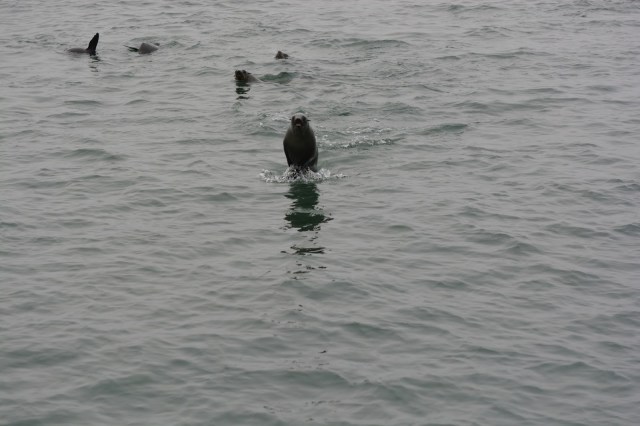
The great expanses of shoal provide safety and comfort for the “seals” as they relax and digest. Speaking of digestion, there are few places on the planet that have the intrusive odor of a seal colony. I can only imagine that researchers throw away their shoes and clothing after every visit to the colony’s favorite haulout. We coasted along the flats watching the animals for a while and the headed out toward the bay’s opening to the Atlantic. We never went out into the Atlantic but there were different animals at different locations as the underwater landscape changed and the interaction with the sea varied.
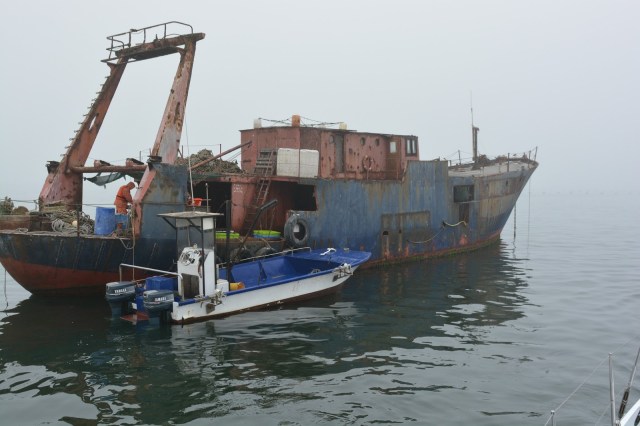
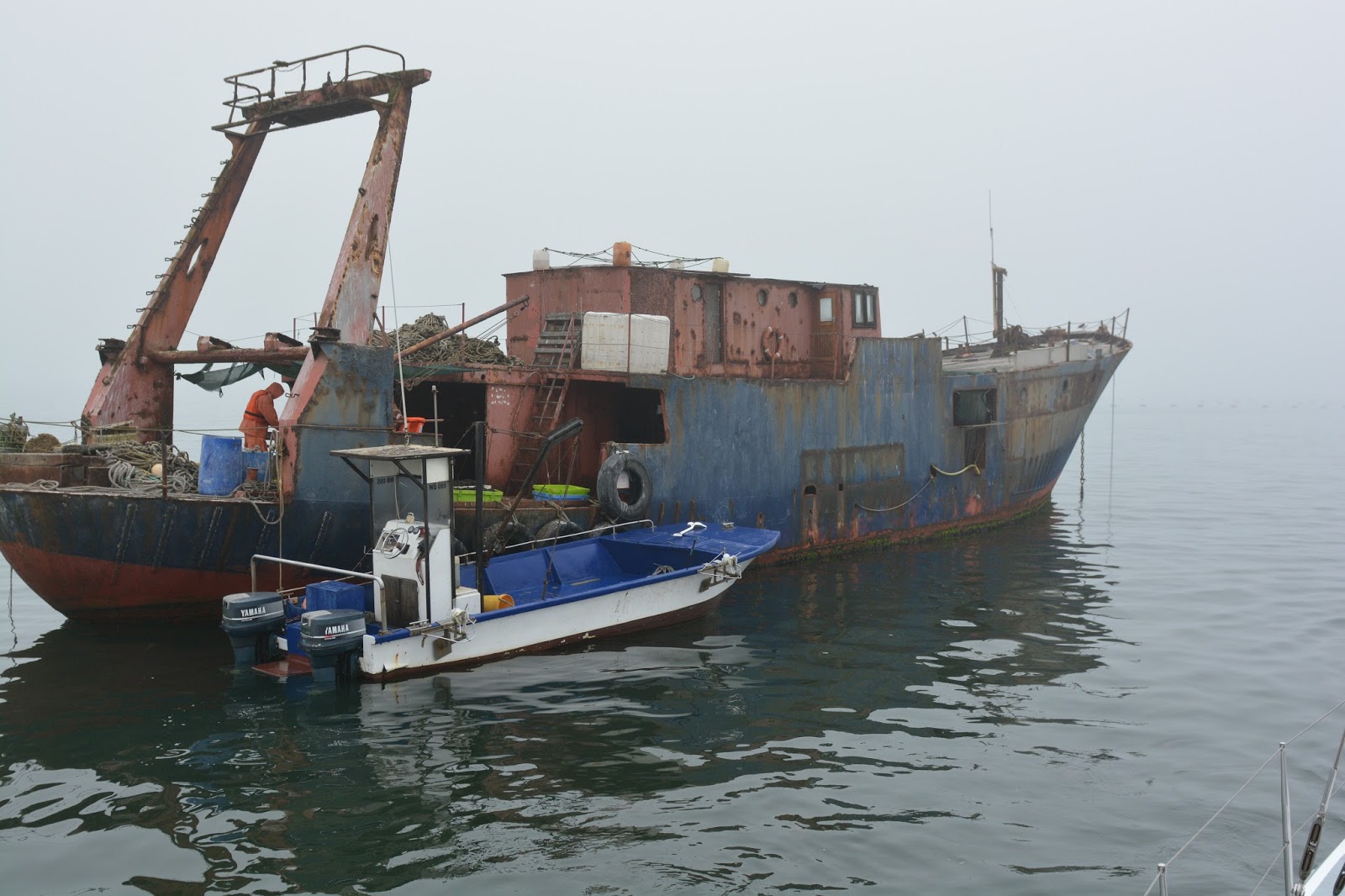
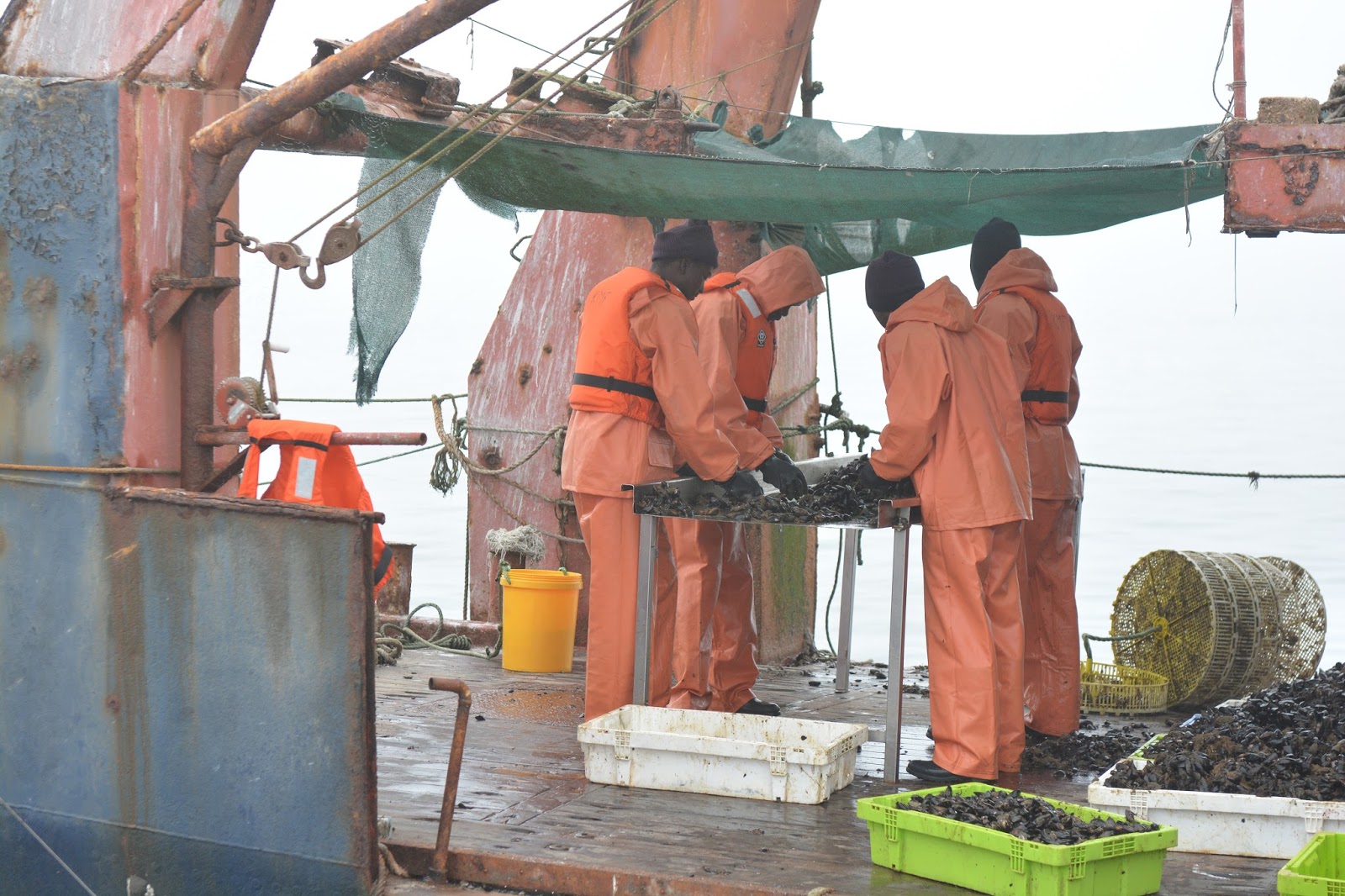
At one point we approached what appeared to be a floating ship wreck. I guess it was in a way but it also housed an oyster-cleaning operation. The aquaculture here is pretty thorough. In the case of oysters, they are mostly grown in hanging bags and seem to acquire a coating of algae. They are taken aboard this boat and scraped cleaned at least twice as they develop. In Massachusetts we grow oysters in flat cages pegged to the sandy bottom. They are sorted and culled as they grow but are not brushed until they are headed to market. Oysters are good (tasty good that is, not well behaved though they are pretty quiet) worldwide; but I do have a local fidelity to our Cape Cod oysters; Wellfleet, Brewster, and I’ll include the Island Creek oysters of Duxbury Bay. Mmm, those are good oysters – tasty, tangy, salty, and easy to come by.
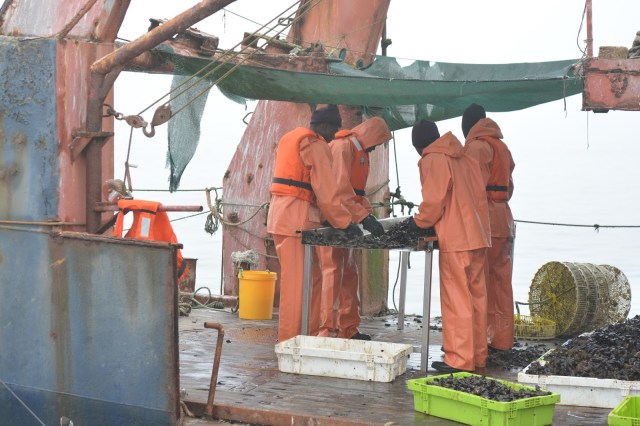
Even though we are in a hot, dry country it can be cool on the water. The Benguela Current is not a warm current and it impacts the waters even in Wallis Bay. We were dressed as if on an April whale watch off Massachusetts and were still chilly.

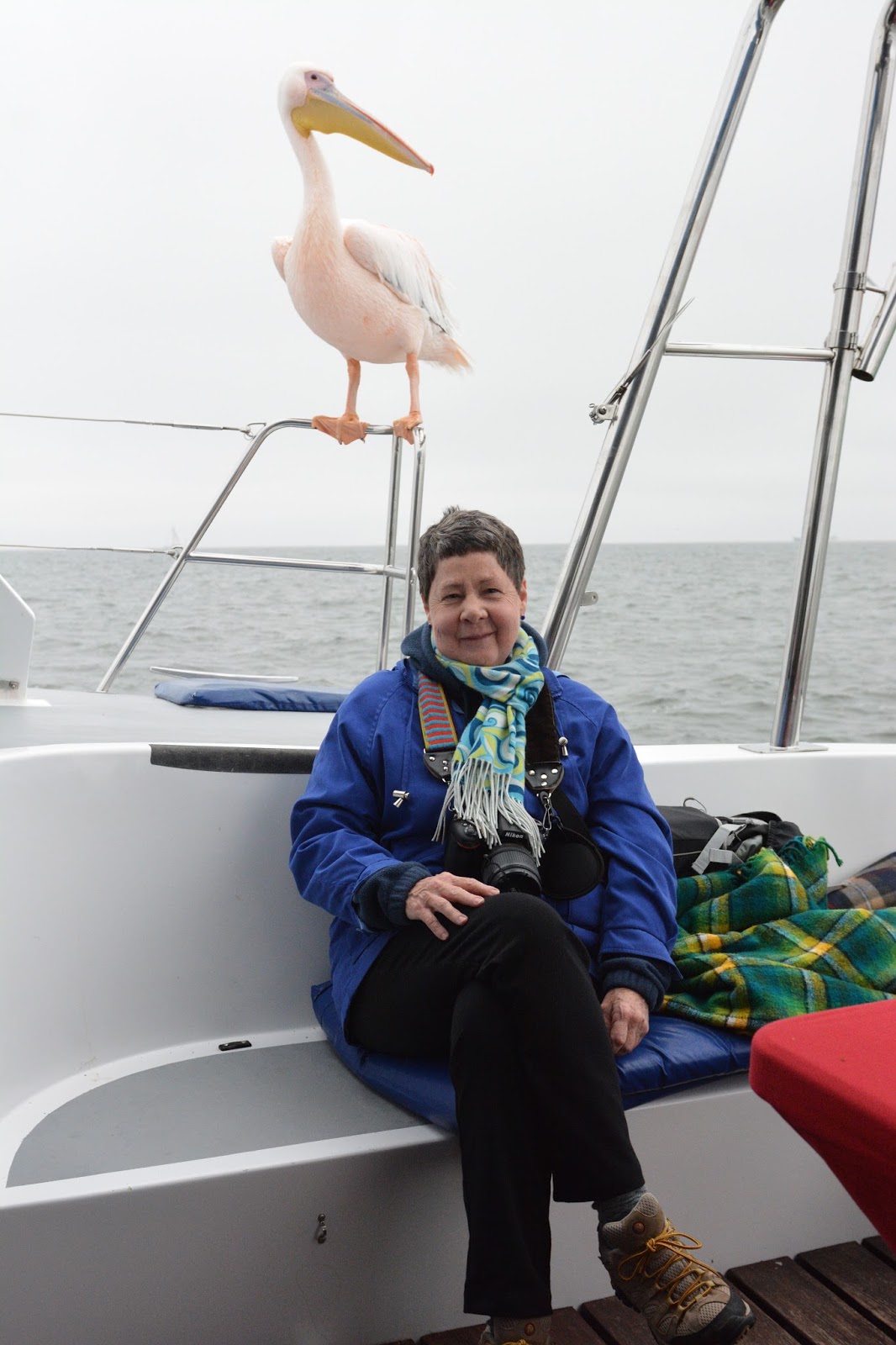
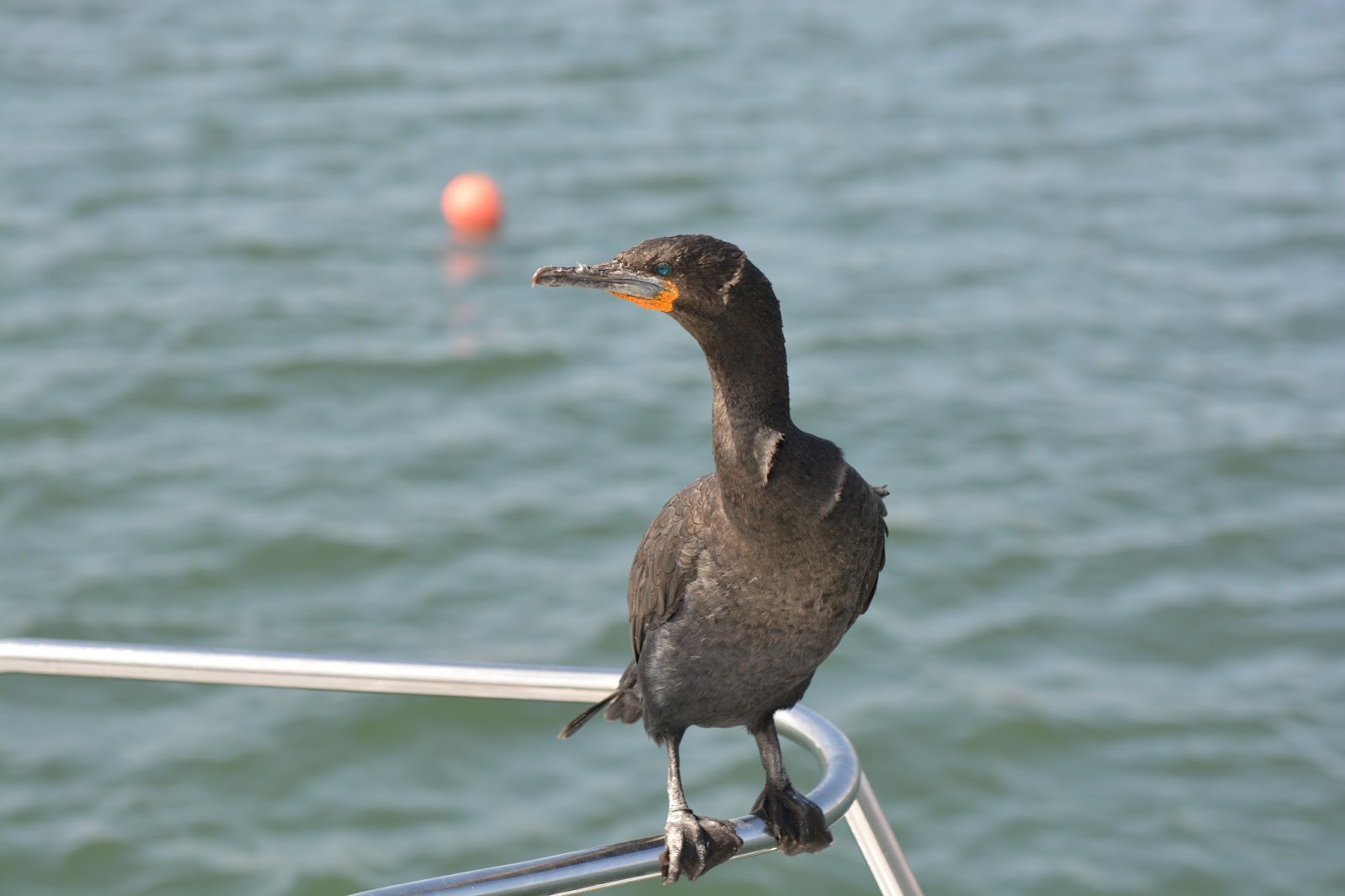
We had Great White Pelicans as well as Cape Cormorants and fur seals come aboard our boat. They know that we are looking for them and at them and they have a rather demanding nature – they want us to provide fishy snacks in order to gain their cooperation. We did and then they did.

The Cape Cormorant is pretty much like all the wold’s cormorants; an aquatic bird that eats fish, lacks waterproofing, is mostly dark colored, and gets some color at the base of the bill during breeding season. The Cape Cormorant has a turquoise eye in addition to that usual array of traits.

The Subantarctic (or Brown) Skua is a pelagic bird found along the southeast coast of Africa. They are in the same group as our jaegers or skuas as the Europeans say. Typically they steal food from gulls, terns, shearwaters, petrels. They are also a threat in penguin and seabird colonies where they are happy to rush in and grab a youngster or hatching egg. They are strong fliers and (despite their approach to life) they are quite a treat for us land-restricted  bird watching-mammals.

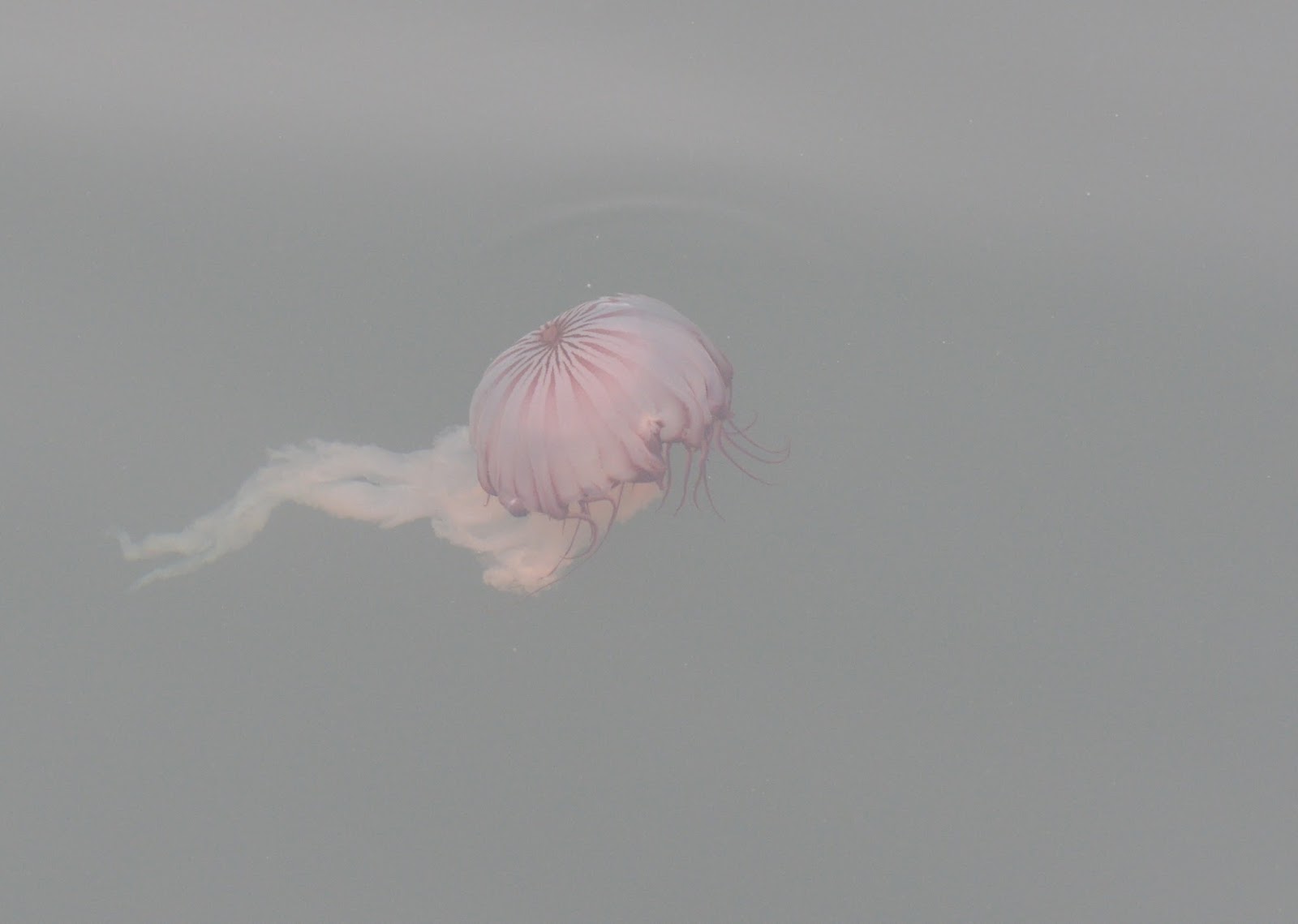
The jelly fish below is commonly called the Sea Nettle. In the heavily fished waters of Namibia is has been shown that jelly fish now provide more biomass than do the fish. The sardine and anchovy fisheries that have harvested in Namibian waters for the last 45 years have decimated the numbers of forage fish. This has dramatically altered the population of many sea animals. If the food disappears so do those that ate that food and the things that food lived on can increase dramatically. A seesaw without someone on the other side I guess………
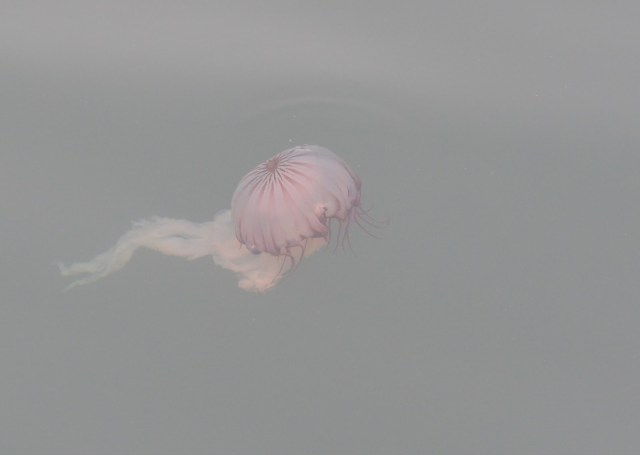
Like all oceans and bays the complexity of life culminates with vertebrate animals like mammals and birds. It is the billions of cyanobacteria, single-celled photosynthesizers, crustaceans, and small creatures that support these larger animals. Of the medium-sized creatures that feed the big guys (molluscs, crustaceans, osteo fishes, and so much more) one easily visible creature was the sea jellys that we saw. These creatures are nearly all water but provide a substantial part of the diet of sea turtles (for example).
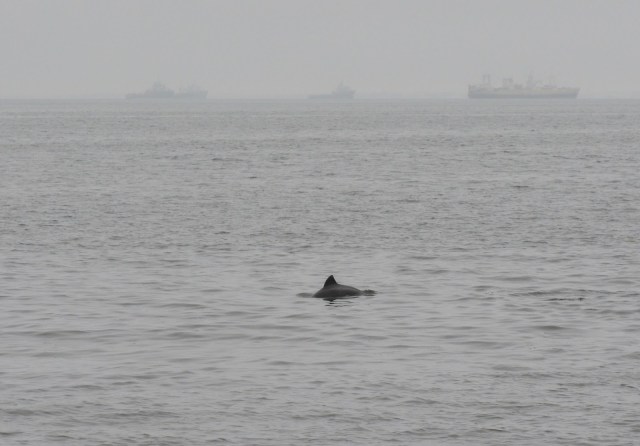
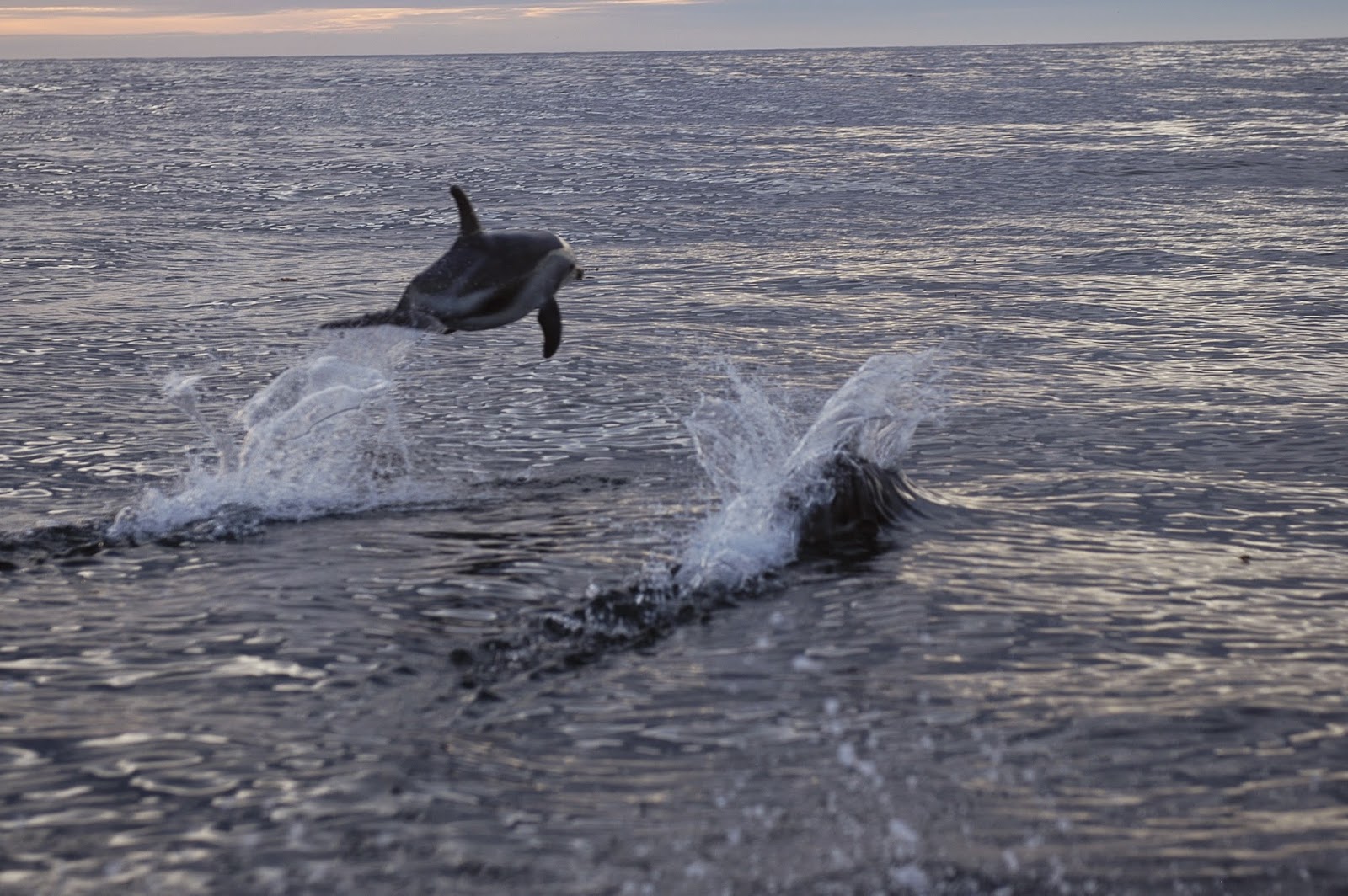
Lastly for this page, but by no means the least, I want to include a rather blah image of the rare and geographically limited dolphin called the Heaviside Dolphin. It is really the Haviside Dolphin as it was named for Captain Heaviside; but it has been misspelled for years now. This small animal is not well studied but seems to be very coastal in its distribution and almost limited to the Namibian coastline. It has relatives (same Genus) along the coast of the Tierra del Fuego and the Falkland Islands (Commerson’s Dolphin) and up the very southern Chilean Coast as well (Black Dolphin). In New Zealand waters there is another member of the genus called Hector’s Dolphin. 
These four species are all in southern waters and would suggest that they might have been in the water as Gondwana broke apart and the continents moved (and are still moving) to the locations we accept as permanent (they aren’t). But it is much more likely that at some point populations (or pods or gams or groups or families) of the ancestral dolphin left their home waters and established a population elsewhere. They then adapted to that area and through isolation and time developed into what we now see as four similar species; hence the one Genus.
New Zealand’s North Island’s Sea Birds

Many of you know that I have had the very good fortune to be a travel guide for nature trips. It is a job that I should pay to do. I get to travel, visit, and learn about things and places that most of us can only dream of. About fifty trips to Africa and nearly the same number to South America and the occasional addition of visits to Sumatra or India or Iceland have peppered by life. Australia and New Zealand have become second homes.
Please do not copy or use the photographs without getting permission – thank you.

There is a blog that was posted in September of 2013 that shows a good bit of the sea bird and oceanic life of the Hauraki Gulf north of Auckland. This page reiterates that and perhaps adds a bit.

..The ocean waters that surround the islands of New Zealand are extremely rich in sea birds. There are petrels, storm-petrels, shearwaters, albatrosses, diving-petrels, as well as gulls and terns. It is a grand contrast to the rather European species that dominate much of the land surface of the country.

The images in this page merely add to those previously posted and I hope offer a greater sense of the diversity that is present on the waters and that was present throughout the island chain

Our charter boat had six birders on it. The captain was most accommodating and provided plenty of enticing chum to attract the sea birds. We were out pretty much all day and only missed one species (New Zealand Storm-Petrel) which had left the area only a week or so before we went out. It is a very rare bird that only recently has been rediscovered (in about 2003) after last being reported in the 1850s. Anyway, the boat was good, the captain knowledgable, the water smooth, the day warm, and all other birds abundant.
The picture is blurry but it helps broaden the feel of the outing. We had huge and noisy (yes really) schools of fish, sharks, dolphins, and birds.
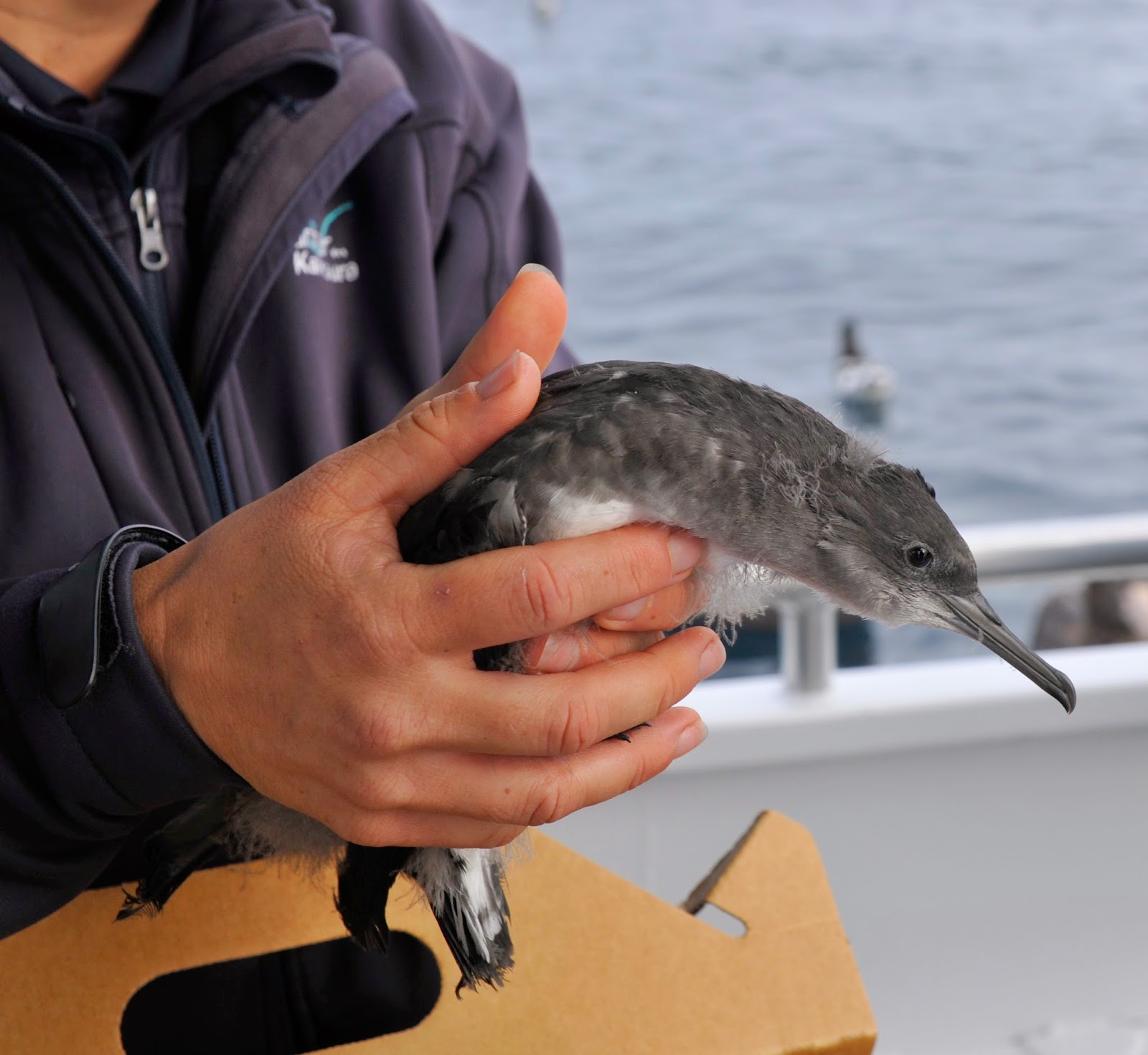
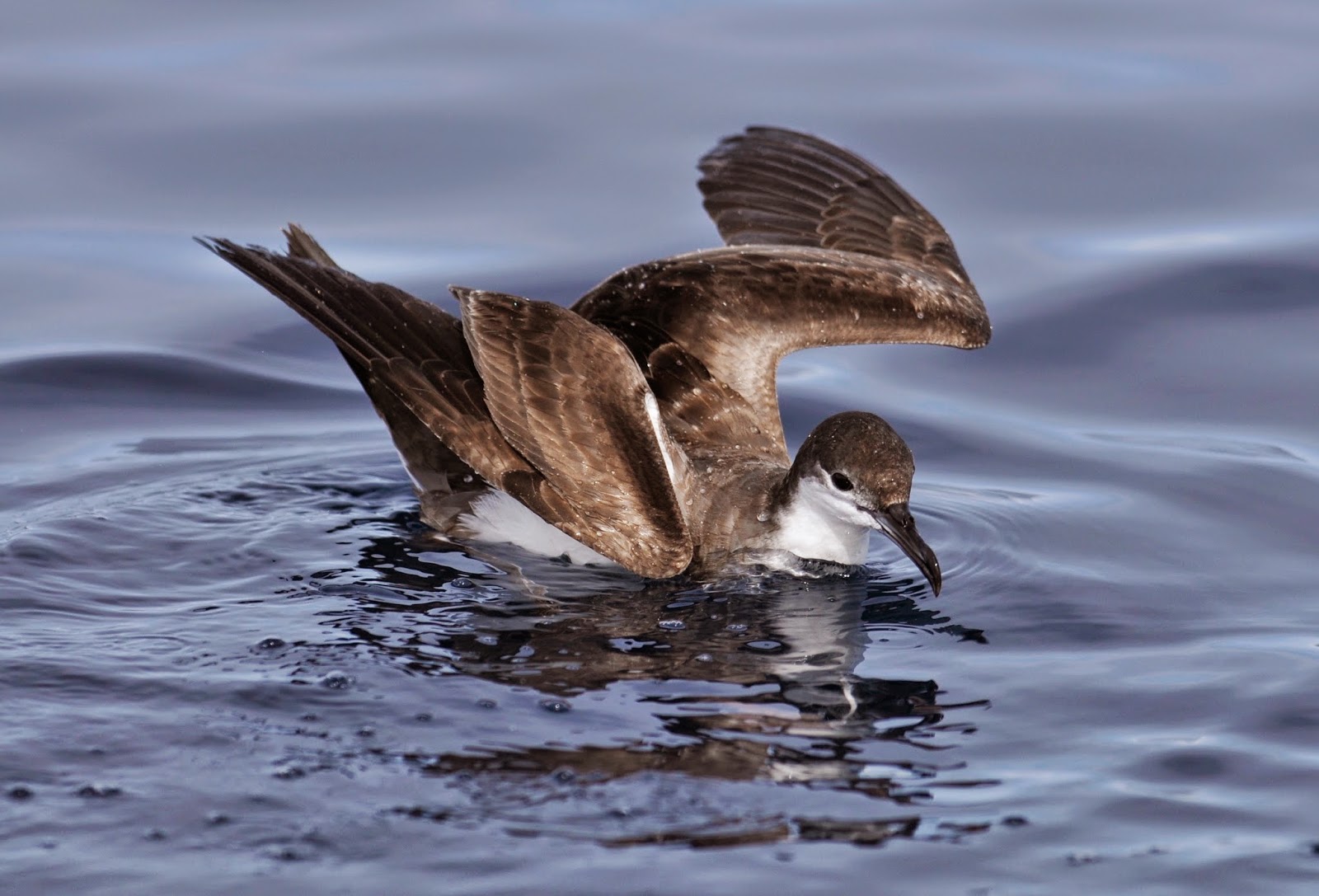
Fluttering Shearwaters were abundant in several locations including the gulf north of Auckland. In one instance we took a hand-raised youngster out to release. It was surprising how small the bird was when in the hand. Seeing them in flight gives a very different feeling as to their size and weight.


This is a Fluttering Shearwater resting on the surface.


One of the interesting bird notes in New Zealand is that the Maori (MOW-ree as in WOW-ree) are still allowed to harvest shearwater young (Sooty Shearwaters) from a few southern islands. (The Canadian Maritime residents of Newfoundland have a similar allowance for murres in Canada.) The  Maori population is largest in the warmer North Island so the birds that are caught on small islands off South Island are soaked and packed in brine and are mostly sold and eaten on North Island. They are still called by the old whaler and sealer name of Muttonbird.
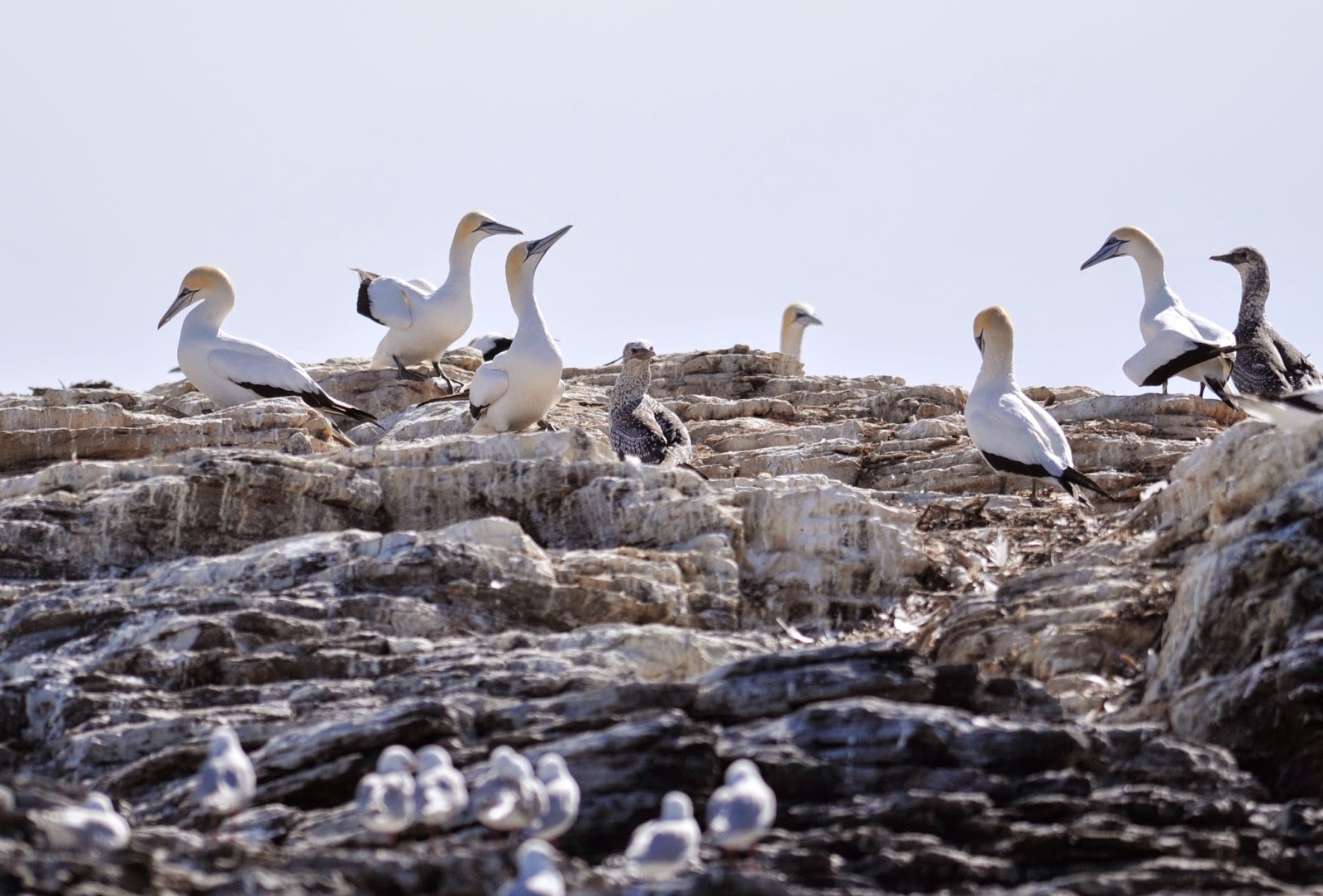
The gannet of the Southern Hemisphere is called the Australasian Gannet and is found in all coastal New Zealand waters. Like all gannet populations the nesting locations are most often on islands, used year after year, and crowded during nesting season. The young will return to nest at about age 5 (3-7 years).
Here a half dozen adult Australasian Gannets sit with two nearly full-sized youngsters. It will be about five years before the young completely lose the brown feathers and have full bright adult plumage. The transition is slow but steady through those five years. The small terns in the foreground are Gray Ternlets or Noddies.
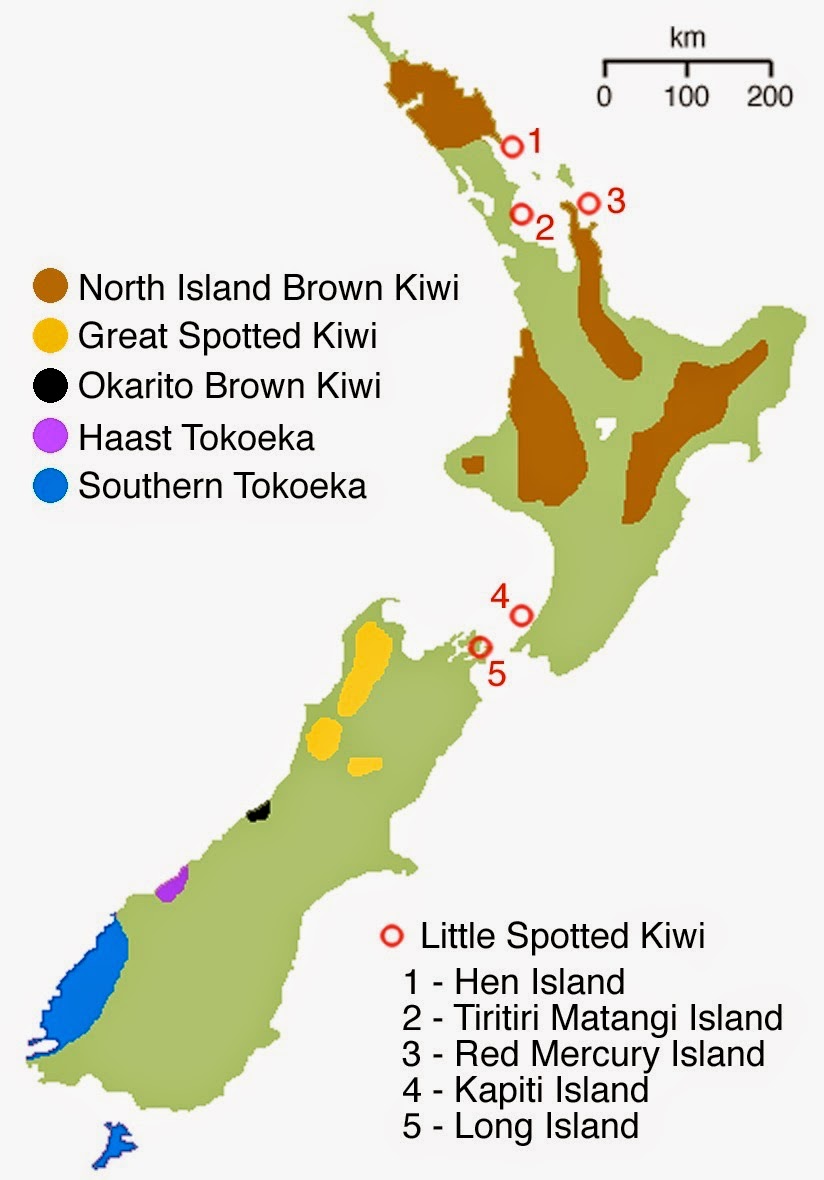
There are several types of kiwi in New Zealand; mainly on North Island. The map above shows where they are established and breeding. However the DOC (Department of Conservation) has an array of small islands that have been cleared of weasels and cats and are suited for kiwi populations. Eggs are taken and incubated; the young raised to a substantial size on these predator-free islands before being released onto larger islands.
There are “friends” groups that work with DOC in raising kiwis and preparing islands for their release. Ground-nesting birds are threatened by mammal predators – the islands had no mammals (excepting a couple tiny bats) prior to the arrival of humans about 750 years ago. At that time everything from the giant moas to kiwis to the ground-nesting falcon were directly impacted by cats, dogs, pigs, and other predators while deer, sheep, and goats altered vegetative habitat. 
This kiwi in the photo above is a Southern Tokoeka found way down south on Stewart Island. But as I have never been able to stay on any of the northern islands overnight to get a glimpse of the kiwi found in the more equatorial areas I have none of the other species documented. As I suggest, kiwis are nocturnal. The photo is blurry as it was taken the middle of the night in a howling wind. The bird is exploring the wrack line and beach grass on a remote beach. 
The White-fronted Tern is the most common of New Zealand’s terns and is probably easier to find and see than my experience would have you believe. They are a smallish to medium-sized tern that can often be seen in bays and harbors. They wander down to Antarctic islands but can be seen in New Zealand waters year-round.
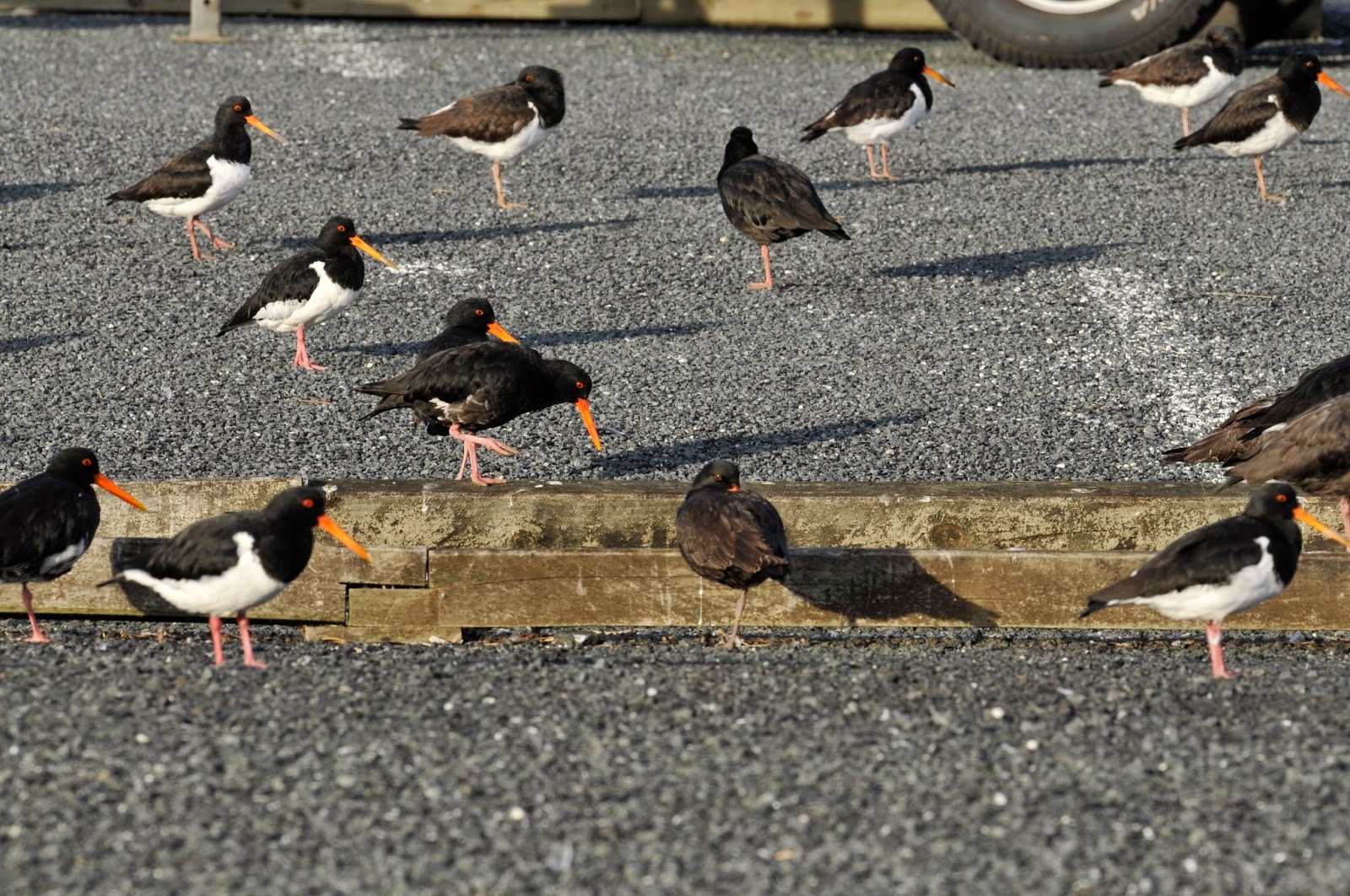
Resident shorebirds are not as common in the Southern Hemisphere as in the northern. Oystercatchers, however, are found on all continents and the New Zealand coast hosts two species; Pied and Variable. The Pied is black and white with some white in front of the folded wing. The Variable is either all black or black and white with no white in front of the folded wing. So, the all black ones are the black morph of the Variable. The very top left bird may be a Variable as it seems to have little or no white in front of the wing. The other black and white birds seem to have a white patch up the body in front of the wing and thus may be Pied Oystercatchers. Whew.
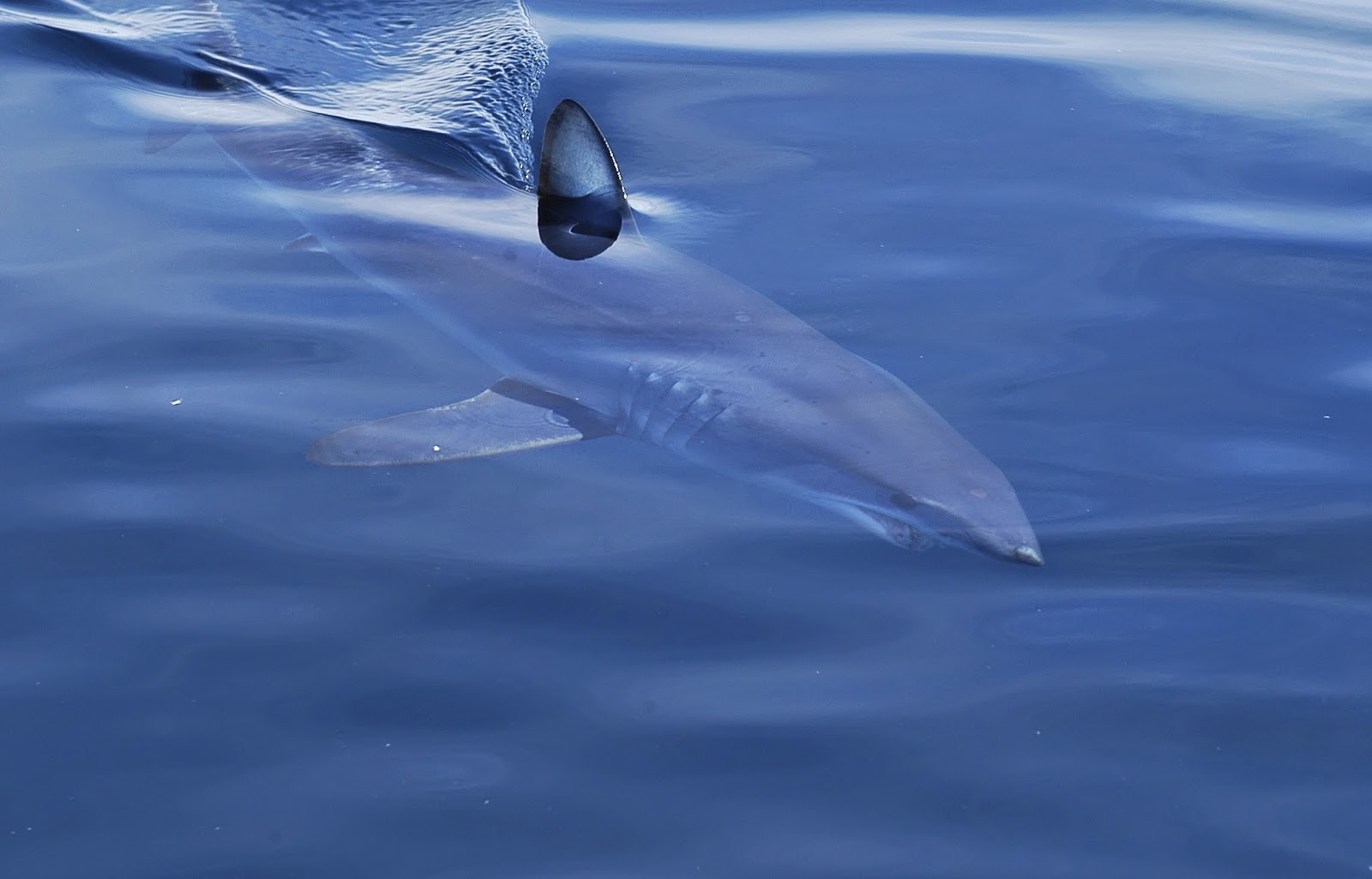
And, oh yes, chumming with fish bits and fish oil attracts birds and other marine predators. Compared to a shearwater this is a real marine predator. It is most likely a Mako Shark.


The Cairns Shore is/was very Birdy

The shoreline in Cairns is very nice. There is a long boardwalk Esplanade with tropical vegetation and extensive flats to the northeast. Much of the configuration of the harbor is a result of World War II. The US needed to get into northern Australia for rest and recovery and to access the hospitals that were established here by the Australians. The harbor was dredged under orders by General McArthur and the shoreline was changed as well.

To the north and south of the Cairns downtown harbor there are mangrove fringes. The airport is in what was a mangrove swamp and the roads in and out just call out to be birded for mangrove species. I was shown one place in the mangroves along the airport road where Pacific Golden Plovers loaf during the day. It was great to see a couple dozen of the birds just hanging out.

The mud flats that are visible, and easily birded, from the boardwalk have a great reputation for birds – the trouble is that there are fewer and fewer birds each year. Many of these birds migrate down the Asian coast from Russia, to China, to South Korea, to the Philippines, southeast Asia, Taiwan, Borneo, Sumatra, Indonesia, and on into Australia. Many of these countries have developed a coastal port-based economy. This means more harbors and less and less coastal marsh lands and mud flats. The birds are forced into fewer and fewer places of less and less quality. Food availability is diminished and many don’t finish the trip.

However for an American it is great to see the European and Russian species we rarely get to see in North America. Here are a few of the easy birds on the flats right in downtown Cairns.

Gulls are a dominant wetland and coastal feature of the northern hemisphere birder; not so much in the southern hemisphere. There are three native gulls in Australia where there are twenty-seven in North America. The Silver Gull is widespread, smallish, and silvery-gray. The other two Australian gulls a pretty much black-backed. Incidentally, New Zealand also has three species of gull. The Silver Gull of Australia and the Red-billed Gull of New Zealand look very similar but DNA mapping shows they are quite different and not each others closest relative.
The Pacific Reef Egret has a large bill on its Snowy Egret-sized body. The bird comes in two color morphs with the dark more being much more common than the white. There seems to be no age or sex factors involved in the coloration. This is an occasional visitor to the USA with probably origins in west Africa.
One of the great migrants found here is the Bar-tailed Godwit. This is a bird that nests in the low tundra of far northern Russia and Scandinavia. It migrates southward to the northern shore of Australia and the islands just to the north. There are also Black-tailed Godwits that reach Australia and can be seen on the Cairns flats along with the more numerous Bar-tailed.
The Great Knot is a bird of northeastern Russia, north of the Kamchatka Peninsula. The Red Knot has become a poster-bird for conservation in the US and perhaps that is a role the Great Knot will assume in Russia. It migrates from northern Russia down through the Indian sub-continent and along the southeast Asian coast to Australia. It is the largest of the sandpiper clan; the largest Calidrid.
Curlew Sandpipers are annual in the northeastern part of the USA. I can see them yearly on Cape Cods more remote beaches. But here they are usual and expected. They new in central northern Russia and migrate for the most part into central Africa. However the Indian sub-continent and the islands falling southward to Australia also get a full share of wintering birds.
The Sharp-tailed Sandpiper is another common bird of Cairns’ flats. However it is dealing in numbers here. Perhaps the substrate is changing and birds are not happy on the flats, but perhaps it is even more dire than that. Habitat loss along the coast is an international problem.
The Sandplovers are two species (probably Lesser Sandplover here) that nest in the Himalayas or just north of the mountains and then winter on flats and beaches on  the African east coast, the Indian sub-continent and the islands of the south Pacific including Australia. When they are together the Greater Sandplover is in fact longer legged and larger. But alone they are more difficult to ID.
There are two Tattlers in world; Wandering and Gray-tailed. They look alike. This is a Gray-tailed Tattler; but they both are very interesting. The Wandering Tattler is an Alaska nesting species that then flies deep into the south Pacific where it winters on very lonely and remote islands and atolls. The Gray-tailed (Grey-tailed in British and Australian books) breeds along mountain streams in northern Siberia and then winters mainly in Australia and the islands just to the north.
Though there are many birds of the flats in addition to those shown (Great Egret, Australasian Pelican, Masked Lapwing, Eurasian Curlew, etc.) I am going to finish up this page with the Whimbrel. Whimbrel nest in a holarctic manner in Canada, Alaska, Russia, and Scandinavia. They winter in a similar manner in the souther hemisphere. Almost every sub-equatorial shore will have some Whimbrel in the winter (our northern winter that is). They are often fiddler crab specialists in  their wintering areas, though they wander fields and beaches picking up whatever they can find. They are rather common on the flats along the Cairns Esplanade.

Michelmas Cay, Great Barrier Reef

It is an all day outing to get to and return from Michaelmas Cay. The ride is over an hour-and-half both coming and going; but the four or five hours spent out there are very special. The cay has a dune-ridge (low island) of coral sand that reaches out of the water and provides a landing place for visitors and about 25,000 terns and boobies. The Cay is a sanctuary and the rights to occupancy are one hundred percent avian. Human visitors are asked to stay within a rope that encloses a rectangle about 150 feet by thirty feet That is about fifty meters by 10 meters in the rest of the world, including Australia.

Upon arriving in the area the boat crew gets ready a semi-submersible (actually partially submerged) vessel and gets the shore-ferry ready to travel back and forth from the catamaran to the beach. That usually means taking possession of the boats from lots of Brown Boobies and Brown Noddies that enjoy the floating perches. We will snorkel from the beach and take a tour in the semi-submersable (looking out the glass sides at the coral reefs and animals). While here it is impossible to avoid noticing (hearing, seeing, smelling) the birds. There are often tens of thousands of birds here. Most abundant are the Brown Noddies and Sooty Terns. These two species of pelagic terns nest on the island in large numbers. In addition there are a couple thousand Greater Crested Terns and a few Lesser Crested and White-fronted Terns as well. Brown Boobies seem more common in the past few years with numbers reaching about two hundred. There are a few Magnificent Frigatebirds and Silver Gulls and the occasional Ruddy Turnstone rounds out the avian population.

The GBR is about 1400 miles long if you start up north near the equator in Papua New Guinea and follow it down below Brisbane. There are maybe 900 islands along the reef and there are about 2900 individual reef heads. There are inshore as well as mid and outer reefs. It is a huge and diverse ecosystem. No two reef areas have the same populations of fish and coral. There are concessions granted by DOC which allow certain activities in specific areas. Cairns and Port Douglas are the two major GBR starting points. This part of Australia is occasionally battered by cyclones and there are poisonous jelly fish (Box Jellies) at specific times of the year in the inshore waters. There are turtles and sharks in addition to the reef fish. Most areas offer rich fish diversity without diving; floating along breathing through a snorkel is all you need. There are many reef-tour vendors in the area, so look into the various offerings and find one that does what you want. Some are for divers, others are from a land based island, and others are from a floating platform. There are a few companies that use a coral island. The high season can be busy and Chinese New Years is especially crowed. This is a part of the world that has a strong Asian bias as South Korea, Japan, and China are much closer than the US and Europe.

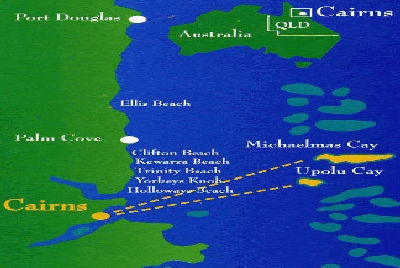
The arc in the lower left is a jet engine, the small white boomerang shaped thing in the middle is Michaelmas Cay from up high, near the jet engine. The shaded areas all around the cay are the reef heads. This area is rich in coral heads but land above the sea is not very common. That is what makes Michaelmas so special; you can get out and walk on it. The sand is coral; it was placed there by cyclone-tossed seas – The Coral Sea. The sand is created by the battering of the cyclones as well as the constant gnawing of coral by certain of the reef residents. The outer layer of a coral reef is alive and has enough sustenance to support some of the larger fish of the area.
The Brown Boobies have increased in the past few years. That is not a long enough time span to think anything special is happening but it is something I have noticed. Dave O’Brien the marine biologist who works the boat we use doesn’t think much of the numbers one way or another. But to my eye there are more of these birds and more breeding pairs. The adults are like Brown boobies that world over. This species is pretty much worldwide between the tropics (of Cancer and Capricorn – equatorial I guess might be a better way to say it).
The youngsters are white, fluffy, and goofy. The Brown Booby is a ground nester and thus needs a place, often islands, without predators. Many birds of this sort were affected by whalers, sealers, buccaneers, pirates, and early colonists who released and/or brought with them domestic animals for food and companionship. Cats, dogs, pigs, goats, sheep and several other animals were often left on their own for later harvest or simply jumped ship when near land. These animals had a significant impact (and still do) on the life of the Australian and (especially) New Zealand coasts.
It is usually assumed that birds are appropriately called by the demeaning phrase – bird brain. This Brown Booby shows that occasionally within the population there is a high-tech nerd bird. 
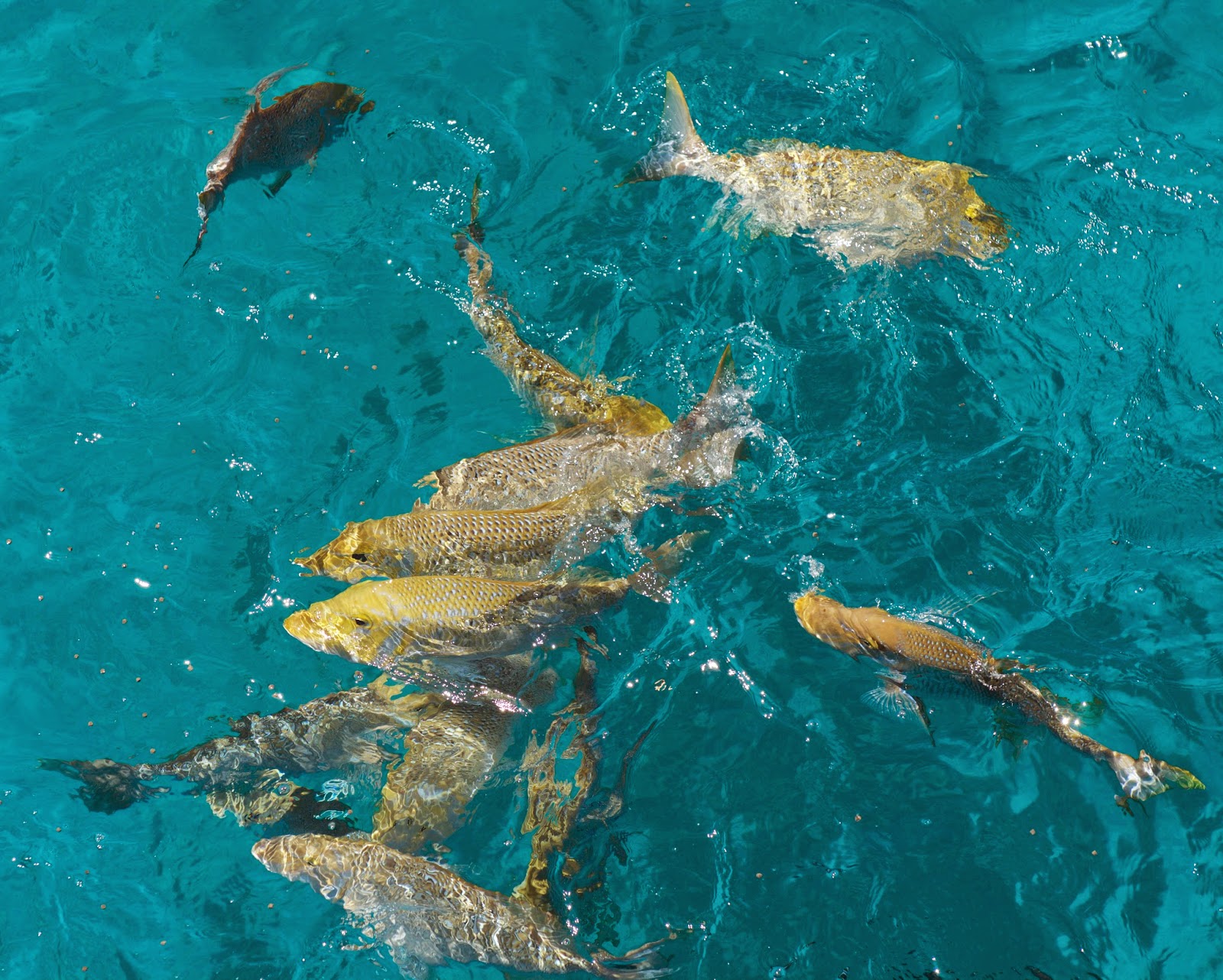
As we tie up in the shallow waters off the cay we are allowed by the Department of Conservation (DOC) to distribute two kilograms of chopped fish. This attracts the larger fish of the reef for a bit of a snack. The large dark fish near the top is a trivially and it slashes through the feeding area like a rocket. The Red Sea Bass are quite slow in comparison.
The Brown Noddy (or Common Noddy) is a pelagic tern. It is an ocean bird. When traveling out from Cairns you don’t see noddies until you actually reach the cay and get to the ocean side of the island. They almost never fly toward land. The noddy is also pan-tropical occurring everywhere in the equatorial oceans. 
Noddies are pelagic, but in nesting times they seem to enjoy loafing on the shore. It is a hectic scene with thousands of terns milling around but I have to assume that the pair splits duties at the nest and then one can preen and relax on the beach both before and after going fishing. Once the young are fledged they are all out to sea. Here a cluster of noddies is joined by a single Great Crested Tern.
Adults have a soft gray crown from the beak back over the crown of the head. There are actually three species of noddies around the world; Brown or Common, Black, and Lesser. Occasionally there is a Black Noddy in with the Michaelmas Cay Browns. But not often.
There are both Lesser and Great Crested Terns on the cay. These terns are also called Swift Tern or simply Crested Tern. But the Greats are by far the most common of this type. They are quite large and generally return from foraging at sea with a smallish flying fish in their beak. The group together on the backside of the cay but fly out over the front and out to sea. This is the only tern that is likely to be seen on the boat trip out from Cairns, and then only a few.
The Sooty Tern (or Wide-awake) is another pelagic tern. Here one straddles her egg providing a bit of shade of a one hundred degree afternoon. Here in my New England home the tern and other birds actually incubate their eggs, keeping them above one hundred degrees. In tropical Australia equal time is spent shading the eggs from the blazing sun. Incubation is a night time activity for the most part. This species don’t breed until it is about seven or eight years old. It spends those first six or seven years at sea.
Here an adult climbs aboard a coconut while the mobile, but flightless, youngster snuggles up to the husk.
There are two other species of tern that might be seen here on Michaelmas Cay as well; the White-fronted and the Bridled. I have seen them both over the years and will include them in another page on the reef. I will also do a future blog page on the fishes and mollusks of this spectacularly biodiverse region of the planet.

New South Wales, Australia

The NSW State Library – WOW

We had a great experience this last month in Sydney. I always seem to visit the state libraries in Australia and the New South Wales State Library in Sydney is on MacQauire Street just up from our hotel. These libraries have exhibits and displays of the cultural and natural history of the continent/country. It is always a great stop – there is strong free wi-fi (not a widespread occurrence in Australia) and the exhibits as well. Always worth a stop.

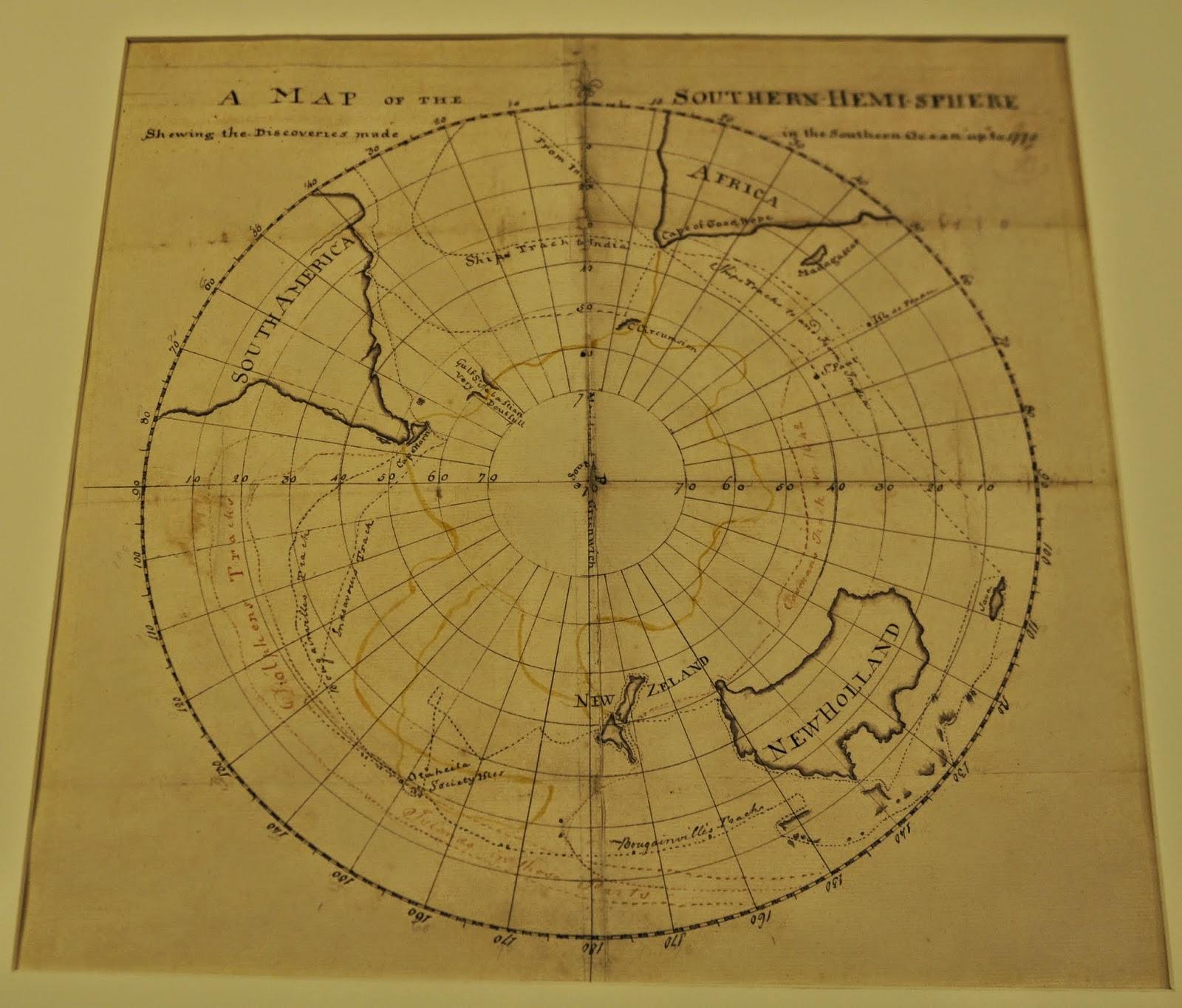
In February of 2015 Margaret MacIntyre made arrangements for us to get a tour and see some of the great artifacts that the SLofNSW holds. We were able to see Joseph Banks’ journal from the trip with Lieutenant Cook, Cook’s own hand drawn map of the southern hemisphere, and other maps and sketches done in those first few year of European residency in Australia. It was a remarkable display of historical material and quite exquisite in its beauty as well. The drawing and map-making skills were exquisite and the penmanship is a feature that we seem to have lost to the sands of time.
(If I couldn’t type I couldn’t communicate, even I have trouble deciphering my handwritten notes – but the writing of these men is still legible, neat, meaningful, and lovely.)

The Mitchell Library is named for David Scott Mitchell who was an early and very significant donor (benefactor) to the library. This research room is quite grand and the materials housed here are simply wonderful. There is a very nice book shop and dozens of carels and seats in casuals spaces for people to stop in and surf the net.
We were shown the deep interior of the library by the informative and well-versed Elise Edmonds. She had pullred items that might interest the Smithsonian travelers and she had us spellbound for the duration.
This map was drawn by the hand of the man we call Captain Cook; though he was a Lieutenant when he drew this map. Cook joined the navy very late in life, as a 27 year old man. Most sailors and captions had started when 10 or 11 or 12 as cabin boys and mess boys and then passed on and upward to higher positions if they had the brains and the will. Cook managed coal boats and then joined the service. He became well known for his mapping of the eastern Canadian coast and was asked to go toward Australia (which no one was sure was there) in order to carry out scientific work and draw maps.
The science was done in part by Joseph Banks; the man who would lead the Royal Society for forty years upon his return to England. They were to time and map the Transit of Venus across the face of the sun in order to develop times and arcs for determine distances from the sun and eventually to determine longitude. Sailing was a bit of a crap shoot for these men. They often were only vaguely aware of where they were. Cook had several clocks on board as part of a very determined search to learn how to tell time while at sea in order to make the use of a sextant accurate around the globe.
Two great books exist on these topics: Longitude (by Dava Sobel) and Measuring Eternity (by Martin Gorst).
Today we have Google Earth and satellite images that depict in real time the contours and face of the earth. As you can see from the above, that was not always the case. What was known of the world’s geography was poorly known and the lands and seas adjacent to what was known were often unknown; totally unknown.
The first eleven ships to arrive in Australia with residential intent contained civil servants, marines, sailors, and, most famously, criminals. Many of the criminals were people of bad reputation and malignant intent, but there were others who were there due to circumstances and their reactions to those circumstances. Some were forgers, petty thieves, and others were down-and-outers who stole bread or clothing. They were soon all settled inside Port Jackson in Sydney Cove. When Cook discovered the east side of Australia he found Botany Bay and that location, just south of Sydney Harbor, was where the ships first landed – but there was no fresh water so they moved north to what is now Sydney and started to build as prison, a country, and a culture.
The Europeans found the locals to be an odd collection of people. The aboriginal residents didn’t look up at the ships when they arrived, there was no widespread fear or panic. Well, after some shooting and fighting there was to be more circumspect behavior. But in general the two factions went along; separately. The European governors became friendly with several of the aboriginals and even built a place for a man named Benelong on a point of land right in town (the Opera House now sits on that point of land). The Europeans, being European, didn’t learn much from the native people. They felt that they were the chosen people and that their way would succeed. The lack of learning had great negative effect on exploration through the interior of Australia as many of the explorers died in the arid, hot, rugged center of the country because they never learned to mimic the lifestyles of the native peoples.
The image above was drawn by an aboriginal and depicts the two cultures and some of the native wildlife and mannerisms of the aboriginal people. 
The drawing above is from a similar source and depicts what appears to be a kangaroo in the tree as well as dancing or celebrating local people. There are animals called tree kangaroos but they are now restricted to the wet rain forests to the north, from Cairns all the way up into New Guinea. The painted bodies of the people in the picture depicts a characteristic display of the many aboriginal peoples/groups/tribes/clans. There were about 4-500 aboriginal languages being spoken at the time of European arrived; small groups, a hard life characterized most interior aboriginal groups; the coastal people had greater edible resources to utilize.

Tiritiri Matangi, New Zealand

Over the years I have been able to see most of New Zealand’s remaining native wildlife; that really means bird life. New Zealand has no native mammals to speak of – a couple small populations of tiny bats were the only land mammals on these remote Pacific islands. It was all birds, a remnant reptile, and some invertebrates. The plants were mostly wind pollinated and the birds were often flightless. Even the resident falcon, usually known as a bird of the wing and remote cliffs, nested on the ground (and still does). The oceans around the Islands are rich in sea birds. There are albatrosses, petrels, storm-petrels, shearwaters, fulmar, prions, and diving-petrels. Any trip to New Zealand for birds should focus on coastal visits and boat trips.

Sadly much of the native wildlife (and plant life as well) has disappeared from these islands. First the Maori arrived in about 1350 and proceeded to develop a taste for the array of large flightless Moa (birds), and they incidentally and probably accidentally brought a Polynesian rat (Kiore) with them. Perhaps the rat was eaten as well, but the rats soon discovered that the birds were quite tasty and that their even tastier eggs were just laying about on the ground. Then the colonials arrived with agriculture, cats, sheep, goats, dogs, and other trappings of Europe. The woods soon lost their birds and bird song. The new residents released brush-tailed opossums, stoats, weasels, and an array of birds best seen in Kew Gardens in London. The islands were changed.

Modern New Zealanders have spent a great deal of currency to re-establish some of the wildlife that Lieutenant Cook and Joseph Banks wrote about when they first arrived in the area. The kiwi, stitchbirds, tui, red-fronted parakeet, and kokako are all now being favored on island sanctuaries like Ulva (south of Stewart Island which is south of South Island) and Tiritiri Matangi an hour or so north of Auckland by a dedicated ferry. The DOC (Department of Conservation) cleans the islands of the pest (alien and invasive) species and then creates vegetated habitat and finally introduces native threatened animals. Cats are usually the worst predator. They kill and eat just about everything they can catch. But now the Brush-tailed Opossum is the most wide spread alien species. It is a rather nice looking Australian animal brought in for a fur trade. They escape, they breed, and they eat plants and animals in large quantities.

Well, anyway there are some very cool birds out on Tiri and I offer a few images below. The woods are thick, the light is dappled, and the birds move… a lot; so the pictures are a bit varied in quality but they’ll have to do. I offer captions for each of the twelve images.

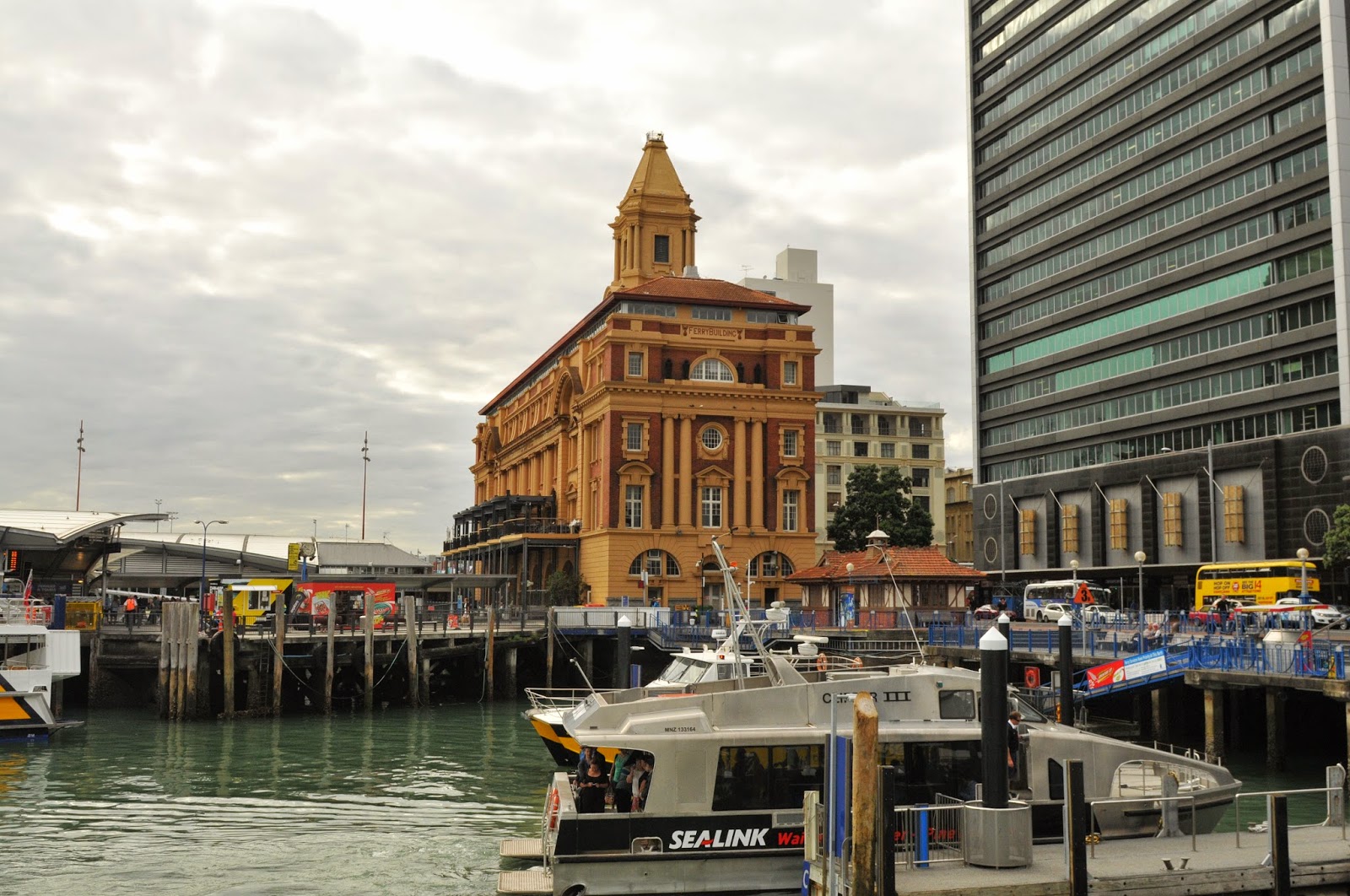
 The harbors in both New Zealand and Australia cater to the folks in the area. The cities have subways and buses but they have great water taxis and ferries as well. These options are usually located in a lovely harbor full of history, charm, and places to eat. Auckland is one of the good ones. There is a Tiritiri Matangi ferry that leaves downtown daily at a sensible morning hour and gets you to the island for a five hour stay and returns you for supper. This is a view from the deck as we pull out.
One of the first things you notice about the deeply southern hemisphere places is that ducks, shorebirds and gulls are pretty thinly represented. Most shorebirds are migrants from Siberia and other northern climes and some even fly from Alaska. However there are a few that are resident and rather common and here is the black phase of the Variable Oystercatcher. There is an adult in the foreground and a youngster in the back.
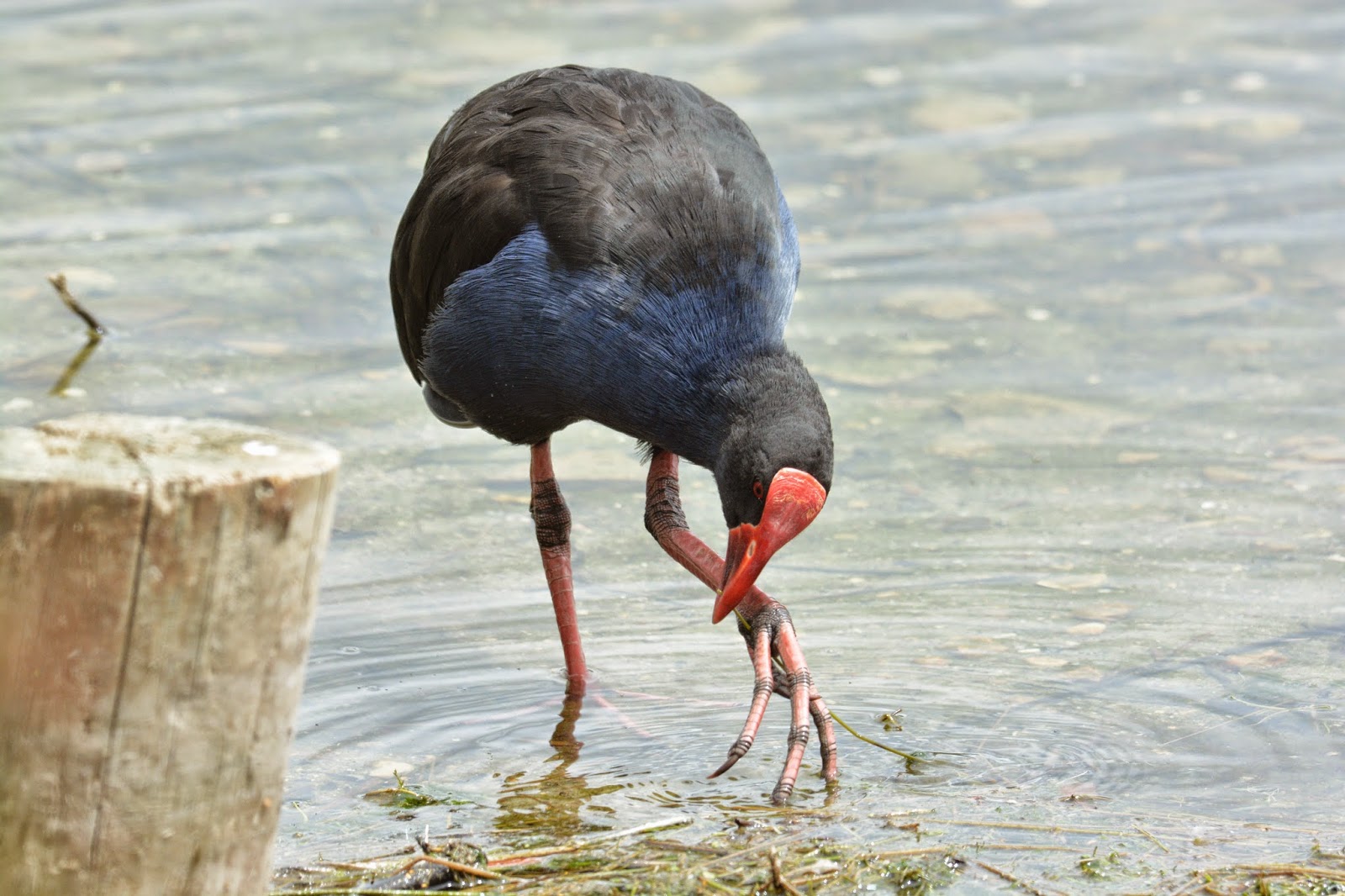
The European-heritage birders in both Australia and New Zealand have honored their country’s first residents by using traditional Aboriginal or Maori names for plants, animals, and geographical sites. In New Zealand this big rail is called Pukeko. World-wide it is better known as Porphyrio porphyrio or the Purple Swamphen. It is one population of a complex of kin that range from west and southern Africa through India and southeast Asia down through the myriad of islands into Australia and then on to New Zealand. There are at least 13 populations that are identifiable by size and feather pattern. In New Zealand it has become quite a tame resident of pastures (paddocks) and golf courses.
Once into the woods of Titri the less common native birds start to appear. One of these is the tiny New Zealand Robin. It is  represented by several populations through the region and the one shown above is the North Island race. This is a perky, upright, curious little guy that is a treat to watch. However perky, upright and curious are not traits that prolonged life once predators arrived in New Zealand. This bird is still found in areas of native vegetation but is safest and more prolific on islands and sanctuaries that have been cleaned of cats, weasels, and opossums.
The Whitehead is aptly named. I use this image because it shows a somewhat typical exposure of an energetic and active bird. This bird travels in flocks and they are all constantly in motion. I do have a few sharp images but most are much blurrier that this one. This species is always moving, hopping, and chattering, and usually rather high in the forest. They do exist in native and non-native forests but seem to do best on predator-free islands.
The Bellbird is another that exists outside of sanctuaries as long as there is a good deal of shelter. They can be found in most of the North and South Islands, especially the wooded regions. it is often heard and has a nice clear rich tone. 
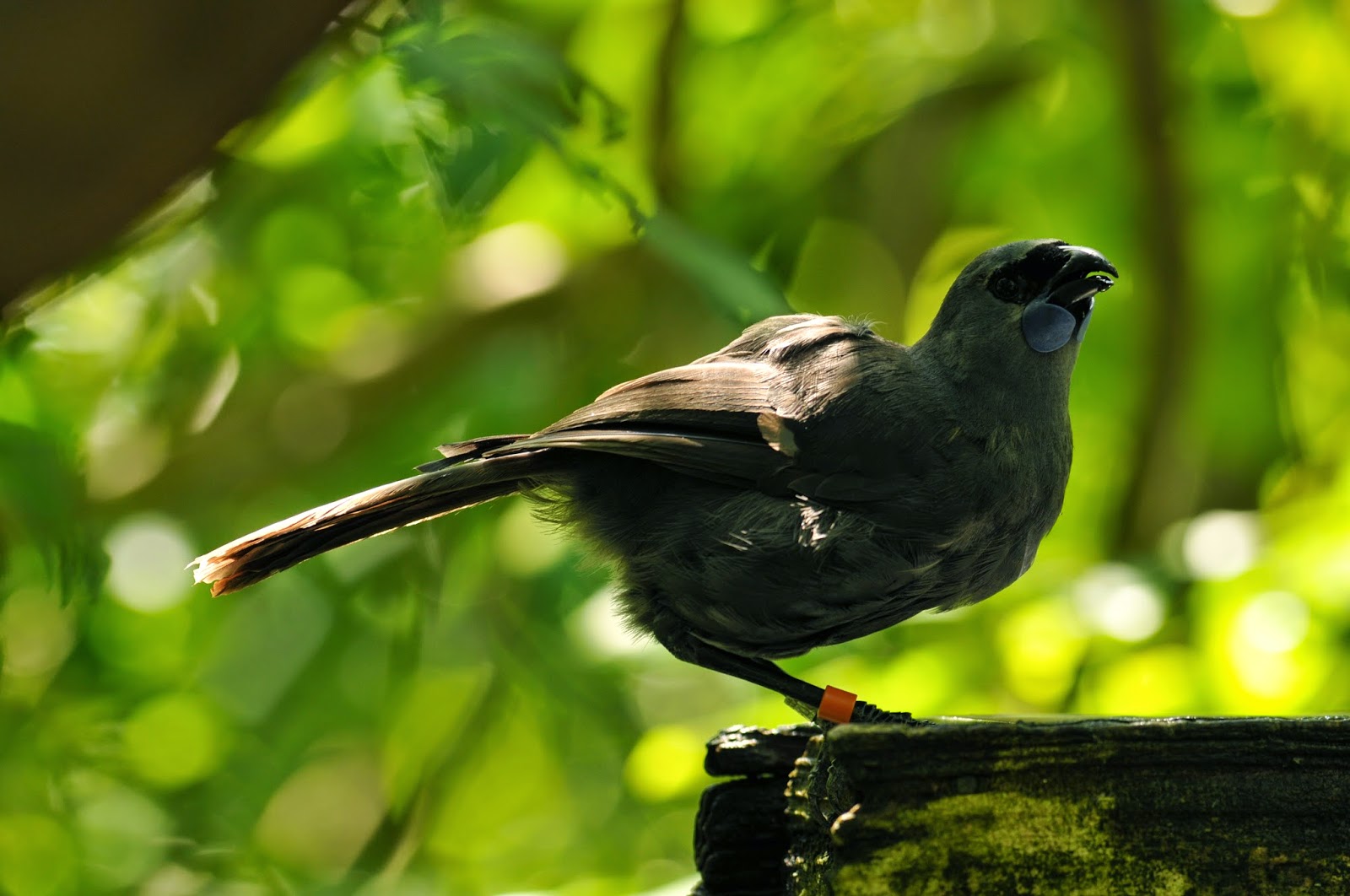
As I was leaving Tiri headed downhill to the boat ramp I stopped at a water pan along the trail – and in came a North Island Kokako. I quickly snapped off a couple images without taking time to make the settings exact and this is what I got. I never did get the setting right as the battery went dead just after this image. The Saddleback and the Kokako are two of the wattlebirds that now live on Tiri. I may put a Saddleback in the next blog. The wattles on the Kokako are the patches that look like blue silly-putty just lower than the base of the bill. 
Australia has dozens of parrots, New Zealand not so much. New Zealand has four introduced Australian parrots, three rare big green parrots generally seen in remote mountain areas, and three parakeets that are considered to be native. (As an aside it should be remembered that all creatures on these islands probably came from somewhere else. New Zealand was likely submerged and then raised (rebounded) rather recently.) This bird is only common on Stewart Island and the sanctuary islands and remains rather shy and easily spooked.
One of the great recovery projects has centered around the Hihi or Stitchbird. They now exist only on predator-free islands and have served as one of the stimuli for creating places like Tiritiri. It is a splashy bird. It has color, motion, and erectile feathers. It is the hardest to photograph also. As you can see here, and in many of the images, the rare birds are banded. They are all being studied for productivity and population success. The researchers can trace heritage back several generations by noting the color and arrangement of the leg bands.
This big clunker is the flightless Takahe. They are almost extinct in the wild and the few places they are assumed to live are reachable only by helicopter. They were rediscovered about fifty years ago by a man who noticed droppings and deduced the existence of the bird. They are now on predator-free islands in reasonable numbers. They were rediscovered in the mountains west of Te Anau where they lived in high areas of tussock grass.  
The Brown Teal is a rare endemic bird also. It is not common on Tiri but there are usually a few around if there is water. The ducks of the south are now threatened by the genetically promiscuous Mallard. The Mallard is now found in both Australia and New Zealand and has little fidelity to its own kind. Hybrids of all sorts will appear and some of the rarer ducks are at risk of being genetically swamped.
The last bird to be shown from Tiritiri Matangi is the Tui. This glossy blue and black bird has odd little (or cute little) white feather tufts under the chin. The white tufts are called poi by the Maori and are represented in Maori culture by the white puffballs on a string used by the Maori women in many of their dances. This is a rather common bird on the protected lands and can still be seen through all of the North Island and most of the South Island; though not so much in the Christchurch environs which are all given over to non-native vegetation and agriculture. 

Tanzania; more than animals

Tanzania Redux (and even once more)
The summer of 2014 was peppered with trips to Africa; two weeks in Tanzania in July and two more weeks in Tanzania in September and another two weeks (this time in Namibia) in October. The trips were all very good and all very different. I am starting to post blogs on these outings and have a bit of explaining to do first. The blogs may run together but I am hoping to post several from each outing. Thus there may be two or three on birds, people, places, mammals, cats, and so on. Hang in there as I think I’m on a roll. The other thing to mention is that one camera was messed up and shot at over 2000ISO throughout the trip. I’d fix it and it would bounce back. So, some of the images look like newspaper photographs from the fifties; grainy and speckled. Sorry about that.

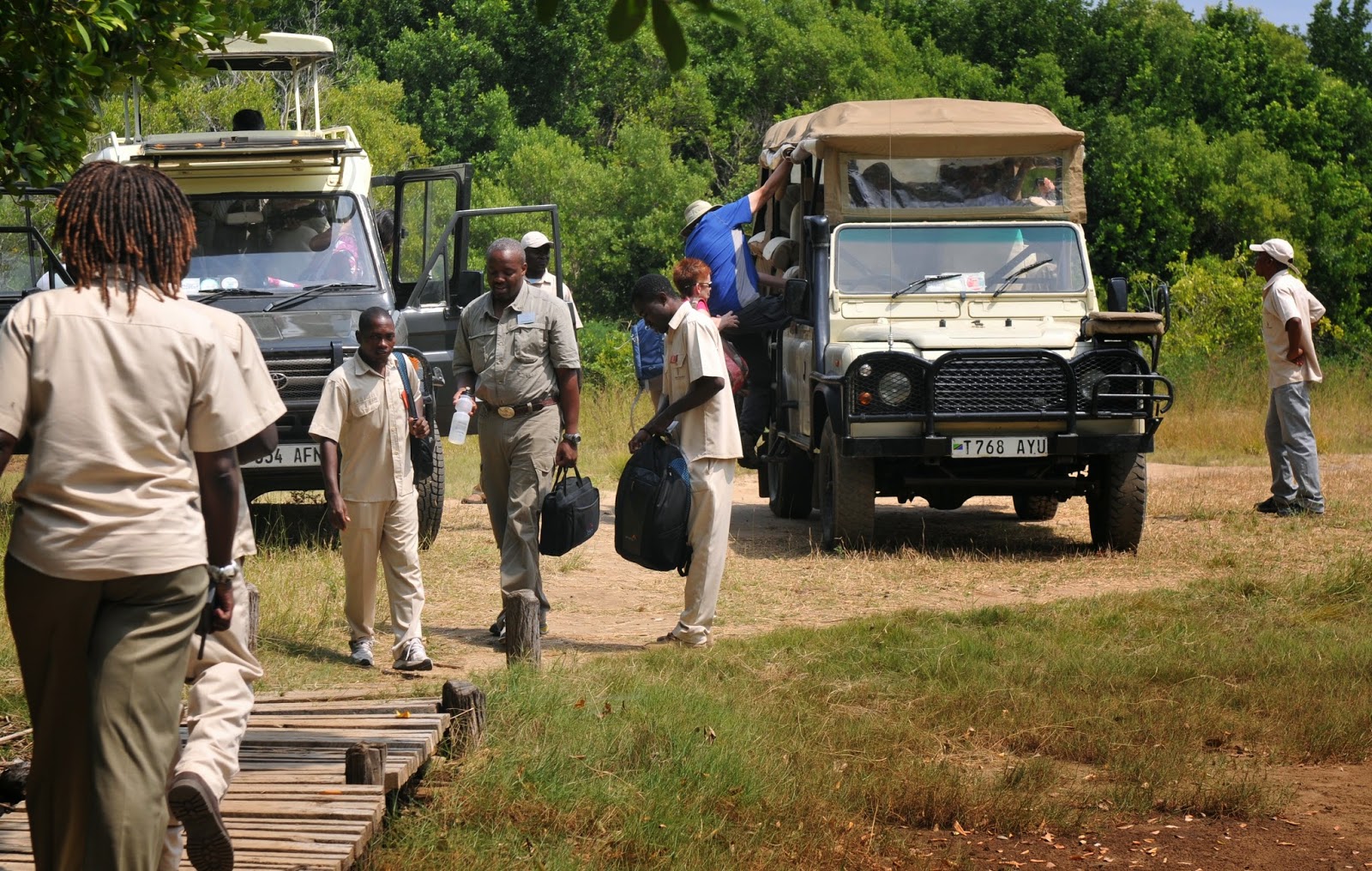
The trips were all Smithsonian trips; two for Smithsonian Journeys and one for Academic Travel Abroad. The arrangements on the ground were made for us by Odysseys Unlimited and Ledirlee. The people who actually managed the day to day activities were Leopard Tours and Ledirlee. The Tanzanian trip started in Arusha and then into the Serengeti and later to Zanzibar and finishing at Saadani National Park along the coast toward Dar es Salaam. We flew home from Dar. The Namibia trip was about half on a train called the Desert Express, a train built for tourism and comfort and half in very nice lodges. The Etosha National Park was the wildlife high point of this trip.

In my early years in Tanzania (and Kenya) the big tour companies were Abercrombie & Kent and Mikato. I was quite surprised to see that A&K was almost invisible and Mikato was even more rare. The biggest company now seems to be Leopard Tours followed by Kobi, Roy, and Ranger. There are always others of course and many of the northern safari circuit companies are not found down in the south. So my observations are not definitive in any way but the two big companies from the 80s, 90s, and early 2000s were certainly in hiding.

A good small company that offers personalized tours is called Nasera (African) Safaris and is managed by my longtime safari companion Joseph Ndunguru. His son (Godfrid) and I were able to meet in TZ but sadly I missed seeing Joseph. He is a marvel as a tour leader and guide. The company is named after Nasera Rock, a very large rock in the Serengeti (north of Ndutu and east of Naabi) that is rarely visited by groups but is quite a memorable monolith.

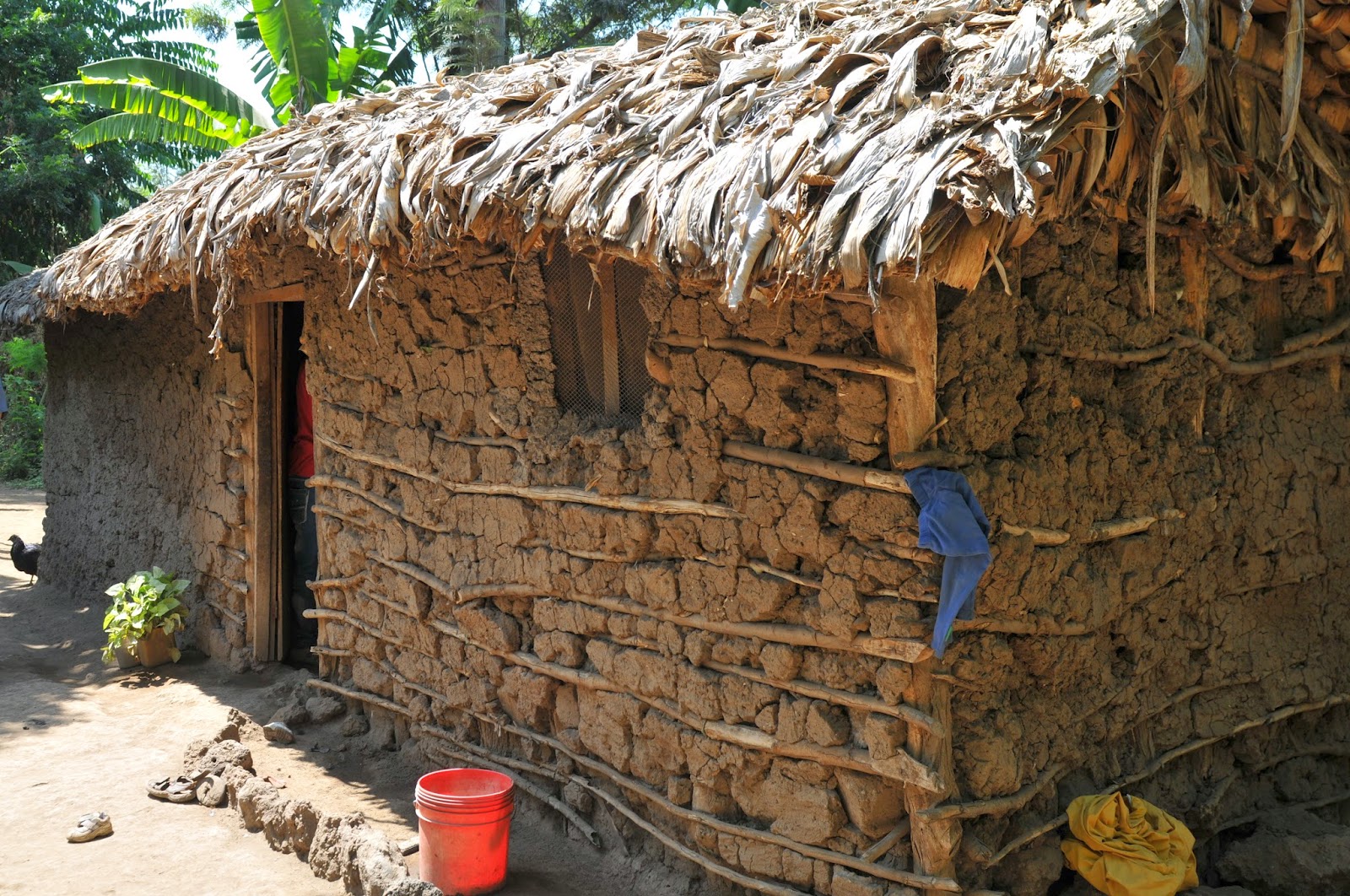
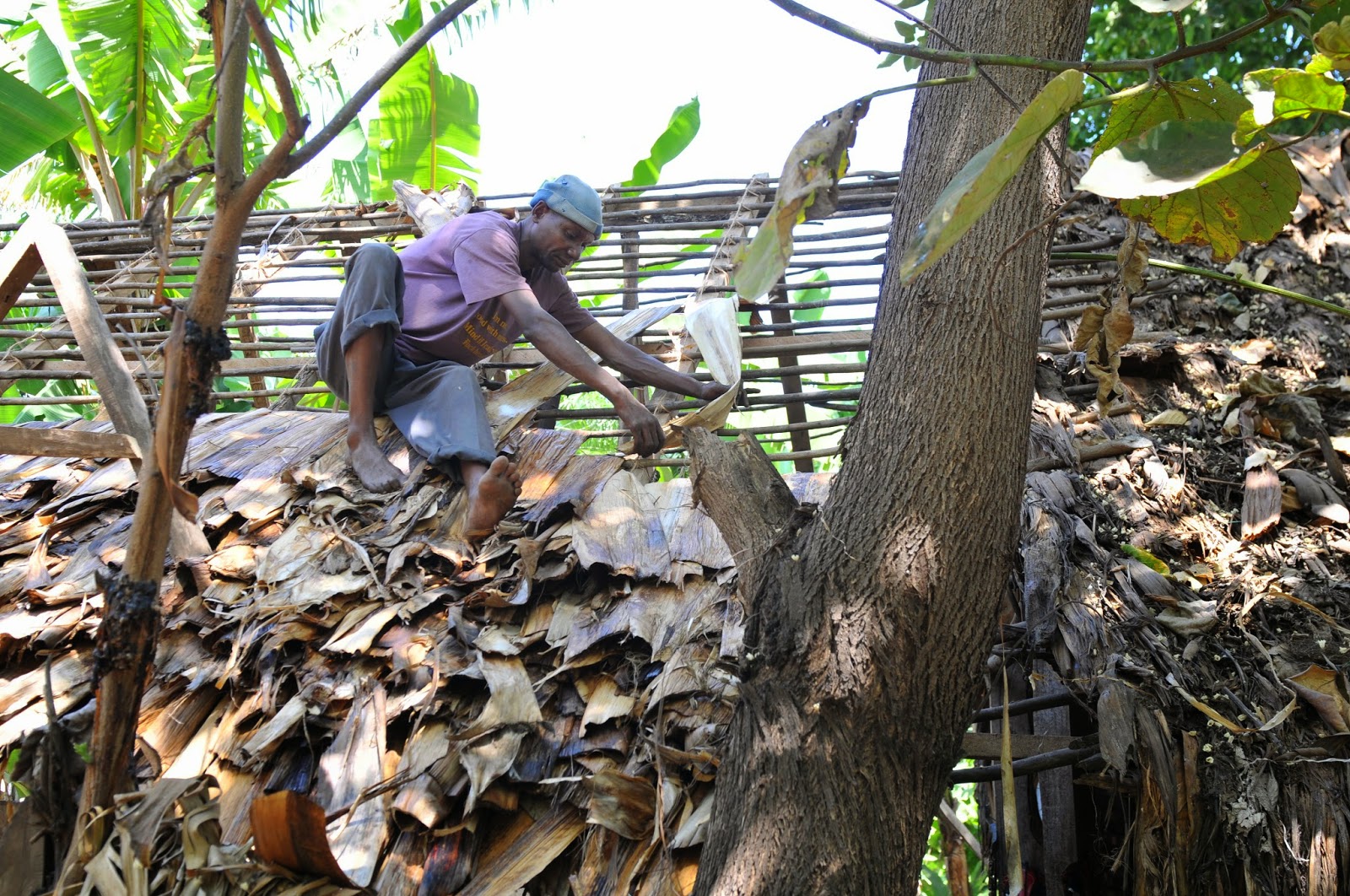
Housing is often home made. Vegetation for roofing, mud and sticks for walls are all that are needed. Little time is spent indoors so the houses merely shelter a cooking area and a place to sleep. This house is in an agricultural area just below the steep wall of the rift as one heads west from Arusha.

The Serengeti is best known for the great migration of wildebeest, zebra, gazelles, and eland. This is a somewhat circular trip where animals drop babies in the Serengeti in January and February and then after  grazing for another month or two. They then find the grasses short and dry and they start westward and then north toward the rivers (which they cross in spectacular waves) and on into Kenya’s Maasai Mara. It is here that they graze and mate during June, July, and August and then they slowly start south again into Tanzania. The arrival is quite dependent on rain. Green grasses attract the animals.

The people of Tanzania still live close to the land. Many of the still
farm patches of land given by the earlier, more socialist, government.
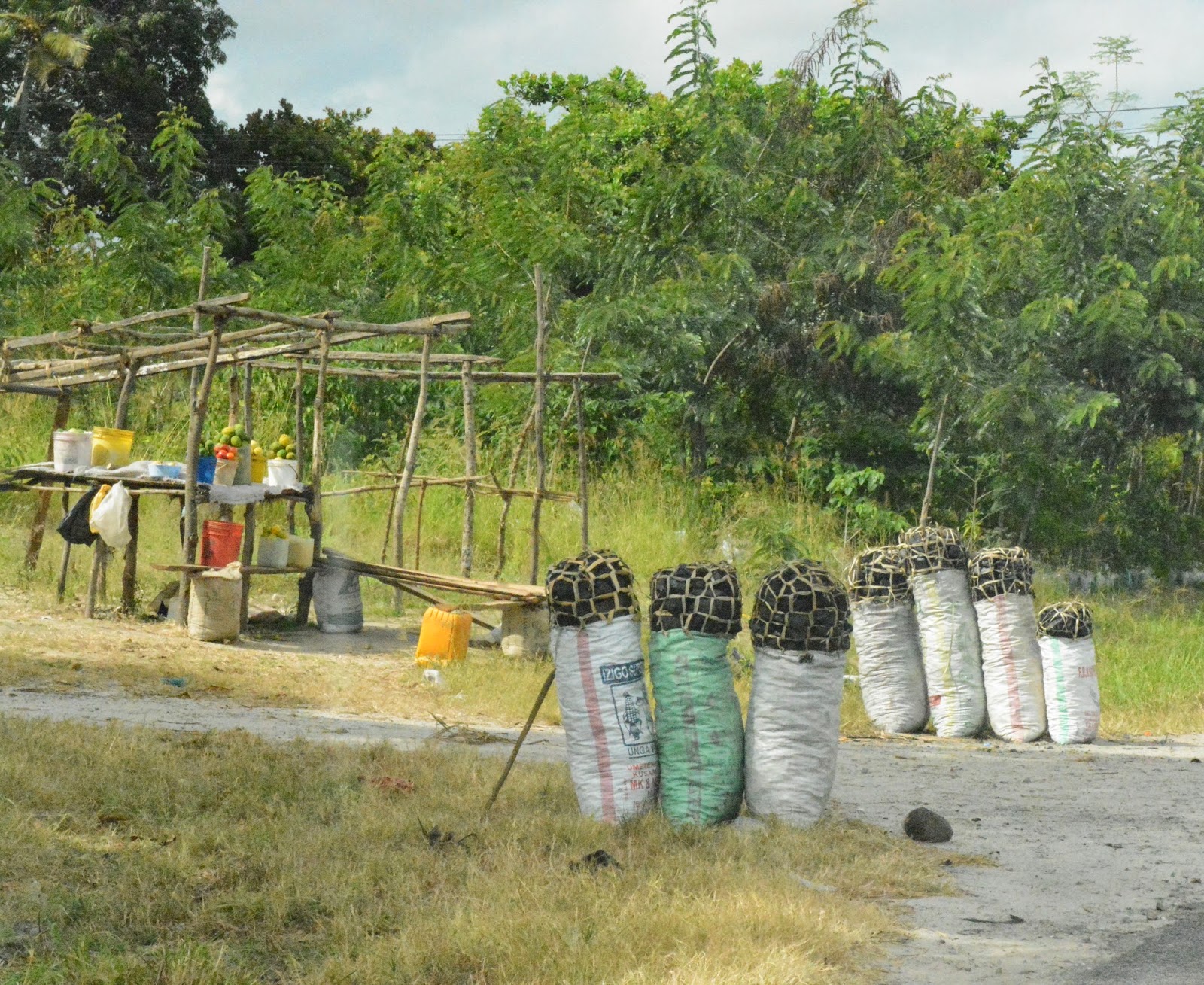
These are bags of homemade charcoal for sale along the main road
into Dar es Salaam. Vegetables and fruit are also offered when in season.

It almost never rains in (our) summer months in East Africa. But, the July trip was shown the vagaries of weather and possibly the climatic changes that are down the road for our planet. It rained a couple times and the rain was pretty heavy. Later, in September, it rained all day and very hard in Arusha-town; where it essentially never rains at this time of year.

I’m going continue this barrage of blogs with a bit of local color. The animals and vistas will get coverage in the next African blogs and rehashes of safaris will follow as well, but remember this is home to many people. In both Tanzania and Kenya there are still more than 100 languages spoken. The people are not of the same heritage; they are (or were) essentially separate nations. It was through the political energy and personalities of Jomo Kenyatta and Julius Nyerere that these countries have been able to exist and grow into the twenty-first century. Kenyatta was an energetic entrepreneur and Nyerere was a socialist. They were both successful and have left behind two very strong countries.

Reeds, banana leaves (shown here), bark, or mud can be used to cover a home or shelter. Bananas are a staple food in East Africa and vital to the economy and health of the people. They are a cash crop as well as a dependable yard-food. The stems are not good for much but the fruit and the leaves are quite valuable.
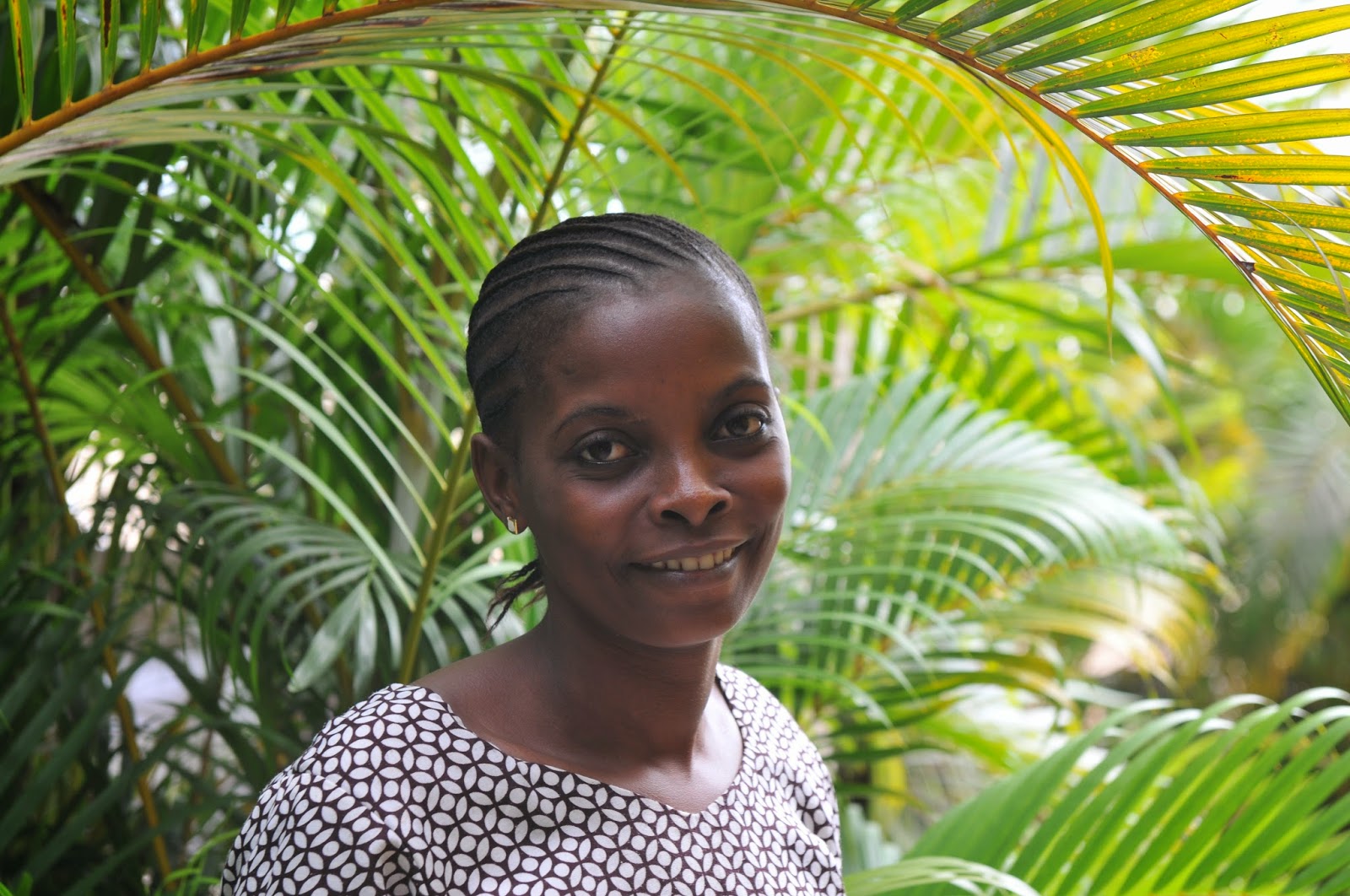
There are still over one hundred languages in Tanzania and another 100+ in Kenya. The people have lived for many generations in specific regions and have developed characteristics best suited to the environment. Most locals can tell by face shape, the type of hair on the head, and body shape where someone’s family originated. In modern East Africa the tribal differences are being melded a bit as urban life, an open society, and broader schooling have allowed people to meet and marry in places often far from their natal community. After about twenty-five years of visiting I am quite hopeless at guessing origins or genealogy
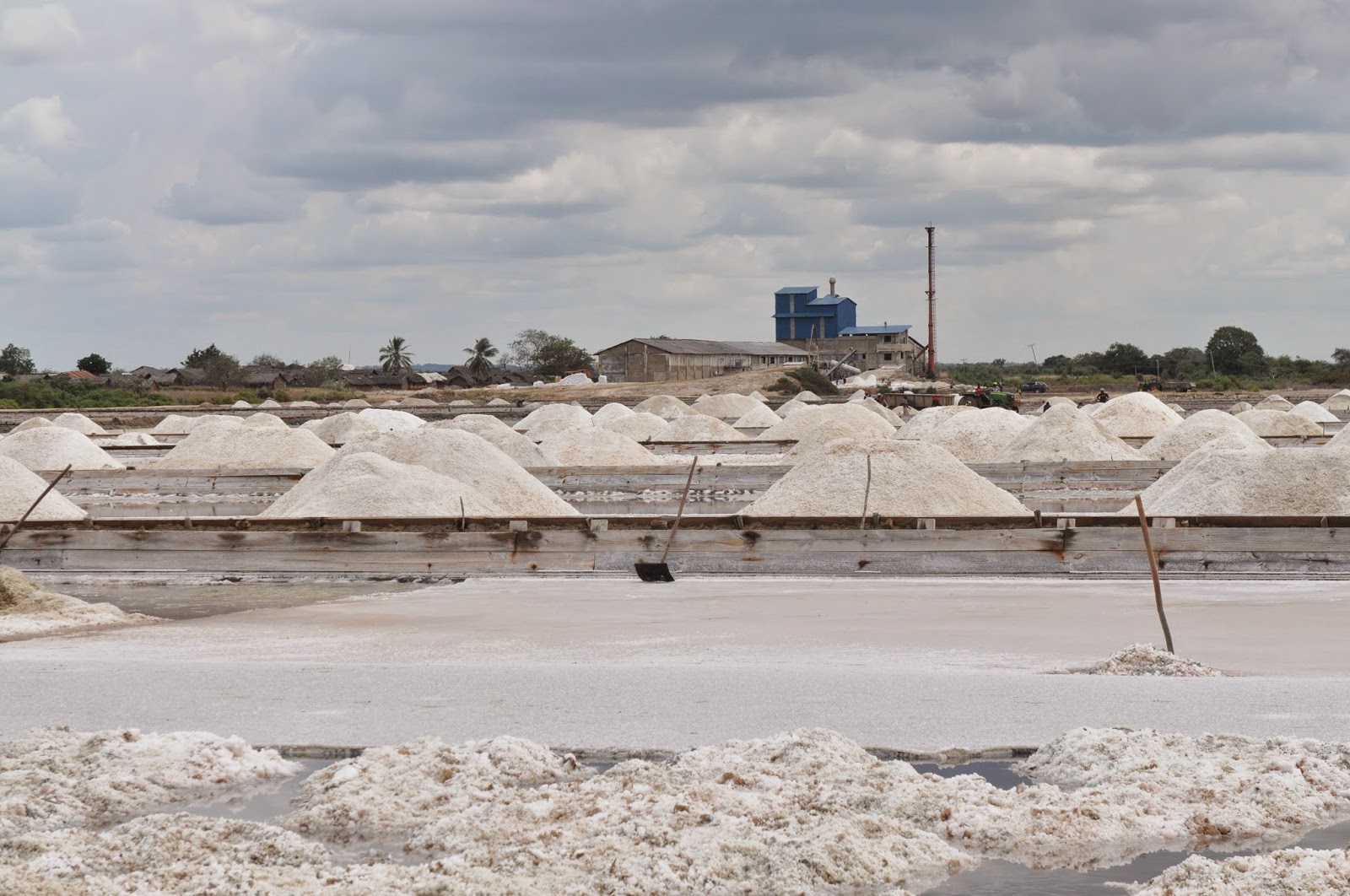
Along coastal Tanzania there are still salt works. Salt is produced by evaporation and the work is all done by hand. This scene is near Saadani NP. It is very hot here and the workers rake and shovel salt all day in the heat. This is not a job that an American college kid would take – it looked very rugged and very uncomfortable.
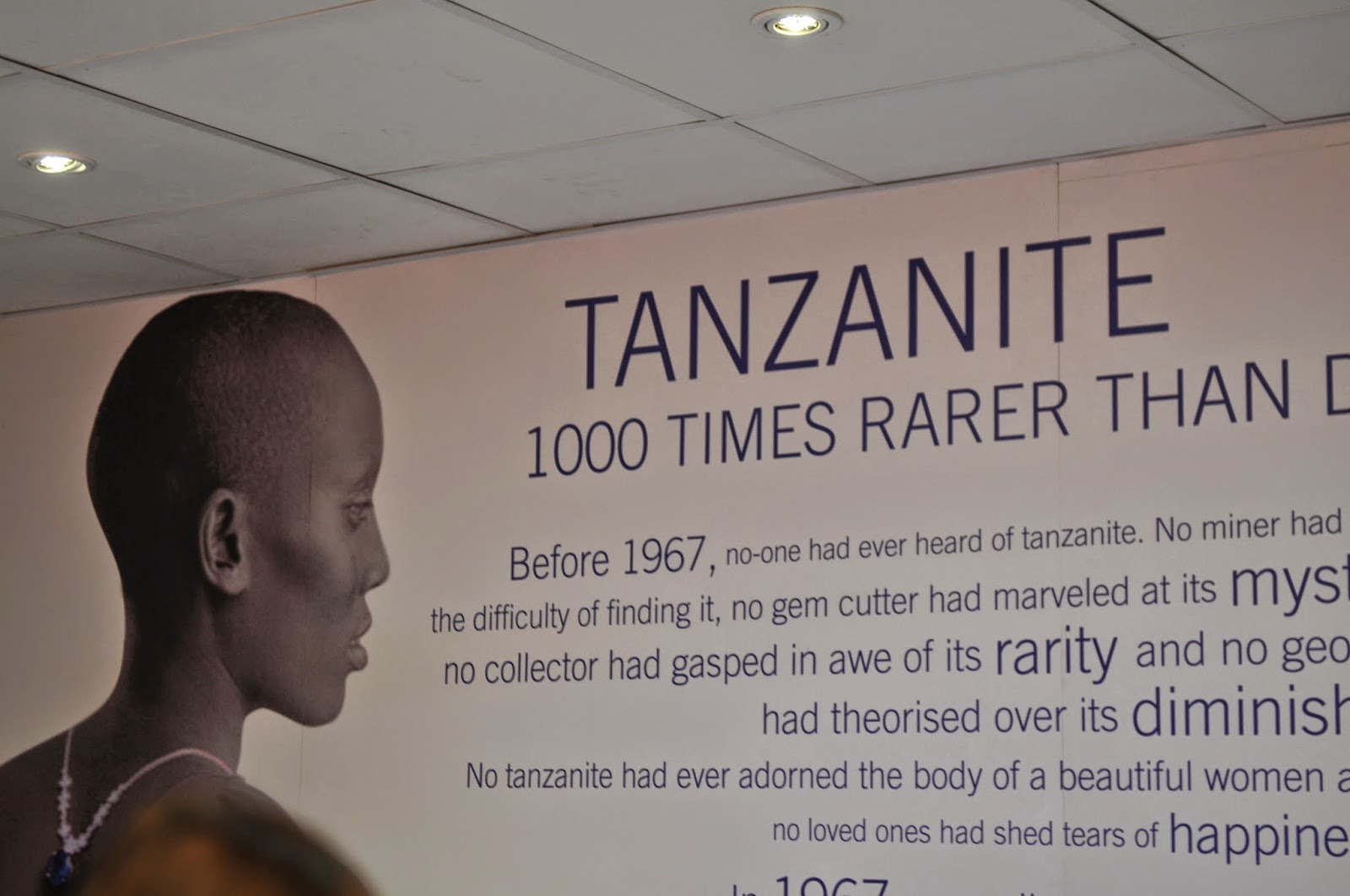
Tanzanite was discovered on fifty years ago. It seems to be a uniques substance and it also seems to have a finite life. There is little left in the ground and it will all be harvested/mined with in a decade or so. It is a blue/purple stone of reasonable hardness but would probably be dinged over time if it were in a ring. Tanzania actually has three colors as there is a burgundy hue also. Sometimes the stone is heated (by natural means or in an oven) and the brown or burgundy disappears leaving a river blue or purple gem.

Before we head out on safari and look at vistas and wildlife, before we load up the vehicles and boats — I want to do one more page on the people and country. The next installment will be on the island that gives Tanzania half of its name –Zanzibar. So Harlequin and Roma will have to wait just a bit longer.
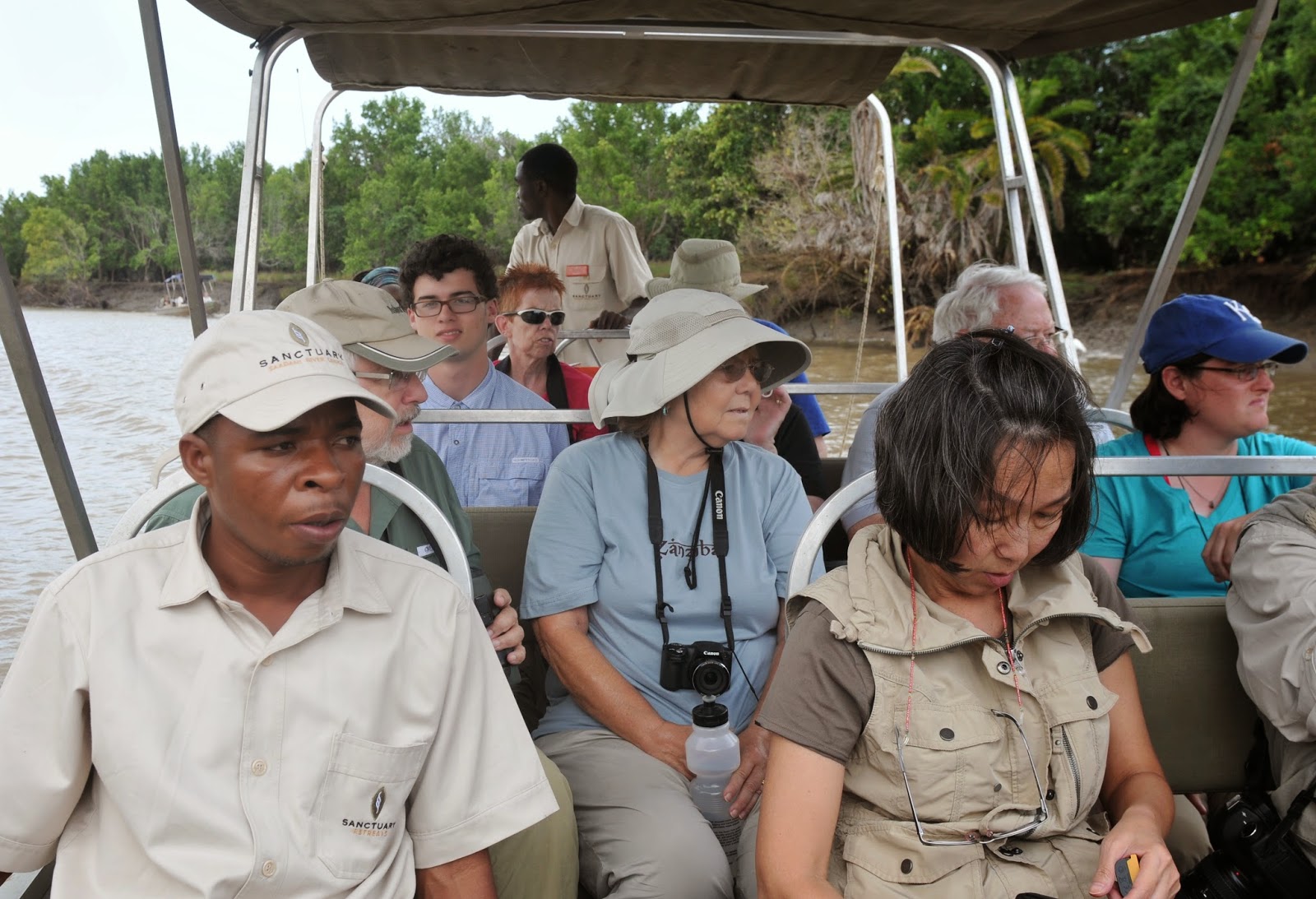
Roma sits up front to spot monitors, crocodiles, herons, storks, and kingfishers.. oh yes, and lots of hippos. But more on the safari will have to wait for the Zanzibar page to be done. Stay tuned.

Tanzania – July 2014 – Scenery and Places

I was in East Africa twice in the late summer/early fall of 2014. (For those who are interested in sightings and dates; the dates are July 15-30 and September 9-24 of 2014.)

I apologize for letting the blog lapse for so long but offer these pages of memories to fellow travelers and perhaps a bit of stimulus to those who have never experienced the people, scenery, and wildlife of northern Tanzania. I will be posting quite a few blogs in a row; from both trips, there will be bird, people, mammals, scenery, and miscellaneous pages. I won’t rewrite this introductory material for each page, but will reference back to this page for background and tour information.

This was a bit on a new itinerary for the Smithsonian, or at least for me with a Smithsonian Journeys group. Most visits to East Africa are focused on the great migration of wildebeest, common zebra, Thomson’s and Grant’s gazelles and the associated hangers-on that occurs annually in northern Tanzania. That migration is a phenomenon of the first month or two of the year in this part of the country. The animals head south from Kenya (the Maasai Mara and other spots) into the Ngorongoro Highlands and on down past Nasera and Oldupai (Olduvai), spilling in their tens of thousands onto the grasslands of the Serengeti. Here they will drop their young and stay for about three-four months as the intermittent rains will provide green grasses through that time. As the rains cease and the grasses dry up they follow their noses, not only toward the dark clouds but following the scent of rain, west and north to the now greening grasses of the Maasai Mara. As they begin to move slowly westward and north, crossing the Grumeti and Sand Rivers heading north into the Mara for the months of June, July, and August, the youngsters are mixed with adults and the overall numbers have swelled from those (once seemingly magnificent) animals that arrived a few months before.

In July and September the numbers were going to be thin, well below peak numbers seen during the few months of each year. We expected some of everything but no great numbers of anything – excepting maybe cats. It was likely to be hot and dry. The itinerary, for this time of year, was augmented to include a couple days in Zanzibar and three days south along the coast near Saadani National Park.

The dates of the migratory movements are never exact and each year will show variation from the years before and those that follow. And the rains that established this pattern over the past few thousand years are no longer as predictable and dependable as they have been. In fact we had rain in July and there were heavy rains (and an early migration of zebra) in September. The safari-town of Arusha almost never gets rain in September and this year there were very heavy rains in the city and throughout the region. It was very surprising to all of the locals.

I am going to do several pages on people and scenery. Part of the decision-making process has been guided by the behavior of the Nikon D7100 that I was carrying. The ISO seemed to jump all over the place and many shots were taken at ISO numbers in the thousands. This makes for grainy images and in general I threw them all away – but I have included a few within the upcoming blog pages. I apologize again, this time for the varied quality of the images.

When one visits the migratory regions of Kenya and Tanzania one is often in the region known as Maasai-land; the lands populated by the livestock-passionate Maasai people. They are a tribal group of rather smallish numbers amongst the nearly two hundred Tanzanian tribes, but they do not eat game meat, do not hunt the animals that share the expanses of grazing land with them, and have (at least historically) left a smallish footprint on their lands. With that in mind I start off with a few images of the Maasai. Their history, culture, language, and rituals are ingrained in the tribal group (though there are six clans with small variations on the cultural themes) and have been brought from their root country to the north. They arrived in this area several hundred years ago. They arrived when the volcano Ol Donyo Lengai was very active and they drew the spewing mountain into their traditions and stories. The Maasai are closely related to the (Wa)Arusha and the Samburu. The Arusha people are now somewhat agricultural on the highlands around Arusha-town and the Samburu are located in northern (arid) Kenya where populations of Somali people have swelled with refugees from Somalia. There has been great pressure on the resources (grass and water) in the area where these people reside.

The gender roles in Maasai are distinct and follow age-related steps through a persons life; a circumstance found in most tribal cultures as well as our “modern” cultures. The Maasai are pastoral and travel to and from grazing areas with cows, sheep, and goats. The male youngsters start tending goats and sheep at kindergarten age and eventually graduate to cattle as the become older. In most seasons they can establish a rather permanent home area and go in and out daily from the same spot, but dry conditions will often force the men to take the animals great distances to find suitable pasturage. The women may or may not accompany them. It depends on the severity of the situation and the assumptions about the future.
Men and women will wear adornments but men alone will have a large piercing in the ear, usually done ceremonially after a courageous act. In the old days it was spearing a lion or elephant that allowed you to get your ear pierced. Most Maasai wear red blankets but purple and blue are also favored. Red woolen blankets were brought into the area, as trade items, by the explorer Thomson in the 1850s.
The presence of a manyata, or village, used to mean that an age-class of young men were living together after passing through one of the many ceremonial rights-of-passage that the tribe uses. In real life an elder will marry and have a home for each of his wives in a small enclave where the extended family and their animals reside. The elders are at least 25-30 years old. These men will gather almost daily to discuss issues and pass along historical tidbits. Older women take care of the young, the house and house-building after a move, and they train the girls in the ways of home-making and food-gathering.
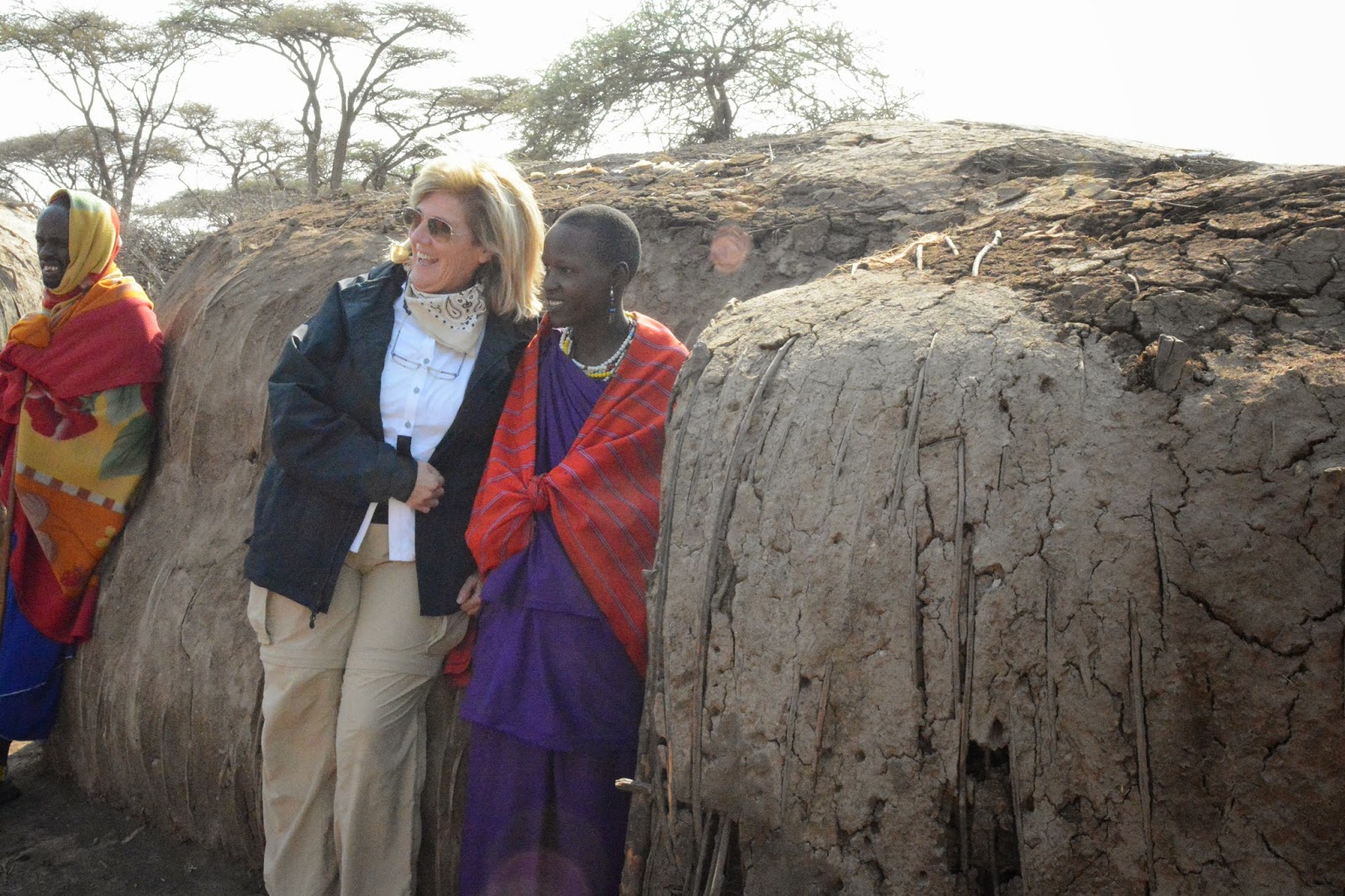
A village like that shown above is based on a “manyata” pattern used by the morani or young warriors. We see these “villages” today near roads and population centers as they are a good way to live if you are opening your home and culture to visits by tourists.
When you fly over the grasslands you still see small home-territory areas where there are two or three huts and a kraal for animals. This is how the older people still live. Most of the sites that tourists visit are actually glorified manyatas and house mostly younger people.
The early European explorers were not very tall. There are tall Maasai but the idea that they are a tall statuesque people is a bit overblown. The suits of armor that are on display in Britain are often created for people about five foot three inches. In the days of colonial exploration the Maasai may have seemed tall to the Europeans but in todays world of rich foods and medicines they are no longer taller than the people who come from afar.
In the image above one of our group seems to have just closed a deal on a small second home in the Serengeti – and both buyer and seller seem pleased.
The Maasai still carry metal-pointed spears when out with their animals. In reality lions, the biggest threat to life and herd, are pretty shy around Maasai. The scent of a Maasai will send lions away. The animals seem to have an innate fear of Maasai, or perhaps it is a learned fear from being poked and prodded, and maybe that is still how a Maasai warrior can get his earlobe pierced. In most public places the walking sticks have replaced the spear – but not in the bush country.
The iconic African plant group, the Acacias, and other plant groups as well, have thorns. Tough sharp thorns, sometimes three inches long, sometimes curled into a nasty circle. I have seen these thorns go through a hiking boot. Footwear is something that the Maasai are now getting in to. Not cross-trainers, or walking shoes, or fancy athletic shoes named after basketball players. They use old motorcycle tires cut to eliminate the sidewall and cut to a length where one shoe fits all. The tread is good for many years of walking on the Serengeti.
This village is surrounded by an acacia-thorn fence that keeps most predators outside. There are lions, leopards, and hyenas that could be a problem in this countryside. The houses are small and used exclusively for sleeping. The people are outside most of the day and at night, as darkness falls, they retire into the houses often with very small calves tethered inside the low door (there is only one opening). Electricity is nonexistent and water is now stored in large plastic cisterns. Until a decade ago there was no water in these villages.
As the realtors say – it is location, location, location. In the foothills of the Ngorongoro Highlands, at an elevation that offers rather comfortable weather year-round, and adjacent to the magnificent Serengeti plains and kopjes the Maasai seem to have one of the best locations in the world.

Thrashers and the Evil Eye

The thrashers make up most of the species in the mimics; the Mimidae. Gray Catbird and the mockingbirds round out this noisy family. They are best known for their long and loud songs usually utilizing repeated phrases and sometimes copying the songs of nearby species. There are more thrashers in the southwestern US than anywhere else. The Gray Catbird is largely an eastern bird and is the only member of the group to reach into (by migration) Central America. South America has a mockingbird or two, but no thrashers. As a group they are medium-sized, short-winged, and rather long-tailed. The mostly forage on the ground for invertebrates though fruits are often taken as well.

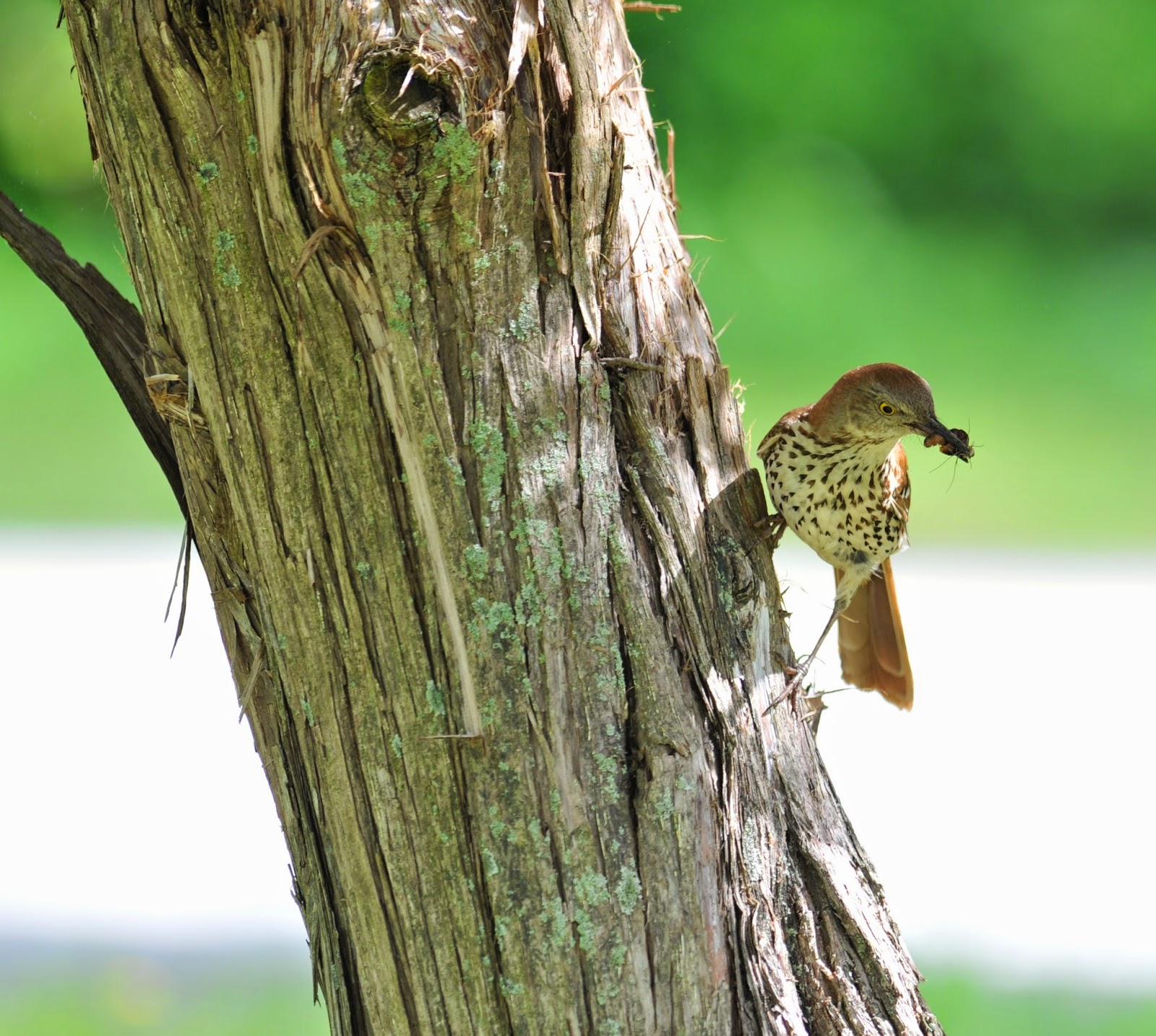
The Brown Thrasher is a bird of the United States with only a modest incursion into Mexico in the winter and slightly into Canada in breeding season. It is found in the mid-west and east though it is not always an obvious member of the avian community. Here in Massachusetts we hear them singing only until they find a mate then they go quiet. Like most birds this size, the eggs hatch in about two weeks and the young fledge about two weeks later.
If you are lucky enough to have a pair in familiar shrubbery they may tame to your presence though they usually skulk. When the nestlings are hungry, growing, and demanding they will gather food all day. Food consists of bugs, caterpillars, beetles, daddy-longlegs and just about anything else they can locate. They gather food from the ground with infrequent flights, to a perch rarely ten feet off the ground. The nest is low in dense growth. 
The return to the nest, especially when carrying food, is often preceded by a brief stop at a modest elevation to look things over. I can imagine the furor if a Blue Jay, crow, or snake were seen – as thrashers will defend their nests and nestlings vigorously. 
The bright eye of the Brown Thrasher can give it a piercing and intense look. The above image shows the rather long legs and dark streaking on the underside.
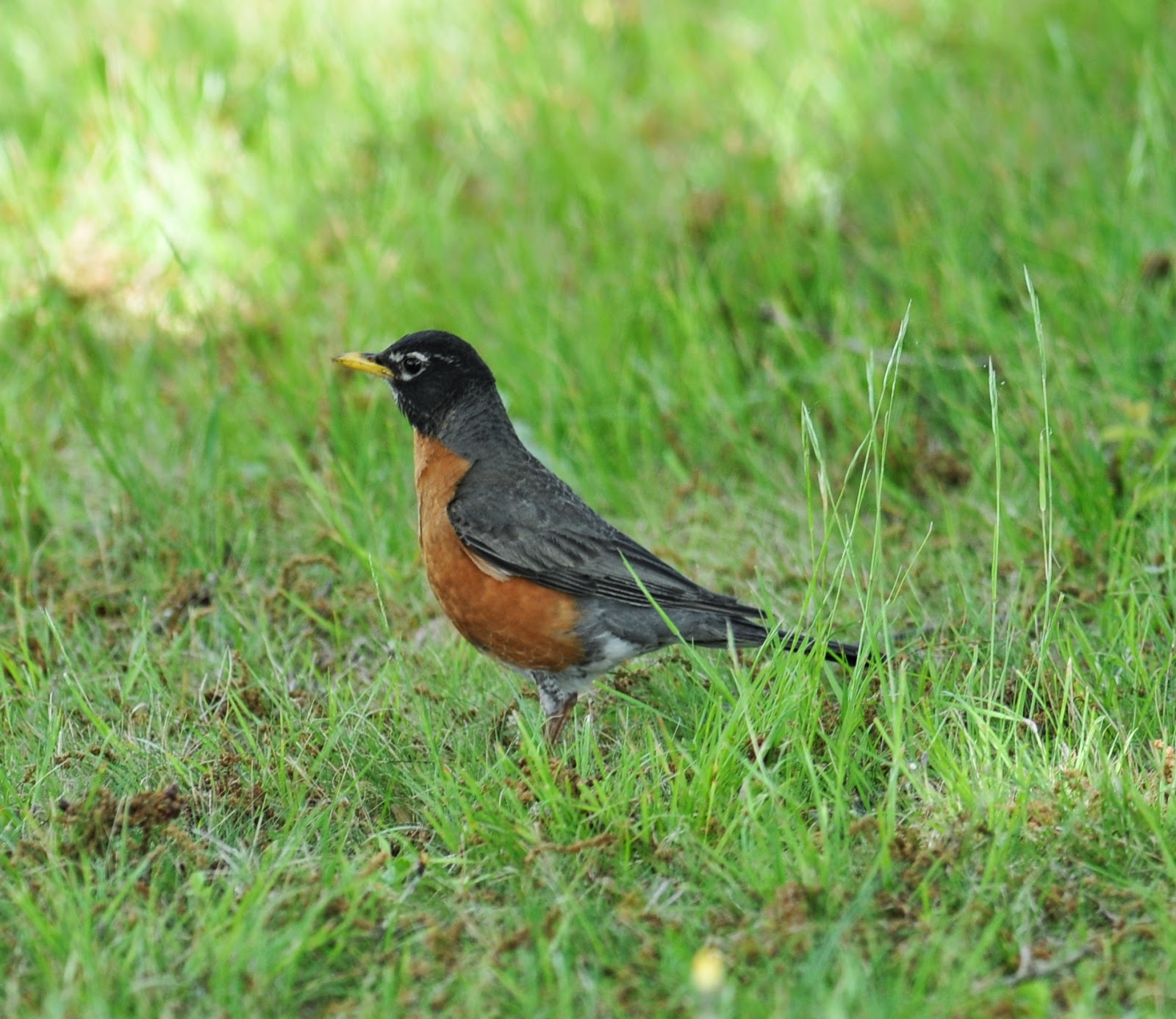
While the pair of Brown Thrashers was gathering food there were two other species in the same area also gathering food. The bird above is a male American Robin and the bird below is a Chipping Sparrow. Both of these birds will nest in the same habitat of low dense brushy growth. The Chipping Sparrow is a bit more of a treetop bird and the robin is so widespread that is common in woodlands and suburban settings at all levels and in all vegetation.

So – what’s in your yard?