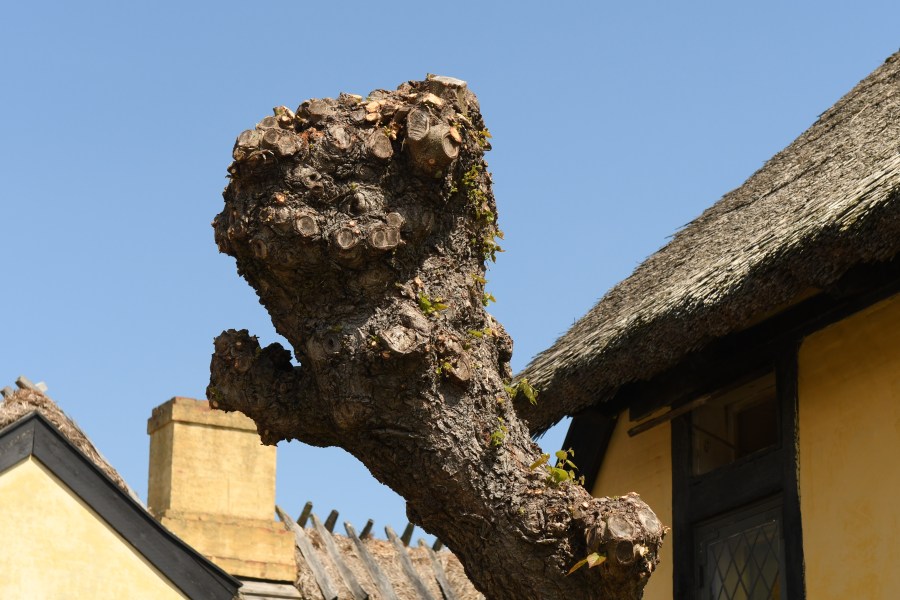
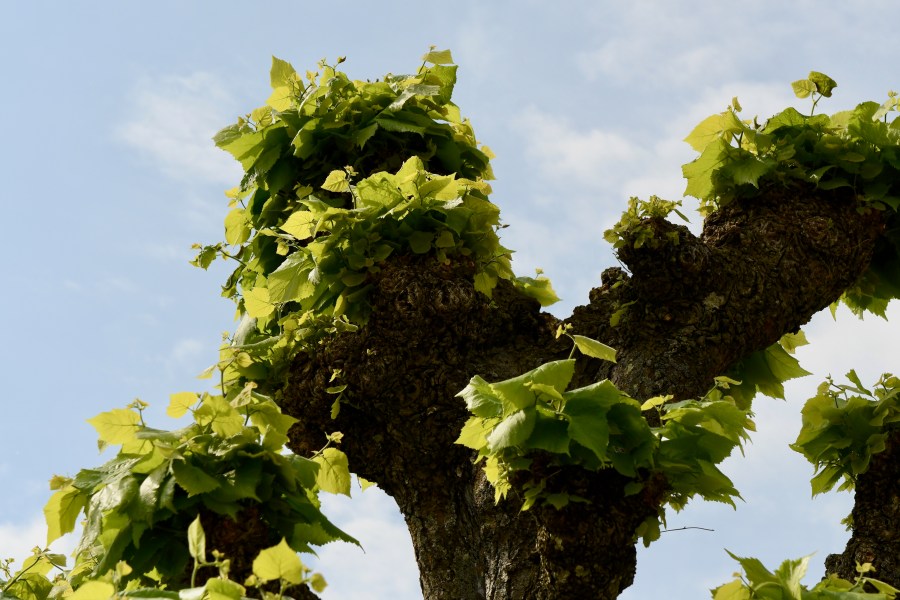
Over the centuries the land has provided. For the first several hundred years of European life the land was the basis of life itself. It was the landowner that ran the show; along with the developing royalty and powerful religious leaders. But the serf, the farmer, and the landlord were the base of the economy for a very long time. Our American countryside is littered with people named Woods, Forest or Forester, Carpenter, Pollard, Cooper, Ash, Atwood, Boyce, Holme, Holt, Marley, Perry, Ryder, Sawyer, Walton, and Woodward — and many more. These names are all derived from trees and tree management, be it from fruit or forest. These people were the tree cutters and the fruit growers of days gone by. Two of the traditional forest management concepts are still seen in pollarded trees throughout European cities and coppiced woodlands scattered through the countryside.
I am not showing coppicing in the images below, but coppicing is a technique in which trees are cut off at ground level and then sprout many new small “trunks” from the stump or “stool” left after cutting. These sprouts will be allowed to grow years, twenty years or so in some cases, and are then harvested as staffs (staves) or poles and are used (or were used) in building houses and barns or wagons and silos. If they were harvested at five or six or seven years they would be made into handles for farm tools or even wagon tongues. A person with a coppice plot would harvest from a different section each year, eventually rotating back to the first section years later. Coppiced trees could be Alder, Ash or Beech (3-4 year cycle), Hazel, Willow, and Chestnut (7 year cycle), Hornbeam and Oak (50 year cycle!!), or Sycamore and Chestnut (20 year cycles). This was truly a family, or multi-generational, business.
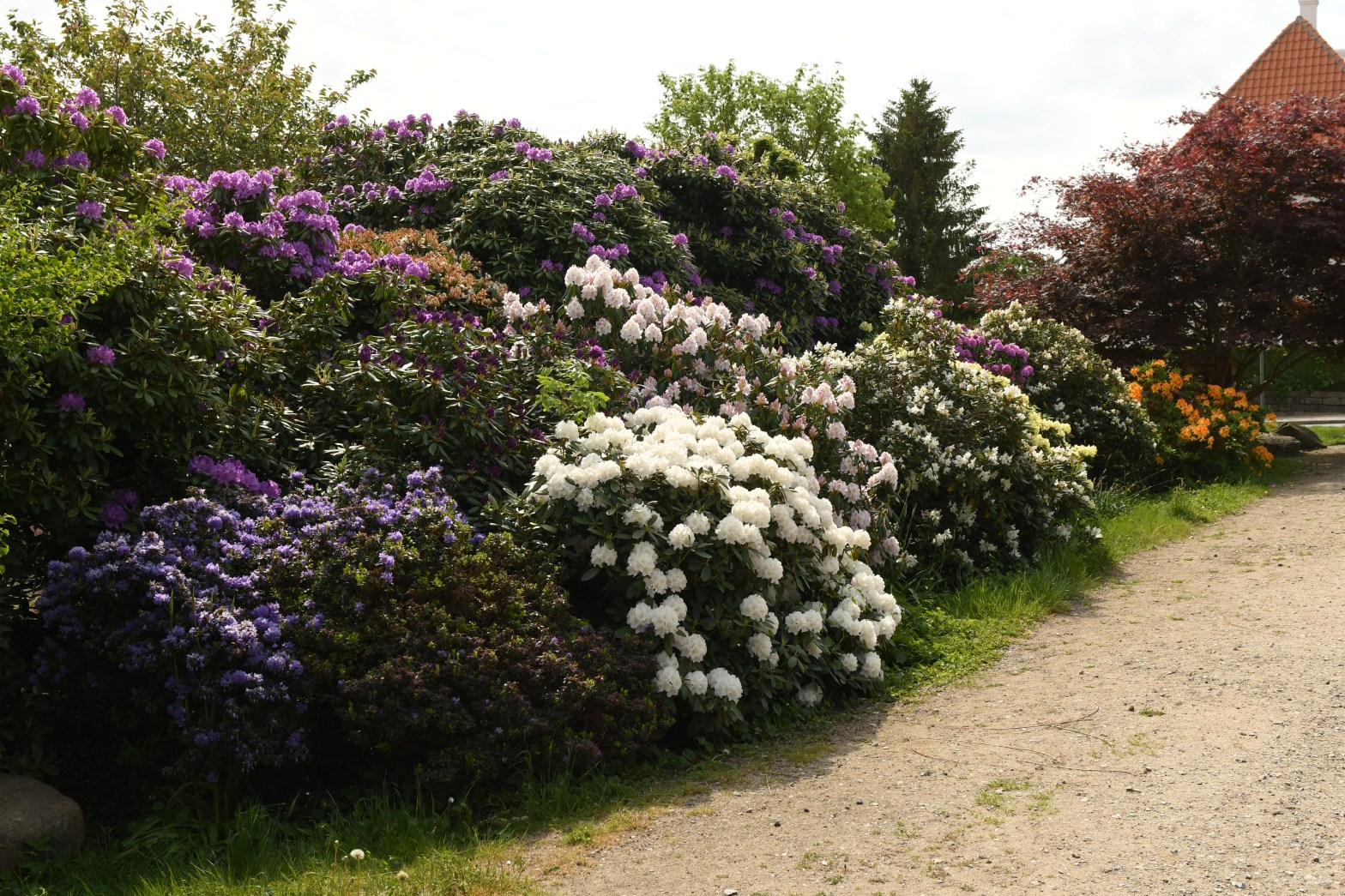
Oh, the top photo merely shows some of the thousands of flowering rhododendron plants, (a group with a center of diversity in the Chinese Himalayas, but with native populations pretty much all around the Northern Hemisphere), now resident in Denmark. The rhodies and lilacs were in full blow when we were traveling.

 On The Road With DEC